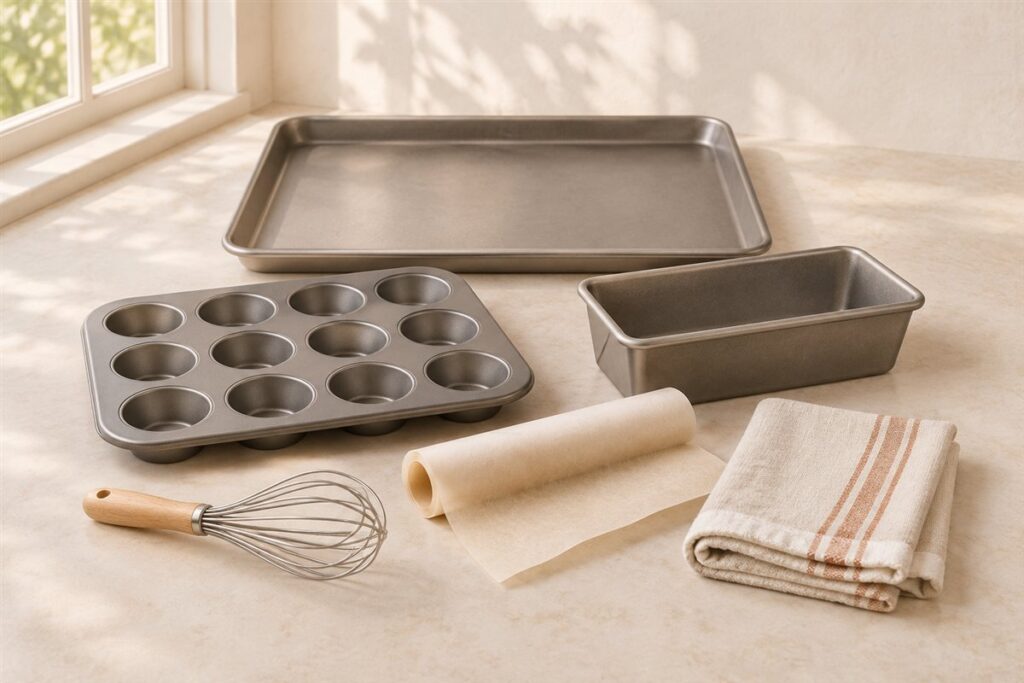
To choose a cake pan, match its shape and size to the recipes you bake most, then think about material and depth. For most home bakers, a pair of round pans about 8 or 9 inches across and a rectangular pan around 9 by 13 inches cover almost everything. Here are the main factors to compare.
Decision Criteria
| Factor | Why it matters | What to check |
|---|---|---|
| Shape | Round, square, rectangle and tube all bake differently | Match to your favorite recipes |
| Diameter or size | Recipes assume a certain pan volume | Measure inside the rim, not outside |
| Depth | Shallow pans overflow; deep pans give taller layers | Look for at least 2 inches for layer cakes |
| Material | Affects browning and release | Light aluminum, coated steel, or silicone |
| Sides | Straight sides give neat edges | Avoid sloped sides for stacked cakes |
| Extras | Removable base or springform helps release | Needed for cheesecake and delicate cakes |
Common Pan Types
- Round layer pans: The standard for birthday and celebration cakes. Having two or three of the same size is handy.
- Rectangular or sheet pans: For sheet cakes, brownies and bars.
- Square pans: Often 8 or 9 inches, used for brownies, cornbread and small cakes.
- Tube or bundt pans: The center tube or fancy mold shape helps dense batters bake through.
- Springform pans: The hinged side opens to release cheesecakes and tortes without flipping.
Material Notes
Light-colored aluminum bakes evenly and gives a golden crust. Dark or coated pans absorb more heat and may brown sooner, so some recipes suggest lowering the temperature a little. Check the maker’s guide for oven limits. Silicone is flexible and easy to release but less rigid, so place it on a baking sheet when moving it.
Prepping the Pan
- Brush the inside with soft butter or a baking spray.
- Line the bottom with a circle of parchment paper.
- Dust the sides with flour or cocoa if the recipe calls for it.
- After baking, cool in the pan for the time the recipe says, then run a thin knife around the edge and turn the cake out.
Common Mistakes to Avoid
- Buying pans with sloped sides when you want tidy stacked layers.
- Choosing a very shallow pan, which can overflow as the batter rises.
- Measuring the outside of the pan instead of the inside.
- Putting a dark pan in the oven without watching the first bake closely.
Pan Depth and Wall Height
Depth is a detail that is easy to miss and causes real trouble. Standard layer cake recipes assume a certain depth, and a pan that is shallower can overflow while one that is deeper may bake slower or produce a pale, tall cake. Check the listed interior height and compare it with the pans your recipes use. If a recipe says nothing about depth, assume a standard layer pan and pick something close.
Wall height also affects how the cake rises and how easily you can unmold it. Straight, vertical sides give clean layers that stack neatly, whereas sloped sides make cakes that can look rounded at the edges. Tall pans suit sponge and chiffon cakes that need a lot of vertical room to climb. Short pans suit sheet cakes and thin layers.
- Shallow pan: risk of overflow with batters that rise a lot.
- Tall pan: may need longer baking and gentle heat to cook the center.
- Straight sides: sharper edges for stacking and frosting.
When you buy, look for measurements of both diameter and height, and note whether the listing gives the inner or outer size, since the rim can add a small amount to the outside.
Release Methods and Pan Features
Getting a cake out in one piece depends partly on the pan. Some pans have a removable bottom or a springform latch, which lets you release delicate cakes without flipping them. These are handy for cheesecakes and other fragile desserts, but the seams can leak thin batter, so a tight fit and careful assembly matter. Tube pans often have a removable center, which helps with angel food and chiffon cakes.
Other features include handles, which make it easier to lift a hot pan, and a rolled rim, which adds strength. Nonstick coatings can help with release, but they are not a substitute for greasing when a recipe calls for it. Check the care instructions, because some coatings do not tolerate metal utensils or harsh scrubbing.
Also think about how you will cool and unmold. Most layer cakes rest in the pan for a short period, as the recipe directs, then are turned onto a rack. A pan with straight, smooth walls and a flat bottom unmolds more easily than one with decorative ridges. Intricate designs are attractive but harder to grease and clean, so be thorough with grease and flour or release spray.
If you bake for events, consider a few pans of the same size so all layers finish together.
Color, Finish and Browning Effects
The color of the pan interior changes how much heat the batter absorbs. Dark finishes absorb more heat and brown faster, which can lead to darker, thicker crusts and sometimes overbaked edges. Light or shiny finishes reflect heat and give softer, paler crusts. Neither is wrong. They suit different cakes and different tastes.
If you switch from a light pan to a dark one, you may need to lower the oven temperature slightly or check the cake earlier, and your recipe may offer guidance. Insulated or air-cushioned pans bake more gently but can take longer, so check for doneness with a toothpick or the cue the recipe gives rather than relying only on time.
A pan’s finish also affects cleaning. Smooth, polished metal is usually the easiest to wipe, while textured or dark nonstick surfaces may need gentler cleaning. Whichever you prefer, avoid scouring pads on coatings, and dry pans fully to prevent rust on steel. If you often bake very delicate cakes, a light-colored, evenly heating pan can be a safe default.
Check the weight of the pan when you pick it up. Thin pans can bend while full, and a pan that flexes in your hands can spill batter on the way to the oven, so a firm, rigid build is a practical advantage.
Oven Fit, Stacking and Storage
Pans take up space both in the oven and in your cupboard. Before buying, measure your oven and consider whether you plan to bake two layers at once. Pans should not touch each other or the oven walls, as that blocks airflow and can cause uneven baking. A pair of pans on one rack needs more width than most people expect, so consider using two racks and staggering them.
Storage matters too. Round pans can nest if they differ slightly in size, but identical ones stack neatly only if the rims allow. Springform pans and tube pans have awkward shapes and need dedicated space. If you are short on room, prioritize versatile shapes such as a round layer pan and a loaf pan, and add specialty pans as needed.
- Check pan diameter against your oven width before buying a set.
- Keep pans away from damp areas to prevent rust.
- Place a sheet of paper between stacked nonstick pans to avoid scratches.
If your oven runs hot or cool, an oven thermometer helps you judge whether the pan or the oven is causing uneven results. Adjust temperature or time, and rotate the pan partway through when the recipe suggests it, to even out the browning across the surface of each layer.
Care, Wear and Replacement
A cake pan does not need much care, but a few habits keep it in good shape. Let it cool before washing, since thermal shock can warp thin metal. Wash by hand with a soft sponge unless the maker says the dishwasher is fine. Dry it completely, particularly steel pans, because even small amounts of moisture can lead to rust.
Replace a pan when its coating is flaking or deeply scratched, when it has warped so the bottom no longer sits flat, when rust returns after cleaning, or when seams on springform or tube pans start to leak. A pan that bakes unevenly or sticks more than it used to may be reaching the end of its life.
When choosing a replacement, look at the build. Heavier gauge metal generally resists warping, and a rolled rim adds rigidity. Check the maker’s care guidance and any stated heat limits. Budget tiers usually differ in thickness and finish, and a basic pan can be very good value for occasional baking. Weigh how often you bake against the price, and avoid buying specialty shapes you may only use once. With sensible care, a quality pan should give many seasons of reliable baking.
FAQ
Can I use a different size than the recipe says?
Sometimes. A larger pan gives a thinner cake that bakes faster, and a smaller pan gives a thicker cake that needs longer. Watch the cake rather than the clock.
How many round pans should I own?
Two matching pans suit most layer cakes. Three help with taller or rainbow cakes.
Should I grease a nonstick cake pan?
Often yes, unless the maker or recipe says otherwise. A light coating of fat and flour or a release spray improves release.
Why does my cake dome in the middle?
Edges set first while the center keeps rising. A lower oven temperature, the correct pan size, or baking strips around the pan can help.
Are dark pans better than light ones?
Neither is better overall. Dark pans brown faster and light pans bake more gently, so adjust temperature and timing to suit.
Can I use a springform pan for a regular cake?
Yes, for sturdy batters, but thin batters may leak through the seam. Check the fit and consider setting the pan on a tray.
How do I stop cake layers from sticking?
Grease the pan thoroughly, line the bottom with parchment, and let the cake rest in the pan for the time the recipe suggests before turning out.
Do I need parchment paper if the pan is nonstick?
It is not always required, but it adds insurance for delicate cakes. Follow the recipe and the pan's instructions.
The Short Version
Choose the shape that fits your most-baked recipes, check the size inside the rim, and favor straight sides and enough depth. Light aluminum is a dependable all-round material.