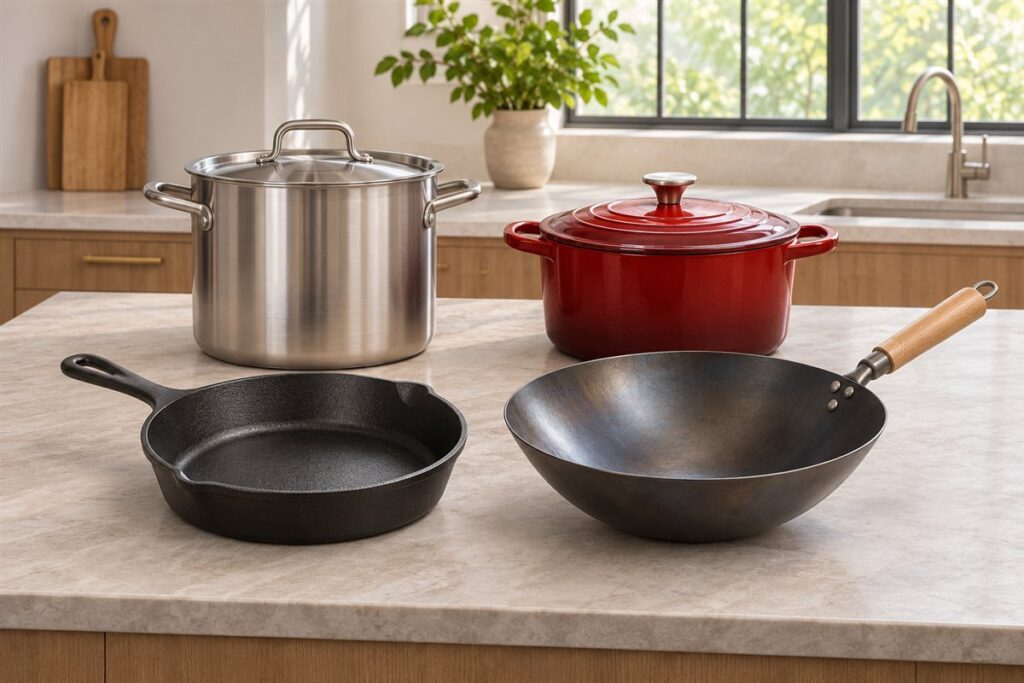
Most stainless steel pans clean up with warm water, dish soap and a non-scratch sponge. For stuck food, stains or rainbow tints, a short simmer or a gentle mild acid such as vinegar does the work without harsh scrubbing.
Everyday Washing
- Let the pan cool so the metal does not warp from a sudden temperature change.
- Fill with warm water and a squirt of dish soap and let it sit for a few minutes.
- Wash with a soft sponge, working along the grain of the finish if there is one.
- Rinse and dry with a towel to avoid water spots.
Check the maker’s guide to see whether the pan is dishwasher friendly. Many are, but handles and decorative finishes may differ.
Stuck-On Food
Add enough water to cover the residue, plus a spoonful of baking soda, and simmer for several minutes. Let it cool, then scrape gently with a wooden spoon. Repeat if needed rather than scraping hard with metal tools.
A paste of baking soda and water also works on stubborn spots. Apply, wait a few minutes and scrub with a soft cloth.
Stains, Spots and Tints
| Marking | Typical Cause | Fix |
|---|---|---|
| White chalky spots | Mineral deposits from water | Wipe with a little white vinegar, rinse and dry |
| Rainbow tint | Heat exposure | Wipe with diluted vinegar |
| Brown film | Baked-on oil | Simmer water with baking soda, then scrub |
| Dull look | Residue buildup | Use a stainless-friendly cleaning powder as directed |
Habits That Keep Pans Cleaner
- Preheat the pan, then add oil, so food releases more easily.
- Avoid very high heat unless you need it.
- Do not leave a pan with salted water sitting for hours, as salt can cause tiny pits.
- Skip steel wool and bleach unless the maker’s guide allows them.
When you use cleaning products, wear gloves if needed, ventilate the room and follow the instructions on the label.
Some marks need a little extra attention. Burnt-on oil near the rim often responds to a longer soak, while a cloudy interior after many washes usually comes from mineral buildup rather than damage. If your tap water is hard, wipe the pan dry right after rinsing instead of letting it air dry. A soft cloth and a few drops of white vinegar bring back the shine on the outside as well. Work in small areas, rinse well afterward, and never mix cleaning products with one another.
Why Food Sticks to Stainless
Stainless steel is not nonstick, and food sticking is often about technique more than a defect. Cold food in a cold pan tends to grip the surface. Heating the pan first, then adding oil and letting it warm, helps create a thin barrier. Moving food too early also tears it from the surface; many foods release on their own when properly browned.
Moisture matters. Wet food steams and sticks, so pat meat and vegetables dry before cooking. Overcrowding the pan lowers the temperature and makes sticking more likely. Using a pan that is too hot can scorch oil and food, leaving brown residue that is harder to clean.
- Preheat before adding fat.
- Pat food dry.
- Do not crowd the pan.
- Let browned food release before turning.
Good habits cut cleaning time dramatically.
Deglazing as a Cleaning Shortcut
The browned bits left after searing are useful in cooking and easy to remove while the pan is still warm. Deglazing means adding a splash of liquid such as water, stock or wine to a hot pan and scraping up the residue with a wooden spoon. The liquid lifts the bits, and you can use them in a sauce.
If you are not making a sauce, add a little hot water, scrape, and pour the liquid out. This makes final washing quick. Be careful of steam and splatter, and use a long-handled spoon. Keep your face away from the pan and remove it from the heat if you add alcohol.
Do not add cold water to a very hot, empty pan, since the shock can warp thin metal and splatter. Let it cool a bit first. This habit turns a stubborn cleanup into a short rinse, and it also protects the surface from baked-on layers that need harsher methods later.
Removing Heat Tint and Mineral Spots
Rainbow tints and white spots are cosmetic and can be treated gently. A cloth dampened with white vinegar usually removes both, followed by a rinse and dry. For stubborn marks, a stainless-friendly cleaning powder used as directed can restore the finish. Rub along the grain of the metal where visible.
If your water is hard, mineral spots are more likely. Drying right after washing reduces them. A final wipe with a soft cloth leaves the surface bright.
Work on the outside as well. Splatters on the exterior can bake on during use and look dull. A baking soda paste on a soft cloth can lift these films. Check the maker’s guide for any finish limits, such as a brushed or colored exterior that may react to certain products. Rinse thoroughly after any treatment, and keep cleaners away from the handle joins if the maker advises.
Handles, Rivets and Hard-to-Reach Areas
Grime hides where the handle meets the pan. Rivets inside the pan create small ridges where food can lodge. A soft brush or toothbrush clears these spots easily. Soak the pan so deposits loosen, then brush around each rivet.
Pay attention to the rim and the pouring edge, where oil collects. A cloth over a finger can reach the inside of the rim. If the handle is hollow or has a finish, avoid soaking it for long; check the maker’s guide.
- Use a small brush on rivets and seams.
- Wipe the handle after use, as grease can build up.
- Check lids, including the inside rim and the knob.
Rivetless designs are easier to clean but may be less common. If you are shopping for new pans, look at the interior and see how smooth it is, as this affects how easy cleaning will be.
When a Pan Is Past Saving
Stainless pans are durable, but they do not last forever. A base that is warped and rocks on a flat surface will heat unevenly. Deep pitting, often from salt left to sit, can trap food and is hard to clean. A loose handle is a safety risk, and a pan with a damaged or separating base layer may no longer cook evenly.
Discoloration alone is not a reason to replace a pan. Scratches on the surface are normal with use. Focus on function: does it sit flat, heat evenly, and have secure handles?
If a pan fails these checks, retire it. Check the warranty first, in case the problem is covered. When buying a replacement, consider the base construction and handle attachment, since these decide how well the pan lasts. A well-chosen pan, cleaned promptly, can serve for years.
FAQ
Why does my pan have a rainbow sheen?
It comes from heat and is cosmetic. Diluted vinegar usually removes it.
Can I use abrasive pads?
Fine pads can help on stubborn areas, but they may scratch some finishes. Check the maker’s guide first.
Is it okay to use steel wool on stainless steel?
Fine steel wool can scratch the surface and some makers advise against it. Try a soft sponge or nylon pad first, and follow the maker's guide.
Can stainless steel pans go in the dishwasher?
Many can, but handles and finishes differ. Hand washing is gentler and often keeps the pan looking better, so check the guide.
Why does my pan have a cloudy film?
It is often mineral buildup or detergent residue. A wipe with diluted vinegar followed by a rinse and a dry usually clears it.
Should I season a stainless steel pan?
Stainless does not need seasoning like iron, but a thin layer of oil on a preheated pan helps food release. Follow the maker's advice.
What causes the black spots on the bottom of my pan?
These are usually burnt-on food or oil from the burner. Scrubbing with a baking soda paste and a soft cloth often helps.
How long can I soak a stainless steel pan?
A few hours is fine for most pans, but avoid leaving them wet for days. Check the maker's care guide for specifics.
The Short Version
Wash gently, soak or simmer for stuck food, and use vinegar or baking soda for marks. Dry the pan after washing to keep it bright.