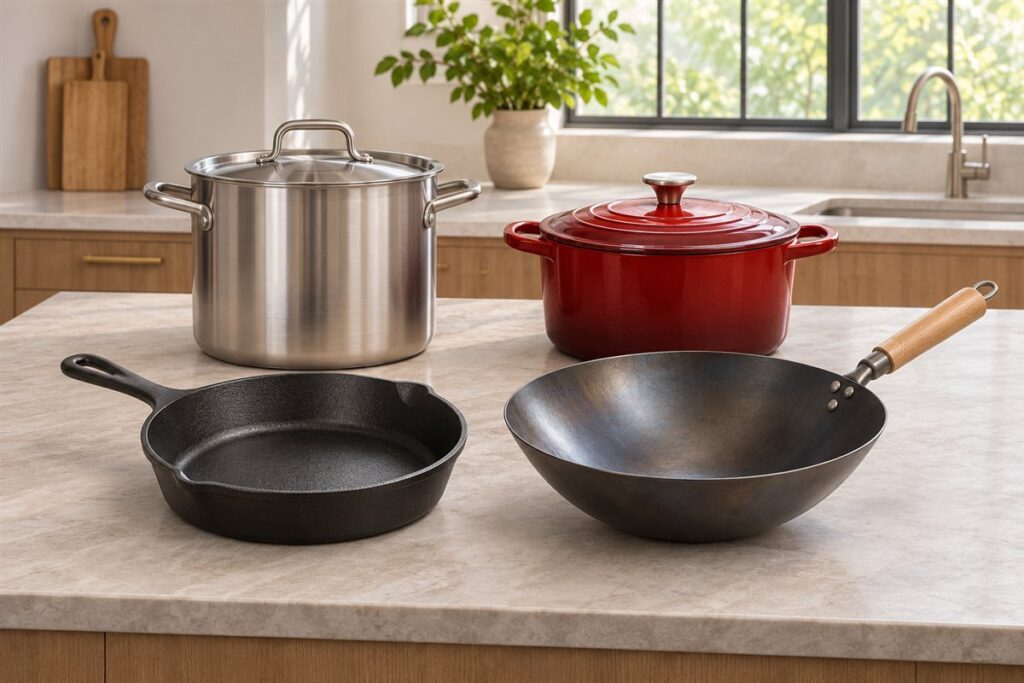
To remove burnt food from a pot, let it cool, soak it in hot soapy water, and then simmer water with baking soda to loosen the residue. Scrape with a wooden tool rather than scouring hard, which can scratch the surface.
First Moves After Scorching
Take the pot off the heat and turn the burner off. Move any food that is not burnt into a clean dish right away, since the scorched taste spreads quickly. Do not touch the pot with bare hands and do not put a very hot pan under cold water, because the sudden change can warp thin metal.
Main Method for Most Pots
- Let the pot cool until it is safe to handle.
- Scrape out loose food with a wooden or silicone spatula.
- Fill the pot with enough water to cover the burnt area and add a squirt of dish soap.
- Soak for 30 minutes or longer.
- Add two tablespoons of baking soda, bring the water to a gentle simmer for 10 minutes and watch that it does not boil over.
- Turn off the heat, let it cool and scrub with a soft sponge.
- Repeat if needed.
Method by Pot Type
| Pot Type | Gentle Approach | Avoid |
|---|---|---|
| Stainless steel | Simmer with baking soda, use a non-scratch pad | Metal scrapers on the surface |
| Nonstick or ceramic coated | Soak in warm soapy water, wipe with a soft cloth | Abrasive pads and long simmers |
| Enameled cast iron | Soak, simmer with water, use a nylon scraper | Metal tools and harsh powders |
| Bare cast iron | Simmer water, scrape, reseason after | Long soaking |
If the Burn Persists
- Try a vinegar soak: equal parts white vinegar and water, simmered briefly, then cooled.
- Use a stainless-friendly cleaning powder on stainless pots, following label directions.
- Be patient and repeat gentle steps rather than scraping hard.
Ventilate the kitchen when simmering vinegar, and always follow the maker’s manual and the cleaner’s label.
Prevention saves effort. Choose a pot with a heavy base for sauces, milk and sugar, since a thick bottom spreads heat and reduces hot spots. Stir often, keep the heat at medium or lower once a liquid is hot, and set a timer when you step away. Add a splash of water to thick foods such as beans or oatmeal if they begin to thicken too much. If you smell something scorching, move the pot off the burner at once and check it.
What Different Burns Look Like
Not all scorching is the same, and the type of residue guides the cleaning method. A light brown film from sugar or milk usually softens with a soak. A thick black crust from burnt rice or beans is more stubborn and may need repeated simmering. A shiny, hard patch of caramelized sugar often dissolves in hot water. Grease that has burnt on forms a sticky brown layer that responds to soap and baking soda.
Look at the pot before you act. Check whether the burn is on the base only or climbs up the walls. Note whether the pot has a coating, as this changes what you can do. A surface that has changed color but feels smooth may be a stain rather than a burn.
- Light film: soak and wipe.
- Thick crust: soak, simmer and scrape gently.
- Sugar: hot water often dissolves it.
Matching the effort to the burn keeps your pot in better shape.
Safe Tools for Scraping
Scraping loosens residue, but the wrong tool damages the pot. Wooden spoons and spatulas are gentle and shape themselves to the pan over time. Silicone and nylon scrapers are good for coated pots and enameled surfaces. A plastic pan scraper handles corners where a spoon cannot reach.
Avoid metal knives, forks and steel scouring pads on coated, enameled or soft metal pots. These can scratch, expose bare metal or leave marks that make future sticking worse. On stainless steel, a non-scratch pad is usually a safer first choice than steel wool, and you should check the maker’s guide.
Use the edge of the tool at a low angle and work slowly, soaking again if the residue is not moving. Forcing a scraper can gouge the surface. If the pot is still warm, protect your hands with a mitt. Patience and several short sessions usually work better than one long scrub, and they preserve the pot’s finish.
Handling Delicate Finishes
Coated, enameled and anodized pots deserve extra care. Nonstick and ceramic coatings can be damaged by abrasives, high heat and long simmers with strong solutions. Soak in warm soapy water and wipe with a soft cloth, and check the maker’s instructions on what is allowed.
Enameled pots can chip if struck with hard tools, and harsh powders can dull the shine. A nylon scraper and a long soak do most of the work. Anodized aluminum can be sensitive to alkaline cleaners, which may darken it, so use mild soap first.
If burnt food has left the coating discolored, a stain may not affect performance. But if the coating flakes, bubbles or shows bare metal, the pot may no longer be suitable for cooking. Check the manual or contact the maker. Avoid using products that the manufacturer does not recommend, especially on a surface that touches your food.
What to Do When the Stain Stays
Sometimes a mark remains after several attempts. First, decide whether it matters. A stain on the outside or a faint discoloration inside may be cosmetic. If the pot cooks well and the surface is intact, you can leave it.
If it bothers you, try a few more gentle rounds, spacing them out so the pot rests between treatments. Alternate a baking soda simmer with a diluted vinegar soak, rinsing well between. A stainless-friendly cleaner used as directed may help on steel pots.
- Do not mix cleaners.
- Ventilate when simmering vinegar or using products.
- Rinse thoroughly before cooking again.
If the residue is stubborn and the pot is thin, you may have a pot that scorches easily. Consider whether a heavier-based pot would suit your cooking. Know when to stop: if the surface is pitted, warped or flaking, replacing the pot is better than continuing to scrub.
Choosing Pots That Resist Scorching
Some pots are more forgiving than others. A heavy, thick base spreads heat and reduces hot spots, which helps with sauces, milk, rice and sugar. Thin, light pots heat quickly and can scorch if you look away. Clad or encapsulated bases are designed to improve evenness, so check the listing.
Shape matters. A pot with a wide base and gently sloped walls is easier to stir, so you can reach the corners. Straight corners can trap food. A smooth interior is easier to scrape and clean than one with rivets or ridges.
Size also counts. Using a pot that is too large for a small amount of food leaves a thin layer that can burn. Match the pot to the batch. Keep a wooden spoon handy and stir often. If you often scorch food, lower the heat and stay nearby, and consider using a diffuser or a double boiler for delicate mixtures. Pot choice and habits work together.
FAQ
Can burnt pots be saved?
Often yes. Light scorching usually comes off with soaking and simmering. Deep damage on a coating may be permanent.
How can I avoid scorching?
Use moderate heat, stir often, and choose a pot with a heavy base for sauces and sugar.
Can I use dishwasher tablets to clean burnt pots?
Some people do, but they can be harsh on certain finishes. Check the pot maker's guide before trying, and follow the label on the product.
Is it safe to cook in a pot after it has been burnt?
If the surface is intact and clean, usually yes. If the coating has flaked or the metal is damaged, check the maker's guide and consider replacing it.
Why does my pot burn food so easily?
A thin base, high heat or too little stirring are common causes. A thicker-based pot and lower heat often help.
Can I use salt to scrub a burnt pot?
Coarse salt acts as a mild abrasive and some people use it on sturdy surfaces. Avoid it on coated or enameled pots, and check the maker's guide.
How long should I soak a burnt pot?
Thirty minutes to a few hours is common. Stubborn burns may take longer or repeated soaks, but avoid soaking cast iron for long.
Does a lid help prevent burning?
A lid traps moisture, which can reduce scorching in some dishes. For sauces that need to reduce, leave it off and stir.
The Short Version
Cool the pot, soak it, simmer with baking soda and scrub gently. Match the method to the material and avoid metal tools on coated surfaces.