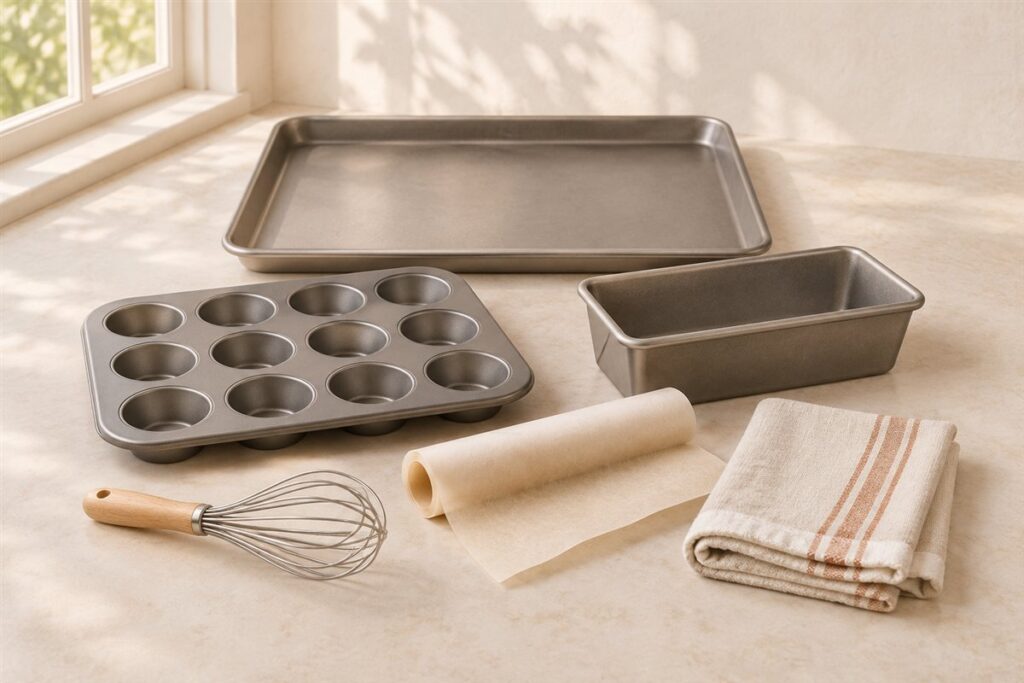
When you choose a pizza stone, look at the material, the thickness, the size relative to your oven, and the care instructions. A stone stores heat and passes it to the dough, which helps the base turn crisp. Make sure it fits your oven with room for air to move around it.
What a Baking Stone Does
A pizza stone is a flat slab that sits in the oven while it preheats. When a pizza or loaf lands on it, the hot surface gives a burst of heat to the underside, which helps the crust set and brown. It is also useful for flatbreads, rolls and frozen pizzas.
Material Choices
- Cordierite: A common ceramic that is made to handle high heat and sudden changes better than many others.
- Clay or ceramic: Absorbs moisture and gives a dry, crisp base. It can be more fragile.
- Stone composites: Vary by maker. Check the stated temperature range.
- Baking steel: A metal plate that moves heat to the dough very quickly. It is heavy and needs a solid oven rack.
Decision Table
| Factor | Why it matters | What to check |
|---|---|---|
| Thickness | Thicker stones hold more heat but take longer to warm | Typical home stones are around half an inch or more; check the maker’s guide |
| Size | Must fit the oven and the pizzas you make | Measure inside the oven and leave a gap around the edges |
| Shape | Round suits pizza, rectangular suits bread and sheet-style baking | The loaves and pizzas you actually make |
| Weight | Heavy stones are hard to move | Your rack strength and your lifting comfort |
| Temperature limit | Applies to oven, broiler and grill use | The maker’s stated limits |
| Care rules | Many stones should not be soaped or soaked | The care sheet |
Using and Caring for It
- Place the stone on a rack before the oven heats, since a cold stone can crack if placed into a hot oven. Follow the maker’s heating instructions.
- Preheat for the time the maker suggests so the stone is fully hot.
- Slide the pizza onto it with a peel or on parchment, if parchment is allowed at your temperature.
- Let the stone cool fully in the oven afterward.
- Scrape off residue and wipe with a damp cloth. Avoid soap unless the maker says it is fine.
Stones stain and darken with use, which is normal. Handle hot equipment with oven mitts and follow the maker’s safety instructions.
Stone Versus Steel: Which Suits Your Baking
The biggest choice after size is whether to buy a ceramic stone or a metal baking steel. A stone is porous and absorbs some surface moisture, which helps produce a dry, crisp base. It heats up gradually, and because it is less conductive than metal, it gives a gentler transfer of heat. A steel moves heat to the dough very quickly, which can mean faster browning and more char on the base, particularly in a home oven that does not get as hot as a pizzeria oven.
Weight is a major difference. Steel plates tend to be heavy, so check that your oven rack can carry the load and that you are comfortable lifting and storing it. Stones are usually lighter but can crack if mishandled. Steel is less likely to break but needs drying and oiling to prevent rust, depending on the type, so read the maker’s care advice.
Think about what else you bake. Stones suit bread loaves, flatbreads and frozen pizzas, and they can smooth out oven temperature swings. Steel suits people who focus on pizza and want quick results. Neither is a requirement for good baking, so choose the one that fits your habits, oven strength and storage space.
Oven Fit, Rack Position and Airflow
A stone that is too big for the oven can block airflow and cause uneven heating. Measure the inside width and depth of the oven, then leave a gap of a couple of inches around the edges, or whatever the oven manual advises. Also check the rack height. A thick stone sits closer to the heating element, so make sure it clears the roof and that any fan is not obstructed.
Rack position affects results. Placing the stone on a lower rack gives more intense bottom heat, which suits thin crusts. A middle or upper rack may brown the tops more, which can help with thicker pizzas. Experiment by moving the rack one step at a time and noting the result. Some ovens have hidden elements under the floor, and a stone placed directly on the base may overheat the oven or the stone, so read the manual before doing this.
Convection settings can change how the stone heats, since the fan moves hot air around it. If your oven has multiple modes, try the one that the stone maker recommends. If you are not sure, start with a standard bake setting and watch the first pizza closely.
Handling, Moving and Launching Pizza
A hot stone is heavy and dangerous, so plan how you will handle it. Use dry, thick oven mitts, and keep the path clear of children and pets. If the stone lives in the oven, remember that it stays hot long after the oven turns off. If you remove it, place it on a heatproof surface and not on a wet counter.
Launching the pizza is the hardest part. A wooden or metal peel helps, and a light dusting of flour, semolina or cornmeal reduces sticking, though too much can burn and smoke. Build the pizza on parchment if the maker allows it at your temperature, or on a peel just before sliding it in. Work quickly, since wet toppings soak the dough if you leave them to sit. Give the peel a little shake before you launch to check the dough moves freely.
- Use only a thin layer of flour or semolina on the peel.
- Do not overload the pizza with wet toppings.
- Slide, do not drop, the pizza onto the stone.
- Keep the oven door open for as short a time as possible.
With practice, launching becomes easy.
Preventing Cracks, Smoke and Stains
Most cracks come from thermal shock, which is a rapid change in temperature. Never put a cold stone into a hot oven unless the maker explicitly says it is fine, and never pour cold water or place a cold, wet item on a hot stone. Let the stone cool in the oven after use. Moisture trapped in a porous stone can also cause cracking if heated too quickly, so keep it dry and follow the maker’s guidance for first use.
Smoke often comes from flour, cornmeal or cheese that has fallen onto the hot surface. Brush off crumbs when the stone is cool, and avoid heavy dusting during baking. Oil and grease soak into stones and can smoke on the next use, so avoid oiling a ceramic stone unless the maker says to. Stains are normal and not a sign of a fault. They do not affect the baking.
If the stone smells or smokes badly, it may have absorbed too much grease, and a longer, empty heating period in a ventilated kitchen may help, again within the maker’s limits. Avoid soap and strong cleaners, because the stone can absorb them and carry the taste into food. For stuck-on bits, scrape gently with a spatula or a stiff brush once the stone is completely cool.
Buying Tips and Signs to Replace
Before buying, read the maker’s stated temperature range and check it covers your usual oven settings. Look for clear care instructions, a size that matches your oven and a thickness that suits your baking. Thin stones heat quickly but can crack more easily, and thick ones hold heat longer but need more preheating. Ask whether the stone comes with a rack, a carrier or a peel, and whether those are things you need.
Questions to ask yourself: Do I bake pizza often enough to justify the space? Can I lift the stone safely? Does it need to live in the oven, or will I store it elsewhere? Do I bake bread as well, in which case a rectangular stone may be more useful? An answer to each of these narrows your options.
Replace the stone if it develops a crack that grows, a corner that crumbles or a surface that flakes. Small hairline cracks may not stop use, but follow the maker’s advice, since a stone that breaks in the oven can be hazardous. If it warps so food no longer sits level, or if it smells unpleasant even after cleaning, a new one is the sensible choice.
FAQ
Can I leave the stone in the oven all the time?
Many people do, as it can even out oven temperature, but it takes longer to preheat. Check the maker’s guidance.
Will a stone work in a small oven?
Yes, if it fits with some clearance. A smaller round stone is often easier to manage.
Do I need to season a pizza stone?
Most makers advise against oiling a ceramic stone. It darkens naturally with use. Follow the care sheet for your stone.
Can I use a stone on a grill?
Only if the maker says it is suitable for grill use and states a temperature limit. Not all stones are intended for open flame.
Why did my stone crack?
Most cracks result from sudden temperature changes or trapped moisture. Heat and cool the stone gradually and keep it dry.
What is the best way to clean it?
Let it cool, scrape off residue with a spatula or brush and wipe with a damp cloth. Avoid soap unless the maker allows it.
Can I cook frozen pizza directly on the stone?
Many people do, but check the maker's guidance and the pizza package. Using the stone's preheated surface often gives a crisper base.
Should I use parchment on the stone?
Parchment can help with launching, but check its temperature rating. At very high heat it can darken or burn.
How long should I preheat the stone?
It depends on the thickness and the oven. Follow the maker's guidance, as thick stones usually need longer to be fully hot.
The Short Version
Choose a stone that fits your oven, suits the foods you bake, and has clear care instructions. Heat it with the oven, let it cool slowly, and avoid sudden temperature changes.