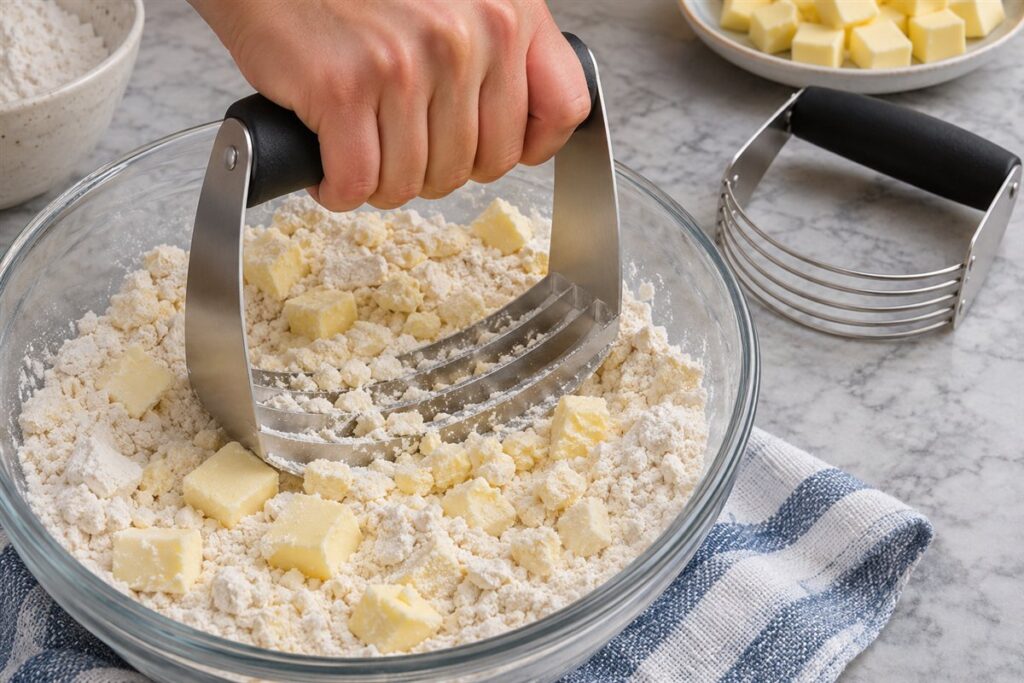
A pastry blender is a hand tool with a row of wires or blades on a curved frame, used to cut cold butter into flour for pie crust, biscuits and scones. Choose one with a sturdy frame, firmly anchored wires and a handle that feels good in your hand. Here is how to compare them.
What It Is For
Flaky pastry depends on small pieces of cold fat staying separate in the flour. A pastry blender cuts the butter into pea-sized bits without warming it with your hands. The result bakes into tender layers.
Wire or Blade
| Style | How it works | Points to note |
|---|---|---|
| Wire | Five or so curved wires cut as you press down | The classic design, easy to wash, wires can bend if forced |
| Blade | Flat metal blades slice the fat | Cuts in a neater way, may be stiffer, handle with care |
| Single-piece stamped | One metal sheet with slots | Simple, but can feel harsh on the hand |
What to Check
- Wire strength: Thicker wires resist bending when you press into cold butter.
- Anchoring: Wires should be firmly attached at both ends of the frame.
- Handle: A wide, cushioned or rounded grip is more comfortable on the palm.
- Width: A wider head works faster, but a narrow one reaches into the corners of a small bowl.
- Cleaning: Dough and butter stick between wires. Look for a design that rinses easily, and check if the dishwasher is allowed.
- Frame shape: A frame with a gentle curve follows the round base of a bowl and cuts more of the mix per press.
How to Use It
- Chill the butter and cut it into small cubes.
- Add the cubes to the flour in a wide bowl.
- Press down with the blender, then lift and repeat, turning the bowl as you go.
- Stop when the mix looks like coarse crumbs with some pea-sized pieces left.
- Add cold water a little at a time and mix gently.
The sharp blades or wires of some tools can nick skin, so keep fingers clear and follow the maker’s guidance.
A Worked Example: Biscuit Dough
- Measure the dry ingredients into a wide, shallow bowl so the blender can reach the sides. Stir them together.
- Cut cold butter into small cubes and scatter them over the flour. Return the bowl to the fridge for a few minutes if the butter feels soft.
- Press the blender straight down through the butter, lift, turn the bowl a quarter turn, and press again. Use a rocking motion rather than stirring.
- Scrape the butter and flour off the wires with a spoon or knife every few presses, so the tool keeps cutting.
- When most of the mixture looks like coarse crumbs with a few larger bits, add the liquid in stages and mix only until the dough just holds.
- Handle the dough lightly and chill it again if your recipe says so, then bake as directed and follow food-safety guidance for storage.
Common Scenarios
Pie crust for the holidays
A sturdy wire blender copes with large batches. Keep the butter cold between batches and work fast.
Small batches for scones
A narrow head fits a small bowl, and a comfortable handle helps when you only bake now and then.
Someone with sore hands
Look for a wide, cushioned handle and a lighter tool. Chill the butter well so it cuts easily.
A kitchen with a food processor
A processor works in short pulses, but a hand tool gives you more control over the size of the butter pieces and is easier to wash.
Mistakes to Avoid
- Using warm butter: it smears into the flour and gives a tough or greasy crust. Keep it cold.
- Overworking the mix: long mixing warms the fat and develops the dough too much. Stop at coarse crumbs.
- Forcing the tool through rock-hard butter: wires bend. Let butter soften for a couple of minutes first.
- Using a deep, narrow bowl: the blender cannot reach the base properly, so choose a wide one.
- Leaving dough to dry on the wires: it hardens and is difficult to remove.
Alternatives
Two knives used in a crisscross motion can do the same job, as can a food processor in short pulses, or a box grater with frozen butter. A dedicated pastry blender is a small, low-effort tool if you bake pies often.
Care and Storage
Wash the blender by hand soon after use, as dough dries between the wires. A small brush helps clear the gaps. Dry it fully to avoid spots, and store it where the wires will not be crushed by heavier tools. Check now and then that the wires remain straight and firmly anchored, and replace the tool if they loosen or snap.
Quick Troubleshooting
| Symptom | Likely cause | What to try |
|---|---|---|
| Butter smears instead of cutting | Butter too warm | Chill the butter and the bowl, then continue |
| Wires bend | Butter too hard or too much force | Let butter soften slightly and use steady pressure |
| Mixture clumps on the tool | Dough building up between wires | Scrape clean every few presses |
| Hand tires quickly | Thin handle or large batch | Work in smaller batches or use a wider grip |
Keeping the Fat Cold
The whole point of cutting fat into flour is to leave small pieces of butter intact, so they melt in the oven and leave little pockets that become flaky layers. Warm butter blends into the flour and produces a dense, tough result. A few habits help. Chill the bowl, the flour and the butter before you begin if your kitchen is warm. Cut the butter into cubes before it goes in, so the blender has less to do. Work quickly and stop as soon as the mixture looks right. If the dough feels soft or greasy, put the bowl in the fridge for a short while before adding liquid. Use cold water, added gradually, and mix with a fork or the blender just until the dough holds together when pressed. Rest the dough as your recipe says, and keep any unused dough chilled and stored according to food-safety guidance and the recipe.
Finally, match the tool to the size of your bowl. A wide, shallow mixing bowl lets the blender reach the base and sides and lets you turn the bowl easily as you work. A small, deep bowl is awkward because the frame hits the wall and you cannot make a full press. If you only have a deep bowl, work in smaller batches or tip the mixture onto a cool, clean work surface and cut the butter in there instead.
FAQ
Can I use my hands instead?
Yes, but hands warm the butter, so work quickly with just your fingertips. A blender helps keep the fat cold.
Why are my wires bending?
Butter that is too cold and hard, or pressing too forcefully, can bend wires. Let butter soften slightly, and use steady pressure.
Is a wire or blade type easier to clean?
Wire types rinse easily with a brush, while blade types have flat faces that wipe clean. Whichever you choose, wash it soon after use.
What size pieces of butter should I aim for?
Your recipe will say, but pea-sized pieces are common for pie crust and biscuits. Some recipes want a few larger flakes as well.
Can I use it for other jobs?
Some cooks use it to mash soft foods such as avocado or boiled eggs, though it is made for cutting fat into flour. Check the maker’s guide.
The Short Version
Choose a blender with thick, firmly anchored wires or blades and a comfortable handle. Keep the butter cold, and clean the tool promptly after use. Stop cutting once the mix looks like coarse crumbs.