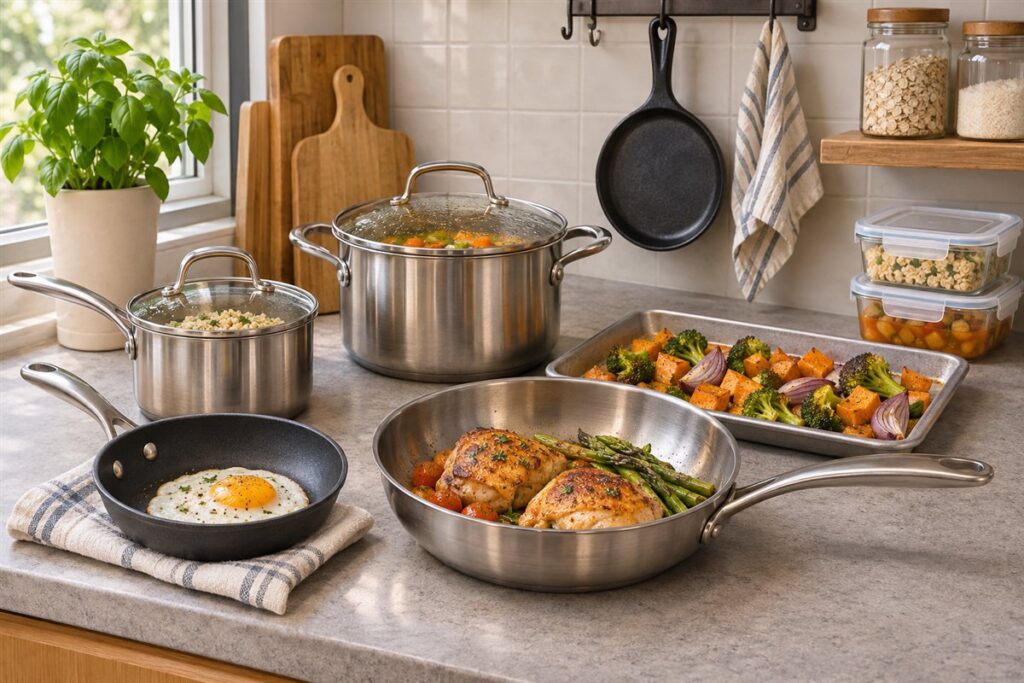
A kitchen for one person needs fewer pots and pans than most sets include. A small skillet, a small saucepan, a medium pot and one baking sheet handle the majority of meals. Smaller sizes also heat faster and are easier to wash and store.
The Core Set
Think about what you cook weekly and choose cookware for that, not for a big dinner you may never host. Four to six pieces often cover it.
- Small skillet: eggs, a single piece of fish, a handful of vegetables.
- Medium skillet: a stir-fry or a couple of chicken thighs.
- Small saucepan with lid: grains, sauces, reheating soup.
- Medium pot with lid: pasta, a pot of soup for leftovers.
- Rimmed baking sheet: roasting vegetables and reheating.
Sizing for Single Servings
Large pans spread small amounts of food too thin, which can scorch oil and dry out food. A pan that suits the amount of food browns better. As a loose rule, a food portion should cover most of the pan base without crowding.
| Task | Handy size |
|---|---|
| One or two eggs | Small skillet |
| One portion of rice or oats | Small saucepan |
| Soup for a few meals | Medium pot |
| Sheet-pan dinner | Quarter or half sheet pan |
Space and Storage Tips
- Choose pieces with removable or folding handles if cabinet space is tight.
- Use lids that fit more than one pan.
- Stack pans with a cloth or pan protector between them to avoid scratches.
- Hang the most-used pan within reach to save drawer space.
- Keep only what you use at least once a month.
Cooking in Batches
Single cooks often make extra and eat leftovers. A pot with a tight lid and a few food storage containers make that simple. Cool leftovers promptly and follow food-safety guidance for storing and reheating.
When to Add a Piece
Resist buying for an imagined future. Instead, notice what you reach for and what frustrates you. If you keep crowding a pan, move up a size. If you boil water for pasta every week, a larger pot is worth the shelf space. If you bake often, add a second sheet pan so one can cool while another goes in the oven.
A small kitchen also benefits from multi-use pieces. A skillet with a lid can braise, steam and fry, and a saucepan can handle sauces, grains and reheating.
Choosing Materials for Light Everyday Use
When you cook for one, the cookware you pick is used often but in small amounts, so ease of handling counts as much as raw performance. A small skillet in stainless steel with a heat-spreading base is a good all-rounder: it browns well, handles acidic sauces and can go in the oven if the handle allows. It needs a bit of technique with eggs and delicate fish, but it lasts for years and tolerates metal tools.
A nonstick skillet is a sensible second pan for eggs, pancakes and fish. Because these coatings wear, many solo cooks treat a nonstick pan as a replaceable item and use gentle tools and moderate heat, following the maker’s care guide. Cast iron suits those who want one very durable pan and do not mind the weight, but a large cast iron skillet can be heavy for daily use. Smaller cast iron pans are easier to handle and heat quickly enough for one portion.
- Stainless steel: durable, versatile and good for searing.
- Nonstick: easy release for eggs, simple cleanup, shorter lifespan.
- Cast iron: long-lived, needs drying and occasional oiling.
- Enameled iron: good for small braises, but heavy.
Lightweight pans are easier to lift one-handed, which matters when you are juggling a spoon and a plate. Avoid pans so thin that they warp or scorch small portions of food, since that wastes ingredients and time.
Cooking Methods That Suit Small Portions
Cooking small amounts is a little different from cooking for a crowd. Food heats faster in a small pan, so reduce the heat slightly and watch more closely. A single chicken thigh or a handful of vegetables can brown and burn in the time it takes to look away. Use a pan that fits the food so the surface is covered, and add just enough oil to coat the base.
Some methods work especially well for one. Sheet-pan meals let you roast a protein and vegetables together with little cleanup. One-pot dishes, such as rice with vegetables or a simple stew, cook in a single pan and give leftovers for later. A covered skillet can steam, simmer and brown in a single pan, which saves washing up. A small saucepan can poach an egg or heat soup without dirtying a big pot.
Think about cooking in stages. Start grains, then prepare toppings while they cook. Cook a larger amount of a basic like rice or roasted vegetables, then turn it into several different meals through the week, keeping food safety guidance in mind for storage. If you are often tired in the evening, make meals that need little attention, and keep your best pan within easy reach so that starting dinner is as simple as possible.
Experiment with sizes. If you find that dinner for one in a medium skillet looks lost in the pan, try the next size down.
Small Appliances Versus Cookware
Solo cooks sometimes wonder whether a small appliance can replace a pan. A toaster oven can bake, toast and reheat without heating a full oven, and a small rice cooker or multi-cooker can handle grains and one-pot meals. These can be useful if your kitchen is small, but they take counter space and have their own cleaning needs. Pans are more flexible, and they work on any stove.
The decision comes down to what you actually cook. If you eat rice several times a week, a simple rice cooker may save time and attention. If you cook mostly on the stove, extra appliances may just clutter the counter. Think about your storage first, then your cooking habits. The best test is whether you can picture using the item at least weekly.
- Check that appliance baking pans fit your cookware.
- Look at the footprint before buying.
- Read the care guide for removable parts.
- Consider whether a pot with a lid already does the job.
Cookware that doubles as storage also helps. A pot with a lid can go into the refrigerator with leftovers, if the maker allows it, while glass or other containers made for the oven can go from fridge to oven. Always check the instructions about sudden temperature changes before using any container this way.
Budget Tiers for a Compact Set
A solo kitchen is a good place to build slowly. At the basic tier, you might buy an inexpensive small skillet, a saucepan and a baking sheet. These cook well enough for many dishes, but thin metal can warp or scorch, so expect to treat them with care and replace them sooner. This tier is sensible if you are moving often, unsure of your habits or learning to cook.
At a middle tier, you buy fewer pieces with sturdier construction: a heavier skillet, a saucepan with a proper lid and a thicker baking sheet. This is often the best value for solo cooks, since each piece gets frequent use. Look for firmly attached handles, flat bases and clear care instructions.
At a higher tier, you might invest in one or two long-lasting pieces, such as a well-made skillet or a small Dutch oven, and add others only when needed. A premium price does not guarantee the best fit for your stove or cooking style, so read the listing for materials, oven limits and compatibility.
- Spend more on the pan you use for most meals.
- Spend less on pieces you use occasionally.
- Buy secondhand only if the surface and base are in good shape.
- Do not buy a set only because it looks like a bargain.
Whatever tier you choose, check warranty and return terms, and keep the care instructions so you can look after each piece properly.
Keeping a Small Kitchen Organized and Clean
With fewer pieces, washing up should be quick, but a small kitchen can still get messy. Wash pans soon after use, when food is easier to remove, and avoid letting dishes pile up. A soak in warm soapy water loosens most residue, and a non-scratch pad is gentle on coatings. Check the care guide for each pan, since some materials should not go in the dishwasher.
Storage can make a cramped kitchen workable. Vertical racks, over-the-door hooks and magnetic strips free up cabinet space, and pot lids can be kept on a small organizer inside a cabinet door. Keep the pans you use daily within arm’s reach and move rarely used items to a higher shelf or a different room.
- Cook, then clean one pan while the next step simmers.
- Line sheet pans with parchment or foil if the maker allows it.
- Replace worn sponges and towels regularly.
- Dry cast iron and carbon steel right away.
Review your collection every few months. If a piece has not been used, ask yourself why. Perhaps it is the wrong size, or perhaps it was bought for a recipe you no longer cook. Passing it on frees space for what you do use. When a pan wobbles, the coating peels or a handle loosens, it is time to replace it.
FAQ
Do I need a full cookware set?
Usually not. Sets often include sizes you will not use. Buying a few pieces one at a time lets you match what you really cook.
Is one good pan better than several basic ones?
One well-made skillet is a good foundation, but a saucepan and a pot add flexibility for liquids and larger batches.
What is the best size skillet for one person?
A small skillet suits one or two eggs or a single portion, while a medium one handles a stir-fry or a couple of chicken thighs. Sizes vary by maker, so check the base diameter in the listing.
Should a single cook buy nonstick or stainless?
Many keep one of each: nonstick for eggs and delicate foods, and stainless steel for searing and pan sauces. Which you start with depends on what you cook most.
How do I avoid wasting food when cooking for one?
Plan a few flexible meals, buy modest quantities and use leftovers in new dishes. Store food promptly following food-safety guidance.
Is a Dutch oven too big for one person?
A small one can be handy for soups, braises and bread, and it makes leftovers. Larger ones are heavy and may be more than you need.
Can I cook everything in one pan?
Many meals work in one skillet or pot, especially with a lid. Having a second small pan helps when two things must cook at once.
What is a good way to store lids in a tight space?
A small rack or an over-the-door organizer keeps them upright and easy to reach. A universal lid that fits several pans can also save room.
How long should a solo cook expect cookware to last?
It depends on the material, the quality and how it is cared for. Replace pans when bases warp, coatings flake or handles loosen, instead of going by a fixed number of years.
The Short Version
For one person, aim for a compact set: small and medium skillets, a small saucepan, a medium pot and a baking sheet. Size the pan to the food, and keep storage simple.