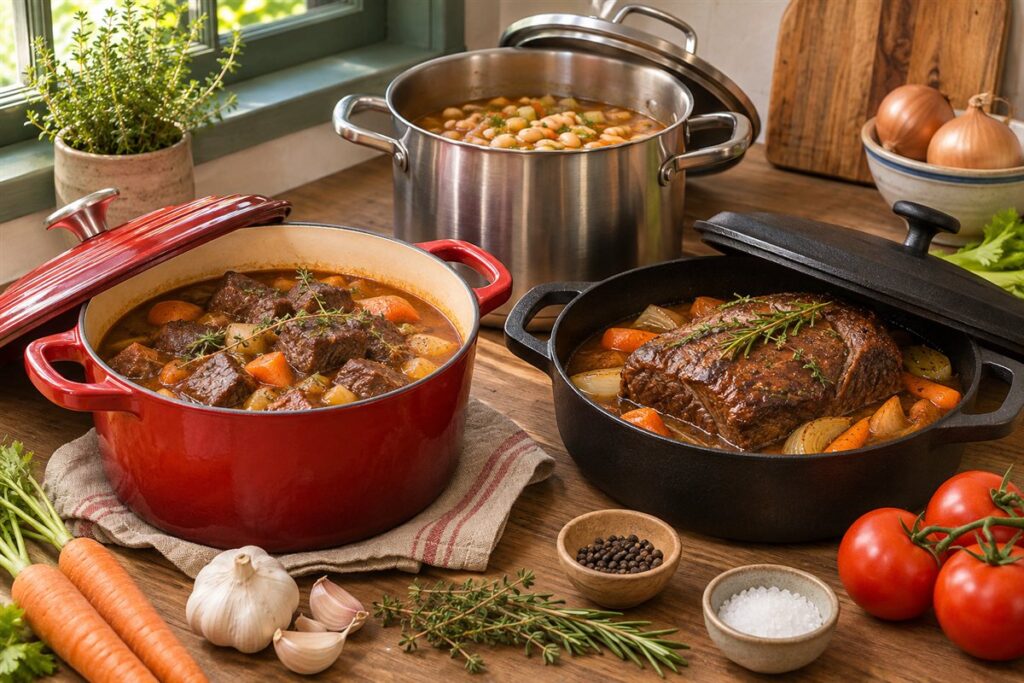
Slow weekend cooking works best in heavy, lidded cookware that holds a steady low heat. A Dutch oven, a deep braiser and a thick-bottomed stockpot cover most long recipes, from stews and ragu to pot roasts. The goal is gentle heat, a tight lid and patience.
What Makes a Pot Good for Slow Cooking
Long cooking asks for even, gentle heat. Thick walls and a heavy base resist scorching, while a tight lid keeps moisture inside so food stays tender. Cast iron, enameled cast iron and heavy-bottomed stainless steel are common choices.
- Weight: heavier pots hold temperature better.
- Lid fit: a snug lid keeps liquid from boiling away too fast.
- Depth: enough room for liquid and a good amount of food.
- Handles: sturdy, oven-friendly grips for moving a full pot.
Matching Pot to Dish
| Dish | Cookware | Why |
|---|---|---|
| Beef or lamb stew | Dutch oven | Browns on the stove, finishes in the oven |
| Tomato sauce or ragu | Heavy stockpot or braiser | Wide surface and steady simmer |
| Pot roast | Lidded roasting pot | Holds moisture around the meat |
| Beans and stock | Tall stockpot | Room for lots of liquid |
A Simple Slow-Cooking Rhythm
- Brown the meat or vegetables in the pot over medium-high heat, working in batches if needed.
- Add liquid and loosen the browned bits from the pot base.
- Bring to a gentle bubble, cover and lower the heat or move the pot into a low oven.
- Check now and then, stirring and adding liquid if the pot looks dry.
- Cook until the food is tender and meets food-safety guidance for doneness, using a thermometer for meat.
Times vary widely with the size of the cut and your recipe, so use your recipe as a guide rather than a fixed rule.
Care After a Long Cook
Let the pot cool before washing to avoid warping or thermal shock. Soak stuck bits in warm water, then clean following the maker’s care guide. Dry cast iron right away.
Slow cooking suits tougher, well-worked cuts because long, gentle heat softens connective tissue. Plan the day around the pot: prep vegetables while the meat browns, and let the finished dish rest for a short while so the juices settle before serving.
Cast Iron, Enameled Iron and Stainless Compared for Long Cooks
Three materials dominate slow cooking, and each suits a slightly different cook. Bare cast iron holds heat extremely well and develops a seasoned surface over time, but acidic ingredients such as tomatoes, wine or vinegar can react with the seasoning during long simmers, giving a metallic taste or dulling the finish. It is better for roasts and dishes with less acid, or for cooks who accept some upkeep.
Enameled cast iron has a glassy coating that resists acid and does not need seasoning. This makes it the usual pick for ragu, stews with wine and braises. The enamel can chip if knocked or overheated, and metal tools may scratch it, so follow the maker’s care guide. It is heavy, so the pot you can comfortably lift matters.
Heavy stainless steel with a thick base is lighter than iron and tolerates acid and metal utensils. It does not hold heat quite as long, so the pot may need a slightly closer eye on the burner. It is a good choice for stocks, beans and large batches where weight would be a problem.
- Pick enameled iron for acidic, saucy dishes.
- Pick bare iron for dry roasts and baked dishes if you enjoy the care.
- Pick stainless for big pots where weight is an issue.
Whichever you choose, confirm the oven limit, since lids, knobs and handles may have lower heat limits than the pot body.
Stovetop, Oven or Slow Cooker: Choosing the Heat Source
Where the pot sits decides how the dish cooks. On the stovetop, heat comes from the bottom, so the base of the pot takes most of the energy. That works for simmering stocks and sauces, but thick mixtures can catch and scorch on the bottom, so they need occasional stirring and low heat. Stovetop cooking also lets you adjust quickly and taste as you go.
In the oven, heat surrounds the pot more evenly. This is gentler for stews, braises and roasts, and it reduces the need to stir or watch. The lid keeps moisture in, and the pot’s heavy walls hold temperature, so the oven setting does not need to be high. Check the maker’s guide for oven-safe limits before using any pot, and remember that the handle and knob may be rated lower than the body.
An electric slow cooker is a separate appliance that applies low, steady heat with minimal supervision, which suits weekday starts or when you leave the house. It does not brown food, so many recipes still start in a skillet. Compared with a heavy pot, it is less flexible, but it is convenient and often safe for unattended cooking according to its instructions.
- Stovetop: control and quick adjustments.
- Oven: even, hands-off heat.
- Slow cooker: convenience for long, unattended cooking.
Choose according to your schedule and whether you want to be present while the food cooks.
Building Flavor Before the Long Simmer
Slow cooking can make flavors blend, but it works best when the pot starts with good building blocks. Browning is the most important. Meat and vegetables that develop a deep color in a hot pan give the finished dish more depth. Pat meat dry, avoid crowding and brown in batches so the pot stays hot. Let a crust form before turning, and the meat will release naturally.
Next, cook aromatics such as onions, carrots, celery or garlic in the fat left in the pot, scraping up the browned bits from the bottom. Those bits are called fond and add a lot of flavor when loosened with a little liquid. Tomato paste can be cooked for a minute or two to deepen its flavor before liquid goes in.
Seasoning needs care over long cooking. Add salt in stages and taste at the end, since liquid reduces and flavors concentrate. Delicate herbs and fresh citrus are best added near the end, while woody herbs can go in early. Dried spices often benefit from a short toasting in the pot.
- Use enough liquid to cover the bottom and part of the food, not drown it.
- Skim excess fat from the surface before serving.
- Finish with a splash of acid or fresh herbs to brighten a rich dish.
These steps take only a few minutes but change the result more than the length of the simmer.
Sizing and Capacity for Long Recipes
A pot that is too small leads to spills and crowding, while one that is too large lets liquid evaporate and food dry out. A reasonable rule is to fill the pot between half and three quarters full for stews and sauces, leaving room for bubbling and stirring. For roasts and braises, the meat should fit with a little space around it, and the lid should close tightly.
Capacity labels differ between makers, so check the listing for whether the stated volume is measured to the brim. Many weekend cooks like to make large batches and freeze portions, so a bigger pot can be useful, provided you can lift it safely when full and it fits in your oven and sink.
- Check the interior diameter against the size of the roast or the number of pieces.
- Measure oven rack height if the pot has a tall lid or knob.
- Consider a braiser, which is wide and shallow, for dishes with a lot of surface area.
- Choose a deeper pot for beans, stocks and soups.
Shape matters, too. A wide pot gives more surface for browning and reducing, while a tall one holds more liquid with less evaporation. Match the shape to the dish and you will need fewer adjustments while it cooks.
Storing Leftovers and Reheating Slow-Cooked Food
Slow-cooked dishes often taste better the next day, which makes them excellent for planning ahead. Large pots of hot food cool slowly, so food-safety guidance usually advises dividing them into shallow containers and refrigerating promptly instead of leaving the pot on the stove to cool. Check your local food-safety authority for recommended time limits on cooling, refrigerating and freezing.
Label containers with the date, and leave space at the top if freezing, since liquid expands. Flat bags or shallow containers freeze and thaw faster than deep ones. When reheating, bring the food to a steady simmer or heat it until it is hot throughout, stirring so heat reaches the center. A splash of water or stock can loosen a sauce that has thickened in the refrigerator.
Clean the pot as soon as it has cooled enough to handle. Soaking helps loosen stuck-on bits, and a gentle simmer with water can free scorched areas. Follow the maker’s advice about cleaning tools, especially for enamel and nonstick surfaces, and dry cast iron promptly.
- Do not put a very hot pot into the refrigerator, since it can warm other food.
- Do not reheat large volumes repeatedly.
- Skim solidified fat from the surface if you prefer a lighter dish.
Planning for leftovers turns one weekend session into several easy meals during the week.
FAQ
Can I leave the stove unattended during slow cooking?
Stay in the house, check often and follow the stove maker’s safety guidance. Oven braising is easier to leave for short stretches than a stovetop simmer.
Do I need an electric slow cooker?
No. A heavy pot with a lid works well on the stove or in the oven.
What oven temperature is best for slow cooking?
Recipes for braises and stews often use a low to moderate setting, but the right figure depends on the recipe and the pot. Follow the recipe and stay within the pot maker's oven limits.
Can I use a regular pot instead of a Dutch oven?
Yes, if it has a heavy base, a snug lid and oven-safe handles when needed. Thin pots tend to scorch and lose moisture faster.
Why is my slow-cooked meat still tough?
It may need more time, or the heat may be too high. Tough cuts need long, gentle cooking, and checking with a fork or thermometer tells you more than the clock.
Does a tight lid really matter?
Yes. A snug lid keeps moisture in so the liquid does not evaporate too fast. If the lid is loose, you can add a sheet of parchment under it as a seal, if the recipe allows it.
Should I stir a stew while it cooks?
Occasionally. Stirring can prevent sticking on the stovetop, while oven braises often need little attention. Avoid lifting the lid more than necessary.
Can I freeze slow-cooked dishes?
Many freeze well, particularly stews, sauces and soups. Cool promptly, pack in suitable containers and follow food-safety guidance on storage times.
Is it safe to leave the oven on while I am out?
Safety advice differs by oven and household. Check your appliance manual, and consider a slow cooker designed for unattended use if you plan to leave the house.
The Short Version
Choose a heavy, tight-lidded pot and keep the heat low and steady. Brown first, then simmer gently until tender. Use a thermometer and food-safety guidance for doneness, and follow the pot maker’s care advice.