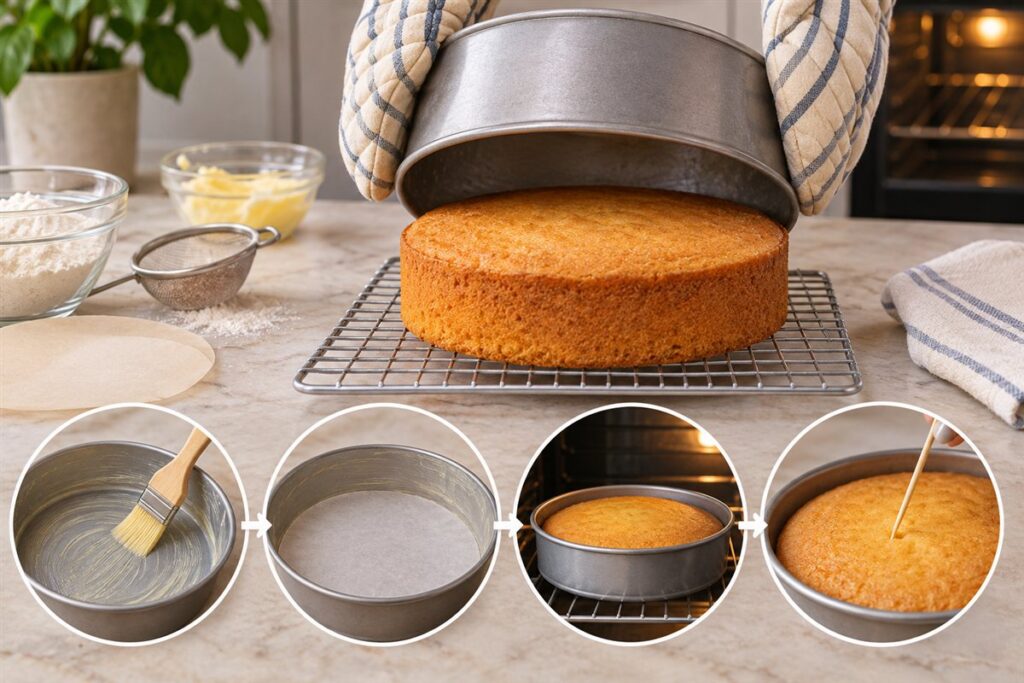
A cake releases cleanly when the pan is greased, lined at the bottom, baked until set and left to cool for a short time before turning out. Skipping any of these steps is how cakes tear or stay behind in the pan. The process takes only a few extra minutes.
Prepare the Pan
Choose the right size pan for the recipe, since a pan that is too large gives a thin, dry cake and one that is too small can overflow. Make sure the pan is clean and free of dried-on residue.
- Brush the sides and base with soft butter or spread a thin layer of shortening, covering corners and seams.
- Trace the pan base on parchment and cut a round to fit.
- Press the parchment into the bottom.
- Dust the sides lightly with flour or cocoa powder, then tap out the extra.
Some recipes use a spray made for baking instead. Either works if you cover every surface.
Bake and Check for Doneness
Heat the oven fully before the pan goes in, and place the pan on the center rack. Open the door as little as possible during the first half of baking. The cake is usually ready when the top springs back lightly and a thin skewer or cake tester inserted near the center comes out clean or with a few dry crumbs. Times depend on the recipe, pan size and oven, so use your recipe as the guide.
Cool and Release
- Set the pan on a wire rack and cool for about ten minutes, or the time in the recipe.
- Run a thin, flat knife or small offset spatula around the edge, pressing against the pan and not the cake.
- Place a rack or plate on top, hold both firmly with oven mitts and flip.
- Lift the pan away slowly. If it resists, wait a moment and tap the base.
- Peel off the parchment and let the cake cool completely before frosting.
Pan Type Notes
| Pan | Release tip |
|---|---|
| Light metal round | Grease, line and flour for dependable release |
| Nonstick pan | Still grease lightly, and follow the maker’s guide |
| Springform | Grease the base and sides, then loosen the edge before opening |
| Bundt or fluted pan | Grease every ridge with a brush and dust with flour |
Layer cakes benefit from the same routine in every pan. Level the batter with a spatula so the layers bake to the same height, and cool them fully before stacking. If a layer domes, trim it flat with a long knife.
FAQ
What if the cake sticks anyway?
Return the pan to a warm spot for a minute, then try loosening the edge again. Patch any cracks with frosting.
Can I turn it out right away?
Not usually. A hot cake is fragile, so a short rest helps it hold together.
The Short Version
Grease, line and dust the pan, bake until set, cool briefly and loosen the edge before flipping. Use mitts for hot pans and follow the pan maker’s care advice.