A coffee bean vault is a storage container built to protect beans from air, light and moisture. Many use a one-way valve or a vacuum mechanism, and many use a heavy, opaque body. The idea is to keep your beans tasting fresh for longer between roast date and brew.
The six vaults below range from a purpose-built coffee vault to general vacuum storage that works for beans. We have not used these ourselves, and we have not tested them. Sizes, materials and mechanism details vary, so confirm them on the current listing before you buy, and read the maker’s advice on how to use the lid.
As an Amazon Associate we earn from qualifying purchases. Links below are affiliate links, and they do not change the product information we give.
What to Look For
| Feature | Why it matters |
|---|---|
| Mechanism | Vacuum pumps pull air out; valves release gas but do not stop air entering |
| Body | Opaque stainless or ceramic blocks light |
| Capacity | Match the size to a standard bag |
| Cleaning | Smooth interiors are easier to wipe |
In this guide
Specs at a Glance
| Vault | Material | Size | Notes |
|---|---|---|---|
| Friis Coffee Vault | Stainless steel with a clear lid | Several sizes | Vacuum-style lid |
| Coffeevac | Stainless steel body, vacuum valve | Several sizes | Hand vacuum |
| Zwilling Fresh and Save | Glass with plastic lid | Several sizes | Works with a vacuum pump |
| Kilner Vacuum | Glass with plastic lid | Several sizes | Hand pump |
| Hario Canister | Glass or ceramic with silicone seal | Several sizes | Japanese coffee gear maker |
| Bodum Bistro | Glass with a silicone seal | Several sizes | Airtight lid |
The 6 Best Coffee Bean Vaults
Top pickBest for cooks who want a real vault
1. Friis Coffee Vault
A stainless steel canister with a vacuum-style lid and a date dial in some versions. It is one of the best-known purpose-built coffee vaults.
Suits: cooks who want a real vault. Strengths: a purpose-built design. Weaknesses: upkeep of the seal. Skip it if you want a plain jar.
View Friis Coffee Vault on Amazon

Best for air-sensitive storage
2. Coffeevac Vacuum Coffee Container
A stainless steel canister with a valve and a hand pump to draw air out. Confirm the pump details on the listing.
Suits: air-sensitive storage. Strengths: a vacuum method. Weaknesses: extra step to pump. Skip it if you want a one-step lid.

Best for people already using the system
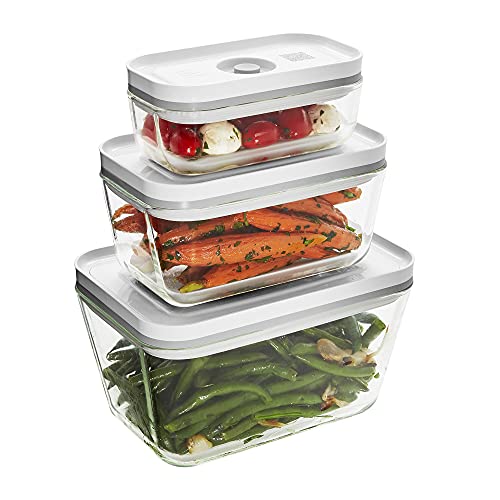
3. Zwilling Fresh and Save Vacuum Container
A glass vacuum container that works with an electric pump. It is a general food storage system that can hold beans. Glass lets in light, so store it in a cupboard.
Suits: people already using the system. Strengths: a flexible food system. Weaknesses: glass lets in light. Skip it if you want an opaque vault.


Best for pantry jars
4. Kilner Vacuum Storage Jar
A glass jar with a vacuum lid and a hand pump. It is a food storage jar that can work for beans. Keep it in a dark place.
Suits: pantry jars. Strengths: a classic jar look. Weaknesses: glass lets in light. Skip it if you want an opaque vault.


Best for pour-over fans
5. Hario Coffee Canister
A canister from a Japanese coffee gear maker with a silicone seal. Check the listing for the exact model and material.
Suits: pour-over fans. Strengths: a Hario look and quality. Weaknesses: limited air removal. Skip it if you want a vacuum.

Best for countertop display
6. Bodum Bistro Coffee Storage Jar
An airtight glass jar from a coffee equipment brand with a simple lid. It is a decorative choice and not a vacuum system.
Suits: countertop display. Strengths: a tidy look. Weaknesses: glass lets in light. Skip it if you want vacuum storage.
View Bodum Bistro Coffee Storage Jar on Amazon
Care and Setup
- Wipe the inside with a dry cloth and let it dry fully.
- Avoid soaking vacuum lids.
- Keep the vault out of direct sun.
- Replace seals if they harden.
Mistakes to Avoid
- Using a clear jar in sunlight.
- Mixing old and fresh beans.
- Not drying after washing.
- Storing too many weeks of beans.
Vault Mechanisms: Pump, Valve and Seal
The word vault covers several different designs, and the mechanism decides what the container really does. A hand pump or built-in vacuum lid draws air out of the container. That lowers the oxygen around the beans, which is the aim of vacuum storage. A one-way valve lets gas escape but does not prevent air coming in, so it mostly helps with very fresh beans that are still releasing carbon dioxide. A plain gasket lid just keeps new air from entering.
Each has a cost. Pump-based vaults add a step each time you open and close the container, and the pump can wear out. Valve designs are simple but give less protection. Gasket jars are easy to use but leave the existing air inside.
- Choose a pump if you want to reduce oxygen and do not mind the extra step.
- Choose a valve if you buy beans soon after roasting.
- Choose a gasket jar if you want an easy daily routine and keep the container well filled.
Read the maker’s instructions on how many pumps are needed or how to read any indicator. A vacuum that is not set correctly gives little benefit, and some systems warn against over-pumping.
Read the manual for the exact method, because pumping habits differ. Some designs want a few strokes, others signal when they are done, and doing it wrong simply wastes the effort.
Body Materials and Light Protection
A vault is meant to protect beans from light, so the body matters. Stainless steel and ceramic block light completely and are tough in daily use. Steel resists breakage, while ceramic looks attractive but can chip or crack if dropped. Glass lets you see how many beans are left, but it lets in light, so it belongs in a dark cupboard rather than on a bright counter.
Plastic parts often form the lid or the inner seal. That is fine for lightweight, easy handling, but plastic can pick up odors from oily beans over time. Look at how much of the container is plastic and whether those parts are replaceable.
- A smooth, seamless interior is easier to wipe and has fewer spots for oils to collect.
- Check whether a clear lid lets light in even if the body is opaque, as the lid on some designs is see-through.
- Consider the weight when full, since steel and ceramic add heft.
If you want to monitor the bean level, choose a vault with a small window or accept that you will open it occasionally. Peeking through a clear panel lets in light, so keep it in a shaded spot.
If you are choosing between two similar vaults, check which has parts you can replace. A removable lid, ring or valve gives the vault a longer working life than a sealed unit.
How to Use a Vacuum Vault Correctly
A vault only helps if you use it as designed. Start with a clean, dry container. Fill it with whole beans, leaving the headspace the maker recommends, then close the lid and operate the pump or valve as instructed. Some designs have an indicator that shows when a vacuum has been reached. Others rely on feel or sound, so read the manual.
One point surprises many buyers: freshly roasted beans give off gas for days, and in a fully sealed vacuum container that gas can build up or push against the lid. If your beans are very fresh, a vault with a valve, or leaving the lid slightly loosened for a short time, may suit better. Check the maker’s advice for your type.
- Do not overfill, and avoid packing beans so tightly that they press on the lid.
- Open the vault only as long as needed to scoop beans, then reseal it promptly.
- Release the vacuum slowly according to the maker’s directions, so beans are not disturbed.
Whenever you open the vault, you let air in, so a vault used several times a day loses some of its advantage. For that pattern, a smaller daily container filled from a larger vault is an option.
Choosing the Right Capacity and Shape
Capacity affects how much air is in the container with your beans. If the vault is far larger than your bag, the extra space holds more oxygen. Aim for a size that your usual purchase nearly fills, and if you buy different bag sizes, think about which one you buy most often. Makers list capacity in ounces, grams or liters, and these can differ from the real bean capacity, so treat the figure as a guide.
Shape counts too. Tall, narrow vaults are easy to fit on a shelf but can be awkward to scoop from. Wide, short ones give easy access but take more space. A wide mouth lets you pour beans from the bag without spilling, and a narrow mouth gives a more controlled pour into a grinder.
- Measure the cupboard height before buying a tall model.
- Check that your scoop, or the supplied one, fits the opening.
- Look at whether the vault stacks or has a flat top so you can use the shelf above.
If you drink coffee in small amounts, resist a very large vault just because it holds a bulk bag. Splitting the bag into two smaller containers keeps one sealed while you use the other.
Maintenance, Seals and When to Replace
A vault has seals, valves and sometimes a pump, and each one wears. Check the silicone gasket regularly. If it is stiff, cracked, flattened or smells of old coffee, replace it, because a failed seal gives you an expensive plain container. Wipe valves and pump parts gently as the maker advises, and avoid soaking pump lids in water.
Coffee oils collect in corners, and old oils turn rancid. Empty the vault completely between batches, wash the body by hand if recommended, and dry everything fully. Leave the lid off for a short time afterward so moisture escapes. If the vault loses its vacuum faster than before, check the seal ring and the closure first.
- Look for replacement parts from the maker before you commit, since a vault with spares lasts longer.
- Replace a vault with a dented rim, loose lid or damaged valve that you cannot repair.
- Keep the vault empty and open if you will not use it for a while.
If beans still taste stale even in a well-kept vault, the cause is usually old beans or a long gap between roasting and use, not the container. Check the roast date next time.
When a vault seems to be performing poorly, check the simple things first: a damp interior, a crumb on the seal, a lid that is not fully seated, or beans that were old to begin with.
A Checklist for Choosing a Coffee Bean Vault
A storage container looks like a minor purchase, yet the differences between models show up every morning. Before you commit, ask yourself these questions and check each answer against the maker’s description.
- How much coffee do you keep on hand? Match the capacity to the bags you buy, whether a small bag of whole beans or a larger bulk bag.
- Does the container have a one-way valve, a pump or a plain lid? Each design handles air differently, and the maker explains how it should be used.
- Is the body opaque or tinted? Light is something many coffee drinkers prefer to keep away from their beans.
- Is the opening wide enough for a scoop and for pouring from a bag?
- Where will it sit? Measure the shelf or counter space and the clearance beneath cabinets.
- Can the lid and seal be removed and washed?
Whole Beans, Ground Coffee and Pods
People store different forms of coffee, and the container needs to suit what you keep. The table gives a general overview, and the maker will indicate which forms their vault is meant for.
| Form | Storage notes | Container fit |
|---|---|---|
| Whole beans | Many drinkers prefer to grind just before brewing | Most vaults are designed for beans |
| Ground coffee | Has more surface exposed to air, so it is best used promptly | A smaller container suits smaller amounts |
| Pods or capsules | Usually sealed already | A separate organizer may work better |
Where to Keep Your Vault in a Real Kitchen
Placement is half the battle. Heat, steam and bright light are the usual enemies of coffee, so the spot above the stove or beside the kettle is not ideal. A cool, dry cupboard or a shaded corner of the counter is a more sensible choice. Keep the container away from strongly scented items, since coffee can absorb odors, and avoid a spot where condensation might form.
If you buy more than you can use quickly, consider dividing it into a small working container for daily use and storing the rest in its original bag or another sealed container, following the roaster’s guidance. Opening a big container repeatedly exposes all the beans to air, while a small one keeps the remainder undisturbed.
A Short Glossary for Storage Containers
- One-way valve: lets gas escape from fresh beans without letting air in.
- Vacuum pump: removes some of the air from the container, according to the maker.
- Gasket: the rubber ring that creates the seal under the lid.
- Roast date: the date the beans were roasted, often printed on the bag.
- Degassing: the release of carbon dioxide from freshly roasted beans.
When to Follow the Maker’s Guidance
The manual or care sheet will tell you whether the lid is washable, how to use a pump or valve and which cleaners are safe. Avoid soaking parts that the maker marks as hand-wipe only. If a seal cracks or the lid no longer closes tightly, contact the maker about a replacement part.
Filling and Using the Vault Day to Day
A good routine takes only a few seconds. Fill the vault with the amount of coffee you expect to use in a reasonable period, wipe the rim so grounds or oils do not interfere with the seal, and close the lid firmly. If your vault has a pump or valve, follow the maker’s directions for how many pumps or presses are suitable. Avoid overfilling, because beans pressed against the lid can block the seal.
Keep a scoop nearby, and use a clean, dry one each time. Wet scoops introduce moisture, which coffee does not appreciate. When you refill the vault, empty it completely, wipe it out and let it dry before adding new beans, so old oils do not mix with fresh coffee.
- Check the roast date on every new bag.
- Write the fill date on a small label on the vault.
- Keep only what you will use soon in the vault, and store the rest sealed in the bag.
- Close the lid promptly after each use.
Cleaning Oils From Metal, Glass and Plastic Bodies
Coffee oils collect on the walls of a container and, over time, they can turn rancid and flavor new batches. Wash the vault regularly with warm soapy water, rinse and dry it fully. Use a soft brush for corners and the grooves around the lid. Different bodies call for different handling: glass and steel are usually easy to wash, plastic may hold odors, and some designs have parts that should only be wiped. The maker’s care card describes what each part can tolerate.
Dry thoroughly before closing, and let the vault air out for a short time. If an odor lingers, a longer airing in a dry place usually helps. If the seal is cracked, stiff or sticky, replace it, since a leaky seal defeats the container’s purpose.
How Roast Level and Bean Age Change Your Storage Needs
Not every bag of beans asks the same thing from a vault. Light roasts, dark roasts and beans at different ages release gas and lose aroma at different rates, and a storage routine that suits one can quietly work against another. Understanding those differences helps you get the most from whichever vault in this guide you choose, because the container is only half of the freshness equation — the other half is how you match it to the beans inside.
Dark-roasted beans are oilier on the surface. Those oils are where much of the flavour lives, but they also oxidise quickly once they meet air, which is why dark roasts can taste flat sooner than expected even in a good container. A vacuum vault helps most here, because removing air slows that oxidation directly. The trade-off is housekeeping: oily beans leave a film inside the vault, and that film turns stale and can taint the next bag. If you drink mostly dark roasts, plan on wiping the interior and lid gasket more often, and consider dedicating one vault to dark roasts so the residue never mixes with a delicate light roast.
Light roasts behave differently. Their flavours are more delicate and more dependent on the aromatic compounds that escape first, so limiting how often the container is opened matters as much as the seal itself. Every opening exchanges the air inside, and with it goes a little of what makes a light roast interesting. A smaller vault that you empty steadily, opened once a day, will usually serve a light roast better than a large vault opened constantly with a big pocket of air above the beans.
Bean age matters too. Freshly roasted beans release carbon dioxide for days, and that gas can push against seals and valves. Most vaults with one-way valves handle this well, but a very fresh bag benefits from a short rest in its original valved bag before moving to the vault, as covered in the FAQ below. At the other end, beans that are already several weeks old will not recover freshness in any container. A vault preserves; it does not restore. Buying quantities you finish within a few weeks will always beat buying in bulk and hoping storage saves the day.
Running a Simple Two-Container Rotation
One of the easiest upgrades to a home coffee routine costs nothing but a little organisation: split your beans between a working supply and a reserve. The reserve stays sealed and unopened in a cool cupboard, while the working supply — a few days’ worth — lives in the vault you open daily. This limits how often the bulk of your beans meet fresh air, and it means the vault’s seal is broken for the smallest practical amount of coffee at any time.
In practice it works like this. When a new bag arrives, transfer roughly a third of it to the vault and reseal the bag tightly, squeezing out excess air before closing it. When the vault runs low, refill it from the bag rather than topping it up with a different coffee. Mixing two roasts or two roast dates in one vault muddies flavour and makes it impossible to judge how fresh anything is. Finish one coffee fully before starting the next in the same container, and give the vault a quick wipe between different beans.
Rotation also solves a quiet problem with large vaults: headspace. A nearly empty large vault holds a lot of air relative to the beans left in it, and pump-style models have to work harder to clear it. Keeping the working supply in a right-sized container and the reserve in its bag keeps headspace low at every stage. If you regularly buy larger bags, two smaller vaults — one in use, one sealed as the reserve — often outperform a single oversized one.
Vault, Original Bag or Freezer: an Honest Comparison
Shoppers often ask whether a vault is genuinely better than simply resealing the bag the beans came in. The honest answer is that it depends on how fast you drink. A quality coffee bag with a one-way valve and a good resealable closure is respectable storage for a week or so. The valve lets roasting gas out without letting air in, and if the bag is finished quickly, a vault adds little. The gap widens with time. Bag seals weaken with repeated opening, the material offers less protection as it creases, and there is no way to remove the air that accumulates inside. Over two to four weeks, a sealed vault — especially a vacuum model — holds aroma noticeably better.
The freezer is the third option and the most misunderstood. Freezing can pause staling for beans you genuinely cannot use for a month or more, but it demands discipline: freeze in single-use, airtight portions, because thawing and refreezing, or opening a cold container in warm kitchen air, invites condensation onto the beans. Moisture is as damaging as oxygen. For everyday drinking, the freezer adds fuss without beating a good vault on the counter. Treat it as long-term storage for a bulk buy you are splitting with a friend, not as a daily routine.
Ground coffee changes the comparison again. Grinding multiplies surface area enormously, so ground coffee stales in days rather than weeks whatever it sits in. A vault slows that decline and is still the best counter option, but the real fix is grinding whole beans as you brew. If you buy pre-ground for convenience, buy smaller amounts more often and keep them in the smallest vault that fits.
Troubleshooting a Vault That Will Not Hold Its Seal
If a pump vault loses its vacuum overnight or a lid that used to sit firm now lifts easily, work through the simple causes before blaming the container. The most common culprit is debris on the sealing surface. A single coffee fragment or a smear of oil on the rim or gasket breaks the seal invisibly. Wipe both surfaces with a dry cloth, check the gasket sits evenly in its groove, and try again. Gaskets also pick up odours and oils over time; a wash in warm water with a little mild detergent, followed by thorough drying, restores many tired seals.
Next, check the valve. On valved lids, a valve clogged with fine coffee dust cannot seat properly. A soft brush or a puff of air usually clears it. On pump models, test the pump on another compatible lid if you have one, or press the lid down firmly while pumping to see whether the seal holds with assistance — if it does, the gasket is the problem rather than the pump. Hairline cracks in plastic lids and chips on glass rims are less common but permanent; inspect the rim against the light if a seal keeps failing after cleaning.
Temperature swings can also mimic a failed seal. A vault filled in a warm kitchen and moved somewhere cold can show a softer vacuum as the air inside contracts, and the reverse can make a lid feel loose. Judge the seal at a stable room temperature. Finally, remember that very fresh beans actively release gas, which will soften a vacuum over the first days no matter how good the seal is. If the vault holds well with older beans but not with a fresh bag, the container is fine — the beans are simply still degassing.
Matching Storage to How You Brew
Different brew methods forgive staleness to different degrees, which should shape how much effort storage deserves in your kitchen. Espresso is the least forgiving. It extracts under pressure in seconds and amplifies both the best and worst in a bean, so espresso drinkers gain the most from a vacuum vault and from grinding fresh. Beans that taste acceptable in a drip pot can taste thin and sour as espresso once they pass their best.
Drip and pour-over sit in the middle. They reveal staleness as a general dullness — the cup is fine but forgettable — rather than an obvious fault. A good airtight vault and sensible buying quantities keep these methods tasting lively. French press and cold brew are the most tolerant. Immersion brewing and long cold steeps smooth out rough edges, so beans a week past their peak still make a satisfying cup. If those are your main methods, a simple, well-sealed canister from this guide may be all you need, and the money saved is better spent on fresher beans.
Moka pot users fall somewhere between drip and espresso: the method is intense enough to expose stale beans but forgiving of small declines. Whatever you brew, the pattern is the same — the more your method exposes the bean, the more a real vacuum earns its place on the counter.
Buying a Vault as a Gift, and Buying a Second One
A coffee vault makes an easy gift for a coffee drinker because it needs no sizing, no power and no learning curve — but a couple of choices make it land better. Match the capacity to how the recipient buys coffee: a vault sized for the standard bag they already purchase will be used daily, while an oversized one becomes cupboard clutter. If they drink one coffee at a time, a single versatile vault is right; if they keep a regular and a decaf, or a house blend and a special bag for weekends, a matched pair is genuinely useful rather than indulgent.
For your own second vault, label discipline matters more than matching looks. Two identical containers side by side invite the classic mistake of pouring fresh beans over old ones. A strip of masking tape with the coffee name and roast date on the base or lid keeps rotation honest and takes seconds. Date labelling is also the simplest freshness habit in this whole guide: when the date on the tape says the beans have been open a while, adjust your expectations — and your buying quantity — rather than blaming the container.
A Realistic Freshness Timeline, Week by Week
It helps to know what a vault can and cannot do across the life of a bag, so expectations stay realistic. In the first week after roasting, beans are still settling. Very fresh coffee can taste sharp and uneven, and many roasters suggest letting beans rest a few days before brewing, particularly for espresso. Storage in this phase is mostly about letting gas escape in a controlled way, which is why valved containers and valved bags exist. Your vault’s job is simply to keep air out while that process finishes.
Weeks two and three are the sweet spot for most coffees. Aromatics are fully developed, the harsh edges of very fresh beans have softened, and a well-sealed vault keeps change so slow that day-to-day cups taste consistent. This is the window a good storage routine is designed to protect, and it is why buying in quantities you finish within roughly this period works so well. If your household drinks a bag in ten days, almost any container in this guide will serve you; the differences between models show up when a bag stretches towards a month.
By week four and beyond, decline becomes a matter of degree rather than debate. Vacuum storage slows it meaningfully — cups stay rounder and sweeter for longer — but no container stops it entirely. You may notice the crema on espresso thinning, pour-overs losing their top notes, and a general drift towards a woody, papery background flavour. None of this makes the coffee undrinkable. It does mean the last cups from a big bag will not match the first, which is a buying-quantity problem first and a storage problem second.
Heat, Humidity and Light in a Working Kitchen
Kitchens are hostile places for coffee storage in three specific ways, and a vault only solves some of them. Heat accelerates every chemical reaction involved in staling, so the warm spot beside the oven or on top of the fridge — where the motor vents warm air — ages beans faster than a cool cupboard does. If your counter space forces a choice, choose the position away from appliances that cycle hot and cold through the day, even if it is slightly less convenient.
Humidity is the quieter enemy. Steam from kettles, dishwashers and pasta pots raises the moisture in the air around your storage spot, and beans absorb moisture readily. A sealed vault blocks this well while it stays closed, but beans measured out with a damp scoop, or a lid left off while the kettle boils beside it, undo that protection a little at a time. Keep the scoop dry, close the lid promptly, and avoid storing the vault directly beside the sink or hob where steam is constant.
Light is the easiest factor to control and the one most shoppers overthink. Ordinary kitchen light through clear glass will not ruin beans overnight, but a clear container in direct sun on a windowsill is genuinely poor storage. If your only good spot catches sun, choose an opaque or tinted model from this guide; if your vault lives in a cupboard or a shaded corner, clear glass is perfectly fine and has the real advantage of showing you exactly how much coffee you have left.
If You Only Drink Coffee at Weekends
Occasional drinkers face the hardest storage problem of all: a bag that takes a month or more to finish. The standard advice — buy less, more often — still applies, but small bags are not always available for the coffees you like, and delivery schedules do not always cooperate. A vacuum vault earns its keep most clearly in exactly this situation, because the beans spend long stretches untouched, and every one of those days with air removed is a day of slowed staling.
Portioning helps even more. Divide a new bag into weekly portions as soon as it arrives. Keep one portion in the vault for the coming weekend and seal the rest in separate airtight portions in a cool cupboard, opening each only when the previous one is finished. This way the majority of the bag is opened once, briefly, rather than being exposed every weekend for a month. Grinding each portion just before brewing, rather than grinding the whole bag at the shop, makes an equally large difference — ground coffee measured in weekends will taste tired long before whole beans do.
Decaf drinkers should follow the same pattern. Decaf beans are not more fragile by nature, but they are often bought in smaller households and finished slowly, which makes them the coffee most likely to sit around. A dedicated smaller vault for decaf, clearly labelled, keeps it in the rotation instead of forgotten at the back of a cupboard.
What to Do With Beans That Have Gone Stale Anyway
Even with good storage, most home drinkers eventually face a bag that has slipped past its best. Before throwing it away, adjust how you brew it. Stale beans respond well to slightly more coffee per cup, a touch finer grind, and water just off the boil — all of which push extraction up and recover some body. Milk-based drinks hide staleness best of all; a flat white or latte made with tired beans is usually perfectly pleasant, while the same beans as a black pour-over will show every flaw.
Cold brew is the other forgiving rescue. A long, cold steep emphasises sweetness and body over delicate aromatics, which are exactly what stale beans have lost. Using an ageing bag for a batch of cold brew concentrate is a far better outcome than forcing it through your morning espresso routine and concluding the vault failed. Beans that have absorbed cupboard odours or taste actively unpleasant are the exception — no brewing adjustment fixes contamination, and those should go.
Finally, treat a stale bag as information. Note how long it took to finish and how it was stored, then adjust the next purchase: a smaller bag, a tighter rotation, or a smaller vault. Storage gear works best as part of that feedback loop, not as a substitute for it.
How the Picks in This Guide Differ in Daily Use
With the storage principles covered, it is worth drawing the six picks together around how they actually behave on a counter, because the best choice depends less on headline claims than on the small repeated actions of your morning. Pump-style vacuum models ask for a few seconds of effort each time you close them, and in return they give the strongest air removal of the group. That trade suits drinkers who open the vault once or twice a day and keep beans for several weeks. If your household opens the container six times a day for different drinks, the repeated pumping becomes a chore some people quietly stop doing — and a vacuum vault left unpumped is just an ordinary canister.
Press-down and twist-seal designs trade a little ultimate air removal for speed. They are the pragmatic middle ground for busy households: the seal is renewed in the same motion as closing the lid, so it actually happens every time. Valve-based freshness systems sit at the other end of the effort scale, passively letting roasting gas out; they ask nothing of you but also remove less of the air that was trapped at filling. None of these approaches is wrong. The right question is which one matches the rhythm of your kitchen, because the mechanism you use consistently beats the superior mechanism you skip.
Body material shapes daily use just as much. Steel hides the contents and blocks all light, which suits bright counters, but you cannot see when you are running low. Glass tells you the level at a glance and washes up beautifully, at the cost of needing a shaded spot. Plastic-bodied vacuum containers tend to be the lightest and the easiest for smaller hands to pump and carry, though they hold odours more readily if you switch between very different coffees. Handles, lid size and how the container pours or scoops sound trivial in a product listing and turn out to be the things you notice every single day. If two picks otherwise tie, choose on those ergonomics — they are what you will live with long after the freshness differences have faded into the background.
A Note on Scoops, Static and Small Annoyances
A few small habits make any vault in this guide work better. Keep the scoop inside the container only if it stays dry and clean; a scoop that lives in the beans picks up oils and carries them back in. Static is a minor nuisance with some plastic bodies in dry weather — beans and chaff cling to the walls — and a quick wipe with a barely damp cloth on the outside, never the inside, settles it. Finally, resist shaking the vault to level the beans. It feels tidy, but it knocks fine particles down through the bed where they end up in the grinder first, and it works air through the beans you just sealed away. A gentle tap on the counter achieves the same levelling with none of the mixing.
Coffee Bean Vault FAQ
What is a coffee vault?
It is a storage container for coffee beans, usually opaque and airtight, sometimes with a vacuum lid.
Do vacuum containers keep beans fresher?
They reduce air, which slows staling, though freshness also depends on the roast date.
Can I store ground coffee in a vault?
Yes, though ground coffee goes stale faster than whole beans.
Should I buy a big vault?
Choose a size close to your bag so there is less air in it. A container that is mostly empty leaves more air around the beans.
Is the seal the same as a vacuum?
No. An airtight seal keeps new air out, while a vacuum lid also pulls air from inside. Both help, and neither replaces buying fresh beans.
Where should I keep the vault?
In a cool, dark cupboard away from the stove, the dishwasher and any sunny window.
Do I need a vacuum vault if I use beans within two weeks?
Probably not. A simple airtight, opaque container is often enough for fast use. A vault helps more when you keep beans for longer or open the container less often.
Can freshly roasted beans go straight into a vault?
Fresh beans release gas for days after roasting. A vault with a valve, or letting the beans rest briefly before sealing, can help. Follow the maker's advice for your design.
Will a vault keep beans fresh forever?
No. It slows staling but beans still lose flavor over time. Plan to finish each batch within a reasonable window after roasting.
Is stainless steel better than glass for a vault?
Steel blocks light and resists breakage, which suits a counter. Glass is fine in a dark cupboard and lets you see the level, but it is more fragile.
How do I know the vacuum is working?
Some designs have an indicator or a change in the lid feel. Check the manual, and if the lid loosens within a day or two, inspect the gasket.
Can I wash a vault in the dishwasher?
Only if the maker says so for that model. Pumps, valves and some finishes are often hand wash only, so check the instructions.
Should I keep a vault in the fridge?
Generally no. Moisture and odors can reach the beans when the container is opened and closed. A cool, dark cupboard is the usual advice.
The Short Version
For a purpose-built vault, the Friis. For a hand-pump option, the Coffeevac. For a system user, the Zwilling Fresh and Save. For a glass jar, the Kilner Vacuum. For pour-over fans, the Hario. For decor, the Bodum Bistro.


