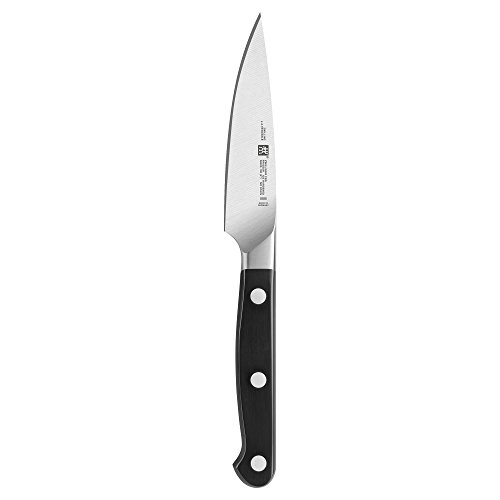
A French chef knife has a long, fairly tall blade with a gentle belly and a pointed tip, designed for rocking and chopping at the board. It is a versatile all-rounder that handles onions, herbs, meat and vegetables with equal ease, and many cooks reach for it first. The tradition runs through the Sabatier name, which is shared by several makers in France, so the exact maker matters when you shop.
The six knives below include carbon steel and stainless blades, forged and stamped builds. We have not used these knives ourselves, so confirm the blade length, the steel type and the maker on the current listing before you buy, because several different companies sell knives under the Sabatier name.
As an Amazon Associate we earn from qualifying purchases. Links below are affiliate links, and they do not change the product information we give.
What to Look For
| Feature | Why it matters |
|---|---|
| Steel | Carbon steel sharpens easily but rusts; stainless is easier to maintain |
| Maker | Check which Sabatier maker produced the knife, since they differ |
| Blade length | Eight inches is a common all-round size; shorter blades suit smaller hands |
| Handle | Wood, plastic or composite handles each have a different feel and care need |
| Construction | Forged blades feel heavier, while stamped ones are lighter and cheaper |
In this guide
Specs at a Glance
| Knife | Steel | Style | Notes |
|---|---|---|---|
| Sabatier Edgekeeper | Stainless | Sheathed | Easy care |
| K Sabatier Au Carbone | Carbon steel | Classic | Needs drying |
| Opinel Les Forges 1890 | Forged | Stainless | French brand |
| Thiers-Issard Sabatier | Carbon steel | Artisan | Thiers |
| Tarrerias-Bonjean Sabatier | Carbon or stainless | Artisan | French maker |
| Sabatier Trompette | Varies | Classic | Curved blade |
The 6 Best French Chef Knives
Top pickBest for home cooks wanting an easy-care knife
1. Sabatier Edgekeeper Chef Knife
A stainless steel chef knife with a built-in sheath that protects the edge, sold under the Sabatier name. Check the listing for the blade length and the steel details.
Suits: home cooks wanting an easy-care knife. Strengths: a protective sleeve and simple upkeep. Weaknesses: the steel is not carbon, so it differs from classic French blades. Skip it if you want a traditional carbon knife.
View Sabatier Edgekeeper on Amazon
Best for traditionalists
2. K Sabatier Au Carbone Chef Knife
A carbon steel chef knife that follows the old French style. Carbon steel takes a keen edge but needs drying right after use to stop rust.
Suits: traditionalists. Strengths: a sharp edge and classic look. Weaknesses: will patina and rust if neglected. Skip it if you want a dishwasher-safe knife.
View K Sabatier Au Carbone on Amazon

Best for those who like a French brand
3. Opinel Les Forges 1890 Chef Knife
A knife from a French brand better known for folding pocket knives, with a forged blade and a handle made with wood. Check the listing for the steel and blade length.
Suits: those who like a French brand. Strengths: a handsome build. Weaknesses: fewer reviews than the big names. Skip it if you want a carbon blade.

Best for knife enthusiasts
4. Thiers-Issard Sabatier Carbon Chef Knife
A knife from a maker in Thiers, France, the country’s historic cutlery region, offered in carbon steel versions. Confirm the listing’s steel type, blade length and handle details.
Suits: knife enthusiasts. Strengths: artisan French cutlery. Weaknesses: limited availability. Skip it if you want a casual kitchen knife.
View Thiers-Issard Sabatier on Amazon
Best for serious home cooks
5. Tarrerias-Bonjean Sabatier Chef Knife
A knife from a French maker that sells Sabatier-branded blades in carbon and stainless versions. Check which steel and size you are buying.
Suits: serious home cooks. Strengths: a French pedigree. Weaknesses: options vary by listing. Skip it if you want a ready-made set.
View Tarrerias-Bonjean Sabatier on Amazon
Best for rocking cuts
6. Sabatier Trompette Chef Knife
A French-style chef knife with a gently curved blade, in a traditional shape that appeals to cooks who want a rocking motion. Confirm the maker and steel on the listing.
Suits: rocking cuts. Strengths: a classic profile. Weaknesses: details differ by seller. Skip it if you prefer a straight-edge Japanese profile.
View Sabatier Trompette on Amazon
Care and Setup
- Dry carbon steel blades immediately after washing.
- Hand wash all knives and avoid the dishwasher.
- Hone often and sharpen when the edge dulls.
- Oil a wooden handle occasionally.
Mistakes to Avoid
- Leaving a carbon knife wet on the counter.
- Assuming every Sabatier knife is made by the same company.
- Cutting on glass or stone boards.
- Buying a long blade that feels awkward.
The French Profile and the Rocking Cut
A French chef knife has a recognizable shape. The blade is long and relatively tall, with a spine that slopes gently to a fine point and an edge that curves upward toward the tip. That curve, often called the belly, lets the knife rock on the board. The tip stays near the surface while the heel rises and falls, which is a quick, rhythmic way to mince herbs, chop onions and shallots and cut through vegetables.
Compared with a flatter profile, the French shape suits cooks who like to rock. Compared with a very curved one, it keeps enough straight edge near the heel for push cuts and slicing. This makes it a good all-rounder, and many cooks use one blade for most tasks.
Blade height matters as well. A taller blade gives your knuckles room above the board and lets you scoop chopped food with the flat of the knife. A very tall blade can feel heavy and awkward for small hands. Thinner blades slice cleanly and glide through food, though they can feel less robust for hard foods such as dense squash.
When you read a listing, look at length, height at the heel and weight, if given. If these are missing, ask the seller or check the maker’s page. Try to match the knife to your cutting style and the size of your hands. If you tend to push and slice, a slightly flatter edge may suit you. If you rock, the classic French curve is a natural fit.
Carbon Steel Versus Stainless in Daily Use
The steel type changes how a knife behaves in your kitchen, so it is worth deciding before you worry about brand. Carbon steel takes a very fine edge and is generally easy to sharpen. It reacts with moisture and acidic food, so it darkens and can rust if left wet. Over time many carbon blades develop a gray patina, which is cosmetic and can help protect the metal. Some foods, such as onions, citrus and tomatoes, can leave marks or a metallic taste on a fresh blade.
Stainless steel resists rust and stains and needs less attention. It is a safe choice if you leave knives to air dry sometimes, or share the kitchen with people who do not baby tools. Stainless can be somewhat harder to sharpen to the finest edge, depending on the alloy, but modern knives are good enough for most cooks.
Ask yourself how you work:
- If you wipe and dry the knife after each use and enjoy sharpening, carbon steel can be rewarding.
- If you want low maintenance, choose stainless.
- If you cook with a lot of acidic foods or work in a humid kitchen, stainless is easier.
Some knives use mixed or special steels. Check the listing for the exact steel name and ask what care the maker advises. Whichever you choose, do not leave a knife in a sink or in a damp sheath.
Handle Materials, Balance and Comfort
A knife is only as good as it feels in your hand. French style knives come with wood, plastic, composite or sometimes metal handles, and each has trade-offs.
Wood handles feel warm and traditional, and many cooks find them comfortable. They need more care, since soaking or dishwashers can cause swelling, cracks or loosening. Plastic and composite handles are generally more durable, easier to clean and less affected by water. Some have textured surfaces for a better grip.
Balance is about where the knife feels most natural. A common test is to pinch the knife at the heel of the blade, where it meets the handle. If the knife sits level, it is balanced. If it tips forward, it is blade-heavy, which can feel powerful but tiring. If it tips back, it is handle-heavy, which can feel nimble but less precise. Neither is wrong, so choose based on how you cook.
Check construction too. A full tang, where the metal runs through the handle, usually adds strength and balance, though many excellent knives are built differently. Look for tight joins between the blade and handle, with no gaps where food can collect. A bolster, the thicker part between blade and handle, gives a place to rest a pinch grip, but a bolster can make sharpening the heel harder.
If you cannot hold the knife before buying, read the return policy.
Size, Weight and Hand Fit
An eight inch blade is a common starting point, but the right size depends on your hands, your board and the food you cut. A longer blade covers more food per stroke and slices large items such as melons or roasts easily. A shorter blade is more agile, takes less board space and feels safer to cooks with smaller hands or less experience.
Weight affects fatigue and control. A heavier knife uses its mass for cutting, which can help with dense vegetables but may tire your wrist during long prep sessions. A lighter knife is quick and comfortable, though it may need more effort on tough foods. French style knives often lean slightly lighter than German styles, but weights vary widely by maker, so check the listing.
Practical sizing checks:
- Measure your board. A blade that is too long for the board hangs over the edge and is awkward to use.
- Think about your grip. Choke up on the blade with a pinch grip for precise control, which requires a blade height and handle you find comfortable.
- Consider storage. A long blade needs a block slot, sheath or magnetic strip that fits.
If you are buying your first chef knife, a mid-length blade is a safe choice. If you already own another chef knife, think about what is missing. A longer slicer or a shorter utility knife may suit you better than a second all-rounder.
Sharpening, Patina and Long-Term Care
A French chef knife can last for decades if you keep it sharp and dry. Use a honing steel often to straighten the edge between sharpenings. When the knife stops cutting cleanly, sharpen it on a whetstone or with a method that suits the steel. Carbon steel often responds quickly to a stone, while some hard stainless alloys need more patience. Follow the angle the maker suggests, and keep the angle consistent.
Carbon steel needs a few extra habits. Wipe the blade during use, especially after cutting acidic foods, and dry it fully afterwards. A light coat of food-safe oil on the blade before long storage can help prevent rust. If rust spots appear, remove them promptly with a mild abrasive such as a non-scratch pad and baking soda paste, then rinse and dry. Patina is normal and not harmful.
For all knives:
- Wash by hand with mild soap and dry right away.
- Store in a sheath, a block or on a magnetic strip so the edge does not hit other metal.
- Cut on wood or plastic boards, never glass, stone or ceramic.
- Do not use the knife to pry, twist or cut through bones or frozen food.
Replace or have the knife professionally repaired if the handle loosens, the blade chips deeply, the tip snaps or the blade has been ground so narrow that it no longer cuts well. A well-cared-for knife can usually be restored, so consider service before replacing.
Before You Buy a French Chef Knife, Run This Checklist
A French style knife has a particular character, so it helps to be sure that the style suits the way you cook before you spend money. Work through these points and note your answers.
- Decide what you cook most. Mincing herbs, slicing onions and breaking down vegetables all suit a long, relatively flat edge.
- Think about your cutting motion. If you rock the blade on the board, a French shape feels natural. If you push and pull in a straight line, the fit is different.
- Check the blade length against your hand size and your board space, since longer is not always easier to control.
- Decide how much care you are willing to give. Some steels need drying and light oiling, while others are more forgiving.
- Look at the handle shape and whether it feels secure in a wet hand.
- Plan where the knife will live: a block, a magnetic strip or a sheath.
A knife is a personal tool, so if you can hold one in a shop before you buy, take that opportunity.
French, German and Japanese Profiles Side by Side
| Trait | French | German | Japanese |
|---|---|---|---|
| Blade shape | Fairly straight spine with a pointed tip | Curved belly for rocking | Often flatter and thinner |
| Feel in hand | Light to medium | Heavier and sturdy | Light and sharp |
| Cutting style | Rocking and push cutting | Rocking | Push and pull cutting |
| Upkeep | Varies with the steel | Generally forgiving | Can need more care |
These are generalisations, and individual knives can differ widely. Use them to understand the tradition behind a shape rather than as a strict rule.
How to Read a Chef Knife Listing
Begin with the blade length and the overall weight, then look at the steel. Listings name the steel by type or by a code, and the maker should explain whether it is carbon or stainless. If it does not, treat the missing information as a reason to ask. Check how the blade is attached to the handle and whether the tang runs through the whole handle, which affects balance. Look at the spine and the heel for finishing, since rough edges can be uncomfortable during long sessions.
Read the care instructions. Many fine knives should be washed by hand and dried straight away. Check whether a sheath or a box is included, and whether the knife arrives sharpened. When photos show the edge at an angle, look for even grinding and a straight line along the cutting edge.
Safe Habits With a New Knife
Use a stable board, keep your fingers curled away from the edge and never try to catch a falling knife. Store it so that the edge is covered or held away from loose hands, and keep it out of reach of children. Follow the instructions from the maker for sharpening, and if you are unsure, have a professional sharpener handle the first service. A sharp knife that you respect is safer than a dull one that slips.
Which Knife for Which Cook: A Decision Guide
- Home cooks who rock the blade through herbs and onions: a French profile with a long, fairly straight edge suits this motion and keeps the tip on the board.
- Cooks who prefer a lighter tool: look for a slimmer blade and a handle that is comfortable without being heavy.
- People who do not like extra upkeep: look for a stainless steel blade and check the care instructions for the model.
- Anyone who enjoys caring for tools: a carbon steel blade develops character as it ages, and rewards regular wiping, drying and light oiling.
- Cooks with small hands or limited board space: a shorter blade is often easier to control and store.
It is common to own a chef knife, a paring knife and a serrated knife, and that trio covers a large share of daily tasks.
Learning the French Profile: Your First Month With the Knife
A French chef knife asks for a short apprenticeship, and repays it for years. The profile’s gentle, continuous curve is built for the rocking, forward-gliding cut French technique is known for, where the tip stays near the board and the blade rolls through food in a smooth arc. Cooks arriving from a German profile, with its deeper belly, often find the French knife feels flatter and more precise; cooks arriving from a Japanese profile find it more forgiving and weightier in the stroke. The first month is about letting your wrist learn the new arc, starting with forgiving foods, onions, carrots, celery, at a pace that keeps the motion smooth rather than fast.
Grip adapts with the blade. The classic pinch grip, thumb and forefinger on the blade just ahead of the handle, suits the French knife particularly well because its balance invites steering rather than pushing. Keep the guiding hand’s fingers curled and let the flat of the blade ride lightly against the knuckles; the knife’s curve will do the rest. If you find yourself lifting the whole blade off the board and chopping vertically, slow down and shorten the stroke; the French profile rewards a glide, not a guillotine.
By the end of the month, most cooks notice two changes. Prep feels quieter, because the rocking cut replaces chopping’s percussion, and piles of evenly cut vegetables accumulate faster than expected, because the long, flat-ish edge section slices as it rocks. That evenness is not vanity: evenly cut food cooks evenly, and a knife that makes even cutting the path of least resistance quietly improves everything cooked with it. The Sabatier-pattern knives in this guide have taught that lesson to generations of cooks, which is why the pattern endures.
Carbon Steel in a Real Kitchen: Living With Patina
Several of the knives in this guide, the K Sabatier Au Carbone and the Thiers-Issard among them, are carbon steel, and living with carbon steel is a set of habits rather than a burden. The blade will take a patina, a grey-blue-brown film that develops as the steel meets food, and that patina is protective and personal: no two carbon knives age alike, because no two kitchens cut the same foods. Cooks who expect a carbon knife to stay mirror-bright will fight it forever; cooks who accept the patina as the knife’s working clothes find carbon steel undemanding.
The habits themselves are few. Wipe the blade during long prep sessions with acidic foods like onions, tomatoes and citrus, rinse and dry it promptly after use rather than leaving it wet on the board, and never leave it sitting in a sink. A light film of food-safe oil protects a blade stored for a long stretch or kept in a humid kitchen. Rust, if it appears as small orange spots after a lapse, is a surface event at that stage: it can be cleaned off with a gentle abrasive and the routine resumed, which is why carbon knives survive decades of imperfect owners.
What carbon steel returns for this modest care is an edge that many cooks find easier to sharpen keenly and a cutting feel with a particular bite and feedback. Stainless French knives, like the Sabatier Edgekeeper and Trompette entries here, trade a measure of that character for near-total indifference to moisture and acids. Neither choice is the serious one and the other the compromise; they are two temperaments, and matching the knife’s temperament to the cook’s habits is the whole decision. A cook who washes and dries immediately will thrive with carbon; a cook whose knife sits wet while dinner is served should buy stainless and never apologise for it.
Sabatier Names and Makers: Buying With Clear Eyes
No part of French knife buying confuses more people than the name Sabatier itself. As this guide’s earlier sections explain, Sabatier is not a single company but a name used historically by multiple makers in and around Thiers, the French cutlery town, and knives bearing the name vary in maker, steel and finishing. Names like K Sabatier, Thiers-Issard Sabatier and Tarrerias-Bonjean each identify a particular maker working in that tradition, while other Sabatier-branded knives come from different arrangements entirely. The practical lesson is to buy the maker, not the word: identify which firm made the knife, what steel it uses, and where it was made, and let those facts carry your decision.
That clarity protects you in both directions. It stops you paying a traditional maker’s price for a knife that merely carries a similar name, and it stops you dismissing a well-made knife because its branding looks unfamiliar. The listings in this guide name their makers deliberately: the K Sabatier Au Carbone for traditional carbon steel, the Opinel Les Forges 1890 for a fully forged knife from another storied French maker, the Thiers-Issard and Tarrerias-Bonjean for their own takes on the pattern, and the Edgekeeper and Trompette lines for accessible stainless versions of the profile.
Once you know your maker, aftercare becomes simpler too, because guidance on sharpening angles, handle care and warranty comes from a real firm with real practices. Keep a note of the maker and model with your purchase records. Years from now, when the knife needs a professional sharpening or you want a matching paring knife from the same hand, that note turns a research project into a single search.
Pairing the French Chef Knife With Boards, Storage and Companions
A French chef knife performs inside a small system, and the system’s other members decide how much of its quality you actually experience. The board comes first: the long edge and rocking motion need a board with room for the full stroke, in wood or quality plastic that treats the edge kindly. A board that is too small forces a shortened, choppy stroke that wastes the profile, and a glass or stone board will dull the edge at a rate that makes the steel seem poor. If you change one thing alongside buying the knife, make it the board.
Storage comes second. The French knife’s fine edge should never live loose in a drawer, where it collides with other tools and endangers searching hands. A block slot, a magnetic strip used carefully, an in-drawer tray or a blade guard all serve; what matters is that the edge touches nothing hard and the knife is findable without rummaging. Carbon steel adds one refinement: store the blade dry, and in humid kitchens a light oil film before a long idle stretch keeps the surface calm.
Companion knives complete the picture, because no chef knife, French or otherwise, should be asked to do every job. A paring knife handles the in-hand work, a serrated bread knife handles crusts and tomatoes without abusing the chef knife’s edge, and a sturdy, inexpensive knife handles the risky jobs, frozen foods, hard squash rinds started carelessly, packaging, that would endanger a fine edge. Cooks who protect their chef knife with companions find it stays keen and true; cooks who use it as a universal tool spend their time repairing it. The French profile is a specialist in versatility, not in invincibility.
Sharpening the French Way: Stones, Rods and Rhythm
French knives have traditionally been maintained on stones and steels with a light, frequent touch, and that rhythm suits their edges beautifully. A honing rod used briefly and often keeps the edge aligned between sharpenings, provided the strokes are light and at a consistent angle; heavy pressure and theatrical speed do more harm than good. When honing stops restoring the bite, the edge needs true sharpening, and for most home cooks that means a whetstone session or a visit to a skilled professional a few times a year, depending on use.
Carbon steel rewards stone work in particular, taking a keen edge readily and giving clear feedback as you work, which is one reason traditionalists love it. Stainless versions ask for a little more patience on the stone but hold their working edge longer between sessions for many cooks. Either way, consistency of angle matters more than the choice among reasonable stones or systems, and a cook who learns one method well will keep a French knife cutting beautifully with modest equipment. Pull-through gadgets of the crudest kind are the exception to avoid on a fine edge, since they can tear at the very geometry you are trying to preserve.
Judge sharpness by cutting, not by tricks. A keen French knife slides through an onion without wedging, slices a ripe tomato under its own weight, and rocks through herbs without bruising them into a wet mat. When those tests start failing, maintain; when maintenance stops reviving them, sharpen. That simple cycle, test, hone, sharpen, is the entire long-term care regime, and it is well within any home cook’s ability. The knife’s part is to make each stage feel responsive, which is precisely what the good makers in this guide deliver.
Who Thrives With a French Chef Knife, and Who Should Choose Otherwise
The French profile suits cooks who value flow: long prep sessions, classic technique, vegetables and proteins in volume, and a cut that feels like gliding rather than chopping. Cooks who learned on French or French-influenced knives rarely leave the pattern, because its rhythm becomes their rhythm. It also suits cooks who want one knife to feel equally at home slicing, dicing and mincing without the pronounced belly that commits a German knife to rocking or the flatness that commits a Japanese knife to push-cutting. The French knife is the profile of the adaptable middle, executed with flair.
Honesty requires the other side. Cooks who mostly power through hard, dense produce with a vertical chop may prefer a heavier German profile whose weight and belly serve that stroke. Cooks who prize featherweight precision and do mostly delicate work may prefer a Japanese knife. Cooks in households where the knife will be left wet, borrowed freely and sharpened rarely should choose a forgiving stainless knife and a profile that tolerates neglect, rather than a carbon French blade whose care habits the household will not keep. None of these is a lesser cook; they are different kitchens, and knives should fit kitchens as they are.
If you are undecided, the deciding question is how you cut when nobody is watching. Watch yourself dice an onion: if your knife hand rolls forward and the tip stays low, you are already cutting French, and a Sabatier-pattern knife will feel like coming home. If your stroke is a decisive vertical chop, try both profiles before committing. The right knife is the one whose motion matches the motion your hands already believe in, refined and supported by good steel.
The French Knife at Work: Vegetables, Proteins and Pastry-Adjacent Jobs
Watch a French chef knife across a day’s cooking and its versatility shows in sequence. Morning might be fruit and a frittata’s onions and herbs, where the long edge slices cleanly and the tip handles detail. Midday brings a chicken to joint, salad vegetables in volume, and bread-adjacent work the knife should politely decline in favour of the serrated blade. Evening is where the profile sings: a rolling mince of garlic and herbs, carrots cut on the bias in a steady rhythm, a cabbage halved and shredded with the flat of the blade doing the work. The knife’s talent is not any single cut but the absence of friction between cuts, the way one tool flows through a whole session without the cook reaching for another.
Proteins show another side of the design. The French knife’s relatively fine tip and gentle curve suit trimming and portioning, slicing cooked meats thinly and evenly, and working around joints with control. It is not a cleaver and should never be twisted in a joint or forced through bone, but within its intended work it is precise in a way heavier knives rarely match. Cooks who portion fish or meat weekly often find the French profile’s feedback, the sense of exactly where the edge is, becomes the quality they cannot give up.
Even pastry-adjacent jobs, slicing butter into flour by hand, trimming dough, portioning a terrine or a set custard, suit the long, fine edge. The pattern’s endurance in professional French kitchens was never about nationalism; it was about a shape that could stay in the hand from the first vegetable crate to the last plated slice. Home cooks who adopt it are inheriting that workflow, and the inheritance is practical, not romantic.
French Knife Handles Through the Seasons of a Cooking Life
Handles are where a knife meets the cook’s changing life, and French knives offer more variety here than their classic image suggests. Traditional wooden handles, as on several Sabatier and Opinel models in this guide, warm to the hand, age with a patina of their own and reward the same dry-storage habits as carbon blades. Synthetic handles shrug off water and busy dish routines and suit households where the knife will be washed by many hands. The right choice is the one your household’s habits will treat kindly, because a handle neglected in the way it dislikes, wood left soaking, for instance, ages faster than the blade it serves.
Grip changes across a life, too. Younger cooks may prize a slim, light handle for speed; cooks with larger hands or reduced grip strength often do better with a fuller handle that fills the palm and asks less of the fingers. French profiles are made across that range, which is one reason trying the actual knife matters more for this purchase than for almost any other in the kitchen. A handle that fits at thirty may not be the handle that fits at sixty, and a knife bought for decades should be chosen with at least a nod to the hands it will meet along the way.
Care for handles is simple and mostly about water discipline: wash, dry, do not soak, and give wooden handles an occasional food-safe oil treatment if they begin to look dry. A handle maintained this way will outlast several sets of kitchen towels and probably the cooker. When a handle finally does age out on a beloved blade, a cutler can sometimes rehandle it, which is another quiet advantage of buying from the traditional makers in this guide: their knives were built to be serviced, not replaced.
Building a Small French-Style Kit Around the Chef Knife
One chef knife becomes a kit when a cook adds the few companions that cover its blind spots, and the French tradition suggests the classic trio: the chef knife for the board, a paring knife for the hand, and a long serrated or slicing knife for breads, roasts and ripe tomatoes. With those three, a household can cook almost anything the French repertoire asks. Add a flexible fillet knife if fish is weekly, a cleaver only if bones and hard work genuinely demand it, and the kit is complete without a block full of duplicates.
Buying companions from the same maker or tradition keeps balance and sharpening habits consistent, and there is real pleasure in a small set that feels like one family. It is not required, though; a French chef knife alongside a Japanese paring knife and a German bread knife offends no one except purists, and kitchens are for cooking, not for passing inspections. Choose each piece for its job and your hand, and let coherence come from use rather than from matching logos.
Storage for a small kit can be correspondingly simple: a strip, a tray or guards in a drawer, each knife protected and visible. Small kits reward the cook with clarity, every knife earning its place weekly, and maintenance stays light because there are only a few edges to hone and sharpen. For many households, this three-knife French-centred kit delivers ninety percent of a large set’s capability at a fraction of the cost and clutter, which is why experienced cooks so often end up owning fewer, better knives than they started with.
The Quiet Economics of Buying One Good Knife
A French chef knife from a traditional maker costs more than a supermarket knife and less than almost any appliance in the kitchen, yet it will outwork and outlast most of them. Spread across the years of service these knives routinely give, the cost per meal becomes trivial, and the daily return, prep that is faster, cleaner and more enjoyable, compounds in the only currency a kitchen really deals in: meals cooked at home because cooking them was a pleasure. That is the honest economic case, and it favours buying the knife your hand loves within the traditional ranges in this guide over either the cheapest imitation or the most decorative object.
The imitation end deserves a word, because the French pattern’s fame attracts copies that borrow the silhouette without the balance, steel or finishing that make the pattern work. A knife that looks French and cuts badly teaches its owner that French knives are overrated, which is the most expensive lesson in the kitchen: the money spent plus the conclusion drawn. Buying from the named makers in this guide, whose reputations are their businesses, is how that lesson is avoided. The price difference between a copy and a genuine K Sabatier or Opinel is small against a decade of dinners.
Finally, consider the knife as an heirloom in the plain sense: an object that will be useful to whoever cooks after you. Carbon French knives in particular carry their history visibly, in patina and in an edge refined by years of stones. Few purchases offer that continuity. Buy the real thing, keep it keen and dry, and it will still be slicing onions beautifully when the kitchen around it has been remodelled twice.
French Chef Knife FAQ
Why are there so many Sabatier brands?
The name was never trademarked as one company, so several French makers use it. Check which maker produced the knife you are buying.
Is carbon steel worth the extra care?
Many cooks like it for its sharpness and for the patina it develops. If you dislike upkeep, choose stainless.
What blade length should I pick?
Eight inches suits most cooks. Pick a shorter blade if you have small hands or limited board space.
Are French chef knives different from German ones?
French blades tend to be thinner with a gentle belly, while German knives are often thicker and heavier. Both are good all-rounders.
Is a French chef knife good for beginners?
It can be, because it handles most tasks. Choose a size you can control and a steel that matches how much care you want to give. Stainless is simpler for a first knife.
How can I tell which Sabatier maker I am buying from?
Check the listing for the maker name, the place of manufacture and the steel type. If the details are unclear, ask the seller or look at the maker's own site before ordering.
Will a carbon steel knife rust?
It can if left wet or dirty. Wipe it during use, dry it fully after washing and store it dry. A gray patina is normal and is not rust.
Does carbon steel affect food flavor?
A new blade can add a slight metallic taste with acidic foods such as onions or tomatoes. A patina tends to reduce this. Rinsing and wiping the blade during use helps.
What is a bolster and do I need one?
A bolster is the thick area between the blade and handle. It adds weight and protects your hand, but is not required. Some cooks prefer knives without one because they are easier to sharpen along the full edge.
How often should I sharpen a chef knife?
It depends on use and steel. Hone regularly, and sharpen when the knife begins to slip on tomato skin or needs extra pressure. Home cooks often sharpen a few times a year.
Can I use a French chef knife on bones?
Avoid it. Thin blades can chip or bend on bone and frozen food. Use a cleaver or a sturdy boning knife for that work.
Can a French chef knife handle a whole chicken?
It can portion a raw chicken at the joints comfortably in skilled hands, but it is not a cleaver and should not be forced through bone. Use it for the jointing and trimming it is suited to, and reach for a heavier tool or poultry shears for any cut that requires force through bone.
Why does my carbon French knife darken unevenly?
Uneven patina is normal and reflects what you cut: acidic and sulphurous foods mark the blade in patterns before the film evens out over time. It is cosmetic and mildly protective. If the look bothers you, a gentle polish resets the surface, but most cooks let the patina develop as the knife’s own record of work.
Is a French chef knife suitable for left-handed cooks?
Yes. The profile and the usual symmetrical handle and edge geometry suit either hand, unlike strongly one-sided blades. Left-handed cooks should still check that any specific model’s handle shaping feels neutral in their grip, since comfort, not the blade, is where handedness occasionally appears.
How long should a French chef knife last?
With ordinary care, decades. The blade wears very slowly through sharpening, the handle is the part most likely to age first, and traditional makers’ knives are routinely handed down. Longevity is one of the pattern’s quiet arguments: buy a good one once, maintain it lightly, and it will outlast most of the kitchen around it.
Can I use a French chef knife for fish filleting?
For occasional filleting of smaller fish, a sharp chef knife can do careful work, but a flexible fillet knife is the right tool for regular fish preparation and will give cleaner results with less waste. Using the chef knife for everything is possible; using it for everything is also how edges and dinners both suffer.
Can a French chef knife be my only knife?
For many cooks it nearly is, handling the great majority of board work. You will still want a serrated knife for bread and a small paring knife for in-hand jobs, and forcing the chef knife into those roles risks the edge and the food. As the centre of a small kit, though, it carries more of the workload than any other single knife.
Does the French profile suit push-cutting styles?
It can push-cut competently, especially through softer produce, though its gentle curve is designed to favour the rocking glide. Cooks who exclusively push-cut may prefer a flatter profile, but most home cutting is a blend of motions, and the French knife handles the blend with particular grace.
The Short Version
For easy care, the Sabatier Edgekeeper. For carbon steel, the K Sabatier Au Carbone. For a French brand, the Opinel. For artisan cutlery, the Thiers-Issard. For another French maker, the Tarrerias-Bonjean. For a classic curve, the Sabatier Trompette.