A luxury stand mixer is more than a status piece. For baking enthusiasts it means a stronger motor, a bigger bowl and the stamina to knead heavy bread dough without stalling or walking across the counter.
The six mixers below cover tilt-head and bowl-lift designs, a Swedish spiral-hook machine and a Bosch kneader. We have not used these products ourselves, and the notes come from general product knowledge. Confirm capacity, power and attachments on the current listing before buying.
As an Amazon Associate we earn from qualifying purchases. Links below are affiliate links, and they do not change the product information we give.
What to Look For
| Feature | Why it matters |
|---|---|
| Bowl lift or tilt head | Bowl-lift designs are steadier with heavy dough |
| Motor strength | Bread and bagel dough need a strong, durable motor |
| Capacity | Bigger bowls help with large batches and double loaves |
| Attachments | Hubs and accessories widen what the mixer can do |
| Finish | Metal bodies and color choices matter in a premium machine |
In this guide
Specs at a Glance
| Mixer | Design | Strength | Notes |
|---|---|---|---|
| KitchenAid Artisan Series | Tilt head | Everyday baking | Many colors; wide accessory range |
| KitchenAid Pro Line | Bowl lift | Heavy dough | Large bowl; strong build |
| Ankarsrum Original | Spiral hook, rotating bowl | Bread dough | Swedish design; very different action |
| Bosch Universal Plus | Dough kneader | Large bread batches | Powerful motor; low-set bowl |
| Smeg 50s Retro Stand Mixer | Tilt head | Style and baking | Retro look; metal body |
| Breville Bakery Chef Hub | Tilt head | Smart features | Digital controls and timer |
The 6 Best Luxury Stand Mixers for Baking Enthusiasts
Top pickBest for all-purpose baking
1. KitchenAid Artisan Series Stand Mixer
The tilt-head mixer that most home bakers know, with a metal body, many color choices and the widest accessory range of any mixer. It handles cakes, cookies and light bread dough comfortably.
Suits: all-purpose baking. Strengths: color choices and attachment support. Weaknesses: not the best for the heaviest dough. Skip it if you knead stiff dough often.
View KitchenAid Artisan on Amazon
Best for frequent bread bakers
2. KitchenAid Professional Series Bowl-Lift Stand Mixer
A bowl-lift model with a larger bowl and a motor aimed at heavier mixing. It is the step up for people who bake bread weekly and want something steadier than a tilt-head.
Suits: frequent bread bakers. Strengths: a strong build and a roomy bowl. Weaknesses: larger and heavier on the counter. Skip it if you have little storage space.
View KitchenAid Pro Line on Amazon
Best for dough-focused bakers
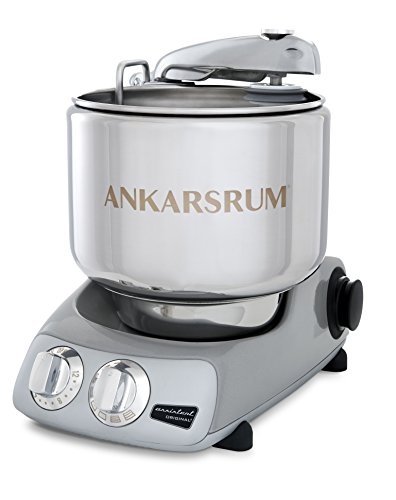
3. Ankarsrum Original Stand Mixer
A Swedish mixer with a rotating bowl, a dough hook and a roller, built to handle large amounts of dough with a gentle, folding action. It looks and works differently from planetary mixers.
Suits: dough-focused bakers. Strengths: excellent bread handling and a loyal following. Weaknesses: a learning curve and a high cost of entry. Skip it if you whip small batches of egg whites.

Best for large bread batches
4. Bosch Universal Plus Kitchen Machine
A powerful German kneader with a low-set bowl and a strong direct-drive motor. It is known for handling big batches of bread dough that stall lighter machines.
Suits: large bread batches. Strengths: power and a roomy bowl. Weaknesses: different attachments from planetary mixers. Skip it if you want a classic planetary mixer.


Best for design-led kitchens
5. Smeg 50s Retro Style Stand Mixer
A tilt-head mixer with a rounded retro design and a metal body, made in Smeg colors that fit a styled kitchen. It aims to balance a showpiece look with real baking performance.
Suits: design-led kitchens. Strengths: a standout look and solid mixing. Weaknesses: a smaller range of add-ons than KitchenAid. Skip it if you want maximum accessory support.

Best for tech-minded bakers
6. Breville Bakery Chef Hub
A tilt-head mixer with digital controls, a built-in timer and a hub for extra attachments. It appeals to bakers who like precise settings and a modern interface.
Suits: tech-minded bakers. Strengths: digital controls and a timer. Weaknesses: more controls to learn. Skip it if you prefer simple knobs.
View Breville Bakery Chef Hub on Amazon
Care and Setup
- Wipe the body with a damp cloth and dry it.
- Wash attachments as the maker advises, since some should be hand washed.
- Keep the mixer on a stable, level surface.
- Do not run the motor with a heavy load for longer than the manual allows.
- Store attachments together so none go missing.
Mistakes to Avoid
- Buying a tilt-head for stiff dough all week.
- Ignoring bowl capacity for large batches.
- Choosing by color before checking motor strength.
- Skipping a check of counter and cabinet height.
What Luxury Really Means in a Stand Mixer
A premium price on a stand mixer should buy something you can feel in use, not only a nicer finish. The most meaningful differences are drivetrain strength, stability, bowl size, and how long the machine keeps performing under load. A mixer that stays put on the counter while kneading, holds a steady speed when the dough thickens, and mixes the bottom of the bowl as well as the sides is the kind of machine that justifies a higher level of investment.
Metal construction, smooth speed control, a well-fitted bowl and attachment hub, and a clear service and parts story all add to long-term value. Appearance and color range matter too, particularly for a machine that sits out on the counter every day, but treat them as a bonus rather than the main reason. Read the listing carefully for the warranty terms, the parts that are metal versus plastic, and what is included in the box.
It is also worth being honest about how you bake. A premium mixer pays off for people who bake often and in volume. If you make a batch of cookies a month, a more modest machine may serve you equally well.
Planetary, Spiral and Kneader Designs Compared
Not every premium mixer works the same way. A planetary mixer spins the beater around the bowl while the bowl stays still. It is versatile and handles creaming, whipping, folding and moderate dough well, and it has the largest ecosystem of attachments. A spiral-hook machine with a rotating bowl works dough gently with a folding motion, which many bread bakers like because it develops gluten without heavy slapping. A dough-kneader style machine with a low bowl is tuned for large batches of bread.
Each approach has trade-offs. Planetary mixers excel at general baking and whipped mixtures but can struggle with very stiff doughs in small bowls. Spiral and kneader machines are outstanding at dough but are less natural for small amounts of egg whites or cream, and the technique and accessories differ. Think about the mix of recipes you make most.
- Cakes, cookies, meringue and buttercream favor a planetary action.
- Frequent, heavy bread dough may suit a spiral or kneader design.
- Check which accessories exist for each machine, such as grinders or pasta rollers.
Tilt-Head Versus Bowl-Lift: Stability and Access
Tilt-head mixers let you lift the motor head to add ingredients or swap tools, which makes them convenient. Bowl-lift mixers keep the head fixed and raise the bowl on a lever, which usually gives more rigidity and room for larger capacities. For heavy dough, the extra stiffness is helpful because the head does not flex or rock as the load changes.
Consider how you will use it every day. Tilt-heads are easier for scraping the bowl and swapping beaters, and they often suit smaller kitchens and more casual baking. Bowl-lift designs can be taller and heavier, so confirm the dimensions and the weight on the listing against the space where you will use and store it. Measure the clearance below upper cabinets with the head raised, since many mixers need more headroom than their resting height suggests.
Check the bowl as well. Stainless steel bowls are durable and chill well, glass bowls let you see the mix, and ceramic bowls add weight and style. Handles help with pouring, and a larger capacity is helpful for double batches, but an oversized bowl can leave small amounts unmixed.
Attachments, Parts Support and Long-Term Value
A luxury mixer is usually a decade-long commitment, so look beyond the machine to what surrounds it. Attachment hubs let you add pasta makers, grinders, slicers and other accessories, and a larger range of compatible add-ons extends what the machine can do. Before buying, check which attachments fit the model you are considering, since hub designs differ and are not always interchangeable between brands or product lines.
Replacement parts and service access matter as much as power. Ask whether bowls, beaters, gaskets and gears can be bought separately, whether authorized service is available in your area, and what the warranty covers. Compare the included accessories, such as a flat beater, whisk and dough hook, and note whether they are metal or coated, since coated tools may have specific washing instructions.
Finally, think about the whole kitchen. If you plan to use the mixer often, leaving it on the counter makes it a daily tool; if you have to lift it out of a cupboard each time, you will use it less.
Running and Maintaining a Premium Mixer
Good habits protect a significant purchase. Start dough on the lowest speed so the hook can gather ingredients, and increase speed gradually. Do not exceed the maker’s stated dough capacity, because overloading is a common cause of motor strain and gear wear. If the machine gets noticeably warm or the head starts to shift, stop and let it rest.
Keep the body clean with a damp cloth and avoid submerging it. Wash bowls and attachments according to the manual, because some coated beaters are not meant for the dishwasher. Wipe the attachment hub, and do not let flour or dough dry into the gaps. Occasionally check for oil seepage or unusual noises, and follow the maker’s guidance on lubrication, which some brands do not require.
Signs that service is due include grinding sounds, a burning smell, a head that no longer locks, speeds that surge or stall, or a beater that no longer reaches the bottom of the bowl. Many makers offer height adjustment instructions in the manual.
A Short Glossary of Stand Mixer Terms
Premium mixers use a vocabulary that is easy to nod along with without really understanding. These plain definitions cover the terms you will see on specification pages.
- Tilt-head: a design where the motor head tilts back to give access to the bowl and attachments.
- Bowl-lift: a design with a fixed head, where a lever raises and lowers the bowl. It is often chosen for larger capacities and heavier doughs.
- Planetary action: a motion where the beater spins on its own axis while also circling the bowl, which helps reach all areas.
- Spiral dough hook: an attachment shaped to knead dough by pulling and folding.
- Bowl capacity: the maker’s stated volume, which is not the same as how much dough the mixer can handle.
- Attachment hub: a port at the front that allows accessories such as grinders and pasta makers to connect to the motor.
- Slow ramp-up: a feature that begins mixing slowly to reduce splashing, as described by some makers.
- Bowl-less design: a layout, as on some models, where a rotating bowl and fixed tools work differently from the planetary pattern.
Models like the KitchenAid Artisan, the KitchenAid Professional bowl-lift, the Ankarsrum Original, and the Bosch Universal Plus each take a different approach, so read the maker’s page to see how each uses these terms.
Mistakes That Waste a Premium Mixer
A high-end mixer is a durable tool, but several habits lead to frustration or wear.
- Overloading the bowl. Heavy doughs have limits that the maker states. Exceeding them strains the motor.
- Running at too high a speed too soon. Begin slowly, as the manual advises, to avoid flour clouds and spills.
- Ignoring bowl clearance. If the beater scrapes the bowl or leaves a gap, check the maker’s adjustment instructions.
- Not scraping down the bowl. Ingredients cling to the sides. Stop the mixer and scrape as needed.
- Using the wrong attachment. Each tool has its job, such as whisking, creaming, or kneading.
- Forgetting counter space. A big mixer needs room, and a place where you can lift it safely or leave it out.
Learn what your own mixer does well. A little patience with the first few recipes pays off.
Tilt-Head Against Bowl-Lift: A Comparison Table
The two layouts shape how a mixer feels in daily use. The table covers general tendencies.
| Point | Tilt-head | Bowl-lift |
|---|---|---|
| Access to the bowl | Easy, with the head tilted back | Bowl removed from a raised or lowered position |
| Typical capacity | Smaller to medium | Medium to large |
| Stability with heavy dough | Good for moderate loads | Often preferred for heavy loads |
| Height under cabinets | Needs room when tilting | Often fits better under shelves |
| Everyday convenience | Simple to add ingredients | Slightly more steps in changing bowls |
| Best for | Cakes, cookies, occasional bread | Frequent bread, large batches |
If you bake bread often or in large quantities, the bowl-lift column is worth a close look. If most of your baking is cakes and cookies, a tilt-head can be perfectly suitable.
Electrical Safety and Following the Manual
A mixer is a heavy electrical appliance with moving parts, so the maker’s instructions come first.
- Read the manual before the first use, including the sections on attachments and speeds.
- Plug into a suitable outlet, and avoid extension cords unless the maker allows them.
- Keep hands, spatulas, and hair away from the beater while it runs, and turn off and unplug the mixer before adding tools or cleaning.
- Lift the machine using safe technique, and seek help with models that are heavy.
- Do not immerse the base in water, and clean it following the care instructions.
- If the mixer overheats, emits burning smells, or makes unusual noises, stop and contact the maker or an authorized service center.
For attachments, use those made for your model as specified by the maker.
Setting Up Your Baking Space
A mixer is more useful when it is easy to reach. Choose a stable counter near an outlet with plenty of clear space around it. Keep the attachments you use most nearby, and store the rest in a drawer or box. A silicone mat under the base can reduce movement during heavy mixing, if the maker approves.
Get into the habit of measuring ingredients before you switch on the mixer, and keep a spatula and a small cloth on hand. After use, wash the bowl and attachments as the care guide says, wipe down the body, and let everything dry before storing.
A Decision Guide by Baker
A weekend baker who loves cakes and cookies
A medium-size tilt-head model is likely to cover your needs, with plenty of attachments to grow into.
A regular bread baker
Look at the dough capacity, the motor description, and a design known for handling stiff dough, such as a bowl-lift or an alternative layout.
A baker who wants a mixer for many kitchen tasks
Check the attachment hub options and what accessories the maker offers.
A luxury mixer is a long-term purchase. Match it to the baking you actually do, and you will get years of use from it.
Reading Capacity and Power Claims Carefully
Capacity figures describe the volume of the bowl, not the amount of dough the machine can knead, and the two are rarely the same. Makers often state a maximum flour weight for dough, and that number is more useful for bread bakers. Check it against the amounts in your usual recipes, and leave some margin.
Wattage figures can also mislead. Two machines with similar numbers may behave very differently because of gearing, motor design, and how power reaches the beater. Treat wattage as one clue among several. Look for how the maker describes dough performance and any limits on continuous running time, and note the warranty and service arrangements, which tell you how the maker stands behind a long-term appliance.
What You Actually Bake Decides the Mixer
Luxury mixers separate themselves not on a single specification but on how they behave across the things you bake most. If your week is cakes, cookies and meringues, bowl coverage and whisk performance matter most: the beater should reach the bowl sides closely enough that you are not stopping to scrape every minute, and the whisk should build volume in egg whites without splashing. The KitchenAid Artisan has built its reputation on exactly this everyday baking, with a shape and accessory range that suit varied, moderate batches. Judge any premium mixer first against your three most common recipes, not against the most extreme one you make once a year.
Bread bakers should think differently. Dough works a mixer hard and continuously, and the qualities that matter are torque at low speed, stability on the counter, and a bowl and hook arrangement that develops dough without climbing or straining. The Ankarsrum Original approaches dough from a different design tradition, with its rotating bowl and roller-and-scraper action, and many dedicated bread bakers prefer that action for larger, wetter doughs. The Bosch Universal Plus likewise earns its place through batch capacity and dough handling rather than through looks. If bread is an occasional guest in your kitchen, these strengths matter less; if it is a weekly ritual, they matter most.
Occasional bakers considering a luxury machine should be honest about frequency. A premium mixer used twice a year is furniture; the same machine used weekly is a tool that pays you back in reliability and pleasure. The Smeg 50s Retro Style mixer makes the strongest case for the design-led kitchen, where the machine lives on the counter and its appearance is part of its daily value. The Breville Bakery Chef Hub argues for control and modern features. Neither argument is wrong; the right choice is the one that matches how often, and how visibly, the mixer will work in your home.
Setting Up a Counter Home for a Heavy Machine
Premium stand mixers are heavy, and that weight should shape where the machine lives. The best home is a permanent counter spot with clearance to raise the head or lift the bowl, room to add ingredients while running, and a nearby socket so the machine is never dragged by its cord. Measure the space with cupboards open and closed, and check the height of a bowl-lift model like the KitchenAid Professional with its bowl raised before you commit to a spot under wall cabinets. A machine that must be hauled from a cupboard for every use will be used less, whatever its quality.
Surface matters. A smooth stone or laminate counter lets you slide the machine slightly for cleaning; a mat underneath can help protect the surface and steady the base during heavy dough work, as long as the maker does not advise against it. Keep the area around the mixer clear of water and flour dust build-up, and leave enough room behind it for the cord to sit without being pinched. Good placement also means light: you need to see the bowl clearly to judge a mix, so a spot under a cabinet light is worth more than a darker corner.
Plan storage for attachments at the same time. Paddles, hooks, whisks and any extra bowls should live within reach of the machine, ideally in the drawer or cupboard directly beside or below it. Attachments stored across the kitchen create friction that quietly reduces how much of the machine’s range you use. If you intend to add hub attachments later, leave the front of the machine accessible rather than boxing it into a corner where the hub faces a wall.
Learning the Speeds Instead of Guessing Them
Every premium mixer rewards a baker who learns its speeds deliberately. Start mixes slower than instinct suggests, especially when flour has just been added, to keep the bowl’s contents in the bowl. Increase speed only once ingredients are incorporated, and return to lower speeds for folding and finishing. The lowest settings on machines like the Artisan and the Breville Bakery Chef Hub exist for gentle work such as stirring in chocolate chips or starting a dough without throwing flour across the kitchen, and using them properly is the difference between a calm bake and a messy one.
Different mixtures peak at different points, and a luxury machine’s value lies in holding a steady speed under load so you can judge by sight and sound. Creaming butter and sugar should lighten in colour and texture; a dough should clear the sides of the bowl when it is ready; egg whites move through stages that are easy to overshoot at high speed. Stand near the machine during these stages rather than treating it as fully automatic. Premium power does not remove judgement; it gives judgement better tools.
Keep brief notes for your staple recipes: the speed and approximate time that produced the best result in your machine. Mixer speeds are not standardised between brands, so a recipe’s instruction translates differently on an Ankarsrum or a Bosch than on a KitchenAid. Your own notes, written once, save repeated guesswork and make results consistent. This is a quiet habit of serious bakers, and it costs nothing but a pencil kept near the machine.
Dough Workflows for Home Bread Bakers
A stand mixer changes bread making from a physical barrier into a scheduling task. Use the machine to bring dough together and develop it, but respect the limits in the manual for flour weight and continuous running, because dough is the hardest work the motor does. Add flour gradually rather than all at once, let the dough rest briefly after initial mixing so the flour hydrates, then knead to the stage your recipe asks for. A short rest mid-knead often achieves in minutes what extra machine time achieves with more heat and strain.
Watch temperature as well as texture. Extended machine kneading warms dough, which speeds fermentation; in a warm kitchen that can push a dough further than planned. Use cooler water in summer, and check the dough’s feel rather than following the clock blindly. Bowl-lift machines and the Ankarsrum’s open bowl make it easy to reach in and judge the dough, one of the practical advantages of premium designs for bread work. Keep a light dusting of flour or a little oil for handling, and turn the dough out onto a clean surface for shaping rather than trying to finish everything in the bowl.
Clean up with bread in mind. Dried dough is stubborn, so rinse the bowl and hook promptly in warm water before residue sets. Never let the machine sit with wet dough drying on the hook while you wait for the loaf to bake. A quick wash immediately after shaping takes a minute; the same job an hour later takes soaking and patience. Build the wash into the workflow, between shaping and the oven, and the mixer stays a pleasure rather than a chore.
Cakes, Meringues and Delicate Work
Delicate baking tests a different side of a luxury mixer: control at gentle speeds and thoroughness at the bowl’s edges. For cakes, cream butter and sugar until genuinely light before adding eggs gradually, because a premium mixer can incorporate air beautifully but cannot fix eggs added so fast that the mixture splits. Scrape the bowl down at each stage regardless of the maker’s claims about beater reach; even the best flat beaters leave a thin layer that needs one pass of a spatula for an even batter.
Meringues and whipped cream reward clean equipment and patience. Wash and dry the bowl and whisk thoroughly, since any trace of fat undermines egg whites, and start at a moderate speed before increasing once the whites are foaming. Stainless bowls, common across the KitchenAid and Breville ranges, chill well for cream and clean completely for meringue work. Glass bowls let you see unmixed pockets at the base, which some bakers prefer for coloured batters and frostings.
For frostings and fillings, the paddle at low-to-moderate speed gives the smoothest result without whipping in unwanted air. Sift icing sugar and add it gradually to avoid a sweet cloud and a gritty finish. A luxury mixer’s steadiness at low speed is exactly what separates a silky buttercream from a grainy one, so resist the urge to hurry delicate mixtures with high settings. The machine’s patience, guided by yours, is the premium feature in these recipes.
Attachments: Building Out Slowly and Sensibly
The attachment ecosystem is a major reason bakers choose a platform like KitchenAid, but the sensible approach is to buy attachments one job at a time. Live with the core machine first: beater, whisk and dough hook cover the great majority of baking. Add an extra bowl if you regularly make two mixtures in one session, because a second bowl saves washing mid-recipe and keeps a meringue safe while a batter waits. Add hub attachments only when a real, recurring task appears, such as grinding, rolling pasta or milling, and confirm compatibility with your exact model before ordering.
Third-party and cross-generation compatibility deserve care. Hubs and fittings differ between brands and sometimes between lines within a brand, so an attachment that fits a tilt-head may not suit a bowl-lift, and nothing fits across brands by default. Keep the model details from your manual with your shopping notes. When an attachment arrives, test it on a small batch first and wash it according to its own instructions, which may differ from the main machine’s care rules.
Store attachments where they will be used and keep their parts together. A pasta roller separated from its cleaning brush, or a grinder missing its pusher, creates the small frustrations that stop people using what they bought. A labelled box or drawer near the mixer, with each attachment complete, turns the ecosystem from a collection into a working system. Review the set once a year and pass on anything untouched; the best attachment collection is the one that is entirely in service.
Noise, Vibration and Baking Around a Household
Premium mixers are powerful, and power makes noise. Gear-driven and direct-drive designs have different sound characters, and dough work at low speed sounds different from whisking at high speed. If you bake early in the morning or in an open-plan home, run your loudest tasks when the household is awake, and place the machine on a solid, level surface to minimise vibration noise through the counter. A machine that walks or rattles is telling you something: check that it is level, that the bowl is seated, and that the load is within the manual’s guidance.
Vibration also affects results. A mixer that shifts during kneading changes how the hook meets the dough, so steady the setup rather than holding the machine down by hand, which is unsafe and masks a placement problem. If the counter itself flexes or the machine sits near an edge, move it to a sturdier spot for bread work. These small placement decisions protect both the bake and the machine’s feet and finish.
Be present while the machine runs, particularly with dough and with hub attachments. Premium mixers are built to work hard, but no mixer should be left running unattended with a heavy load. Staying nearby lets you catch the moment a dough is ready, a meringue peaks, or a sound changes, and that attention is part of what you are paying for the privilege of using a serious machine well.
Long-Term Care for a Machine Bought to Last
A luxury mixer is a decade-scale purchase, so care should be routine rather than occasional. Wipe the body after each use before flour paste dries in seams, keep vents clear, and never immerse the machine or let water run into its joints. Wash bowls and attachments promptly, dry them fully, and store the machine with its head or bowl in the position the manual recommends. If your model has parts that benefit from periodic checking, such as a drip ring or a hub cover, include them in a simple seasonal check.
Treat the machine’s limits as part of its care. Repeatedly overloading a mixer with dough beyond its stated capacity shortens its life more surely than years of ordinary baking. If your baking outgrows the machine, splitting a large dough into two batches is kinder than forcing one. Likewise, let the motor rest between heavy batches as the manual directs. Premium engineering tolerates hard work; it does not invite abuse.
Keep the paperwork. Proof of purchase, warranty details and the manual should live together, because a machine at this level is worth repairing rather than replacing when something eventually wears. Register the product if the maker offers it, and note the model and serial details in your kitchen records. When you eventually need a part or a service, having those details to hand turns a frustration into a short phone call, and keeps a good machine in service for the long term it was built for.
Deciding Whether the Premium Is Worth It for You
The honest test is frequency multiplied by frustration. If you bake weekly and your current setup struggles with dough, leaves unmixed pockets, or makes you avoid recipes you want to make, a luxury mixer removes real friction and will be used enough to justify itself. The KitchenAid Professional argues for capacity and dough strength, the Ankarsrum and Bosch for bread-centred kitchens, the Artisan for versatile everyday baking, the Smeg for a design-led counter, and the Breville for modern control. Each is a coherent answer to a different kitchen.
If you bake monthly and your current mixer handles your recipes without complaint, the premium buys pleasure and headroom rather than necessity, which can still be a legitimate reason, but should be recognised as such. In that case, choose the machine you will enjoy looking at and using, because enjoyment is the return on the purchase. Bakers who love their machine bake more; that feedback loop is real and is often how a premium mixer eventually earns its keep.
Whichever you choose, buy the machine for the baker you are over the next several years, with a modest allowance for the baker you are becoming. A little headroom in capacity and attachment options lets the machine grow with you, while a vast excess of either is money sitting idle on the counter. Read the picks in this guide against your recipes, your counter and your habits, and the right luxury mixer usually identifies itself.
Recipes That Reveal a Mixer, and How to Test With Them
When a premium mixer arrives, test it with recipes that expose specific abilities rather than with your easiest bake. A stiff bread dough tests torque, stability and the dough action; a small batch of egg whites tests whisk reach and bowl coverage at low volume, which is where many large machines struggle; a thick cookie dough tests whether the beater clears the bowl without leaving a ring of unmixed butter at the base. Run these three tests in the first fortnight and you will know your machine’s character while it is still new to you, instead of discovering a weakness mid-celebration cake months later.
Test small batches deliberately. Luxury mixers are often bought for capacity, but most home baking is modest in scale, and a machine that handles a full batch beautifully may splash or under-mix a half batch. Learn where your model’s comfortable minimum sits for cream, whites and dough, and adjust your habits: combine small tasks, use the whisk for small volumes, or accept one scrape-down as the price of a small batch in a large bowl. Knowing the minimum is as valuable as knowing the maximum, and the manual rarely tells the whole story.
Keep the results in your recipe notes. A line recording that a dough needed a rest halfway, or that whites peaked faster than expected at a given speed, turns first impressions into a personal manual for the machine. Over a season of baking, those notes become the difference between owning a premium mixer and actually getting premium results from it. The machine provides power and consistency; your notes provide the calibration.
Counter Space Economics: One Machine, Many Jobs
A luxury mixer claims prime counter territory permanently, so it should justify the footprint beyond baking day. Machines with a powered hub, notably the KitchenAid range and the Bosch Universal Plus, can take on grinding, pasta, shredding and other tasks that would otherwise need separate appliances, and a kitchen that uses those functions genuinely gets more from the square of counter the machine occupies. Be honest about which of those jobs you will do monthly rather than admire in theory; an attachment used twice a year does not pay rent on the space.
If counter space is the scarcest resource in your kitchen, weigh the design-led option differently. A machine like the Smeg, chosen partly for how it looks, earns its place every day it sits there, including the days it does not run, in a way a purely functional choice does not. That is a legitimate calculation in a small kitchen where everything visible must please. Conversely, a large bowl-lift machine in a tiny kitchen may dominate the room and crowd out the working space needed to use it comfortably.
Measure the true footprint, including working room. You need space beside the mixer for ingredient bowls, in front for adding and scraping, and above for the head or bowl movement. A mixer wedged into its exact footprint with no working margin will be used reluctantly. Sometimes the premium decision is actually a placement decision: the right machine in the right square of counter, with room to work, outperforms a technically stronger machine squeezed into a corner it resents.
Gifting a Premium Mixer Well
A luxury stand mixer is a significant gift, and it lands best when the giver has quietly done the homework in this guide on the recipient’s behalf: what they bake, how often, how much counter they have and whether their kitchen leans toward bread or toward celebration cakes. A bread baker given a design-led mixer, or a small kitchen given a vast bowl-lift machine, receives a beautiful problem rather than a present. Where the homework is impossible, a contribution toward the recipient’s chosen model respects their judgement better than a surprise. Include the receipt arrangements discreetly, because a machine at this level may need its warranty one day, and a gift that can be serviced is a gift that lasts.
Luxury Stand Mixer FAQ
Is a bowl-lift mixer better for bread?
Usually, yes. The bowl-lift design holds the bowl firmly, which helps with heavy dough.
Is the Ankarsrum a good choice?
It is excellent with dough, but its spiral action differs from planetary mixers.
What counts as a luxury stand mixer?
A strong motor, a metal body, long-term support and the build to handle heavy baking day after day.
Do these mixers fit under cabinets?
Many are tall when the head is raised, so measure your counter clearance first and check the listing for dimensions.
Do I need a luxury mixer if I only bake occasionally?
Probably not. Premium machines shine with frequent, heavy or large-volume baking, while a simpler mixer handles occasional cakes and cookies well.
How big a bowl should I get?
Choose based on your largest typical batch. Bigger bowls help with double loaves and large cake batches, but very large bowls can struggle with tiny quantities, so check the minimum and maximum capacities in the manual.
Can I knead bread in any of these mixers?
Most can with the dough hook, but capacity and technique vary by design. Check the maker's guidance for the amount of flour or dough your model can handle.
Are the attachments interchangeable between brands?
Generally no. Hubs and fittings differ between makers and sometimes between product lines, so confirm compatibility on the listing before buying an accessory.
How noisy are heavy-duty stand mixers?
Noise varies with the motor, the speed and the mix. Direct-drive and gear-driven machines sound different from each other, so check owner feedback and the manual if noise matters in your home.
What should I look for in the warranty?
Look at the length, which parts are covered, whether commercial or heavy use voids it, and how claims are handled. Keep your proof of purchase.
Should I choose a metal or glass bowl?
Stainless steel is durable and chills well, while glass lets you watch the mix and is stable on the counter. It is a matter of preference, so check that the bowl fits your model.
How long should a luxury stand mixer realistically last?
A well-kept premium mixer should serve for many years of regular home baking. Longevity depends on respecting load limits, cleaning it properly, and not forcing it through work beyond the manual’s guidance. Keep your proof of purchase and manual, because a machine at this level is generally worth servicing or fitting with a replacement part rather than replacing outright.
Is a second bowl worth buying?
Yes, if you regularly make two mixtures in one session, such as a cake and a frosting, or a meringue that must not wait while a bowl is washed. A second bowl saves time and protects delicate mixtures. If most of your baking is single-mixture, the standard bowl is enough and the money is better kept for an attachment you will actually use.
Why does my dough climb the hook, and what should I do?
Dough climbs when the batch is small relative to the bowl, the hydration is high, or the speed is too fast for the stage. Pause, push the dough down, reduce speed, and let it work more gently. Check the manual for the minimum and maximum amounts your model handles well, because working within that window prevents most climbing and straining.
Can I leave a stand mixer running while I do other things?
Stay nearby, especially with dough or attachments. Mixtures change quickly at key stages, and a machine under heavy load should not be left unattended. Being present lets you stop at the right moment for texture, catch an unusual sound early, and keep the process safe. Short, light tasks at low speed are less demanding, but attention remains the rule.
What is the best first recipe to learn a new premium mixer with?
Choose a recipe you already know well by hand or with an older machine, such as a favourite cake or a simple bread dough. Familiarity lets you notice what the new machine does differently: how it creams, where it leaves unmixed pockets, and which speeds suit each stage. Take brief notes, and your second bake will already be better calibrated.
The Short Version
For an all-round classic, the KitchenAid Artisan. For heavy dough, the KitchenAid Pro Line. For a different dough action, the Ankarsrum Original. For big batches, the Bosch Universal Plus. For style, the Smeg. For digital control, the Breville Bakery Chef Hub.