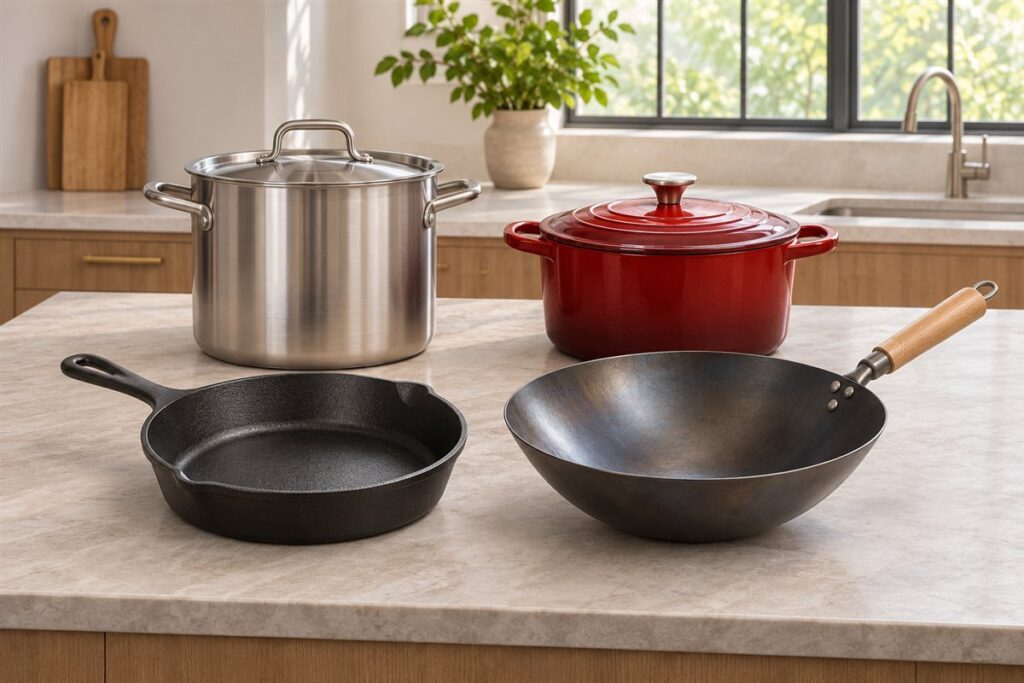
A stuck-on layer should be handled with the pan maker’s approved cleaning process rather than more force. Patience and time usually do more than muscle, and gentle methods protect the surface for the next meal.
What to do
Allow the cookware to cool as directed, remove loose residue and use permitted soaking or cleaning methods. Check the finish before selecting a brush or cleaning product.
Wait until the pan is comfortable to handle before you put it in water. The surface is easiest to clean once it has cooled but before the residue sets hard.
A gentle cleaning sequence
- Remove loose food with a soft spatula or a paper towel while the pan is cooling.
- Soak with warm water and a little washing-up liquid for a while, longer for heavy residue.
- Use a soft sponge or non-scratch pad in circles, working from the edges inward.
- Try an approved cleaner or simmer method if the maker’s guidance allows it, such as simmering water in the pan to loosen residue.
- Rinse and dry promptly to avoid water spots.
Repeat the soak rather than scrubbing harder, and change tools only if the maker approves.
A mistake to avoid
Do not scrape with an unapproved sharp tool or pour cold water into very hot cookware. Follow the material’s thermal and cleaning guidance.
Sudden temperature changes can stress the pan and in some designs cause warping, so let it cool first. Metal scrapers can leave scratches that catch more food next time.
A detail worth checking
Check whether the approved cleaner is intended for the exact finish. A product suitable for an uncoated stainless surface may have different restrictions on a polished exterior, marking or coated component.
If your pan has a different material on the outside, such as a coating or decorative band, read the instructions for each part before using a stronger cleaner.
Try this practical check
Note which approved cleaning step releases the residue. If sticking repeatedly follows the same cooking routine, review that routine separately instead of escalating the cleaner.
Ask yourself whether the pan was hot enough, whether the food was dry, and whether you moved it too soon. A small change in technique often prevents the problem.
Common questions
Is it safe to soak stainless steel overnight?
Short soaks are generally fine, but check the maker’s guidance, particularly for pans with other materials or coatings. A few hours is usually enough for most residue.
Can I use steel wool?
Many makers advise against it because it can scratch the surface. Check what your pan’s guidance says before using any abrasive.
Why does food burn on the same spot?
Uneven heat, a burner that does not match the base or a warped pan may be the cause. Check the pan sits flat and the burner suits its size.
Why Food Sticks to Stainless Steel in the First Place
Stainless steel has a surface that looks smooth but is microscopically textured. When proteins and sugars are heated, they can grip into that texture, particularly if the pan is not hot enough when food goes in, or if the food is moved before a crust has formed. Cold food, wet food and an overcrowded pan all increase the chance that it will cling.
Heat plays an important role. A pan that is too cool allows food to bond before the surface seals, while one that is too hot scorches the outside and welds it to the metal. Using a moderate, steady heat and letting the pan warm properly before adding fat helps. Fat itself acts as a barrier, filling those tiny gaps and making release easier, so use enough to coat the surface thinly.
Foods differ. Eggs, fish, starchy foods and anything with sugar tend to be sticky, while oily or well-seasoned items release more easily. Sauces that reduce can leave a film at the edges that hardens into a stubborn ring. Recognising what you cooked helps decide how to clean it. A burnt sugar layer will dissolve in warm water, while a protein layer may need a longer soak. Keeping these basics in mind not only helps you clean, it also helps you cook in a way that reduces the problem next time.
Soaking and Simmering Methods in Detail
The gentlest approach to loosening residue is to let water do the work. Once the pan is cool enough to handle, fill it with warm water and a little dish soap, and leave it for a while. The warmth softens the layer and the soap breaks down grease. After a soak, many residues wipe away with a soft sponge and little effort.
For heavier build-up, a simmer can help. Add enough water to cover the stuck area and bring it to a gentle simmer on the stove, then use a wooden or silicone spatula to nudge the softened residue loose. Remove the pan from the heat before scraping, and take care with steam and hot water. Some guides suggest adding a spoonful of baking soda to the simmering water; check your pan’s care guidance first. Let the pan cool before pouring out the water and washing.
Patience is the key. If the first attempt only loosens part of the residue, repeat it rather than scrubbing hard. Avoid leaving food-stained pans for days, because dried residue becomes harder to soften. If the pan has a non-stainless element, such as a coated interior, a wooden handle or a decorative exterior, check what soaking and simmering the maker permits. A pan with riveted handles may hold water in the joints, so rinse and dry them properly afterward. Following these steps usually removes the bulk of the mess without any damage.
Tools That Help and Tools to Avoid
Choosing the right tool prevents scratches that make future sticking worse. Soft sponges, non-scratch scouring pads and nylon brushes are generally safe on stainless steel. A wooden or silicone spatula can lift softened food without marking the metal. For corners and rivets, a small soft brush or a wooden skewer reaches awkward spots.
Cleaning compounds designed for stainless steel can help with stubborn marks, but read the label and the pan’s guidance. Powders with mild abrasives are usually applied with a damp cloth and rubbed along the grain of the metal, then rinsed thoroughly. Do not mix cleaning products, and keep them away from food preparation areas.
Some tools are best avoided. Steel wool and coarse scouring pads can leave visible scratches, and sharp metal scrapers may gouge the surface. Bleach and strongly chlorinated cleaners can damage stainless steel and should not be used unless the maker explicitly allows it. Dishwasher tablets are not a good substitute for hand cleaning, since harsh detergents can leave dullness or spots. If the pan has a brushed finish, wipe in the direction of the grain, because cross-grain scrubbing can leave visible marks. When in doubt, test any new tool or cleaner on a hidden area or ask the maker.
Dealing With Discolouration and Heat Marks
After you remove stuck food, you may notice other marks. A rainbow or bluish tint is usually caused by heat and is harmless; it can often be wiped away with a cloth dampened with diluted white vinegar, if the maker allows. White chalky spots are mineral deposits from hard water, which are also usually removed with vinegar or lemon juice, followed by rinsing and drying.
Brown or dark patches are often a thin layer of baked-on oil. A soak in warm soapy water and gentle rubbing may remove it, but patience is needed, because heavy scrubbing risks scratches. Burnt rings along the sides may require a repeat of the simmering method. Remember that some discolouration does not affect cooking and is purely cosmetic, so it is up to you how far to go.
Pits, deep scratches or a permanent dark stain may not be removable. If you see small pits, especially after contact with salt, check the maker’s guidance, as salt added to cold water can sometimes mark stainless steel; adding it once the water is boiling or stirring it in quickly is often suggested. For the exterior, use a cleaner that suits the finish, and check any decorative bands separately. Finally, rinse thoroughly and dry the pan to avoid spotting. Keeping a light routine for marks prevents them from becoming difficult.
Changing Habits to Prevent Future Sticking
The best way to remove stuck food is to avoid it in the first place. Preheat the pan gently, add a thin layer of fat and let it shimmer before adding food. Dry food with a paper towel so moisture does not lower the pan temperature. Add food in a single layer and leave it alone until a crust forms and it releases, which can take a minute or so.
Control the heat. If food browns too quickly, lower the burner rather than adding cold liquid or scraping. Use the right pan size for the amount of food, and choose a burner that matches the base. When cooking sticky ingredients like cheese, sugar or starchy sauces, stir more often and keep the heat modest.
Deglazing is a useful habit. While the pan is still warm, add a little liquid such as water, stock or wine to dissolve browned bits, then use them in a sauce or pour them away. This shortens cleaning, but handle hot liquid carefully, since steam can burn. If you cook in a pan regularly and it sticks, review which step goes wrong: temperature, fat, timing or food moisture. Small adjustments often fix the problem. With a consistent routine and gentle cleaning, stainless pans can look good and cook well for many years.
Common Questions
How long should I soak a stainless pan?
A soak of 15 to 30 minutes in warm soapy water often loosens most residue. For heavier build-up, repeat the soak or use a gentle simmer. Check the maker's guidance if the pan has other materials.
Is baking soda safe on stainless steel?
It is commonly used as a mild abrasive or in simmering water, and many makers accept it for stainless steel. Check your pan's care guide, and rinse and dry the pan afterward.
Why do I see white spots after cleaning?
These are often mineral deposits from hard water. Wipe with a cloth dampened with diluted vinegar if the maker permits, then rinse and dry promptly.
Can I use a dishwasher for pans with stuck food?
It is better to remove the residue by hand first. Dishwasher detergents can be harsh, and baked-on food may not come off in a normal cycle. Check the care guide for dishwasher suitability.
What causes a rainbow tint on stainless steel?
It is usually a heat effect and is harmless. Wiping with diluted vinegar may reduce it, if the maker allows. It does not affect cooking.
Should I add salt to cold water in a stainless pan?
Some makers advise adding salt after the water is boiling or stirring it until dissolved, since undissolved salt can sometimes cause marks on the surface. Check your pan's guidance.
When is a pan too damaged to keep using?
Consider replacing it if the base is warped, handles are loose or the surface is deeply damaged. Follow the maker's guidance if you are unsure.
Related reading
6 Best Stainless Steel Pans: Tri-Ply and 5-Ply Compared (2026)