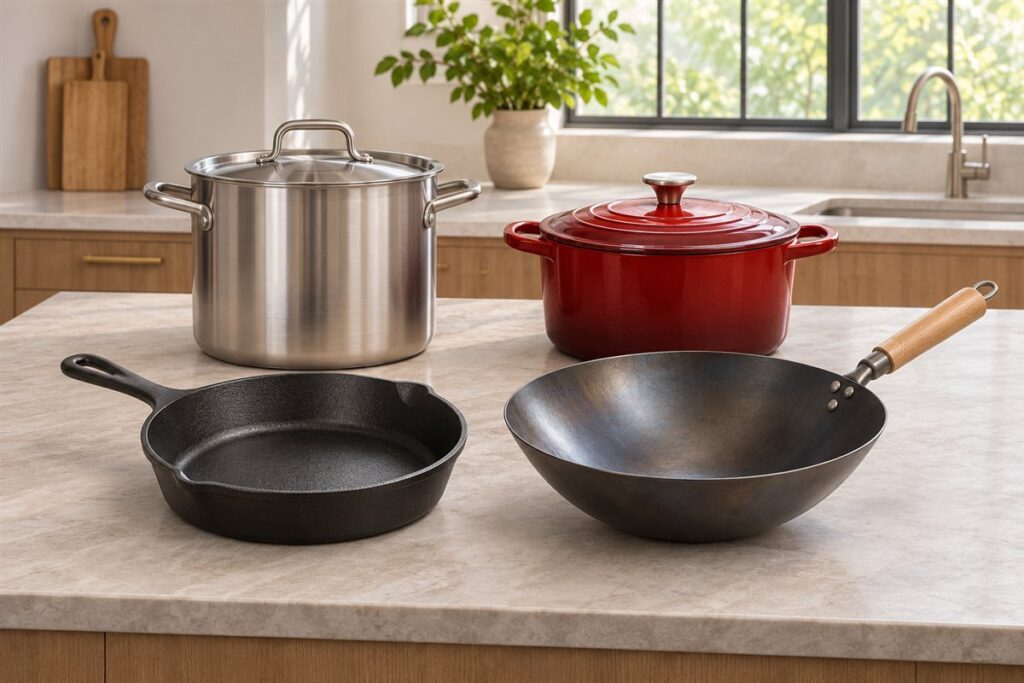
Bare seasoned cast iron and enameled cast iron have different surfaces and care requirements. Identify the exact product before treating it. The two can look alike from across the kitchen, but what is right for one can harm the other.
What to do
Read the maker’s description and care sheet. Follow seasoning guidance only for cookware intended to be seasoned, and use the enamel-specific method for an enameled surface.
If you have inherited a pan or bought it second-hand, there may be no paperwork. In that case, look at the surface closely and use the clues below before deciding on care.
Telling the two apart
- Feel and finish: enamel is a glassy coating that feels smooth and hard, while seasoned iron has a matte or slightly satiny feel.
- Edges and chips: enamel can chip, revealing dark metal underneath, while bare iron does not.
- Rim: many enameled pans have bare or differently coated rims that need a little extra care.
- Interior color: some enameled pans have light interiors, but dark enamel exists too, so color alone is not reliable.
When unsure, search for the model name or contact the maker with photographs.
A mistake to avoid
Do not apply a bare-iron restoration routine to enamel or assume a dark interior is automatically uncoated cast iron.
Oiling and baking an enameled pan as though it were bare iron can leave sticky residue, and harsh restoration methods could damage the coating. Equally, treating bare iron like enamel, such as soaking it for long periods, can invite rust.
A detail worth checking
Look up the exact model rather than identifying the surface only by color. Dark enamel and dark seasoning can look similar in a photograph but require different use and care decisions.
The model name is often stamped on the base or printed on the box. A quick photo of the underside before you throw anything away makes later research easier.
Try this practical check
Find the model number and record whether the cooking surface is seasoned iron or enamel. Keep the matching care instructions with that item.
A short note taped inside the cupboard door, listing each pan and its surface type, helps other people in the household treat each one correctly.
Common questions
Can I season enameled cast iron?
Seasoning is generally for bare iron. Enameled surfaces are coated already, so follow the maker’s own care guidance instead.
Does enamel need special utensils?
Check the maker’s advice. Many suggest wood or silicone tools to protect the coating, and avoiding sudden temperature shocks.
Which is easier to look after?
Enamel usually needs less upkeep and can handle a wider range of ingredients, while bare iron needs regular drying and oiling. Both are durable with sensible care.
Daily Routine for Seasoned Bare Iron
A bare iron pan relies on a thin, baked-on layer of oil that protects the metal and helps food release. Everyday care is about preserving that layer. After cooking, let the pan cool to a safe handling temperature, scrape out food with a wooden or silicone tool, and rinse with warm water. A soft brush or non-scratch sponge handles most residue. A small amount of mild soap is generally fine on a well-established seasoning, though you should follow the maker’s guidance.
The step that matters most is drying. Towel the pan dry, then warm it briefly on a low burner so any water hiding in the pores evaporates. Finish with a few drops of cooking oil and wipe it around until the surface looks barely glossy. Too much oil turns tacky when stored, which is a common cause of sticky pans.
Avoid long soaks and dishwasher cycles, which invite rust and strip seasoning. Cook fattier foods in a young pan for the first several weeks so the surface builds up, and go easy on long-simmered acidic sauces until the seasoning is established. If rust spots appear, scrub them away, dry thoroughly, and rebuild a thin seasoning layer by following the maker’s instructions. A seasoned pan that is used and wiped regularly usually improves over time.
Looking After an Enameled Finish
Enameled cast iron has a glass-like coating fused to the metal, so the pan needs no seasoning and the cooking surface does not rust in the same way. That makes upkeep different but not absent. Wash with warm water, dish soap and a soft sponge. Let a hot pan cool before it meets water, since a sudden temperature change can stress the coating and lead to cracking or crazing.
Stubborn staining or stuck-on food usually responds to a soak in warm soapy water, followed by a gentle scrub with a nylon pad. Avoid steel wool and harsh scouring powders, which can scratch or dull the finish. Some makers allow certain cleaning pastes or mild soaking solutions, so read the care sheet rather than guessing.
Use wood, silicone or nylon tools to protect the surface, and avoid dragging metal across the interior. Be careful not to bang the pan against the sink, the stove grates or other cookware, because the rim and the edge of the base are the most likely places for chips. Bare rims on some enameled pans can rust if left wet, so dry them well and treat them according to the maker’s advice. Never let an empty enameled pan sit over high heat unless the manual says it is acceptable.
What Each Surface Cooks Best
Because the surfaces behave differently, they suit different tasks. Seasoned bare iron is the traditional choice for high-heat searing, shallow frying, cornbread and other oven-baked dishes where a crisp crust is the goal. Over time it can become naturally slick, though it will not behave exactly like a modern coated pan, and eggs may need more fat while the seasoning is young.
Enameled iron is more forgiving with wet and acidic ingredients. Braises, stews, tomato-based sauces and soups can simmer for long periods without affecting a seasoning layer, because there is none to damage. Light interiors also make it easier to judge browning and to see fond forming on the bottom. On the other hand, enamel may not develop the same deep, nonstick patina as bare iron, so cooking delicate foods can need a little more attention to heat and fat.
Searing with enamel is possible, but many makers advise moderate or medium-high heat rather than the highest setting, so check the guide. If you want one pan for everything, you may end up owning both: bare iron for searing and baking, and enameled iron for braising and slow cooking. What matters is using each for what it handles best and keeping the care routines straight.
Inherited and Second-Hand Pans
Pans passed down or bought at a sale often come without instructions, which is why identifying the surface first is so important. Once you know what you have, inspect it for damage before cooking. On bare iron, look for deep rust, a rough crusty buildup, or a sticky layer. Light rust and old residue can often be cleaned and the pan reseasoned following the maker’s or a reputable care guide. A pan with a crack through the body or a severely warped base is not worth restoring.
With enamel, the questions are different. Look carefully for chips, hairline cracks and areas where the coating has worn through to dark metal. Small chips on the outside or the rim may be only cosmetic, but chips or flaking on the cooking surface are a reason to stop using the pan for food. Dull, rough patches inside can also trap food and be hard to clean.
Check that handles and knobs are secure, and remember that older lids may not be the original ones. If you cannot identify the maker or confirm the surface, treat the pan cautiously: use gentle cleaning only, avoid aggressive restoration, and keep the heat moderate until you are sure. When in doubt, contact the maker with photographs of the pan and its markings.
Storing and Stacking Without Damage
Storage habits can undo careful cleaning. Both surfaces dislike moisture, so store pans completely dry in a cabinet or on a rack with good airflow. Avoid keeping them in sealed containers or a damp lower cupboard, where humidity can encourage rust on bare iron and on exposed rims.
When stacking, put a protective layer between pans. A paper towel, a cloth or a felt pan protector prevents scratches on seasoned surfaces and chips on enamel. Heavy pieces should go at the bottom, and it helps to avoid stacking more than two or three high so you are not lifting a tower to reach the one you want.
Lids deserve attention too. A cast iron lid sitting tightly on its pan traps moisture, so rest it slightly ajar or put a paper towel between lid and pan. Enameled lids can chip at the rim, so lift rather than slide them. If a pan hangs from a hook, make sure the hook and wall can carry its weight. Keep a label or note with each pan’s surface type and care steps so anyone who uses the kitchen treats each one correctly.
Common Questions
Can I use soap on seasoned cast iron?
A small amount of mild soap is generally fine on a well-established seasoning, as long as you rinse, dry well and oil lightly afterward. Long soaks and harsh scrubbing do more harm than soap does.
Is a chip in enamel dangerous?
A small chip on an outer edge may be cosmetic, but chips or flaking on the cooking surface can allow pieces of coating into food and expose the iron beneath. If damage is on the cooking surface, it is safest to stop using the pan for food and check with the maker.
Can enameled cast iron go in the dishwasher?
Some makers say yes and others advise hand washing to protect the finish. Read the care sheet for your exact piece, and hand wash if you are unsure.
Why is my seasoned pan sticky?
Sticky patches usually come from too much oil applied in a thick coat that did not fully cure. Wipe the pan with a paper towel and heat it according to the maker's seasoning guidance, using only a very thin film next time.
Can I cook acidic food in bare iron?
Short cooking times are usually fine on a well-built seasoning, but long simmers of tomato or wine sauces can dull it and add a metallic taste. Enameled iron is a better match for long acidic cooking.
What is the safest way to tell if the pan is enameled?
Look for a smooth, glassy interior and check the base or box for the model name, then confirm with the maker's description. Color alone is not a reliable clue.
Does enameled cast iron work on induction?
Because the body is iron, it is typically magnetic, but the base should sit flat and the maker should list induction compatibility. Lift rather than slide the pan to protect both the cooktop and the base.
Related reading
6 Best Cast Iron Skillets: Seasoned, Smooth and Enameled (2026)