Disclosure: topratedkitchenware.com is reader-supported. When you buy through links on our site, we may earn an affiliate commission from Amazon and other retailers, at no extra cost to you.
Where to buy
These six picks answer the search for best multi cookers australia: all six are sold on Amazon. Start with the shortlist here, read the full reviews further down, and use any Check on Amazon link to see the live listing for that exact model before you buy. Read the full guide ↓
- AROMA Digital Rice Cooker ARC-914SBD — Best Overall. Check on Amazon
- Cosori Rice Cooker 10 Cup with Fuzzy Logic — Best for Large Families. Check on Amazon
- BLACK+DECKER Rice Cooker 6-Cup — Best Small-Bench Basic. Check on Amazon
- AROMA Rice Cooker ARC-363NG 3-Cup — Best for Singles and Couples. Check on Amazon
- Zojirushi NS-ZCC10 Neuro Fuzzy Rice Cooker — Best Premium for Rice Lovers. Check on Amazon
- Zojirushi NS-TSC10 5.5-Cup Micom Rice Cooker — Best Mid-Size All-Rounder. Check on Amazon
Finding the best multi cookers australia for your kitchen is less about chasing the longest function list and more about matching one honest pot to the way your household actually eats. This guide compares six verified models — spanning compact rice-led multicookers, fuzzy-logic precision cookers, three-in-one digital pots and large family slow cookers — and ranks them for Australia buyers who want one appliance to carry grains, steaming, batch cooking and weeknight dinners without guesswork.
Shopping from Australia changes the homework in two ways that have nothing to do with cooking. First, voltage and plugs: Australia runs 230–240V with Type I plugs, while the models in this pool are North American listings built for 120V with US plugs. A plug adapter alone does not convert voltage, and running a 120V heating appliance on Australian mains without a proper step-down transformer is a safety and warranty problem, not a hack. Many Australians therefore buy these models through international shipping for the specific features — fuzzy-logic rice precision, in particular, is a category where local shelves can be thin — and either use a correctly rated transformer or choose the purchase with full knowledge of the trade-off. Second, measurements: capacities here are given in the manufacturers’ own cup and quart terms, and this guide converts the thinking into litres and servings wherever it helps, because an American ‘cup’ measure for rice is not the 250 ml metric cup in your drawer.
Every pick below was chosen from a verified research pool, with specifications taken only from confirmed product data. There are no prices printed in this guide, because listing prices move constantly; each pick instead carries Check on Amazon links so you can see the live listing for the exact model. If your needs sit between categories, readers comparing best multi cookers uk will find the same shortlist framed for that market, and the sections after the reviews explain the sizing maths in plain terms.
Key Takeaways
- Best overall for most households: the AROMA Digital Rice Cooker ARC-914SBD, which balances capacity, control and everyday ease.
- Size honestly: small pots cook small amounts better, and large pots only earn their space if you batch cook or host.
- Fuzzy-logic and Micom models forgive water-ratio mistakes and improve brown rice; simple one-touch models win on ease and value tier.
- Only the wider digital models truly combine rice, steaming and slow cooking in one body; the stoneware picks are slow-cooking specialists.
- In Australia, add one decision before all others: the power question. Decide whether you are importing with a transformer, and let that decision push you toward the picks whose performance justifies the effort — the fuzzy-logic and large multi-function models — rather than a basic cooker with local equivalents.
In this guide
Quick Picks: Best Multi Cookers Australia
| Badge | Pick | Key specification | Best for |
|---|---|---|---|
| Best Overall | AROMA Digital Rice Cooker ARC-914SBD | 4-cup uncooked / 8-cup cooked; 2 Qt; stainless steel exterior; steamer function | See the full review below |
| Best for Large Families | Cosori Rice Cooker 10 Cup with Fuzzy Logic | 10-cup uncooked / 20-cup cooked; fuzzy logic; ceramic-coated inner pot; 18-in-1 functions including saute and slow cook; 24-hour keep warm and delay timer; stainless steel steamer basket | See the full review below |
| Best Small-Bench Basic | BLACK+DECKER Rice Cooker 6-Cup | 6-cup cooked; steaming basket included; removable non-stick bowl | See the full review below |
| Best for Singles and Couples | AROMA Rice Cooker ARC-363NG 3-Cup | 3-cup uncooked / 6-cup cooked; 1.5 Qt; auto keep warm; positioned for rice, oatmeal and soup | See the full review below |
| Best Premium for Rice Lovers | Zojirushi NS-ZCC10 Neuro Fuzzy Rice Cooker | Neuro Fuzzy logic; automatic keep-warm; delay timer; white finish | See the full review below |
| Best Mid-Size All-Rounder | Zojirushi NS-TSC10 5.5-Cup Micom Rice Cooker | 5.5-cup capacity; 1.0 L; Micom computerised controls; LCD controls; delay timer | See the full review below |
Badges are used consistently through this guide: the badge a pick earns here is the badge it carries into its detailed review, so you can track any model from this table to its strengths, trade-offs and verdict in seconds. Readers whose priority is pressure-style speed should also scan best multi pot cookers Best Multi Pot Cookers alongside this shortlist.
How These Picks Were Chosen
This is a research-led guide. The six models come from a verified pick pool built from confirmed product listings, and every specification printed here — capacities, functions, materials, timers — is taken from that verified data rather than from marketing summaries or memory. Where a specification was not in the verified data, it is not printed. That discipline matters in this category, because cooker listings routinely blur uncooked and cooked capacity, and a guide that repeats the blur sends you home with the wrong size.
The ranking weighs five things, in this order: capacity matched to real household sizes; control type, from one-touch simplicity to fuzzy-logic correction; the breadth of jobs the pot genuinely covers; cleaning and storage practicality; and the honesty of the trade-offs. No pick here is hands-on tested by us, and we will not pretend otherwise — instead, the method is comparative research across verified specifications, manufacturer documentation and the patterns that recur in owner experience for each model class. Prices and popularity rankings were deliberately excluded from the scoring, because both change faster than a guide can responsibly track.
One more filter was applied for this keyword specifically: relevance to the best multi cookers australia search itself. Models were ordered so the picks that best answer this angle lead the guide, even where a different ordering would suit a general list. If your angle is narrower — say, the compact end of the market — the guide on best multi pourpose cookers Best Multi Pourpose Cookers applies the same pool to that question.
The 6 Best Options for Best Multi Cookers Australia

AROMA Digital Rice Cooker ARC-914SBD
Badge: Best Overall
The ARC-914SBD is the straightforward digital starting point in this pool. AROMA built it around the jobs most homes actually repeat: white rice, brown rice, steaming, and holding food warm without fuss. The digital panel matters more than it sounds, because it separates the guesswork of a lever cooker from the result — you choose a function, the cooker manages the curve, and the keep-warm stage holds texture instead of continuing to cook. The stainless exterior is not decoration either; in a busy kitchen it resists the scuffs and sauce splashes that mark up painted finishes within a year. Capacity is the honest boundary. Eight cups cooked sounds generous until you picture a family dinner plus tomorrow’s lunch boxes, at which point this is a cook-twice appliance for bigger households. For one to four people eating rice several times a week, though, the size is a virtue: smaller pots cook small amounts evenly, where oversized pots can leave a thin layer of rice gummy at the edges.
For an Australian buyer, weigh this one against the import effort honestly: it earns the transformer-and-freight route only if its particular strength — the job it does better than local equivalents — is a job your household does weekly, not occasionally.
Strengths
- Digital controls are clearer than a single lever for mixed grain cooking
- Steamer function lets vegetables or fish cook above the rice in the same cycle
- Stainless steel exterior wipes clean and suits an open-plan kitchen bench
Trade-offs
- 2 Qt capacity is a household-of-four ceiling, not a batch-cooking size
- No pressure function, so dried beans and tough cuts still need long cycles
- Inner pot is compact, which makes stirring large pilaf-style dishes awkward
At a glance: 4-cup uncooked / 8-cup cooked; 2 Qt; stainless steel exterior; steamer function.
Best for: households whose priority is overall / Not suited for: buyers whose needs fall outside this model’s size and function range.


Cosori Rice Cooker 10 Cup with Fuzzy Logic
Badge: Best for Large Families
The Cosori is the closest thing in this pool to a true one-pot command centre. Fuzzy logic is the headline, and it earns it: the cooker senses temperature patterns during the cycle and corrects, so the difference between a careful measure and a hurried one shrinks noticeably on white, brown and mixed grains. The 18-in-1 function list is long, but the useful core is saute, slow cook, steam and delay-start — the four that turn a rice cooker into a weeknight system. Brown onions with the saute setting, add lentils and stock, switch to slow cook, and dinner builds itself in one pot. The ceramic-coated inner pot and stainless steamer basket are a thoughtful pairing for anyone reducing nonstick in their kitchen. Size is the trade: at 10-cup uncooked capacity this is a family and meal-prep machine, and it will dominate a small bench. Buy it when the volume is real, not aspirational.
For an Australian buyer, weigh this one against the import effort honestly: it earns the transformer-and-freight route only if its particular strength — the job it does better than local equivalents — is a job your household does weekly, not occasionally.
Strengths
- Fuzzy logic adjusts mid-cycle, which forgives imperfect water ratios
- Ceramic-coated pot and stainless basket avoid the all-nonstick accessory set
- 18 functions genuinely cover saute, slow cook, grains and steaming in one body
Trade-offs
- Largest footprint in this pool — measure cupboard and bench depth first
- More functions means a learning curve before the controls feel automatic
- Ceramic coating still needs non-metal utensils to stay at its best
At a glance: 10-cup uncooked / 20-cup cooked; fuzzy logic; ceramic-coated inner pot; 18-in-1 functions including saute and slow cook; 24-hour keep warm and delay timer; stainless steel steamer basket.
Best for: households whose priority is for large families / Not suited for: buyers whose needs fall outside this model’s size and function range.

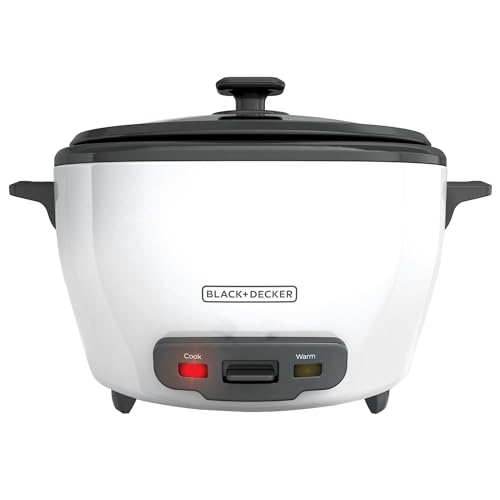
BLACK+DECKER Rice Cooker 6-Cup
Badge: Best Small-Bench Basic
This BLACK+DECKER is the pool’s honest basic: a 6-cup cooked rice cooker with a steaming basket and a removable non-stick bowl, operated with the kind of simplicity that needs no manual after the first use. That simplicity is a feature for the right buyer. In a first flat, a student kitchen, a holiday house or an office kitchenette, a cooker that anyone can run without instruction beats a feature list nobody opens. The steaming basket lifts it beyond plain rice — broccoli, corn, dumplings and a salmon fillet all cook in the steam while the grains finish below, which is a complete small meal from one plug. The limits are equally clear. Six cups cooked is roughly three modest adult servings of rice, there are no grain programs to fine-tune brown rice or quinoa, and there is no timer to wake up to porridge. Judge it as a dependable small-batch cooker, not a family multicooker, and it makes its case cleanly.
For an Australian buyer, weigh this one against the import effort honestly: it earns the transformer-and-freight route only if its particular strength — the job it does better than local equivalents — is a job your household does weekly, not occasionally.
Strengths
- Simple one-touch operation suits first-time cooker buyers
- Steaming basket included for vegetables, dumplings or fish above the rice
- Removable bowl goes straight to the table and washes easily
Trade-offs
- 6-cup cooked output is small for families or batch cooking
- Basic controls offer no delay timer or grain-specific programs
- Non-stick bowl needs gentle utensils to protect the coating
At a glance: 6-cup cooked; steaming basket included; removable non-stick bowl.
Best for: households whose priority is small-bench basic / Not suited for: buyers whose needs fall outside this model’s size and function range.


AROMA Rice Cooker ARC-363NG 3-Cup
Badge: Best for Singles and Couples
The ARC-363NG is AROMA’s small-format answer: 3 cups uncooked, 6 cups cooked, 1.5 quarts, automatic keep warm. Small cookers are routinely dismissed as novelties, which misses how most small households actually eat. Cooking one cup of rice in a family-size pot wastes energy and often cooks unevenly; a pot sized to the portion gives fluffy results with less sticking and less waste. AROMA also names oatmeal and soup for this model, and both suit it — morning porridge on keep-warm while you get ready, or a two-person soup that simmers without watching a stove. The trade-offs are arithmetic, not quality: you cannot stretch 1.5 quarts into a dinner party, and without digital grain programs you will adjust water and rest time manually for brown rice. As a one-or-two-person daily driver, or a second cooker dedicated to grains while the main pot is busy, it is sized exactly right.
For an Australian buyer, weigh this one against the import effort honestly: it earns the transformer-and-freight route only if its particular strength — the job it does better than local equivalents — is a job your household does weekly, not occasionally.
Strengths
- Compact 1.5 Qt body suits small benches, dorms and caravans
- Auto keep warm removes the timing pressure from small meals
- Works beyond rice — oatmeal and soup are named use cases, and it shows
Trade-offs
- 6-cup cooked ceiling rules out family dinners and entertaining
- No digital programs, so brown rice needs a water-ratio adjustment and patience
- Small pot means sauces and soups are side-quantity, not main-quantity
At a glance: 3-cup uncooked / 6-cup cooked; 1.5 Qt; auto keep warm; positioned for rice, oatmeal and soup.
Best for: households whose priority is for singles and couples / Not suited for: buyers whose needs fall outside this model’s size and function range.
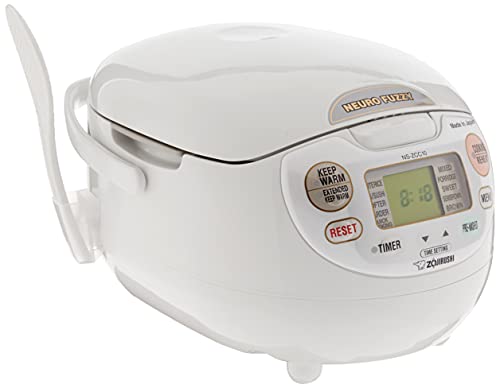
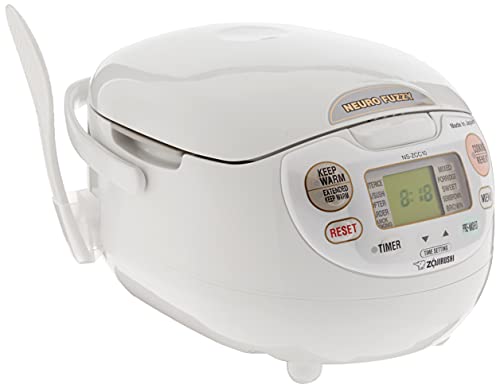
Zojirushi NS-ZCC10 Neuro Fuzzy Rice Cooker
Badge: Best Premium for Rice Lovers
Zojirushi’s Neuro Fuzzy line is what rice enthusiasts measure other cookers against, and the NS-ZCC10 shows why. The system does not follow a fixed timer; it reasons about the cooking curve in broad terms — how the pot is heating, how the grain is absorbing — and adjusts, which is why results stay consistent across jasmine, basmati, sushi and brown rice with less babysitting of water ratios. The delay timer and automatic keep-warm complete the weekday picture: load it in the morning, and rice is ready when you are, held at serving texture rather than drying out. Be clear about what it is not. This is a rice specialist, not a wide multicooker — there is no saute stage for building a stew base and no slow-cook program competing with a dedicated crock. The premium is paid for one thing done exceptionally well. If rice is a near-daily staple in your house, that specialisation is the point, not the compromise.
For an Australian buyer, weigh this one against the import effort honestly: it earns the transformer-and-freight route only if its particular strength — the job it does better than local equivalents — is a job your household does weekly, not occasionally.
Strengths
- Neuro Fuzzy system is the reference standard for repeatable rice texture
- Delay timer plus keep-warm makes set-and-forget weekday rice realistic
- Even small portions cook evenly, which cheaper pots often fail at
Trade-offs
- Premium-tier positioning — you pay for precision, not capacity or functions
- Rice-focused: no saute or slow-cook breadth compared with wider multicookers
- White finish shows turmeric and tomato splashes more than darker bodies
At a glance: Neuro Fuzzy logic; automatic keep-warm; delay timer; white finish.
Best for: households whose priority is premium for rice lovers / Not suited for: buyers whose needs fall outside this model’s size and function range.
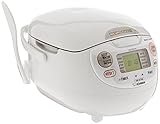

Zojirushi NS-TSC10 5.5-Cup Micom Rice Cooker
Badge: Best Mid-Size All-Rounder
The NS-TSC10 sits in the most useful size band in this entire pool: 5.5 cups, one litre, computerised Micom control with a clear LCD and a delay timer. For couples and small families it avoids both failure modes — the tiny pot that cannot handle guests, and the family pot that cooks a single cup badly. Micom control places it a clear step above lever cookers: programs are set deliberately, the cooker manages heat in stages, and the difference shows most on brown rice and mixed grains, where staged soaking and heating change the final texture. The LCD sounds minor until you are setting a delay timer at midnight and can actually read what you programmed. Like its Neuro Fuzzy sibling, it is rice-and-grains first; buyers wanting saute-and-slow-cook breadth should look at the wider-function picks in this guide. Within its lane — daily grains cooked precisely, on a timer, in family-realistic quantity — it is a complete answer.
For an Australian buyer, weigh this one against the import effort honestly: it earns the transformer-and-freight route only if its particular strength — the job it does better than local equivalents — is a job your household does weekly, not occasionally.
Strengths
- 5.5-cup size is the sweet spot for couples and small families
- LCD controls and delay timer make programs easy to set precisely
- Micom control gives more even results than basic lever cookers
Trade-offs
- Premium-tier cost for a mid-size capacity
- Function set centres on rice and grains rather than full multicooker breadth
- 1.0 L working volume fills fast when steaming above a full rice load
At a glance: 5.5-cup capacity; 1.0 L; Micom computerised controls; LCD controls; delay timer.
Best for: households whose priority is mid-size all-rounder / Not suited for: buyers whose needs fall outside this model’s size and function range.
Comparison Table
| Pick | Badge | Capacity | Control style | Listing |
|---|---|---|---|---|
| AROMA Digital Rice Cooker ARC-914SBD | Best Overall | 4-cup uncooked / 8-cup cooked | Digital | Check on Amazon |
| Cosori Rice Cooker 10 Cup with Fuzzy Logic | Best for Large Families | 10-cup uncooked / 20-cup cooked | Fuzzy logic digital | Check on Amazon |
| BLACK+DECKER Rice Cooker 6-Cup | Best Small-Bench Basic | 6-cup cooked | One-touch | Check on Amazon |
| AROMA Rice Cooker ARC-363NG 3-Cup | Best for Singles and Couples | 3-cup uncooked / 6-cup cooked | One-touch with auto keep warm | Check on Amazon |
| Zojirushi NS-ZCC10 Neuro Fuzzy Rice Cooker | Best Premium for Rice Lovers | Neuro Fuzzy logic | Neuro Fuzzy | Check on Amazon |
| Zojirushi NS-TSC10 5.5-Cup Micom Rice Cooker | Best Mid-Size All-Rounder | 5.5-cup capacity | Micom with LCD | Check on Amazon |
Read the table by columns, not rows: fix the capacity column first, because no control system rescues the wrong size, then compare control styles within your size band. The guide to best multi pressure cookers Best Multi Pressure Cookers applies the same comparison to a neighbouring slice of this category.
How to Choose the Right Model When Comparing Best Multi Cookers Australia
Start with cooked capacity, not the number on the box. Cooker sizing is quoted three ways — uncooked cups, cooked cups and quarts — and mixing them up is the most common buying error in this category. As a working rule, one uncooked rice-cooker cup (180 ml) yields roughly two cups cooked and serves one adult as a main portion of rice. A couple eating rice most nights lives happily in the 3-cup uncooked class; a family of four belongs in the 5.5-cup class; batch cookers and hosts should read the cooked-cup figures on the large models and think in terms of events, not dinners.
Then choose your control philosophy. One-touch cookers ask nothing of you and forgive nothing either: the water ratio is yours to get right. Digital models add programs and timers, which buy schedule freedom — porridge ready at waking, rice ready at walking-in time. Fuzzy-logic and Micom models go further and correct mid-cycle, which shows up as consistency: the same texture on a rushed Tuesday as on a careful Sunday. Pay for correction if grains are a daily staple; save the money if the cooker is a twice-a-month appliance.
Count the jobs, honestly. List what the pot must do weekly. Grains plus steaming covers most households and points to the rice-led picks. Adding slow cooking points to the three-in-one digital model or a dedicated stoneware pick. Adding genuine batch volume points to the largest capacities. Every job you credit that you will not actually use inflates the size, the cost tier and the cupboard footprint for no return. The reverse error is just as real: buying a rice-only pot when your Sundays revolve around braises simply moves the problem to a second purchase.
Check the unglamorous details. Removable pots and lids decide cleaning effort; dishwasher-safe stoneware is a genuine quality-of-life feature at family sizes. Lid style decides whether the pot can travel. Bench depth with the lid open decides whether the cooker can live where you plan to use it. And keep warm behaviour decides whether the cooker fits a household that eats in shifts. Readers narrowing the field further will find the same framework applied in best multi purpose rice cookers Best Multi Purpose Rice Cookers.
In Australia, add one decision before all others: the power question. Decide whether you are importing with a transformer, and let that decision push you toward the picks whose performance justifies the effort — the fuzzy-logic and large multi-function models — rather than a basic cooker with local equivalents.
How to Use, Clean and Maintain Your Cooker
First use. Wash the inner pot, lid parts and accessories in warm soapy water, rinse and dry. Run one plain water cycle — or a small sacrificial batch of rice — to clear manufacturing residues, and discard it. Read the water-ratio guidance for your model once, carefully; every later success builds on that first calibration.
Everyday grains, step by step. Rinse rice until the water runs mostly clear to remove surface starch. Add grain and water using the pot’s own measure and markings, not a metric cup from the drawer. Wipe the outside of the inner pot dry before seating it — a wet base spits and can mark the heating plate. Close the lid, select the program, and leave the lid shut for the full cycle plus a ten-minute rest. Fluff with a paddle, serve, and move leftovers to the fridge within a sensible window rather than holding them warm indefinitely.
Steaming and slow cooking. For steaming, keep water below the basket, arrange food in a single layer where you can, and remember the basket cooks in the rice’s steam timetable — delicate fish and greens want the final minutes, dense root vegetables want the whole cycle. For slow cooking, fill stoneware between half and two-thirds for even results, keep the lid closed (every lift costs real cooking time), and add dairy, fresh herbs and quick vegetables near the end.
Cleaning and care. Unplug and let the pot cool. Wash removable pots and lids promptly; grains and sauces set hard overnight. Use non-metal utensils in coated pots, and a soft sponge on ceramic and stoneware alike. Wipe the heating plate and lid underside weekly — stray grains on the plate are the hidden cause of scorched bottoms and uneven cycles. When you first use an imported cooker, test the transformer setup with a simple water-and-rice cycle while you are in the kitchen, confirm the keep-warm stage behaves normally, and store the transformer with ventilation space around it rather than sealed in a cupboard.
Troubleshooting. Problem: rice is gummy → reduce water slightly next cycle, rinse the grain more thoroughly, and respect the ten-minute rest before fluffing. Problem: rice is firm or undercooked at the edges → add a small amount of water, check the lid sealed properly, and confirm nothing was trapped between pot and plate. Problem: slow-cooked meals taste watery → cut added liquid modestly next time, since slow cookers lose little to evaporation, and finish with a short uncovered simmer or a reduction on the stove for sauces that need body.
Buying a Multi Cooker for an Australian Kitchen: Voltage, Plugs and Shipping
Start with the plug, because it decides everything else. Australian sockets are Type I and the mains supply is 230–240V. The cookers in this pool are US-market appliances designed for 120V. Plugging one in through a travel adapter without voltage conversion will damage the cooker and can be dangerous, since heating elements draw serious wattage. A step-down transformer must be rated comfortably above the cooker’s watt draw, which makes it a bulky, deliberate purchase — reasonable for a premium rice cooker you cannot source locally, questionable for a basic model with local equivalents.
Shipping and warranty deserve the same clear-eyed look. International shipping adds freight cost and weeks, not days, and manufacturer warranties on US appliances are generally serviced in the US, so a fault can mean expensive return freight. None of that makes importing the wrong choice — Australians import specialty kitchen gear constantly, and for fuzzy-logic rice cooking the local range genuinely is narrower — but it does mean the premium picks justify the effort better than the basics. If a simple rice cooker is all you need, a local 240V model is the sensible buy; if you want the specific precision of the Zojirushi or Cosori picks here, buy once, convert power properly, and keep the paperwork.
Sizing in Litres: What These Capacities Mean at an Australian Table
American cooker sizing mixes three languages: uncooked cups, cooked cups and quarts. One US quart is roughly 0.95 litres, and a rice-cooker ‘cup’ is the 180 ml measure that ships in the box, not a 250 ml metric cup. Translated: the small 1.5-quart AROMA is about a 1.4-litre pot for one or two people; the 5.5-cup Zojirushi is a 1.0-litre cooker for couples and small families; the big 20-cup AROMA yields roughly ten metric cups of cooked rice and beyond, into party territory.
Match that to Australian eating patterns. A household cooking rice for a stir-fry night, a curry Friday and Sunday fried rice from leftovers is a mid-size household, and the 5.5-cup class is its natural home. The mini and 3-cup models suit singles, couples in units, and the increasingly common second-cooker setup where grains cook separately from the main dish. The large digital AROMA earns its bench space in share houses and big families, where one appliance that also slow cooks and steams replaces a shelf of single-purpose gear in a small rental kitchen.
However your shortlist settles, keep the neighbouring question in view: the guide to best multi use electric pressure cookers Best Multi Use Electric Pressure Cookers covers the adjacent slice of this category with the same verified pool, and cross-reading the two is the fastest way to confirm you have chosen the right family of cooker before you buy.
A Week of Cooking in an Australian Household
Picture a fairly typical Australian week and watch where a cooker earns its keep. Monday is a stir-fry night: rice started when the chopping starts, vegetables steamed above it in the final minutes, and the whole meal lands together without a second pot to wash. Wednesday leans on leftovers — fried rice from Monday’s batch, which is precisely why cooking a little extra grain early in the week is a strategy rather than an accident. Friday is curry night, the natural home of the mid-size and large picks, where a full pot of rice anchors the table and keep warm covers the second helpings and the late arrivals.
The pattern underneath every version of that week is the same: the cooker succeeds when it removes decisions, not when it adds features. A pot on a timer removes the six o’clock question. A pot with keep warm removes the coordination problem of a household eating in shifts. A pot big enough for a double batch removes tomorrow’s cooking entirely. When you read the detailed reviews above with your own week in mind, those are the moments to test each pick against — not the function count, and not the badge, but the specific weeknight where the appliance either saves you or sits there.
Breakfast deserves a sentence of its own, because it is the meal most cooker buyers forget to plan for and the one where timers quietly transform mornings. Porridge and oatmeal cook beautifully in the rice-led picks in this pool, and waking to a warm pot instead of a stove task is the kind of small daily win that turns an appliance into a habit. If your household eats cooked breakfasts even three times a week, weight the timer-equipped picks more heavily than their badges alone suggest.
Leftovers are the third meal every cooker cooks, whether you plan them or not. Grains refrigerate well for several days and freeze well for longer; slow-cooked stews and sauces famously improve overnight as flavours settle. Choose lids, pots and portion sizes with the second serving in mind — a cooker whose output matches your household plus one planned leftover meal is sized more cleverly than one matched to a single dinner. That single adjustment, cooking for tonight plus tomorrow’s lunch, is the highest-return habit in this entire category.
Common Buying Mistakes
One habit separates satisfied cooker owners from frustrated ones: cooking the same grain three times in the first week. The first cycle teaches you the pot’s basic timing, the second lets you adjust the water ratio to your taste, and by the third you have a personal setting — a little more water for softer rice, a rest on keep warm for firmer grains — that no manual can give you, because it is calibrated to your rice, your water and your preference. Write that ratio on a note inside the cupboard door. It sounds trivial; it is the difference between an appliance you trust and one you second-guess.
Water quality quietly changes results. Very hard water can leave mineral film on pots and slightly firm grain surfaces, while softened water can push rice toward softness at ratios that worked before a move. If your results change after moving house or fitting a filter, suspect the water before the cooker, and adjust in small steps — a spoonful or two of water per cup of grain at a time. The same applies to altitude: higher kitchens boil at lower temperatures, grains absorb more slowly, and a small water increase plus a longer rest usually restores the texture you had at sea level.
Resting is the most skipped stage in cooker cooking. Grains finish unevenly the moment a cycle ends — wetter at the centre, firmer at the edges — and ten minutes resting with the lid closed lets moisture equalise through the pot. Slow-cooked dishes benefit the same way: a short rest off the heat lets sauces settle and meat fibres relax before shredding or slicing. Build the rest into your timing rather than treating the beep as the finish line, and every pick in this guide performs closer to its best.
Storage decides whether a cooker gets used. A pot that lives on the bench gets used weekly; a pot buried behind other appliances gets used monthly, whatever its functions. When you choose a size, choose its home at the same time — a bench corner, a deep drawer, a cupboard shelf with the cord managed — and measure that space, not an imaginary one. Owners of the larger picks in this guide consistently report the same pattern: the households that planned storage use the big pot constantly, and the ones that did not, quietly stop.
Finally, think in terms of cost per use rather than purchase tiers. A premium cooker used three hundred times a year for a decade is one of the cheapest appliances in the kitchen per meal, while a bargain cooker abandoned after a season is expensive at any price. That arithmetic favours buying the pick whose size and functions match your real routine — and it is why this guide keeps returning to household size, weekly frequency and the specific meals you cook, rather than to feature lists.
Buying cooked capacity when the listing meant uncooked, or the reverse. The two figures differ by a factor of two, and confusing them is the single most common reason cookers get returned in this category. Always convert to servings before comparing models.
Paying for functions instead of fit. An eighteen-function panel used for two programs is worse value than a simple pot used daily, and it usually comes in a larger body that crowds the bench. Match the function list to your written weekly menu, not to an imagined one.
Ignoring the lid-open measurement. Cookers are measured closed and used open. A tall pot under low wall cupboards can be unusable in the exact spot you planned for it. Measure the open height against your kitchen before ordering, especially for the large-capacity picks.
Treating keep warm as storage. Keep warm is a serving feature measured in hours, not a food-safety strategy measured in days. Refrigerate leftovers promptly, reheat them thoroughly, and let the cooker’s convenience end where food safety begins.
Final Recommendation
For most readers of this guide, the first choice is the AROMA Digital Rice Cooker ARC-914SBD: it leads the shortlist because it answers the best multi cookers australia question most completely for a typical household, balancing size, control and the jobs a cooker is actually asked to do each week. Start there, and only move away from it for a specific reason.
The reasons to move are clear. If the lead pick’s size or specialisation does not match your household, the Cosori Rice Cooker 10 Cup with Fuzzy Logic is the strongest alternative, trading the lead’s balance for its own distinct strength. And readers whose cooking leans the other way — smaller households, tighter benches, or a narrower set of weekly jobs — should look seriously at the BLACK+DECKER Rice Cooker 6-Cup before defaulting to the top of the list. Every pick here is defensible; the right one is the one whose trade-offs you will never notice because they sit outside your routine.
Frequently Asked Questions
Can I plug a US multi cooker straight into an Australian power point?
No. These are 120V appliances and Australian mains is 230–240V. A plug-shape adapter does not convert voltage. You would need a step-down transformer rated above the cooker’s wattage, or you should choose a locally sold 240V model instead.
Which size suits a typical Australian household of four?
The 5.5-cup class, around 1.0 litre uncooked capacity, covers a family of four for a rice-based dinner with modest leftovers. Households that batch cook or entertain often should look at the large digital pick instead.
Is it worth importing a fuzzy-logic rice cooker to Australia?
It can be, because the local range of high-end fuzzy-logic models is limited. Weigh freight, the transformer requirement and US-based warranty service against the texture improvement, which is real for households eating rice most days.
What does keep warm do to rice over several hours?
Keep warm holds rice at serving temperature and gradually dries it. For best texture, serve within a few hours, fluff before serving, and refrigerate leftovers promptly rather than holding them warm all day.
Can these cookers handle Australian power with a transformer long term?
A correctly rated, quality step-down transformer handles a heating appliance fine, but it adds cost, bulk and one more device on the bench. Factor it into the purchase decision rather than treating it as an afterthought.
Which pick is best for a small rental kitchen in Australia?
The compact AROMA 3-cup or the mid-size Zojirushi, depending on household size. Both minimise bench footprint, and the AROMA doubles as an oatmeal and soup maker for one or two people.