Disclosure: topratedkitchenware.com is reader-supported. When you buy through links on our site, we may earn an affiliate commission from Amazon and other retailers, at no extra cost to you.
Where to buy
These six picks answer the search for best multi pot cookers: all six are sold on Amazon. Start with the shortlist here, read the full reviews further down, and use any Check on Amazon link to see the live listing for that exact model before you buy. Read the full guide ↓
- Zojirushi NS-ZCC10 Neuro Fuzzy Rice Cooker — Best Premium for Rice Lovers. Check on Amazon
- Zojirushi NS-TSC10 5.5-Cup Micom Rice Cooker — Best Mid-Size All-Rounder. Check on Amazon
- Dash Mini Rice Cooker 2-Cup — Best Personal Size. Check on Amazon
- BLACK+DECKER 16-Cup Rice Cooker RC516 — Best for Gatherings. Check on Amazon
- Aroma Housewares ARC-363-1NGB Rice Cooker and Multicooker — Best Compact Multicooker. Check on Amazon
- Aroma Housewares 20-Cup Digital Rice Cooker and Slow Cooker ARC-150SB — Best Three-in-One System. Check on Amazon
Finding the best multi pot cookers for your kitchen is less about chasing the longest function list and more about matching one honest pot to the way your household actually eats. This guide compares six verified models — spanning compact rice-led multicookers, fuzzy-logic precision cookers, three-in-one digital pots and large family slow cookers — and ranks them for any kitchen buyers who want one appliance to carry grains, steaming, batch cooking and weeknight dinners without guesswork.
The phrase multi pot cooker describes an idea more than a single product category: one pot, several jobs. In practice the pool splits into three families that all honour that idea differently. Digital rice-led multicookers add steaming, slow cooking and saute-style functions around a grain core. Simple rice cookers with steamer baskets cover the two jobs most households repeat daily. And large one-touch pots trade programs for sheer volume. Choosing well means deciding which family’s version of ‘multi’ matches your week — the daily grain-plus-steam rhythm, the set-and-forget batch session, or the one big pot that feeds everyone at once.
Every pick below was chosen from a verified research pool, with specifications taken only from confirmed product data. There are no prices printed in this guide, because listing prices move constantly; each pick instead carries Check on Amazon links so you can see the live listing for the exact model. If your needs sit between categories, readers comparing best multi pourpose cookers will find the same shortlist framed for that market, and the sections after the reviews explain the sizing maths in plain terms.
Key Takeaways
- Best overall for most households: the Zojirushi NS-ZCC10 Neuro Fuzzy Rice Cooker, which balances capacity, control and everyday ease.
- Size honestly: small pots cook small amounts better, and large pots only earn their space if you batch cook or host.
- Fuzzy-logic and Micom models forgive water-ratio mistakes and improve brown rice; simple one-touch models win on ease and value tier.
- Only the wider digital models truly combine rice, steaming and slow cooking in one body; the stoneware picks are slow-cooking specialists.
- For multi pot buying, rank your three most-cooked meals and check each pick against them specifically. A cooker that nails your actual top three beats a cooker with eighteen functions that only approximately covers them.
In this guide
Quick Picks: Best Multi Pot Cookers
| Badge | Pick | Key specification | Best for |
|---|---|---|---|
| Best Premium for Rice Lovers | Zojirushi NS-ZCC10 Neuro Fuzzy Rice Cooker | Neuro Fuzzy logic; automatic keep-warm; delay timer; white finish | See the full review below |
| Best Mid-Size All-Rounder | Zojirushi NS-TSC10 5.5-Cup Micom Rice Cooker | 5.5-cup capacity; 1.0 L; Micom computerised controls; LCD controls; delay timer | See the full review below |
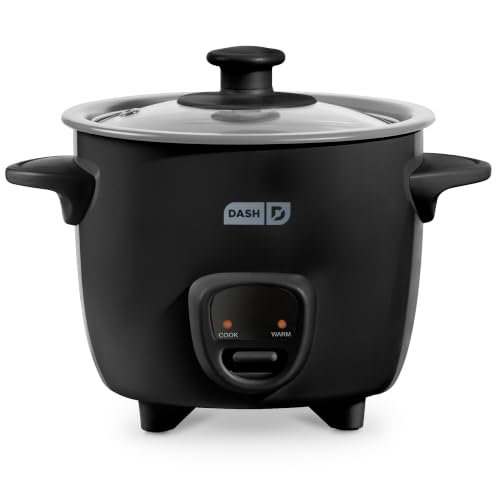
| Best Personal Size | Dash Mini Rice Cooker 2-Cup | 2-cup cooked; 1-cup uncooked; removable ceramic nonstick pot; keep warm function; cooks oatmeal, quinoa and grains | See the full review below |
| Best for Gatherings | BLACK+DECKER 16-Cup Rice Cooker RC516 | 16-cup cooked; 8-cup uncooked; steaming basket; removable non-stick bowl; one-touch operation | See the full review below |
| Best Compact Multicooker | Aroma Housewares ARC-363-1NGB Rice Cooker and Multicooker | 3-cup uncooked / 6-cup cooked; steamer and multicooker positioning; 2–6 cup range; black finish | See the full review below |
| Best Three-in-One System | Aroma Housewares 20-Cup Digital Rice Cooker and Slow Cooker ARC-150SB | 20-cup cooked / 10-cup uncooked; digital controls; slow cooker and food steamer functions; stainless steel exterior | See the full review below |
Badges are used consistently through this guide: the badge a pick earns here is the badge it carries into its detailed review, so you can track any model from this table to its strengths, trade-offs and verdict in seconds. Readers whose priority is pressure-style speed should also scan best multi pressure cookers Best Multi Pressure Cookers alongside this shortlist.
How These Picks Were Chosen
This is a research-led guide. The six models come from a verified pick pool built from confirmed product listings, and every specification printed here — capacities, functions, materials, timers — is taken from that verified data rather than from marketing summaries or memory. Where a specification was not in the verified data, it is not printed. That discipline matters in this category, because cooker listings routinely blur uncooked and cooked capacity, and a guide that repeats the blur sends you home with the wrong size.
The ranking weighs five things, in this order: capacity matched to real household sizes; control type, from one-touch simplicity to fuzzy-logic correction; the breadth of jobs the pot genuinely covers; cleaning and storage practicality; and the honesty of the trade-offs. No pick here is hands-on tested by us, and we will not pretend otherwise — instead, the method is comparative research across verified specifications, manufacturer documentation and the patterns that recur in owner experience for each model class. Prices and popularity rankings were deliberately excluded from the scoring, because both change faster than a guide can responsibly track.
One more filter was applied for this keyword specifically: relevance to the best multi pot cookers search itself. Models were ordered so the picks that best answer this angle lead the guide, even where a different ordering would suit a general list. If your angle is narrower — say, the compact end of the market — the guide on best multi purpose rice cookers Best Multi Purpose Rice Cookers applies the same pool to that question.
The 6 Best Options for Best Multi Pot Cookers
Zojirushi NS-ZCC10 Neuro Fuzzy Rice Cooker
Badge: Best Premium for Rice Lovers
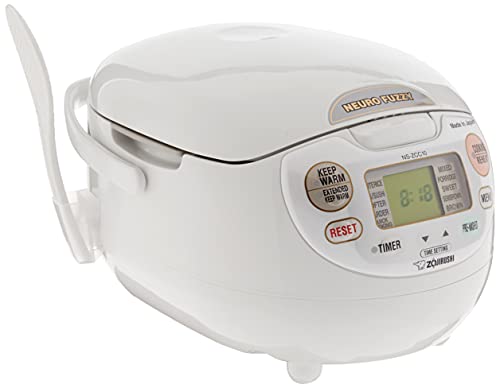
Zojirushi’s Neuro Fuzzy line is what rice enthusiasts measure other cookers against, and the NS-ZCC10 shows why. The system does not follow a fixed timer; it reasons about the cooking curve in broad terms — how the pot is heating, how the grain is absorbing — and adjusts, which is why results stay consistent across jasmine, basmati, sushi and brown rice with less babysitting of water ratios. The delay timer and automatic keep-warm complete the weekday picture: load it in the morning, and rice is ready when you are, held at serving texture rather than drying out. Be clear about what it is not. This is a rice specialist, not a wide multicooker — there is no saute stage for building a stew base and no slow-cook program competing with a dedicated crock. The premium is paid for one thing done exceptionally well. If rice is a near-daily staple in your house, that specialisation is the point, not the compromise.
In a multi pot setup, this model’s role is defined by its strongest job: build your weekly rotation around that job, and let other vessels — or a second, complementary pot — cover the stages it does not claim.
Strengths
- Neuro Fuzzy system is the reference standard for repeatable rice texture
- Delay timer plus keep-warm makes set-and-forget weekday rice realistic
- Even small portions cook evenly, which cheaper pots often fail at
Trade-offs
- Premium-tier positioning — you pay for precision, not capacity or functions
- Rice-focused: no saute or slow-cook breadth compared with wider multicookers
- White finish shows turmeric and tomato splashes more than darker bodies
At a glance: Neuro Fuzzy logic; automatic keep-warm; delay timer; white finish.
Best for: households whose priority is premium for rice lovers / Not suited for: buyers whose needs fall outside this model’s size and function range.

Zojirushi NS-TSC10 5.5-Cup Micom Rice Cooker
Badge: Best Mid-Size All-Rounder
The NS-TSC10 sits in the most useful size band in this entire pool: 5.5 cups, one litre, computerised Micom control with a clear LCD and a delay timer. For couples and small families it avoids both failure modes — the tiny pot that cannot handle guests, and the family pot that cooks a single cup badly. Micom control places it a clear step above lever cookers: programs are set deliberately, the cooker manages heat in stages, and the difference shows most on brown rice and mixed grains, where staged soaking and heating change the final texture. The LCD sounds minor until you are setting a delay timer at midnight and can actually read what you programmed. Like its Neuro Fuzzy sibling, it is rice-and-grains first; buyers wanting saute-and-slow-cook breadth should look at the wider-function picks in this guide. Within its lane — daily grains cooked precisely, on a timer, in family-realistic quantity — it is a complete answer.
In a multi pot setup, this model’s role is defined by its strongest job: build your weekly rotation around that job, and let other vessels — or a second, complementary pot — cover the stages it does not claim.
Strengths
- 5.5-cup size is the sweet spot for couples and small families
- LCD controls and delay timer make programs easy to set precisely
- Micom control gives more even results than basic lever cookers
Trade-offs
- Premium-tier cost for a mid-size capacity
- Function set centres on rice and grains rather than full multicooker breadth
- 1.0 L working volume fills fast when steaming above a full rice load
At a glance: 5.5-cup capacity; 1.0 L; Micom computerised controls; LCD controls; delay timer.
Best for: households whose priority is mid-size all-rounder / Not suited for: buyers whose needs fall outside this model’s size and function range.

Dash Mini Rice Cooker 2-Cup
Badge: Best Personal Size
The Dash Mini is the smallest cooker in this pool and the most honest about it: one cup uncooked, two cups cooked, a removable ceramic nonstick pot, and a keep warm function. It exists for the single serving — the dorm room, the studio flat, the office desk, the caravan, the one person in a household who eats rice when nobody else does. Single servings are where big cookers fail worst, spreading a thin layer across a wide pot; the Mini’s narrow pot is built for exactly that layer depth. Dash also names oatmeal and quinoa, and both work at this scale as single-bowl breakfasts or lunches. There are no programs and no timer, and the capacity ceiling is absolute — this cannot help with guests, ever. But as a personal appliance it replaces a saucepan, a stove watch and a takeaway habit for very little bench space, and the lift-out pot means washing up is a one-item job.
In a multi pot setup, this model’s role is defined by its strongest job: build your weekly rotation around that job, and let other vessels — or a second, complementary pot — cover the stages it does not claim.
Strengths
- Personal size cooks a single serving without waste or guesswork
- Ceramic nonstick pot lifts out for serving and easy washing
- Keep warm function suits staggered mornings and desk lunches
Trade-offs
- 2-cup cooked output is strictly one-person territory
- No timer or programs — it is a simple, single-job design
- Too small for soups or steaming anything beyond a token portion
At a glance: 2-cup cooked; 1-cup uncooked; removable ceramic nonstick pot; keep warm function; cooks oatmeal, quinoa and grains.
Best for: households whose priority is personal size / Not suited for: buyers whose needs fall outside this model’s size and function range.

BLACK+DECKER 16-Cup Rice Cooker RC516
Badge: Best for Gatherings
The RC516 is the volume pick: 16 cups cooked from 8 cups uncooked, one-touch operation, a steaming basket and a removable non-stick bowl. This is the cooker for the house that hosts — extended family dinners, sports-club meals, faith-community lunches, holiday sides — and for the serious meal-prepper who cooks a week of grains on Sunday. One-touch control is the right interface at this scale, because the person running a 16-cup batch is usually also running five other dishes; there is nothing to program and nothing to mis-set. The steaming basket at this size is genuinely useful, turning the top layer into a vegetable course for the same crowd. The compromises are physical and practical: it is a large appliance to store, and like all big pots it cooks small quantities badly, so a household of two still needs a small cooker for weeknights. Treat it as the event-and-batch specialist and it earns its cupboard space.
In a multi pot setup, this model’s role is defined by its strongest job: build your weekly rotation around that job, and let other vessels — or a second, complementary pot — cover the stages it does not claim.
Strengths
- 16-cup cooked capacity handles gatherings, teams and big batch prep
- One-touch operation means anyone can run a full batch without training
- Steaming basket scales too — vegetables for a crowd cook above the rice
Trade-offs
- Bulky body needs real bench and cupboard space
- Simple controls only — no programs for different grains
- A near-empty pot cooks small amounts poorly, so it cannot be your only cooker for two
At a glance: 16-cup cooked; 8-cup uncooked; steaming basket; removable non-stick bowl; one-touch operation.
Best for: households whose priority is for gatherings / Not suited for: buyers whose needs fall outside this model’s size and function range.

Aroma Housewares ARC-363-1NGB Rice Cooker and Multicooker
Badge: Best Compact Multicooker
The ARC-363-1NGB takes AROMA’s proven 3-cup platform and leans it toward multicooker duty: rice cooker, steamer and small one-pot cooker in a black, bench-friendly body covering the 2-to-6-cup cooked range. That range is the daily reality for singles and couples, and the multicooker framing is fair at this scale — a small pot that steams dumplings over rice, simmers a two-person soup, or cooks oatmeal for breakfast is doing several jobs, even without a digital panel. The black finish is a practical choice that shows fewer cooking stains than the white small appliances most kitchens accumulate. What it does not have is automation: no delay timer, no grain programs, no display. You trade those for simplicity, size and a cooker that can be explained to a guest in one sentence. For a first apartment or a small household that cooks grains most days, that trade is well judged.
In a multi pot setup, this model’s role is defined by its strongest job: build your weekly rotation around that job, and let other vessels — or a second, complementary pot — cover the stages it does not claim.
Strengths
- Multicooker positioning in a compact body — rice, steaming and simple one-pot dishes
- Black finish hides the stains that show on white small appliances
- 2–6 cup range matches singles, couples and small sides precisely
Trade-offs
- 6-cup cooked ceiling — not a family or entertaining size
- No digital display or delay timer at this level
- Steaming and rice at full load together crowd the small pot
At a glance: 3-cup uncooked / 6-cup cooked; steamer and multicooker positioning; 2–6 cup range; black finish.
Best for: households whose priority is compact multicooker / Not suited for: buyers whose needs fall outside this model’s size and function range.

Aroma Housewares 20-Cup Digital Rice Cooker and Slow Cooker ARC-150SB
Badge: Best Three-in-One System
The ARC-150SB is the consolidation pick: a 20-cup cooked digital rice cooker that also slow cooks and steams, in a stainless steel exterior. Its argument is arithmetic — if one body credibly replaces a rice cooker, a slow cooker and a steamer, a small kitchen gains two cupboards back. The digital controls are what make the claim hold, because slow cooking and steaming need set-and-forget timing rather than a lever and a prayer. Families will use the capacity weekly, not just at holidays: 10 cups uncooked is a genuine batch size for fried-rice prep, burrito bowls and feeding a table. Honest limits: a metal multi-pot slow-cooks differently from heavy stoneware — edges run warmer, so delicate sauces need a stir — and the pot is far too large for a single cup of rice. Buy it as a system replacement for a household that will use all three functions, and the value case is strong.
In a multi pot setup, this model’s role is defined by its strongest job: build your weekly rotation around that job, and let other vessels — or a second, complementary pot — cover the stages it does not claim.
Strengths
- Combines rice, slow cooking and steaming — three appliances in one body
- 20-cup cooked capacity covers families, gatherings and weekly prep
- Digital controls make the slow-cook and steam functions set-and-forget
Trade-offs
- Large footprint — this replaces other appliances or it crowds them out
- Slow-cook results differ from a heavy stoneware crock; liquids run hotter
- Too much pot for one or two cups of rice on a weeknight
At a glance: 20-cup cooked / 10-cup uncooked; digital controls; slow cooker and food steamer functions; stainless steel exterior.
Best for: households whose priority is three-in-one system / Not suited for: buyers whose needs fall outside this model’s size and function range.
Comparison Table
| Pick | Badge | Capacity | Control style | Listing |
|---|---|---|---|---|
| Zojirushi NS-ZCC10 Neuro Fuzzy Rice Cooker | Best Premium for Rice Lovers | Neuro Fuzzy logic | Neuro Fuzzy | Check on Amazon |
| Zojirushi NS-TSC10 5.5-Cup Micom Rice Cooker | Best Mid-Size All-Rounder | 5.5-cup capacity | Micom with LCD | Check on Amazon |
| Dash Mini Rice Cooker 2-Cup | Best Personal Size | 2-cup cooked | One-touch with keep warm | Check on Amazon |
| BLACK+DECKER 16-Cup Rice Cooker RC516 | Best for Gatherings | 16-cup cooked | One-touch | Check on Amazon |
| Aroma Housewares ARC-363-1NGB Rice Cooker and Multicooker | Best Compact Multicooker | 3-cup uncooked / 6-cup cooked | One-touch | Check on Amazon |
| Aroma Housewares 20-Cup Digital Rice Cooker and Slow Cooker ARC-150SB | Best Three-in-One System | 20-cup cooked / 10-cup uncooked | Digital | Check on Amazon |
Read the table by columns, not rows: fix the capacity column first, because no control system rescues the wrong size, then compare control styles within your size band. The guide to best multi use electric pressure cookers Best Multi Use Electric Pressure Cookers applies the same comparison to a neighbouring slice of this category.
How to Choose the Right Model When Comparing Best Multi Pot Cookers
Start with cooked capacity, not the number on the box. Cooker sizing is quoted three ways — uncooked cups, cooked cups and quarts — and mixing them up is the most common buying error in this category. As a working rule, one uncooked rice-cooker cup (180 ml) yields roughly two cups cooked and serves one adult as a main portion of rice. A couple eating rice most nights lives happily in the 3-cup uncooked class; a family of four belongs in the 5.5-cup class; batch cookers and hosts should read the cooked-cup figures on the large models and think in terms of events, not dinners.
Then choose your control philosophy. One-touch cookers ask nothing of you and forgive nothing either: the water ratio is yours to get right. Digital models add programs and timers, which buy schedule freedom — porridge ready at waking, rice ready at walking-in time. Fuzzy-logic and Micom models go further and correct mid-cycle, which shows up as consistency: the same texture on a rushed Tuesday as on a careful Sunday. Pay for correction if grains are a daily staple; save the money if the cooker is a twice-a-month appliance.
Count the jobs, honestly. List what the pot must do weekly. Grains plus steaming covers most households and points to the rice-led picks. Adding slow cooking points to the three-in-one digital model or a dedicated stoneware pick. Adding genuine batch volume points to the largest capacities. Every job you credit that you will not actually use inflates the size, the cost tier and the cupboard footprint for no return. The reverse error is just as real: buying a rice-only pot when your Sundays revolve around braises simply moves the problem to a second purchase.
Check the unglamorous details. Removable pots and lids decide cleaning effort; dishwasher-safe stoneware is a genuine quality-of-life feature at family sizes. Lid style decides whether the pot can travel. Bench depth with the lid open decides whether the cooker can live where you plan to use it. And keep warm behaviour decides whether the cooker fits a household that eats in shifts. Readers narrowing the field further will find the same framework applied in best multi use pressure cookers Best Multi Use Pressure Cookers.
For multi pot buying, rank your three most-cooked meals and check each pick against them specifically. A cooker that nails your actual top three beats a cooker with eighteen functions that only approximately covers them.
How to Use, Clean and Maintain Your Cooker
First use. Wash the inner pot, lid parts and accessories in warm soapy water, rinse and dry. Run one plain water cycle — or a small sacrificial batch of rice — to clear manufacturing residues, and discard it. Read the water-ratio guidance for your model once, carefully; every later success builds on that first calibration.
Everyday grains, step by step. Rinse rice until the water runs mostly clear to remove surface starch. Add grain and water using the pot’s own measure and markings, not a metric cup from the drawer. Wipe the outside of the inner pot dry before seating it — a wet base spits and can mark the heating plate. Close the lid, select the program, and leave the lid shut for the full cycle plus a ten-minute rest. Fluff with a paddle, serve, and move leftovers to the fridge within a sensible window rather than holding them warm indefinitely.
Steaming and slow cooking. For steaming, keep water below the basket, arrange food in a single layer where you can, and remember the basket cooks in the rice’s steam timetable — delicate fish and greens want the final minutes, dense root vegetables want the whole cycle. For slow cooking, fill stoneware between half and two-thirds for even results, keep the lid closed (every lift costs real cooking time), and add dairy, fresh herbs and quick vegetables near the end.
Cleaning and care. Unplug and let the pot cool. Wash removable pots and lids promptly; grains and sauces set hard overnight. Use non-metal utensils in coated pots, and a soft sponge on ceramic and stoneware alike. Wipe the heating plate and lid underside weekly — stray grains on the plate are the hidden cause of scorched bottoms and uneven cycles. Build a one-pot meal in layers: aromatics and any saute stage first, grains and liquid second, quick-cooking vegetables in the steamer basket for the final stretch, proteins rested on top during keep warm rather than cooked to death in the full cycle.
Troubleshooting. Problem: rice is gummy → reduce water slightly next cycle, rinse the grain more thoroughly, and respect the ten-minute rest before fluffing. Problem: rice is firm or undercooked at the edges → add a small amount of water, check the lid sealed properly, and confirm nothing was trapped between pot and plate. Problem: slow-cooked meals taste watery → cut added liquid modestly next time, since slow cookers lose little to evaporation, and finish with a short uncovered simmer or a reduction on the stove for sauces that need body.
What ‘Multi’ Really Means in a Multi Pot Cooker
Marketing counts functions; cooks should count transitions. A genuinely multi pot cooker lets a meal move through stages without changing vessels: soften onions, add grains and liquid, cook, steam vegetables on top near the end, hold warm until serving. The wider-function picks in this pool support most of that chain, while the simpler rice cookers support the shorter version — grains below, steaming above, serve. Both are honest versions of ‘multi’; they just serve different cooking styles.
The second meaning of multi is temporal. A pot that cooks rice tonight, porridge tomorrow morning on a timer, and a big batch of grains on Sunday for the week’s lunches is multiplying itself across your schedule. Delay timers and reliable keep-warm stages are what make that possible, which is why the digital picks punch above their capacity in real-world usefulness. When you compare models, count the meals per week the pot will actually carry, not the programs printed on the box.
One Big Pot or Two Smaller Ones? The Two-Pot Strategy
Many households end up happiest with a pairing: a small, precise everyday cooker and a large batch pot. The logic is physical. Small amounts cook badly in big pots — thin layers dry at the edges — and big amounts simply do not fit in small ones. A compact cooker for weeknight grains plus a large cooker for gatherings, batch prep and holidays covers the full range with each pot working in its efficient zone.
This pool maps neatly onto that strategy. The mini and 3-cup models are natural everyday partners; the 16-cup and 20-cup models are the batch specialists; the mid-size digital and Micom picks can serve as the single compromise for households that only have space or budget for one. If you entertain rarely and cook for two nightly, spend on the mid-size and skip the giant. If your Sundays involve feeding a crowd, the two-pot pairing will repay itself within a season.
However your shortlist settles, keep the neighbouring question in view: the guide to best multi use slow pressure cookers Best Multi Use Slow Pressure Cookers covers the adjacent slice of this category with the same verified pool, and cross-reading the two is the fastest way to confirm you have chosen the right family of cooker before you buy.
A Week With One Pot: Putting the Multi Idea to Work
The multi pot idea proves itself across a week, not a single meal. Monday: grains and steamed vegetables from the same cycle, with enough rice cooked deliberately extra. Wednesday: that extra rice becomes fried rice in minutes, and the pot turns to porridge duty for the next morning if a timer is fitted. The weekend is batch day — the large picks cook the week’s grains in one session while a stew or soup occupies the slow-cooking option, and by Sunday evening the fridge holds the building blocks of four more dinners.
The pattern underneath every version of that week is the same: the cooker succeeds when it removes decisions, not when it adds features. A pot on a timer removes the six o’clock question. A pot with keep warm removes the coordination problem of a household eating in shifts. A pot big enough for a double batch removes tomorrow’s cooking entirely. When you read the detailed reviews above with your own week in mind, those are the moments to test each pick against — not the function count, and not the badge, but the specific weeknight where the appliance either saves you or sits there.
Breakfast deserves a sentence of its own, because it is the meal most cooker buyers forget to plan for and the one where timers quietly transform mornings. Porridge and oatmeal cook beautifully in the rice-led picks in this pool, and waking to a warm pot instead of a stove task is the kind of small daily win that turns an appliance into a habit. If your household eats cooked breakfasts even three times a week, weight the timer-equipped picks more heavily than their badges alone suggest.
Leftovers are the third meal every cooker cooks, whether you plan them or not. Grains refrigerate well for several days and freeze well for longer; slow-cooked stews and sauces famously improve overnight as flavours settle. Choose lids, pots and portion sizes with the second serving in mind — a cooker whose output matches your household plus one planned leftover meal is sized more cleverly than one matched to a single dinner. That single adjustment, cooking for tonight plus tomorrow’s lunch, is the highest-return habit in this entire category.
Common Buying Mistakes
One habit separates satisfied cooker owners from frustrated ones: cooking the same grain three times in the first week. The first cycle teaches you the pot’s basic timing, the second lets you adjust the water ratio to your taste, and by the third you have a personal setting — a little more water for softer rice, a rest on keep warm for firmer grains — that no manual can give you, because it is calibrated to your rice, your water and your preference. Write that ratio on a note inside the cupboard door. It sounds trivial; it is the difference between an appliance you trust and one you second-guess.
Water quality quietly changes results. Very hard water can leave mineral film on pots and slightly firm grain surfaces, while softened water can push rice toward softness at ratios that worked before a move. If your results change after moving house or fitting a filter, suspect the water before the cooker, and adjust in small steps — a spoonful or two of water per cup of grain at a time. The same applies to altitude: higher kitchens boil at lower temperatures, grains absorb more slowly, and a small water increase plus a longer rest usually restores the texture you had at sea level.
Resting is the most skipped stage in cooker cooking. Grains finish unevenly the moment a cycle ends — wetter at the centre, firmer at the edges — and ten minutes resting with the lid closed lets moisture equalise through the pot. Slow-cooked dishes benefit the same way: a short rest off the heat lets sauces settle and meat fibres relax before shredding or slicing. Build the rest into your timing rather than treating the beep as the finish line, and every pick in this guide performs closer to its best.
Storage decides whether a cooker gets used. A pot that lives on the bench gets used weekly; a pot buried behind other appliances gets used monthly, whatever its functions. When you choose a size, choose its home at the same time — a bench corner, a deep drawer, a cupboard shelf with the cord managed — and measure that space, not an imaginary one. Owners of the larger picks in this guide consistently report the same pattern: the households that planned storage use the big pot constantly, and the ones that did not, quietly stop.
Finally, think in terms of cost per use rather than purchase tiers. A premium cooker used three hundred times a year for a decade is one of the cheapest appliances in the kitchen per meal, while a bargain cooker abandoned after a season is expensive at any price. That arithmetic favours buying the pick whose size and functions match your real routine — and it is why this guide keeps returning to household size, weekly frequency and the specific meals you cook, rather than to feature lists.
Buying cooked capacity when the listing meant uncooked, or the reverse. The two figures differ by a factor of two, and confusing them is the single most common reason cookers get returned in this category. Always convert to servings before comparing models.
Paying for functions instead of fit. An eighteen-function panel used for two programs is worse value than a simple pot used daily, and it usually comes in a larger body that crowds the bench. Match the function list to your written weekly menu, not to an imagined one.
Ignoring the lid-open measurement. Cookers are measured closed and used open. A tall pot under low wall cupboards can be unusable in the exact spot you planned for it. Measure the open height against your kitchen before ordering, especially for the large-capacity picks.
Treating keep warm as storage. Keep warm is a serving feature measured in hours, not a food-safety strategy measured in days. Refrigerate leftovers promptly, reheat them thoroughly, and let the cooker’s convenience end where food safety begins.
Final Recommendation
For most readers of this guide, the first choice is the Zojirushi NS-ZCC10 Neuro Fuzzy Rice Cooker: it leads the shortlist because it answers the best multi pot cookers question most completely for a typical household, balancing size, control and the jobs a cooker is actually asked to do each week. Start there, and only move away from it for a specific reason.
The reasons to move are clear. If the lead pick’s size or specialisation does not match your household, the Zojirushi NS-TSC10 5.5-Cup Micom Rice Cooker is the strongest alternative, trading the lead’s balance for its own distinct strength. And readers whose cooking leans the other way — smaller households, tighter benches, or a narrower set of weekly jobs — should look seriously at the Dash Mini Rice Cooker 2-Cup before defaulting to the top of the list. Every pick here is defensible; the right one is the one whose trade-offs you will never notice because they sit outside your routine.
Longevity is the last lens worth applying before you buy. The cookers in this pool divide into simple machines with very little to fail — a dial, a lever, a heating plate — and electronic machines whose panels and sensors do more and can, eventually, do less. Neither is automatically the better buy. Simple models routinely serve a decade because there is almost nothing in them to break, while the electronic picks repay their complexity every week in timers, programs and corrected cycles. The right question is not which design lasts longer in the abstract, but which one’s daily advantages you will still be using in year three. A delay timer you rely on every morning justifies the electronics; a pot used twice a month for batch grains does not need them. Match complexity to rhythm, keep the heating plate free of stray grains, store the pot with its lid ajar so seals and interiors stay fresh, and any pick in this guide should give long, uneventful service.
One final practical note: keep each cooker’s own measuring cup with the machine. Water markings are calibrated to that 180 ml measure, and substituting a different cup is the most common hidden cause of disappointing first results with any pot in this guide. Store the cup inside the pot itself, and the water ratios you calibrate in the first week will stay accurate for the life of the appliance.
Related guides
- Best Weekend Buy On Instant Pot Cookers
- Best Multi Cookers Australia
- Best Multi Cookers Uk
- Best Trice Cookers
Frequently Asked Questions
What is the difference between a multi pot cooker and a rice cooker?
A rice cooker with a steamer basket already does two jobs. Models marketed as multi pot cookers add more functions — slow cooking, saute-style stages, timers and grain programs — around the same core pot.
How many functions do I actually need?
Most households use three or four weekly: grains, steaming, keep warm and either slow cooking or a delay timer. Long function lists matter less than those core jobs working well.
Can a multi pot cooker replace a slow cooker?
The wider digital picks include a slow-cook function that handles most soups, stews and braises. Heavy stoneware still wins for very gentle, all-day braising texture.
What size multi pot suits meal prep?
Look at the large digital pick or the 16-cup model. Weekly grain and protein batches need cooked capacity in the teens of cups to be worth the session.
Is fuzzy logic worth it in a multi pot?
For households eating rice and grains most days, yes — it forgives measuring errors and improves brown rice noticeably. Occasional rice eaters will not feel the difference enough to justify the premium tier.
Can I cook pasta or eggs in these pots?
Boiled eggs steam beautifully above water or rice, and small pasta shapes cook in the pot with absorbed liquid, risotto-style. Long pasta and large volumes belong in a stovetop pot.