Disclosure: As an Amazon Associate, Reviews Took earns from qualifying purchases. Links to Amazon on this page are affiliate links; they cost you nothing extra.
Check capacity, material and temperature control.
This guide is built from Amazon product listings and maker specs, not our own testing, so confirm size, contents and current price on each product page.
Check the current price on Amazon before you buy.
Last updated: November 2, 2026.
In this guide
Quick Picks
| Product | Type | Best for |
|---|---|---|
| Cosori Stainless Steel Electric Kettle No Plastic Contact | Electric kettle | tea and fast hot water |
| Proctor Silex 1 Liter Electric Tea Kettle Water Boiler & Heater | Electric kettle | tea and fast hot water |
| MEGAWISE 1.8L Electric Glass Kettle with Auto Shut-Off and Blue | Electric kettle | tea and fast hot water |
| Amazon Basics Electric Kettle with Glass Carafe for Tea | Electric kettle | tea and fast hot water |
| BLACK+DECKER 1.7L Cordless Electric Kettle Gray | Electric kettle | tea and fast hot water |
| OVENTE 1.7L Electric Tea Kettle Fast Boiling Water Heater White | Electric kettle | tea and fast hot water |
| Hamilton Beach 1 Liter Electric Tea Kettle Water Boiler & Heater | Electric kettle | tea and fast hot water |
| Cuisinart 1.7 L. Programmable Electric Kettle Tea Kettle CPK-17P1 | Electric kettle | tea and fast hot water |
Our Picks

Top pickBest for tea and fast hot water
1. Cosori Stainless Steel Electric Kettle No Plastic Contact
A Cosori Stainless Steel Electric Kettle No Plastic Contact (electric kettle), per the listing. Check price on Amazon.
Good for: tea and fast hot water. Watch out: Check capacity and material.
Best for tea and fast hot water
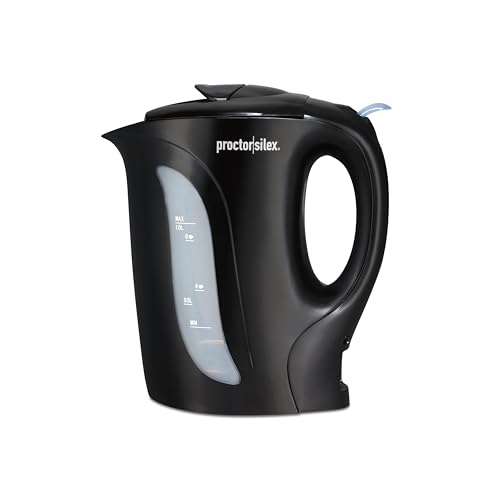
2. Proctor Silex 1 Liter Electric Tea Kettle Water Boiler & Heater
A Proctor Silex 1 Liter Electric Tea Kettle Water Boiler & Heater (electric kettle), per the listing. Check price on Amazon.
Good for: tea and fast hot water. Watch out: Check capacity and material.

Best for tea and fast hot water
3. MEGAWISE 1.8L Electric Glass Kettle with Auto Shut-Off and Blue
A MEGAWISE 1.8L Electric Glass Kettle with Auto Shut-Off and Blue (electric kettle), per the listing. Check price on Amazon.
Good for: tea and fast hot water. Watch out: Check capacity and material.

Best for tea and fast hot water
4. Amazon Basics Electric Kettle with Glass Carafe for Tea
An Amazon Basics Electric Kettle with Glass Carafe for Tea (electric kettle), per the listing. Check price on Amazon.
Good for: tea and fast hot water. Watch out: Check capacity and material.

Best for tea and fast hot water
5. BLACK+DECKER 1.7L Cordless Electric Kettle Gray
A BLACK+DECKER 1.7L Cordless Electric Kettle Gray (electric kettle), per the listing. Check price on Amazon.
Good for: tea and fast hot water. Watch out: Check capacity and material.
Best for tea and fast hot water
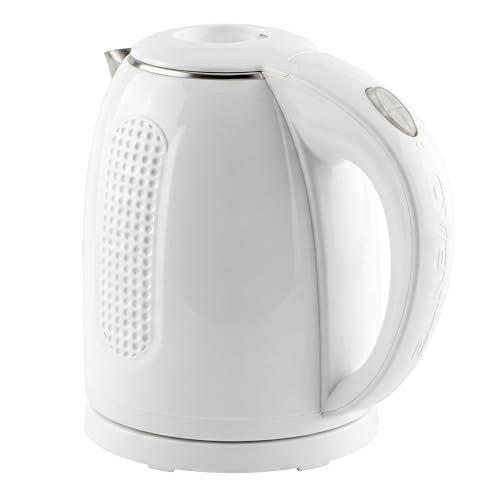
6. OVENTE 1.7L Electric Tea Kettle Fast Boiling Water Heater White
An OVENTE 1.7L Electric Tea Kettle Fast Boiling Water Heater White (electric kettle), per the listing. Check price on Amazon.
Good for: tea and fast hot water. Watch out: Check capacity and material.

Best for tea and fast hot water
7. Hamilton Beach 1 Liter Electric Tea Kettle Water Boiler & Heater
A Hamilton Beach 1 Liter Electric Tea Kettle Water Boiler & Heater (electric kettle), per the listing. Check price on Amazon.
Good for: tea and fast hot water. Watch out: Check capacity and material.

Best for tea and fast hot water
8. Cuisinart 1.7 L. Programmable Electric Kettle Tea Kettle CPK-17P1
A Cuisinart 1.7 L. Programmable Electric Kettle Tea Kettle CPK-17P1 (electric kettle), per the listing. Check price on Amazon.
Good for: tea and fast hot water. Watch out: Check capacity and material.

Best Picks by Category
They summarize listing data and are not hands-on test results.
- Top rated: Amazon Basics Electric Kettle with Glass Carafe for Tea.
- Most reviewed: OVENTE 1.7L Electric Tea Kettle Fast Boiling Water Heater White.
- Best value: OVENTE 1.7L Electric Tea Kettle Fast Boiling Water Heater White.
- Lowest price: OVENTE 1.7L Electric Tea Kettle Fast Boiling Water Heater White.
- Premium option: Cuisinart 1.7 L. Programmable Electric Kettle Tea Kettle CPK-17P1.
Price, Rating and Review Comparison
The table lists the picks with their price tier. Prices change often, so confirm the current price on Amazon.
| Product | Price | Rating | Ratings | Price tier |
|---|---|---|---|---|
| OVENTE 1.7L Electric Tea Kettle Fast Boiling Water Heater White | Check price on Amazon | — | — | Budget |
| MEGAWISE 1.8L Electric Glass Kettle with Auto Shut-Off and Blue | Check price on Amazon | — | — | Mid-range |
| Proctor Silex 1 Liter Electric Tea Kettle Water Boiler & Heater | Check price on Amazon | — | — | Mid-range |
| Amazon Basics Electric Kettle with Glass Carafe for Tea | Check price on Amazon | — | — | Mid-range |
| Hamilton Beach 1 Liter Electric Tea Kettle Water Boiler & Heater | Check price on Amazon | — | — | Mid-range |
| Cosori Stainless Steel Electric Kettle No Plastic Contact | Check price on Amazon | — | — | Mid-range |
| BLACK+DECKER 1.7L Cordless Electric Kettle Gray | Check price on Amazon | — | — | Premium |
| Cuisinart 1.7 L. Programmable Electric Kettle Tea Kettle CPK-17P1 | Check price on Amazon | — | — | Premium |
How Much Feedback Backs Each Rating
A high average from a handful of ratings is weaker evidence than a slightly lower average from thousands. Here is how the sample size looks for each pick.
How to Choose
Size
Check the max pizza or capacity size.
Fuel and power
Match fuel or power to where you cook.
Cleaning
Removable parts make cleanup easier.
Glass, Steel and Plastic Kettle Bodies
The material of a kettle affects how it looks, how it feels, and what touches your water. The picks in this guide include glass kettles, a stainless steel kettle whose listing mentions no plastic contact, and several others whose materials you should confirm on the product page.
- Glass: lets you see the water level and the boil, and it does not hold flavors. Glass can break if it is dropped, and mineral scale is easy to see, which some people find motivating to clean.
- Stainless steel: usually tougher against bumps and keeps the outside from showing scale. You cannot see inside, so the level window or markings matter more.
- Plastic bodies: often lighter and lower in cost. Check the listing for where plastic touches the water, such as the lid or spout, if that matters to you.
Beyond the main body, look at the parts that touch water. The lid, the spout filter, and the inner base can all be made of different materials, and the listing is the place to confirm them. If you are sensitive to taste, run one or two plain boils and discard the water when the kettle is new, as many makers suggest.
Also think about the outside temperature. Glass and steel bodies can get hot to touch while boiling, so the handle and lid should stay comfortable to hold. Check that the lid opens wide enough for your hand to reach inside, because a narrow opening makes cleaning harder.
Temperature Control and What to Brew
A basic kettle heats water to a boil and then switches off. A programmable kettle, such as the Cuisinart model in this guide, lets you choose a lower target temperature. That matters because different drinks taste better at different temperatures, and water that is too hot can make delicate teas taste bitter.
As a general guide, many tea makers suggest cooler water for green and white teas, hotter water for black and herbal blends, and full boiling for most coffee methods. Always check the instructions on the tea packaging, because recommendations differ by product.
- Boil-only kettles: fine for black tea, instant noodles, oatmeal, instant coffee, and pour-over coffee after a short rest.
- Preset temperature kettles: helpful if you drink several types of tea, since you do not need to guess or wait.
- Keep-warm options: some models hold the temperature for a time. Check how long and whether it adds to the power use.
If you do not have a temperature setting, you can let water rest for a minute or two after boiling to cool slightly. This works well enough for many people, though a thermometer helps if you want precision. Consider how often you would really use the settings before paying for them, since many households only ever press the boil button.
Safety Features and Sensible Habits
An electric kettle is a simple appliance, but it holds scalding water, so a few safety features are worth checking. The most important is automatic shutoff when the water boils, which the title of this guide highlights. Another is boil-dry protection, which switches the element off if the kettle is turned on with too little water. Look for both in the product description rather than assuming.
Other points to consider include these.
- Cordless base: the kettle lifts off the base to pour, so there is no cord to pull. Check that the base has a stable footprint and a secure connection.
- Locking lid: a lid that stays closed while pouring helps prevent spills and steam burns.
- Cool-touch handle: the handle should stay comfortable while the water is hot.
- Minimum and maximum fill lines: never overfill, because boiling water can spit out of the spout.
Good habits matter as much as features. Keep the kettle on a flat, dry surface away from the edge of the counter. Direct the spout away from you when you open the lid, since steam rises quickly. Unplug it when you are not using it for long periods, and keep it out of reach of children. Never immerse the base in water, and do not use the kettle for anything other than heating water unless the maker says it is allowed.
Keeping a Kettle Clean and Scale-Free
If you live in an area with hard water, you will eventually notice a white or gray crust inside the kettle. This is mineral scale. It is not usually harmful, but it can slow heating, make the kettle noisier, and leave flakes in your cup. A simple routine keeps it under control.
Many makers recommend descaling with a mix of water and white vinegar or citric acid. The usual approach is to fill the kettle partway, bring it to a boil, let it stand, then rinse thoroughly and boil fresh water once or twice to clear any smell. The exact ratio and wait time differ, so follow the manual that came with your kettle rather than guessing.
- Empty the kettle after each use instead of letting water sit, since standing water speeds up scale and can taste stale.
- Wipe the outside with a damp cloth once it has cooled, and keep the base dry.
- Rinse the spout filter if there is one, because trapped bits can slow pouring.
- Do not use abrasive pads on glass or steel interiors, since scratches collect residue.
If you use filtered water, scale will build more slowly. Check whether your kettle has a removable filter that needs periodic cleaning or replacement.
Choosing the Right Size and When to Replace
Kettle capacity ranges across this guide from about one liter up to nearly two liters. A smaller kettle suits one or two people, heats quickly with less water, and takes up less room. A larger kettle suits families, entertaining, and anyone who fills a thermos or makes several mugs at once. Remember that a bigger kettle needs more water to cover the heating element, so boiling a single mug in a large one can be less efficient.
Before buying, think about these questions.
- How many mugs do you usually need at once?
- Do you have space on the counter, and will the kettle fit under the cabinet when the lid is open?
- Will you pour for others, in which case a comfortable handle and a controlled spout matter?
- Is the cord a suitable length for your outlet, or does the base store the cord neatly?
Signs that it is time to replace a kettle include leaking from the base or seams, a lid that no longer latches, a switch that fails to shut off, persistent metallic or plastic taste after cleaning, and a heating element that is badly corroded. If an electric appliance smells burnt or sparks, unplug it and stop using it. Check the warranty and return details on the product page before you buy, because the length of coverage varies by maker.
Material Matters: Stainless Steel, Glass and Plastic Bodies
Electric kettles look alike on a shelf, but the material inside the body shapes the taste of the water, the way the kettle ages and the way it is cleaned. The Cosori stainless steel model is described as having no plastic contact with the water, the MEGAWISE kettle uses glass, and the Proctor Silex and Amazon Basics models use other body styles. Here is how the main options compare.
| Material | Good points | Things to consider |
|---|---|---|
| Stainless steel | Durable, resists dents, no see-through water level unless a window is added | Outside can get hot, so look for insulation or a cool-touch design |
| Glass | You can watch the water, easy to spot scale | More fragile if dropped, and the surface shows fingerprints |
| Plastic | Light and easy to pour | Some people notice a smell at first, so rinse before the first use |
Check where the lid, spout and filter are made from, since those are the parts that touch hot water. The maker’s description should explain this clearly.
Daily Care and Descaling in Plain Steps
A kettle is simple, yet it still benefits from regular care, particularly in areas with hard water. White scale on the heating surface can slow boiling and affect the taste. A short routine keeps things fresh.
- Unplug the kettle and let it cool fully before cleaning.
- Empty any leftover water each day rather than letting it sit.
- Wipe the outside with a damp cloth. Never immerse the base in water.
- Clean the removable filter under running water.
- Descale when you see buildup, using a method the maker recommends in the manual.
- Rinse and boil fresh water once or twice after descaling, and discard it.
Avoid abrasive pads on stainless steel and glass, since scratches collect residue over time. Do not mix cleaning products, and follow the manual’s directions on any acids or commercial descalers.
Capacity deserves a quick thought too. A 1 liter kettle suits one or two people and fills quickly, while a 1.8 liter model handles family tea rounds. Always fill between the minimum and maximum marks, never overfill, and place the base on a level, dry surface away from the edge of the counter. Electrical use, cord handling and any signs of damage should be handled according to the maker’s instructions, and a damaged kettle should be replaced rather than repaired at home.
Two last details are worth a look. Check how the lid opens, since a wide opening makes cleaning and filling much easier, and see whether the base lets you wind the cord away. Small conveniences like these shape how pleasant a kettle is to use every single day.
Frequently Asked Questions
Is it easy to use?
Most are simple with a short learning curve.
What do I need extra?
A peel and a thermometer help.
Is it safe?
Follow the maker instructions.
Is a glass kettle better than a stainless steel one?
Neither is better for everyone. Glass lets you see the water and boil, while stainless steel is often tougher and hides scale on the outside. Choose based on how you handle your kitchen items and which material you prefer to see in contact with water.
Do I need a kettle with temperature settings?
Only if you drink several types of tea or brew coffee by hand and want precise control. If you mostly make black tea, instant drinks, or oatmeal, a simple boil-only kettle is enough.
How often should I descale an electric kettle?
It depends on how hard your water is and how often you use the kettle. A good rule is to descale when you see buildup or notice slower heating. Follow the method in the manual for your model.
Why does my new kettle smell or taste odd?
New kettles can have a faint manufacturing smell. Many makers suggest boiling water once or twice and discarding it before first use. If the taste persists after several boils and a clean, contact the maker or return it within the window.
Can I leave water in the kettle overnight?
It is better not to. Standing water can pick up a stale taste and speeds up scale. Empty it after use and refill with fresh water when you need it.
Is it safe to boil only a small amount of water?
Most kettles have a minimum fill line, and you should stay above it. Boiling with too little water can trigger boil-dry protection or shorten the life of the element, so check the markings.
Can I use a kettle to heat milk or soup?
Usually not. Most makers say to heat only water, since other liquids can burn onto the element and are hard to clean. Check the manual for what is allowed.
What does cordless mean on a kettle?
It means the kettle lifts off a powered base so you can pour without a cord attached. The base still plugs into the wall. Check that the kettle seats firmly on the base before you switch it on.
Going Deeper: The Daily Rituals a Kettle Must Survive
An electric kettle is used more often than almost any appliance in the kitchen, several times a day, half awake, by every member of the household, and that duty cycle is the real test behind this guide. The picks span simple boil-only designs like the Proctor Silex and Hamilton Beach one-liter models, family-size glass and steel options from MEGAWISE, Amazon Basics, BLACK+DECKER, and OVENTE, and the programmable Cuisinart at the top. What separates them in year two is not boiling speed; water boils. It is whether the lid still opens cleanly, the spout pours without dribbling down the side, and the base connection feels as solid as the day it arrived.
Pour quality is the underrated specification. A good spout delivers a controlled stream for pour-over coffee and a confident flow for filling a pot, without the surge-and-glug that scalds fingers and floods counters. Weight distribution matters in the same moment: a kettle that is balanced when full invites one-handed use, while a nose-heavy design makes the last cup of the day feel like a chore. When you compare picks, imagine the pour at six in the morning, because that is the user experience you are actually buying.
Capacity: honest liters versus usable liters
The number on the box is the maximum the vessel holds, not the amount you should boil daily. Minimum-fill marks exist because an element needs cover, and maximum marks exist because boiling water expands its ambitions. Households that mostly boil two mugs at a time will find the one-liter picks faster and pleasanter, and will waste less energy reheating water nobody drinks. Larger households and tea-round families need the 1.7 to 1.8 liter class in this guide and should judge those models by how they pour when genuinely full, which is the condition cheap designs handle worst.
Use Cases: Matching Kettles to Drinkers
Tea drinkers with opinions
Green, white, and delicate teas punish boiling water with bitterness, while black tea and herbal infusions want a full rolling boil. Drinkers who move between them are the natural audience for the programmable Cuisinart pick in this guide, where temperature presets turn a judgment call into a button. Single-tea households can save the complexity: a boil-only kettle plus a minute’s patience off the boil approximates gentler temperatures well enough for most palates, and there is less to go wrong across thousands of cycles.
Coffee brewers: pour-over, French press and instant
Pour-over brewing is where spout control and a steady, balanced pour stop being niceties, and where a standard kettle, however fast, can frustrate a careful brewer. French press and instant coffee are far more forgiving, asking only for hot water delivered promptly. If your mornings alternate, prioritize the kettle that pours most controllably among the picks here, and accept a few extra seconds to the boil as the fair price. Speed records matter less than the cup that results.
Offices, dorms and small households
The compact one-liter picks in this guide suit shared and small spaces: they take little counter, boil a couple of drinks quickly, and are light enough to fill at any sink. In offices, the social contract matters as much as the appliance: descale the shared kettle when it is your turn to notice the flakes, and never leave it sitting empty for the next person. Dorm users should check their housing rules on heating appliances and choose the auto-shutoff designs that dominate this list with good reason.
Scale, Water Quality and the Taste of Your Drinks
Limescale is not a defect; it is your water supply made visible, and in hard-water areas it will coat any kettle in this guide on roughly the same schedule. Its real effects are slower boils, noisy kettles, flakes in the cup, and eventually an element working harder than it should. Descaling on a rhythm, before the buildup is dramatic, takes minutes with a manufacturer-approved method or a simple citric or vinegar solution followed by thorough rinsing and a fresh boil discarded. A kettle descaled monthly in a hard-water district will out-boil and outlast a neglected premium model.
Water itself deserves one thought: freshly drawn, cold water boiled once makes better-tasting tea and coffee than water reboiled repeatedly through the day, which concentrates minerals and loses its liveliness. Boil what you need, empty what is left at day’s end, and the morning kettle starts clean in every sense. Glass-bodied picks, like the MEGAWISE and Amazon Basics options here, make scale and water level honestly visible, which is a quiet maintenance advantage; steel bodies hide the evidence, so their owners must descale by calendar rather than by eye.
Troubleshooting: Early Shutoff, Leaks and Strange Tastes
The kettle switches off before boiling, or will not switch on
Scale on the temperature sensor or a kettle boiled nearly dry can trip protection early, so descale first and confirm the water is above the minimum mark. Check that the kettle sits fully seated on its base and that the lid is properly closed, because many designs interlock operation with both. If the fault persists on a clean, correctly filled kettle, the thermostat is aging, and replacement is the honest answer for an appliance that heats water unattended.
Drips, dribbles and a spout that will not behave
Most dribbling is technique meeting design: pouring too fast for the spout’s shape, or tilting so far that water reaches the lid seam. Slow the first part of the pour and let the stream establish. Scale crusting at the spout lip also breaks the stream’s clean edge, and a descale often restores manners. A kettle that leaks from the body or the water-gauge seam, rather than the spout, should be retired; water and mains electricity deserve no experiments.
Plastic or metallic tastes in a new kettle
New kettles commonly need a few boil-and-discard cycles before the water tastes neutral, and the stainless and no-plastic-contact designs in this guide, like the Cosori pick, exist for drinkers sensitive to exactly this. If a taste persists beyond the first days, descale once and check that no packaging material hides near the element. Water left sitting in any kettle for days will taste stale; start fresh each morning as a matter of routine.
More Questions Kettle Owners Ask
Is it cheaper to boil water in a kettle or on the hob?
For the quantities a household actually drinks, an electric kettle is generally the more efficient and always the more convenient route, because it heats only the water in the vessel and switches itself off at the boil rather than heating a hob, a pan, and the surrounding air. The saving grows when you boil only what you need, which is the habit minimum and maximum marks are quietly trying to teach.
Why is my kettle so loud?
Boiling noise rises as scale roughens the heating surface, so a kettle that has grown loud over months is usually asking for a descale rather than announcing a fault. Glass bodies also transmit more sound than insulated steel ones, which is a fair trade for visibility if the noise does not trouble you. A kettle that bangs, rattles mechanically, or crackles electrically is a different matter: unplug it and replace it.
How long should a kettle last, and what kills it early?
Years of daily service are normal from every pick in this guide when three habits hold: never boil below the minimum mark, descale on schedule for your water, and keep the base contacts dry. What kills kettles early is dry boiling, chronic scale, and being filled through the spout under a running tap that splashes the base and electrics. Treat those three as the whole law and the appliance will repay you in thousands of uneventful boils.
Head-to-Head: Choosing Among the Kettles in This Guide
The eight picks divide into three honest families. The one-liter compacts from Proctor Silex and Hamilton Beach are single-purpose in the best way: fast, light, and sized for one or two people who boil often and in small amounts. The mid-size glass and steel models from MEGAWISE, Amazon Basics, BLACK+DECKER, and OVENTE are the family workhorses, trading a little counter space for the capacity a household’s tea rounds and cooking water actually consume. The Cuisinart programmable stands apart for drinkers who need specific temperatures, and the Cosori stainless design stands apart for those who want water touching as little plastic as possible. Every other difference is detail; those two axes, size and special purpose, decide the purchase.
Between glass and steel at the same size, choose by temperament. Glass shows you the water, the boil, and the scale, which makes it the teacher’s kettle and the hard-water owner’s friend. Steel hides its interior, feels sturdier in a busy kitchen, and keeps its looks longer around a hob’s splashes. Both boil identically. The drinker who descaled faithfully will get more years from either than the owner of the finest kettle who never does, which is this guide’s recurring moral in miniature.
The kettle in a whole morning routine
Think about where the kettle sits in the choreography of your kitchen. It should live near the sink for filling, near the mugs and tea for use, and away from the hob’s steam, which can fool auto-shutoff mechanisms and age the base contacts. Households that boil for porridge, bottles, and cooking as well as drinks will use a kettle more in a week than some appliances manage in a year, and for them the mid-size picks’ sturdier lids and handles are not details but the product. Fill, boil, pour, return: a kettle whose every step is pleasant disappears into the routine, which is the highest praise a daily appliance can earn.
Buying for someone else: a short guide
Kettles are a classic gift for students, new households, and office-bound relatives, and the safe gift choices are the simple, robust, auto-shutoff models sized to the recipient’s life rather than the giver’s kitchen. A programmable model delights the committed tea drinker and baffles the person who wants one button between them and a cup of tea. Include the one piece of advice that matters, about descaling, perhaps written cheerfully on the card, and the gift will still be boiling happily when fancier presents have been forgotten.
When to stop repairing and replace
A kettle is a sealed marriage of water, heat, and mains electricity, and its repairable life is deliberately short: descaling, keeping contacts dry, and replacing a tired unit are the whole maintenance story. Switches that stick, bases that spark or smell hot, bodies that weep at a seam, and thermostats that boil endlessly are retirement announcements, not repair projects. Every pick in this guide is priced and built with that lifecycle in mind, and replacing a kettle at the first electrical symptom is not waste; it is the correct and only sensible response.
Getting More From Hot Water: A Small Drink-Maker’s Handbook
The kettle’s real product is not boiling water; it is the drinks that follow, and small habits separate a good cup from a merely hot one. Warm the mug or pot while the kettle boils so the drink does not surrender its heat to cold ceramic. Use fresh water for each round of tea rather than reboiling the morning’s remainder. Let boiling water stand briefly for delicate teas if your kettle has no temperature control, and pour steadily rather than in glugs, which is where the spout designs discussed in this guide quietly earn their keep across thousands of repetitions.
Coffee repays the same attention. A French press wants water just off the boil and a patient steep; pour-over wants a controlled stream and a kettle you can hold comfortably at arm’s length for a full minute, which is a genuine argument for balance and against the heaviest full-to-the-brim boil. Instant drinks, cocoa, and the evening herbal tea ask nothing but speed and reliability, and it is worth remembering that for most households those simple drinks are ninety percent of the kettle’s working life. Buy the kettle for the ninety percent, and let the ten percent adapt.
The kettle beyond drinks
Hot water is a kitchen utility: loosening a stubborn jar lid under a warm pour, starting pasta water with a kettle’s head start, making stock from a cube for a weeknight soup, filling a hot water bottle in winter, even warming a baby bottle bath where that is the household’s method. Each of these is a small job the kettle does faster and more safely than a pan on the hob, and together they explain why a household that owns a good kettle uses it with a frequency no other small appliance matches. When you choose among the picks in this guide, you are really choosing the tool that will perform hundreds of these micro-tasks, and reliability across all of them is the specification that matters most.
Teaching the household the three kettle rules
Every shared kettle lives longer when everyone in the house knows three rules: fill between the marks, never switch on an empty kettle, and mention it when the water starts leaving flakes so the descale happens on time. None of these requires enthusiasm, only agreement, and they are worth stating out loud once rather than assuming. Kettles rarely die from a single dramatic event; they die from a year of small, unowned habits, and the three rules are how a household takes collective custody of an appliance everyone uses and nobody thinks about.
Kettle Safety and Sense for a Busy Household
A kettle concentrates three hazards in one cheerful appliance: boiling water, steam, and mains electricity, and the safety features across this guide, auto shutoff, boil-dry protection, cool-touch bodies on some designs, exist because households are busy and distractible. Support those features with placement: the kettle belongs on a stable surface, its cord routed so a passing sleeve or a curious child cannot catch it, and far enough from the edge that a knocked mug cannot become a knocked kettle. Fill it at the sink and carry it back level rather than filling through the spout under the tap, a shortcut that splashes the base and ages the electrics with every repetition.
Steam deserves specific respect, because the cloud from a just-boiled kettle scalds as surely as the water does, and it rises exactly where a face leans in to check the level. Open the lid away from you, pour with the lid properly closed, and teach children that the kettle is an adult tool even when it looks friendly, especially the glass designs whose clear water invites small observers to stand close. Households with elderly members should weigh a lighter, smaller pick from this guide honestly: a full large kettle is a meaningful weight at arm’s length, and the right size is a safety feature as real as any thermostat.
End-of-day and holiday routines
Empty the kettle at night so the morning starts with fresh water and no overnight mineral bath for the element. When the household travels, leave it empty and unplugged like every heating appliance. On your return, the first boil of fresh water, discarded, is a small homecoming ritual that flushes the system and confirms all is well. These are thirty-second habits, and across the thousands of boils in a kettle’s life they are the difference between an appliance that feels trustworthy every single time and one that gradually becomes a source of small doubts.
One Last Ritual: The Kettle at the Center of the Kitchen
It is worth noticing, as this guide closes, how much of a household’s rhythm passes through this one small appliance: the first drink of the morning, the cook’s head start on dinner, the evening cup that ends the day. A kettle chosen well and kept descaled disappears into that rhythm so completely that its quality is measured in absence: no waiting worth mentioning, no drips on the counter, no flakes in the cup, no small morning irritation repeated ten thousand times. That is the standard the picks in this guide were held to, across their sizes and their price tiers, and it is why the details this guide kept returning to, the pour, the lid, the seating on the base, the honest capacity, matter more than any race to the boil.
Choose the kettle that fits your household’s real drinking life, give it fresh water and a monthly descale, and it will repay the attention in the most underrated currency in any kitchen: mornings that start smoothly, every single day, for years.
And if the household includes someone learning to make their own drinks for the first time, a student, a teenager, a grandparent in a new flat, the kettle is often the first appliance they master, which is one more reason the simple, safe, auto-shutoff designs in this guide matter. Teach them the fill marks and the descale along with the tea, and you have handed over a small, complete independence, one boiling at a time, that will serve them in every kitchen they ever live in.
Boil the kettle, then, and let the small ceremony stand for the larger one this guide has argued throughout: that the objects used most often deserve the most thoughtful choosing, because their quality is multiplied by every day they serve.
Bottom Line
Look for auto shutoff and a size that fits your needs.
More Kitchen Guides
- Best Rice Cookers from Basic to Fuzzy Logic
- Best Pots and Pans Sets for Home Kitchens
- Best Stand Mixers for Home Bakers