Disclosure: As an Amazon Associate, Reviews Took earns from qualifying purchases. Links to Amazon on this page are affiliate links; they cost you nothing extra.
Never use without food to weigh them down.
This guide is built from Amazon product listings and maker specs, not our own testing, so confirm size, contents and current price on each product page. Health products are for general information and are not medical advice.
Check the current price on Amazon for each pick.
Last updated: November 2, 2026.
In this guide
Quick Picks
| Product | Type | Best for |
|---|---|---|
| 250 Pcs 8″ Square Air Fryer Liners Disposable for 5-8QT | Air fryer liners | easier cleanup |
| Air Fryer Liners 100Pcs Aluminum Foil Air Fryer Disposable Paper | Air fryer liners | easier cleanup |
| Vailnd 100Pcs 8″ Air Fryer Liner Disposable for 5-8 QT Square | Air fryer liners | easier cleanup |
| Vailnd 125Pcs 8 Inch Round Air Fryer Liners Disposable Parchment | Air fryer liners | easier cleanup |
| 125Pcs Air Fryer Liners Disposable for Dual Basket 8×5.5 Inch | Air fryer liners | easier cleanup |
| 360 Pcs 8” Square Air Fryer Paper Liners Disposable Unbleached | Air fryer liners | easier cleanup |
| 125Pcs 8 Inch Square Air Fryer Liners Disposable for 5-8QT | Air fryer liners | easier cleanup |
| Air Fryer Liners Disposable Unbleached Parchment Paper Baking | Air fryer liners | easier cleanup |
Our Picks
Top pickBest for easier cleanup
1. 250 Pcs 8″ Square Air Fryer Liners Disposable for 5-8QT
A 250 Pcs 8″ Square Air Fryer Liners Disposable for 5-8QT (air fryer liners), per the listing. Check price on Amazon.
Good for: easier cleanup. Watch out: Check size fit.

Best for easier cleanup
2. Air Fryer Liners 100Pcs Aluminum Foil Air Fryer Disposable Paper
An Air Fryer Liners 100Pcs Aluminum Foil Air Fryer Disposable Paper (air fryer liners), per the listing. Check price on Amazon.
Good for: easier cleanup. Watch out: Check size fit.
Best for easier cleanup
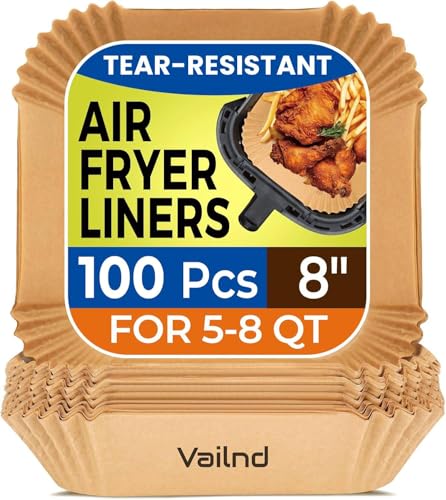
3. Vailnd 100Pcs 8″ Air Fryer Liner Disposable for 5-8 QT Square
A Vailnd 100Pcs 8″ Air Fryer Liner Disposable for 5-8 QT Square (air fryer liners), per the listing. Check price on Amazon.
Good for: easier cleanup. Watch out: Check size fit.
Best for easier cleanup
4. Vailnd 125Pcs 8 Inch Round Air Fryer Liners Disposable Parchment
A Vailnd 125Pcs 8 Inch Round Air Fryer Liners Disposable Parchment (air fryer liners), per the listing. Check price on Amazon.
Good for: easier cleanup. Watch out: Check size fit.
Best for easier cleanup
5. 125Pcs Air Fryer Liners Disposable for Dual Basket 8×5.5 Inch
A 125Pcs Air Fryer Liners Disposable for Dual Basket 8×5.5 Inch (air fryer liners), per the listing. Check price on Amazon.
Good for: easier cleanup. Watch out: Check size fit.
Best for easier cleanup
6. 360 Pcs 8” Square Air Fryer Paper Liners Disposable Unbleached
A 360 Pcs 8” Square Air Fryer Paper Liners Disposable Unbleached (air fryer liners), per the listing. Check price on Amazon.
Good for: easier cleanup. Watch out: Check size fit.
Best for easier cleanup
7. 125Pcs 8 Inch Square Air Fryer Liners Disposable for 5-8QT
A 125Pcs 8 Inch Square Air Fryer Liners Disposable for 5-8QT (air fryer liners), per the listing. Check price on Amazon.
Good for: easier cleanup. Watch out: Check size fit.

Best for easier cleanup
8. Air Fryer Liners Disposable Unbleached Parchment Paper Baking
An Air Fryer Liners Disposable Unbleached Parchment Paper Baking (air fryer liners), per the listing. Check price on Amazon.
Good for: easier cleanup. Watch out: Check size fit.
How to Choose
Size and capacity
Pick a size that fits your household.
Power and speed
Check wattage and settings.
Cleaning
Removable, dishwasher-safe parts help.
Parchment Versus Foil and Other Liner Materials
Air fryer liners are not all the same, and the material decides what you can cook and how safe it is. Parchment paper liners are made of paper with a heat-resistant coating, usually silicone, and are the type most often used for general cooking. They are suited to foods like chicken, vegetables, fish and baked goods. Check the maximum temperature on the packaging, because liners have limits, and do not exceed it. Unbleached versions skip the whitening step, and the choice between bleached and unbleached is mostly a matter of preference unless a listing states a performance difference.
Foil is a different material and behaves differently. Aluminum foil conducts heat and can touch the heating element if it moves, so many makers advise caution or restrict its use. Foil should not be used with acidic foods such as tomato or citrus, which can react with aluminum. Always follow the air fryer manual, because some models allow foil only in specific ways and others advise against it.
Some liners are made from silicone, which is reusable and is often a mat or bowl rather than a sheet. Reusable silicone is washable and reduces waste, but it may hold odors and oils and takes up basket space. Whichever you choose, read what the product listing says about its material, coating and heat range, and compare that with your appliance manual.
Shape, Size and Basket Fit
A liner must fit your basket, and getting the size wrong is the most common frustration. Liners are sold in square, round and rectangular forms, and sizes are given in inches. Measure the bottom of your basket and the depth of the sides, then compare it with the liner dimensions on the listing. A liner that is too small leaves gaps, and one that is too large folds up the sides and may reach the heating element or block airflow.
Round liners suit round baskets, and square ones suit square baskets. Dual-basket air fryers need rectangular liners sized for each drawer. Some listings state a quart range, such as a size suited to a range of basket capacities, but quart ranges are rough guides, and the physical dimensions of your basket are what count. Check whether the product is shaped with sides, like a tray with a lip, or a flat sheet.
Look at the pack size as well. Large packs reduce cost per sheet but take storage space, and you may not use them all before you decide the shape is wrong for you. If you are unsure, buy a smaller pack first. Keep in mind that your air fryer’s brand and model may have an exact liner size recommended in the manual or by the maker. Match the liner to the basket rather than choosing by capacity alone.
Airflow, Perforations and Correct Placement
An air fryer cooks by circulating hot air, so anything that blocks airflow can change the results. Perforated liners, which have small holes, are designed to let air flow through and drip fat down to the basket, and many users prefer them for foods that should brown, such as fries and wings. Solid liners are better for foods that release a lot of liquid or for sticky sauces, but they hold juices and may cook less crisply.
Liners must always be weighed down by food. An empty liner can be lifted by the fan and move into the heating element, which is a fire risk. Never place a liner into a preheating air fryer without food on top. If you preheat, add the liner and food together, or preheat the appliance empty and then place the liner and food inside, following the manual.
Place the liner flat on the bottom of the basket, and do not cover the whole basket if the liner has no holes. Keep the edges below the rim of the basket, and trim the liner if needed, so that it does not stand up. Do not stack multiple liners. Check the food during cooking, particularly lightweight foods such as leafy items, and stop if the liner shifts or curls.
Food Safety, Temperature Limits and What to Avoid
Liners add convenience but also some rules. Check the temperature rating on the pack and keep your cooking below it. Do not use liners at settings higher than the pack states, and be aware that heating elements on some air fryers can run hot near the top. If your liner browns heavily, smokes or smells, stop cooking and remove it once the unit has cooled.
Do not use liners as a replacement for good basket care. Oil and food residue can still reach the basket through holes or at the edges, so wash the basket regularly. Avoid placing liners where they touch the heating element, and avoid using them in toaster ovens or conventional ovens unless the pack and the oven manual say it is fine.
Think about the foods that suit a liner. Marinated meats, sticky sauces, cheese-topped items and fish are good candidates because liners limit sticking and cleanup. Very wet food may soak through paper liners or produce steam, so adjust. Check whether the pack mentions that it is food-safe and grease-resistant. If anyone in your household has sensitivities or allergies, check the materials, such as coatings and adhesives. If you have health concerns, the information in this guide is general and not medical advice, so consult appropriate resources.
Cost, Waste and When Not to Use Liners
Disposable liners cost money and add waste, so decide whether they suit how you cook. They shine when you cook messy foods, have limited time for washing, or have a basket that is hard to clean. They are less useful if you mostly cook dry foods that do not stick, such as plain frozen fries, or if you want the maximum crisp and airflow. Some cooks use a liner only for sticky or saucy foods and cook the rest directly in the basket.
Compare the cost per sheet across pack sizes, but also compare what you actually use. A very large pack saves money only if you use it. Consider reusable silicone or a washable perforated mat if you cook with liners frequently. Reusable products have a higher upfront cost but fewer refills, and they take effort to wash.
Know when to skip liners. Do not use them for very high-heat settings beyond the rating, for foods that need direct airflow underneath, or in models whose manuals advise against liners. Avoid using them when cooking light foods that may blow around. If your results change, such as soggy bottoms or uneven browning, try cooking without the liner or switching to a perforated style. Store liners flat in a dry place so they do not curl, and discard any that are damaged or stained with oil before use.
Which Foods Work Best With Liners
Liners are not equally useful for every recipe. They shine with foods that are sticky, saucy or likely to leave residue: glazed wings, marinated chicken, breaded items that shed crumbs, reheated pizza with melted cheese, and anything coated in a sugary sauce. In these cases the liner catches drips and keeps the basket clean, which is the entire point.
They are less useful when you want direct contact between the food and the hot basket. Fries, frozen nuggets and vegetables that benefit from crisping on every side often do better without a liner, or with a perforated one that lets air flow through. Fatty foods such as bacon or sausages can pool grease in a solid liner, and that grease can scorch or smoke at high heat. If you cook these often, perforated liners or a basket without a liner at all are better matches.
Using Liners in Different Air Fryer Designs
Basket-style air fryers, oven-style models with trays, and dual-zone units all handle liners differently. In a drawer or basket model, the liner sits on the bottom and should leave the sides open for air movement. In an oven-style unit with a mesh tray, the liner needs to be cut to fit and kept away from the heating element, since hot air can lift a loose sheet. Dual-zone fryers usually need a rectangular liner sized for each drawer rather than a round one.
Round liners suit round baskets and square ones suit square baskets, but the more important question is how much of the base each covers. If a liner is too large, the edges curl up into the airflow path. Too small, and it leaves gaps where food and grease can reach the basket. Check your basket dimensions on the base, not at the top rim, since the walls often taper.
Weight and Load: Keeping Liners Anchored
Because the fan is strong, a lightweight liner can lift or flutter when the basket is empty. This is why many guides recommend placing the food on the liner before you slide the basket in, or adding the food first and then pressing it down. During preheating, an empty liner is a poor idea: it can fold up toward the element, scorch, or even catch fire in extreme cases. A good rule is to add the liner only when you are about to load the food, and never to run the machine with only paper inside.
If you notice the liner shifting during cooking, try placing a heavier item such as a piece of meat at the center, or switch to a liner with raised sides that hold their shape. Do not use staples, clips or weights that could melt or burn.
Cleaning the Basket Between Uses
A liner reduces cleanup, but it does not eliminate it. Oil can pass around the edges, and crumbs can slip underneath. A quick wipe or wash of the basket after each use prevents buildup, which can smoke in later cooks and affect flavor. Lift the liner carefully by its edges so that any liquid does not run onto the base, then discard it once cool. If the basket has a nonstick coating, avoid abrasive scrubbers that scratch it, since a damaged coating is a reason to replace the basket.
Environmental and Household Considerations
Disposable liners are convenient, but they add to household waste. Parchment is generally compostable in many municipal programs if it is free of heavy grease, though rules vary, so check locally. Foil is recyclable only when clean, which is rare after cooking. Households that cook with an air fryer daily may find that reusable silicone mats cut waste, and that liners are better kept for messy recipes. A mixed approach, using liners for sticky foods and bare baskets for everything else, tends to balance convenience and waste.
Matching Liner Size to Your Air Fryer Capacity
Liners are sold by diameter or by the basket capacity they are meant to fit, and the two do not always line up. A liner marketed for a range such as five to eight quarts is cut to cover many baskets approximately, not exactly. The best approach is to measure the flat bottom of your basket and compare it with the stated liner dimensions. If the liner is slightly larger, trim it with scissors so the edges sit flat or only rise a little up the walls.
Small units need extra care. In a compact two or three quart fryer, a standard liner can cover most of the base and block airflow, so a smaller size or a perforated style is a better match. Large oven-style units sometimes accommodate sheets cut from a roll, which can be more economical than pre-cut packs. Keep a pair of kitchen scissors handy and avoid folding a large liner to fit, since stacked layers reduce air movement and may cause uneven cooking.
Because capacity affects how much food you cook at once, a liner that is too restrictive can also push you toward overfilling the basket. Aim to leave enough gaps for air to move around the food, and cook in batches when you need to.
Paper, Foil and Parchment: Why This List Contains Different Materials
The eight liner packs in this guide look interchangeable in photographs and behave quite differently in a hot basket. Most are parchment paper, pre-shaped into square or round trays, in bleached and unbleached versions and in counts from one hundred to several hundred. One entry is aluminium foil, which conducts heat, crisps differently and can be moulded to a basket’s corners. Treating them as one product with eight prices misses the point. Parchment is the generalist: nonstick, absorbent enough to catch grease, and kind to coatings. Foil is the specialist: it shields delicate coatings from sticky glazes, stands up to saucy foods that soak paper, and reflects heat in ways that can help or hinder browning depending on the dish. Choosing between the picks above starts with knowing which of those behaviours your cooking needs most often.
Count and cost per liner shape the second decision. A large-count pack suits a household that fries daily and treats liners as a running consumable, while a smaller pack suits occasional use or a first experiment with a new basket size. The unbleached parchment options in this list appeal to households avoiding bleaching processes, and they perform on equal terms with bleached paper in the fryer; the difference is preference, not capability. Shape is the third decision, and it is dictated entirely by your basket: square liners in a round basket fold and flap, round liners in a square basket leave the corners exposed, and dual-basket machines need their own long, paired shapes, as one pick here provides.
Perforated versus solid: the airflow trade-off in practice
Solid liners catch everything, which is their glory and their compromise. Grease and crumbs stay in the paper, the basket wipes clean in seconds, but the food sits in its own juices on the underside and crisps less beneath. Perforated liners let air and fat pass, restoring much of the crisping the basket was designed for, at the cost of letting some mess through with it. In practice, households split by food: wet, saucy and crumbly items earn a solid liner, while foods whose whole point is all-over crispness, chips, wings and roast vegetables, often cook better with perforations or with no liner at all. The honest skill is choosing per dish rather than lining by reflex, and the picks in this guide give you both styles to build that judgement on.
Foods That Gain, Foods That Lose
Liners earn their strongest praise with sticky, sugary and marinated foods. Glazed wings, teriyaki salmon, cheese-topped items and anything in a sugary marinade can weld themselves to a basket coating, and a liner turns that clean-up from a soak into a lift-and-bin moment. Reheating leftovers with cheese, cooking bacon, and baking small items that would fall through a rack are all liner victories. Delicate foods that release a lot of water, by contrast, can stew in a solid liner; a perforated one or a minute without a liner at the end restores them.
The foods that lose are the ones sold on crispness. Frozen chips on a solid liner emerge softer underneath, and breaded items can stick to paper as their coating sets, tearing the crust when lifted. The fixes are simple: a light oil spray on the liner for breaded food, a perforated liner for chips, or the discipline of using liners only when the food justifies them. Owners who line every load regardless tend to conclude that air fryers are overrated; owners who line selectively get the clean basket and the crisp food, which is the entire promise of the accessory.
Loading, weighting and the flying-liner problem
An empty or lightly loaded liner in a running fryer is a sail in a storm. The fan’s airflow can lift a light liner into the heating element, which is both a fire risk and the source of most liner horror stories. The rules are absolute: never preheat with an empty liner in the basket, always weigh the liner down with the food itself before starting, and trim or fold any paper that stands above the food where the element can reach it. Magnets and racks sold for the purpose help with very light loads, but the fundamental discipline is food first, heat second. Follow it and liners are a tame, useful accessory; ignore it and they are the one genuinely hazardous item in this guide.
Heat Limits, Coatings and Cooking With Confidence
Parchment has a working temperature ceiling, and air fryers run close enough to it that the maker’s stated limit on the pack deserves reading rather than assuming. Within that limit, parchment darkens and becomes brittle on long cooks, which is normal and harmless; beyond it, paper can scorch. Foil has no such ceiling but brings its own cautions: acidic foods in prolonged contact with foil can pick up a metallic note, and foil should never be allowed to touch the heating element or block the fan’s airflow entirely. Both materials are tools with envelopes, and cooking inside those envelopes is undramatic. The problems in this category almost always trace back to an empty liner, an oversized liner folded over the element, or a temperature pushed past the pack’s guidance.
Your basket’s coating benefits quietly from liner use. Sugary glazes and acidic marinades are hard on nonstick surfaces over time, and a liner takes that punishment instead. Owners of older baskets with tired coatings find liners extend the fryer’s useful life by restoring easy release. The trade is that you see less of the basket’s condition, so lift the liner habit out once in a while and inspect the coating; a basket that is flaking needs retiring whether or not a liner hides it, because coating fragments do not belong in food.
Waste, cost and the reusable question
Disposable liners create waste, and households weigh that differently. The honest accounting includes the water, energy and detergent of the extra soaking and scrubbing that liners replace, which narrows the gap without closing it. Practical compromises abound: liners for the genuinely messy cooks, none for clean ones like reheating bread or roasting plain vegetables; a liner reused for a second batch of the same food in one session; foil chosen where it can be wiped and used again for the same dish. Silicone reusable liners exist outside this guide’s picks and suit some households, with their own trade-offs in crisping and washing. The picks above are disposables, and the fairest way to judge them is per genuinely messy cook avoided, not per sheet.
More Questions Liner Users Ask
Can I cut a large liner down for a smaller basket?
Yes, and it is often the economical answer when your basket size sits between stocked shapes. Cut or fold so the paper sits below the food line with no tall edges to catch the airflow, and keep the base covered where the food rests. A liner folded up the sides like a tray catches more mess; a flat sheet preserves more airflow. Either is legitimate, and the choice is the same solid-versus-airflow decision that runs through this whole category, made with scissors instead of a shopping basket.
Do liners change cooking times?
Slightly, and mainly for solid liners under dense food. A solid sheet insulates the underside, so thick items may want a minute more or a turn halfway that you might otherwise skip. Perforated liners change timing negligibly. The practical approach is to check doneness by the food, not the clock, on your first cooks with a new liner style, then fold what you learn into your usual timings. After two or three sessions the adjustment becomes instinct, like every other small calibration in a home kitchen.
Why did my food stick to the parchment?
Usually a sugary or eggy coating that sets against the paper, or a liner that wrinkled so food pooled in a fold. A light brush or spray of oil on the liner before loading prevents most sticking, and smoothing the liner flat under the food prevents the rest. Lifting food with a spatula rather than tipping the basket also saves coatings that have bonded lightly. If sticking is routine with a particular dish, that dish is telling you it wants the foil pick from this list or no liner at all.
Used with that much judgement, liners stop being a subscription to waste and become what they should be: a targeted tool for the cooks that used to cost you a soak, deployed exactly when they pay and skipped exactly when they do not. That selectivity, more than any single pack in this guide, is the mark of an owner who has made the accessory their own.
Building a Small Liner System at Home
Households that fry daily do well to treat liners like any other consumable system. Measure your basket properly once, across the base rather than the rim, and write the size on the inside of the cupboard where the packs live, because reordering the wrong shape is the category’s most common waste of money. Keep one pack open beside the fryer and the reserve in the pantry, and reorder when the open pack runs low rather than when it runs out, so a favourite dish never meets an empty drawer. If your fryer is a dual-basket model, note that the paired liners in this guide exist precisely because two single shapes rarely match both compartments well.
It also helps to keep a tiny decision rule where you can see it: sticky, saucy, cheesy or sugary means a liner; dry and crisp means perforated or none. That two-line rule, stuck inside a cupboard door, settles the question in the second it arises and stops both over-lining, which dulls food, and under-lining, which costs you the soak the accessory exists to prevent. After a month the rule becomes instinct and the note can come down, but by then the habit it taught will have saved a dozen clean-ups and improved a dozen dinners.
Liners beyond the fryer
A final practical note: the same packs earn their keep elsewhere. Parchment shapes line small cake tins, separate burgers and chops in the freezer so they part without tearing, catch drips under a pie in the oven and make a disposable surface for icing biscuits with children. Foil liners mould into drip trays and impromptu lids. A pack bought for the fryer that also serves the freezer and the oven justifies its cupboard space several times over, and households that discover these second uses tend to standardise on one favourite pack from lists like this one and stop experimenting, which is its own kind of verdict on the category.
So choose the material your messiest dishes need, the shape your basket actually is, and a count that matches your frying rhythm. Then cook with the discipline this section describes: food weighing the paper down, temperatures inside the pack’s limits, and liners deployed where they pay. The basket will stay clean, the food will stay crisp where crispness matters, and the humble liner will have done everything its makers promised.
What to do when a batch goes wrong
Even careful owners occasionally produce a soggy underside or a scorched corner, and both are information rather than failure. Sogginess under a solid liner on a wet dish tells you to switch that dish to perforated paper or to finish it for a minute directly on the basket. A scorched edge tells you the liner stood too tall or the temperature ran past the pack’s comfort, and the correction is a trim and a small reduction next time. Note the fix on the pack itself with a pen, because the next bag of the same wings may be a month away and memory is an unreliable recipe card. Owners who annotate their consumables this way converge quickly on a short list of dishes, liners and settings that simply work, and the fryer becomes the appliance of few surprises it ought to be.
That convergence is the real endpoint of buying well in this category. The first pack is an experiment; the third identical reorder is a system. Whether your system settles on unbleached parchment squares, a perforated round, the dual-basket pairs or the foil specialist from this guide matters less than that it settles, because a settled system means every cook starts from knowledge instead of guesswork, and dinner gets easier in the way that only good habits can make it.
One more consideration belongs in any honest account of this accessory: guests and other cooks. If someone else uses your fryer, leave the current pack where they will find it and, if your household has strong feelings about preheating empty or trimming tall edges, say so once, kindly, before the first scorched liner says it for you. Accessories this simple spread through a household by example, and a liner used well by everyone keeps the basket in good condition for whoever cooks next, which is the quiet, communal benefit behind the whole idea.
And when the pack runs out, as packs do, notice how the next few cooks feel without it. That brief absence is the most honest review your household will ever write: the dishes you line again the moment a new pack arrives are the ones the accessory truly serves, and the ones you never line again were habit all along. Buy the next pack for the first group, in the shape and material this guide helped you choose, and let the second group cook bare and crisp as they prefer.
That is the whole philosophy of this small accessory in one paragraph: deploy it where it earns, skip it where it costs, and let your own basket, your own dishes and your own washing-up bowl arbitrate between the packs above. No specification can make that judgement for you, and no judgement needs to be made more than once per dish.
Make it once, write it on the cupboard door if it helps, and then get on with cooking. The fryer, the basket and the cook all benefit when the liner question is settled in advance rather than re-argued at every meal, and settling it is a five-minute job with the information in this guide.
Five minutes, a tape measure and one honest look at the dishes you actually fry: that is the entire investment. The return arrives the first time a glazed, sticky, wonderful mess lifts out of the basket in its paper and the basket underneath needs nothing more than a wipe and a nod.
Keep chasing that moment and avoiding the soggy one, and your judgement in this category will sharpen with every pack. Soon you will be the person friends ask about liners, and your answer will sound a lot like this guide: it depends on the dish, the basket and the mess, and now you know how to tell.
That confidence is worth more than the small saving between one pack and the next, so let it guide the reorder as much as the first order. A household confident in its consumables cooks more freely, and cooking freely is the entire reason the fryer earned its counter space in the first place.
Guard that freedom jealously. Line the sticky, spare the crisp, weigh the paper down, respect the heat, and let the basket stay young. Do those five things and the humblest accessory in this entire series will quietly become one of the most appreciated.
Appreciation, in a kitchen, is measured in reaches. You will know the liners have earned theirs when your hand goes to the pack before the fryer even warms, for the dishes that need them, without a thought wasted on the ones that do not.
That thoughtless reach is the sign of a system working. Build yours from the packs above, and let the fryer get on with what it does best.
It does it best, after all, with a clean basket beneath the food and a cook who is free to think about seasoning instead of scrubbing.
Season boldly, then. The liner has the mess; you have the meal.
And on the nights when the dish is a plain, dry, crispy one, leave the pack in the drawer with a clear conscience. Restraint is half the system, and the crisp result will remind you why.
Keep that balance and the packs in this guide will last you exactly as long as they should: long enough to prove their worth, and never so long that they become clutter.
Frequently Asked Questions
Is it easy to use?
Most have simple controls.
What do I need extra?
Check included accessories.
Is it safe?
Follow the manual.
Can I put a liner in the air fryer while it preheats?
Not without food on it. A light liner can lift and touch the heating element, so add the food first or follow the manual's preheat instructions.
Are perforated liners better than solid ones?
Perforated liners let air and fat move, which helps browning and crisping. Solid ones hold juices and sauces, so the choice depends on what you cook.
Can I reuse a parchment liner?
Some can be used a second time if they are clean and not darkened, but many are designed for single use. Follow the pack's instructions and discard liners that are brittle or heavily stained.
Will liners change cooking time?
They can, slightly, because they affect airflow. Check the food earlier than usual and adjust as needed.
Can I use foil instead of parchment?
Only if your air fryer manual allows it, and with care that it does not touch the heating element. Avoid foil with acidic foods, and check the manual.
How do I know which size to buy?
Measure the bottom of your basket and the side height, then compare with the dimensions on the listing. Do not rely only on quart ranges.
Do liners work in a dual-basket air fryer?
Yes, if you buy the rectangular shape sized for each drawer. Check the listing for the dimensions and the style of your model.
Where should I store unused liners?
Keep them flat and dry, away from heat and moisture. Curling or damp paper is harder to place and may not perform well.
Are parchment air fryer liners compostable?
Often yes when they are plain, unbleached and free of heavy grease, but local composting rules differ. Many programs accept paper-based liners, while others do not. Check with your municipal service, and avoid composting liners soaked in oil or coated with synthetic materials.
Can I put a liner in the basket with nothing on it?
It is best not to. The fan can lift an empty liner into the heating element, where it may burn. Add the liner only when you are ready to load the food, and place the food on it before the basket goes in.
Do liners make food less crispy?
They can, especially solid ones, because they block air from reaching the underside. Perforated liners reduce the effect. For foods where crispness matters on every side, a bare basket or a liner with plenty of holes usually works better.
Should I choose round or square liners?
Match the liner to your basket shape, and measure the bottom surface rather than the rim. Round liners fit round baskets, square liners fit square ones, and dual-zone fryers typically need a rectangle. A near-perfect fit keeps edges flat and out of the airflow.
Bottom Line
Perforated liners keep airflow open.
More Kitchen Guides
- Best Belgian and Mini Waffle Makers
- Best Cold Press and Citrus Juicers
- Best Programmable Slow Cookers
- Best Multi-Cookers for Home Kitchens
- Best Immersion Circulators for Sous Vide
- Best Ninja and Black+Decker Food Processors
- Best Automatic Bread Makers
- Best Home Ice Cream Machines