Bunn is an American coffee maker brand known for brewers that keep water hot and ready at all times. That design lets a pot of coffee brew in a few minutes. The brand sells home models, single-serve machines and heavy-duty units meant for offices and cafes.
The six Bunn machines below cover home, single-serve and commercial-grade options. We have not used these products ourselves, so confirm the capacity, power needs and included parts on the current listing before you buy. Commercial models in particular have specific plumbing or outlet needs. Because Bunn machines keep a tank of water warm, they work best in households or offices that brew coffee often during the day.
As an Amazon Associate we earn from qualifying purchases. Links below are affiliate links, and they do not change the product information we give.
What to Look For
| Feature | Why it matters |
|---|---|
| Hot water tank | Keeps water ready, so brewing is quick |
| Capacity | Home pots and commercial pots differ widely |
| Carafe type | Glass, thermal and airpot options change how long coffee stays hot |
| Power | Heavy-duty models can need more than a basic outlet |
| Footprint | Check height, since some Bunn units are tall |
In this guide
Specs at a Glance
| Model | Type | Use | Notes |
|---|---|---|---|
| BUNN BT Velocity Brew | Home drip brewer | Household | Thermal carafe version |
| BUNN Speed Brew Elite | Home drip brewer | Household | Fast brewing |
| BUNN GRX-B | Home drip brewer | Household | Hot water tank |
| BUNN My Cafe MCU | Pod brewer | Single serve | Uses pods |
| BUNN VPR | Commercial brewer | Offices and cafes | Warmers and decanters |
| BUNN CWTF15 | Commercial brewer | Larger batches | Check setup needs |
The 6 Best Bunn Coffee Makers
Top pickBest for home use
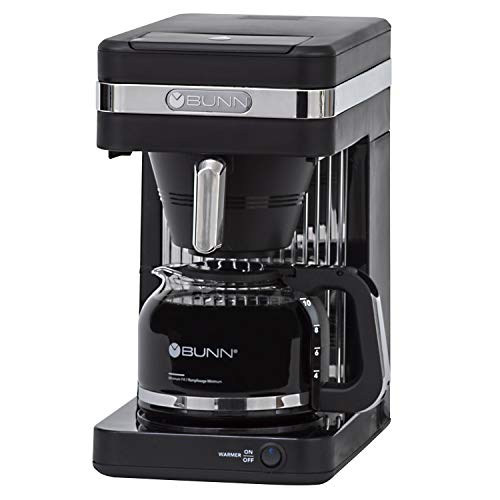
1. BUNN BT Velocity Brew 10-Cup Coffee Maker
A home drip machine with a thermal carafe and a quick brew cycle. It is one of the better known Bunn models for households.
Suits: home use. Strengths: fast brewing. Weaknesses: a taller body. Skip it if you have low cabinets.
View BUNN BT Velocity Brew on Amazon
Best for busy mornings
2. BUNN Speed Brew Elite Coffee Maker
A home brewer built around Bunn’s quick-brew approach, aimed at people who want a full pot without a long wait.
Suits: busy mornings. Strengths: speed. Weaknesses: fewer extras than programmable models. Skip it if you want a timer.
View BUNN Speed Brew Elite on Amazon
Best for a simple home setup
3. BUNN GRX-B Coffee Maker
A long-running home model with a hot water tank that stays ready. It follows the classic Bunn design with a straightforward layout.
Suits: a simple home setup. Strengths: a proven design. Weaknesses: the tank stays warm, so it draws power. Skip it if you brew once a week.
View BUNN GRX-B Coffee Maker on Amazon
Best for single drinkers
4. BUNN My Cafe MCU Single Serve Pod Brewer
A single-cup machine from Bunn that works with pods and aims to give a fast cup. It suits those who want one drink at a time.
Suits: single drinkers. Strengths: a quick cup. Weaknesses: pod cost over time. Skip it if you serve a crowd.
View BUNN My Cafe MCU on Amazon
Best for small businesses
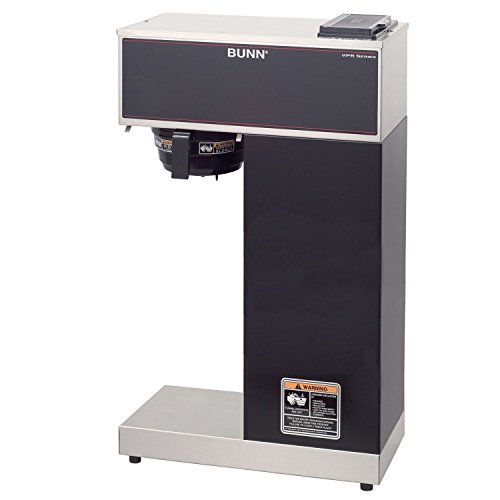
5. BUNN VPR Commercial Coffee Brewer
A commercial pour-over style brewer made for offices, shops and restaurants, with warmers for glass decanters. It is a straightforward foodservice unit.
Suits: small businesses. Strengths: a work-ready design. Weaknesses: not a small home machine. Skip it if you only brew for yourself.
View BUNN VPR Commercial Coffee Brewer on Amazon

Best for busy venues
6. BUNN CWTF15 Commercial Coffee Brewer
A commercial-grade machine for larger batches that is used in many foodservice settings. It is built for output rather than compact size.
Suits: busy venues. Strengths: volume. Weaknesses: setup and space needs. Skip it if you need a countertop home brewer.
View BUNN CWTF15 Commercial Coffee Brewer on Amazon
Care and Setup
- Fill the tank with water first and wait for it to heat before the first brew.
- Descale on a schedule if you have hard water.
- Wash the funnel and carafe after use.
- Follow the maker’s guidance for storing or draining the unit.
- Keep the sprayhead clean so the water spreads evenly over the grounds.
- Use fresh, cold water in the tank and follow the manual for the first fill.
Mistakes to Avoid
- Brewing before the tank has warmed up.
- Leaving a hot tank on a countertop with no use for weeks.
- Picking a commercial model without checking power and plumbing.
- Ignoring the height under your cabinets.
- Brewing with the pot or decanter missing or misplaced.
- Skipping the sprayhead clean-up, which leads to uneven brewing.
How the Hot-Water-Tank Design Works in Daily Use
Bunn brewers are built around a reservoir that holds heated water, so when you pour in fresh cold water, it pushes heated water from the tank over the grounds. That is why the machines can start dripping quickly rather than waiting for water to heat from cold. The practical effect is a short wait between pressing the switch and having a full pot, which is attractive for busy mornings or for offices where several people want coffee in succession.
The design also has consequences you should plan for. The tank stays warm while the machine is plugged in, which uses power even when idle, and many households switch the unit off or unplug it when away. Because the tank is always full, the machine can leave a ring of mineral buildup over time, so water hardness matters. If you live somewhere with hard water, filtered water can reduce buildup, and the maker’s manual explains routine descaling.
The tank also affects how you fill the machine. Add water slowly, as the instructions advise, and do not remove the carafe or decanter in the middle of a cycle unless the model allows it. Different models behave differently with partial pots and pausing, so read the manual. Understanding this design helps you decide whether it suits your coffee habits: it rewards frequent brewing and is less compelling if you drink one cup a week.
Choosing Between Home, Pod and Commercial Models
The six machines in the post fall into three groups, and knowing which group you need narrows your choice quickly. Home drip brewers are meant for households and typically produce a full pot, with a glass or thermal carafe. They plug into a regular outlet and fit on a counter, although you should check the height. Pod brewers are for single servings and trade the volume of a pot for convenience, but you need to keep buying pods and accept the ongoing cost.
Commercial brewers are designed for offices, churches, cafes and restaurants. They often brew larger volumes, use decanter warmers, and may require a dedicated electrical supply or a water line connection, depending on the model. Check the electrical needs on the listing and consult a qualified electrician if you are unsure. Some commercial machines are manual-fill, while others connect to plumbing, and installing a plumbed machine is more involved than setting up a countertop unit.
Think about volume. If you brew for one or two people, a home brewer or a pod machine is the sensible fit. A commercial machine at home can be overkill and may produce more coffee than you can drink while it stays fresh. If you host often or run a small business, a commercial model might be justified. Define your daily cups before you decide.
Carafes, Warmers and Keeping Coffee Fresh
How coffee is held after brewing matters as much as how it is brewed. Glass carafes on a heated plate keep coffee warm, but prolonged heating can make coffee taste bitter or burnt, so many people drink within an hour or transfer leftovers to an insulated container. Thermal carafes keep coffee hot without a heating plate, which preserves flavor for longer and uses less energy, although they can be harder to clean and can cost more.
Airpots and decanters have their own uses. An airpot stores coffee in an insulated pump pot, suited for meetings and gatherings. Decanters with warmers suit cafes where coffee is served continuously and turned over quickly. If the listing mentions a particular carafe, confirm whether spare carafes are sold, since a dropped glass carafe is a common reason for replacing parts.
- Do not leave a glass carafe on a warmer for hours if you can avoid it.
- Rinse the carafe daily to prevent oily buildup that affects taste.
- Use the carafe style the machine was designed for, as the spout and lid shape are part of the system.
Freshness also depends on the beans and grind. Use freshly ground coffee when you can, measure consistently and use clean water. Even a well-built brewer cannot rescue stale grounds. Match the carafe to how long coffee typically sits before it is finished.
Descaling and Water Quality
Because Bunn-style machines keep a tank of hot water, mineral scale can accumulate in the tank, tubes and spray head. Scale slows flow, causes uneven wetting of the grounds and shortens the life of the machine. Descaling means running an appropriate cleaning solution through it, following the maker’s steps. Use only products the manual recommends, since the wrong solution can damage components or leave residue.
How often to descale depends on your water and how often you brew. Hard water builds scale faster, so you may need to descale more regularly. Signs that it is time include slower brewing, sputtering, a cooler brew than usual, or visible white deposits around the spray head. If your tap water has a strong taste, using filtered or bottled water is worth considering, although you should check whether the manual has any guidance about water type.
Routine cleaning is separate from descaling. Wash the brew basket, funnel and carafe after use, wipe the exterior, and clean the spray head if it clogs. Allow parts to dry. For commercial units, follow the maker’s maintenance schedule and keep spare parts where it makes sense. Neglecting cleaning leads to bitter coffee and shortens the machine’s life, so build it into your routine.
Space, Power and Placement Planning
Bunn machines can be taller than typical drip brewers, and the filter funnel needs headroom for removing it. Measure the space under your cabinet with the lid open and the carafe in place. Leave room at the back for ventilation and a cord, and keep the machine away from the edge of the counter so steam and drips do not damage surfaces. A heat-resistant mat under the unit protects the counter.
Check the power rating on the listing and compare it to the circuit where you will plug in the machine. Large brewers and warmers draw significant current, and sharing a circuit with a microwave or toaster oven can trip a breaker. Avoid extension cords and power strips unless the manual allows them. Commercial models may need a particular plug type or voltage, so read the specifications closely.
If the machine is plumbed, plan for the water line, shutoff valve and drain, and consider whether a professional should do the work. For countertop models, place the unit where you can fill the tank easily and see the water level. Finally, think about noise and steam: some brewers make gurgling sounds and release steam during brewing, which matters in a small kitchen or quiet office.
Bunn Coffee Maker FAQ
Why are Bunn machines so fast?
They keep water hot in a tank, so brewing can start right away.
Do they use more power?
The warm tank draws power while it waits. Check the manual for the maker’s guidance.
Can I use a commercial Bunn at home?
Possibly, but check the electrical and water needs first. Some models need dedicated setup.
Which Bunn is best for one person?
A single-serve model such as the My Cafe suits one drinker. A home drip machine suits a pot at a time.
Should I leave a Bunn brewer plugged in all the time?
Many people do, since the tank stays warm and ready, but it uses power while idle. If you brew rarely, switching it off or unplugging it between uses may suit you better. Check the manual for guidance on your model.
How often should I descale a Bunn machine?
It depends on your water hardness and how often you brew. Watch for slower brewing, sputtering or white deposits, and follow the maker's descaling instructions. Hard water usually means more frequent descaling.
Can I use filtered water?
Filtered water can reduce mineral buildup and improve taste. Check the manual for any water guidance. It does not remove the need for regular cleaning.
Do I need a special filter for a Bunn brewer?
Many use flat-bottom or basket-style paper filters, but the correct shape varies by model. Check the listing or manual for the filter size and type. Using the wrong filter can cause overflow.
Why is my coffee weak or watery?
Possible causes include too little coffee, a grind that is too coarse, a clogged spray head or scale buildup. Measure the coffee and water, clean the machine and descale if needed. Check the manual for troubleshooting steps.
Are commercial Bunn machines hard to install?
Some are simple countertop units, while others need plumbing or special electrical supply. Check the listing for requirements and consult a qualified professional if needed.
How do I keep coffee from tasting burnt on a warmer?
Avoid leaving coffee on a hot plate for long periods, and transfer leftovers to an insulated container. A thermal carafe also helps hold temperature without a heating plate.
Brew Quality: What to Expect and How to Improve It
Speed gets most of the attention with Bunn machines, but the cup matters more. A fast brewer has less time to extract flavor, so the quality of what goes in becomes important. Brew temperature, water contact with the grounds and the ratio of coffee to water all play a part. Bunn-style systems keep water hot and spray it over the grounds, and the sprayhead spreads it across the basket. If the spray pattern is uneven because of scale or a clogged hole, some grounds are overextracted and others barely touched, which tastes bitter and thin at once.
A few habits help in any drip brewer. Use a measured ratio, and a common starting point is about two tablespoons of ground coffee for each six ounces of water, adjusted to taste. Use a medium grind suited to a flat-bottom or basket filter. Too fine a grind slows the flow and can cause overflow, while too coarse a grind tastes weak and sour. Level the grounds in the basket with a light tap so water passes through them evenly.
- Grind just before brewing, if you can, since ground coffee loses aroma quickly.
- Use filtered water if your tap water has a strong taste or a lot of minerals.
- Run a pot of plain water through a new machine before first use, as the manual directs.
- Keep the machine and basket clean, since old coffee oils turn rancid and taste harsh.
Because the listings do not give brew temperature or timing figures for these models, treat claims of speed and quality as the maker’s description. If you care about the exact temperature, look for specifications from the maker or independent measurements, and do not assume a fast machine automatically brews better coffee.
Running Costs and Energy Habits
The hot tank is the feature that makes Bunn brewers quick, and it is also the main running cost. While the machine is plugged in and the tank is warm, it draws a small amount of power to hold temperature. How much depends on the model, the room temperature and how well the tank is insulated, and the listings here do not give figures, so check the manual for a standby rating.
Your habits decide whether this is a minor point or a real cost. A household that brews three or four pots a day gets plenty of use out of a ready tank. Someone who brews one pot on weekends may prefer to unplug the machine between uses, accepting a longer wait for the tank to heat. Some people simply switch the unit off at night or while traveling, and follow the manual for any steps before storage.
- Brew full pots when you can, since a half pot costs nearly the same warm-up and holding energy.
- Move leftover coffee into an insulated container and turn off warmers you are not using.
- Descale on a schedule, because scale insulates the heating element and makes the machine work harder.
- If the machine will sit unused for weeks, follow the maker’s instructions on emptying or draining the tank.
Pod brewers and commercial machines have their own costs. A pod machine costs more per cup in consumables than a pot made with ground coffee. A commercial machine with several warmers can draw significantly more power, and in a business, the electricity cost is part of the equation along with water, filters and cleaning supplies. Add up the cost of everything you will buy regularly before you decide.
Buying Replacement Parts and Planning for Service
Coffee makers are used daily, so something eventually wears out or breaks. Glass carafes crack, spray heads clog, lids go missing and seals age. Before you buy a Bunn machine, take a few minutes to see what parts the listing or the maker sells and how easy they are to find. A model with readily available carafes, funnels and spray heads is easier to keep going than one where a single broken part means a replacement.
The commercial models in this guide are built with servicing in mind, since foodservice operators expect to replace parts. Many commercial brewers have removable spray heads, funnel baskets and decanters sold separately. Home machines may have fewer parts available, so check the warranty and the maker’s support information. Keep the receipt and model number somewhere you can find them, as the model number is what you need when ordering parts.
- Note the exact model name and number from the machine or the box.
- Buy a spare carafe or decanter if yours is glass and the machine gets heavy use.
- Replace a cracked or chipped carafe right away, because it can fail suddenly.
- Keep a small set of cleaning supplies such as a brush and descaler that suit the model.
If a machine develops a leak, stops heating or trips a breaker, unplug it and read the manual’s troubleshooting section before trying anything else. Do not open the housing yourself, as it holds electrical parts and hot water. Contact the maker or a qualified technician, particularly for plumbed commercial units, where water and electrical connections are involved.
Office and Group Use: Planning for a Crowd
If you are buying for a shared space, work out how many people will drink coffee and when. A common estimate is that each person drinks one to two cups during a morning, and a busy break room sees most of that demand in a short window. A machine that makes a full pot quickly and then recovers fast helps at those peaks. Think about whether you want one large batch brewer or two smaller machines, so that the coffee does not sit on a warmer for hours while a second batch brews.
Also think about who is in charge of upkeep. Shared machines get neglected unless someone owns cleaning and refills. A simple rota, a posted instruction card and a supply of filters and cleaning tablets nearby make a difference. Place the machine near an outlet and a sink if possible, and put a heat-safe mat under it to protect the counter.
Living With an Always-Ready Bunn: Habits for Home and Office
A Bunn brewer changes the rhythm of a kitchen because the wait largely disappears. That speed is the point of the design, but it also changes which mistakes matter. With a conventional machine, a rushed morning still involves a pause while water heats; with a tank brewer, coffee can be ready before you have thought carefully about dose or grind, so preparation becomes the whole craft. Keep the routine anchored: fill the tank reservoir as directed, use fresh filters stored away from strong odours, and measure coffee for a few weeks until the scoop in your hand is genuinely calibrated. Speed rewards a prepared user and exposes a careless one, because there is no heating pause in which to notice that yesterday’s grounds are still in the basket.
Which Bunn in This Guide Fits Which Setting
The BUNN BT Velocity Brew is the home flagship pattern: a thermal carafe and a fast full pot for households that drink coffee across the morning rather than all at once. The Speed Brew Elite suits the same household with an emphasis on convenience features and a warmer-style routine. The GRX-B is the simpler, glass-carafe home option for drinkers who serve coffee promptly and prefer a familiar setup. The My Cafe MCU answers a different problem entirely, giving a single user a choice of pods, ground coffee or loose tea without committing the counter to a full pot. At the other end, the VPR and the CWTF15 are commercial machines intended for offices, churches, small cafes and community spaces where pots follow pots all day and a warmer station, rather than a thermal carafe, keeps service moving. Putting a commercial unit in a quiet home usually means coffee sitting and staling, while putting a home unit in a busy office means a machine worked beyond its intended rhythm. Matching the class of machine to the setting matters more than any single feature.
Keeping Fast Coffee Tasting Fresh
Freshness is the tank brewer’s main trade-off to manage. Coffee held on a warmer gradually loses aroma and gains a stewed edge, so brew amounts you will drink within a reasonable window rather than filling the largest pot by habit. A thermal carafe slows that decline and is the better pattern for slow mornings. At the office, agree on a simple rule that the person who empties a pot starts the next one and notes the time it was brewed; most stale-coffee complaints vanish once age is visible. Clean the spray head and basket regularly, because a fast, hot spray pattern distributes residue efficiently as well as water. Finally, if the machine will sit unused for an extended holiday, follow the maker’s guidance for the tank rather than improvising, since a heated tank left for weeks is neither economical nor kind to the next pot’s flavour.
Vacation Mode and Other Tank Habits Worth Forming
An always-heated tank is a convenience that deserves a routine around absences. If the house will be empty for more than a few days, follow the maker’s guidance for switching the brewer off or using any vacation setting it provides, rather than leaving a tank heating an empty kitchen indefinitely. On your return, run a plain water cycle before the first pot so the first coffee of the trip home tastes like coffee rather than storage. In daily use, top up habits matter too: use fresh, cold water for refills, keep the decanter or carafe rinsed between pots so old residue does not season the next brew, and wipe the warmer plate while it is cool. None of these habits takes a minute, but together they are the difference between a tank brewer that tastes fast and fresh for years and one that slowly drifts into stale, overheated service.
Frequently Asked Questions
How much coffee should I use in a Bunn brewer?
A common starting point is about two tablespoons of ground coffee per six ounces of water, then adjust to taste. Some models include a measuring guide in the manual. Weigh your coffee if you want repeatable results, and change the amount in small steps.
How long does a Bunn take to heat up the first time?
Heat-up time varies by model, and the first fill usually takes longer than later pots because the tank starts cold. Follow the manual’s startup steps and wait for the machine to reach temperature before brewing. Do not run it with an empty tank.
Can I make tea or hot water with a Bunn coffee maker?
Some people do, but only if the manual allows it, since residue from coffee can flavor the water and the machine may not be designed for it. Models with a separate hot water faucet are made for this. Check your manual before trying.
Is it okay to stop a Bunn brew cycle halfway?
Only if the manual says the model supports it. Some machines drip steadily until the tank empties, and removing the carafe midway can cause overflow. Use a pause feature if there is one, and keep a carafe in place during the whole cycle.
How the Always-Hot Tank Changes Daily Life
The defining idea behind most Bunn machines in this guide is the internal tank that keeps water hot and ready around the clock. That single design choice explains both the brand’s loyal following and its honest drawbacks. On the benefit side, brewing becomes an anytime act rather than a small project: you add grounds and fresh water, and a pot follows in a few minutes because the heating, the slowest part of drip brewing, has already been done. In a household or office where coffee is brewed several times a day, that readiness reshapes the morning. There is no kettle-watching, no long wait with a line forming, and the second pot is as quick as the first.
On the cost side, a tank that stays hot draws power continuously, and a machine that is always ready is always working a little. For a home that brews daily, most owners accept that trade without thinking about it. For a home that brews once a week, the trade makes little sense, and a conventional machine that heats on demand is the more sensible tool, a point this guide makes about the GRX-B and it applies across the home range. The tank also asks for a small habit: because the water in the machine is hot and waiting, keeping the brewer supplied with fresh water and using it regularly keeps the water in rotation and the coffee tasting clean.
Understanding the tank also explains Bunn’s commercial strength. The VPR and CWTF15 in this guide come from settings where coffee cannot wait: offices, diners and venues where a fresh pot is needed the moment the last one empties. The home models are that same idea, scaled down and civilized for a kitchen counter. When you choose a Bunn, you are really choosing that philosophy of readiness, and the rest of the decision is capacity, carafe and footprint.
Comparing the Six Bunn Machines in This Guide
The three home models divide by carafe and by small differences in approach. The BT Velocity Brew pairs the fast tank system with a thermal carafe, which is the combination for households that brew a pot and drink it over an hour or two without wanting a warming plate cooking it meanwhile. The Speed Brew Elite leans hardest into speed and simplicity for busy mornings, while the GRX-B is the classic, long-running expression of the design, straightforward and proven, with the glass decanter and warmer arrangement that diners made familiar. Between the three, choose the carafe first and the badge second, because how your coffee waits to be drunk matters more to daily satisfaction than small differences in the brew cycle.
The My Cafe MCU stands apart as the single-serve member of the family, using pods to deliver one fast cup at a time. It suits the solo drinker, the desk, or the household where everyone wants something different, and it gives up the pot-based economy of its siblings in exchange for that flexibility. Its running costs follow the pod pattern, so it rewards drinkers who value convenience per cup over value per pot.
The two commercial machines, the VPR and the CWTF15, are not bigger home machines but different tools altogether. They are built for volume, for warmers holding spare decanters, and in the larger model’s case for more demanding setup requirements, which is why this guide keeps reminding buyers to check power and plumbing needs on the listing. A small office or a busy community space will find them entirely appropriate. A home kitchen will find them oversized in every sense, and the home range above them will brew a better-fitting pot.
Getting the Best Pot From a Bunn at Home
Start with the same fundamentals that govern all drip coffee: fresh beans ground shortly before brewing, a ratio you have adjusted to your taste, and water that tastes good on its own. Bunn’s speed does not rescue stale coffee, and its consistency will faithfully reproduce a bad ratio every single time. Once the basics are right, a few Bunn-specific habits help. Keep the brewer’s water supply fresh by brewing regularly and, after holidays or quiet weeks, running a cycle or discarding the first pot if the water has sat hot and unused for a long stretch.
Mind the spray head, the part that showers water over the grounds. It sits in the steam path of every pot and slowly collects scale and coffee residue, and a spray head with blocked holes wets the bed unevenly, which no amount of good beans can overcome. It is designed to be checked and cleaned, so make it part of your routine, along with descaling on a schedule set by your water hardness. A Bunn that brews more slowly than it used to, or sputters where it once poured smoothly, is usually describing scale rather than failure.
Finally, respect the carafe. Thermal carafes, like the one on the BT, keep coffee kindly but need a proper wash rather than a rinse to stay free of the stale film that seasons future pots. Glass decanters on warmers should not sit cooking for hours; brew what the household will drink, and brew again later using that famous speed, which is, after all, the point of owning the machine.
Home, Office or Countertop Business: Placing the Machine
Where a Bunn lives changes how well it serves. Height is the first check, because several models are tall and kitchen cabinets are unforgiving; measure the counter-to-cabinet gap and the space needed to open lids and pour water in from above, not just the machine’s standing height. The second check is water access. A brewer used many times a day wants to live near the sink or its water supply, since every pot begins with carrying water, and small frictions repeated daily are what make a good machine feel like a chore.
In an office, add two more considerations: a surface that tolerates heat and spills, and a person who owns the routine. Shared machines decline when nobody desales, nobody cleans the spray head and everybody assumes somebody else did it. A simple rota or a single volunteer keeps a commercial Bunn in the condition its design deserves. At home, the same principle applies in miniature: one person who knows the machine’s habits, its descale dates and its sounds will keep it brewing beautifully for years, and that knowledge is worth writing down where the household can find it.
More Bunn Coffee Maker Questions Answered
Does a Bunn use a lot of power sitting ready?
It uses some, continuously, because the tank stays hot, and that is the honest price of its speed. For daily brewers the convenience usually outweighs it. For occasional brewers it is a genuine reason to choose a heat-on-demand machine instead, as this guide notes for the home models.
Why is my Bunn brewing slower than it used to?
Scale is the usual suspect, in the tank, the lines or the spray head, especially in hard water areas. Descale following the maker’s guidance, clean the spray head, and the speed the brand is known for generally returns. If it does not, have the machine checked rather than forcing it.
Can I use a Bunn in a small office?
Yes, and the smaller commercial and larger home models in this guide exist for exactly that middle ground. Check the outlet’s capacity, decide who maintains the machine, and choose a carafe or decanter arrangement that matches how the office actually drinks, in a rush at nine or steadily all day.
What grind works best in a Bunn?
A medium drip grind is the starting point for the pot brewers, adjusted by taste: finer if the cup is weak and sour, coarser if it is bitter and heavy. Because Bunn brews fast, grind is one of your main tools for fine-tuning extraction, so change it in small steps and taste the difference.
Should I leave the machine on while on holiday?
Follow the maker’s guidance for your model. As a general habit, a machine that will sit unused for a long stretch is better switched off and emptied as directed, then brought back with fresh water when you return, rather than holding hot water nobody will drink for weeks.
Are commercial Bunn parts and decanters interchangeable with home ones?
Not reliably, so do not assume a decanter, warmer or part from one line fits another. Check the listing and the maker’s information for your exact model before ordering spares, and keep your model’s details recorded with the machine’s paperwork.
Troubleshooting Taste Problems With a Fast Brewer
When a pot from any machine in this guide tastes weak, check the unglamorous causes first: too little coffee for the water, a grind too coarse for the fast cycle, or a spray head wetting only part of the bed so half the grounds never really brewed. When it tastes bitter, reverse the thinking: too much coffee, too fine a grind, or a pot left sitting on a warmer long past its best. When it tastes flat despite fresh beans, suspect the water that waited in the tank through a quiet week, or a carafe carrying yesterday’s film into today’s pot.
Work through these one change at a time and taste again, because a consistent machine like a Bunn is actually the easiest kind to troubleshoot: it does the same thing every time, so any change in the cup is telling you about a change in the inputs. Keep brief notes for the first few weeks, beans, ratio, grind and result, and the machine’s behavior becomes predictable in the best way. Predictability, more than any single feature, is what owners of these brewers praise after years of mornings, and it is earned with exactly this kind of small, systematic attention.
Buying for a workplace: a short checklist
If the machine is headed for an office, shop, or community space, settle a few questions before choosing between the home and commercial picks here. How many people drink coffee, and do they arrive at once or across the day? Who will clean, descale and order supplies, and is that written down anywhere? Does the space have the counter height, the outlet capacity and the water access the machine needs, checked rather than assumed? Is a thermal carafe enough, or does the setting genuinely need warmers and spare decanters working in rotation? Answering those questions honestly points most workplaces to exactly one model in this guide, and prevents the two classic errors: a home machine worked to exhaustion in a busy office, and a commercial machine looming over a kitchen counter where a simple home brewer would have made everyone happier.
One last habit separates satisfied long-term owners from frustrated ones: keep the manual and your model’s details with the machine, and write the date of each descale on a small card kept nearby. Fast brewers fail slowly and then suddenly, almost always through neglected scale, and the card is the difference between a machine maintained on schedule and one maintained in a crisis. It takes ten seconds to update and saves the morning the whole household depends on.
Guests notice a Bunn, because the coffee arrives quickly and tastes like the coffee from a good diner, which is a compliment about consistency rather than novelty. If you entertain often, that reliability is a feature in itself: you can promise coffee with dessert and deliver it without leaving the table for long, and the machine’s readiness quietly becomes part of how your home runs.
When you replace filters, grounds or a decanter, replace them with the sizes your model actually specifies and check the fit before the morning rush does it for you. Small mismatches, a filter that folds, a decanter that sits slightly wrong under the drip mechanism, cause the drips and overflows that owners blame on the machine. Five unhurried minutes with the listing’s details prevents all of it.
Teach everyone in the household the two-minute version of using the machine: how much coffee, how much water, what to do with the grounds afterward, and where the descale card lives. A brewer that only one person understands becomes a bottleneck and a mystery; a brewer everyone understands becomes infrastructure, quietly reliable in the background of daily life.
And if the machine will serve a crowd at a gathering, brew the first pot before guests arrive and hold it in the thermal carafe or on the warmer as appropriate, so the second pot, brewed at Bunn speed when the first runs low, lands without a gap in the conversation.
Keep a spare decanter or carafe only if your household genuinely breaks or misplaces them; otherwise, one well-kept vessel, washed properly and handled with dry hands, will serve for years alongside the machine itself.
That is the pattern with every part of owning one of these machines: small, regular attention, given before it is urgently needed, in exchange for speed and consistency every single day.
Choose the model that matches your rhythm, set it up where it can be reached and filled comfortably, and let that quiet readiness become one less thing your mornings have to think about.
A final practical note: photograph your setup once it works, the machine in place with its carafe, filters and supplies arranged as you like them. If anything is ever moved, replaced or lent, the picture restores the arrangement exactly, without another round of trial and error.
The Short Version
For a home pot with a thermal carafe, the BT Velocity Brew. For speed, the Speed Brew Elite. For a classic, the GRX-B. For pods, the My Cafe. For an office, the VPR. For larger volume, the CWTF15. Match the model to your use: home, single cup or a busy workplace.


