A cake mixer is any electric mixer that beats batter, whips cream and creams butter and sugar until light. For cakes, you mainly need steady speeds, good bowl coverage and a whisk or beater that gets to the bottom of the bowl. Stand mixers free your hands, while hand mixers are light and easy to store.
The six mixers below include both types, from compact stand models to simple hand mixers. We have not used these products ourselves, so confirm the bowl size, speed settings and included attachments on the current listing before you buy. Pick the style that suits your kitchen space and baking habits. A stand mixer saves effort on a heavy batter, while a hand mixer is enough for most boxed mixes, frosting and whipped cream.
As an Amazon Associate we earn from qualifying purchases. Links below are affiliate links, and they do not change the product information we give.
What to Look For
| Feature | Why it matters |
|---|---|
| Type | Stand mixers are hands-free; hand mixers are easy to store |
| Speeds | A slow start prevents flour spray |
| Attachments | A whisk, flat beater and dough hook cover most recipes |
| Bowl coverage | Good reach stops pockets of unmixed batter |
| Cleanup | Removable parts and a smooth body save time |
In this guide
Specs at a Glance
| Mixer | Type | Size class | Notes |
|---|---|---|---|
| KitchenAid Classic Plus | Tilt-head stand mixer | Mid-size bowl | Flat beater, whip and hook |
| KitchenAid Artisan Mini | Tilt-head stand mixer | Compact bowl | Smaller footprint |
| Smeg Stand Mixer | Tilt-head stand mixer | Mid-size bowl | Retro styling |
| Hamilton Beach Electric Hand Mixer | Hand mixer | Handheld | Beaters and whisk |
| Cuisinart Power Advantage Hand Mixer | Hand mixer | Handheld | Storage case on some versions |
| Breville Handy Mix Scraper | Hand mixer | Handheld | Scraper-style beaters |
The 6 Best Cake Mixers
Top pickBest for regular bakers
1. KitchenAid Classic Plus Tilt-Head Stand Mixer
A mid-size stand mixer with a flat beater, a wire whip and a dough hook. It handles standard cake batters, buttercream and cookie dough.
Suits: regular bakers. Strengths: hands-free mixing. Weaknesses: takes counter room. Skip it if you bake only now and then.
View KitchenAid Classic Plus Stand Mixer on Amazon
Best for small spaces
2. KitchenAid Artisan Mini Stand Mixer
A smaller version of the tilt-head design, built for small kitchens and smaller batches such as a single cake.
Suits: small spaces. Strengths: a compact footprint. Weaknesses: a smaller bowl. Skip it if you bake for big groups.
View KitchenAid Artisan Mini Stand Mixer on Amazon

Best for style-minded kitchens
3. Smeg Stand Mixer
A retro-styled tilt-head stand mixer from an Italian appliance maker. It comes with the standard mixing attachments and sells on its looks as much as its function.
Suits: style-minded kitchens. Strengths: a distinct design. Weaknesses: check the bowl size on the listing. Skip it if looks matter little.

Best for occasional baking
4. Hamilton Beach Electric Hand Mixer
A basic hand mixer with several speeds, beaters and a whisk in many versions. It is light and simple for cake batter and whipped cream.
Suits: occasional baking. Strengths: easy storage. Weaknesses: you hold it while it works. Skip it if you want hands-free.
View Hamilton Beach Electric Hand Mixer on Amazon
Best for thicker batters
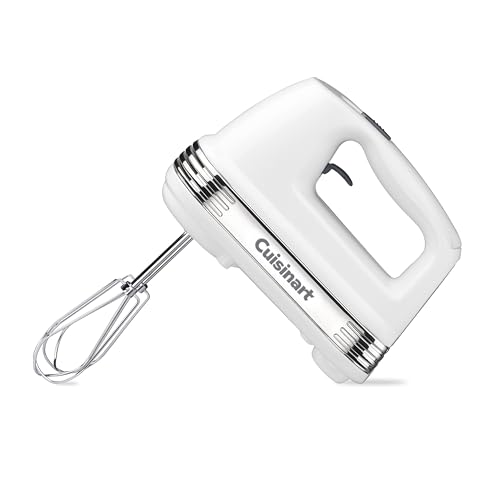
5. Cuisinart Power Advantage Hand Mixer
A hand mixer with a stronger motor than most basic models, aimed at thicker batters. Some versions include a storage case.
Suits: thicker batters. Strengths: power in a handheld. Weaknesses: versions vary in extras. Skip it if you only whip cream.

Best for careful bakers
6. Breville Handy Mix Scraper Hand Mixer
A hand mixer with scraper-style beaters that clear the sides of the bowl as they turn, which helps with even mixing.
Suits: careful bakers. Strengths: a scraping action. Weaknesses: a unique beater style to get used to. Skip it if you want standard beaters.
View Breville Handy Mix Scraper Hand Mixer on Amazon
Care and Setup
- Bring butter and eggs to room temperature before mixing.
- Start on low speed, then raise it as the batter comes together.
- Scrape the bowl a couple of times during mixing.
- Wash removable parts after use, as the maker advises.
- Chill the bowl and whisk before whipping cream.
- Add dry ingredients in stages so the mixer does not push flour out.
Mistakes to Avoid
- Overmixing, which can make a cake dense.
- Starting on high speed and spraying flour.
- Using a hand mixer for very stiff dough.
- Buying without checking which attachments come in the box.
- Beating egg whites in a bowl that has a trace of grease.
- Leaving butter too cold, so the batter looks curdled.
Matching Motor and Mixer Style to Your Batters
Cake batters are mostly light, but recipes vary. A sponge or chiffon batter needs gentle whipping and folding, while a pound cake needs vigorous creaming of butter and sugar. Buttercream asks for a sustained, steady beat, and cookie or bread dough puts more strain on the motor. Think about the heaviest thing you plan to mix, because that decides how much power and build quality you want.
Stand mixers have the advantage of a bowl-and-beater arrangement that runs without help and usually carries more torque, which suits thick batters and long mixing times. Tilt-head designs are easy to load and clean, and compact versions suit small kitchens. Hand mixers are easier to store and cheaper to run, and they handle boxed mixes, whipped cream and most standard cake batters. They can struggle with very stiff dough, so avoid pushing a light model through heavy tasks.
If you bake occasionally and want simplicity, a hand mixer is likely enough. If you bake weekly, make layer cakes or want to multitask while the batter mixes, a stand mixer is worth considering. Look at the speed range as well, and make sure the lowest speed is gentle enough to start dry ingredients without flinging flour. Check the listing for what attachments are included and what the motor is designed for.
Creaming, Whipping and Folding: What Each Attachment Does
Different attachments do different jobs, and using the wrong one is a quiet source of poor results. The flat beater creams butter and sugar, mixes batters and blends frosting. It works by pushing and folding the mixture against the bowl. The wire whip incorporates air, so it is for egg whites, meringue and whipped cream. Using a whip on a thick batter can strain it and may damage the wires.
The dough hook is for yeast doughs and is generally not needed for cake. Some hand mixers include whisks or dough hooks, so check the listing to see what comes with yours. Scraper-style beaters, such as the type the post mentions for one model, are designed to reach the sides and bottom of a bowl. That can reduce how often you stop to scrape, though it depends on the bowl shape.
Gentle folding is often better done by hand with a spatula. After whipping egg whites or cream, add them to the batter with a light folding motion so the air is not lost. Mixers are excellent for the aeration and blending stages, but the final steps of delicate cakes are usually manual. Learn when to switch from machine to spatula, and you will get lighter results regardless of which mixer you own.
Bowl Size, Reach and Batch Quantity
Bowl size controls how much batter you can make and how well the beaters reach it. A bowl that is too small forces you to split large recipes or risks overflow, while one that is too large can leave a small batch spread thin so that the beater does not touch it. Check the capacity on the listing and compare it with the recipes you use most. Many cake recipes are written for standard bowls, and scaling up or down may need adjusting.
Reach matters as much as capacity. The beater should come close to the bowl’s bottom and sides without scraping them. In a tilt-head stand mixer, the clearance can be adjusted on many models, and the manual explains how. If the beater is too high, unmixed butter or flour can sit at the bottom; if it is too low, it may scrape and wear the bowl’s coating or the beater itself.
- Check whether the bowl is stainless steel, glass or another material, and whether it is dishwasher safe.
- Look for a handle on the bowl if you pour batter often.
- Confirm that bowls are sold separately in case you want a second one for alternating recipes.
For compact models, a smaller bowl suits one cake at a time. If you regularly bake for a crowd or make multi-layer cakes, consider a larger bowl or plan to mix in two rounds.
Ingredient Prep That Makes Any Mixer Work Better
No mixer compensates for poor preparation. Room-temperature butter, eggs and milk blend more smoothly and trap air better than cold ingredients. Butter that is too cold will not cream, and butter that is too warm turns greasy. It should be soft enough to press a finger into, but still hold its shape. If your recipe says to cream butter and sugar until light, allow enough time, and scrape the bowl a couple of times to keep the mixture even.
Add eggs one at a time, mixing fully after each, and add dry and wet ingredients in alternating portions if the recipe says so. This helps prevent a curdled look and avoids overmixing. Once flour is added, mix just until combined; overmixing develops gluten and can make a cake tough. Start on the lowest speed so flour does not fly, and only increase it when the ingredients are wet.
Weigh ingredients when you can, since cups of flour vary depending on how it is packed. Sift or whisk dry ingredients to break up lumps. Make sure the bowl and whisk are clean and free of grease before whipping egg whites, because fat prevents them from reaching volume. Preheat the oven and prepare pans before you mix, so batter does not sit and lose air while you work.
Care, Storage and When to Replace a Mixer
Look after a mixer and it will last. Unplug it before cleaning, wipe the housing with a damp cloth, and keep liquid out of the motor housing and vents. Beaters, whisks and bowls usually come off for washing, and the listing or manual should state which parts are dishwasher safe. Painted or coated beaters can discolor or flake in a dishwasher, so check before assuming.
Store hand mixers with the cord loosely wrapped, not tightly twisted, since sharp bends damage the wires over time. Keep attachments together in a drawer or in a case if one is included. For stand mixers, leave enough space around the unit for ventilation, and lift it by the base, not the head, as the manual advises.
Know the signs that a mixer is wearing out. A burning smell, a motor that slows or surges under normal loads, grinding noises, or a head that wobbles are all signs of trouble. A frayed cord is a safety hazard and a reason to stop using the mixer. Attachments that are bent, scratched or pitted should be replaced, since they can leave residue in food. If repairs cost close to a replacement, or parts are no longer available, replacement may be the sensible option.
Cake Mixer FAQ
Stand mixer or hand mixer for cake?
Both work. A stand mixer frees your hands, and a hand mixer takes less room.
Which attachment is for cake batter?
The flat beater is used for most cake batters. The whip is for egg whites and cream.
Is a bigger bowl better?
Only if you bake large batches. A smaller bowl is fine for one or two cakes.
Can a hand mixer cream butter and sugar?
Yes, though it takes a little longer than a stand mixer, and softened butter helps.
Can I use a stand mixer to make whipped cream?
Yes, the wire whip is designed for this. Use a cold bowl and cold cream, start at a lower speed and watch closely, since cream can turn grainy if overwhipped.
Why is my cake batter lumpy?
Cold ingredients, such as butter or eggs, can cause lumps, as can flour added too fast. Use room-temperature ingredients, scrape the bowl and mix until just combined.
How do I stop flour from flying out of the bowl?
Start on the lowest speed, and add dry ingredients gradually. Some mixers have a splash guard or cover. Check your model's manual for what is available.
Is it safe to put mixer attachments in the dishwasher?
It depends on the material and coating. Some are dishwasher safe, while others can discolor or corrode. Check the care instructions for your model.
Can I overmix cake batter?
Yes. Mixing too long after adding flour can make a cake dense or tough. Mix until the ingredients are just combined, then finish by hand if needed.
Do I need a mixer for boxed cake mix?
Not necessarily. A whisk and a bowl can work, though a hand mixer makes it quicker and smoother. Follow the instructions on the box.
How long should I cream butter and sugar?
Recipes usually say to cream until pale and fluffy, which can take a few minutes. Time depends on the mixer and butter temperature. Follow the recipe and look for a lighter color and volume.
What Different Cakes Ask of a Mixer
Not all cake batters make the same demands. A mixer that handles a boxed vanilla cake with ease may struggle with a dense pound cake, and a model that whips egg whites beautifully may be more than you need for a quick snack cake. Knowing which kind of baking you do most makes the choice simpler.
- Butter cakes and pound cakes start by creaming butter and sugar, which needs a mixer with enough low-end strength to move stiff, cold ingredients. This is where a stand mixer earns its space, and where a weak hand mixer can slow or bog down.
- Sponge and chiffon-style cakes rely on whipped eggs or egg whites for lift. They need a whisk attachment or a pair of good beaters and a clean, dry bowl, and they reward a mixer that holds a steady high speed.
- Boxed mixes and oil-based cakes are forgiving. A basic hand mixer is enough, since the batter is thin and mixing is brief.
- Carrot, banana and other fruit or vegetable cakes are usually stirred in by hand at the end, so the mixer matters less than a good spatula.
- Frostings vary. Whipped cream and meringue-style frostings need a whisk, while a thick buttercream suits a paddle or strong beaters.
If you bake a cake once or twice a month, a hand mixer covers most of the list. If you bake weekly, or make cakes for events, a stand mixer saves time and gives you free hands to add ingredients or prepare pans.
Reading Speeds, Wattage and Motor Claims
Listings throw numbers at you, and they are easy to misread. Wattage is the most common figure, but it is not a reliable guide to real mixing ability. A higher number can mean more power draw, not better results, and different makers measure it in different ways. Use it as a rough hint rather than a ranking.
More useful are the speed controls and how smoothly the mixer moves through them. Look for:
- A true low speed, so flour and dry ingredients go in without a cloud. Some mixers start too fast and splash the batter out of the bowl.
- Enough steps between low and high, since a gradual increase lets you control how the batter comes together.
- A planetary mixing action on stand mixers, where the beater travels around the bowl while spinning. It reaches more of the bowl than a beater that only turns in one spot.
- A sturdy build and a motor housing that feels solid, since vibration and walking across the counter are signs of a light base.
For hand mixers, a comfortable grip and a balanced weight matter more than the wattage number. Check how the beaters lock in and eject, and whether the cord can be placed on either side for left or right-handed use. If a model offers a scraper-style or whisk attachment, confirm it fits the mixer you are buying.
Counter Space, Cabinet Height and Storage
A mixer you cannot easily reach is a mixer you will not use. Before you buy a stand mixer, measure where it will live. A tilt-head model needs vertical room to tilt back and lift the head, and a low wall cabinet can block that motion. A bowl-lift style needs height to raise the bowl, though its head stays fixed.
- Measure the clearance under your cabinets with the head tilted back or the bowl raised, not just the mixer’s resting height.
- Check the footprint, since the base and bowl together may be wider than you expect.
- Think about weight. A heavy stand mixer is stable when it runs, but it is awkward to lift in and out of a cupboard every time.
- Plan where the cord and attachments will be stored. A box of beaters and whisks shoved to the back of a drawer gets forgotten.
Compact stand mixers, such as the mini model in this guide, suit small kitchens and smaller batches, but they carry a smaller bowl, so check the batch size you usually make. Hand mixers store in a drawer or on a hook, and they are the easiest option for a tiny kitchen or a shared space.
Budget Versus Premium: Where the Money Goes
The gap between a basic hand mixer and a premium stand mixer is large, and it is not always obvious what you are paying for. At the lower end, you get a motor, a few speeds and a pair of beaters. As you move up, the money goes mainly toward build quality, motor durability, bowl capacity, attachment compatibility and design.
A premium stand mixer typically offers a heavier metal body, a more consistent motor under load, and a wide range of optional attachments, from pasta rollers to grinders. Those extras matter if you want a machine that does more than cakes. If cake and cookie baking is the whole job, you may be paying for features you will not use.
A well-chosen hand mixer is a sensible first step. If you outgrow it, you can upgrade later and keep the hand mixer for quick jobs such as whipped cream or frosting. Whatever you choose, check what is in the box, since bowls, beaters and a whisk are not always included, and consider how long the maker’s warranty lasts.
Getting Professional Results From a Home Cake Mixer
The difference between a good home cake and a bakery-level one is rarely the mixer itself; it is how the ingredients meet the machine. Butter and eggs at a cool room temperature emulsify into a smooth, stable batter, while cold butter resists creaming and cold eggs can curdle a mixture that was beating perfectly. Give ingredients time out of the refrigerator before you start, and add eggs gradually, letting each addition absorb before the next. Flour deserves the same patience. Add it in a few additions, alternating with any liquid in the recipe, and stop mixing shortly after the last streaks disappear. Every extra minute of beating after flour meets liquid develops structure you do not want in a tender cake, and no mixer, however capable, can undo overmixing after the fact.
Reading the Six Mixers in This Guide by Baking Style
The KitchenAid Classic Plus tilt-head is the generalist’s stand mixer: comfortable with layer cakes, frostings and everyday batters, and easy to live with for bakers who mix several times a month. The KitchenAid Artisan Mini answers the space question, giving small households and compact counters the stand-mixer pattern in a lighter footprint, provided batch sizes stay modest. The Smeg stand mixer adds strong visual appeal to similar everyday work, which matters in an open kitchen where the machine lives on display. Among the hand mixers, the Hamilton Beach model is the straightforward, budget-conscious tool for occasional cakes, brownies and whipped cream, with storage-minded design that suits small cupboards. The Cuisinart Power Advantage hand mixer offers a step up in control and smoothness for bakers who prefer to feel the batter and move the mixer through the bowl themselves. The Breville Handy Mix Scraper is the thoughtful hand-mixer option, with beaters designed to scrape the bowl as they work, reducing the stop-and-scrape interruptions that break a baker’s rhythm. Choose by frequency first: weekly bakers feel the benefit of a stand, monthly bakers often do not.
Small Troubleshooting for Common Cake Problems
A batter that looks curdled after adding eggs usually recovers once flour is folded in, provided the ingredients were not fridge-cold; warm the bowl briefly with your hands and continue rather than discarding the mixture. A cake that domes and cracks often points to an oven running hot or a batter beaten too long at high speed, trapping excess air. A dense, heavy crumb more often traces back to under-creamed butter and sugar or to flour measured by scooping, which packs in more than the recipe intends. Weighing flour, or at least spooning it into the measure and levelling it, fixes more cake problems than any attachment. Finally, scrape the bowl properly: stand mixers can leave a pocket of unmixed butter at the base, so stop once mid-mix, scrape the bottom and sides thoroughly, and give the batter a short final mix. That single pause prevents the greasy streaks and uneven texture bakers often blame on the machine.
Mixing Frostings and Fillings Without Overworking Them
Cakes are judged as much by what goes between and over them as by the crumb, and mixers treat those components differently. Butter-based frostings want thorough creaming at the start, then powdered ingredients added gradually at low speed so the kitchen, and the frosting, stay free of sweet dust clouds; a clean towel draped over the bowl for the first moments of each addition is an old baker’s trick that works with any machine in this guide. Whipped fillings want the opposite discipline: cold cream, a clean bowl and a stop the moment soft, glossy peaks form, because a hand mixer left running while you reach for a spatula can take cream past its peak in seconds. Ganache and glazes need no beating at all beyond gentle combining. Matching the mixer’s energy to the component, rather than treating every bowlful the same, is what gives a home cake its finished, composed quality.
Related guides
- 6 Best Hand Mixers for Cookie Dough: Corded and Cordless (2026)
- 6 Best Mixers for Dough: Stand and Hand Models
Frequently Asked Questions
Do I need a stand mixer to bake a pound cake?
Not strictly, but it helps. Creaming cold butter and sugar for a pound cake is tiring with a weak hand mixer, and the motor can strain. A sturdy hand mixer works if you soften the butter well and mix in short bursts.
Why does my stand mixer not reach the bottom of the bowl?
The gap between beater and bowl may need adjusting. Many stand mixers have a screw that sets the beater height. Scraping down the bowl by hand with a spatula during mixing also helps ensure everything is combined.
Is a higher wattage mixer better for cake batter?
Not necessarily. Wattage measures power draw, and makers calculate it differently. Look at the speed range, the beater design and the build quality instead. A well-built mixer with good low speeds often performs better than one with a bigger number.
Can I whip egg whites in a stand mixer bowl that was used for butter?
Only after washing it thoroughly. Any trace of fat can stop egg whites from whipping to full volume. Wash the bowl and whisk, dry them well, and start with whites that have no yolk in them.
Stand or Hand Mixer: Deciding by the Cakes You Bake
The stand-versus-hand question at the heart of this guide is really a question about volume, frequency and patience. A stand mixer, such as the KitchenAid Classic Plus, the Artisan Mini and the Smeg in this guide, works unattended: you can cream butter and sugar while you line a tin, whip egg whites while you fold elsewhere, and let the machine hold a steady speed through a long buttercream without your arm in the equation. That freedom matters most when you bake in batches, bake often, or bake recipes with stages that overlap. A stand mixer also handles the heavier end of cake work, thick batters and stiff cookie doughs that shade into cake territory, with a stability a handheld cannot match.
A hand mixer, such as the Hamilton Beach, Cuisinart Power Advantage and Breville Handy Mix Scraper here, wins on storage, simplicity and the small jobs that make up most home baking: a single sponge, a bowl of whipped cream, a quick frosting. It lives in a drawer, washes in a minute, and asks for no counter at all. Its costs are your attention and your arm: you are the stand, the speed judgment and the scraping system, and long or heavy mixing becomes tiring in a way that quietly discourages ambitious recipes.
The honest test is your last dozen bakes. If they were mostly single cakes and small batches, a good hand mixer will serve you happily for years, and the Cuisinart’s extra power or the Breville’s scraper beaters will cover the thicker moments. If they included layer cakes for gatherings, double batches, or long sessions of buttercream and meringue, a stand mixer will change how baking feels, and the only remaining questions are size and style, which the next sections address.
Comparing the Six Mixers in This Guide
Among the stand mixers, the KitchenAid Classic Plus is the all-round household choice, a mid-size tilt-head with the standard trio of flat beater, whip and hook, suited to regular bakers who make a bit of everything. The Artisan Mini takes the same idea smaller, for compact kitchens and single-cake habits, accepting a smaller bowl as the price of its footprint. The Smeg sells the same tilt-head function wrapped in a retro design, and it should be chosen with eyes open: you are paying partly for how it looks on the counter, which is a legitimate reason if the machine will live in view and be used often, and a poor one if it will hide in a cupboard.
Among the hand mixers, the Hamilton Beach is the straightforward, light option for occasional baking, the Cuisinart Power Advantage adds motor strength for thicker batters and, in some versions, a storage case that keeps beaters from colonizing a drawer, and the Breville Handy Mix Scraper adds beaters designed to scrape the bowl as they turn, reducing the stop-and-scrape rhythm that interrupts hand mixing. Between the two groups, the Breville and Cuisinart narrow the gap more than buyers expect: for batters and creams, a strong hand mixer with good beaters is genuinely capable, and only sustained, heavy or hands-free work truly belongs to the stand machines.
One more comparison matters and is easy to miss: bowl coverage. Stand mixers vary in how well the beater reaches the bottom and sides, and hand mixers put coverage entirely in your hands, which is why the scraper design exists. Unmixed pockets at the bottom of the bowl are the hidden cause of streaky batters and lumpy buttercream in both formats, and whichever you choose, the habit of stopping once to scrape properly will improve your cakes more than the difference between several models here.
Cake Technique: What the Mixer Is Doing at Each Stage
Most cake recipes ask the mixer for three distinct jobs, and understanding them makes any machine in this guide perform better. Creaming butter and sugar beats air into the fat, and that air is the foundation of a light sponge or layer cake. It takes time, longer than most beginners allow: the mixture should turn pale and fluffy, not merely combined. A stand mixer earns its keep here by holding a steady medium speed while you prepare the next stage, while a hand mixer asks you to be patient and keep the beaters moving around the bowl so all the butter is worked evenly.
Adding eggs and flour is where restraint replaces energy. Eggs go in gradually so the mixture stays smooth rather than curdling, and flour is mixed only until it disappears, because every extra turn after that point develops gluten and toughens the crumb. This is where a slow starting speed matters, both to keep flour in the bowl rather than across the kitchen and to keep your touch light. Whipping, the third job, for egg whites or cream, wants clean beaters, a clean bowl and a steady climb through the speeds, and it punishes any trace of fat on the equipment, which is why bakers wash and dry attachments properly between stages rather than wiping them and hoping.
Buttercream and meringue reward the stand mixer most of all, because they improve with long, steady beating that would exhaust a hand and an arm together. If celebration cakes with real buttercream are your ambition, let that ambition guide the purchase. If your cakes are finished with a dusting, a glaze or whipped cream, a hand mixer covers the whole of your actual repertoire, and buying beyond it buys capacity you will admire rather than use.
Care, Storage and Small Habits That Extend a Mixer’s Life
Wash attachments promptly, because dried batter and buttercream harden into a chore, and check the maker’s guidance before putting any part in a dishwasher. Dry the beater shafts and the places where attachments meet the machine, since trapped moisture in hidden joints is unkind over time. Wipe the body with a damp cloth and keep vents and seams free of the flour dust that migrates everywhere in a baking kitchen. On stand mixers, check periodically that the bowl still locks and the head still latches exactly as they should, because a small looseness makes mixing noisier and less even long before anything fails outright.
Storage shapes use. A stand mixer kept on the counter gets used; the same machine in a deep cupboard becomes an occasion. If yours must be stored, keep its attachments together in or beside the bowl so setup is one motion rather than a search. Hand mixers belong in a drawer with their beaters paired and, if your model has a case or a snap-on storage arrangement, used, because loose beaters bend and drawers full of metal are how beaters get damaged. Treat the cord kindly on both types, coiling it loosely rather than winding it tight around the body, and the machine will repay you in years.
More Cake Mixer Questions Answered
Can a hand mixer really make a layer cake?
Yes, comfortably, including the buttercream, provided you work in the order the recipe intends and accept that long beating stages need your presence throughout. Generations of bakers made celebration cakes with hand mixers and by hand. The stand mixer’s gift is freedom and ease, not permission.
Why does my batter curdle when I add the eggs?
Usually because the eggs are cold, added too fast, or the butter mixture was not creamed enough first. Bring eggs toward room temperature, add them gradually with a little of the flour if the recipe allows, and keep the speed moderate. A slightly curdled batter often bakes acceptably, so do not discard it in despair.
How do I stop flour flying everywhere?
Start at the lowest speed, add flour in portions, and let each addition mostly disappear before adding the next. A larger bowl helps, and draping a tea towel over a stand mixer for the first seconds is an old, effective trick. Speed is the enemy at this stage and patience is the whole solution.
Is a smaller stand mixer a false economy?
Only if your baking outgrows it. For single cakes and small households, the Artisan Mini’s size in this guide is a genuine fit rather than a compromise. For double batches and big gatherings, a mid-size bowl saves you from working in halves, so let your real batch sizes decide.
What attachments beyond the basics are worth having?
For cake work, the standard beater, whip and hook cover nearly everything, and a second bowl is often the most useful addition of all, since it lets you whip whites while batter waits. Buy extras when a recipe you make repeatedly asks for them, not in anticipation of recipes you may never try.
How do I know when whipped cream or whites are done?
Watch the texture, not the clock. Cream should hold soft, then firm peaks that stand with a slight curl; whites should be glossy and hold a peak without looking dry. Both go from perfect to overworked quickly, and overworked cream turns grainy while overworked whites weep, so slow down near the end and check often, whichever mixer you are using.
A First Cake With a New Mixer: Setting Yourself Up to Succeed
Choose a familiar, forgiving cake for a new mixer’s first outing, not the most ambitious recipe in your collection. Read the recipe fully before switching anything on, bring butter and eggs toward room temperature as it directs, and set out every ingredient measured and ready, because mixing stages wait for no one and a stand mixer’s hands-free advantage is wasted if you spend it hunting for vanilla. Notice how the machine sounds at each speed, how the beater meets the bowl, and where the unmixed pockets hide in your particular bowl, since every model has its own small geography.
As you work, scrape once more often than feels necessary. That single habit, applied at the end of creaming, after the eggs, and after the flour, prevents the streaks and lumps that beginners blame on recipes. When the cake is baked, judge it honestly and note one thing you would adjust: a longer creaming, a gentler fold, a slower start with the flour. A new mixer becomes a trusted tool over a handful of bakes treated this way, each one a small lesson, and the cakes improve faster than they would from any amount of reading, including this guide.
Scaling a recipe for your bowl
Doubling a cake batter is safer in a stand mixer with room to spare than in a bowl filled to the brim, where creaming cannot build air and flour has nowhere to go but out. If your bowl is small, mix in two batches rather than one heroic one, and combine gently at the end if the recipe tolerates it. Halving has the opposite quirk: a thin layer of batter in a large bowl can escape the beater, in which case a hand mixer, or finishing the stage with a spatula, keeps everything engaged. Match the batch to the bowl and the mixer to the batch, and most cake problems never get the chance to happen.
Troubleshooting cakes that disappoint
When a cake rises unevenly or domes and cracks, the mixer is rarely the culprit, but mixing can contribute: an under-creamed base gives a weak rise, and an over-mixed batter gives a tough, peaked crumb. When buttercream is grainy, the butter was likely too cold or the sugar needed longer, steadier beating, which is a patience problem a stand mixer solves and a hand mixer user solves with breaks and persistence. When a sponge is dense, suspect the folding after the mixing, since whipped eggs and whites lose their air to a heavy hand faster than to any machine. Work through these causes in order, change one thing on the next bake, and keep the note. Baking improves by exactly this loop, and a good mixer, stand or hand, is the steady partner that lets the loop run without fatigue distorting the results.
Keep a small baking notebook for the first season with a new mixer: the recipe, the speeds you used at each stage, and one honest sentence about the result. Speeds that worked for a sponge and settings that suited a buttercream become your personal manual, more useful than the printed one, because they describe your machine, your bowl and your ingredients rather than a test kitchen’s.
And bake the cake you actually want to eat, soon after the machine arrives, rather than saving it for an occasion. A mixer that is used in its first week becomes part of the kitchen; one that waits for a special day can wait for months, and the habit, like the cakes, is best begun simply.
If children bake with you, a hand mixer teaches control and a stand mixer teaches patience, and either, supervised, turns a recipe into a memory. Choose the machine that fits the bakers in the house as well as the cakes on the list.
Keep spare beaters only if your household genuinely loses them; otherwise, one well-kept set, washed and dried and stored together, will outlast several cakes a month for a very long time.
The measure of the right mixer, in the end, is not in its specification but in whether baking becomes easier to start. The best machine in this guide is the one that removes your particular reason for putting a cake off until tomorrow.
So set it up where it belongs, plug it in, and let the next birthday, bake sale or quiet Sunday decide nothing at all: you will already be ready.
Ready, in a baking kitchen, is a wonderful thing to be: ingredients in the cupboard, a machine you understand, and a recipe you trust.
The rest is preheating the oven and choosing who gets the first slice.
Choose generously; there will be another cake, and now nothing stands between the idea of it and the baking of it.
That ease, repeated over birthdays and ordinary weekends alike, is what you were buying all along.
Enjoy it in good company, and keep the notebook going.
A notebook kept beside the mixer also solves the oldest problem in home baking, which is remembering what you did on the day a cake turned out perfectly. Write down the flour you used, the size of the eggs, the weather if the kitchen was unusually warm or cold, and the exact moment you judged the creaming done, because those details, invisible a month later, are the difference between repeating a triumph and chasing it.
The Short Version
For a classic stand mixer, the KitchenAid Classic Plus. For small kitchens, the Artisan Mini. For style, the Smeg. For simple hand mixing, the Hamilton Beach. For power, the Cuisinart. For even mixing, the Breville Handy Mix Scraper. Choose the style that fits your counter and how often you bake.

