A citrus juicer squeezes lemons, limes, oranges and grapefruit with less effort and less waste than pressing by hand. Options range from handheld squeezers and lever presses to electric reamers. The right pick depends on how much juice you need and how much hand strength you want to use. A good juicer also cuts waste, since it gets more juice out of each fruit than a quick squeeze with your fingers, and it keeps seeds out of the glass.
The six juicers below cover manual and electric styles. We have not used these products ourselves, so confirm the size, fruit types and parts on the current listing before you buy. Lever presses and squeezers are sized for particular fruits, so check which ones each model suits. If you only squeeze a lemon or lime now and then, a simple handheld tool is enough; if you make juice often, consider an electric model.
As an Amazon Associate we earn from qualifying purchases. Links below are affiliate links, and they do not change the product information we give.
What to Look For
| Feature | Why it matters |
|---|---|
| Style | Handheld squeezers are small; lever presses and electric reamers are faster |
| Fruit size | Some tools suit lemons and limes but not grapefruit |
| Material | Metal is durable; coated metal and plastic are lighter |
| Seed and pulp control | Strainers keep seeds out of the juice |
| Cleaning | Dishwasher-safe parts save time |
In this guide
Specs at a Glance
| Juicer | Type | Material | Notes |
|---|---|---|---|
| Chef’n FreshForce Citrus Juicer | Handheld press | Plastic and steel | Spring-assisted |
| OXO Good Grips 2-in-1 Citrus Juicer | Handheld reamer | Plastic | Built-in cup and strainer |
| Zulay Metal Lemon Squeezer | Hand press | Metal | Sold in several sizes |
| Cuisinart Pulp Control Citrus Juicer | Electric reamer | Plastic and steel | Pulp control |
| Hamilton Beach Citrus Juicer | Electric reamer | Plastic | Auto-reversing cone on some versions |
| Breville Citrus Press Pro | Electric press | Metal and plastic | Lever-style |
The 6 Best Citrus Juicers

Top pickBest for lemons and limes
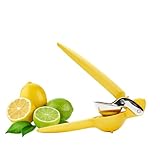
1. Chef’n FreshForce Citrus Juicer
A handheld press with a spring that opens the handles for you and a design aimed at making squeezing easier on your hands.
Suits: lemons and limes. Strengths: easy action. Weaknesses: small capacity. Skip it if you juice many fruits at once.

Best for small jobs
2. OXO Good Grips 2-in-1 Citrus Juicer
A handheld reamer with a built-in measuring cup and a strainer that holds back seeds, sized for a small batch.
Suits: small jobs. Strengths: collects and strains the juice. Weaknesses: needs hand strength. Skip it if you want a hands-off tool.
View OXO Good Grips 2-in-1 Citrus Juicer on Amazon

Best for bar and kitchen use
3. Zulay Premium Metal Lemon Squeezer
A hand-operated metal press that comes in lemon, lime and orange sizes. Check which size matches your fruit.
Suits: bar and kitchen use. Strengths: a solid metal build. Weaknesses: sized per fruit. Skip it if you juice mixed fruit.
View Zulay Metal Lemon Squeezer on Amazon

Best for breakfast juicing
4. Cuisinart Pulp Control Citrus Juicer
An electric reamer from a well-known brand that lets you pick how much pulp ends up in the glass.
Suits: breakfast juicing. Strengths: pulp control. Weaknesses: counter space. Skip it if you want a handheld.
View Cuisinart Pulp Control Citrus Juicer on Amazon

Best for casual daily use
5. Hamilton Beach Citrus Juicer
A simple electric reamer that spins a cone against halved fruit. It is a plain, accessible choice for regular orange juice.
Suits: casual daily use. Strengths: easy to operate. Weaknesses: plastic parts. Skip it if you want metal.

Best for heavy use
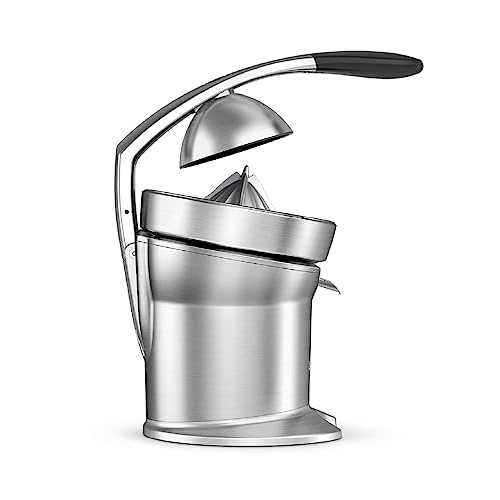
6. Breville Citrus Press Pro
An electric citrus press with a lever-style action, built for people who squeeze a lot of fruit.
Suits: heavy use. Strengths: strong squeezing action. Weaknesses: large and heavier. Skip it if you juice once in a while.
Care and Setup
- Roll the fruit on the counter before cutting to loosen the juice.
- Bring citrus to room temperature for more yield.
- Rinse the tool soon after use.
- Check which parts can go in the dishwasher.
- Warm cold citrus for a few seconds in warm water before juicing.
- Rinse the strainer under running water to clear the pulp.
Mistakes to Avoid
- Putting the fruit in the wrong way round in a lever press.
- Using a lemon press for large oranges.
- Pressing too hard and breaking the pulp.
- Leaving sticky juice to dry on the tool.
- Squeezing the rind side up in a press and tearing the peel.
- Leaving seeds in the pulp strainer.
Handheld, Lever Press or Electric: Which Style Fits
Three styles cover most citrus juicers, and each is best for a different kind of use. A handheld squeezer is a small hinged tool that you press by hand over a bowl or glass. It is compact, quick to clean and cheap to store, and it is perfect for a lemon or lime wedge in a recipe. A lever press works similarly but uses leverage and a larger cup to extract more juice with less force. An electric reamer or press spins a cone against the fruit and suits anyone who juices several fruits at a time.
Think about your volume. If you squeeze a lemon or lime a few times a week, a handheld tool is enough. If you make a pitcher of lemonade, juice for cocktails for a crowd or have a daily glass of orange juice, a lever press or electric model saves time and effort. Also consider your hands: people with weak grip or joint pain often prefer a lever or electric model that needs less pressure.
Check the listing to see which fruits the model is designed for. A squeezer sized for lemons may not fit a large orange or grapefruit.
- Occasional use: handheld squeezer.
- Frequent use with less effort: lever press.
- Large volumes: electric model.
Matching the Juicer to the Fruit You Squeeze
Citrus fruits vary in size, rind thickness and juiciness, and a juicer that works well on a lime may struggle with a grapefruit. Limes and lemons are small, so smaller handheld squeezers fit them well. Oranges need a larger cup, and grapefruit needs more space and a wider cone or press. Some products are sold with interchangeable inserts or described as two-in-one, but check the listing for which sizes each insert fits.
Fruit choice matters too. Soft, ripe citrus gives more juice, while firm, cold fruit gives less. Rolling the fruit under your palm on the counter before cutting, or warming it slightly, loosens the pulp. Cut the fruit crosswise, through the equator, for reamers and presses. For handheld squeezers, follow the product guidance on whether to put the cut side up or down.
Think about the final use. For cocktails, you may want juice with few seeds and little pulp. For cooking or baking, pulp is often fine, and zest is useful too. If you plan to zest the fruit, do it before juicing, since a cut fruit is hard to hold.
- Check size ranges on the listing.
- Roll and warm fruit for more juice.
- Zest before you cut and juice.
Pulp, Seeds and Juice Quality
How a juicer treats pulp and seeds changes the drink you end up with. Many handheld squeezers and presses have perforated cups that hold back seeds and larger pieces, though some pulp passes through. Electric reamers often include a pulp control setting or a strainer, which lets you choose a smoother or more textured juice. Check the listing for a seed catcher and for how the strainer works.
Pulp preference is personal. Some people like orange juice with pulp, and others prefer it clear. If you want clear juice, you can pour it through a fine strainer or a piece of cheesecloth after juicing. For cocktails, straining improves the look and mouthfeel.
Another factor is how much bitterness reaches the juice. Pressing too hard on the pith, the white layer under the peel, can add bitter flavor. Some machines are designed to limit this, but even a manual tool can be used with a gentle touch. Avoid squeezing the very last drops if you taste bitterness.
- Check for strainers and seed catchers.
- Strain again if you want clear juice.
- Be gentle with pith to limit bitterness.
Materials and Durability
Citrus juice is acidic, and it can affect some materials over time. Metal squeezers made from stainless steel or coated aluminum are popular because they are strong and resist bending, but the coating should be intact. Check the listing for what the finish is, and for any care instructions, since some coated metals should not go in a dishwasher. Plastic juicers are lighter and often cheaper, but can crack under heavy pressure and may stain from orange juice. Look for sturdy hinges and thick handles.
Electric models bring other considerations. Look at the motor housing, the cone material and how easily the parts come apart. A removable cone and strainer make cleaning simpler. Check the cord length and whether the base has non-slip feet, because the motor can shift while it runs.
Consider how long you want the juicer to last. A well-made manual tool can last many years with little care, but weak hinges or a thin cup may bend. Reading product descriptions for comments about hinge strength and finish is a useful step, and independent reviews can help you see how a model holds up over time.
- Check the finish and coating on metal squeezers.
- Look for strong hinges and handles.
- Choose easy-to-disassemble electric parts.
Cleaning, Storage and Getting More Juice
Rinse the juicer soon after use, because sugar and pulp dry into a sticky film. Handheld squeezers usually rinse clean under warm water with a brush for the holes. Check the care instructions for dishwasher use, particularly for coated metal and electric parts. Electric reamers and strainers should come apart for washing, but keep the motor base dry.
A few habits help you get more from each fruit. Bring citrus to room temperature before juicing, since cold fruit is harder to squeeze. Roll it firmly on the counter. Cut it in half and press steadily, rather than twisting with force. For limes, a pinch of extra pressure at the end may release more juice, but avoid bitterness from the peel.
Store the juicer where you can reach it. A tool that lives in a drawer at the back is less likely to be used. Freshly squeezed juice is best used soon, and if you need to store it, keep it covered in the refrigerator for a short time. Juice flavor changes quickly, so squeeze as close to serving as you can. Replace the juicer if hinges loosen, the coating peels or plastic cracks.
- Rinse immediately to avoid sticky residue.
- Use room-temperature fruit and roll before cutting.
- Replace tools with cracked parts or peeling coatings.
Citrus Juicer FAQ
Which citrus juicer is easiest to use?
Electric reamers and lever presses need the least effort. Handheld tools suit small jobs.
Do I need different juicers for lemons and oranges?
Some presses are sized for one fruit. Check the listing for the size.
Metal or plastic?
Metal is more durable. Plastic is lighter and often cheaper to replace.
Can I use these for grapefruit?
Larger electric models and presses sized for grapefruit can. Handheld tools may be too small.
Which juicer is best for someone with weak hands?
Lever presses and electric models need less grip strength than a small handheld squeezer. Look for long handles, a comfortable grip and a stable base, and check the listing for details.
How can I get more juice from a lemon?
Bring it to room temperature, roll it firmly on the counter, then cut it and press steadily. Warm fruit is generally easier to juice than cold fruit.
Do metal juicers react with citrus?
Some metals and coatings can wear with acidic juice over time. Check the finish on the listing and follow the care instructions, since some coated squeezers should not be placed in a dishwasher.
Is an electric juicer worth it for occasional use?
Probably not, since a manual squeezer is cheaper, smaller and easier to clean. Electric models make sense if you juice often or in volume.
Why does my juice taste bitter?
Pressing hard on the white pith under the peel can add bitterness. Use a gentler press, avoid squeezing the last drops and strain out any bits of peel.
How long does fresh juice keep?
Fresh juice is best used soon after squeezing. If you must store it, keep it covered in the refrigerator for a short time, and discard it if it smells or tastes off.
Can one juicer handle limes, lemons and oranges?
Some can, but sizes vary. Check which fruit each model is sized for, as a squeezer built for limes may not fit an orange, and a large cone may not squeeze small fruit well.
How Much Juice to Expect From Common Citrus
Planning quantities saves wasted fruit and repeated trips to the store. Yield varies by variety, ripeness and how the fruit has been stored, so treat the numbers below as rough rules of thumb rather than promises.
- Lemons: A medium lemon commonly yields around two to three tablespoons. Thin-skinned, heavy lemons tend to be juicier than thick-skinned, light ones.
- Limes: A lime typically gives one to two tablespoons, so recipes that call for a quarter cup can take five or six.
- Oranges: Juicing varieties give more than thick-skinned eating oranges. Expect roughly a third to half a cup per fruit.
- Grapefruit: One large grapefruit can supply a generous glass, though yield varies widely by variety.
When you buy, pick fruit that feels heavy for its size. Weight is a better clue to juice content than color. Smooth, thin skin usually signals more juice than bumpy, thick skin.
Prepping Fruit So the Juicer Does Its Job
A few minutes of preparation raises the amount of juice you collect and keeps bitterness out of the glass.
- Bring fruit to room temperature: Cold fruit from the refrigerator releases juice less readily. If you are in a hurry, microwave a whole fruit for about ten seconds, keeping a close eye on it.
- Roll before cutting: Pressing the fruit against the counter with your palm helps break the internal membranes.
- Cut crosswise for most juicers: Slicing across the equator exposes the most segments. Lemons and limes in handheld presses are an exception, since many are designed for lengthwise halves, so follow the shape of the juicer.
- Check for seeds: Remove visible seeds when you can. Crushing seeds can add a bitter edge, and a strainer catches the rest.
- Wash the skin: Rinsing removes surface residue, especially if you plan to zest first.
If you need zest for the same recipe, remove it before juicing. A whole fruit is far easier to zest than a squeezed half.
Recipes and Uses That Justify the Counter Space
People often buy a juicer for lemonade and then discover how many other uses fresh juice has. It helps to know what you will actually make, because that determines how much capacity and speed you need.
For cooking, fresh lemon or lime juice brightens sauces, marinades, dressings and soups right at the end of cooking. For baking, it supplies acid for curds, glazes and quick breads. For drinks, it is the base of lemonade, limeade, margaritas, spritzers and flavored water. Frozen into ice cube trays, surplus juice becomes a ready supply for weeks, which is a good way to use up a bag of fruit before it spoils.
Households that only need a squeeze here and there do well with a compact handheld tool. Families that make a pitcher of juice every morning will appreciate a motorized or lever-style unit that handles larger batches without tiring the hand.
Storing and Using Fresh Juice Safely
Fresh juice has no preservatives, so handle it with care. Keep it in a clean, covered container in the refrigerator and plan to use it within a day or two for the best flavor. Citrus juice is acidic, which helps slow some bacterial growth, but flavor still changes quickly as the bright aroma fades and a cooked or bitter note creeps in.
Freezing is the better option for anything beyond a few days. Pour juice into ice cube trays, freeze solid, then transfer the cubes to a sealed bag. A cube is usually about an ounce or two, which makes measuring simple.
People who take certain medications, notably some prescriptions that interact with grapefruit, should check with a pharmacist or doctor before drinking grapefruit juice regularly. That is general health information rather than advice for any individual, and it is worth a quick conversation if it applies to you.
Choosing by kitchen size and frequency
Counter and cabinet space often decides the matter before juice quality does. A handheld squeezer fits in a drawer and needs no cord, which suits small kitchens and occasional use. A lever press is bulkier but handles a bag of fruit with less effort. An electric reamer sits on the counter, so it earns its place only if you juice several times a week. Ask how often you will really use it, how many fruits you typically squeeze at once, and who else will be using it. A tool that is easy to wash by hand or in the dishwasher is the one most likely to stay in rotation.
Getting the Most From Citrus Season: Technique and Timing
Citrus is at its best, and usually its best value, in season, and a juicer earns its space by helping you use that abundance well. Fruit at room temperature gives more juice than fruit straight from the refrigerator, so take what you plan to squeeze out a little ahead of time. Roll each fruit firmly on the counter under your palm before cutting; this breaks down the internal membranes and makes a visible difference to yield, whatever tool you use. Cut across the equator rather than through the stem end so the segments open fully to the reamer or press. If you are juicing a large batch for a recipe or for freezing in small portions, work through the firmest fruit first and taste as you go, because a single underripe or tired fruit can flatten the flavour of an otherwise bright batch.
Matching the Six Juicers in This Guide to Hands and Habits
The Chef’n FreshForce is the geared hand press for cooks who juice a lemon or two at a time and want mechanical help without another appliance on the counter. The OXO Good Grips 2-in-1 Citrus Juicer is the measured, reamer-style option that suits recipes, dressings and drinks where you juice directly and want to see quantities as you work. The Zulay Premium Metal Lemon Squeezer is the simple, sturdy hinged squeezer that lives in a drawer and handles everyday lemons and limes with almost no cleaning. The Cuisinart Pulp Control Citrus Juicer moves to electric power for regular orange and grapefruit juicing, letting the user adjust how much pulp reaches the glass. The Hamilton Beach Citrus Juicer serves larger, family-scale batches with a pitcher-based routine that suits weekend breakfasts. The Breville Citrus Press Pro is the lever-assisted electric press for households that juice in volume and want the press to do the physical work, fruit after fruit, with minimal strain. Hand strength and batch size decide this category more than any other factor, so choose for the hands that will actually do the squeezing on an ordinary morning, not for an ideal one.
Pulp, Seeds and Storing Fresh Juice Well
Pulp is a preference, not a fault, but manage it deliberately. A quick pour through a small strainer gives a smooth juice for cocktails and sauces, while leaving pulp in breakfast juice keeps more of the fruit’s character. Seeds should be caught before they reach the glass, since a bitten seed is bitter enough to spoil a drink; most tools in this guide trap them, but a final glance before pouring is worthwhile with hand squeezers. Fresh citrus juice keeps its brightness briefly, so juice close to use where you can. If you must store it, refrigerate it promptly in a filled, sealed container to limit air, and use it within a short window while the flavour is still lively. Leftover juice freezes well in ice-cube trays for later cooking, which is a better fate than a forgotten jug slowly losing its character at the back of the refrigerator.
When Hands Need Help: Reducing Strain Without Going Electric
Not every cook who struggles with a basic squeezer needs to jump straight to an electric machine. Technique closes much of the gap. Warm fruit gives more juice for less force, rolling before cutting loosens the structure, and pressing with body weight through a flat palm on a counter-stable reamer is far easier on joints than gripping and twisting in the air. A geared hand press, like the FreshForce pattern in this guide, multiplies force mechanically and suits most everyday quantities. If squeezing still hurts, that is useful information rather than a failing: an electric or lever-assisted press is then a genuine accessibility tool, and choosing one is simply matching equipment to hands honestly. The right juicer is the one that gets used without discomfort on an ordinary morning, because a tool that causes pain will be avoided no matter how well it performs in a test.
Frequently Asked Questions
Should I microwave a lemon before juicing it?
A short burst of about ten seconds can warm the fruit and loosen the membranes, so a little more juice comes out. Watch it closely and do not overheat. Rolling the lemon on the counter with firm palm pressure is a no-heat alternative with similar benefits.
Can I freeze fresh citrus juice?
Yes. Pour it into ice cube trays, freeze until solid, then store the cubes in a sealed freezer bag. This preserves flavor far better than refrigerating for a week, and you can drop a cube straight into recipes or drinks.
Why does my citrus juice taste bitter after sitting?
Bitterness can come from the white pith, from crushed seeds, or from compounds that change after juicing. Juice that sits for hours also develops a stale flavor. Use fresh juice soon after squeezing and avoid pressing the rind too hard.
How do I choose a juicy lemon at the store?
Pick lemons that feel heavy for their size, with thin, smooth skin and a slight give when pressed. Light, hard fruit with thick, bumpy skin usually has less juice. Fruit stored cold and fresh tends to hold more moisture than old stock.
Hand, Lever or Electric: Matching the Juicer to the Job
The six juicers in this guide divide into three families, and the right family depends on two honest questions: how much juice, and how often. A handheld squeezer or reamer, such as the Chef’n FreshForce, the OXO Good Grips 2-in-1 and the Zulay metal squeezer here, is the whole answer for a lemon in a dressing, a lime in a drink, or a couple of oranges on a weekend morning. These tools cost little drawer space, wash in seconds, and give you complete control over every drop. Their limit is volume and effort: your hand is the motor, and a bag of oranges for a family breakfast will make that fact plain.
Electric reamers, the Cuisinart Pulp Control and the Hamilton Beach models in this guide, move the work to a motor. You press a halved fruit onto a spinning cone and the machine does the squeezing, which transforms the economics of larger jobs: a pitcher of orange juice, a batch of lemonade for guests, or the citrus base for a marinade becomes a few minutes of easy work. The pulp control on the Cuisinart answers the household argument about texture at the machine rather than at the table. The costs are counter space, a cord, and more parts to wash, which is why electric models earn their place only when the volume is real and recurring.
The Breville Citrus Press Pro represents the third family, the motorized lever press, which combines a lever’s pressure with a motor’s cone for the least effort per fruit of any style here. It suits the household that juices citrus in quantity and often, and wants the session to feel effortless from the first orange to the last. Between the families there is no hierarchy, only fit: the cook who squeezes two lemons a week and buys an electric press has purchased storage problems, while the family squeezing a crate of oranges through a handheld tool has purchased a sore hand. Let your real volume decide, and every model in this guide becomes the right one for somebody.
Comparing the Six Juicers in This Guide
Within the handhelds, the personalities are distinct. The Chef’n FreshForce uses a geared, spring-assisted action designed to make squeezing easier on the hands, which matters more than it sounds for anyone who juices lemons regularly or whose grip is not strong. The OXO 2-in-1 takes the reamer approach, twisting the fruit on a cone over a built-in measuring cup with a strainer, so the juice is collected, measured and seed-free in one small tool that suits baking and dressings particularly well. The Zulay metal squeezer is the classic two-handle press in metal, sold in sizes matched to lemons, limes and oranges, which means choosing the size for the fruit you squeeze most rather than expecting one tool to span the whole citrus family.
The electrics divide by control and character. The Cuisinart’s pulp control is its defining idea, letting you set how much pulp reaches the glass, and its design suits breakfast juicing as a routine. The Hamilton Beach brings an auto-reversing cone on some versions, which works the fruit in both directions for a more complete squeeze, in a straightforward, counter-friendly form. The Breville press, as described above, is the low-effort flagship, with a lever doing the pressing work that your arm does on the other electrics.
A practical way to choose is to rehearse your most common job against each tool. A lemon for tonight’s dinner: any handheld wins. Juice for four people on Sunday: the electrics pull away. A weekly pitcher for the refrigerator: the press justifies itself. The tool that wins your most common job, not your most ambitious one, is the tool you will still be using happily next year.
Technique: Getting More Juice From Every Fruit
Whatever tool you choose, a few habits raise the yield from every piece of fruit. Start with fruit at room temperature rather than straight from the refrigerator, since cold citrus gives up its juice reluctantly. Roll each fruit firmly on the counter under your palm before cutting it, which breaks down the internal membranes and frees juice that squeezing alone would leave behind. Cut across the equator rather than from stem to tip, exposing the segments in the way every reamer and press is shaped to work.
On a reamer or electric cone, use steady pressure and let the tool do the cutting; pressing harder past a point yields bitterness from the pith rather than more juice. Work the fruit around the cone so all sides meet it, and stop when the rind has given what it has, because the last drops are the bitter ones. On a handheld press, seat the fruit cut-side down as the design intends, squeeze in one smooth motion, and open the handles fully between fruits so the spring-assisted and hinged designs can reset properly.
Strain with judgment. Seeds and coarse pulp belong out of a cocktail or a sauce, while a breakfast juice can happily keep the fine pulp that many drinkers prefer. The built-in strainers and pulp controls in this guide exist to make that choice at the machine, and using them deliberately, rather than accepting whatever comes out, is the difference between juice that happens and juice that is made.
Cleaning and Care for Citrus Tools
Citrus is kind to tools in one way and unkind in another. The juice rinses away easily when fresh, but left to dry it becomes a sticky film, and the natural acids, given time and neglect, are hard on finishes and on the moving parts of presses. The rule, as with so many kitchen tools, is a prompt rinse. Handhelds need little more: warm water, a quick brush around hinges and reamer cones where pulp lodges, and a proper dry before the drawer, since a metal squeezer stored wet will eventually show it.
Electric models ask for the same promptness with more parts. Remove the cone, strainer and jug as the maker directs, rinse them before the pulp sets, and wash them in warm soapy water or the dishwasher only where the guidance allows. Wipe the base rather than washing it, keeping water away from the motor housing, and let everything dry fully before reassembly so no stale citrus smell takes up residence. Check the listing for which parts are dishwasher safe for your specific model, since versions differ and assumptions are how good tools get damaged.
Inspect handheld presses occasionally at their hinges and coatings. A coating that has begun to chip where the handles meet the fruit bowl is a reason to retire the tool from food duty, and a hinge that has loosened changes the squeeze in ways you will feel before you see. These are inexpensive tools with long lives when they are rinsed, dried and stored with a little respect.
More Citrus Juicer Questions Answered
Which size squeezer do I need for mixed citrus?
If you squeeze mostly lemons and limes, the lemon or lime size in a tool like the Zulay here serves best, since an oversized press closes poorly on small fruit. If your work spans oranges too, a reamer-style tool such as the OXO, or an electric, covers the range without sizing compromises. Match the tool to the fruit you squeeze weekly, not occasionally.
Why does my juice taste bitter?
Bitterness comes from the pith and rind oils, extracted when fruit is pressed too hard or worked too long on the cone. Ease off at the end of each fruit, avoid grinding the rind against the reamer, and taste as you go. Juice sweetened by technique needs no other sweetening at all.
Can I juice other fruits in a citrus juicer?
These tools are shaped for citrus and do their best work there. Soft fruits belong in a blender, and hard produce belongs in a centrifugal juicer of the kind covered elsewhere in our guides. Using each tool for its own fruit is not fussiness; it is how you get good juice and long-lived equipment.
How much juice should I make at once?
As much as will be drunk fresh or within a short keeping time in the refrigerator, in a sealed container. Citrus juice is at its brightest the day it is made and fades steadily afterward, so smaller, more frequent sessions beat a weekly marathon for flavor, whatever the tool.
Are metal squeezers better than plastic ones?
Metal, as in the Zulay here, offers durability and a firm squeeze, while designs mixing plastic and steel, such as the Chef’n, can offer easier actions and lighter weight. The better question is whether the tool’s size and action suit your fruit and your hands; both materials serve well when the design is right.
What should I do with citrus halves after juicing?
The spent halves still hold aromatic oils in their rinds, useful for a quick wipe around a chopping board or for the compost and the food waste bin afterward. What they should not do is sit in the juicer or the sink, since dried citrus residue is the beginning of the sticky film described above. Rinse the tool, clear the halves, and the job is finished.
Citrus at the Bar and in the Kitchen: Two Different Demands
A home bar and a kitchen use citrus differently, and the difference can guide a household that juices in both places. The bar wants small amounts, precisely and often: a lemon or lime at a time, squeezed to order so the juice is alive in the drink, with seeds kept out absolutely. A handheld press lives happily on a bar for exactly this work, rinsed in seconds and ready again. The kitchen wants range and sometimes volume: dressings and marinades in spoonfuls, baking measures in the OXO’s cup, and breakfast juice in glasses. A household serious about both often ends up with two tools from this guide, a handheld at the bar and an electric in the kitchen, and that is not duplication but correct placement, since each tool sits where its work happens and neither has to travel.
Wherever the juicing happens, keep the supporting cast together: a small knife and board for halving, a strainer for the bar, and a container for the finished juice. Citrus work is quick, and it stays quick when the whole small kit lives in one place rather than being assembled from four drawers each time.
Buying citrus for juicing
Choose fruit that feels heavy for its size, which signals juice, with smooth, fine-textured skin rather than thick, coarse rind where lemons and oranges are concerned. Fruit bought for juicing can be less beautiful than fruit for the bowl, since the inside is what matters, but it should be sound and fresh, because a juicer concentrates whatever the fruit brings, including tiredness. Buy in the rhythm you juice, keep a few lemons and limes permanently in stock for the kitchen’s daily needs, and let oranges and grapefruit follow the week’s actual plans, so the fruit is used at its peak and the juicer, whichever you choose from this guide, always has something worth squeezing.
Keep a note, for the first month, of how many fruits your household actually squeezes in a week and for what. That small count settles every argument about which family of juicer belongs in your kitchen, because it replaces guessing with evidence, and it often surprises: many households discover their volume is bar-sized, not breakfast-sized, and that the simple handheld they nearly overlooked is the tool their life was asking for all along.
Evidence of that kind is worth gathering before any purchase in this guide, and it costs nothing but a pencil by the fruit bowl. Count for a week, then choose, and the juicer you bring home will fit your kitchen the way a well-chosen tool should: immediately, obviously, and for years of lemons, limes and Sunday oranges without a single regret about the drawer or the counter it occupies.
There is one more consideration that experienced citrus users raise and beginners rarely think of: the zest. Many recipes that call for juice also call for zest, and the order of operations matters, because zesting a fruit that has already been halved and squeezed is awkward and yields less. When a recipe wants both, zest first, while the fruit is whole and firm in the hand, then halve and juice it, and you will get the full value of every lemon you bought. The same foresight applies to garnishes at the bar: cut your twists and wheels from a fresh fruit before it goes to the press, not from a squeezed half afterward. These are small habits, but citrus work is a craft of small habits, since the fruit is inexpensive, the tools are simple, and the entire difference between a cook who juices well and one who merely juices lies in a dozen details of exactly this size. Learn them one at a time, in the order your cooking presents them, and within a season your hands will perform them without thought, which is when a simple tool from this guide becomes, in the best sense, invisible: the juice appears, bright and seed-free, in whatever quantity the meal requires, and nobody at the table ever has to think about how it got there.
Invisibility, for a kitchen tool, is the highest praise available. Nobody praises the knife that simply cuts or the board that simply holds, and a citrus juicer that has become invisible in this way, reached for without deliberation and rinsed without resentment, has achieved everything its maker intended. Choose the one most likely to disappear into your routine, and let the fruit, rather than the equipment, be what your cooking is remembered for.
That disappearance takes a few weeks of regular use, so give a new juicer a fair trial across your ordinary cooking before judging it. The first squeeze is unfamiliar with any tool; the twentieth is a habit, and habits, not first impressions, are what this purchase is really about.
Judge it, in the end, by a simple test: when a recipe calls for the juice of a lemon, do you reach for the tool with pleasure or with a small sigh? The right answer to that question is the whole review, and every juicer in this guide is capable of earning the pleasure in the kitchen whose volume it matches.
Match the volume, learn the small habits, rinse the tool when the work is done, and that pleasure will still be there, undiminished, years from now.
Years of small, bright, useful moments at the counter and the bar: that is what a well-chosen citrus juicer actually delivers, one lemon at a time.
Begin with the next lemon your cooking asks for, and pay attention to your hands. They will tell you within a week whether the tool you chose was the right one.
If they were wrong, the evidence will be equally clear, and a different family from this guide will be waiting with a better fit.
Either way, you will know, and knowing your own kitchen that precisely is worth more than any single purchase in it.
That knowledge accumulates quietly, recipe by recipe, until one day the whole kitchen runs on it.
A kitchen that runs on knowledge rather than on gadgets is a pleasant place to cook, and a pleasant place to cook is used often.
Used often, with fresh fruit and good company, it produces exactly the meals and drinks this guide exists to help with.
Start helping it tonight, with whatever citrus is already in the bowl.
Roll it under your palm first, the way this guide describes, and notice how much more willingly it gives up its juice. That small sensation, repeated across a season of cooking, is the sound of a kitchen habit forming, and it is the most reliable sign that you chose well.
The Short Version
For an easy handheld, the Chef’n FreshForce. For a cup and strainer, the OXO. For a metal press, the Zulay. For pulp control, the Cuisinart. For simple electric, the Hamilton Beach. For heavy use, the Breville Citrus Press Pro. Pick by the fruit you juice most and how much counter space you can give.

