A cocktail mixing glass is the vessel used to stir spirit-forward drinks like martinis, Manhattans and negronis with ice. A good one is heavy enough to stay put, wide enough for a bar spoon and has a spout or lip for clean straining.
The six glasses below range from Japanese-style cut glass to simple, sturdy pitchers. We have not used these products ourselves, so confirm the capacity, material and care notes on the current listing before buying. Durability claims are the makers’ own.
As an Amazon Associate we earn from qualifying purchases. Links below are affiliate links, and they do not change the product information we give.
What to Look For
| Feature | Why it matters |
|---|---|
| Weight | A thick base stops the glass sliding while you stir |
| Capacity | It should hold ice plus enough liquid for two drinks |
| Spout | A pour lip makes straining over a strainer neater |
| Walls | Thick walls keep the drink colder, but they add weight |
| Look | Cut patterns are attractive, while smooth glass is easier to clean |
In this guide
Specs at a Glance
| Glass | Material | Style | Notes |
|---|---|---|---|
| Cocktail Kingdom Yarai | Glass | Japanese cut pattern | Professional bar favorite |
| Barfly Mixing Glass | Glass | Plain with a spout | Restaurant supply style |
| Crafthouse by Fortessa Mixing Glass | Glass | Heavy base | Bar-focused line |
| Viski Admiral Mixing Glass | Crystal-style glass | Decorative | Often sold as a gift |
| Hiware Mixing Glass | Glass | Plain with a spout | Sold with a spoon in some listings |
| Godinger Mixing Glass | Glass | Cut pattern | Barware brand |
The 6 Best Cocktail Mixing Glasses

Top pickBest for serious home bartenders
1. Cocktail Kingdom Yarai Mixing Glass
The Yarai is the best-known Japanese-style mixing glass among bartenders, with a cut diamond pattern around the walls. It is a classic choice for stirring a Manhattan.
Suits: serious home bartenders. Strengths: a pro-bar reputation and a good grip. Weaknesses: the pattern takes careful cleaning. Skip it if you want something plain.
View Cocktail Kingdom Yarai Mixing Glass on Amazon

Best for practical everyday stirring
2. Barfly Mixing Glass
Barfly is a barware supplier to working bars. Its mixing glass is a straightforward, functional design with a pour spout and no extra decoration.
Suits: practical everyday stirring. Strengths: simple to wash. Weaknesses: not much style. Skip it if you want an ornate glass.
View Barfly Mixing Glass on Amazon
Best for frequent use
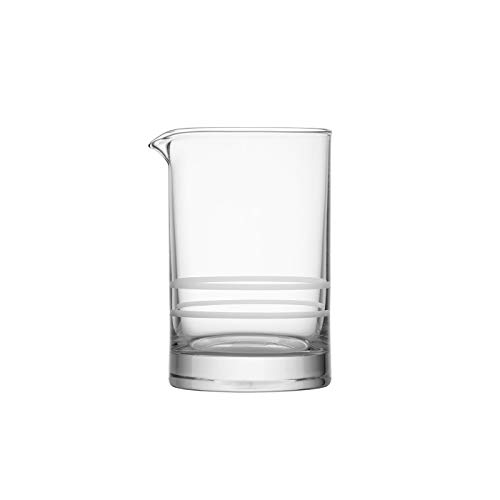
3. Crafthouse by Fortessa Mixing Glass
Crafthouse is a bar-focused line from Fortessa, a hospitality tableware maker. The mixing glass is designed to be handled often.
Suits: frequent use. Strengths: a maker that serves professional bars. Weaknesses: details vary by listing, so check the capacity. Skip it if you want a decorative piece.
View Crafthouse Mixing Glass on Amazon
Best for gifts and show
4. Viski Admiral Mixing Glass
Viski sells barware that doubles as gifts. This mixing glass leans toward the decorative end, with a cut look that suits a display shelf.
Suits: gifts and show. Strengths: an attractive design. Weaknesses: check that the weight and size suit your stirring. Skip it if you only want a tool.
View Viski Admiral Mixing Glass on Amazon

Best for beginners
5. Hiware Mixing Glass
Hiware makes budget-friendly bar tools. Its mixing glass is a plain, spouted design that some listings pair with a bar spoon.
Suits: beginners. Strengths: an easy entry point. Weaknesses: thinner feel than premium glasses. Skip it if you want a heavy base.
View Hiware Mixing Glass on Amazon
Best for a traditional bar cart
6. Godinger Mixing Glass
Godinger is a barware and crystal brand with a cut-glass style. Its mixing glass suits a home bar that favors a traditional look.
Suits: a traditional bar cart. Strengths: a decorative cut pattern. Weaknesses: details differ by listing. Skip it if you prefer a modern look.
View Godinger Mixing Glass on Amazon
Care and Setup
- Rinse right after use so sugars do not dry on the glass.
- Wash cut-glass patterns by hand with a soft brush.
- Avoid sudden temperature swings, such as hot water on a glass that is full of ice.
- Pair the glass with a long bar spoon and a Hawthorne strainer.
Mistakes to Avoid
- Choosing a glass too small to stir ice freely.
- Skipping the pour spout and making a mess.
- Stirring with thin, light glass that slides around.
- Putting heavy cut glass in the dishwasher.
Why Stirring Needs Its Own Vessel
Stirred drinks are made from spirits, vermouths and liqueurs that mix cleanly and look clear in the glass. The aim is to chill and slightly dilute the drink without introducing air bubbles or cloudiness. A mixing glass is built for this: tall enough to let ice circulate, wide enough for a long bar spoon and strong enough to take repeated contact with ice. Using a shaker for these drinks tends to make them cloudy and over-diluted, which is the main reason people add a mixing glass to a home bar.
The glass also helps you see what you are doing. You can watch the ice move, judge when the drink has reached the right dilution and pour into the serving glass with a steady hand. Because the walls are transparent, you can tell if the drink looks right before you serve it. That visual feedback is part of why the Japanese-style cut glass, which gives a good grip, is so popular.
If you only make an occasional martini, a pitcher or a pint glass might get you by, but a purpose-built glass handles the work more neatly. Think about how often you stir drinks and how many people you serve. For one or two drinks at a time, a mid-size glass is plenty. If you entertain, a larger glass saves repeated rounds.
Sizing the Glass to the Drink
Capacity should leave room for ice, liquid and the motion of the spoon. A common guideline is that the glass should hold the ice and the ingredients with some space above, so liquid does not slosh over the rim as you stir. If you want to make two drinks at once, pick a glass with enough volume for both, plus ice. Check the listing for the stated capacity, and understand that this is the brim volume, not the practical fill line.
Width matters for the spoon. A glass that is too narrow makes it awkward to turn the spoon without hitting the sides, and a very wide glass spreads the liquid so that it dilutes unevenly. Look for a shape that lets a bar spoon travel smoothly along the wall. The height should also be enough that your fingers stay clear of the cold liquid when holding the glass in a stirring grip.
- For single drinks, a smaller glass concentrates the cold and is easy to store.
- For batches of two or more, a larger glass reduces the number of rounds.
- For tall bar spoons, check that the glass is deep enough for the spoon to reach the bottom.
If you own other bar tools, compare their sizes. A glass should work with your strainer, spoon and serving glasses. Matching the glass to your existing set makes the process smoother and avoids buying extras.
Glass Quality, Thickness and Ice Contact
A mixing glass takes a beating: ice knocks against the walls, the spoon clinks along the surface, and the base lands on hard counters. Thicker glass is more resistant to chips and gives a sense of stability, while thin glass feels refined but can be easier to chip or break. Quality also affects temperature. Thicker walls hold cold longer, but they also add weight and can make the glass slower to chill. Neither is wrong, and the right balance depends on your preferences.
Inspect the rim and the spout. A smooth, even rim is more comfortable for pouring and less likely to chip. A pour lip should be well-formed, so liquid flows in a controlled stream. If the spout is sharp or uneven, it can drip. Look for a flat base that sits steadily on the counter, since a rocking glass is annoying and dangerous.
Cut patterns add grip and style, but they can trap residue and are harder to clean. Plain glass is easier to wash and to inspect for chips. Check the listing for glass type and care instructions. Durability claims come from the makers, so treat them as a guide, and handle all glassware carefully. If you see a crack, even a small one, stop using the glass.
Technique Tips for Better Stirred Drinks
A good tool only helps if you use it well. Start by chilling the serving glass, which keeps the drink cold longer. Fill the mixing glass with plenty of ice, since more ice chills faster and dilutes more slowly than a few small cubes. Pour the ingredients over the ice, then stir smoothly with the back of the spoon against the glass wall, so the ice rotates as a unit rather than clattering.
Stir for long enough to chill and dilute the drink, which commonly takes a short, steady period, and taste a small sample if you are unsure. The right amount depends on the drink, the ice and personal taste. Over-stirring waters the drink down, while under-stirring leaves it warm and strong. Practice and adjust.
Strain with a proper strainer, holding it firmly against the glass, and pour in a single motion. A pour lip makes this tidier, and a good strainer keeps ice out of the serving glass. Use fresh ice for each drink, since melted ice dilutes the next one. Wipe the rim of the serving glass if drops land on it. With a little repetition, a stirred cocktail becomes quick and consistent.
Cleaning, Storing and Replacing a Mixing Glass
Wash your mixing glass soon after use, particularly when it has held sugary vermouths or liqueurs that dry sticky. Warm water, mild soap and a soft brush or sponge are usually enough, but follow the maker’s care notes. Many people hand wash cut glass to protect the pattern and prevent clouding, while plain glass may be dishwasher safe if the listing says so.
Avoid sudden temperature changes, such as pouring hot water into a glass that has been sitting in a cold fridge, because they can stress the glass. Dry it with a lint-free cloth, or air dry upside down on a rack. Store the glass where it will not knock against other items, ideally in a padded or separate space.
Check for damage regularly. Chips on the rim or base, hairline cracks and deep scratches are reasons to replace the glass. Cloudiness that does not clear after washing can be etching, which is permanent. A glass that wobbles on its base or has a rough spout is no longer a good tool. When buying a replacement, think about what you liked and disliked about the first, such as weight, size or pattern, and compare the listing details before you order.
Choosing Between the Picks in This Guide, One by One
Six options is a lot to hold in your head at once, so it helps to work through the shortlist for this cocktail mixing glass guide pick by pick, using only what the reviews above already establish. Each pick below is framed the same way: who it suits, what it does best, and the limitation to accept with open eyes. Read the six in order and mark the one whose weakness bothers you least — that simple test resolves most shortlists faster than chasing an abstract idea of the single best option.
Consider the Cocktail Kingdom Yarai Mixing Glass if its particular balance of trade-offs matches how you actually work. The guide above notes that it suits serious home bartenders, and that its appeal rests on a pro-bar reputation and a good grip. Set against the other picks, that makes it the natural shortlist entry when those qualities matter more to you than all-round convenience. Its honest limitation is worth weighing just as carefully: the pattern takes careful cleaning. Skip it if you want something plain. If that limitation touches something you do every day, another pick in this guide will serve you better; if it touches something you rarely do, it is a fair price in kind for the strengths you gain. The mistake to avoid is choosing it for a use case it was never aimed at, then blaming the product for a mismatch that was visible from the start.
The Barfly Mixing Glass earns its place for a narrower reason than the headline suggests. It suits practical everyday stirring, with simple to wash as the qualities that separate it from the rest of this list. Read it as a specialist rather than a default: when your routine lines up with what it does well, it can outperform a more general pick, and when your routine does not, its drawback — not much style. Skip it if you want an ornate glass — will be the thing you notice daily. A useful test is to picture your most ordinary session, not your most ambitious one, and ask whether this is the pick you would reach for then. Ordinary sessions are where satisfaction is actually decided.
With the Crafthouse by Fortessa Mixing Glass, the decision comes down to priorities. It is aimed at frequent use, and it stands out for a maker that serves professional bars. Those are real advantages, but they sit alongside a clear compromise: details vary by listing, so check the capacity. Skip it if you want a decorative piece. Compared with the neighbouring picks in this guide, it asks you to accept that compromise in exchange for doing its main job in its own way. If you have read the other reviews and found yourself nodding at this one’s strengths while shrugging at its weakness, that reaction is usually the right signal. If the weakness made you hesitate, trust the hesitation and look at the pick whose strengths match the task you found yourself defending.
Consider the Viski Admiral Mixing Glass if its particular balance of trade-offs matches how you actually work. The guide above notes that it suits gifts and show, and that its appeal rests on an attractive design. Set against the other picks, that makes it the natural shortlist entry when those qualities matter more to you than all-round convenience. Its honest limitation is worth weighing just as carefully: check that the weight and size suit your stirring. Skip it if you only want a tool. If that limitation touches something you do every day, another pick in this guide will serve you better; if it touches something you rarely do, it is a fair price in kind for the strengths you gain. The mistake to avoid is choosing it for a use case it was never aimed at, then blaming the product for a mismatch that was visible from the start.
The Hiware Mixing Glass earns its place for a narrower reason than the headline suggests. It suits beginners, with an easy entry point as the qualities that separate it from the rest of this list. Read it as a specialist rather than a default: when your routine lines up with what it does well, it can outperform a more general pick, and when your routine does not, its drawback — thinner feel than premium glasses. Skip it if you want a heavy base — will be the thing you notice daily. A useful test is to picture your most ordinary session, not your most ambitious one, and ask whether this is the pick you would reach for then. Ordinary sessions are where satisfaction is actually decided.
With the Godinger Mixing Glass, the decision comes down to priorities. It is aimed at a traditional bar cart, and it stands out for a decorative cut pattern. Those are real advantages, but they sit alongside a clear compromise: details differ by listing. Skip it if you prefer a modern look. Compared with the neighbouring picks in this guide, it asks you to accept that compromise in exchange for doing its main job in its own way. If you have read the other reviews and found yourself nodding at this one’s strengths while shrugging at its weakness, that reaction is usually the right signal. If the weakness made you hesitate, trust the hesitation and look at the pick whose strengths match the task you found yourself defending.
Stirring Technique, Practised Properly
Good stirring is a quiet skill. Rest the glass on a stable surface, add the drink and ice, then slide the back of the bar spoon against the inside wall and move it in smooth circles rather than churning. The goal is to chill and dilute evenly without knocking air into a drink that is meant to stay silky and clear. Beginners often stir too fast and splash, or too briefly and serve something warm at the core. A steady rhythm for a consistent count of turns, tasted once with a straw, teaches more than any timer. Because the glass is transparent, watch the ice: it should travel as one slow mass, not rattle in pieces.
Hand position matters more than equipment. Hold the spoon high on its twisted stem between thumb and fingers so the bowl stays against the wall, and let the glass do the chilling while your hand only guides. If the glass slides, its base is too light for your surface or the surface is wet; dry both and try again. Practising with water and ice for a few minutes before guests arrive builds the muscle memory that makes the real drink effortless, and it shows you exactly how your particular glass behaves under a spoon.
Building a Small Stirred-Drinks Repertoire
A mixing glass earns its place when it anchors a small repertoire rather than one party trick. Start with the three classics the vessel exists for: a martini, a Manhattan and a negroni. Each teaches something different — the martini teaches dilution control, the Manhattan teaches balance between whiskey and vermouth, and the negroni teaches how bitterness softens with stirring. Once those are reliable, variations come cheaply: swap the base spirit, change the vermouth, or add a rinse of something aromatic to the serving glass. Keeping brief notes on what you changed and how it tasted turns casual mixing into steady improvement.
Fresh vermouth is the hidden variable in most stirred drinks. An opened bottle kept on a warm shelf for months will flatten every drink you stir, and no glass can fix that. Refrigerate vermouth after opening, buy small bottles if you drink slowly, and taste it neat occasionally so you know what you are adding. The same applies to ice: old freezer ice absorbs odours and clouds drinks. Fresh ice, fresh vermouth and a clean glass will improve your stirred drinks more than any upgrade in the glass itself, which is worth remembering before blaming your equipment.
Straining and Serving Without the Mess
The stir is only half the job; the strain decides how the drink arrives. A julep strainer sits inside the glass and holds the ice back while you pour in one confident motion. Pour slowly and steadily rather than in starts and stops, which slosh the liquid against the ice and chip it. If your glass has a spout, aim it at the centre of the strainer and let the lip do the guiding. Practise the pour with water until it is boring — the confidence you build is what keeps a coupe from overflowing in front of guests.
Serve stirred drinks up, in a chilled glass, whenever the recipe allows. Chilling the serving glass while you stir costs nothing and buys a noticeably colder first sip. Garnish last and simply: an expressed citrus peel or a single cherry, not a fruit salad. Finally, taste before you serve when you are learning. A small straw taste tells you whether the drink needs a few more turns of the spoon or is ready, and catching an under-diluted drink in the glass is far better than catching it at the table.
A Slower Decision Routine Before You Order
Most disappointment with a cocktail mixing glass is not caused by a bad product; it is caused by a quick decision made on the wrong criterion. The criteria table near the top of this guide is short for a reason — those are the checks that actually predict whether you will be happy. Work through them in the order below, in writing if necessary, before you commit to any of the six picks.
Start with weight. The guide’s table puts it plainly: a thick base stops the glass sliding while you stir. Do not treat that as a box to tick and move on. Picture it in your own space and routine — where this cocktail mixing glass will live, who else will use it, and how often. A criterion that looks minor on a product page becomes major when it is part of a daily habit, and minor daily friction is what quietly pushes a purchase into a cupboard. If a pick is weak on the criterion that matters most in your routine, that weakness outweighs several strengths elsewhere.
Start with capacity. The guide’s table puts it plainly: it should hold ice plus enough liquid for two drinks. Do not treat that as a box to tick and move on. Picture it in your own space and routine — where this cocktail mixing glass will live, who else will use it, and how often. A criterion that looks minor on a product page becomes major when it is part of a daily habit, and minor daily friction is what quietly pushes a purchase into a cupboard. If a pick is weak on the criterion that matters most in your routine, that weakness outweighs several strengths elsewhere.
Start with spout. The guide’s table puts it plainly: a pour lip makes straining over a strainer neater. Do not treat that as a box to tick and move on. Picture it in your own space and routine — where this cocktail mixing glass will live, who else will use it, and how often. A criterion that looks minor on a product page becomes major when it is part of a daily habit, and minor daily friction is what quietly pushes a purchase into a cupboard. If a pick is weak on the criterion that matters most in your routine, that weakness outweighs several strengths elsewhere.
Start with walls. The guide’s table puts it plainly: thick walls keep the drink colder, but they add weight. Do not treat that as a box to tick and move on. Picture it in your own space and routine — where this cocktail mixing glass will live, who else will use it, and how often. A criterion that looks minor on a product page becomes major when it is part of a daily habit, and minor daily friction is what quietly pushes a purchase into a cupboard. If a pick is weak on the criterion that matters most in your routine, that weakness outweighs several strengths elsewhere.
Start with look. The guide’s table puts it plainly: cut patterns are attractive, while smooth glass is easier to clean. Do not treat that as a box to tick and move on. Picture it in your own space and routine — where this cocktail mixing glass will live, who else will use it, and how often. A criterion that looks minor on a product page becomes major when it is part of a daily habit, and minor daily friction is what quietly pushes a purchase into a cupboard. If a pick is weak on the criterion that matters most in your routine, that weakness outweighs several strengths elsewhere.
Finish the routine by re-reading the review of your leading pick one more time, looking only for reasons not to buy it. If the reasons you find are things you can genuinely live with, you have made a sound choice. If they are things you are merely hoping will not matter, keep looking — the other five picks exist precisely because no single cocktail mixing glass suits everyone.
Three Mistakes That Lead to the Wrong Choice
Stirring in the serving glass
Mixing directly in a coupe or rocks glass looks efficient but gives the spoon no room, the ice no space to move, and you no control over dilution. Drinks come out unevenly chilled and the glassware gets scratched and stressed. A dedicated mixing vessel is not ceremony; it is the working space the technique requires.
Using tired ice
Ice that has sat in a freezer for weeks picks up odours and melts unpredictably, watering drinks unevenly and adding stale flavours. Because a mixing glass shows everything, bad ice is especially obvious in a clear stirred drink. Fresh ice from a covered tray or bag, used generously, is the cheapest quality upgrade at any home bar.
Buying for looks alone
Cut patterns and decorative glass are lovely, but a glass that is awkward to hold, hard to clean or too small for two drinks will be avoided in practice. Choose first for weight, capacity and a clean pour, and let appearance break the tie between options that already work. The glass you reach for nightly beats the beautiful one you admire from a shelf.
Living With It: The First Month and Beyond
In the first month, keep the glass where you actually mix, not stored as display. A tool within arm’s reach gets used; a tool in a high cupboard becomes an ornament. Notice which drinks you stir most and whether the capacity suits them — many home bartenders discover they mostly make one drink at a time and value a steady base and easy cleaning over maximum size.
Cleaning rhythm decides longevity. Rinse the glass soon after use, wash it in warm water, and dry it with a soft cloth to prevent water spots on cut patterns. Inspect the rim and base occasionally for chips; a chipped rim is a reason to retire the glass, since it can cut and will only worsen. Stored upside down on a soft surface or right side up in a low-traffic spot, a good glass should serve for years.
Over time, pair the glass with the few tools that complete it: a long bar spoon, a julep strainer and a jigger you trust. Those three, plus fresh ice and fresh vermouth, cover nearly everything the stirred repertoire asks for. Resist expanding the collection until a specific drink you love demands a specific extra tool — depth in a few drinks beats a drawer of gadgets.
More Questions About Choosing and Using One
Should I chill the mixing glass before stirring?
It helps a little and costs nothing: a cold glass melts slightly less ice at the start, giving you more predictable dilution. A few minutes in the freezer or a fill of ice water while you measure ingredients is enough. It is a refinement, not a requirement, and consistent stirring matters far more.
Why does my stirred drink taste watery?
Usually the stir ran long, the ice was wet or small, or the drink sat in the glass after straining should have happened. Use plenty of fresh, cold ice, stir with purpose, taste as you go, and strain promptly. Wateriness is a timing problem far more often than an equipment problem.
Can one mixing glass handle drinks for a group?
For two drinks at a time, comfortably, in most of the sizes in this guide. For a group, stir in batches rather than crowding one glass; an overfilled glass stirs badly and dilutes unevenly. Batching also lets you adjust each round, which guests experience as care rather than delay.
Is a mixing glass worth it if I mostly shake drinks?
Only if you want to explore the stirred classics. Shaken drinks forgive a substitute vessel; stirred drinks are built around this one. If martinis and Manhattans hold no appeal, spend the money elsewhere. If they do, the glass is the single most useful purchase after the spoon and strainer.
Cocktail Mixing Glasses FAQ
What is a mixing glass used for?
It is used to stir drinks that should look clear, such as martinis, Manhattans and negronis.
Can I use a pint glass instead?
You can in a pinch, but a mixing glass is heavier, stirs more smoothly and pours more neatly.
Do I need a bar spoon too?
Yes. A long spoon reaches the bottom of the glass and lets you stir without splashing.
How much ice should I use when stirring?
Fill the glass about two thirds with cold, solid ice and stir for roughly half a minute, until the outside feels very cold. Larger cubes dilute more slowly, which gives you more control over the finished drink.
Is a heavier glass better?
Usually, yes. A heavy base stays put on the counter while you stir, and thick walls hold the cold. The trade-off is that heavy cut glass is harder to wash and store, so choose the weight you are happy to handle.
Can I use a mixing glass for shaken drinks?
It is not designed for shaking, as it has no seal and can break. Use a shaker for drinks with juice, cream or egg. Reserve the mixing glass for stirred drinks.
What is the difference between a mixing glass and a pitcher?
Both can be used for stirring, but a mixing glass is usually heavier and has a spout built for straining. A pitcher may hold more but can be less stable. Choose based on volume and stability.
Is cut glass better than plain glass?
Cut glass gives grip and looks attractive, while plain glass is easier to clean. The performance for stirring is similar. Pick based on look and maintenance.
Should I chill the mixing glass first?
It can help keep the drink cold, though it is not required. Filling it with ice and water for a moment is a simple way. Discard the water before adding the drink.
How long should I stir a cocktail?
It depends on the recipe, the ice and your taste. Stir until the glass feels cold and the drink tastes balanced. Taste a small sample if unsure.
Will a mixing glass crack from ice?
Quality glass is designed to handle ice, but sudden temperature changes or impacts can cause damage. Avoid pouring hot liquids in and handle gently. Replace it if you see cracks.
Can I put a mixing glass in the dishwasher?
Only if the listing or care notes say it is dishwasher safe. Cut patterns and delicate glass often do better washed by hand. Check the instructions.
Dilution and Temperature: What the Glass Is Really Controlling
Stirring a cocktail is about two things at once: chilling the drink and adding a measured amount of water from melting ice. Both depend on how long you stir, how cold the ice is, and how much surface the liquid touches. A mixing glass gives you room to move ice without bruising it and lets you see the drink cloud slightly as dilution rises. That visual cue is useful, because spirit-forward drinks like a Manhattan or an old fashioned are best when they are cold, silky, and slightly softened rather than watery.
As a rough guide, many bartenders stir for around 20 to 30 seconds with plenty of ice, then taste. Colder, larger ice dilutes more slowly, while small wet ice melts fast and can overshoot. The glass itself matters here: a heavy base keeps the glass stable, and thick walls resist warming from your hand, which holds the temperature steady for longer.
The Spout, the Rim and Pouring Without Ice Spilling
Pouring is where a poorly designed glass shows itself. A good mixing glass has a defined spout or a rim shaped to send liquid in a clean stream. Without one, drips run down the outside and onto the counter. Most people strain with a Hawthorne or julep strainer, and the rim should accommodate that tool without wobbling.
- Check that the strainer fits the rim comfortably. Very wide mouths can let the strainer slip, while narrow ones can jam with ice.
- A pronounced spout controls the pour for single drinks, and is especially handy when you serve to a coupe or a small glass.
- Smooth, rounded rims are kinder to lips if you taste straight from the glass, and less likely to chip.
If you often make two drinks at once, a glass with a wide opening and a steady foot lets you pour into both glasses in one smooth sweep without losing control of the ice.
Glass, Crystal and Other Materials Compared
Most mixing glasses are made of soda-lime glass, lead-free crystal, or borosilicate. Each behaves a little differently in daily use, though none is wrong for home bartending.
- Soda-lime glass: the everyday choice. Affordable, clear, and widely available, though thinner versions can chip more easily.
- Lead-free crystal: usually clearer and slightly harder, with a refined look. It tends to cost more and needs gentler handling.
- Borosilicate glass: tolerates temperature swings better, which is useful if you rinse a cold glass under warm water.
Whatever the material, avoid sudden extreme temperature changes, such as pouring boiling water into a chilled glass. That stress is the usual cause of cracks, far more than the ice itself. Surface decoration also matters: cut patterns look attractive but can trap residue in the grooves, so rinse thoroughly after sticky drinks like those with syrups or vermouth.
Match the Glass to Your Bar Habits
Thinking about how you actually drink helps narrow the choice faster than comparing small details. A host who makes four drinks for guests needs a larger vessel than someone who makes a single nightcap, and a person with a small kitchen needs something that stores easily.
- Occasional home use: a mid-priced glass that is easy to clean and tough enough to live in a cabinet.
- Entertaining: a larger capacity with a stable base and a dependable spout.
- Gift buying: presentation counts, so look for a design that looks good on a bar cart and arrives in sturdy packaging.
- Tight storage: a slimmer profile that fits a cabinet shelf beside your other bar tools.
Pair the glass with a bar spoon, a strainer, and a jigger, and you have a complete stirred-drink kit. It does not need to be expensive to work well. A glass that is comfortable to hold, steady on the counter, and easy to clean will get used, and the habit of stirring properly is what improves your drinks.
Beyond Stirred Drinks: Other Uses at the Bar
A mixing glass is built for one job, but it earns its shelf space in other ways. It is a handy vessel for building a pitcher-style batch for two, for stirring a spirit-forward drink with a splash of bitters, or for chilling a small amount of liquid without a shaker. Some people use it to infuse a simple syrup with herbs, then strain it into a bottle.
It is less suited to anything carbonated, since stirring dulls bubbles, and it is not meant for drinks with egg white or cream, which need shaking to emulsify. Treat it as the right tool for clear, spirit-based drinks such as Negronis, martinis, and Manhattans, and reach for a shaker for everything else. Used with that focus, a single good glass serves a home bar for years.
Finally, consider the weight of a full glass in use. A mixing glass loaded with ice and liquid can weigh more than you expect, so a comfortable grip and a base that does not skate on wet counters make stirring easier and safer. Wipe the outside dry before lifting to pour.
Related guides
Frequently Asked Questions
How do I stop a mixing glass from sliding on the counter?
Look for a heavy base and a wide foot, which lower the center of gravity. You can also place a small silicone mat or damp towel underneath while stirring. A stable base keeps you from knocking the glass over as you stir with ice, which is the most common cause of spills.
What is the best strainer to use with a mixing glass?
A Hawthorne strainer with a coil is the most common choice and sits snugly on the rim. A julep strainer is a perforated bowl that fits inside the glass and suits a clean, quiet pour. Pick whichever feels comfortable, and check that it fits your glass rim before buying.
Can I use a mixing glass for batching cocktails ahead of time?
Yes, for short periods. You can combine spirits and mixers in the glass or a larger pitcher, then add ice and stir just before serving. Keep dilution in mind: do not add ice until you are ready, or the drink will water down while it waits.
Why does my stirred drink taste watered down?
Usually it was stirred too long, or the ice was small, wet, or half-melted. Use cold, solid ice, stir for around 20 to 30 seconds, and taste. A cold glass also helps, since a warm one melts ice faster. Adjust time slightly until the drink tastes balanced to you.
The Short Version
For a pro-bar classic, the Cocktail Kingdom Yarai. For simple function, the Barfly. For a bar-line option, the Crafthouse. For a gift, the Viski Admiral. For a budget-friendly start, the Hiware. For a traditional cut look, the Godinger.

