A cold brew system is a complete setup for making smooth iced coffee at home: a brewing vessel, a filter and a way to store the finished coffee. The best ones make steeping, straining and pouring easy enough that you actually use them every week.
The six systems below range from a countertop tower to pitchers, a filter-bag setup and a jar kit. We have not used these products ourselves, so confirm the capacity, filter style and care instructions on the current listing before buying. Design and ease-of-use claims are the makers’ own.
As an Amazon Associate we earn from qualifying purchases. Links below are affiliate links, and they do not change the product information we give.
What to Look For
| Feature | Why it matters |
|---|---|
| Completeness | A system with a vessel, filter and storage saves buying extras |
| Filter | Fine filters reduce sediment but can slow draining |
| Capacity | Match the batch to how much iced coffee you drink |
| Footprint | Towers need counter space; pitchers need fridge space |
| Serving | A spout or carafe makes pouring over ice cleaner |
In this guide
Specs at a Glance
| System | Style | Material | Notes |
|---|---|---|---|
| KitchenAid Cold Brew Coffee Maker | Slow-drip tower | Glass and steel | Countertop appliance-style unit |
| OXO Brew Compact Cold Brew Coffee Maker | Brew container and carafe | Plastic and glass | Smaller footprint |
| Coffee Gator Cold Brew Coffee Maker | Pitcher with filter | Glass | Includes a filter, per the maker |
| Mueller Cold Brew Coffee Maker | Pitcher with filter | Glass | Home-sized pitcher |
| Ovalware RJ3 Cold Brew Pitcher | Pitcher with infuser | Glass | Versatile infuser pitcher |
| Soulhand Cold Brew Coffee Maker | Pitcher with filter | Glass | Lid and filter, per the maker |
The 6 Best Cold Brew Systems for Iced Coffee
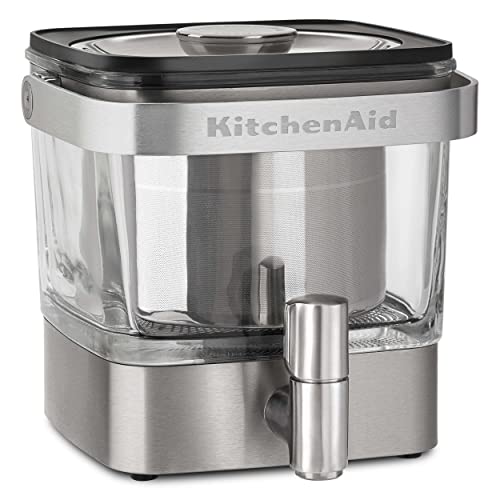
Top pickBest for enthusiasts with counter space
1. KitchenAid Cold Brew Coffee Maker
KitchenAid sells a countertop cold brew tower that drips cold water through grounds over many hours. It is a step up from a pitcher and suits people who like gear.
Suits: enthusiasts with counter space. Strengths: a well-known appliance brand. Weaknesses: bulky and a slow process. Skip it if you want a simple jar.
View KitchenAid Cold Brew Coffee Maker on Amazon
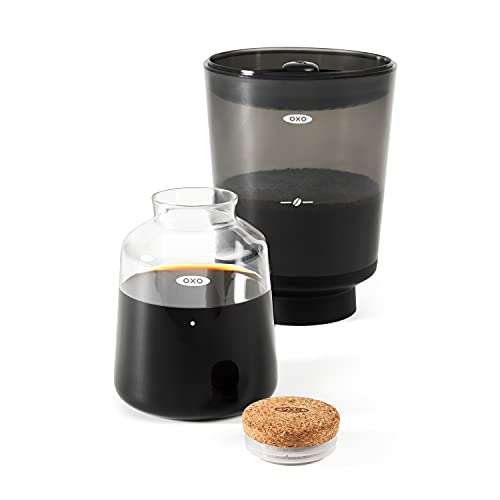
Best for small households
2. OXO Brew Compact Cold Brew Coffee Maker
OXO offers a compact cold brew set with a brew container and a carafe. It aims to keep the size small enough for modest kitchens.
Suits: small households. Strengths: a tidy, complete setup. Weaknesses: a smaller batch. Skip it if you serve a crowd.
Best for everyday home use
3. Coffee Gator Cold Brew Coffee Maker
Coffee Gator sells a glass pitcher system with a filter insert. It is built for brewing in the fridge and pouring over ice.
Suits: everyday home use. Strengths: a simple glass format. Weaknesses: details vary by listing. Skip it if you want a premium finish.
View Coffee Gator Cold Brew Coffee Maker on Amazon

Best for casual drinkers
4. Mueller Cold Brew Coffee Maker
Mueller sells small appliances and kitchen items. Its cold brew pitcher uses a removable filter and suits straightforward home brewing.
Suits: casual drinkers. Strengths: a familiar format. Weaknesses: a basic feature set. Skip it if you want a tower.
View Mueller Cold Brew Coffee Maker on Amazon
Best for coffee and tea drinkers
5. Ovalware RJ3 Cold Brew Pitcher
A glass pitcher with a removable infuser that works for cold brew coffee and for iced tea. It is a flexible choice for households that drink both.
Suits: coffee and tea drinkers. Strengths: versatile use. Weaknesses: not coffee-specific. Skip it if you want a coffee-only design.
View Ovalware RJ3 Cold Brew Pitcher on Amazon
Best for tight fridges
6. Soulhand Cold Brew Coffee Maker
Soulhand sells glass pitchers for cold brew and iced tea, with a removable filter and a lid. It is a straightforward home pitcher that should fit many fridge shelves, though you should check the size.
Suits: tight fridges. Strengths: a simple glass pitcher and filter. Weaknesses: modest extras. Skip it if you want a tower.
View Soulhand Cold Brew Coffee Maker on Amazon
Care and Setup
- Use a coarse grind and measure the coffee for consistent batches.
- Keep the system in the fridge while it steeps, unless the maker says otherwise.
- Wash filters and glass parts soon after use.
- Store finished coffee in a sealed container.
Mistakes to Avoid
- Skipping a measurement and getting weak coffee.
- Choosing a system that will not fit your fridge shelf.
- Washing delicate glass in a crowded dishwasher.
- Forgetting to replace worn filters.
Grind Size and Coffee-to-Water Ratio
Two settings shape almost every batch of cold brew: how coarse the coffee is ground and how much coffee you use for the water. Cold water extracts slowly, and a long steep of many hours is normal. Because of that, a coarse grind, similar to coarse sea salt, is the usual starting point. Fine grounds over-extract and turn bitter, they also slip through mesh filters and leave sediment and cloudiness in the glass.
Ratio decides strength. Many people brew a concentrate that is diluted with water or milk when served, while others brew at a ready-to-drink strength. Concentrate takes up less fridge space and lets you adjust each glass, but it needs a little math at serving time. A ready-to-drink batch is easier but takes more room. Check the system’s instructions for the suggested ratio and its fill line, since the brewer’s design, filter and capacity often assume a particular amount of coffee.
Start with the maker’s guidance, taste the result and change one thing at a time. If the coffee tastes weak or watery, use a little more coffee or steep a little longer. If it tastes harsh or bitter, try a coarser grind or a shorter steep. Keep notes so you can repeat batches you enjoy.
- Use a coarse grind to avoid bitterness and sediment.
- Decide between concentrate and ready-to-drink.
- Change one variable at a time when adjusting.
Filter Types and Getting a Clean Cup
The filter determines how clear and smooth the finished coffee is. Metal mesh filters are reusable and let some oils and fine particles through, which gives a fuller body but can leave a little sediment. Fabric or felt filters are reusable too and tend to give a cleaner cup, but they need careful washing and eventual replacement. Paper filters give the cleanest result and are easy, but they add a recurring cost and can slow draining.
Different system designs use filters in different ways. A tower or drip-style system slowly drips water over grounds. A pitcher with an insert holds the grounds in a basket inside the water. A bag system wraps the grounds in a filter bag that you lift out. A jar kit often uses a lid with a mesh insert. Check the listing to see what the filter is made of and whether replacements are available.
For a cleaner cup with any system, you can pour the finished coffee through a second filter, such as a paper coffee filter or a fine strainer. Pouring slowly and stopping before the last cloudy bit reaches the glass also helps. If the filter clogs, try a coarser grind or a smaller dose.
- Metal mesh: fuller body, some sediment.
- Fabric or paper: cleaner cup, more care or cost.
- Double-filter if you want very clear coffee.
Steep Time and Where to Brew
Steeping time and temperature work together. Most cold brew recipes call for a steep of many hours, and the maker’s guide should give a range for your system. Steeping in the refrigerator is slower and gives a more controlled result, so it usually calls for a longer time. Steeping on the counter is faster but depends on room temperature, and a warm kitchen can speed extraction and produce a sharper flavor.
A good practice is to start at the lower end of the recommended time and taste. You can always steep longer, but you cannot take it back. If you prefer a brighter, lighter cup, aim for the shorter end. If you prefer rich, chocolatey flavors, extend the time slowly and test.
Think about the practical side. The brewer must fit in your refrigerator, with room for other items, and it should sit steady on a shelf. Check the dimensions on the listing, including the height of towers and pitchers with lids. Also consider where you put it while steeping, since leaking or tipping can make a mess.
Roast and origin also matter. Medium and dark roasts are common choices for cold brew because they give a smooth, low-acid taste, though lighter roasts can bring out fruity notes. Fresh beans ground just before brewing give a better result than pre-ground coffee that has been sitting.
- Follow the maker’s time range and taste early.
- Fridge steeping is steadier than counter steeping.
- Measure the fridge shelf before buying a tall system.
Storage, Dilution and Serving
Once the coffee is strained, store it in a clean, sealed container in the refrigerator. Check the system’s instructions for how long it recommends keeping it, because freshness depends on handling and sanitation. As a general approach, treat finished cold brew like any perishable drink, keep it cold and covered, and discard it if it smells or tastes off. A concentrate can be kept in a jar or bottle with a tight lid.
Dilution is where you make the drink your own. If you brewed a concentrate, you might add water, milk, a plant-based drink or sparkling water. Try small ratios first and adjust to taste. Pour over plenty of ice, since a cold, strong coffee dilutes as the ice melts. Making coffee ice cubes from leftover cold brew is a simple way to avoid watering down the drink.
Consider flavors that work well with cold coffee. A splash of cream, a little simple syrup, vanilla or a pinch of cinnamon are common additions. Add sweeteners in a liquid form, since sugar dissolves poorly in cold coffee. Serve in a glass you can chill, and offer a straw or spoon if you add ice and milk.
- Keep the brew cold and covered.
- Dilute to taste rather than all at once.
- Freeze extra coffee as ice cubes.
Cleaning the Brewer and Spotting Wear
Cold brew systems are easy to use but can pick up stale coffee oils and odors if neglected. Wash all parts soon after each batch with warm water and mild dish soap. Pay attention to the filter, the lid seal and any spouts or taps, since residue collects in the corners. A small bottle brush helps with narrow openings. Rinse thoroughly, and let everything dry before reassembling.
Check the maker’s guidance on the dishwasher. Glass pitchers and plastic parts differ, and some filters and silicone seals are best washed by hand. Metal mesh filters can clog with fine grounds, so tap out the grounds and rinse from the back. If they stay clogged, soak them in warm water with a bit of soap and clean with a soft brush.
Watch for wear. Silicone gaskets that become loose, cracked or sticky should be replaced. Plastic that is cloudy, scratched or smells of old coffee may hold on to flavors. Glass that is chipped or cracked is unsafe to use. A tap on a tower or pitcher that drips or does not seal properly should be checked or replaced. Replace paper or fabric filters as the maker suggests.
- Wash all parts after every batch.
- Rinse mesh filters from the back to clear grounds.
- Replace worn seals, cracked glass and clouded plastic.
Choosing Between the Picks in This Guide, One by One
Six options is a lot to hold in your head at once, so it helps to work through the shortlist for this cold brew system guide pick by pick, using only what the reviews above already establish. Each pick below is framed the same way: who it suits, what it does best, and the limitation to accept with open eyes. Read the six in order and mark the one whose weakness bothers you least — that simple test resolves most shortlists faster than chasing an abstract idea of the single best option.
Consider the KitchenAid Cold Brew Coffee Maker if its particular balance of trade-offs matches how you actually work. The guide above notes that it suits enthusiasts with counter space, and that its appeal rests on a well-known appliance brand. Set against the other picks, that makes it the natural shortlist entry when those qualities matter more to you than all-round convenience. Its honest limitation is worth weighing just as carefully: bulky and a slow process. Skip it if you want a simple jar. If that limitation touches something you do every day, another pick in this guide will serve you better; if it touches something you rarely do, it is a fair price in kind for the strengths you gain. The mistake to avoid is choosing it for a use case it was never aimed at, then blaming the product for a mismatch that was visible from the start.
The OXO Brew Compact Cold Brew Coffee Maker earns its place for a narrower reason than the headline suggests. It suits small households, with a tidy, complete setup as the qualities that separate it from the rest of this list. Read it as a specialist rather than a default: when your routine lines up with what it does well, it can outperform a more general pick, and when your routine does not, its drawback — a smaller batch. Skip it if you serve a crowd — will be the thing you notice daily. A useful test is to picture your most ordinary session, not your most ambitious one, and ask whether this is the pick you would reach for then. Ordinary sessions are where satisfaction is actually decided.
With the Coffee Gator Cold Brew Coffee Maker, the decision comes down to priorities. It is aimed at everyday home use, and it stands out for a simple glass format. Those are real advantages, but they sit alongside a clear compromise: details vary by listing. Skip it if you want a premium finish. Compared with the neighbouring picks in this guide, it asks you to accept that compromise in exchange for doing its main job in its own way. If you have read the other reviews and found yourself nodding at this one’s strengths while shrugging at its weakness, that reaction is usually the right signal. If the weakness made you hesitate, trust the hesitation and look at the pick whose strengths match the task you found yourself defending.
Consider the Mueller Cold Brew Coffee Maker if its particular balance of trade-offs matches how you actually work. The guide above notes that it suits casual drinkers, and that its appeal rests on a familiar format. Set against the other picks, that makes it the natural shortlist entry when those qualities matter more to you than all-round convenience. Its honest limitation is worth weighing just as carefully: a basic feature set. Skip it if you want a tower. If that limitation touches something you do every day, another pick in this guide will serve you better; if it touches something you rarely do, it is a fair price in kind for the strengths you gain. The mistake to avoid is choosing it for a use case it was never aimed at, then blaming the product for a mismatch that was visible from the start.
The Ovalware RJ3 Cold Brew Pitcher earns its place for a narrower reason than the headline suggests. It suits coffee and tea drinkers, with versatile use as the qualities that separate it from the rest of this list. Read it as a specialist rather than a default: when your routine lines up with what it does well, it can outperform a more general pick, and when your routine does not, its drawback — not coffee-specific. Skip it if you want a coffee-only design — will be the thing you notice daily. A useful test is to picture your most ordinary session, not your most ambitious one, and ask whether this is the pick you would reach for then. Ordinary sessions are where satisfaction is actually decided.
With the Soulhand Cold Brew Coffee Maker, the decision comes down to priorities. It is aimed at tight fridges, and it stands out for a simple glass pitcher and filter. Those are real advantages, but they sit alongside a clear compromise: modest extras. Skip it if you want a tower. Compared with the neighbouring picks in this guide, it asks you to accept that compromise in exchange for doing its main job in its own way. If you have read the other reviews and found yourself nodding at this one’s strengths while shrugging at its weakness, that reaction is usually the right signal. If the weakness made you hesitate, trust the hesitation and look at the pick whose strengths match the task you found yourself defending.
Immersion, Drip and Hybrid: How Systems Differ in the Cup
Cold brew systems divide by how water meets coffee. Immersion systems steep grounds in the full volume of water: simple, forgiving, and round in flavour. Slow-drip systems pass water through a bed of grounds drop by drop: slower, more theatrical, and often brighter and more defined in the cup. Hybrids and pressurised designs try to borrow from both. The differences are real but second-order — coffee quality, grind and ratio still dominate. Choose the method whose process you will enjoy performing weekly, because a system you find fiddly will be a system you stop using by August.
Time is the other axis. Immersion asks for a long, unattended steep; drip systems ask for setup attention and then hours of dripping; both reward planning a day ahead. If your household’s rhythm is spontaneous, neither will feel instant, and keeping a finished batch in the fridge becomes the actual system. Judge these makers as part of a weekly pipeline — brew day, drinking days, wash day — rather than as appliances that produce coffee on demand.
Dialling In a System You Will Use All Summer
Every system has a small set of adjustments that matter: ratio, grind, and time or drip rate. Change them one at a time across batches and keep brief notes, because cold brew’s day-long feedback loop makes memory useless. Most drinkers converge within four or five batches on a house setting they then leave alone for the season. That convergence is the goal — not endless optimisation, but a repeatable batch that tastes like yours. The notes from those early batches remain valuable when a new coffee arrives and one adjustment needs re-checking.
Water quality shows plainly in cold brew because there is no heat to mask it and the drink is mostly water. If your tap water tastes strongly of anything, it will taste of it in the glass. A simple filter jug often improves cold brew more than any equipment change. Serve a glass of your tap water beside a glass of filtered to any sceptic in the household; the comparison usually ends the debate in one sip.
The Ritual and the Display
Some systems — towers especially — are partly furniture: they make the process visible and give a kitchen a small ceremony. There is nothing wrong with that, provided the ceremony produces coffee you love and the footprint is honest. A beautiful tower on a counter you need for cooking will be resented by October; the same tower on a side counter becomes the room’s talking point. Place a system where its theatre delights rather than obstructs, and remember that every vessel in it must be washed — beauty with six parts to clean is a commitment, not a decoration.
For most households the quiet verdict is this: immersion for reliability, drip for ceremony and nuance, and either for the real prize, which is a fridge that always holds good cold coffee. Guests will not ask which method you used. They will ask for a second glass, which is the only review that matters and the one your notes and routine are quietly engineering.
A Slower Decision Routine Before You Order
Most disappointment with a cold brew system is not caused by a bad product; it is caused by a quick decision made on the wrong criterion. The criteria table near the top of this guide is short for a reason — those are the checks that actually predict whether you will be happy. Work through them in the order below, in writing if necessary, before you commit to any of the six picks.
Start with completeness. The guide’s table puts it plainly: a system with a vessel, filter and storage saves buying extras. Do not treat that as a box to tick and move on. Picture it in your own space and routine — where this cold brew system will live, who else will use it, and how often. A criterion that looks minor on a product page becomes major when it is part of a daily habit, and minor daily friction is what quietly pushes a purchase into a cupboard. If a pick is weak on the criterion that matters most in your routine, that weakness outweighs several strengths elsewhere.
Start with filter. The guide’s table puts it plainly: fine filters reduce sediment but can slow draining. Do not treat that as a box to tick and move on. Picture it in your own space and routine — where this cold brew system will live, who else will use it, and how often. A criterion that looks minor on a product page becomes major when it is part of a daily habit, and minor daily friction is what quietly pushes a purchase into a cupboard. If a pick is weak on the criterion that matters most in your routine, that weakness outweighs several strengths elsewhere.
Start with capacity. The guide’s table puts it plainly: match the batch to how much iced coffee you drink. Do not treat that as a box to tick and move on. Picture it in your own space and routine — where this cold brew system will live, who else will use it, and how often. A criterion that looks minor on a product page becomes major when it is part of a daily habit, and minor daily friction is what quietly pushes a purchase into a cupboard. If a pick is weak on the criterion that matters most in your routine, that weakness outweighs several strengths elsewhere.
Start with footprint. The guide’s table puts it plainly: towers need counter space; pitchers need fridge space. Do not treat that as a box to tick and move on. Picture it in your own space and routine — where this cold brew system will live, who else will use it, and how often. A criterion that looks minor on a product page becomes major when it is part of a daily habit, and minor daily friction is what quietly pushes a purchase into a cupboard. If a pick is weak on the criterion that matters most in your routine, that weakness outweighs several strengths elsewhere.
Start with serving. The guide’s table puts it plainly: a spout or carafe makes pouring over ice cleaner. Do not treat that as a box to tick and move on. Picture it in your own space and routine — where this cold brew system will live, who else will use it, and how often. A criterion that looks minor on a product page becomes major when it is part of a daily habit, and minor daily friction is what quietly pushes a purchase into a cupboard. If a pick is weak on the criterion that matters most in your routine, that weakness outweighs several strengths elsewhere.
Finish the routine by re-reading the review of your leading pick one more time, looking only for reasons not to buy it. If the reasons you find are things you can genuinely live with, you have made a sound choice. If they are things you are merely hoping will not matter, keep looking — the other five picks exist precisely because no single cold brew system suits everyone.
Three Mistakes That Lead to the Wrong Choice
Buying the tower for a tiny, busy counter
Slow-drip towers are tall, multipart and delicate in daily traffic. In a small working kitchen they get knocked, crowded and eventually exiled. Measure the footprint and the life around it before falling for the theatre; a compact immersion system that lives happily beats a masterpiece in exile.
Adjusting everything between batches
Changing coffee, grind, ratio and drip rate together makes the next batch a stranger. At a day per experiment, undisciplined changes waste a fortnight. One variable per batch, written down, converges on your house recipe faster than any amount of enthusiastic guessing.
Neglecting the small parts
Drip valves, fine filters and seals are where systems age. Rinse them, dry them, and inspect them as the maker directs; a clogged valve or a perished seal changes extraction silently. Systems reward owners who treat the small parts as the machine, because functionally they are.
Living With It: The First Month and Beyond
In the first month, run the system on a fixed day so the pipeline never empties: brew day is a habit, not a decision. Notice how long a batch truly lasts and let the second month’s batch size follow that evidence. Most households discover their consumption is steadier than they feared, which makes the whole arrangement feel less like a project and more like a utility.
Cleanliness decides whether a system stays pleasant. Coffee oils film every surface water touches, and in a drip system that film lives in valves and tubes where you cannot see it. Follow the maker’s cleaning rhythm from the first batch, not the fifth, and dry parts before reassembly. A system cleaned on rhythm never needs rescuing; a neglected one eventually flavours everything with its own history.
By the end of a summer, your system will have a house recipe, a brew day and a reputation among friends. That is the destination. The equipment differences that loomed so large in the reviews will have shrunk to fit and feel — which is why choosing the system whose daily handling you enjoy was the right criterion all along.
More Questions About Choosing and Using One
Does slow drip taste better than immersion?
Different more than better: drip tends toward clarity and brightness, immersion toward roundness and body. Your palate and your coffees decide which flatters them. If possible, taste both styles at a café before buying — one afternoon of tasting is worth a shelf of reviews, including this one.
How fine should the grind be for a drip system?
Drip systems generally want a medium grind that lets water pass at a steady rate; too fine and the bed chokes, too coarse and water channels through under-extracted. Follow your maker’s starting guidance, then adjust by taste across batches, changing only the grind until the cup balances.
Can these systems make hot coffee too?
Cold brew systems are specialists; most do not brew hot. Households wanting both usually pair the system with a simple hot method they already own. Buying one device to do everything is how kitchens end up with a device that does each thing indifferently — the guides in this series keep the categories separate for that reason.
What breaks first on a cold brew system?
In practice, the small consumables: filters clog or tear, seals age, glass meets a sink edge. None is catastrophic if the maker supports the design with replaceable parts. When comparing systems, the availability of those humble spares is a better predictor of long life than any headline feature.
Three Readers, Three Different Right Answers
Abstract rankings matter less than fit, so consider three typical readers of this cold brew system guide and notice how the same shortlist resolves differently for each. Their situations are composites, but the reasoning is the reasoning you should apply to your own circumstances, using the reviews above as the evidence base.
The first-time buyer has never owned one and wants the fewest possible surprises. For this reader, the KitchenAid Cold Brew Coffee Maker is the natural landing place: it suits enthusiasts with counter space, and its case rests on a well-known appliance brand. Crucially, its known limitation — bulky and a slow process. Skip it if you want a simple jar — is one this reader is well placed to accept, because it does not collide with the use they actually have in mind. The lesson generalises: the right pick is rarely the one with the fewest weaknesses, but the one whose weaknesses fall where you will never step. Read your own situation into these three sketches, decide which reader you most resemble, and let that resemblance — not the numbering in the list — order your shortlist.
The upgrader already owns a basic version and is replacing it because one specific frustration finally outweighed the rest. For this reader, the Coffee Gator Cold Brew Coffee Maker is the natural landing place: it suits everyday home use, and its case rests on a simple glass format. Crucially, its known limitation — details vary by listing. Skip it if you want a premium finish — is one this reader is well placed to accept, because it does not collide with the use they actually have in mind. The lesson generalises: the right pick is rarely the one with the fewest weaknesses, but the one whose weaknesses fall where you will never step. Read your own situation into these three sketches, decide which reader you most resemble, and let that resemblance — not the numbering in the list — order your shortlist.
The host or gift buyer is choosing for other people’s use, or for a household where several people will share it. For this reader, the Ovalware RJ3 Cold Brew Pitcher is the natural landing place: it suits coffee and tea drinkers, and its case rests on versatile use. Crucially, its known limitation — not coffee-specific. Skip it if you want a coffee-only design — is one this reader is well placed to accept, because it does not collide with the use they actually have in mind. The lesson generalises: the right pick is rarely the one with the fewest weaknesses, but the one whose weaknesses fall where you will never step. Read your own situation into these three sketches, decide which reader you most resemble, and let that resemblance — not the numbering in the list — order your shortlist.
Cold Brew Systems FAQ
Is a tower better than a pitcher?
Towers offer a slow-drip method and more control. Pitchers are easier and cheaper.
How strong should iced coffee be?
Brew it stronger than hot coffee, because ice and milk will dilute it.
Can I flavor cold brew?
Yes. Add syrup, milk or cream when you pour, or steep with spices.
How often do I need to clean it?
After every batch. Oils and old grounds can sour the next brew.
Can I make cold brew in a regular jar?
Yes. A jar with a lid and a fine strainer works, but a purpose-made system keeps grounds contained and makes straining much cleaner and quicker.
What grind size is best for cold brew?
A coarse grind is the usual choice, because fine grounds over-extract, taste bitter and pass through filters. Follow your system's instructions and adjust a little at a time.
How long should I steep cold brew?
Cold brew steeps for many hours, and the maker's guide should provide a range. Start near the lower end, taste, and extend if you want a stronger flavor.
Should I steep in the fridge or on the counter?
The fridge is slower and steadier, while the counter is faster and depends on room temperature. Either works if you follow the instructions and keep it clean.
How can I make cold brew less bitter?
Use a coarser grind, shorten the steep or use a little less coffee. Also check that the beans are fresh and that the filter is not letting fine grounds into the pitcher.
Can I use flavored or pre-ground coffee?
Yes, but pre-ground coffee is often too fine and loses aroma over time. Flavored coffee works, though oils in flavored beans can be harder to clean from filters.
How long can I keep cold brew in the refrigerator?
Follow the system maker's guidance and treat it as a perishable drink. Keep it sealed and cold, and discard it if it smells or tastes off.
Why is my cold brew cloudy?
Fine particles and oils get through the filter. Use a coarser grind, try a finer or paper filter, and pour slowly, leaving the last cloudy portion behind.
Choosing Beans and Roast Levels for Cold Brew
Cold water extracts differently from hot, so a bean that tastes sharp as a hot pour-over can come across as mellow and rounded after a long cold steep. That is why many cold brew drinkers lean toward medium and dark roasts, which tend to give chocolate, nut and caramel notes. Lighter roasts can work well, too, and often show more fruit and floral character, but they may taste thin or tea-like if the ratio is too low.
Single-origin beans let you taste distinct regional character, while blends aim for a steady flavor from batch to batch. If you plan to add milk and ice, a bolder roast holds up better to dilution. If you drink it black, a more delicate bean may be worth the price. Beans sold for espresso often suit cold brew as well, because they are roasted to stand up to strong preparation, but the labels are guidance, not rules.
- Pick medium to dark roasts for classic chocolatey, low-acid-tasting iced coffee.
- Try a light roast if you enjoy fruity, tea-like flavors, and use a slightly stronger ratio.
- Buy whole beans with a roast date when you can, and grind just before brewing.
- Skip very old beans, since stale coffee tastes flat even after a long steep.
Decaf works too. Many decaf beans are lighter in body, so a slightly higher ratio can help. As with any coffee, taste and adjust over a few batches until you find what you like.
Concentrate or Ready-to-Drink: Two Ways to Use a System
There are two common styles of home cold brew, and they change how you use the equipment. Concentrate is made with a higher coffee-to-water ratio, then diluted with water or milk when you pour. It takes less fridge space per serving and gives you control over strength each time, though it needs a little math at the glass. Ready-to-drink is brewed at a lower ratio, so you can pour it straight over ice, which is simpler but takes up more room in the refrigerator.
Which suits you depends on how you drink coffee. If you add a lot of milk or want a latte-style drink, concentrate stays strong enough to taste through dairy. If you drink it plain, ready-to-drink is quicker. A pitcher with a fixed volume is easy to use for either method, as long as you mark the dilution you prefer on a card or the fridge door.
Tower-style systems, which drip water slowly through grounds, usually produce a stronger result and give you more say over drip speed. Pitchers are hands-off after setup. Whatever you choose, keep notes on the ratio, the steep or drip time and the final dilution so that you can repeat the batch you liked.
Fridge Space, Counter Space and Planning Batch Size
Capacity looks like a simple number, but it interacts with your kitchen. A large pitcher is convenient until you realize it does not fit on the fridge door or under a shelf. Measure the shelf height and depth before you buy, and remember that a full pitcher is heavy. Tall, narrow designs save space on a crowded shelf, while wide jars may fit better in a deep fridge.
Think about how fast you drink the coffee. Cold brew keeps for a limited time in the refrigerator, so brewing more than you can finish only leads to waste. If you drink one or two glasses a day, a smaller batch every few days may suit you better than a large one every week. Households with several coffee drinkers can justify a larger system or a second pitcher.
- Measure your fridge shelf before choosing a pitcher.
- Count servings per batch based on how you dilute, not only on the listed volume.
- Leave counter space for the tower styles, plus room to set a glass underneath.
- Label the container with the brew date so nothing lingers too long.
Drinks to Make Beyond Plain Iced Coffee
Once you have a batch of cold brew, the possibilities widen. A simple version is coffee over ice with a splash of milk or cream. From there you can make an iced latte by combining concentrate with cold milk, a coffee tonic by topping it with sparkling water, or a dessert-style drink by blending it with ice and a sweetener. Coffee ice cubes made from leftover cold brew keep the drink strong as the ice melts.
Sweeteners dissolve more easily if you use a simple syrup rather than granulated sugar, since sugar struggles to dissolve in a cold drink. Flavored syrups, spices such as cinnamon or vanilla, and a pinch of salt can all change the character of the glass. Cold brew can also go into baking and cooking, such as tiramisu-style desserts, marinades or ice cream.
Keep the focus on what you will actually drink. A system that makes a tasty, consistent glass most mornings does more for you than one with extra accessories you rarely use.
Frequently Asked Questions
Is cold brew concentrate better than ready-to-drink?
Neither is better. Concentrate uses a higher coffee ratio and takes less fridge space per serving, and you dilute it at the glass. Ready-to-drink is brewed weaker and pours straight over ice. Choose by how you drink it and how much shelf room you have.
Which roast is best for cold brew?
Medium and dark roasts are popular for their chocolate and nut notes, and they hold up to milk and ice. Light roasts can taste fruity but may seem thin at a low ratio. Taste a few batches and adjust the ratio to suit the bean.
Can I make decaf cold brew?
Yes. Decaf beans can work in any cold brew system. They can taste lighter in body, so a slightly higher coffee ratio may help. Use fresh, whole-bean decaf if you can and adjust the strength over a few batches.
What can I make with leftover cold brew?
Use it for iced lattes, coffee tonics with sparkling water, blended iced drinks, or coffee ice cubes that keep a glass strong as it melts. It also works in desserts and marinades. Simple syrup dissolves more easily than granulated sugar in a cold drink.
The Short Version
For a countertop tower, the KitchenAid. For a compact set, the OXO Brew Compact. For a glass pitcher, the Coffee Gator. For a simple pitcher, the Mueller. For coffee and tea, the Ovalware. For a simple fridge-shelf pitcher, the Soulhand.


