A commercial anti-fatigue kitchen mat is built for long shifts on hard floors. Compared with a home mat it is usually thicker, more grease-resistant and designed to stay flat and slip-resistant under constant foot traffic.
The six mats below include foodservice-grade rubber and vinyl mats as well as sturdy mats sold for home and workshop use. We have not used these products ourselves, so confirm the size, thickness, material and slip rating on the current listing before buying. Durability and grease-resistance claims are the makers’ own.
As an Amazon Associate we earn from qualifying purchases. Links below are affiliate links, and they do not change the product information we give.
What to Look For
| Feature | Why it matters |
|---|---|
| Material | Rubber and vinyl resist grease and water better than foam |
| Thickness | Thicker mats cushion more but can be a trip hazard at the edge |
| Drainage | Holes or a grid pattern let liquids drain away |
| Edges | Beveled edges reduce tripping |
| Cleaning | Mats you can hose down save time in a busy kitchen |
In this guide
Specs at a Glance
| Mat | Material | Style | Notes |
|---|---|---|---|
| Wearwell Diamond-Plate Anti-Fatigue Mat | Rubber or vinyl, by model | Solid surface | Industrial brand |
| NoTrax Comfort Rest Anti-Fatigue Mat | Vinyl or rubber, by model | Cushion mat | Commercial brand |
| Rubber-Cal Dura-Chef Floor Mat | Rubber | Drainage mat | Kitchen focus |
| Cactus Mat Anti-Fatigue Mat | Vinyl or rubber, by model | Cushion mat | Industrial and kitchen use |
| Gorilla Grip Anti-Fatigue Mat | Foam-based | Home-style mat | Lighter duty |
| Sky Mats Anti-Fatigue Mat | Foam or rubber, by model | Cushion mat | Accessible option |
The 6 Best Commercial Anti-Fatigue Kitchen Mats

Top pickBest for demanding workspaces
1. Wearwell Diamond-Plate Anti-Fatigue Mat
Wearwell is a long-established maker of industrial floor mats. Its diamond-plate anti-fatigue mats are meant for workplaces where people stand all day.
Suits: demanding workspaces. Strengths: a commercial-grade brand. Weaknesses: details differ across sizes and models. Skip it if you want a soft home mat.
View Wearwell Diamond-Plate Mat on Amazon
Best for food prep stations
2. NoTrax Comfort Rest Anti-Fatigue Mat
NoTrax supplies floor mats to restaurants and factories. The Comfort Rest is a cushion mat designed for standing work areas.
Suits: food prep stations. Strengths: a known commercial maker. Weaknesses: models differ, so check material. Skip it if you want a drainage grid.
View NoTrax Comfort Rest Mat on Amazon

Best for wet kitchen floors
3. Rubber-Cal Dura-Chef Floor Mat
Rubber-Cal makes rubber mats and the Dura-Chef line is aimed at kitchens. These mats use a rubber construction suited to wet, greasy floors.
Suits: wet kitchen floors. Strengths: a kitchen focus. Weaknesses: rubber can be heavy to move. Skip it if you need a lightweight mat.
View Rubber-Cal Dura-Chef Floor Mat on Amazon

Best for mixed commercial use
4. Cactus Mat Anti-Fatigue Mat
Cactus Mat sells anti-fatigue and utility mats for workplaces, including kitchens. Check the listing for the exact material and size.
Suits: mixed commercial use. Strengths: a workplace-oriented brand. Weaknesses: products vary a lot. Skip it if you cannot confirm the model.
View Cactus Mat Anti-Fatigue Mat on Amazon
Best for lighter use
5. Gorilla Grip Anti-Fatigue Mat
Gorilla Grip sells home-oriented mats. This anti-fatigue mat is a lighter-duty option for home kitchens or a small food business.
Suits: lighter use. Strengths: an easy-to-find, cushioned style. Weaknesses: not made for heavy commercial traffic. Skip it if you work double shifts.
View Gorilla Grip Anti-Fatigue Mat on Amazon
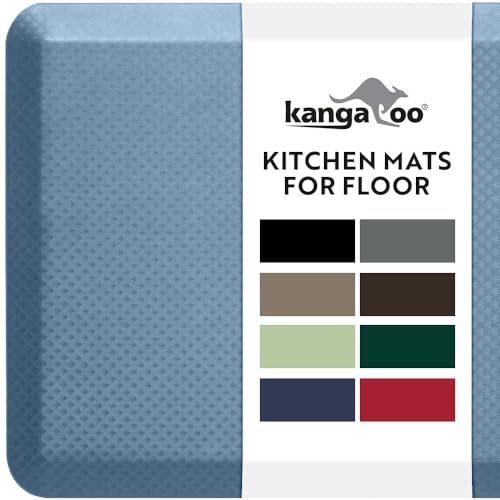
Best for budget buyers
6. Sky Mats Anti-Fatigue Mat
Sky Mats sells cushioned standing mats at accessible costs. They suit home kitchens and small workspaces more than heavy foodservice.
Suits: budget buyers. Strengths: accessible cushioning. Weaknesses: check grease resistance. Skip it if you need foodservice-grade durability.
View Sky Mats Anti-Fatigue Mat on Amazon
Care and Setup
- Lay the mat on a clean, dry floor and let it settle flat.
- Sweep and rinse regularly so grease does not build up.
- Lift and clean underneath at the end of the week.
- Replace the mat when edges curl or the surface is worn.
Mistakes to Avoid
- Choosing a foam mat for a greasy fryer line.
- Ignoring curling edges that become trip hazards.
- Buying a mat that is too small for your work zone.
- Skipping regular cleaning.
Materials and What They Mean in a Kitchen
The material decides how a mat handles grease, water, cleaning and wear. Rubber is a common choice for commercial kitchens because it resists oils, stays flexible and grips the floor. Vinyl mats can also stand up to moisture and are often lighter, though some formulations stiffen in cold areas such as walk-in coolers. Foam mats are softer underfoot, but they absorb liquids more readily and wear faster in busy, greasy spaces.
Check how the manufacturer describes the material. Terms like nitrile rubber suggest better grease resistance than standard rubber, but the listing should say so. Look for statements about resistance to oil, animal fats and cleaning chemicals, and compare them with what your kitchen sees. A fryer station demands more than a prep table.
Think about surface texture. A smooth, closed surface wipes clean quickly but can become slippery if wet. A textured or perforated surface improves grip and drainage but traps debris. Beveled edges help prevent trips. The underside also matters: a flat, grippy backing helps the mat stay in place, while a gritted or molded pattern may anchor it on slick tile. Choose according to the conditions where you cook.
Thickness, Comfort and Stability
Cushioning relieves strain on legs, feet and the lower back during long shifts, but thicker is not always better. An overly soft mat can feel unstable, making your muscles work harder to balance. A thinner, firm mat may feel less plush but gives better support and easier movement. The right balance depends on how much you stand still versus move around.
Think about the work you do. A cook who pivots between prep and stove needs a mat that lets feet slide a little without catching. A dishwasher standing in one place may prefer more cushioning. If you carry heavy pots or trays, stability is critical. Mats that compress too easily can be tiring over time.
Edge height is a safety factor. Thick mats create a lip that people can trip on, especially when carrying hot food. Beveled or tapered edges reduce this risk. Where carts roll across the floor, choose a mat designed for wheeled traffic or place it where carts do not travel. Check the listing for thickness, and compare it with doors, drains and floor transitions.
Sizing and Layout for Real Work Zones
Measure where you actually stand. Stand in your normal working position and mark the area you cover as you reach for tools, turn between stations and shift your feet. Add some extra room so you do not step off the edge. A mat that is too small forces you to stand half on and half off, which creates uneven footing.
For long lines, think about whether to use one large mat or several. A single continuous mat reduces gaps and trip points, but it can be heavy to move and clean. Multiple smaller mats are easier to lift and wash but need to sit tightly together. Interlocking designs can help. Leave space for floor drains, grease traps and cleaning access, and do not cover drains unless the mat is designed for it.
Consider doorways and walkways. Mats near doors may need to be thinner or tapered to avoid catching. Leave clearance for opening cabinets and appliance doors. Plan for the cleaning routine: you will lift mats regularly, so choose sizes you can move comfortably. Check the listing for dimensions and shape options, such as cut-outs or corner pieces for awkward layouts.
Cleaning, Grease and Hygiene Routines
A kitchen mat sits under constant spills and food debris, so its cleaning routine matters. Sweep or rinse it each day to remove crumbs and liquids. At the end of each shift or week, lift the mat and clean both the mat and the floor underneath. Trapped moisture and grease create odors, slippery spots and a haven for bacteria.
Use cleaning products recommended by the maker. Strong solvents can damage rubber and vinyl, and some detergents leave a slippery film if not rinsed. Mats with drainage holes should be flushed so debris does not clog them. Many commercial mats can be hosed down, but check the care instructions. Let them dry before placing them back.
Follow local food safety rules, which may have specific requirements for floor mats in food preparation areas. Keep a spare mat to rotate while one is being cleaned. Store mats flat or rolled according to the maker’s guidance, since folding can leave creases. Cleaning is also a chance to inspect for wear: look for cracks, cuts, curled edges and thin spots that signal it is time to replace the mat.
Safety, Footwear and Knowing When to Replace
A mat is only one part of staying comfortable and safe on your feet. Supportive, slip-resistant shoes make a major difference, and they work together with the mat. Take breaks, shift your weight and stretch periodically. If you have a medical condition, ask a professional about the right support.
Slip resistance depends on the surface, the floor and what is on it. No mat prevents slipping if there is a layer of oil or water. Wipe up spills promptly, and keep the mat and the floor clean. Check that the mat does not slide when you step on it; a mat that creeps is a trip hazard. If it moves, clean the floor and underside, or look for a model with a better backing.
Replace the mat when edges curl and do not flatten, when the surface cracks or wears smooth, when it loses cushioning or when odors persist after cleaning. Compressed areas under your feet show where the foam or rubber has given up. Mats used in busy kitchens may need replacement more often than those in light-use areas. Check the warranty, keep your receipt and plan for replacement before the old mat becomes dangerous.
Choosing Between the Picks in This Guide, One by One
Six options is a lot to hold in your head at once, so it helps to work through the shortlist for this commercial anti-fatigue kitchen mat guide pick by pick, using only what the reviews above already establish. Each pick below is framed the same way: who it suits, what it does best, and the limitation to accept with open eyes. Read the six in order and mark the one whose weakness bothers you least — that simple test resolves most shortlists faster than chasing an abstract idea of the single best option.
Consider the Wearwell Diamond-Plate Anti-Fatigue Mat if its particular balance of trade-offs matches how you actually work. The guide above notes that it suits demanding workspaces, and that its appeal rests on a commercial-grade brand. Set against the other picks, that makes it the natural shortlist entry when those qualities matter more to you than all-round convenience. Its honest limitation is worth weighing just as carefully: details differ across sizes and models. Skip it if you want a soft home mat. If that limitation touches something you do every day, another pick in this guide will serve you better; if it touches something you rarely do, it is a fair price in kind for the strengths you gain. The mistake to avoid is choosing it for a use case it was never aimed at, then blaming the product for a mismatch that was visible from the start.
The NoTrax Comfort Rest Anti-Fatigue Mat earns its place for a narrower reason than the headline suggests. It suits food prep stations, with a known commercial maker as the qualities that separate it from the rest of this list. Read it as a specialist rather than a default: when your routine lines up with what it does well, it can outperform a more general pick, and when your routine does not, its drawback — models differ, so check material. Skip it if you want a drainage grid — will be the thing you notice daily. A useful test is to picture your most ordinary session, not your most ambitious one, and ask whether this is the pick you would reach for then. Ordinary sessions are where satisfaction is actually decided.
With the Rubber-Cal Dura-Chef Floor Mat, the decision comes down to priorities. It is aimed at wet kitchen floors, and it stands out for a kitchen focus. Those are real advantages, but they sit alongside a clear compromise: rubber can be heavy to move. Skip it if you need a lightweight mat. Compared with the neighbouring picks in this guide, it asks you to accept that compromise in exchange for doing its main job in its own way. If you have read the other reviews and found yourself nodding at this one’s strengths while shrugging at its weakness, that reaction is usually the right signal. If the weakness made you hesitate, trust the hesitation and look at the pick whose strengths match the task you found yourself defending.
Consider the Cactus Mat Anti-Fatigue Mat if its particular balance of trade-offs matches how you actually work. The guide above notes that it suits mixed commercial use, and that its appeal rests on a workplace-oriented brand. Set against the other picks, that makes it the natural shortlist entry when those qualities matter more to you than all-round convenience. Its honest limitation is worth weighing just as carefully: products vary a lot. Skip it if you cannot confirm the model. If that limitation touches something you do every day, another pick in this guide will serve you better; if it touches something you rarely do, it is a fair price in kind for the strengths you gain. The mistake to avoid is choosing it for a use case it was never aimed at, then blaming the product for a mismatch that was visible from the start.
The Gorilla Grip Anti-Fatigue Mat earns its place for a narrower reason than the headline suggests. It suits lighter use, with an easy-to-find, cushioned style as the qualities that separate it from the rest of this list. Read it as a specialist rather than a default: when your routine lines up with what it does well, it can outperform a more general pick, and when your routine does not, its drawback — not made for heavy commercial traffic. Skip it if you work double shifts — will be the thing you notice daily. A useful test is to picture your most ordinary session, not your most ambitious one, and ask whether this is the pick you would reach for then. Ordinary sessions are where satisfaction is actually decided.
With the Sky Mats Anti-Fatigue Mat, the decision comes down to priorities. It is aimed at budget buyers, and it stands out for accessible cushioning. Those are real advantages, but they sit alongside a clear compromise: check grease resistance. Skip it if you need foodservice-grade durability. Compared with the neighbouring picks in this guide, it asks you to accept that compromise in exchange for doing its main job in its own way. If you have read the other reviews and found yourself nodding at this one’s strengths while shrugging at its weakness, that reaction is usually the right signal. If the weakness made you hesitate, trust the hesitation and look at the pick whose strengths match the task you found yourself defending.
Placement Science: Where Standing Actually Happens
A mat only helps where feet actually are, and kitchens surprise owners about where that is. Watch a full cooking session and note the standing points: the sink, the stove, the main prep run, and the pass where plating happens. In commercial kitchens the pattern is stations, and mats belong at stations, not wall to wall. Home and small-café kitchens follow the same logic at smaller scale. One correctly placed mat at the station where someone stands longest beats three mats distributed by guesswork, and the reviews above give the sizes that make station coverage practical.
Edges decide safety. A mat whose edge sits mid-walkway becomes a trip line; a mat that runs station-edge to station-edge disappears underfoot. Measure the run you intend to cover, including where feet pivot — pivoting at a mat’s edge is how edges get kicked up and how ankles get surprised. In wet zones, drainage and grip matter as much as cushioning; in dry prep zones, cushioning leads. Match the mat’s character to the station’s reality rather than buying identical mats for unlike jobs.
Cushioning, Posture and the Honest Limits of a Mat
A good mat redistributes pressure and encourages micro-movements that keep blood moving in the legs; it does not fix a workstation that is the wrong height or a shift pattern with no breaks. Treat the mat as one part of an ergonomic whole that includes footwear, counter height and task rotation. Staff who stand all day will feel a genuine difference by the afternoon — that difference is the product working as intended, not a promise that standing work becomes sitting work. Owners who understand this are satisfied; owners who expected a cure are not, and the mat is identical in both kitchens.
Thickness is a trade, not a ladder. Thicker mats cushion more and rise higher above the floor, which affects stability for some users and catches more trolley wheels and door swings. The right thickness is the most cushioning you can have while the mat still feels like floor — solid, ignorable, safe. Test by standing through one full service or cooking session; a mat you stop noticing within minutes is doing its job perfectly.
Cleaning Regimes for Mats That Live in Working Kitchens
Kitchen mats collect what kitchens produce: grease, flour, spills and the day’s debris in their texture. A mat that cannot be cleaned quickly will not be cleaned often, and an uncleaned mat becomes a hygiene problem wearing an ergonomic costume. Commercial practice is blunt — mats are lifted, shaken or hosed, scrubbed with degreaser as needed, and dried before returning. Choose a mat whose weight and size your team can actually handle at closing time, because the best mat in this guide is the one your closing routine can lift without a negotiation.
Rotation extends life and reveals wear. Where two mats serve similar stations, swapping them evens the wear; inspecting the underside during cleaning catches the cracking, curling or crumbling that says a mat is done. A worn mat kept in service is worse than no mat — its edges curl into trip hazards and its cushioning collapses unevenly. Budget these as working equipment with a service life, not as permanent flooring, and replacements stop feeling like failures.
A Slower Decision Routine Before You Order
Most disappointment with a commercial anti-fatigue kitchen mat is not caused by a bad product; it is caused by a quick decision made on the wrong criterion. The criteria table near the top of this guide is short for a reason — those are the checks that actually predict whether you will be happy. Work through them in the order below, in writing if necessary, before you commit to any of the six picks.
Start with material. The guide’s table puts it plainly: rubber and vinyl resist grease and water better than foam. Do not treat that as a box to tick and move on. Picture it in your own space and routine — where this commercial anti-fatigue kitchen mat will live, who else will use it, and how often. A criterion that looks minor on a product page becomes major when it is part of a daily habit, and minor daily friction is what quietly pushes a purchase into a cupboard. If a pick is weak on the criterion that matters most in your routine, that weakness outweighs several strengths elsewhere.
Start with thickness. The guide’s table puts it plainly: thicker mats cushion more but can be a trip hazard at the edge. Do not treat that as a box to tick and move on. Picture it in your own space and routine — where this commercial anti-fatigue kitchen mat will live, who else will use it, and how often. A criterion that looks minor on a product page becomes major when it is part of a daily habit, and minor daily friction is what quietly pushes a purchase into a cupboard. If a pick is weak on the criterion that matters most in your routine, that weakness outweighs several strengths elsewhere.
Start with drainage. The guide’s table puts it plainly: holes or a grid pattern let liquids drain away. Do not treat that as a box to tick and move on. Picture it in your own space and routine — where this commercial anti-fatigue kitchen mat will live, who else will use it, and how often. A criterion that looks minor on a product page becomes major when it is part of a daily habit, and minor daily friction is what quietly pushes a purchase into a cupboard. If a pick is weak on the criterion that matters most in your routine, that weakness outweighs several strengths elsewhere.
Start with edges. The guide’s table puts it plainly: beveled edges reduce tripping. Do not treat that as a box to tick and move on. Picture it in your own space and routine — where this commercial anti-fatigue kitchen mat will live, who else will use it, and how often. A criterion that looks minor on a product page becomes major when it is part of a daily habit, and minor daily friction is what quietly pushes a purchase into a cupboard. If a pick is weak on the criterion that matters most in your routine, that weakness outweighs several strengths elsewhere.
Start with cleaning. The guide’s table puts it plainly: mats you can hose down save time in a busy kitchen. Do not treat that as a box to tick and move on. Picture it in your own space and routine — where this commercial anti-fatigue kitchen mat will live, who else will use it, and how often. A criterion that looks minor on a product page becomes major when it is part of a daily habit, and minor daily friction is what quietly pushes a purchase into a cupboard. If a pick is weak on the criterion that matters most in your routine, that weakness outweighs several strengths elsewhere.
Finish the routine by re-reading the review of your leading pick one more time, looking only for reasons not to buy it. If the reasons you find are things you can genuinely live with, you have made a sound choice. If they are things you are merely hoping will not matter, keep looking — the other five picks exist precisely because no single commercial anti-fatigue kitchen mat suits everyone.
Three Mistakes That Lead to the Wrong Choice
Covering the floor instead of the stations
Mats laid wall to wall waste money, complicate cleaning and create edges everywhere. Identify where people actually stand for long periods and mat those stations properly. Coverage is a decision about work patterns, not about floor area.
Choosing domestic mats for commercial work
A light home mat in a commercial kitchen is destroyed by grease, traffic and cleaning chemicals in short order, and its remains are a hazard. The commercial rating in this guide exists because the environments differ in kind, not degree. Buy for the environment you have.
Leaving mats down during floor cleaning
Mopping around a mat leaves a ring of grime exactly where feet stand, and moisture trapped underneath damages both mat and floor. Lift, clean beneath, dry, replace. It takes minutes and is the difference between a mat as hygiene equipment and a mat as hygiene theatre.
Living With It: The First Month and Beyond
In the first month, ask the people standing on the mats how their legs feel at the end of the day compared with before — that is your real performance data, and it arrives within a week. Adjust placement on their evidence; the person at the pass may need the mat more than the person at the stove, whatever your floor plan assumed. Ergonomics is empirical or it is nothing.
Build the mat into closing and opening routines explicitly: lifted and cleaned at close, down and checked at open. Mats that belong to a routine stay flat, clean and present; mats that belong to nobody migrate, curl and vanish under equipment. In a home kitchen the same principle shrinks to a weekly lift, shake and wipe — small, regular, done.
Over a year, expect to learn your replacement rhythm. Working mats in busy kitchens are consumables with a long fuse, and planning their replacement before they become hazards is part of running a professional space. Keep the size and model noted somewhere; the second purchase of a mat that worked is the easiest buying decision in the building.
More Questions About Choosing and Using One
How thick should a commercial kitchen mat be?
Thick enough to change how the end of a shift feels, thin enough to stay stable underfoot and clear of wheels and doors. Most kitchens land in the middle of the range in this guide. If staff include anyone unsteady on their feet, favour stability over maximum softness — confidence underfoot is an ergonomic benefit too.
Can these mats handle grease and water?
Commercial kitchen mats are designed for exactly that, but designs differ: some prioritise drainage in wet zones, others cushioning in dry ones. Match the mat to the wettest reality of its station, and clean grease off promptly — grease left sitting degrades many materials and defeats the grip the mat exists to provide.
How do I stop a mat sliding?
Start with a clean, dry floor and a clean mat underside — most sliding is grime acting as lubricant. Heavier mats and textured undersides help; a mat that still travels on a clean floor is the wrong mat for that surface. Never tolerate a travelling mat in a kitchen: it is an accident with a date on it.
When should a mat be replaced?
When its edges curl and stay curled, when the surface cracks or crumbles, when cushioning feels dead in the centre, or when cleaning no longer restores its grip. Any one of these ends its service. A mat is safety equipment, and safety equipment is replaced on condition, not on nostalgia.
Three Readers, Three Different Right Answers
Abstract rankings matter less than fit, so consider three typical readers of this commercial anti-fatigue kitchen mat guide and notice how the same shortlist resolves differently for each. Their situations are composites, but the reasoning is the reasoning you should apply to your own circumstances, using the reviews above as the evidence base.
The first-time buyer has never owned one and wants the fewest possible surprises. For this reader, the Wearwell Diamond-Plate Anti-Fatigue Mat is the natural landing place: it suits demanding workspaces, and its case rests on a commercial-grade brand. Crucially, its known limitation — details differ across sizes and models. Skip it if you want a soft home mat — is one this reader is well placed to accept, because it does not collide with the use they actually have in mind. The lesson generalises: the right pick is rarely the one with the fewest weaknesses, but the one whose weaknesses fall where you will never step. Read your own situation into these three sketches, decide which reader you most resemble, and let that resemblance — not the numbering in the list — order your shortlist.
The upgrader already owns a basic version and is replacing it because one specific frustration finally outweighed the rest. For this reader, the Rubber-Cal Dura-Chef Floor Mat is the natural landing place: it suits wet kitchen floors, and its case rests on a kitchen focus. Crucially, its known limitation — rubber can be heavy to move. Skip it if you need a lightweight mat — is one this reader is well placed to accept, because it does not collide with the use they actually have in mind. The lesson generalises: the right pick is rarely the one with the fewest weaknesses, but the one whose weaknesses fall where you will never step. Read your own situation into these three sketches, decide which reader you most resemble, and let that resemblance — not the numbering in the list — order your shortlist.
The host or gift buyer is choosing for other people’s use, or for a household where several people will share it. For this reader, the Gorilla Grip Anti-Fatigue Mat is the natural landing place: it suits lighter use, and its case rests on an easy-to-find, cushioned style. Crucially, its known limitation — not made for heavy commercial traffic. Skip it if you work double shifts — is one this reader is well placed to accept, because it does not collide with the use they actually have in mind. The lesson generalises: the right pick is rarely the one with the fewest weaknesses, but the one whose weaknesses fall where you will never step. Read your own situation into these three sketches, decide which reader you most resemble, and let that resemblance — not the numbering in the list — order your shortlist.
Commercial Anti-Fatigue Mat FAQ
What makes a mat commercial grade?
Heavier materials, grease and water resistance, and edges built to handle constant foot traffic.
Rubber or foam?
Rubber and vinyl stand up to grease and washing. Foam is softer but wears faster in kitchens.
How thick should it be?
Thicker cushions more, but the best choice balances comfort with stability. Check the listing for thickness.
Can I hose it down?
Many commercial mats can be hosed, but follow the maker’s cleaning guidance.
How big should the mat be?
Measure the area where you stand and work, then allow a little extra so you can shift your feet without stepping off the edge. Several smaller mats can suit a long line, but a joined run is safer than gaps.
How long does a commercial mat last?
That depends on the material, the traffic and the cleaning routine. Rubber and vinyl mats generally outlast foam, but all of them wear, so replace one when the surface cracks, the edges curl or the cushioning flattens out.
Are anti-fatigue mats slip-resistant?
Many are designed to be, but wet grease can defeat any surface. Choose a mat with a textured or drainage surface, keep it clean, and check the listing for the maker’s slip-resistance details.
Should I put an anti-fatigue mat on a carpeted floor?
These mats are designed for hard floors. On carpet they may bunch or slide. Check the listing for guidance.
Can I cut a mat to size?
Some can be trimmed, but others should not be. Cutting may affect edges, warranties or performance. Follow the maker's instructions.
How do I stop a mat from sliding?
Clean the floor and the mat's underside so grit and grease do not build up. Choose a mat with a gripping backing. Replace mats that creep despite cleaning.
Are drainage holes necessary?
They help liquids pass through and keep surfaces drier, which is useful in wet areas. They collect debris, so clean them often. In dry prep areas, a solid surface may be easier to wipe.
What shoes work best with these mats?
Supportive, slip-resistant footwear suited to kitchens pairs well with a mat. Replace worn shoes. Comfort depends on both.
Can I use a commercial mat at home?
Yes, they can work in home kitchens, though they may be heavier and larger than needed. Measure your space and check the thickness. Choose a size that suits your routine.
Do I need a mat near the dishwashing station?
Wet stations benefit from drainage mats with good grip, since people stand for long periods. Check the surface and cleaning guidance. Keep it rinsed.
Matching a Mat to the Station
A commercial kitchen is not one environment but several, and the right mat changes from one station to the next. The line cook at the range stands in heat, grease and spilled liquid, and rarely stays still for long. The prep cook at a stainless table stands mostly in one spot, often on a cleaner, drier floor. A dishwasher works in standing water and steam. Buying a single mat type for every position is the most common way kitchens end up replacing mats early.
For fryer and grill lines, prioritize grease and oil resistance, a surface that grips under wet soles and a design that lets spills drain or wipe away. Heavy rubber or a nitrile-blend construction fits that profile, and a perforated or grid pattern keeps shoes out of puddles. For prep tables and cold stations, a smoother cushion mat is acceptable because there is less grease, and the extra softness helps people who stand still for hours. At dish pits, drainage is the deciding factor; a solid mat that holds water becomes a slip hazard and a bacteria trap, so an open-grid design that lets water pass through is the better match.
Front-of-house stations such as a coffee bar, a deli counter or a host stand are gentler on a mat but still benefit from a beveled edge, since customers and staff cross the area constantly. If you run a small food business from a home kitchen, the lighter-duty mats in this guide can make sense for prep areas, as long as you keep them away from the hottest, greasiest spots.
Reading a Spec Sheet Before You Order
Commercial mat listings use a handful of terms that are easy to skim past. Treat the following as a checklist rather than a guarantee, since every claim comes from the maker and the exact wording differs by model.
- Thickness: usually given in fractions of an inch. Commercial kitchen mats commonly fall in a range from roughly three-eighths to about an inch, and the number alone does not tell you how firm the mat feels.
- Material description: look for rubber, nitrile rubber, vinyl or closed-cell foam. Closed-cell structures resist absorbing liquids better than open ones.
- Surface pattern: diamond plate, grease-proof texture, grid, beveled or smooth. Each has different cleaning and traction behavior.
- Edge style: a beveled or ramped edge reduces trip risk. A square edge on a thick mat can catch toes and carts.
- Size and shape: listings give the full dimension. Some sellers also offer rolls or cut-to-length options.
- Weight: a heavy mat stays put but is harder to lift for cleaning. Check whether a handle or cutout is mentioned.
- Compliance language: terms about slip resistance or health department guidelines are worth reading, though local rules vary, so verify with your inspector if it matters.
When a listing is vague about a spec you care about, treat that as information. A seller who cannot say what the mat is made from is a weaker bet than one who spells out the compound and the care requirements.
Budget Versus Premium: Where the Money Goes
The price gap between a home-style cushion mat and a foodservice-grade rubber mat can be large, and it is fair to ask what you get. In most cases the answer is material density and lifespan. A denser compound resists compression, which means the mat keeps its cushioning after months of foot traffic instead of flattening in the places where people stand most. It also resists chemical breakdown from degreasers and hot oil.
For a busy restaurant, the cost per month of use matters more than the sticker price. A mat that lasts several years and keeps staff comfortable may cost less over time than a cheaper foam mat replaced every few months. For a home cook or a small cottage food operation, however, a lighter mat can be perfectly adequate and easier to move. Be honest about your hours on your feet, how much grease reaches the floor and how often you clean.
One more consideration is the cost of a bad day. A worn mat that curls at the edge or slides is a liability, not just an annoyance. Spending a little more on a heavier, stable mat for the highest-risk station is a reasonable use of budget, while you save on the quieter positions.
Installing Mats Without Creating New Hazards
Even the best mat can cause problems if it is placed carelessly. Always clean and dry the floor before laying a mat down, since grease underneath lets it migrate. Leave a small gap from walls and equipment so the mat lies flat, and avoid overlapping edges, which create a ridge. If two mats meet, butt them together tightly or use a ramp edge. Walk the path your team takes with plates and hot pans in mind, and ask whether anyone has to step up, down or around a corner to use the mat.
Lift each mat on a set schedule for cleaning underneath. This is the step most kitchens skip, and it is where grease, crumbs and moisture accumulate. Rotating mats between positions every so often also evens out wear. If a mat still slides after cleaning, check whether the floor itself is slick, and ask the manufacturer about suitable anti-slip underlayment rather than taping the edges down, which can leave residue.
Frequently Asked Questions
What thickness of anti-fatigue mat is best for a restaurant line?
There is no single answer, but many kitchens favor a firm mat around half an inch to three-quarters of an inch thick. Thicker mats feel softer but can be unstable and raise trip risk at the edges. Choose firm and beveled for a moving line, and softer for standing-only stations.
Can commercial kitchen mats be cleaned in a dishwasher or pressure washer?
Mats are too large for a dishwasher. Many rubber and vinyl mats can be hosed down and scrubbed with a degreaser, but pressure washers can damage some surfaces or force water under edges. Follow the manufacturer’s care instructions and let the mat dry fully before putting it back.
How often should kitchen mats be replaced?
Replace a mat when you see curling edges, cracks, a worn surface, persistent slipping or when it no longer feels supportive. Lifespan depends on traffic, grease and cleaning habits, so there is no fixed date. Inspect mats regularly rather than waiting for a visible failure.
Do I need a different mat for a wet dish station?
Usually yes. A drainage-style mat with holes or a raised grid keeps feet above standing water and lets liquid pass through. Solid cushion mats can trap water and food debris. Clean under a dish station mat often to prevent buildup and odor.
The Short Version
For an industrial brand, the Wearwell. For a kitchen cushion, the NoTrax Comfort Rest. For wet floors, the Rubber-Cal Dura-Chef. For mixed use, the Cactus Mat. For a lighter home mat, the Gorilla Grip. For a budget cushion, the Sky Mats.

