A hobbyist drum roaster needs to be affordable, forgiving and fun to learn on. Many hobbyists start with a programmable countertop model, then move to a manual drum as their skills grow. The goal is a steady, repeatable roast without having to run a commercial shop. A hobbyist also benefits from a machine with clear feedback, so you can see how changes in time and heat affect the cup, and from a community of owners who share profiles and tips online.
The six roasters below range from beginner-friendly models to manual drums for tinkerers. We have not used these products ourselves, so confirm the batch size, power needs and control options on the current listing before buying. Specs change between versions, so we keep descriptions general. Treat these notes as a starting point, then compare sizes, set contents and current availability across the listings before you decide.
As an Amazon Associate we earn from qualifying purchases. Links below are affiliate links, and they do not change the product information we give.
What to Look For
| Feature | Why it matters |
|---|---|
| Learning curve | Programmable models are friendlier than manual drums |
| Batch size | Hobbyists usually need a small batch, but check how many cups it makes |
| Ventilation | Roasting makes smoke, so plan for an open window or a vent |
| Upgrade path | A roaster you can control manually will grow with your skills |
In this guide
Specs at a Glance
| Roaster | Type | Batch size | Notes |
|---|---|---|---|
| Behmor 1600 Plus | Electric drum | Home batch | Presets |
| Gene Cafe CBR-101 | Rotating chamber | Home batch | Visible beans |
| Kaldi Home Roaster | Manual drum | Small batch | Motorized |
| Hottop KN-8828B-2K+ | Electric drum | Home batch | Software control |
| Huky 500 | Gas drum | Medium batch | Larger batch |
| Aillio Bullet R1 | Induction drum | Small commercial | Data logging |
The 6 Best Drum Coffee Roasters for Hobbyists
Top pickBest for beginners and up
1. Behmor 1600 Plus
A countertop drum roaster with preset profiles, smoke suppression and the option to control some settings by hand. It is a staple of the hobbyist world.
Suits: beginners and up. Strengths: preset profiles. Weaknesses: limited manual control. Skip it if you want a gas roaster.
View Behmor 1600 Plus on Amazon
Best for watching the roast
2. Gene Cafe CBR-101
A countertop roaster with a rotating glass chamber that lets you watch the beans change colour. It offers temperature and time control.
Suits: watching the roast. Strengths: a visible chamber. Weaknesses: not a true commercial drum. Skip it if you want a larger batch.
View Gene Cafe CBR-101 on Amazon
Best for tinkerers
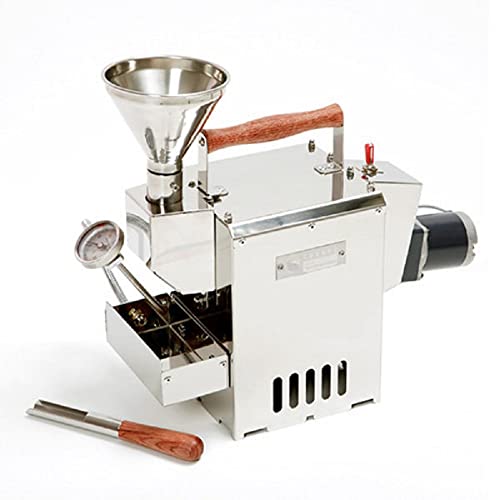
3. Kaldi Home Coffee Roaster Motorized
A small drum roaster with a motor, usually run on a portable burner. It gives you hands-on control for a modest cost.
Suits: tinkerers. Strengths: manual control. Weaknesses: needs a heat source. Skip it if you want an electric unit.
View Kaldi Home Roaster on Amazon
Best for advanced hobbyists
4. Hottop KN-8828B-2K+
A countertop drum roaster with computer-assisted control. It is a step up for hobbyists who want to log and repeat profiles.
Suits: advanced hobbyists. Strengths: data and control. Weaknesses: a higher price. Skip it if you are on a budget.
View Hottop KN-8828B-2K+ on Amazon
Best for sharing coffee
5. Huky 500 Coffee Roaster
A drum roaster from a small maker with a larger batch size. Hobbyists who share coffee with friends or sell a little often choose it.
Suits: sharing coffee. Strengths: a bigger batch. Weaknesses: needs setup and ventilation. Skip it if you want plug-and-play.
Best for going pro
6. Aillio Bullet R1
A prosumer drum roaster with an induction heater and data logging. It is an aspirational choice for hobbyists who want to go pro.
Suits: going pro. Strengths: detailed data. Weaknesses: a premium cost. Skip it if you are a beginner.
View Aillio Bullet R1 on Amazon
Care and Setup
- Empty the chaff collector after every roast so it cannot build up and pose a fire risk.
- Wipe the drum with a dry cloth once it has cooled to clear oils and fine dust.
- Keep a roast log with times and temperatures so you can repeat good batches and learn from poor ones.
- Store roasted beans in an airtight container away from light and heat.
Mistakes to Avoid
- Starting with a roaster that is too advanced and quitting in frustration after a few burnt batches.
- Overloading the drum beyond the maker’s guidance, which leads to uneven colour.
- Roasting without ventilation, which fills the room with smoke.
- Not letting the beans rest after roasting, then judging the flavour too early.
Heat Source: Electric, Gas or Induction
The heat source shapes nearly everything about a drum roaster, from where you can put it to how much control you have. Electric countertop roasters plug into a standard outlet, need no extra fuel and are the easiest to set up in a home. They tend to offer limited power, which suits small batches. Gas-heated roasters usually give more heat and finer control of the flame, but they require a gas supply or a portable burner, plus attention to safety and ventilation.
Induction heating is a newer approach that heats the drum directly without a flame, and some models pair it with software control. It can offer quick response and precise control, but the machines tend to be more advanced, and you should check the electrical requirements. Not every home outlet can support high-power equipment, so read the specifications and ask an electrician if you are not sure.
Think about where you plan to roast. A garage or outdoor space gives more freedom for gas models, while an apartment kitchen limits you to electric ones. Consider your fuel logistics too: a gas model needs a way to store and handle fuel safely. Choose the heat source that fits your space, your comfort with equipment and your long-term plans. Always confirm the power or fuel needs on the current listing.
Batch Size Versus How Often You Roast
Batch size looks like a simple number, but it connects to how you drink and share coffee. A small batch suits people who roast often and want fresh coffee all the time. It lets you experiment with different beans without wasting much. A larger batch makes more coffee per session, which suits households that drink a lot, or people who give roasted beans to friends. But a larger batch also needs more green coffee, more space and often more power.
Roasted coffee tastes best within a window after roasting, so there is no benefit to making far more than you can drink. Estimate your weekly consumption, then decide how often you are willing to roast. If you roast once a week, a mid-size batch may cover you. If you prefer to roast twice, a smaller drum is fine. Remember to include the time for cooling and cleaning, since a roasting session is more than the roast itself.
- Check the minimum and maximum batch sizes in the manual.
- Very small loads can roast unevenly in a large drum.
- Overloading can cause uneven results and put strain on the machine.
Hobbyists who plan to sell a little should also check local rules about selling roasted coffee, which may include licensing and food safety requirements. Equipment designed for home use may not be suited to commercial settings.
Controls, Profiles and Feedback
A roast profile is the path of temperature and time that a batch follows, and the controls on a roaster determine how much of it you can shape. Presets are the easiest way to start, since the machine follows a programmed curve. As you learn, you may want to adjust heat, airflow and drum speed manually. Machines with software and data logging let you record a profile and repeat it, which helps with consistency.
Feedback is what teaches you. A roaster that shows bean temperature, lets you see the beans through a window or sample port, or logs data helps you link your actions to results. Without feedback, you rely on sound, smell and color, which are valuable skills but take time to develop. Look for a sampling tool, such as a trier, which lets you pull a few beans during the roast to check their color.
Think about your learning style. If you enjoy tinkering and data, a logging-capable machine is attractive. If you want simple results with little fuss, presets may be enough. Keep in mind that more control means more variables to manage. Start with a basic approach, change one thing at a time, and record each roast. Over time, you will learn how your machine responds, which matters more than any single feature.
Ventilation, Smoke and Home Setup
Roasting produces smoke, chaff and strong aromas, and the amount increases as roasts get darker. Plan ventilation before you buy. Some roasters have built-in smoke handling, while others need an exhaust path such as a duct to a window or outdoors. A kitchen hood may not be enough for a gas or high-output machine. Check the manual for ventilation requirements, and consider carbon monoxide detectors if you use gas.
Chaff is a fire risk if it collects near heat sources, so empty collectors regularly and keep the area clean. Place the roaster on a stable, heat-resistant surface, with clearance from walls and cabinets as the manual advises. Keep a fire extinguisher nearby, and never leave a roast unattended. Keep the cooling tray close, so that you can dump the beans quickly when the roast is done.
Check power requirements and outlets, and avoid overloading circuits. If a machine draws a large current, it may need its own circuit. Consider noise too, since fans and drums can be loud in a quiet home. Neighbors may notice smoke and smell, so be considerate. Plan storage for green beans, roasted beans and tools, and keep the roasting area clean. A well-prepared space makes roasting safer and more pleasant.
Building Skills and Planning the Upgrade Path
Roasting improves with deliberate practice. Start with a few bean types and repeat roasts to learn how the machine behaves. Keep a log of weights, times, temperatures, settings and tasting notes. Cup each batch, comparing it with previous ones, and change only one variable at a time. This approach makes it easier to understand cause and effect, and it prevents confusion.
Think about the upgrade path when buying. A machine that offers manual control can grow with your skills, while a fully automated one may limit you later. On the other hand, a very advanced machine may overwhelm a beginner. Decide how far you expect to go. If you see yourself roasting for years, a machine with more control and replaceable parts may be worth it. If it is a casual interest, a simpler model may be right.
Look for community resources, such as owner groups and manuals, which help with troubleshooting and sharing profiles. Check the availability of spare parts and support. Signs you may be outgrowing your roaster include wanting larger batches, needing more control or finding that repeatability is limited. Before upgrading, consider whether better beans, a scale or a thermometer would solve the problem. When you do upgrade, compare the new machine’s specifications and requirements with your space and skills.
Hobbyist Drum Roaster FAQ
What is the best first drum roaster?
A programmable countertop model is the easiest way to start, because it takes care of timing and smoke. Move to a manual drum once you understand the stages of a roast.
Is a manual drum worth it?
It gives you more control and often costs less, but it demands more attention and practice. Expect a few ruined batches while you learn heat and drum speed.
How soon can I drink freshly roasted coffee?
Many people wait a day or two so the beans can rest and release gas, though preferences vary. Espresso fans often wait longer than filter drinkers.
Do I need a separate cooling tray?
Some roasters include one, while others rely on an internal cooling cycle. Beans must cool quickly to stop roasting, so check how your model handles it. A colander and fan can help if needed.
Can I roast decaf or very dense beans in a drum roaster?
Often yes, but they may behave differently and need heat adjustments. Start with small batches and take notes. Check the manual for any limits.
How do I clean a drum roaster?
Empty the chaff collector after each roast and wipe the surfaces as the manual directs. Do a deeper clean periodically, since oils and chaff build up. Never use water on electrical parts.
Is a thermometer necessary?
Many roasters have one built in, and extra probes can help you track temperature. Where a probe sits changes the reading, so use it consistently. Sound, smell and color remain important cues.
What should I do if my roast stalls?
A stall can come from low heat or an overloaded drum. Check the batch size, the heat setting and airflow, and note what happened. Adjust in later batches.
Can I sell coffee I roast at home?
Rules vary by location and may include licensing and food safety requirements. Check your local regulations before selling.
How do I store green coffee?
Keep it in a cool, dry place in a breathable container away from strong odors. Avoid damp areas. Buy amounts you can use within a reasonable time.
Choosing Green Coffee for Your First Roasts
A roaster is only half of the equation. The beans you feed it shape how forgiving the process is, and a poor choice can make a good machine feel difficult. Beginners usually do best with a small set of dependable options.
Start with forgiving origins
Brazilian, Colombian and Central American coffees are widely recommended for early practice because they are commonly available, moderately dense and tolerant of small timing errors. They tend to roast evenly and taste pleasant across a range of roast levels, which makes it easier to learn what a first crack or a slightly darker finish does.
Density and moisture matter
Dense, high-grown beans absorb heat more slowly and often need more energy early in the roast. Softer, lower-grown beans can scorch or roast unevenly if the drum is too hot. Moisture content also changes how a batch behaves, since very fresh green coffee can behave differently from beans that have rested for a year. Reputable green coffee sellers often list density, processing method and harvest year, and those details are worth reading.
Buy small and vary slowly
Many suppliers sell green coffee in one- to five-pound bags, and sampler packs are a low-risk way to try several origins. Resist the urge to switch to a new bean every roast. Repeating the same coffee several times teaches you far more about your machine than a different origin every weekend.
- Choose one forgiving origin for your first five to ten roasts.
- Keep notes on batch weight, ambient temperature and finish time.
- Add a more challenging bean, such as a dense washed African coffee, only after you can repeat results.
Reading the Roast: Stages, Sounds and Smells
Whether you use a fully manual drum like the Huky 500 or a more automated model, you will make better decisions if you recognize the main stages of a roast. The names are consistent across most hobby roasters, even if the timing differs.
Drying and yellowing
Early in the roast, green beans lose moisture, change from grassy green to pale yellow and smell like hay or toasted bread. This phase is about gentle energy, and rushing it can lead to uneven development later.
Maillard browning
As the beans turn tan and then brown, sugars and amino acids react and the aroma shifts toward toast, caramel and baked goods. Many roasters spend extra time and attention here because it strongly influences sweetness.
First crack
This is the audible turning point, a series of popping sounds as moisture and gas escape the bean. Light to medium roasts usually finish at or shortly after first crack, so you need to be watching and listening closely. A noisy fan can mask the sound, which is one reason it helps to practice with the roaster in a quiet room.
Development and second crack
The time between first crack and the end of the roast, often called development time, affects acidity and body. If you continue to a faster, quieter crackle called second crack, oils begin to appear on the surface and the flavor moves toward dark chocolate and smoke. Plenty of people prefer to stop well before this stage.
Smell and color are as reliable as sound. Compare your beans to a printed roast color chart or to a previously roasted batch that you liked, and write down what you see at each point.
Cooling, Chaff and the Post-Roast Routine
The roast does not end when the heat turns off. Residual heat in the beans keeps cooking them, so quick cooling is a critical step, especially for lighter roasts where a few extra seconds are noticeable.
Built-in cooling trays and fans, found on machines like the Behmor and the Hottop, simplify this. If your roaster lacks one, plan to dump the beans into two metal colanders and toss them between the two, ideally near a fan. Aim to bring them to room temperature within a few minutes.
Chaff, the papery skin that comes off beans during roasting, is a nuisance and a minor fire concern. Empty the chaff collector after every batch, and never let it accumulate. Check your manual for specific guidance, since different designs capture chaff in different places.
After cooling, let the coffee rest in a container with a one-way valve or a loosely covered jar so that carbon dioxide can escape. Label each batch with the date, bean and roast notes. Tasting a batch at one, three and seven days is a simple way to learn how your preferred roast levels change as the coffee degasses.
What Home Roasting Really Costs
The machine is the largest purchase, but not the only one. Green coffee prices vary widely by origin and quality, and a hobby habit of one roast every weekend can add up. Typical home roasting usually costs less per pound than buying fresh specialty coffee, but the savings only appear if you roast consistently and do not waste batches during practice.
Plan for a few extras. A digital scale for weighing green and roasted beans, a good thermometer if the roaster does not have one, metal colanders or a cooling tray, airtight storage containers and a small brush for cleaning are all common additions. Over time you may also want a burr grinder that suits your brew method, because roasting well and grinding poorly defeats the purpose.
Finally, include your time. A typical roast cycle, including preheat, roast, cooling and cleanup, takes well over half an hour. Some owners find that relaxing. Others discover that roasting every few days is more commitment than they want, in which case a larger-capacity machine and a once-a-fortnight routine may fit better.
Frequently Asked Questions
How long does first crack take to start?
It depends on the roaster, batch size and starting temperature, but first crack commonly arrives somewhere around eight to twelve minutes into a roast on many hobby machines. Treat that as a rough range, not a target. Watch the beans and listen, and rely on your own roast log for your machine.
How much weight does coffee lose when roasted?
Coffee typically loses roughly 12 to 20 percent of its weight as moisture and gases leave the bean, with darker roasts losing more. Weigh the green coffee before and the roasted coffee after, and record the percentage. It is a useful way to check whether two batches were roasted to a similar level.
What causes chaff fires in a drum roaster?
Chaff is light, dry and flammable, and a fire can start if it collects near a heating element or in an exhaust path. Empty the chaff collector after every roast, clean ducts as the manual suggests, and never leave a roaster running unattended. Good habits matter more than any single feature.
Does room temperature affect home roasting?
Yes. A cold garage or a warm summer room changes how fast the roaster heats and how the beans respond, so the same settings can give different results. Noting the ambient temperature in your roast log helps explain differences between batches and lets you adjust preheat or heat levels.
Going Deeper: What This Guide Means by a Good Hobby Drum Roaster
This article was written for roasting as a hobby you intend to grow into, batch by batch. That hobbyist focus shapes everything in it, and it is worth keeping in mind as you read the picks again, because a drum roaster that suits one household can be the wrong answer for another even when both are well made. The honest way to use a guide like this is to decide what your own hobby roast session has to deliver, then judge each option against that, rather than against an abstract idea of the best. It is worth slowing down here, because this is the point where a good hobby purchase either becomes a pleasure or becomes clutter.
Start with how often you will actually roast. A hobby roaster used twice a day lives a different life from one used twice a month, and the features that matter change with that rhythm. Roast often and you will prize quick cleaning, predictable behaviour and parts you can replace without a struggle. Roast only now and then, and you will be happier with a forgiving roaster you can relearn in minutes, since occasional users never build daily muscle memory. Be candid about the hobbyist you are: many regretful buyers chose for an imagined enthusiast, then resented a routine weekdays could not support.
Next, think about the whole system around the hobby roaster, not the roaster alone. The roasting corner it sits in, the green beans from a supplier you trust, bought in quantities you will use while they are still fresh, the water you use, and the time you genuinely have all shape the result as much as the headline roaster does. A humble hobby bench run with care will beat an ambitious roasting setup used in a hurry, every time. As you compare hobby roasters, ask what each expects of your bench — ventilation, cooling, storage — because that is part of its cost.
Comparing the Hobby Roasters With Each Other, Not With Perfection
These six hobby roasters were picked for different kinds of hobbyist, so head-to-head reading beats any league table. Treat the comparisons below as questions to take back into the individual roaster reviews above. Where two hobby roasters seem close, the deciding factor is usually workflow: how the roast session starts, what you have to watch, and how much clearing up waits at the end. Those workflow differences are the ones still shaping your hobby six months from now, when first impressions are long forgotten.
Set the Behmor 1600 Plus beside the Gene Cafe CBR-101 and ask what each assumes about you. The Behmor 1600 Plus makes sense for a hobbyist when its rhythm suits yours — unhurried where you are unhurried, hands-on where you enjoy control. If its routine in the review sounded enjoyable rather than tedious, trust that instinct — it is genuine data. If that routine sounded like homework, trust the feeling and look again at the Gene Cafe CBR-101, which may appeal precisely because it asks less of you on the days you have least to give. A hobby roaster you use happily and often beats a theoretically finer one that gathers dust.
Set the Gene Cafe CBR-101 beside the Kaldi Home Coffee Roaster Motorized and ask what each assumes about you. The Gene Cafe CBR-101 makes sense for a hobbyist when its rhythm suits yours — unhurried where you are unhurried, hands-on where you enjoy control. If its routine in the review sounded enjoyable rather than tedious, trust that instinct — it is genuine data. If that routine sounded like homework, trust the feeling and look again at the Kaldi Home Coffee Roaster Motorized, which may appeal precisely because it asks less of you on the days you have least to give. A hobby roaster you use happily and often beats a theoretically finer one that gathers dust.
Set the Kaldi Home Coffee Roaster Motorized beside the Hottop KN-8828B-2K+ and ask what each assumes about you. The Kaldi Home Coffee Roaster Motorized makes sense for a hobbyist when its rhythm suits yours — unhurried where you are unhurried, hands-on where you enjoy control. If its routine in the review sounded enjoyable rather than tedious, trust that instinct — it is genuine data. If that routine sounded like homework, trust the feeling and look again at the Hottop KN-8828B-2K+, which may appeal precisely because it asks less of you on the days you have least to give. A hobby roaster you use happily and often beats a theoretically finer one that gathers dust.
Set the Hottop KN-8828B-2K+ beside the Huky 500 Coffee Roaster and ask what each assumes about you. The Hottop KN-8828B-2K+ makes sense for a hobbyist when its rhythm suits yours — unhurried where you are unhurried, hands-on where you enjoy control. If its routine in the review sounded enjoyable rather than tedious, trust that instinct — it is genuine data. If that routine sounded like homework, trust the feeling and look again at the Huky 500 Coffee Roaster, which may appeal precisely because it asks less of you on the days you have least to give. A hobby roaster you use happily and often beats a theoretically finer one that gathers dust.
Set the Huky 500 Coffee Roaster beside the Aillio Bullet R1 and ask what each assumes about you. The Huky 500 Coffee Roaster makes sense for a hobbyist when its rhythm suits yours — unhurried where you are unhurried, hands-on where you enjoy control. If its routine in the review sounded enjoyable rather than tedious, trust that instinct — it is genuine data. If that routine sounded like homework, trust the feeling and look again at the Aillio Bullet R1, which may appeal precisely because it asks less of you on the days you have least to give. A hobby roaster you use happily and often beats a theoretically finer one that gathers dust.
Set the Aillio Bullet R1 beside the Behmor 1600 Plus and ask what each assumes about you. The Aillio Bullet R1 makes sense for a hobbyist when its rhythm suits yours — unhurried where you are unhurried, hands-on where you enjoy control. If its routine in the review sounded enjoyable rather than tedious, trust that instinct — it is genuine data. If that routine sounded like homework, trust the feeling and look again at the Behmor 1600 Plus, which may appeal precisely because it asks less of you on the days you have least to give. A hobby roaster you use happily and often beats a theoretically finer one that gathers dust.
A Careful Hobby Roast Session, Step by Step
Technique advice is easy to give and hard to use in the abstract, so here is a hobby roast session broken into the order that experienced users actually follow. You do not need to commit it to memory. Practise the sequence slowly a few times and it settles into a rhythm, and rhythm is what makes hobby roasts repeatable. While you work a hobby batch, watch the beans change colour, listen for the cracks, and smell how the aroma shifts from grassy to sweet. Those senses, trained over a handful of hobby roast sessions, will tell you more than any single gadget or guess.
Work on preheating the drum and letting the metal settle before the beans go in. Doing this deliberately, rather than roughly, is what makes the rest of a hobby roast session easy to judge. When a roast disappoints you, a careful routine lets you name the step that drifted; without one, every hobby session is a fresh mystery and improvement is mostly luck. The extra minute returns roasts you can repeat deliberately, not by luck.
Work on charging the beans and noting the temperature and the time in your log. Doing this deliberately, rather than roughly, is what makes the rest of a hobby roast session easy to judge. When a roast disappoints you, a careful routine lets you name the step that drifted; without one, every hobby session is a fresh mystery and improvement is mostly luck. The extra minute returns roasts you can repeat deliberately, not by luck.
Work on guiding the roast through the drying phase without rushing it. Doing this deliberately, rather than roughly, is what makes the rest of a hobby roast session easy to judge. When a roast disappoints you, a careful routine lets you name the step that drifted; without one, every hobby session is a fresh mystery and improvement is mostly luck. The extra minute returns roasts you can repeat deliberately, not by luck.
Work on listening for first crack and deciding how far past it this bean wants to go. Doing this deliberately, rather than roughly, is what makes the rest of a hobby roast session easy to judge. When a roast disappoints you, a careful routine lets you name the step that drifted; without one, every hobby session is a fresh mystery and improvement is mostly luck. The extra minute returns roasts you can repeat deliberately, not by luck.
Work on dropping and cooling the beans quickly so the roast stops where you planned. Doing this deliberately, rather than roughly, is what makes the rest of a hobby roast session easy to judge. When a roast disappoints you, a careful routine lets you name the step that drifted; without one, every hobby session is a fresh mystery and improvement is mostly luck. The extra minute returns roasts you can repeat deliberately, not by luck.
Work on cupping the result a day or two later and writing down what you would change. Doing this deliberately, rather than roughly, is what makes the rest of a hobby roast session easy to judge. When a roast disappoints you, a careful routine lets you name the step that drifted; without one, every hobby session is a fresh mystery and improvement is mostly luck. The extra minute returns roasts you can repeat deliberately, not by luck.
Finally, end the hobby roast session properly. Clear up while things are still easy to clean, note anything you changed and what it did, and leave the roasting corner ready for the next hobby batch. That habit separates hobby roasters who improve steadily from people who plateau: the next roast session starts from knowledge instead of a vague memory. After a few months, those brief log entries become the reference you trust most, capturing your roaster, beans and palate, not a stranger’s.
Troubleshooting: When a Hobby Roast Is Not What You Expected
Every hobbyist who roasts at home meets the same handful of disappointments. The reassuring part: every roast fault has a handful of usual suspects, and ordered checking cures most without spending. Alter a single variable per roast, and let that change prove itself before you touch another. Change two things at once in a hobby roast and you will know the cup changed without knowing why, which is how roasters end up chasing their tails for weeks.
Consider a roast that tastes baked and flat even though the colour looks right. Before blaming the roaster, check the basics in order: the freshness and quality of your green coffee, the quantities you used, the temperatures involved, and whether everything was properly prepared and clean. One of those four explains most hobby-roast disappointments. If the basics are sound, change the single variable the hobby reviews above connect most closely with this problem, and repeat the roast session as identically as you can otherwise. If a fault outlasts several fair tries, try the manual’s troubleshooting pages or the maker’s support, log in hand.
Consider beans that scorch on the surface while the inside stays underdeveloped. Before blaming the roaster, check the basics in order: the freshness and quality of your green coffee, the quantities you used, the temperatures involved, and whether everything was properly prepared and clean. One of those four explains most hobby-roast disappointments. If the basics are sound, change the single variable the hobby reviews above connect most closely with this problem, and repeat the roast session as identically as you can otherwise. If a fault outlasts several fair tries, try the manual’s troubleshooting pages or the maker’s support, log in hand.
Consider one batch racing ahead of the last on exactly the same settings. Before blaming the roaster, check the basics in order: the freshness and quality of your green coffee, the quantities you used, the temperatures involved, and whether everything was properly prepared and clean. One of those four explains most hobby-roast disappointments. If the basics are sound, change the single variable the hobby reviews above connect most closely with this problem, and repeat the roast session as identically as you can otherwise. If a fault outlasts several fair tries, try the manual’s troubleshooting pages or the maker’s support, log in hand.
Consider smoke building up in the room faster than your ventilation clears it. Before blaming the roaster, check the basics in order: the freshness and quality of your green coffee, the quantities you used, the temperatures involved, and whether everything was properly prepared and clean. One of those four explains most hobby-roast disappointments. If the basics are sound, change the single variable the hobby reviews above connect most closely with this problem, and repeat the roast session as identically as you can otherwise. If a fault outlasts several fair tries, try the manual’s troubleshooting pages or the maker’s support, log in hand.
Consider results that drift as the weather and the room temperature change. Before blaming the roaster, check the basics in order: the freshness and quality of your green coffee, the quantities you used, the temperatures involved, and whether everything was properly prepared and clean. One of those four explains most hobby-roast disappointments. If the basics are sound, change the single variable the hobby reviews above connect most closely with this problem, and repeat the roast session as identically as you can otherwise. If a fault outlasts several fair tries, try the manual’s troubleshooting pages or the maker’s support, log in hand.
Ownership Over Months and Years of Hobby Roasting
The first week with a new hobby roaster is the worst guide to owning it. Early excitement glosses over fiddly bits that a busy month of hobby roasting will expose. Reassess the roaster once it has survived a season of ordinary hobby use. Is the roaster still the first thing you reach for on a free morning? Is the roaster still cleaned properly, or has that shrunk to a brush-out? Can you keep its consumables — beans, filters, spares — stocked without a scramble? Good roaster ownership is unglamorous: frequent small attention to drum, chaff tray and exhaust beats rare rescue cleans.
Keep the roaster’s manual, and read its maintenance pages once, ideally before you need them. Makers write those roaster pages from the failures they see returned to them, so they map what goes wrong when care slips. Jot down which roaster parts are consumables, which you can swap yourself, and what the maker says never to open or soak. For any part that will eventually wear out, confirm you can get a replacement while the old one still works, not during the week you need it. A one-line record of deep cleans and part swaps keeps roaster maintenance from turning into guesswork.
Before You Buy: A Final Round of Hobbyist Questions
Where, precisely, will this roaster sit? Measure its footprint properly, including the clearance above and in front, and consider heat, smoke and noise reaching whatever sits nearby. Who else will roast on it, and will its routine make sense to them without you standing over it? What extras does it need that you do not currently own — and are you happy to buy, store and clean them? What cleaning and servicing does the maker prescribe for this roaster, and does that timetable suit your patience? None of these questions will ever appear in a product listing, which is exactly why a hobbyist should ask them before paying.
More Questions Hobby Roasters Ask
How long should I rest roasted coffee before drinking it?
No single figure fits every hobbyist, yet home roasters keep landing on the same answer. Start from the basics emphasised throughout this guide: fresh, suitable green coffee, a clean and properly prepared hobby roaster, and a routine you follow the same way each time. Most underwhelming roasts trace back to one of those basics, not the roaster. Give any change a few hobby roast sessions before judging it; single results mislead, while patterns are evidence worth trusting.
How do I know when a green bean suits a lighter or darker roast?
No single figure fits every hobbyist, yet home roasters keep landing on the same answer. Start from the basics emphasised throughout this guide: fresh, suitable green coffee, a clean and properly prepared hobby roaster, and a routine you follow the same way each time. Most underwhelming roasts trace back to one of those basics, not the roaster. Give any change a few hobby roast sessions before judging it; single results mislead, while patterns are evidence worth trusting.
What should a beginner roast log actually record?
No single figure fits every hobbyist, yet home roasters keep landing on the same answer. Start from the basics emphasised throughout this guide: fresh, suitable green coffee, a clean and properly prepared hobby roaster, and a routine you follow the same way each time. Most underwhelming roasts trace back to one of those basics, not the roaster. Give any change a few hobby roast sessions before judging it; single results mislead, while patterns are evidence worth trusting.
Can I roast indoors without upsetting the whole household?
No single figure fits every hobbyist, yet home roasters keep landing on the same answer. Start from the basics emphasised throughout this guide: fresh, suitable green coffee, a clean and properly prepared hobby roaster, and a routine you follow the same way each time. Most underwhelming roasts trace back to one of those basics, not the roaster. Give any change a few hobby roast sessions before judging it; single results mislead, while patterns are evidence worth trusting.
How do I clean chaff out of places I cannot see?
No single figure fits every hobbyist, yet home roasters keep landing on the same answer. Start from the basics emphasised throughout this guide: fresh, suitable green coffee, a clean and properly prepared hobby roaster, and a routine you follow the same way each time. Most underwhelming roasts trace back to one of those basics, not the roaster. Give any change a few hobby roast sessions before judging it; single results mislead, while patterns are evidence worth trusting.
When is a hobby roaster ready to be replaced rather than repaired?
No single figure fits every hobbyist, yet home roasters keep landing on the same answer. Start from the basics emphasised throughout this guide: fresh, suitable green coffee, a clean and properly prepared hobby roaster, and a routine you follow the same way each time. Most underwhelming roasts trace back to one of those basics, not the roaster. Give any change a few hobby roast sessions before judging it; single results mislead, while patterns are evidence worth trusting.
The Short Version
For a first roaster, the Behmor 1600 Plus. For a visual roast, the Gene Cafe CBR-101. For hands-on learning, the Kaldi Home Roaster. For advanced hobbyists, the Hottop KN-8828B-2K+. For sharing, the Huky 500. For a big step up, the Aillio Bullet R1.


