Espresso coffee makers cover a wide range, from a stovetop moka pot to a pump machine that forces hot water through finely ground coffee. Each makes a concentrated cup, though the strength, the crema and the effort differ a lot from one type to another.
The six picks below include a moka pot, a capsule machine, two pump machines, a portable press and a programmable unit. We have not used these products ourselves, so confirm every detail on the current listing before you buy. Think about how much time you want to spend and whether you plan to make milk drinks.
As an Amazon Associate we earn from qualifying purchases. Links below are affiliate links, and they do not change the product information we give.
What to Look For
| Feature | Why it matters |
|---|---|
| Type | Moka pots, capsules and pump machines each give a different cup |
| Effort | Capsule machines are quick; manual presses take practice |
| Milk drinks | A steam wand is useful for lattes and cappuccinos |
| Space | Portable and stovetop models need little counter room |
In this guide
Specs at a Glance
| Maker | Type | Power or heat | Notes |
|---|---|---|---|
| Bialetti Moka Express | Stovetop moka pot | Stovetop heat | Aluminum, octagonal body |
| Nespresso Essenza Mini | Capsule machine | Plug-in | Very compact |
| De’Longhi Stilosa | Pump espresso machine | Plug-in | Manual steam wand |
| Breville Bambino | Pump espresso machine | Plug-in | Fast heat-up |
| Wacaco Nanopresso | Portable manual press | Hand pumped, no power | Fits in a bag |
| Cuisinart EM-100 | Pump espresso machine | Plug-in | Programmable volume |
The 6 Best Espresso Coffee Makers

Top pickBest for simple, strong coffee
1. Bialetti Moka Express
A classic aluminum stovetop pot that brews strong coffee by pushing steam-heated water up through grounds. It makes a bold cup close to espresso, though not true pump espresso. It also costs little and lasts for years, and the classic shape has barely changed. Check the current listing for the cup size you need.
Suits: simple, strong coffee. Strengths: low cost and a long track record. Weaknesses: it makes no crema like a pump machine. Skip it if you want a true espresso shot.

Best for quick, no-fuss shots
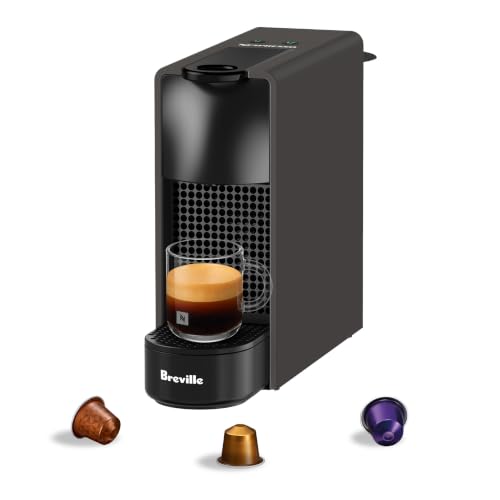
2. Nespresso Essenza Mini
A very compact capsule machine that makes espresso and lungo cups with a quick start. It suits small kitchens and quick mornings. Water heats quickly and capsules come in many varieties sold separately. Check the current listing for the water tank size and included items.
Suits: quick, no-fuss shots. Strengths: small size and fast heat up. Weaknesses: capsules are an ongoing cost. Skip it if you want to grind your own beans.
Best for beginners
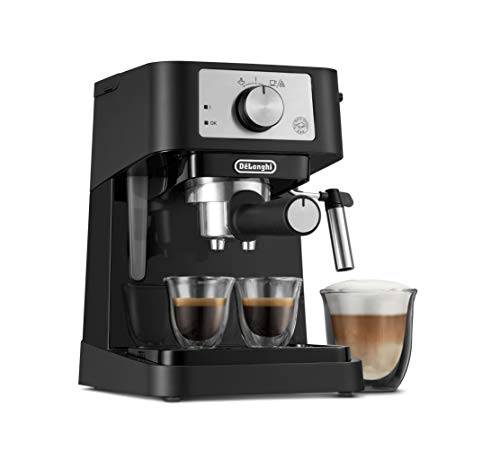
3. De’Longhi Stilosa EC260
A compact pump machine with a manual steam wand and a portafilter. It gives beginners a way into real espresso at a modest level. The portafilter on many models of this type is pressurized, which forgives uneven grinding. Check the listing for the water tank capacity and accessories.
Suits: beginners. Strengths: a real steam wand and small size. Weaknesses: its settings are basic. Skip it if you want a built-in grinder.
Best for small kitchens and milk drinks
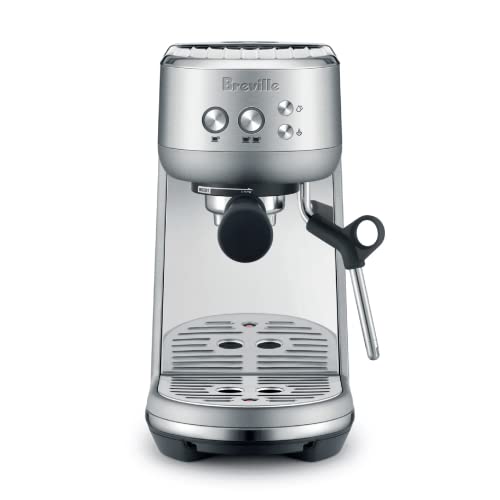
4. Breville Bambino
A compact pump machine known for a quick heat-up and a capable steam wand for its size. It is a popular choice for small kitchens. The small footprint helps in apartments, and the steam wand lets you texture milk for lattes. Check the listing for what is in the box.
Suits: small kitchens and milk drinks. Strengths: quick start and compact body. Weaknesses: it needs a separate grinder. Skip it if you want an all-in-one grinder machine.
Best for travelers
5. Wacaco Nanopresso
A small hand-pumped espresso maker that you fill with hot water and finely ground coffee. It is made for travel, camping and tiny kitchens. It packs away small and needs only hot water, so it is easy to use on the go. Check the listing for the cup capacity and accessories.
Suits: travelers. Strengths: portability and no electricity needed. Weaknesses: it takes effort and practice. Skip it if you want convenience.
View Wacaco Nanopresso on Amazon
Best for casual home use
6. Cuisinart EM-100 Programmable Espresso Maker
A pump machine with programmable shot volume and a steam wand. It is designed to give a simple route to cappuccinos and lattes at home.
Suits: casual home use. Strengths: simple programming. Weaknesses: build and shot quality may not match higher-end models. Skip it if you want precision control.
View Cuisinart EM-100 on Amazon
Care and Setup
- Descale the machine on the schedule given by the maker.
- Wash the moka pot by hand and dry it fully.
- Use fresh coffee and grind just before brewing.
- Rinse the portafilter and steam wand after use.
Mistakes to Avoid
- Packing a moka pot tight like an espresso basket.
- Using pre-ground coffee that is too coarse for a pump machine.
- Skipping descaling.
- Buying a machine without a plan for a grinder.
Which Brewing Method Fits Your Routine
The six makers here use four different methods, and each rewards a different habit. A stovetop moka pot is cheap, small and forgiving, and it makes a strong, concentrated cup with no electricity. A capsule machine is the fastest and cleanest: insert a capsule, press a button, rinse and go. A pump machine with a portafilter gives you real control over grind, dose and milk, but it asks for time, a grinder and practice. A hand-pumped travel press suits camping, small spaces and people who enjoy the ritual.
Be honest about your mornings. If you have five minutes and want one drink, a capsule machine or a moka pot is likely to be used daily. If you enjoy tinkering and want to make cappuccinos for guests, a pump machine pays off. If you travel often, a manual press may be a better second machine than a main one.
Think about who else will use it. A machine that needs several steps may sit idle if only one person in the house enjoys the process. Consider the number of drinks you make in a typical day, the types of drink and how much counter space you can spare. Matching the method to your routine matters more than any single specification.
Grinders, Grind Size and Fresh Beans
For anything beyond capsules, the grinder is as important as the machine. Espresso needs a fine, even grind, and uneven particles lead to weak, sour shots or bitter, slow ones. A burr grinder produces more even particles than a blade grinder, and a model with fine steps lets you adjust in small increments. If your budget is limited, putting some of it toward a decent grinder is often a better use than choosing a pricier machine.
Moka pots need a medium-fine grind, coarser than espresso but finer than drip. Do not tamp the grounds into the basket. Fill it level and leave it loose. Pump machines with pressurized baskets, common on entry-level models, tolerate less perfect grinding. Non-pressurized baskets give more control but are less forgiving.
Freshness matters. Coffee loses aroma after roasting and again after grinding. Buy whole beans in a quantity you will use within a few weeks, store them in an airtight container away from heat and light, and grind just before brewing. Check the roast date on the bag if one is printed. If shots taste flat, the beans may be stale. If they taste harsh, the grind may be too fine or the water too hot, so adjust one thing at a time.
Making Milk Drinks at Home
Lattes and cappuccinos need steamed milk, which means a steam wand. Wands vary in power and design. A strong wand heats and textures milk quickly, while a weaker one takes longer and may produce larger bubbles. If you only drink black espresso or Americanos, you can ignore this. If you love milk drinks, it should rank near the top of your list.
Learn the basics. Start with cold milk in a cold pitcher. Purge the wand to clear water, place the tip just under the surface to add air for a few seconds, then lower it to swirl and heat. Stop when the pitcher feels hot but still comfortable to hold. Wipe the wand right away and purge it again. Milk left on the wand bakes on and clogs the holes.
Capsule machines may not include a wand, and some offer a separate milk frother. Moka pots and travel presses have no steaming at all, so you would add a standalone frother or heat milk another way. If a listing claims automatic milk features, check what is included. Whole milk generally steams more easily than skim, and some plant milks are made for foaming, though results vary by product.
Descaling, Cleaning and Water Quality
Hard water leaves limescale inside heating parts and pipes. Over time, scale slows the flow, makes the machine noisy and reduces temperature accuracy. Follow the maker’s descaling schedule and use the descaler they recommend. Using filtered or softened water can reduce build-up, but very soft or distilled water may not suit every machine, so check the manual.
Clean after each use. Knock out the puck, rinse the portafilter and basket, wipe the group head and purge the steam wand. Run a blank shot through the group head to clear loose grounds. For capsule machines, empty the used capsule bin and wipe the drip tray. For a moka pot, wash with warm water, no strong detergents if the maker advises against them, and dry completely to avoid off flavors and corrosion.
Empty and clean the water tank regularly, and refill it with fresh water. Check seals and gaskets for wear, and replace them if they harden or leak. Backflushing, if your machine supports it, should follow the maker’s instructions only. Keep the manual, because maintenance steps differ between designs.
Running Costs and When to Upgrade
The purchase price is only part of the cost. Capsule machines have an ongoing cost in capsules, and the range is limited to what is sold for that system. Pump machines have the cost of beans, a grinder, a tamper, a milk pitcher and a descaler. Moka pots have a low ongoing cost but may need replacement gaskets and filters over the years. Portable presses need hot water and sometimes a kettle, plus attention to seals.
Sit down and add up what a typical month looks like. If you make several drinks a day, a bean-based system generally costs less per cup than capsules, but only if you use the machine regularly and the beans are fresh. If you drink one cup, the convenience of capsules may outweigh the difference.
Signs that it is time to upgrade include shots that vary despite consistent habits, a steam wand that no longer produces enough pressure, leaks that persist after replacing gaskets and parts that are no longer available. Before replacing, check whether descaling, a new gasket or a better grinder fixes the problem. If you outgrow the machine, you will know which features you want, such as stronger steam, more control or a faster heat-up.
Espresso Coffee Makers FAQ
Is moka pot coffee the same as espresso?
No. Moka pots do not reach the same pressure, so the cup is strong but different from pump espresso.
Do I need a grinder?
For pump machines, yes, a grinder makes a big difference. Capsule machines skip that step.
Can I use pre-ground coffee?
Yes in most cases, though freshly ground beans taste better. Pump machines need a fine grind, while moka pots need a medium-fine one.
Which is best for lattes?
A machine with a steam wand, like the Bambino or Stilosa, makes it easy to texture milk.
What grind size do I need for each type?
A pump machine needs a fine grind, a moka pot a medium-fine one and a capsule machine none at all. A travel press usually needs a fine grind similar to a pump machine. Check each maker's instructions.
What is the difference between pressurized and non-pressurized baskets?
A pressurized basket builds pressure by design and tolerates uneven grinds. A non-pressurized basket gives more control but needs a good grinder and careful technique.
How often should I descale?
Follow the maker's schedule. It depends on your water hardness and how often you brew. Hard water calls for more frequent descaling.
Can I use flavored or oily beans?
Some makers advise against very oily beans because they can clog grinders and parts. Check the manual for your grinder and machine before using them.
Why does my espresso taste sour or bitter?
Sour shots often come from a grind that is too coarse or too little coffee, while bitter shots often come from a grind that is too fine or water that is too hot. Change one variable at a time.
Is a moka pot safe on every stove?
Not always. Some pots are not suited to induction or to certain stovetops. Check the listing and manual for compatibility with your cooktop.
Do I need a tamper?
For a portafilter machine, a tamper helps you press the grounds evenly. Some machines include one, but check the box contents, since some come with a plastic tamper that is basic.
Pressure, Temperature and Why Bars Are Not the Whole Story
Espresso is defined by forcing hot water through finely ground coffee under pressure for a short time. Machine listings love to quote pressure in bars, and a figure like 15 bar looks impressive. In practice, the pump rating describes the maximum the pump can produce, while the pressure at the coffee is usually regulated lower. Nine bar is the commonly cited target for extraction at the puck. A higher pump number does not automatically mean better coffee, and it is not a reliable way to compare a Breville Bambino with a De’Longhi Stilosa or a Cuisinart EM-100.
Temperature stability matters at least as much. Water that is too hot extracts bitter, harsh flavors, and water that is too cool tastes sour and thin. Machines with a small thermoblock heat water quickly, which suits compact designs. Larger boilers hold temperature more steadily but take longer to warm up and cost more. For most home users, a consistent, repeatable routine will do more for taste than chasing a technical specification.
Pump, Steam and Lever Compared
- Pump machines: use an electric pump and a heating element. These are the most common home espresso machines and include the Bambino and Stilosa class.
- Steam-driven machines: older and cheaper designs that produce lower pressure and a different cup. They can be a rough approximation, closer to a strong coffee than true espresso.
- Manual lever machines: you supply the pressure by hand, as with the Wacaco Nanopresso, which suits travel more than daily use.
Capsules Versus Fresh Grounds
The Nespresso Essenza Mini represents the capsule approach: you insert a sealed pod, press a button and get a drink. The advantages are speed, consistency and almost no cleanup beyond emptying the used-capsule container. The trade-offs are that you are tied to a pod supply, you pay more per cup than buying whole beans, and your flavor choices depend on what the brand sells. Check whether you are comfortable with the recycling options in your area, since pods add small amounts of aluminum or plastic waste.
Fresh grounds require more effort. You grind beans, dose them into a basket, tamp or level them, and clean up afterward. In return you control the bean, grind, dose and extraction, which is the route to improving taste over time. If you want convenience first, capsules fit. If you want to learn the craft, a pump machine paired with a decent grinder gives you more room to grow. Neither is wrong, but pretending a capsule machine offers the same flexibility as a manual setup leads to disappointment.
Counter Space, Warm-Up and Daily Workflow
Picture a typical morning. A machine that heats in under a minute fits a rushed routine, while one that needs a longer warm-up may suit a more relaxed start. Compact designs free counter space but often have small water tanks, which means refilling more often. Consider where you will keep the grinder, tamper, knock box and milk pitcher, because the accessories take more room than the machine itself.
Workflow also includes cleanup. Some machines need a quick rinse and wipe after each use, while others require backflushing or purging of the steam wand. A moka pot, such as the Bialetti, is simple to disassemble and wash by hand, but it is not a pressure-driven espresso machine, and it needs attention on a stove. Ask yourself how many minutes you are willing to spend daily before choosing something that demands more than that.
Dialing In: What to Adjust and in What Order
Dialing in means adjusting variables until a shot tastes balanced. Change one thing at a time so you know what caused the difference.
- Dose: start with a consistent amount of coffee in the basket and keep it the same between shots.
- Grind size: if the shot runs too fast and tastes sour, grind finer. If it drips slowly and tastes bitter or harsh, grind coarser.
- Yield and time: measure the liquid in the cup and note the time. Many people aim for roughly twenty-five to thirty seconds, then adjust to taste.
- Temperature, if adjustable: small changes can shift acidity and bitterness, though most entry-level machines offer little control.
Write down what you tried. If your machine uses pressurized baskets, the dialing process is more forgiving but less informative, because the basket masks inconsistencies in grind and tamp. Moving to a non-pressurized basket gives clearer feedback and requires a decent grinder.
Fitting Espresso Into Everyday Life
Think about how many people drink coffee at home and when. A single drinker who wants one shot a day has different needs than a household making several milk drinks in the morning. Machines with smaller boilers recover more slowly between drinks, which matters when you are serving more than one person. Also consider whether you travel often, since a portable lever device or a stovetop pot fills gaps when a larger machine stays home.
Frequently Asked Questions
Does 15 bar pressure mean better espresso?
Not necessarily. The pump rating is a maximum, while extraction is usually regulated closer to nine bar at the coffee. Grind quality, water temperature, dose and bean freshness influence taste far more than the headline number. Treat bar ratings as a rough indication, not a quality score.
How long does an espresso machine take to warm up?
It varies by design. Machines with a thermoblock often heat in under a minute, while those with larger boilers can take several minutes to stabilize. Check the manual for guidance, and run a blank shot through the group head to preheat the portafilter and cup for steadier temperature.
How much coffee goes in a single espresso shot?
Basket sizes vary, but many single baskets hold roughly seven to ten grams and double baskets around fourteen to eighteen. Use the amount your basket and machine recommend, weigh it with a small scale if you can, and keep the dose the same between shots so you can adjust other variables.
Are coffee pods worth it compared with grinding beans?
Pods trade money for convenience. They are fast, consistent and tidy, but cost more per cup and limit your bean choices. Grinding beans takes more effort and a grinder, yet gives you control over flavor and usually lowers the price per drink. The right choice depends on how much time you want to spend.
Going Deeper: What This Guide Means by a Good Espresso Machine
This article was written for espresso-style coffee at home across very different methods, from moka pots and capsules to pump machines and travel presses. That focus shapes everything in it, and it is worth keeping in mind as you read the picks again, because an espresso maker that suits one household can be the wrong answer for another even when both are well made. The honest way to use a guide like this is to decide what your own morning coffee has to deliver, then judge each option against that, rather than against an abstract idea of the best. None of this requires special barista talent. It requires paying attention to the same few things, in the same order, until they become a morning habit.
Start with how often you will actually use it at home. An espresso maker used twice a day lives a different life from one used twice a month, and the features that matter change with that rhythm. Daily use rewards fast purging and wipe-downs, steady heat and gaskets you can swap without a workshop. Use an espresso maker only at weekends and forgiving operation matters more than finesse, since you will never build a daily user’s muscle memory. Admit which user you are today: many regretful buyers chose for a future enthusiast, then balked at a routine mornings could not carry.
Next, think about the whole system around the espresso maker, not the machine alone — grinder, beans, water and all. The coffee corner it sits in, the beans from a roaster whose roast dates you can see, bought little and often rather than in bulk, the water you use, and the time you genuinely have all shape the result as much as the headline machine does. A modest espresso setup used carefully will outperform an ambitious one used in a rush. As you compare espresso makers, ask what each demands of your wider setup, because that demand is part of the cost.
Comparing the Espresso Makers With Each Other, Not With Perfection
The six espresso makers here cover different users, so head-to-head reading is more useful than a ranking. Use the comparisons below as questions to carry back into the individual espresso maker reviews above. Where two picks seem close, the deciding factor is usually workflow: how the session starts, what you have to watch, and how much clearing up waits at the end. Those are the differences you will still notice in six months of mornings, long after first impressions have faded.
Set the Bialetti Moka Express beside the Nespresso Essenza Mini and ask what each assumes about you. The Bialetti Moka Express is the right kind of espresso maker when its way of working matches yours: the pace it sets in the morning, and the decisions it leaves in your hands. If its routine sounded like a small pleasure rather than another chore, that reaction is worth hearing. If it sounded like homework, believe that too, and look again at the Nespresso Essenza Mini, whose appeal may be precisely that it asks less of you when you have least to give before work. An espresso maker you use happily and often beats a theoretically finer one that gathers dust.
Set the Nespresso Essenza Mini beside the De’Longhi Stilosa EC260 and ask what each assumes about you. The Nespresso Essenza Mini is the right kind of espresso maker when its way of working matches yours: the pace it sets in the morning, and the decisions it leaves in your hands. If its routine sounded like a small pleasure rather than another chore, that reaction is worth hearing. If it sounded like homework, believe that too, and look again at the De’Longhi Stilosa EC260, whose appeal may be precisely that it asks less of you when you have least to give before work. An espresso maker you use happily and often beats a theoretically finer one that gathers dust.
Set the De’Longhi Stilosa EC260 beside the Breville Bambino and ask what each assumes about you. The De’Longhi Stilosa EC260 is the right kind of espresso maker when its way of working matches yours: the pace it sets in the morning, and the decisions it leaves in your hands. If its routine sounded like a small pleasure rather than another chore, that reaction is worth hearing. If it sounded like homework, believe that too, and look again at the Breville Bambino, whose appeal may be precisely that it asks less of you when you have least to give before work. An espresso maker you use happily and often beats a theoretically finer one that gathers dust.
Set the Breville Bambino beside the Wacaco Nanopresso and ask what each assumes about you. The Breville Bambino is the right kind of espresso maker when its way of working matches yours: the pace it sets in the morning, and the decisions it leaves in your hands. If its routine sounded like a small pleasure rather than another chore, that reaction is worth hearing. If it sounded like homework, believe that too, and look again at the Wacaco Nanopresso, whose appeal may be precisely that it asks less of you when you have least to give before work. An espresso maker you use happily and often beats a theoretically finer one that gathers dust.
Set the Wacaco Nanopresso beside the Cuisinart EM-100 Programmable Espresso Maker and ask what each assumes about you. The Wacaco Nanopresso is the right kind of espresso maker when its way of working matches yours: the pace it sets in the morning, and the decisions it leaves in your hands. If its routine sounded like a small pleasure rather than another chore, that reaction is worth hearing. If it sounded like homework, believe that too, and look again at the Cuisinart EM-100 Programmable Espresso Maker, whose appeal may be precisely that it asks less of you when you have least to give before work. An espresso maker you use happily and often beats a theoretically finer one that gathers dust.
Set the Cuisinart EM-100 Programmable Espresso Maker beside the Bialetti Moka Express and ask what each assumes about you. The Cuisinart EM-100 Programmable Espresso Maker is the right kind of espresso maker when its way of working matches yours: the pace it sets in the morning, and the decisions it leaves in your hands. If its routine sounded like a small pleasure rather than another chore, that reaction is worth hearing. If it sounded like homework, believe that too, and look again at the Bialetti Moka Express, whose appeal may be precisely that it asks less of you when you have least to give before work. An espresso maker you use happily and often beats a theoretically finer one that gathers dust.
One more comparison habit is worth adopting: compare the espresso makers at their worst, not their best. Every espresso maker here can produce a good result on a good day. What separates them is what happens on a tired weekday, with a new bag of beans, a distracted home barista and no time to start again. The pick whose failure mode is a slightly ordinary shot, rather than a wasted dose or a mess, is often the right one for a busy household. Read the honest-limitation notes in each review above with that rushed morning in mind, and the shortlist usually narrows itself.
A Careful Home Espresso Session, Step by Step
Technique advice is easy to give and hard to use in the abstract, so here is the espresso session broken into the order that experienced home users actually follow. You do not need to memorise any of it. The sequence feels fiddly twice, familiar the third time, automatic after that — and automatic routines repeat well. While you work, watch the stream slow and change colour, listen to the pump or the pot settle, and taste for balance rather than chasing a single number. Those senses, trained over a handful of espresso sessions, will tell you more than any single gadget or guess at the counter.
Work on choosing the method that matches the morning you actually have, not the one you imagine. Doing this deliberately, rather than roughly, is what makes the rest of the shot easy to judge. When a result disappoints you, a careful routine lets you name the step that drifted; without one, every session is a fresh mystery and improvement is mostly luck. Those extra moments earn shots you can repeat on purpose.
Work on grinding or preparing the coffee as fresh as the method allows. Doing this deliberately, rather than roughly, is what makes the rest of the shot easy to judge. When a result disappoints you, a careful routine lets you name the step that drifted; without one, every session is a fresh mystery and improvement is mostly luck. Those extra moments earn shots you can repeat on purpose.
Work on heating water with care, because every method on this list is sensitive to it. Doing this deliberately, rather than roughly, is what makes the rest of the shot easy to judge. When a result disappoints you, a careful routine lets you name the step that drifted; without one, every session is a fresh mystery and improvement is mostly luck. Those extra moments earn shots you can repeat on purpose.
Work on brewing and watching the extraction instead of leaving it to chance. Doing this deliberately, rather than roughly, is what makes the rest of the shot easy to judge. When a result disappoints you, a careful routine lets you name the step that drifted; without one, every session is a fresh mystery and improvement is mostly luck. Those extra moments earn shots you can repeat on purpose.
Work on tasting the cup plainly and adjusting one variable next time, not three. Doing this deliberately, rather than roughly, is what makes the rest of the shot easy to judge. When a result disappoints you, a careful routine lets you name the step that drifted; without one, every session is a fresh mystery and improvement is mostly luck. Those extra moments earn shots you can repeat on purpose.
Work on rinsing and drying the parts so tomorrow starts clean. Doing this deliberately, rather than roughly, is what makes the rest of the shot easy to judge. When a result disappoints you, a careful routine lets you name the step that drifted; without one, every session is a fresh mystery and improvement is mostly luck. Those extra moments earn shots you can repeat on purpose.
Finally, bring the espresso session to a proper close. Clear up while things are still easy to clean, note anything you changed and what it did, and leave the coffee corner ready for tomorrow. That note-taking habit separates people who improve steadily from people who plateau: the next shot starts from knowledge instead of a vague memory. Months of shot notes soon matter more than any manual, mapping your machine, beans and household’s favourite drinks.
Troubleshooting: When the Espresso Is Not What You Expected
Every owner of an espresso maker meets the same handful of disappointments. The good news: each espresso disappointment has a few likely causes, and ordered checking fixes most without buying anything. Touch one variable at a time, and give each change a fair chance before touching another. Two adjustments at once — say grind and dose — leave you knowing the shot changed but not why, and that is how owners chase their tails for weeks.
Consider coffee that tastes bitter from one method and weak from another. Before blaming the machine, check the basics in order: the freshness and quality of your coffee beans, the quantities you used, the temperatures involved, and whether everything was properly prepared and clean. Most disappointing shots trace to those four. If the basics are sound, change the single variable the reviews above connect most closely with this problem, and repeat the shot as identically as you can otherwise. If the same disappointing shot survives several attempts, try the manual’s troubleshooting pages or the maker’s support, notes ready.
Consider a capsule routine that is convenient but never quite satisfying. Before blaming the machine, check the basics in order: the freshness and quality of your coffee beans, the quantities you used, the temperatures involved, and whether everything was properly prepared and clean. Most disappointing shots trace to those four. If the basics are sound, change the single variable the reviews above connect most closely with this problem, and repeat the shot as identically as you can otherwise. If the same disappointing shot survives several attempts, try the manual’s troubleshooting pages or the maker’s support, notes ready.
Consider a moka pot that sputters and spits instead of flowing gently. Before blaming the machine, check the basics in order: the freshness and quality of your coffee beans, the quantities you used, the temperatures involved, and whether everything was properly prepared and clean. Most disappointing shots trace to those four. If the basics are sound, change the single variable the reviews above connect most closely with this problem, and repeat the shot as identically as you can otherwise. If the same disappointing shot survives several attempts, try the manual’s troubleshooting pages or the maker’s support, notes ready.
Consider espresso that changes character whenever the beans change. Before blaming the machine, check the basics in order: the freshness and quality of your coffee beans, the quantities you used, the temperatures involved, and whether everything was properly prepared and clean. Most disappointing shots trace to those four. If the basics are sound, change the single variable the reviews above connect most closely with this problem, and repeat the shot as identically as you can otherwise. If the same disappointing shot survives several attempts, try the manual’s troubleshooting pages or the maker’s support, notes ready.
Consider kit multiplying on the counter while the daily cup stays the same. Before blaming the machine, check the basics in order: the freshness and quality of your coffee beans, the quantities you used, the temperatures involved, and whether everything was properly prepared and clean. Most disappointing shots trace to those four. If the basics are sound, change the single variable the reviews above connect most closely with this problem, and repeat the shot as identically as you can otherwise. If the same disappointing shot survives several attempts, try the manual’s troubleshooting pages or the maker’s support, notes ready.
Ownership Over Months and Years of Mornings
The first week with a new espresso maker is the worst guide to owning it. Novelty hides small frictions that only a busy month will price honestly. Revisit your verdict after a season of ordinary daily use. Are you still reaching for it every single morning? Is descaling still a real routine, or has it faded to a rinse? Will pods, beans and descaler be easy to keep in stock? Espresso gear rewards little-and-often care: baskets, gaskets and wands cleaned in the moment outlast rescued ones.
Keep the manual, and read the maintenance pages once, ideally before you need them mid-morning. Makers write those pages from the espresso machines returned to them, so they map what goes wrong when care slips. Note which espresso parts are consumable, which you can replace yourself, and what the maker asks you not to open or soak. If a part will wear out, check it is available before it fails, not during the week you need your morning shot. A simple record of backflushes, descaling and part changes stops espresso maintenance becoming guesswork.
Before You Buy: A Final Round of Espresso Questions
Where will it live, exactly, in your morning routine? Measure the space, including the room above and in front of it, and think about heat, steam and splashes reaching whatever sits nearby. Who else will make coffee with it, and will its routine make sense to them without you standing over it? What does it need that you do not currently own — a grinder, a tamper, a scale — and are you content to buy, store and clean those extras? What does the maker say about cleaning and servicing the machine, and does that schedule fit your patience? None of these questions is glamorous, which is why espresso buyers should ask them before money changes hands.
Then re-read the two or three machine reviews above that survived your shortlisting, and look for the honest limitation in each. Every machine in this guide has one, stated plainly. Choose the machine limitation you can live with, not the pick that pretends to have none. That shift prevents most espresso buyer’s remorse, which usually comes not from a product being bad but from its particular weakness landing on the thing you cared about most. The right espresso maker is the one whose weaknesses fall where you will never notice them.
More Questions Espresso Readers Ask
Is moka pot coffee a fair substitute for espresso?
No universal number exists — moka, capsule and pump machines live differently — yet owners agree. Start from the basics emphasised throughout this guide: fresh, suitable coffee beans, a clean and properly prepared machine, and a routine you follow the same way each time. Most disappointing shots trace back to one of those basics, not the machine. Give any change a few espresso sessions before judging it; one odd shot misleads, while patterns are evidence worth trusting.
Can a capsule machine make a convincing milk drink?
No universal number exists — moka, capsule and pump machines live differently — yet owners agree. Start from the basics emphasised throughout this guide: fresh, suitable coffee beans, a clean and properly prepared machine, and a routine you follow the same way each time. Most disappointing shots trace back to one of those basics, not the machine. Give any change a few espresso sessions before judging it; one odd shot misleads, while patterns are evidence worth trusting.
Which method on this list travels best?
No universal number exists — moka, capsule and pump machines live differently — yet owners agree. Start from the basics emphasised throughout this guide: fresh, suitable coffee beans, a clean and properly prepared machine, and a routine you follow the same way each time. Most disappointing shots trace back to one of those basics, not the machine. Give any change a few espresso sessions before judging it; one odd shot misleads, while patterns are evidence worth trusting.
How much does the grinder matter for the simpler methods here?
No universal number exists — moka, capsule and pump machines live differently — yet owners agree. Start from the basics emphasised throughout this guide: fresh, suitable coffee beans, a clean and properly prepared machine, and a routine you follow the same way each time. Most disappointing shots trace back to one of those basics, not the machine. Give any change a few espresso sessions before judging it; one odd shot misleads, while patterns are evidence worth trusting.
What is the easiest method here to keep clean?
No universal number exists — moka, capsule and pump machines live differently — yet owners agree. Start from the basics emphasised throughout this guide: fresh, suitable coffee beans, a clean and properly prepared machine, and a routine you follow the same way each time. Most disappointing shots trace back to one of those basics, not the machine. Give any change a few espresso sessions before judging it; one odd shot misleads, while patterns are evidence worth trusting.
When does it make sense to move from capsules to beans?
No universal number exists — moka, capsule and pump machines live differently — yet owners agree. Start from the basics emphasised throughout this guide: fresh, suitable coffee beans, a clean and properly prepared machine, and a routine you follow the same way each time. Most disappointing shots trace back to one of those basics, not the machine. Give any change a few espresso sessions before judging it; one odd shot misleads, while patterns are evidence worth trusting.
The Short Version
For a stovetop classic, the Bialetti. For capsules, the Nespresso Essenza Mini. For a starter pump machine, the Stilosa. For quick milk drinks, the Bambino. For travel, the Nanopresso. For programmable shots, the Cuisinart.