A small apartment kitchen calls for an espresso machine that is slim, lightweight and easy to store. Compact pump machines, capsule makers and portable presses all fit in tight spaces, though they trade some features for size.
The six picks below range from slim pump machines to portable presses. We have not used these products ourselves, so confirm every detail on the current listing before you buy. Measure your counter and cabinet space, and remember a grinder adds to the footprint.
As an Amazon Associate we earn from qualifying purchases. Links below are affiliate links, and they do not change the product information we give.
What to Look For
| Feature | Why it matters |
|---|---|
| Width | Slim bodies fit narrow counters |
| Weight | Light machines are easier to move and store |
| Tank size | Smaller tanks mean more refills |
| Grinder | A separate grinder adds to the footprint |
In this guide
Specs at a Glance
| Machine | Type | Size | Notes |
|---|---|---|---|
| Breville Bambino | Semi-automatic | Compact body | Fast heat-up and small size |
| De’Longhi Dedica EC685 | Semi-automatic | Very slim body | Slim width and a stylish body |
| Nespresso Essenza Mini | Capsule machine | Very compact | Very small size and no grinder |
| Wacaco Minipresso GR | Portable manual press | Pocket size | Fits in a drawer |
| Lelit Anna | Semi-automatic with PID | Compact body | Compact build and temperature control |
| Staresso Mini | Portable manual press | Pocket size | Small size and no power needed |
The 6 Best Espresso Machines for Small Apartments
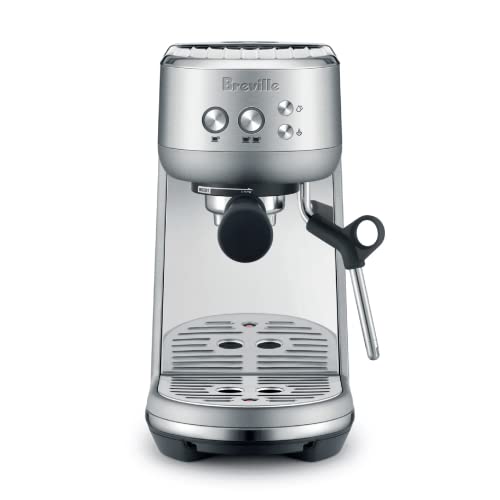
Top pickBest for apartments with milk drinks
1. Breville Bambino
A compact pump machine with a fast heat-up and a capable steam wand. It is a favorite for small kitchens because it makes real espresso and milk drinks in a small body. A grinder is needed. Check the listing for the size. Its quick heat-up means you can make a drink in a short morning routine without a long wait.
Suits: apartments with milk drinks. Strengths: fast heat-up and small size. Weaknesses: you need a separate grinder. Skip it if you want an all-in-one.
Best for narrow counters
2. De’Longhi Dedica EC685
A very slim stainless pump machine with a manual steam wand. It fits narrow counters. A grinder is needed. Check the listing for the dimensions and portafilter details. The narrow shape means it tucks beside a kettle without taking over the counter.
Suits: narrow counters. Strengths: slim width and a stylish body. Weaknesses: steaming power is modest. Skip it if you want programmable shots.
View De’Longhi Dedica EC685 on Amazon
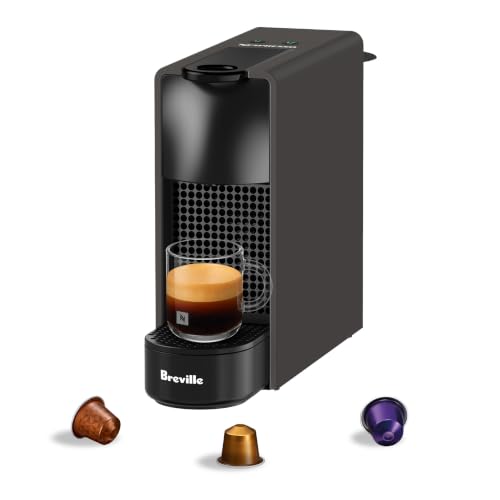
Best for tiny kitchens
3. Nespresso Essenza Mini
A very compact capsule machine with a quick heat-up. It suits tiny kitchens and needs no grinder. Capsules are sold separately. Check the listing for the tank size. It heats quickly and has a short brew cycle, so you can have a cup in moments.
Suits: tiny kitchens. Strengths: very small size and no grinder. Weaknesses: capsules add cost. Skip it if you want to use your own beans.
Best for tiny spaces and travel
4. Wacaco Minipresso GR
A pocket-size manual espresso maker that uses ground coffee. It needs only hot water and fits in a drawer. Check the listing for the cup size and what is in the kit. It is simple to rinse, though you will need to heat water separately.
Suits: tiny spaces and travel. Strengths: fits in a drawer. Weaknesses: it takes effort and gives a small shot. Skip it if you want milk drinks.
View Wacaco Minipresso GR on Amazon
Best for small-space enthusiasts
5. Lelit Anna
A compact Italian pump machine with a stainless body and a PID controller. It is aimed at users who want a proper machine in a small footprint. A grinder is needed. Check the listing for the version. The small footprint comes with a metal body that feels solid, and the PID helps keep brew temperature steady.
Suits: small-space enthusiasts. Strengths: compact build and temperature control. Weaknesses: you need a separate grinder. Skip it if you want an all-in-one.
Best for tiny kitchens and travel
6. Staresso Mini Portable Espresso Maker
A small manual espresso maker that works with hot water and ground coffee. It stores easily in an apartment. Check the listing for the cup size and any extra pieces. It rinses clean in moments, and you only need hot water to make a cup.
Suits: tiny kitchens and travel. Strengths: small size and no power needed. Weaknesses: results take practice. Skip it if you want a steam wand.
View Staresso Mini Portable Espresso Maker on Amazon
Care and Setup
- Store the machine away from steam and splashes.
- Descale on the maker’s schedule.
- Dry portable parts fully before storing.
- Keep beans in an airtight container.
Mistakes to Avoid
- Buying a machine and forgetting the grinder.
- Overlooking cabinet clearance for the tank.
- Using hard water without descaling.
- Choosing a portable press when you want milk drinks.
Measuring Your Real Space
In a small apartment, the footprint printed on a listing is only part of the story. What matters is the total space a coffee routine occupies, including the clearance the machine needs to be used. Start by marking out the spot with tape and checking each dimension before you buy.
Things to measure and check:
- Width and depth on the counter, with a gap on each side for steam and splashes.
- Height under cabinets, especially for machines whose tank lifts out from the top or whose lid opens upward.
- Portafilter swing: the handle sticks out to the front and may need extra depth.
- Cup clearance: the gap between the spout and drip tray must fit your cups, and tall mugs need more room.
- Tank access: if the tank is at the back or side, make sure you can still remove it.
- Cord and outlet position, since a short cord may force a layout you do not like.
Remember what else needs a home: a grinder, beans, a milk jug, a scale, cleaning supplies. A tiny machine paired with a large grinder may take up more room than a slightly bigger machine with a built-in grinder. Count the total, not just the headline item. If your counter is very limited, think about a machine you can bring out and put away easily, and check that it is light enough for you to carry.
Storage and Daily Setup Routines
When space is scarce, how often you set up and pack away becomes a big part of the experience. A machine that lives permanently on the counter should be easy to wipe around and look acceptable in the room. One that goes into a cupboard needs to be light, stable and quick to reassemble, or it will stay in the cupboard.
Think through a typical morning:
- Where do you fill the tank, and is it near the sink?
- Where do you put the used grounds, and is there a bin close by?
- Where do you rest the hot portafilter or steam wand tip after use?
- How do you dry the parts, and where do you put them while they dry?
Portable manual makers and capsule machines have fewer parts, which makes them easier to store, but each has its own routine, such as heating water or buying capsules. Slim pump machines give you more control but leave you with more to clean. A tray or a small cart with a lip can corral your coffee gear and keep the counter clear when you are done. Avoid storing a machine over a stove or next to a sink where steam and splashes can reach it, and always empty and dry water containers before packing up.
Noise, Heat and Shared Walls
Apartment living brings neighbors, sleeping partners and thin walls, so the sound of a coffee routine matters. Pumps hum, grinders can be loud, steam hisses and knocking out a puck can thump on the counter. If you wake early, think about which part of the routine makes the most noise and whether you can adjust it.
Ways to reduce noise:
- Place the machine and grinder on a soft mat so vibrations do not carry into the counter and cabinets.
- Use a knock box with a padded bar or a bin with a soft liner instead of tapping on a hard surface.
- Check the listing for any information on pump or grinder noise, and treat it as a guide rather than a guarantee.
- Consider a manual maker if you want almost no machine noise, as these have no pump.
Heat and moisture also add up in a small kitchen. Steam from a wand can leave moisture on nearby cabinets, so aim it away from walls. A machine that stays hot for long periods adds warmth to a small room. Look for auto-shutoff features and turn the machine off when you are done. If your apartment shares a circuit among appliances, avoid running a kettle, a toaster and an espresso machine together, and follow the manual’s guidance about using a wall outlet rather than a power strip.
Capsule, Pump or Portable for Tight Spaces
Each compact format has strengths and compromises. Capsule machines are the smallest plug-in option for many people. They need no grinder or tamper, heat quickly and are easy to clean, but they limit your coffee to compatible capsules and create ongoing purchases and waste. They suit people who value speed and simplicity above all.
Compact pump machines with a portafilter give you the real espresso workflow, including the use of fresh ground coffee and a steam wand for milk. They need a grinder, which adds to the space and budget, and they require practice. They suit people who want better coffee and are willing to learn.
Portable manual makers are the tiniest option. They use hot water you heat separately and your own muscle to build pressure. They take almost no space and need no electricity, but they produce small servings, require effort and do not steam milk.
- Choose capsules if convenience and a tiny footprint outweigh coffee choice.
- Choose a compact pump machine if you drink milk drinks or want to grow your skills.
- Choose a portable maker if you have almost no space, travel often, or want a backup.
Whichever you choose, read the listing for what is included, because accessories such as capsules, a grinder or a kettle can change the total space and cost.
Making a Small Setup Feel Complete
Small-space coffee does not have to mean compromised coffee. A few smart choices can bring a compact setup close to a full home bar. Start with the beans: store them in an airtight container away from heat and light, and buy amounts you will use within a few weeks. Fresh beans matter more than machine size.
For grinders, compact hand grinders can fit in a drawer and take little space, though they take effort and time. Small electric burr grinders are faster but need counter room. Choose the one that matches your tolerance for effort.
- Use a small scale with a timer to keep shots consistent.
- Choose a milk jug that fits your drawer or sits on a shelf.
- Use a compact tray under the machine to catch drips and make wiping easy.
- Keep a microfiber cloth near the machine for the steam wand and counter.
- Descale on schedule, and use water suited to your machine.
If you notice the setup is getting crowded, review what you actually use. Drop items you rarely touch, and keep the daily essentials within reach. A tidy routine is more likely to last than a perfect one, and a compact machine you use every day is better than a bigger one that you avoid.
Espresso Machines for Small Apartments FAQ
What is the smallest espresso machine?
Portable manual presses and capsule machines are the smallest. Check each listing for dimensions.
Do I need a grinder for a small apartment?
For pump machines, a grinder helps a lot. Capsule machines skip that step.
Where should I store the machine?
Keep it on a dry shelf or counter away from the sink, and empty the tank before storing it for long periods.
Is a slim pump machine good enough?
For most home users, yes, though steam power may be modest.
Can I use a small espresso machine on a narrow shelf?
Only if the shelf supports the weight, has enough depth for the machine and portafilter, and allows steam to escape. Check the listing for dimensions and keep clear of walls and cabinets.
Are capsule machines real espresso?
They use pressure to push hot water through ground coffee in a capsule, which is similar in principle. The result differs from a portafilter machine in control and flavor, so decide based on convenience and taste.
Is a hand grinder practical for daily use?
Many people use one every day. It saves space and is quiet, but it takes time and effort, especially for the fine grind needed for espresso. Consider your morning schedule.
Will a small machine make milk drinks?
Some compact pump machines have a steam wand, and some capsule machines have milk systems. Portable manual makers do not steam milk, so pair them with a separate frother if you want lattes.
How do I keep a small machine from tipping?
Place it on a flat, stable surface and keep cords out of the way. Lightweight machines can move when you lock in the portafilter, so hold the base or use a non-slip mat.
What should I do about limescale in a small machine?
Use suitable water and descale on the maker's schedule. Small machines with narrow passages can clog sooner in hard water.
Is it safe to leave a small machine plugged in?
Follow the manual. Many models have auto shutoff, but unplugging when you leave for long periods is a sensible habit.
Budgeting for the Whole Setup, Not Just the Machine
The price on a machine listing is only part of the cost of making espresso at home. A pump machine needs a way to grind beans, and a good grinder can cost as much as the machine itself. You will also need a tamper, a scale or at least a dosing cup, a knock box or a small bin, a milk pitcher if you plan to steam, and cleaning supplies. Capsule machines skip the grinder, but capsules cost more per cup over time, and portable presses need hot water from a kettle.
It helps to compare setups at the level of the whole routine. Add the machine, the grinder or capsules, the accessories and a realistic monthly spend on coffee. Then decide how much you are willing to pay up front and how much you would rather pay per cup. For some small-apartment dwellers, a capsule machine is the cheapest path to a convenient morning drink. For others who plan to make several drinks a day, a slim pump machine and a hand grinder repay the extra setup cost.
- Pump machine: machine, grinder, tamper, scale, pitcher and cleaning tablets.
- Capsule machine: machine and a steady supply of compatible capsules.
- Portable press: the device, a kettle and fresh ground coffee.
Keep in mind that this guide makes no claims about particular prices, and costs change. Compare listings at the time you buy.
Outlets, Circuits and Older Wiring
Compact machines still draw real power when they heat. Espresso machines with heating elements and steam wands can pull a significant share of what a household circuit can supply, and older apartments sometimes have circuits that serve several rooms. If your breaker trips when the kettle and microwave run at the same time, an espresso machine on that circuit may do the same. Check the wattage on the listing and look at what else shares the outlet.
Plug the machine straight into a wall outlet if you can. Power strips and thin extension cords are a poor match for a high-draw appliance, and many manuals warn against them. If your counter has only one outlet, plan around it: for instance, run the machine and the kettle at different times, or choose a machine with a lower wattage rating. Cord length matters in tight kitchens, since a short cord may limit where the machine can sit.
If you are unsure about your wiring, ask your landlord or a licensed electrician. This is not a place for guesses, because overloaded circuits can be a safety risk, and a tripping breaker is a signal to stop and investigate.
Renting, Moving and Resale Considerations
Many small-space buyers rent, and that affects what makes sense to buy. A heavy machine is a nuisance on moving day, so consider its weight and whether the original box and packing material fit in your storage. A water tank must be emptied before a move, and a machine should be drained so that no water freezes or leaks in transit. Portable presses, by contrast, slip into a bag.
Think about the kitchen you may have next. A machine sized for a narrow shelf will fit most future kitchens, while a larger one may not. Resale also matters for some buyers. Well-known semi-automatic machines often retain demand in the used market, while capsule machines are cheap enough that many people simply replace them. If you buy secondhand, ask about the descaling history, check the gasket and the group head for wear, and run water through it to look for leaks.
Also check for rules in your lease or building. Some buildings limit certain appliances, and you may want to confirm that the counter you plan to use is heat-tolerant, since steam and hot surfaces can mark laminate.
Beans, Storage and Staying Fresh in a Small Space
Coffee quality depends on the beans, and a small apartment affects how you store them. Whole beans stay fresher than pre-ground, and an airtight container kept in a cool, dark cupboard slows staleness. The refrigerator and freezer are debated, since moisture and odors can reach the beans, so avoid leaving an opened bag in the fridge door. Buy amounts you can finish in a few weeks rather than stocking up on a large bag that will go stale.
Roast date, grind size and dose all affect the shot, and small machines can be sensitive to them. A machine with pressurized baskets is more forgiving of a mismatched grind, while a non-pressurized basket asks for a finer, more precise one. If you do not own a grinder, ask a local roaster to grind to the setting that suits your machine, and use that coffee within days. Decaf and flavored coffee should be kept separate, since oils and aromas can transfer.
Finally, give the supplies a home. A small tray or box that holds the tamper, scale, cloth and cleaning tablets keeps your counter clear and makes it easy to put everything away. A routine that takes two minutes to set up and two to put away is more likely to survive a busy week.
Related guides
Frequently Asked Questions
How much does a complete small-apartment espresso setup cost?
It depends on the route. A pump machine needs a grinder, tamper and scale on top of the machine, while a capsule machine needs only ongoing capsules, and a portable press needs a kettle. Add up the whole routine and compare current listings before deciding.
Can an espresso machine trip my breaker in an older apartment?
It can if the circuit also serves a kettle, microwave or other heavy loads. Check the wattage on the listing, plug directly into the wall and avoid thin extension cords. If breakers trip, stop and ask your landlord or an electrician.
How should I store coffee beans in a small kitchen?
Keep whole beans in an airtight container in a cool, dark cupboard, away from the stove and sunlight. Buy only what you can use in a few weeks. Avoid leaving opened bags in a fridge door, where moisture and odors can reach them.
What should I do with my espresso machine before moving?
Empty the water tank and drain the machine as the manual describes, dry the parts, and pack it in its original box if you kept it. Check the manual for transport advice, especially if you are moving in cold weather.
Going Deeper: What Really Matters When Choosing Espresso machines for small apartments
The first part of this guide gave you the shortlist. This extended section slows the decision down, because espresso machines for small apartments reward buyers who think past the headline features and into the daily reality of owning and using them. None of the criteria below appears in large print on a product box, yet together they decide whether a purchase still feels right a year from now. Work through them with your own kitchen, household and habits in view — the right answer is personal, and these are the questions that reveal it.
Measure the space you actually have
Apartment counters are shared with everything else in life, so measure more than the gap the machine will sit in. Note the depth from the wall to the counter edge, the clearance under wall cabinets, and the room needed to open a lid, lift a water tank or swing a portafilter handle. Then add working room: a knock box, a small grinder or a milk pitcher needs somewhere to live while you make a drink. A machine that technically fits but leaves no room to work will annoy you daily, while a slightly simpler machine with breathing room becomes part of the routine.
Noise is a neighbourly specification
In a small apartment, pump vibration, grinder noise and steam all travel — through thin walls, into a bedroom, and down to the neighbours below. Think about when you make coffee. If it is early and others are asleep, a capsule machine or a hand-powered option changes the social maths completely compared with a pump machine and a separate grinder. Rubber feet, a solid counter and a mat under the machine reduce vibration more than people expect. Choosing with your building in mind is not a compromise; it is what makes the habit sustainable.
Storage decides what you will really use
Every accessory you buy needs a home within arm’s reach of the machine, or it will migrate to a drawer and stop being used. In a small apartment, favour setups whose extras are few and stackable: a tamper that lives on the machine, filters that fit in a single drawer, cups stored above rather than beside. Portable machines earn their place here because they can be put away entirely between uses. Before buying, walk the storage you plan to use and be honest about what is already in it. The best small setup is the one that sets up and clears away in under a minute.
Heat, steam and ventilation
Espresso machines release steam and heat into rooms that may already run warm, and in a small apartment that moisture has nowhere to go. Avoid tucking a machine into a closed corner where steam condenses on cabinets, and keep it away from anything that steam could damage. A spot near a window or under an extractor makes daily use more pleasant and protects your cupboards over time. This sounds minor until a summer morning with the steam wand running shows you exactly how much moisture a small kitchen can hold.
How the Picks in This Guide Compare in Daily Use
The reviews above introduce each option on its own terms. This section steps back and compares them as things you will live with, because the differences that matter most — effort, forgiveness, maintenance, fit with your household — only appear in daily use. Read it with your own routine in mind, and let the picks sort themselves against that routine rather than against each other in the abstract.
Consider Breville Bambino again with daily life in mind rather than first impressions. The description above sets out what it is and who it suits; the living-with-it question is how its strengths and its stated trade-off feel after a month of ordinary use. If its strength matches the thing you do most often, the trade-off will fade into the background. If its strength serves an occasional need while its weakness taxes a daily one, the honeymoon will be short. That simple projection — strength against routine, weakness against routine — is the most reliable comparison tool in this whole guide.
With De’Longhi Dedica EC685, the detail worth re-reading is the limitation named in its review, because limitations are where ownership is actually decided. Every pick here does its main job well; they differ in what they ask of you in return — space, patience, cleaning attention, or a narrower set of drinks. Ask whether the specific thing it asks is a thing you give easily. A demand that fits your habits is barely a cost. A demand that fights them is a daily tax, and daily taxes, not headline features, are what make people stop using a product they once researched carefully.
Place Nespresso Essenza Mini in the context of the other picks rather than judging it alone. This guide deliberately spans different approaches to the same job, so each option defines the others: the convenient ones show what the hands-on ones ask you to give up, and the hands-on ones show what the convenient ones cannot do. If you find yourself torn between this pick and another, name the single difference that separates them and imagine living with that difference for a year. Decisions made on one honest difference age better than decisions made on a blur of features.
Think about Wacaco Minipresso GR in the hands of the other people in your household, not only in yours. A product that only its buyer can operate becomes a service that person must provide; a product others can use confidently becomes part of the household. If your household will share it, weight clarity and forgiveness heavily. If it is truly yours alone — your hobby, your ritual, your quiet morning — weight pleasure and control instead. Neither weighting is wrong, but choosing the wrong one for your situation is the most common reason a well-reviewed product disappoints a perfectly sensible buyer.
For Lelit Anna, imagine the second year rather than the second week. What wears, what needs cleaning, what needs replacing, and how available are the parts and the knowledge to do it? Products in this guide were chosen to be keepable — standard sizes, documented care, designs that can be maintained rather than discarded. Still, the ownership stories differ, and the pick whose maintenance rhythm matches your temperament will feel cheaper and better over time than a rival whose care you resent. Long-term fit is a feature; read for it between the lines of each review.
Finally, hold Staresso Mini Portable Espresso Maker against the simplest test of all: does it remove a friction you actually feel, or add a capability you only imagine using? Both can justify a purchase, but they justify different ones. Friction-removers pay you back daily and are almost never regretted. Capability-adders pay you back when the imagined occasion arrives — so be honest about how often it will. Running every pick through that test, in the order they appear above, usually leaves one option standing quietly at the end. That quiet one, more often than not, is the right purchase.
A Closer Look at the Details That Decide Satisfaction
The real skill in a small apartment is building a coffee corner that disappears. Think in layers: the machine itself, the things you touch every day, and the things you touch weekly. Daily items — cups, beans, a cloth — should live in the smallest possible footprint, ideally on a single tray that can move as one piece when you need the counter for cooking. Weekly items, like descaling supplies and spare filters, can live in a cupboard. When everything has a layer, making coffee feels like opening a small, well-organised station rather than unpacking a project.
Renters have an extra consideration: nothing in a good small setup should require drilling, plumbing or permanent changes. All of the approaches in this guide work from a standard outlet and a removable tank, which keeps landlords happy and deposits safe. If you move often, weight and packability start to matter too. A machine you can carry in one trip down the stairs, with its accessories in a single box, will survive moves that a sprawling setup will not. Apartment life changes; a flexible coffee setup changes with it.
Shared living adds a negotiation layer. A machine that heats quickly, cleans up after itself and does not monopolise the counter at breakfast earns goodwill from flatmates. Agree on the basics early: whose beans are whose, who rinses what, and where the used pucks or capsules go. The machines in this guide were chosen partly because none of them demands a full counter takeover, which makes that conversation easy. The best apartment machine is partly a social object, and treating it that way prevents the small resentments that kill shared routines.
Finally, plan for the morning you are late. A small setup should have a fastest possible mode: pre-measured doses, a machine that is quick to heat, a cup that lives in the same place. Practise that rushed version once while you are not rushed, and simplify anything that slows it down. In a small apartment the difference between a coffee habit that survives busy weeks and one that collapses is rarely the machine — it is whether the routine still works at half speed, half awake, with one eye on the clock.
A Practical Routine: From Cold Machine to a Drink You Are Proud Of
Begin before the machine: fresh beans, a clean milk path or wand, and water you would happily drink on its own. Fill and check the tank, empty the drip tray if it is close, and switch the machine on early enough for it to be genuinely ready rather than merely awake. While it warms, prepare your dose and your cup. This unhurried front end is not ceremony — it removes every small scramble that later masquerades as a bad drink. Espresso punishes rushing at exactly the moment your hands are busiest, so the routine’s job is to make the busy moment the only thing you are doing.
During the drink itself, work in the same order every time. Consistency in sequence builds consistency in the cup, because variables stop changing accidentally. Dose, distribute and tamp the same way; start the shot and the milk in the same relationship; pour and serve immediately rather than letting the drink sit while you tidy. Tidying is part of the routine too, but it comes after serving: knock out the puck, wipe and purge the steam wand or run the milk rinse, rinse the pitcher, and give the drip area a quick wipe. Two minutes of reset now prevents the residue that would otherwise flavour tomorrow’s first drink.
Once a week, give the machine its slightly deeper care: wash removable parts in hot soapy water, clean the group and shower screen as the manual describes, wipe seals and surfaces, and check the water filter’s age. Once a month — or on the machine’s own prompting — deal with scale according to your water hardness. Keep the supplies for these jobs together in one place so the routine has no friction. Machines rarely fail from use; they decline from skipped small care compounding quietly. A written rhythm, kept, is the cheapest performance upgrade in this entire guide.
Troubleshooting the Drinks That Disappoint
When a shot tastes sour and thin, think under-extraction: the water rushed through, too cool or too coarse a bed, leaving the coffee’s sweetness behind. When it tastes bitter and hollow, think over-extraction: too fine, too hot or too long, pulling the harsh compounds out. These two poles organise nearly all espresso troubleshooting. Adjust one variable a step at a time — grind first, then dose or ratio, then temperature habits like warm-up — and taste again. Random changes feel productive and teach nothing; single changes feel slow and teach everything, which is why experienced home baristas keep notes even when their drinks are already good.
Inconsistent drinks with no change in recipe usually trace to preparation or cleanliness: an unevenly distributed bed, a tilted tamp, stale beans from a bag left open, or a group and basket filmed with old coffee oils. Before adjusting any setting, clean the coffee path and make one careful drink with fresh beans and your most deliberate technique. That diagnostic drink separates machine problems from habit problems, and most of the time it is the habits. This is good news disguised as blame: habits are free to fix, and fixing them improves every future drink on any machine you ever own.
Milk troubles follow their own short list. Foam that collapses points to milk that was too hot, too old or contaminated by a dirty wand or carafe. Foam that will not form points to air not being introduced, a blocked wand tip or intake, or milk whose proteins have faded with age. Scorched flavours mean the milk went too far; flat flavours mean it stopped too soon or the espresso beneath it was weak. Work the list in order — fresh cold milk, clean equipment, correct temperature — before suspecting the machine. Nine milk problems out of ten are solved by those three checks, in that order, at no cost.
Matching the Setup to the Household
For the solo drinker, the virtues are speed and simplicity: a machine that heats quickly, wastes little milk and cleans in moments keeps the habit alive on workdays. For a couple with different tastes, profiles and flexibility matter more — one machine must make a strong small drink and a large milky one without either person compromising. For families, capacity and forgiveness dominate: tanks and carafes sized for a queue, systems that tolerate interruption, and cleaning that does not depend on one conscientious person. Read the picks through your household’s lens, because the same machine can be perfect for one kitchen and wrong for the one next door.
Entertainers should think in rounds. Making drinks for six guests tests heat recovery, milk capacity and your own workflow more than any weekday morning. Machines that hold temperature across back-to-back drinks, and milk systems that do not need long rests, turn hosting from a performance into a pleasure. If you entertain rarely, do not buy for the party — buy for the weekday and accept a slower party pace. If weekends at your house mean a queue of friends with cups, weight the recovery and capacity details in the pick descriptions heavily. They are written for exactly that queue.
Finally, consider the household’s future. Coffee habits evolve: children become teenagers who want hot chocolate from the milk system, a partner discovers flat whites, your own taste migrates from cappuccino to straight espresso. A machine with a little headroom — a broader menu, a wand alongside automation, a standard portafilter — adapts as tastes move. Buying exactly for today’s drink is efficient; buying with one step of headroom is wise. The picks in this guide were chosen partly for that adaptability, so favour the one whose strengths overlap not just your current favourite, but the drink you suspect you are growing toward.
More Questions Worth Asking Before You Decide
Where is the best place to put an espresso machine in a small apartment?
Choose the spot you walk past naturally in the morning, with a water source nearby and enough clearance to work. A section of counter near the sink is usually best because filling and rinsing happen constantly. Avoid the far end of a narrow counter where the machine blocks drawers, and avoid anywhere steam will rise directly into a closed cabinet. If counter space is truly scarce, a sturdy shelf or a small rolling cart can work, provided it does not wobble when you lock in a portafilter.
Can a small machine share a circuit with other appliances?
In most apartments, yes, as long as you avoid running several high-draw appliances on the same circuit at the same moment. A kettle and an espresso machine heating together can trip a breaker in older buildings. The simple habit is sequencing: heat the machine while you do other tasks, and avoid boiling a kettle on the same run of outlets at the same time. If breakers trip repeatedly, move one appliance to a different circuit rather than working around it with extension leads.
How do I stop coffee smells and mess taking over a small space?
Work clean in small steps: knock out the puck straight away, wipe the machine and counter as part of making the drink, and store beans in a sealed container rather than an open bag. A small lidded bin near the machine catches grounds, capsules and paper without a trip across the room. Ventilate while you make coffee if steam builds up. In a small apartment, tidiness is not fussiness — it is what keeps the coffee corner pleasant for everyone who shares the space.
The Short Version
For milk drinks, the Breville Bambino. For a slim body, the Dedica. For capsules, the Essenza Mini. For pocket size, the Minipresso. For a compact PID machine, the Lelit Anna. For portability, the Staresso Mini.


