An insulated tumbler set gives a household or office matching cups that keep cold drinks icy and hot drinks warm. Most use double-wall construction, either in stainless steel with a vacuum layer or in durable plastic with an air gap. Buying together makes it easy to give everyone their own cup. Look for sizes and lids that suit how you actually drink, because a cup that stays in a cabinet saves nobody any effort.
The six picks below include stainless steel and double-wall plastic options that are commonly sold in packs or easy to order in multiples. We have not used these tumblers ourselves, so please confirm the pack count, size and lid style on the current listing before you buy.
As an Amazon Associate we earn from qualifying purchases. Links below are affiliate links, and they do not change the product information we give.
What to Look For
| Feature | Why it matters |
|---|---|
| Material | Vacuum stainless steel holds temperature longest; double-wall plastic is lighter |
| Lid | Splash-resistant lids and straws change how easy a cup is to carry |
| Size | Common sizes run from small cups to large travel tumblers |
| Pack count | Check how many tumblers come in one order |
| Cleaning | Dishwasher-safe lids and bodies save time |
In this guide
Specs at a Glance
| Tumbler | Material | Style | Notes |
|---|---|---|---|
| Tervis Classic Tumblers | Double-wall plastic | Classic tumbler | Often sold in sets |
| Simple Modern Classic Tumbler | Stainless steel | Tumbler with lid | Many colors |
| Sunwill Insulated Tumbler | Stainless steel | Tumbler with lid | Often sold in packs |
| YETI Rambler Stackable Cup | Stainless steel | Stackable cup | Easy to store in sets |
| Hydro Flask All Around Tumbler | Stainless steel | Tumbler with lid | Vacuum insulation |
| Stanley Quencher H2.0 FlowState | Stainless steel | Large tumbler with handle | Popular travel size |
The 6 Best Insulated Tumbler Sets
Top pickBest for families and parties
1. Tervis Classic Insulated Tumblers
A long-running double-wall tumbler made from durable plastic and commonly sold in sets with lids. It resists condensation and suits gatherings.
Suits: families and parties. Strengths: a lightweight, sweat-resistant cup. Weaknesses: not stainless steel. Skip it if you want long hot retention.
View Tervis Classic Tumblers on Amazon

Best for households with different tastes
2. Simple Modern Classic Insulated Tumbler
A vacuum-insulated stainless steel tumbler with a lid, available in many colors. It is a common pick for matching cups across a household.
Suits: households with different tastes. Strengths: a wide color range. Weaknesses: check the listing for size. Skip it if you want a handle.
View Simple Modern Classic Tumbler on Amazon
Best for groups
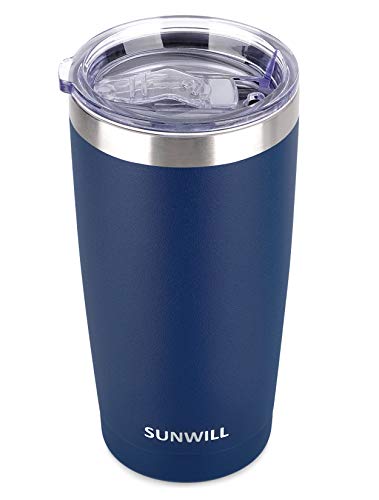
3. Sunwill Insulated Tumbler
A stainless steel tumbler that is often sold in multi-packs with lids. It suits shared kitchens and office teams.
Suits: groups. Strengths: multiple tumblers in one order. Weaknesses: details vary by listing. Skip it if you want a single premium cup.
View Sunwill Insulated Tumbler on Amazon

Best for tidy cabinets
4. YETI Rambler Stackable Cup
A stainless steel cup built to stack neatly, so a set takes little cupboard space. It is straightforward and durable.
Suits: tidy cabinets. Strengths: a stackable, rugged build. Weaknesses: the lid is often sold separately. Skip it if you want a travel mug.
View YETI Rambler Stackable Cup on Amazon
Best for everyday cups
5. Hydro Flask All Around Tumbler
A vacuum-insulated stainless steel tumbler from a well-known brand, built for hot and cold drinks. It is a good match for a small set of everyday cups.
Suits: everyday cups. Strengths: durable, insulated construction. Weaknesses: check the lid style. Skip it if you want a straw lid.
View Hydro Flask All Around Tumbler on Amazon
Best for long days out
6. Stanley Quencher H2.0 FlowState Tumbler
A large stainless steel travel tumbler with a handle and a lid with straw options. It has become a household name for hydration.
Suits: long days out. Strengths: a handle and a big capacity. Weaknesses: a large size in car cup holders. Skip it if you want a small cup.
View Stanley Quencher H2.0 on Amazon
Care and Setup
- Wash by hand unless the maker states that it is dishwasher safe.
- Keep lids clean, because gaskets can trap residue. A small brush reaches into the grooves.
- Avoid freezing liquids solid in stainless cups.
- Air dry fully before storing with the lid on.
Mistakes to Avoid
- Assuming every lid is leakproof. Test with water first.
- Putting plastic tumblers in the microwave.
- Buying mismatched sizes for a set. Lids then do not swap between cups.
- Ignoring the maker’s hot liquid guidance.
How Double-Wall Insulation Works and What to Expect
Insulated tumblers keep drinks cold or hot by slowing the movement of heat through the cup wall. The common design uses two walls with a gap between them. In vacuum-insulated stainless steel, the gap has most of the air removed, which greatly reduces heat transfer by conduction and convection, so the outside stays closer to room temperature and condensation is limited. In double-wall plastic and some copy-style designs, the gap holds air or foam, which insulates less strongly but still helps. The result is that the same drink stays cold or warm longer than in a single-wall cup.
Keep expectations realistic, because performance depends on much more than the walls. The lid is the weak spot in any tumbler: an open sipping hole lets heat in and out, and a loosely fitting lid allows leaks and faster temperature change. Ice-to-liquid ratio, starting temperature and the room you are in also matter. Pre-chilling or pre-warming the cup with water for a few minutes before filling helps. When a listing states hours of cold or heat, treat those numbers as the maker’s own claims and look at how they were measured, if the listing says. For a set, check that every cup in the pack is the same style, since some packs mix sizes or lid types.
Stainless Steel Versus Double-Wall Plastic
The two main materials in tumbler sets suit different needs. Stainless steel is durable, resists staining and odors, and usually insulates better when vacuum sealed. It is also heavier and can dent if dropped, and it should not go in a microwave. Double-wall plastic is lighter, often cheaper per cup, and can be see-through, which many people like for iced drinks. It may scratch, stain with coffee or tea, and hold odors over time, and some plastics are not recommended for very hot liquids.
- Choose stainless for daily commuting, hot drinks and long outings.
- Choose plastic for kids, patio use, parties or situations where breakage is a concern.
- Check the listing for any statements about BPA-free materials, and confirm the details on the product page.
- Confirm whether the lid and straw are also made of a safe, food-grade plastic or silicone.
If you plan to buy a set for a household, think about whether everyone has the same preference. A mixed household may be better served by two different types than by a single large pack.
Lids, Straws and Cup-Holder Fit
Lids determine how comfortable and leak-resistant a tumbler is. Sliding lids are easy to use and clean but are not designed to be spill proof. Flip-top and straw lids are convenient for iced drinks, though they can leak if tipped. Screw-on or press-in lids seal better but may take more care when closing. Look for removable gaskets that can be washed, since mold can develop in hidden crevices.
Fit is an everyday annoyance that listings sometimes mention only briefly. Tapered bases usually fit in most car cup holders, whereas wide tumblers with large handles may not. Measure the base and compare it with your car or bike cup holders if that is where you will use it. Check that the straw is the right length for the cup and that a straw hole suits reusable or standard straws. For sets, check that lids are interchangeable across the cups so that a lost lid does not leave a cup unusable. If you use a tumbler at a desk, a lid with a splash-resistant closure can prevent accidents near electronics.
Cleaning, Stains and Lasting Wear
How you clean a tumbler affects how long it looks and works well. Wash by hand with warm water, mild soap and a bottle brush, paying attention to the lid threads and gasket. Check the manual or listing for dishwasher safety, because hot cycles may damage the exterior finish, the vacuum seal or the plastic components. Never place a vacuum-insulated tumbler in a microwave or freezer unless the maker explicitly says it is safe.
Coffee and tea can stain interiors over time, and a paste of baking soda and water or a diluted white vinegar soak can help lift stains. Avoid abrasive pads that scratch the finish. Remove and air-dry the gasket and straw to prevent odors. Dents on a stainless cup can break the vacuum seal and reduce insulation, and sweating on the outside of a stainless tumbler is a sign that the insulation may have failed. Replace a tumbler if the lid no longer seals, the inside has cracks or flaking, or the cup retains a smell after careful cleaning.
Choosing Set Size and Getting Value From a Pack
Sets let you buy several cups at once, but a larger pack is only a good deal if you will use all of them. Think about how many people will use the tumblers, whether you want matching colors for guests, and whether a few extras for gifts or replacements make sense. Check the listing for the number of cups, the size of each and what is included in the pack, since some sets add lids, straws or a cleaning brush and some do not.
Budget tiers are easy to compare qualitatively. Entry-level sets offer basic double-wall construction with simple lids, mid-tier sets add vacuum insulation and better lids, and premium singles from well-known brands add finishes, accessories and a strong reputation for durability, though they are often sold individually. A pack of plain cups can be ideal for events, shared offices or kids, where cups get lost. If you prefer to use a tumbler daily, a single high-quality cup may serve better than a set of cheaper ones. Think about customization too: some people like personalized or decorated cups, so look at the finish and whether it suits the method you have in mind.
Insulated Tumbler Set FAQ
Are stainless or plastic tumblers better?
Stainless steel holds temperature longer, while double-wall plastic is lighter and resists sweat. Plastic is easier on the hands in hot drinks.
Do the lids seal tightly?
Many lids resist splashes but are not fully leakproof. Check the listing for details. A tight lid helps in a bag but may not stop a tipped cup.
Can I put them in the dishwasher?
Some are dishwasher-safe and others are not. Read the maker’s guidance first.
How many should I buy?
Count the people who will use them and consider a spare or two for guests. Matching sets make it easy to tell whose cup is whose with colors or labels.
Why does my tumbler sweat on the outside?
A properly vacuum-insulated cup should stay mostly dry. Sweating can mean the vacuum seal is damaged, or that the cup is double-wall without a full vacuum. Check the listing for the insulation type.
Can I put hot drinks in a plastic tumbler?
Only if the maker says it is designed for hot liquids. Many double-wall plastic cups are intended for cold drinks, so check the product description and manual.
How do I remove coffee or tea stains?
Soak the cup in warm water with baking soda or a diluted vinegar solution, then scrub with a bottle brush. Avoid abrasive pads that can scratch the surface.
Are the lids spill proof?
Not always. Many lids are splash resistant but can leak if tipped over. Check the listing for the lid style and whether the maker claims leak resistance.
Can I freeze a tumbler to chill it?
Freezing is not recommended for many insulated cups, as expanding liquid or stress could damage them. Instead, fill with cold water and ice for a few minutes before use.
Do all tumblers fit in car cup holders?
No. Base width varies, so check the dimensions on the listing and compare them with your cup holder. Tapered designs generally fit more easily.
How long do insulated tumblers last?
Lifespan depends on use and care. Dents, worn gaskets or damaged lids are the usual causes of decline. Replace parts or the cup when performance drops.
Materials, Coatings and Food Safety
What touches your drink matters more than what the tumbler looks like. Most insulated tumblers fall into a few material families, and knowing the differences helps you read a listing critically.
- Stainless steel interior. Food-grade stainless, often described as 18/8 or 304, resists rust and does not absorb flavors. A polished interior is easier to clean than a rough one.
- Plastic interior and shell. Double-wall plastic tumblers, like the Tervis style, are lighter and cheaper, and are usually labeled BPA-free. They can scratch and hold odors more easily than steel.
- Powder-coated exterior. This durable finish gives color and grip, though it can chip if the cup is dropped or knocked against hard surfaces. Chipping is cosmetic on the outside, but avoid cups where the coating has worn through to bare metal near the rim.
- Silicone and plastic parts. Lids, gaskets and straws are usually plastic or silicone. Look for labels indicating they are food-safe and BPA-free.
If a listing makes health claims without naming materials, treat it with caution. Clear information about the interior material, the lid material and the cleaning instructions is a good sign of a seller who expects scrutiny.
Picking Size by Use
Capacity is one of the first specs buyers see, yet it is easy to choose poorly. A tumbler that is too big sits half-empty and becomes heavy, while one that is too small needs constant refills.
Desk and office
A mid-size tumbler that you can finish in a morning or afternoon works well. Think about whether you will refill from a cooler or tap, and whether a straw or a sip lid suits your workday.
Commuting and cars
Cup-holder fit and a sealable lid matter more than size. A tall slim profile typically fits better than a wide one. If you drive with the cup rolling around, a leak-resistant lid is more important than extra capacity.
Gym, walks and errands
A lighter tumbler with a secure lid and a comfortable grip does the job. Handles help you carry a bigger cup, but make sure the cup still fits where you want to put it.
Outdoors and sports
Insulation and durability matter more, since the cup will be dropped, left in a hot car, and used for hours. A larger tumbler with a thicker wall stays cold longer when you cannot easily refill it.
Kids and shared households
Shatter-resistant, easy-to-wash, and distinctive designs help when many cups look alike. Multi-packs in different colors reduce arguments over whose is whose.
Comfort, Grip and Daily Handling
A tumbler you enjoy holding gets used more. Pay attention to weight, because steel models feel heavier when full, and a large model may be tiring to carry for long periods. A tapered base helps with cup holders, while a flat wide base tends to be more stable on a desk. Handles are convenient for big cups, but a handle also means the cup is harder to fit into some bags and holders.
Texture matters, too. A smooth, polished exterior can be slippery with condensation or wet hands, whereas powder-coated surfaces provide a bit of grip. Think about the rim as well: a thin lip feels pleasant for drinking, whereas a thick, rounded rim may feel awkward with a wide lid.
If you drink with a straw, consider how long and wide it is. A straw that is too short is annoying when the cup is nearly empty, and one that is too narrow struggles with smoothies. Reusable straws are often sold separately, so check what is included in the pack.
Gifting, Sets and Personalizing
Tumbler sets are popular as gifts, particularly for housewarmings, teachers, groups and teams. A few pointers keep gift-giving simple:
- Choose colors that suit more than one personality if you are buying for a group.
- Include the care instructions, especially if the tumbler is not dishwasher-safe.
- If personalizing with names or logos, check how the print is applied and whether it will hold up in washing; some decals or vinyl wear off faster than engraving.
- Keep the box if the recipient may want to exchange the item.
Buying a multi-pack for the household also makes it easier to stick with a cup habit instead of reaching for disposable cups, which is where the real savings often show up.
Questions to Ask Before You Check Out
A short checklist helps you compare similar-looking tumblers without getting lost in marketing language. Does the listing say what the interior is made of? Does it say whether the lid is dishwasher-safe, or only the cup? Is a straw included, and does the lid have a slot or an opening that suits it? How many pieces come in the set, and are the colors mixed or identical? Is there a warranty or return window? Does the size fit the cup holder in your car or the pocket of your bag? If a seller cannot answer these, look for one that can. A few minutes of reading will help you avoid a drawer full of cups that almost work.
Frequently Asked Questions
Can I use an insulated tumbler in the microwave?
No. Stainless steel tumblers are not microwave-safe, and many plastic double-wall tumblers are not recommended either because the trapped air layer and lids can be damaged. Pour your drink into a microwave-safe cup to reheat it, then transfer it back to the tumbler.
Why does my tumbler have a metallic taste?
A metallic taste often comes from new stainless steel, a lingering manufacturing residue, or an old residue from acidic drinks. Wash the tumbler with warm soapy water, then soak it in a mix of baking soda and water or vinegar and water, and rinse thoroughly.
Can I put carbonated drinks in an insulated tumbler?
You can, but expect fizz to go flat faster because the lid is not designed to hold pressure. Do not seal a tightly closed tumbler with a carbonated drink and leave it in a hot place, since pressure can build up. Fill it only part way and open the lid slowly.
What happens if the powder coating chips?
A small chip is usually cosmetic and does not affect insulation or the drink. If bare metal is exposed on the outside, it may rust in time. Avoid using a cup where the interior lining is damaged or the coating is flaking near the rim.
Plastic Double-Wall Versus Vacuum Steel: An Honest Comparison
This guide contains both great families of insulated tumblers, and they are not interchangeable. The Tervis Classic represents the double-wall plastic tradition: two walls with air between them, a tumbler that is light in the hand, kind to cup holders, happy in the dishwasher and microwave in a way steel never is, and decorated in more designs than any household could collect. Its insulation is real but modest, suited to a drink finished within a few hours rather than a drink expected to hold its temperature across a working day. The steel vacuum tumblers, from the Simple Modern Classic and Sunwill through the YETI Rambler Stackable Cup, the Hydro Flask All Around and the Stanley Quencher, seal a vacuum between steel walls and hold heat and cold far longer, at the price of weight, hand-washing recommendations for some finishes, and an absolute ban on the microwave.
Choose by the drink’s timetable. A tumbler that carries morning coffee to a desk and is empty by mid-morning does not need vacuum performance, and the lighter, friendlier plastic may genuinely suit it better. A tumbler that carries iced tea through a hot afternoon in a car, or coffee through a long shift, needs the vacuum. Households often end up owning both families for exactly this reason, and there is no contradiction in it: the mistake is expecting one tumbler to be best at every timetable, and then blaming a good plastic tumbler for failing a steel tumbler’s exam.
Sets, Singles and the Arithmetic of a Shared Household
Because this guide is about sets, it is worth thinking clearly about how tumblers actually live in a household. They migrate. One lives in the car, one on the desk, one in the gym bag, one is always, mysteriously, in the dishwasher. A set sized exactly to the number of drinkers will therefore always feel short, and the household that buys for its real pattern, drinkers plus locations plus the wash cycle, will feel well supplied. This is the quiet argument for multi-packs such as the Simple Modern and Sunwill sets: identical tumblers in rotation remove the daily negotiation about whose cup is whose and which one is clean.
Singles earn their place differently. The YETI Rambler Stackable Cup and the Stanley Quencher are bought as personal instruments, chosen in a colour, kept by one person, and valued partly because they are not shared. The Hydro Flask All Around sits between the camps, a personal tumbler with a household-friendly temperament. A sensible household often mixes the strategies: a working set of identical tumblers for the kitchen’s daily traffic, and one personal favourite per adult for the car and the desk. What does not work is the accidental collection, six unrelated tumblers with six unrelated lids, none of which fit each other, all of which leak their identities into the same cupboard chaos.
Lids: The Part That Decides Whether You Trust the Tumbler
More tumblers are abandoned over lids than over insulation. A lid decides whether the tumbler can travel in a bag, whether it can be knocked on a desk without consequence, whether it drinks pleasantly or dribbles, and whether it washes clean or harbours a smell in a gasket. When comparing the picks here, study the lid system as carefully as the wall: how it seals, how it opens, whether the sliding closure can be removed for washing, and whether replacement lids and gaskets are easy to find. A tumbler body can last a decade; a lid is a consumable, and a brand that sells its lids and seals separately is a brand that expects its tumblers to be kept.
Straw lids and sip lids serve different drinks and different people. A straw lid, as on the Quencher style, encourages steady drinking of cold drinks through the day and suits the desk and the car, but it is rarely the most spill-resistant arrangement and it is not meant for hot drinks. A sip lid with a closable opening suits coffee and commuting. A fully sealing screw or press lid suits the bag and the backpack. Match the lid to the journey, and keep the spare gaskets in the same drawer as the spare batteries and other household consumables, because a gasket replaced in a minute saves a tumbler; a gasket that cannot be found retires one.
Temperature Expectations, Set Honestly
Insulation slows change; it does not stop it, and a tumbler judged against an impossible standard will always disappoint. A hot drink in any tumbler here will be drinkably hot for hours rather than minutes, and an iced drink will still have ice at the end of an afternoon that would have reduced a plain glass to flavoured water, and those are the honest terms of the category. Variables move the result more than brand does: a drink that starts properly hot or properly iced, a tumbler filled generously rather than half, a lid kept closed, a car that is not an oven. Preheating a steel tumbler with hot water before adding coffee, or pre-chilling it before an iced drink, buys a real and noticeable extension for the price of a minute’s patience.
Be wary of any test, including your own first impression, that treats the tumbler as the only variable. The same tumbler will seem miraculous on a mild day and ordinary in a hot car, and both verdicts are about the environment as much as the walls. Judge a new tumbler across a week of your real routine, in your real locations, and it will tell you the truth about itself. That week of evidence is also the moment to decide whether the size is right, because a tumbler that is always empty by ten and a tumbler that always has warm dregs at four are both the wrong size wearing the right insulation.
Colour, Finish and Living With the Look
A set of tumblers is visible household equipment, sitting on counters, desks and tables every day, and its look is a legitimate part of the decision. Powder-coated steel finishes give grip and colour and hide minor scuffs gracefully, but they can chip at the base if the tumbler is dropped on hard floors, and some finishes ask for hand washing to stay at their best. Bare steel shows every fingerprint and every small dent, yet it shrugs off dishwashers and decades with equal indifference. The decorated plastic of the Tervis tradition makes the tumbler a small piece of personal expression, which matters more than it should in theory and exactly as much as it does in practice: people drink more water from a vessel they enjoy looking at.
For sets, consider the household’s colour logic. Identical colours are calm and interchangeable, and they make the rotation system described earlier effortless. A different colour per person ends all arguments about ownership and helps children and guests keep track of their drink at a gathering. A mixed set bought on impulse tends to produce a favourite that everyone reaches for and a remainder that everyone avoids, which is a small daily friction that a moment’s thought at purchase can prevent.
More Questions About Tumbler Sets
How do I stop a set from smelling of old coffee or tea?
The smell lives in the lid and the gasket more than in the cup. Remove the gasket and any sliding closure parts for washing, soak the lid components in warm water with a little bicarbonate of soda, and let everything dry fully, stored with the lid off, before reassembling. A tumbler stored sealed while still damp will smell musty within days whatever it is made of. Households that drink both coffee and cold drinks from the same set often dedicate one tumbler to coffee permanently, because coffee’s oils are the most persistent flavour in this category and a dedicated cup is cheaper than a weekly deep clean.
Are these tumblers suitable for children?
The lighter plastic tumblers and the smaller steel sizes suit children well, with lids that close fully for the school run and finishes that forgive being dropped. Avoid handing a child a very large, full steel tumbler, whose weight when full is a genuine burden for small hands, and avoid hot drinks in straw-lid arrangements for anyone, of any age. A child’s own tumbler, in their colour, with their name on the base in marker, will be looked after better than a borrowed adult one, and the set logic of this guide applies to the youngest drinkers most of all.
What should I check when a set arrives?
Check every lid on every tumbler, not just the first: seals should sit evenly, closures should move smoothly, and each tumbler should be filled with water and tipped to confirm the seal before it is trusted with coffee over a keyboard. Check the bases for wobble, the rims for roughness, and the set for colour consistency if matching matters to you. Small faults found on day one are a simple exchange; the same faults found in month three are an argument. Ten minutes of inspection is the cheapest quality control in the whole purchase.
Tumblers at Work, in the Car and at the Gym
Each location in a day makes its own demand. At a desk, the ideal tumbler is stable, quiet to set down, kind to paperwork when knocked, and large enough to reduce trips to the kitchen to a civilised number. In a car, the ideal tumbler fits the holder without a struggle, can be drunk from without looking away from the road, and seals well enough that a pothole is an anecdote rather than a laundry event. At the gym, the ideal tumbler is light, grippy with damp hands, and indifferent to being dropped on a hard floor. Very few single tumblers win all three locations, which is another reason sets and mixed households make sense: assign tumblers to locations the way you assign shoes to occasions, and each one will seem better designed than it did when it was asked to do everything.
Commuters should test the full, closed tumbler in the actual bag or holder before the first real journey, with water, over a sink’s worth of caution. Gym users should check that the lid can be operated with one hand and that the base survives the walk from machine to machine without leaving a ring of condensation on every surface. Desk users should consider a coaster habit regardless of insulation claims, because a cold drink in a humid room will find a way to mark a wooden desk, and the tumbler will be blamed for the room’s physics.
When a Tumbler Stops Performing
A steel vacuum tumbler that suddenly stops holding temperature has usually lost its vacuum, often after a hard drop, and there is no home repair for that; the honest test is to fill it with hot water and feel the outside, which should stay cool on a healthy vacuum tumbler and will warm noticeably on a failed one. A plastic double-wall tumbler that clouds or takes on a permanent smell has usually absorbed flavours into a scratched interior, and while deep cleaning helps, a heavily used plastic tumbler has a natural service life. Lids fail more kindly: a new gasket, a replacement slider, a thorough descale of the drinking port restores most of them.
Retire tumblers without guilt when they fail these tests. A household set works because every member of it can be trusted, and one leaky, lukewarm tumbler in the rotation generates a daily moment of suspicion that poisons the whole cupboard. Replace like with like where the set logic matters, keep the retired tumbler for painting water or workshop duty if it is sound enough for that, and let the set return to being a system you reach into without thinking.
How many tumblers does a household actually need?
Count drinkers, then add the locations and the wash cycle. A practical formula is two per regular drinker, one in use and one in the wash or ready, plus a small reserve for guests and for the tumbler that will inevitably be left at work or in a car overnight. Households that entertain often should count the gathering case separately and consider whether guests are better served by the household set or by glasses, since a party that empties the tumbler cupboard leaves Monday morning under-supplied. Buying in sets makes this arithmetic painless, because the per-tumbler cost of a well-chosen pack is gentler than singles, and because replacements within a set keep the system coherent.
Can I put sparkling drinks in an insulated tumbler?
With the lid open or vented, generally yes; sealed tightly and shaken in a bag, the pressure of a carbonated drink can force liquid past a slider or weep around a gasket, and opening a pressurised sip lid can spray. If sparkling drinks are a daily habit, drink them from the tumbler with the closure open, or choose the most fully sealing lid in your set and open it slowly, pointed away. Rinse promptly afterward, since sugary residues in a lid mechanism are the beginning of every sticky closure and every mysterious smell.
Choose the set the way you would choose a set of everyday plates: by the timetable of your real days, the hands that will hold them, and the washing they will actually receive. A tumbler set chosen on those terms disappears into the routine within a week, which is the highest praise this category offers, because a vessel you never think about is a vessel that is working.
Should every tumbler in the set be the same size?
Not necessarily. A mixed set, with a larger size for long days and long drinks and a smaller size for coffee and short trips, often matches a household’s real drinking better than uniformity does. The caution is lids: mixed sizes that share a lid system are a pleasure, while mixed sizes with entirely different lids recreate the cupboard chaos this guide warns against. If you mix, mix within one family whose lids, gaskets and straws you can stock together, and label the bases if two sizes look alike when the cupboard is dark and the morning is early.
Whatever combination you settle on, write the household rule somewhere it will be seen: which tumblers travel, which stay home, and where the spare lids live. A rule that exists only in one person’s head is a rule the household will break weekly, and the set will be blamed for it.
Is a handle worth having on a large tumbler?
For a large, full tumbler, a handle changes the ergonomics completely: the weight is carried by the whole hand rather than by a grip around a wide body, which smaller hands and anyone with limited grip strength will appreciate across a long day. The costs are cup-holder fit and storage, since a handled tumbler needs a holder designed for it or a different place in the car, and it will not nest or line up as neatly in a cupboard. If the tumbler lives on a desk or travels in a purpose-made holder, the handle is a clear win. If it must disappear into a standard car holder and a crowded shelf, the straight body is the safer shape.
Test the handle question with a full tumbler of water at home before committing a set to a shape. Five minutes of carrying, setting down and picking up will answer it more honestly than any amount of reading, including this guide.
How do I keep straws and narrow lid parts hygienic?
Use a straw brush every wash rather than occasionally, rinse parts immediately after sweet or milky drinks, and let everything air-dry fully before reassembly. A spare set of straws in rotation means no single straw is pressed into service while still damp from the last wash. If a straw or a lid part develops a smell that a proper soak and brush cannot shift, replace that part alone; small parts are consumables in this category, and replacing them is maintenance, not defeat.
Maintenance, done in these small and regular ways, is what lets a modest set outlast a premium one that was washed carelessly and stored sealed and damp. The tumblers in this guide are all capable of years of service; the routine decides how many of those years they get.
Start the routine on the day the set arrives, while the lids are new and the habits are unformed, and the set will reward you by simply never being a problem.
A problem-free cupboard of tumblers sounds like a small ambition until you have lived with a troublesome one; then it sounds like exactly the point.
Choose well once, wash kindly, and let the set get on with its quiet work.
Your future self, reaching into that cupboard half awake, will be glad you did.
That small, reliable gladness, repeated daily, is the true measure of a set well chosen.
If two sets in this guide still look equal after all of that, decide by the wash: the set whose lids come apart most completely, whose gaskets are stocked as spares, and whose finishes match your household’s actual dishwasher habits will be the set that still looks and smells clean in its second year, and cleanliness, in a vessel you drink from daily, outranks almost every other virtue.
The Short Version
For a lightweight set, the Tervis Classic. For colorful stainless cups, the Simple Modern. For multi-packs, the Sunwill. For easy storage, the YETI Stackable Cup. For everyday cups, the Hydro Flask. For a large handle tumbler, the Stanley Quencher. Check the pack count before you buy. Pick colors that make it easy to tell the cups apart.

