Leafy greens are some of the hardest produce to juice. Kale, spinach, chard and wheatgrass are light and fibrous, and fast centrifugal juicers often leave a lot of liquid in the pulp. A masticating juicer presses them slowly with an auger, which tends to pull out more juice from the same bunch.
Greens also vary a lot in texture, so no single machine is perfect for every leaf. Kale and chard are tough and fibrous, spinach is soft, and wheatgrass is a fine blade that needs a tight auger. Think about what you drink most often, then choose the format that suits it.
The six juicers below are suited to green juice, from vertical models for quick daily use to horizontal ones that handle wheatgrass. We have not used these machines ourselves, and we avoid figures we cannot verify. Please confirm capacity, parts and warranty terms on the current listing before you buy.
As an Amazon Associate we earn from qualifying purchases. Links below are affiliate links, and they do not change the product information we give.
What to Look For
| Feature | Why it matters |
|---|---|
| Orientation | Horizontal models often suit leaves and wheatgrass; vertical saves space |
| Auger speed | Slower pressing usually gives more juice from leaves |
| Screen design | A fine screen handles leafy fibers but needs a good brush |
| Chute size | A bigger chute means less prep for stems |
| Cleanup | Greens leave residue, so fewer parts help |
In this guide
Specs at a Glance
| Juicer | Type | Format | Notes |
|---|---|---|---|
| Omega VSJ843 | Masticating | Vertical | Space-saving; brand with a long history |
| Omega NC900HDC | Masticating | Horizontal | Common pick for leafy greens |
| Tribest Greenstar Elite | Twin-gear | Horizontal | Aimed at leaves and wheatgrass |
| Kuvings EVO820 | Cold press | Vertical | Larger chute; easier prep |
| Hurom H101 | Slow juicer | Vertical | Simple, compact design |
| Nutribullet Slow Juicer | Slow juicer | Vertical | Budget-friendly entry option |
The 6 Best Masticating Juicers for Greens
Top pickBest for daily green juice in small kitchens
1. Omega VSJ843 Vertical Slow Juicer
A vertical masticating juicer from a brand known for its slow juicers. The upright design takes up little counter space and works well for a daily green juice routine.
Suits: daily green juice in small kitchens. Strengths: a compact upright design. Weaknesses: leaves are best fed alongside firmer produce. Skip it if you juice mostly wheatgrass.
View Omega VSJ843 Juicer on Amazon
Best for leafy greens and wheatgrass
2. Omega NC900HDC Nutrition Center Juicer
A horizontal masticating juicer that is a common pick for leafy greens. The lying-down auger handles soft leaves and grasses without much fuss.
Suits: leafy greens and wheatgrass. Strengths: a design suited to light produce. Weaknesses: it takes more counter width. Skip it if you need a small footprint.
View Omega NC900HDC Juicer on Amazon
Best for committed green juicers
3. Tribest Greenstar Elite Twin Gear Juicer
A twin-gear juicer, which uses two interlocking augers rather than one. It is made for people who treat green juice as a serious habit, with leaves and wheatgrass as the main ingredients.
Suits: committed green juicers. Strengths: a dedicated design for leaves. Weaknesses: more parts and a longer cleanup. Skip it if you want a quick routine.
View Tribest Greenstar Elite on Amazon
Best for people who want less prep
4. Kuvings EVO820 Cold Press Juicer
A vertical cold press juicer with a larger chute. You can drop in bigger bunches of greens with less cutting, which saves time on busy mornings.
Suits: people who want less prep. Strengths: a wide chute and a solid brand. Weaknesses: the body is large. Skip it if cabinet height is limited.
Best for beginners
5. Hurom H101 Easy Clean Slow Juicer
A compact vertical slow juicer designed with simple cleanup in mind. It is a reasonable starting point for someone building a green juice habit.
Suits: beginners. Strengths: a simple design and a trusted brand. Weaknesses: a smaller chute. Skip it if you juice large amounts.
View Hurom H101 Slow Juicer on Amazon
Best for casual use
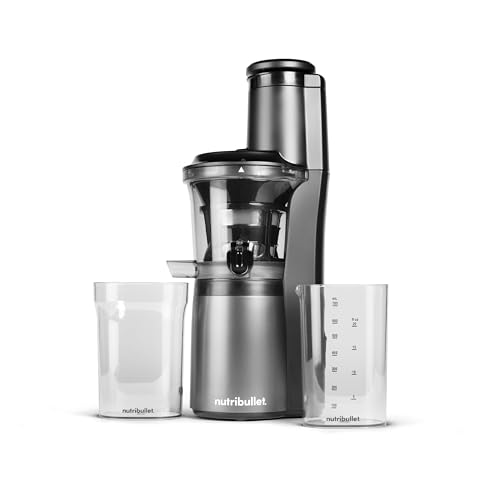
6. Nutribullet Slow Juicer
A budget-friendly vertical slow juicer from a familiar kitchen brand. It suits people who want to try slow juicing before they invest in a premium model.
Suits: casual use. Strengths: a simple setup. Weaknesses: heavy daily use may favor a sturdier model. Skip it if you juice large batches.
View Nutribullet Slow Juicer on Amazon
Care and Setup
- Wash greens well and shake off extra water first.
- Alternate leaves with firm produce such as cucumber or apple.
- Rinse the screen straight away so residue does not set.
- Dry every part before storing.
- Compost or reuse the pulp in soups and baking.
Mistakes to Avoid
- Packing too many leaves in at once.
- Skipping the cleaning brush.
- Using a narrow chute without trimming stems.
- Expecting identical results with kale and wheatgrass.
Single Auger Versus Twin-Gear Designs
Most masticating juicers use one auger that turns slowly and presses produce against a screen. Twin-gear juicers use two interlocking gears that grind and squeeze the produce between them. Each approach has strengths for greens, so the choice depends on how serious your habit is.
Single-auger machines are more common, more compact and usually easier to clean. They handle leafy greens well when the leaves are fed with a firmer item that pushes them forward. Both vertical and horizontal versions exist. Horizontal ones are often considered better for wheatgrass and fine leaves, while vertical ones take up less counter space and are quick to set up.
Twin-gear machines are generally aimed at people who drink a lot of green juice and want to extract as much as possible from leaves and grasses. They tend to be heavier, have more parts and take longer to clean, but they handle fine blades such as wheatgrass in a very controlled manner. If you juice greens a few times a week, a single-auger model likely meets your needs. If green juice is a daily staple and wheatgrass is a regular ingredient, a twin-gear machine may be worth considering. Read the listing for the number of parts and the cleaning steps before committing.
Kale, Spinach, Chard and Wheatgrass Compared
Greens behave differently, and understanding them helps you set up the machine well. Kale and chard are firm and fibrous, and their stems can be tough. They usually juice well in a slow juicer when fed steadily, and the stems add liquid. Some people remove the thickest ribs if their machine struggles, though many leave them in.
Spinach and other soft leaves are tender and contain plenty of water, but they can bunch up and slide through without being pressed. Rolling the leaves into a tight bundle, or feeding them between harder pieces, gives the auger something to grip. Herbs such as parsley and cilantro behave similarly, and they are strong in flavor, so a small amount goes a long way.
Wheatgrass is the trickiest. It is fine, tough and fibrous, and it needs a tight auger and slow feeding. Many vertical juicers can handle it in small amounts, but horizontal and twin-gear machines are often considered better suited. Check the maker’s guidance on whether wheatgrass is supported. Because wheatgrass is very concentrated, people typically drink it in small quantities. When trying a new green, start with a small amount and mix it with milder ingredients so you can adjust the flavor to your taste.
Feeding Technique for Leafy Produce
Technique can make a modest machine perform well and a good machine perform poorly. The main principle is to give the auger something to push against. Feeding a handful of loose leaves can cause them to wrap around the auger or pass through nearly dry. Instead, bunch the leaves into a loose ball or roll, and push them in gradually.
Alternate leaves with firmer produce. A piece of cucumber, celery, apple or carrot between handfuls of greens helps move the leaves through and carries more juice out of them. Keep the feed steady and moderate. If you feed too fast, the machine may jam or produce wet pulp. If you feed too slowly, leaves may sit and heat slightly from friction, although slow juicers are designed to limit this.
Make sure the greens are washed and well drained. Excess water dilutes the juice and makes the pulp wetter. Dry leaves feed more easily. If your chute is narrow, trim long stems, but you may find that stems add useful moisture. After you finish, run a piece of firm produce through to help flush out leftover fibers. If the pulp coming out is very wet, feed it back through once, though many users prefer to avoid the extra step.
Cleaning, Pulp and Keeping the Habit Going
Greens leave fine fibers and pigment in the screen and auger, so cleaning right away is important. Rinse parts under running water as soon as you finish, then use the supplied brush to clear the screen mesh. If pigment stains plastic parts, a short soak in warm water with a little dish soap, or a mild solution recommended in the manual, usually helps. Follow the care instructions, and avoid putting parts in a dishwasher unless the maker says it is fine.
Count the parts and consider how quickly the machine goes together. A juicer that is quick to assemble and quick to wash is one you are likelier to use every day. Compare how many pieces touch the produce, whether any need special tools and whether the screen can be rinsed in place. Dry parts fully before storing them, to prevent musty smells.
Pulp from greens can be put to use. Add it to soups, smoothies, baked goods or veggie burgers, or compost it. Green juice is best consumed fresh, because flavor and appearance change as it sits. If you need to make it ahead, store it in a sealed container, filled to the top to limit air, and drink it soon. Following the manual’s guidance on run time prevents overheating during larger batches, and giving the motor a short rest between jobs helps it last longer.
Matching a Juicer to Your Kitchen and Budget
Begin with how often you juice and what you juice. Occasional green juice with a mix of fruit and vegetables is well served by a mainstream vertical model. If you drink green juice daily and use wheatgrass, consider a horizontal or twin-gear machine. If you want one machine for several kitchen tasks, such as nut butters or sorbet, check which attachments the maker offers.
Budget tiers differ in several ways. Entry-level machines often have narrower chutes, simpler screens and shorter warranties. Mid-range models add larger chutes, easier cleaning and better yield. Premium models offer heavier builds, more attachments and longer coverage. Spend where it matters for your routine, which for greens usually means the auger and screen design and the ease of cleaning.
Ask some questions before buying. How wide is the chute? How many parts must be washed? Is a cleaning brush included? What is the warranty? Are replacement parts available? Is wheatgrass supported? Signs that it is time to replace include an auger with worn or chipped edges, a screen with tears, a motor that strains or overheats, leaking seals and juice output that has noticeably dropped despite clean parts. A machine that shows these signs should be retired.
Masticating Juicers for Greens FAQ
Why not a fast juicer for greens?
Fast blades often leave leaves damp and wasteful. A slow auger squeezes them more thoroughly.
Can I juice wheatgrass in a vertical model?
Some can, but horizontal and twin-gear machines are usually better suited. Check the maker’s guidance.
Does green juice keep?
It is best fresh. If you store it, use a sealed container and follow the maker’s advice.
Can I juice greens without adding other produce?
You can, but leaves alone often feed poorly and give less juice. Mixing them with firmer produce such as cucumber or apple helps the auger work and improves the taste.
Should I remove the stems from kale?
Not necessarily. Stems add liquid and juice well in most slow juicers, though very thick ribs may strain a small machine. Follow the maker's guidance.
Why is my green juice foamy?
Some foam is normal, especially with leafy produce. It usually settles after a minute or so. Slower feeding may reduce it.
How do I stop leaves from wrapping around the auger?
Bunch them into a loose ball and feed them with firmer produce. Avoid dropping in loose handfuls all at once.
Can I use frozen greens?
Most slow juicer makers advise against freezing produce for juicing, as it can strain the machine. Check the manual before trying.
How much wheatgrass should I use?
Wheatgrass is strong, so start with a small amount and see how it tastes and how you feel. Follow any guidance from your doctor if you have concerns.
Why does my juice look brown or dull?
Green juice can oxidize and lose color as it sits. Drinking it soon after making it keeps it looking and tasting fresher.
Do I need to wash organic greens?
Yes. Wash all greens to remove dirt and residue before juicing.
Building Green Juice Recipes That Taste Good
The biggest reason people abandon green juice is flavor, not equipment. A glass made only of leaves can taste grassy and bitter. A few basic building blocks make it far more drinkable, and a slow juicer extracts the sweetness and body from each ingredient well enough that you rarely need much.
- A mild base: Cucumber and celery produce a lot of watery juice and carry the greens without dominating the taste. Roughly half the glass can come from these.
- A leafy component: Spinach is gentle. Kale, chard and collards are stronger. Start with a small handful and increase over a few weeks as your palate adjusts.
- A sweet element: A green apple or a couple of pear slices rounds out bitterness. Carrot adds natural sweetness with a heavier body.
- Acid and brightness: A squeeze of lemon or lime lifts the flavor and helps keep color from dulling quickly.
- Optional aromatics: A small piece of ginger or a few mint leaves adds interest. Use a little, because both are strong.
Keep notes on combinations you like. Once you find a ratio that works, shopping becomes simpler and you waste less produce.
Sourcing and Storing Produce for Juicing
Greens are bulky and perishable, so a juicing routine depends on how you buy and keep them. Fresh produce gives the best flavor, but a few storage habits cut waste considerably.
Wash leafy greens, spin or pat them dry, and store them in a container lined with a paper towel in the refrigerator. Excess moisture speeds wilting. Wrap celery and hardy herbs in a damp towel or stand them in a jar of water. Leave cucumbers unwashed until use, since surface moisture shortens their life.
If you juice a few times a week, shopping once or twice a week is more practical than stocking up. Farmers markets and bulk bags of spinach or kale can lower cost per glass, though only if you actually use them before they spoil. Frozen produce is useful for smoothies but gives poorer results in most juicers because ice crystals change the texture, so keep it for other recipes.
Organic produce is a personal choice. Whatever you buy, rinse well, because dirt and grit hide in crinkled leaves and dirty produce makes for gritty juice and extra cleaning work.
How Much Juice Per Bunch: Planning Your Grocery Run
Leafy greens give far less juice than watery vegetables. A large bunch of kale might fill only a fraction of a glass, while a cucumber contributes much more. This matters for budgeting, because the cost per glass of green juice is driven by how much leaf you use and how efficiently your machine extracts it.
A general approach is to think in ratios. A common starting point is about two-thirds high-water produce (cucumber, celery, apple) to one-third leafy greens, then adjusting by taste. Slow juicers tend to extract more from leaves than fast ones, but yield still varies by model and by how you feed the produce. Check how dry the leftover pulp is as a rough indicator. Very wet pulp suggests juice is being left behind and may be worth re-running through the machine.
Do not assume a bigger bunch always gives a better result. Fresh, crisp greens yield more than limp, older ones, so buy for the days you plan to juice.
Making Green Juice Part of a Balanced Routine
Juice is one tool in a varied diet, not a replacement for whole vegetables. Juicing removes most of the fiber, which means the sugar from fruit is absorbed more quickly than when you eat the whole piece. For that reason many people keep fruit to a small portion and lean on vegetables for volume.
Drink juice soon after making it to enjoy the best flavor and texture. If you must store it, fill a glass jar to the brim, seal it, and keep it cold, but expect the taste to change over a day. Pair juice with a meal that contains protein and fiber if you want to feel full.
Anyone managing a medical condition, taking medication that interacts with leafy greens such as certain blood thinners, or following a special diet should talk to a doctor or dietitian before starting a juicing habit. That is general information rather than personal advice. For most healthy adults, treating juice as an occasional complement to whole foods is a practical middle ground.
Prepping a week of produce in one sitting
Many people keep up the habit by prepping ahead. Wash and dry the greens, cut cucumbers and celery into lengths that fit your feed chute, and portion everything into containers for individual batches. Cutting in advance saves the most time on busy mornings. Keep citrus whole until you juice, then peel it just before use. With produce already sized, a juicing session can take only a few minutes of active work, and cleanup is easier when you run the machine once and rinse immediately.
Frequently Asked Questions
How do I make green juice taste less bitter?
Use a mild base such as cucumber or celery, add a green apple or pear for sweetness, and finish with lemon or ginger. Start with spinach before moving to stronger greens like kale, and increase the amount gradually as your taste adjusts.
What is a good ratio of vegetables to fruit in green juice?
A common starting point is mostly vegetables with a small amount of fruit, such as one apple for a whole batch. This keeps sugar lower while still balancing bitterness. Adjust by taste, and use fruit more sparingly if you want a lighter-sugar drink.
Is it okay to drink green juice every day?
For many healthy adults, a daily glass can fit into a varied diet, but juice lacks most of the fiber in whole vegetables. People with medical conditions or who take medication affected by leafy greens should ask a doctor or dietitian first.
How should I store leafy greens for juicing?
Wash and dry them thoroughly, then keep them in a container lined with a paper towel in the refrigerator. Removing excess moisture slows wilting, and crisp greens give you more juice than limp ones. Use the most delicate leaves first.
Going Deeper: Getting the Most From a Masticating Juicer for Greens and Wheatgrass
Leafy greens and wheatgrass are where juicers tell the truth about themselves. A handful of spinach is mostly air and ambition; wheatgrass is a fistful of fibres with juice locked inside them, and a machine designed for oranges will wave both through and return a sad, wet handful of pulp and a thimble of green water. Masticating juicers earn their reputation here by crushing, squeezing and pressing slowly enough to actually extract what leaves hold. The picks above, from Omega’s vertical and nutrition-centre designs to Tribest’s twin-gear Greenstar Elite, Kuvings, Hurom and Nutribullet’s slow model, approach the green problem with different mechanisms. This section is about the practice: how to feed leaves so they yield, how to judge a machine by its pulp, and how to build a greens habit that survives contact with real mornings.
Matching the Choice to the Way You Actually Work
If wheatgrass is your main event, perhaps grown at home in trays, you are shopping for a specialist whether you meant to or not. Wheatgrass yields reluctantly and only to genuine pressure, and it is fibrous enough to defeat casual designs. The twin-gear and nutrition-centre end of this list exists for you. Your sessions are short, intense and regular, and the machine that treats a tray of grass as a normal breakfast, rather than an extreme sport, is the one that will still be serving you when the novelty has worn off.
If greens are part of a varied juicing life, kale on Monday, spinach in a Friday blend, wheatgrass when the tray is ready, versatility is the criterion. You need a machine that presses leaves properly but also handles roots, fruits and celery without a personality change. The vertical slow juicers in the list court exactly this kitchen, trading a little of the specialist’s extraction for speed of assembly, feeding and cleaning across many kinds of produce.
If you are juicing greens for a household or for a week’s supply rhythm, think about batch behaviour. Greens juicing is stop-start by nature: handfuls of leaves, a pause, a piece of apple to push things through. A machine that tolerates that rhythm, with a chute and auger that keep leaves moving downward instead of spinning them in place, saves real time and temper across a large session, and pulp dryness across a large session is produce money saved in visible quantities.
The Criteria That Matter Most, Revisited
For greens, forget the headline numbers. These are the criteria that decide whether leaves become juice or become expensive compost that passed through a machine.
- Pressing mechanism: Single augers squeeze; twin gears crush and press with a thoroughness leafy fibre respects. For pure wheatgrass duty the twin-gear approach is the benchmark, while good single-auger designs handle mixed greens admirably. Match the mechanism to your greenest ingredient, not your average one.
- How leaves are drawn in: Leaves love to ride on top of an auger instead of entering the press. Designs that pull greens down positively, and techniques like balling leaves tightly or sandwiching them between harder produce, decide whether a session flows or stalls.
- Pulp dryness on greens: Judge a greens juicer by its pulp. Properly pressed leaf pulp emerges dry and crumbly; wet, slimy pulp is juice you paid for and did not drink. This single test, run on the same handful of kale, separates the list more honestly than any feature comparison.
- Screen and pulp outlet behaviour: Fine green pulp challenges screens and outlets. A design that ejects pulp steadily without packing the screen keeps a long greens session moving; one that slowly strangles itself will teach you to dread large batches.
- Cleaning after greens: Green residue films onto screens and stains eagerly. Parts that rinse clean quickly, without pulp packed into seams, decide whether a daily greens habit is sustainable. Inspect the parts count and the screen design with your mornings in mind.
- Versatility beyond greens: Most kitchens ask one machine to do everything. If yours must also handle hard roots and soft fruits gracefully, weigh that honestly against greens specialisation, because the perfect wheatgrass machine that sulks at carrots will not survive in a general kitchen.
Greens juicing is a negotiation between a determined machine and reluctant leaves. The picks above all negotiate seriously, but they settle on different terms. Your greens, your volumes and your cleaning tolerance are the contract details; read the reviews with a specific handful of kale in mind and the choice sharpens quickly.
A Step-by-Step Routine That Works
Technique matters more with greens than with any other produce. This routine extracts what the leaves actually hold, on any masticating machine.
- Wash and dry the greens: Rinse leaves well, since field greens carry grit that no juicer appreciates, and shake or spin off excess water. Surface water dilutes the juice and makes leaves slippery and harder for the auger to grip.
- Ball and bundle the leaves: Roll leafy greens into tight bundles or balls before feeding. A compact bundle gives the auger something to bite and presses far more effectively than loose leaves sprinkled in hopefully.
- Sandwich between harder produce: Alternate bundles of greens with pieces of apple, carrot, cucumber or celery. The harder produce acts as a piston, driving the leaves through the press and sweeping the screen, and it transforms the yield of both ingredients.
- Feed slowly and let the press work: Greens reward patience even more than celery does. Small bundles, steady rhythm, no forcing. The machine should sound calm; a strained, packed machine is asking you to slow down.
- Finish with something cleansing: End a greens session with a piece of watery produce, cucumber or apple, which flushes green residue through and makes the immediate rinse quicker. Your future self, at the sink, thanks you.
- Rinse everything immediately: Green pulp dries into a cement with surprising commitment. An immediate rinse keeps cleaning to minutes; a delayed one adds soaking, scrubbing and resentment to the recipe.
Master these steps and the differences between good machines narrow, because your technique is supplying what mediocre feeding hides. That is the pleasant secret of greens juicing: the machine sets the ceiling, but the hands decide how close to it each session gets, and hands can be taught in a week.
Troubleshooting: Problems, Causes and Fixes
Leaves spin in the chute without feeding
The classic greens stall. Bundle the leaves tighter, push them down with a piece of hard produce rather than the pusher alone, and feed smaller amounts more often. If a design repeatedly floats your greens, note it; that behaviour, not the specification, is your machine’s true greens verdict.
Pulp comes out wet and slimy
The press is being rushed or the leaves are being fed too loosely. Slow down, bundle tighter, sandwich more deliberately. Persistent wet pulp after honest technique is the machine telling you its greens limit, which is exactly what the reviews above exist to reveal.
Juice tastes aggressively bitter
Some greens are simply stronger than others, and stems carry much of the bitterness. Balance with apple, cucumber, lemon or pineapple in the blend, use younger leaves where you can, and remember that a small glass of intense green juice is a serving, not a failure of dilution.
The screen clogs mid-session
Fine green pulp packs screens gradually. A piece of hard produce run through often sweeps it; if clogging persists, stop, rinse the screen, and resume with better sandwiching. Sessions planned in waves, greens then a hard flush, rarely clog at all.
Care, Storage and Making It Last
Greens are the most staining, filming produce a juicer meets, so care here is mostly about immediacy. Rinse parts as soon as the glass is poured, brush the screen under running water, and check the pulp outlet, where green matter compacts quietly and ripens if forgotten. A machine put away clean after greens will smell of nothing at all tomorrow, which is the standard.
Give the screen a periodic deeper clean, a soak in warm water with a little bicarbonate, especially if your water is hard or your greens are daily. Mineral film plus green residue is the slow strangle that reduces yield over a season, and it reverses easily when caught as a maintenance habit rather than a rescue mission.
Store the machine dry and loosely assembled, with the brush that fits its screen kept with it. Greens juicing is a frequent, small-scale practice, and the tools of its cleaning should live where the cleaning happens, not in a drawer of unrelated utensils across the kitchen.
Extra Questions, Answered
Can a slow juicer really juice wheatgrass well?
The right ones can, and it is the category’s defining test. Twin-gear designs are the benchmark, and the better single-auger machines manage wheatgrass respectably in modest quantities. If wheatgrass is your daily staple, weight the reviews toward the specialists.
How much juice do greens actually give?
Less than fruit, always, which surprises new juicers. Leaves are mostly fibre and air by volume. The yield of a good press on well-fed greens is nevertheless a generous small glass from a large bunch, and technique, bundling and sandwiching, moves the result more than any other factor.
Should greens be juiced alone or blended with other produce?
Blended, for most people and most machines. Partner produce improves flow, yield and flavour simultaneously, a rare triple win. Pure green juice has its devotees and its place, but it is the advanced setting, not the starting point.
Does juicing greens remove the fibre benefit?
Juicing separates most insoluble fibre into the pulp, which is precisely why the nutrients become so accessible and the drink so light. Many greens juicers eat their fibre elsewhere in the day. The pulp itself can join soups and compost rather than the bin.
How fresh must greens be?
Fresher leaves juice better and taste sweeter; tired, wilting greens yield less and lean bitter. Juice greens within a few days of buying or cutting, store them dry and cold meanwhile, and let the juicing schedule follow the produce rather than the other way round.
How the Picks Differ on the Green Test
The Tribest Greenstar Elite is the list’s thoroughbred for this work, its twin gears built for exactly the crushing and pressing that leaves and wheatgrass demand, with a versatility into other produce as a second talent. The Omega entries split the difference two ways: the NC900HDC nutrition centre brings the horizontal, multi-tasking tradition that handles greens with marathon calm, while the VSJ843 vertical offers the modern, compact route. The Kuvings EVO820 and Hurom H101 court the design-conscious general kitchen that juices greens often but not exclusively, and the Nutribullet Slow Juicer is the accessible doorway into slow juicing for households testing the habit.
None of these positions is a consolation prize. A household that juices greens twice a week inside a varied practice will be happier with the vertical’s pace than with the specialist’s thoroughness it rarely needs, while a wheatgrass devotee will find anything less than the specialist a daily negotiation. The reviews above give you the evidence; your tray of wheatgrass or your bunch of kale casts the deciding vote.
Growing, Buying and Storing Greens for the Juicer
Wheatgrass growers learn quickly that the juicer is only half the system; the tray, the cutting rhythm and the harvest timing set the juice’s quality before the machine is switched on. Cut grass at its sweet, jointing stage, juice it promptly, and let the tray schedule dictate small, frequent sessions, which happen to suit masticating machines perfectly. Bought greens ask a simpler discipline: buy firm, dry leaves, store them unwashed and cold, and juice them while they still have spring in them.
There is an economy to learn here too. Greens are sold by the bunch and juiced by the handful, and the gap between a wasteful routine and a careful one is visible within a month of shopping. Bundling, sandwiching and pressing properly are not fussy virtues; they are the difference between a greens habit that feels abundant and one that feels like feeding expensive leaves to a compost bin via an appliance.
Building a Greens Habit That Survives February
Every juicing habit is enthusiastic in its first fortnight. The test is the ordinary week in the ordinary month, when the greens are wilting, the morning is short and the machine needs cleaning again. Habits survive that week on design, not willpower: produce bought in quantities the household actually juices, a machine stored ready rather than boxed, a cleaning routine measured in minutes, and a glass size that feels like a pleasure rather than a prescription. When you choose among the picks above, you are really choosing which of them your February self can operate happily, and that self is the only critic whose verdict matters.
It helps to vary the cast. A greens practice that rotates spinach, kale, chard, cucumber-heavy blends and wheatgrass when the tray is ready never bores the palate or the machine, and it spreads the nutritional bet widely. Keep a short list of house blends that work, yours, tested, logged by taste, so that a tired morning can run on rails instead of decisions. Decision fatigue kills more juicing habits than any machine flaw, and a written list of three good blends is a genuine piece of kitchen equipment.
Finally, let the habit be social where it can. A second glass made for someone else, a tray of wheatgrass shared with a neighbour who juices, a recipe swapped with the person who sold you the greens: these small connections are the mortar of routines. The machine starts the habit, but the life around it is what the habit is actually made of.
More Questions, Answered
Can I juice frozen greens?
Thawed greens juice poorly, collapsing into a wet mass that presses badly and tastes tired. Freeze finished juice if you must bank production, in small portions, and keep the leaves themselves fresh for the machine.
What is the best first green for a beginner?
Spinach and cucumber-heavy blends are the gentle introduction: mild, forgiving and quick to juice. Kale, chard and wheatgrass reward the palate once it has acclimatised, and the machine once your feeding technique has settled.
How do I keep the juice from turning brown?
Drink it promptly, keep air out of stored juice by filling containers fully, and add a squeeze of lemon to blends that must wait. Slow pressing already limits oxidation; your storage habits finish the job.
How small a glass counts as a serving?
A modest glass of well-made green juice is a genuine serving; intensity is the point of the format. Chasing volume leads to diluted blends and discouraged beginners. Start small, enjoy it completely, and let the habit’s consistency supply what any single glass cannot.
What should I do with a glut of greens from the garden?
Juice them at their peak rather than storing them into decline, and freeze the juice in small portions for the lean weeks. A glut is the garden’s way of asking for a session, and a masticating machine in good rhythm makes short, pleasant work of abundance that would otherwise wilt into regret.
How do I introduce green juice to someone sceptical?
Start with the gentlest blend you make, heavy on cucumber and apple with the greens in a supporting role, served cold in a small glass without ceremony or health claims. Palates convert by pleasure, not by argument. Over a few weeks the proportion of greens can rise as the taste becomes familiar, and many sceptics end up requesting the stronger blends they once refused.
Can I juice herbs like mint and parsley too?
Yes, and they are potent: a small handful perfumes a whole glass. Bundle them inside leafy greens so the press grips them properly, and use them as seasoning rather than as a base. Herbs are where a greens practice becomes cuisine, and a little experimentation here rewards the curious juicer disproportionately.
One last word on expectations?
Expect the juice to taste like the plants it came from: green, alive and occasionally challenging. Sweetness can be balanced in, but the character of greens is the point of the glass. Drinkers who embrace that character stop chasing blends that hide it and start enjoying the most honest juice their kitchen produces.
Greens and wheatgrass ask the most of a juicer and repay the most to the drinker, which is why this category rewards care in choosing. Pick the machine above whose mechanism matches your greenest ingredient, learn the bundling and sandwiching that leaves demand, and rinse the parts before the pulp sets. The result is a small, intense glass that tastes like effort properly rewarded, and a machine that earns its counter space every single morning.
The Short Version
For small kitchens, the Omega VSJ843. For leafy greens, the Omega NC900HDC. For serious green juicing, the Tribest Greenstar Elite. For less prep, the Kuvings EVO820. For simple cleanup, the Hurom H101. For a budget start, the Nutribullet Slow Juicer.

