Bread dough is heavy, sticky and slow to develop. A stand mixer for bread needs a strong motor, a stable body and a hook that kneads rather than just pushes dough around. Weak mixers can walk across the counter or strain under a full batch, so power and weight matter here more than they do for cake batter.
It also helps to think about how you bake. A weekend loaf now and then asks little of a mixer, while a weekly routine with whole grain or high-hydration dough asks a lot more. Be honest about your habits before you choose a size.
The six mixers below range from specialist bread machines to well-known tilt-head and bowl-lift models. We have not used these mixers ourselves, and we avoid wattage and capacity figures we cannot verify. Please confirm bowl size, dough capacity and included attachments on the current listing before you buy.
As an Amazon Associate we earn from qualifying purchases. Links below are affiliate links, and they do not change the product information we give.
What to Look For
| Feature | Why it matters |
|---|---|
| Motor strength | Heavy dough can stall a weak motor |
| Bowl design | Bowl-lift mixers are steadier than tilt-head models under load |
| Dough hook | A well-shaped hook kneads without pushing dough up the shaft |
| Weight and grip | A heavy body and rubber feet resist walking |
| Capacity | Match the bowl to the number of loaves you bake |
In this guide
Specs at a Glance
| Mixer | Type | Bowl style | Notes |
|---|---|---|---|
| Bosch Universal Plus | Kitchen machine | Low, wide bowl | Strong reputation for dough |
| Ankarsrum Original | Spiral-style machine | Rotating bowl | Swedish design; gentle kneading |
| KitchenAid Professional 600 | Stand mixer | Bowl-lift | Steadier under heavy loads |
| KitchenAid Artisan | Stand mixer | Tilt-head | Good for smaller batches |
| Cuisinart SM-50 | Stand mixer | Tilt-head | Large bowl; many speeds |
| Breville Bakery Chef | Stand mixer | Tilt-head | Built-in timer; baking-focused |
The 6 Best Mixers for Bread Dough

Top pickBest for frequent bread bakers
1. Bosch Universal Plus Kitchen Machine
A kitchen machine with a low, wide bowl and a strong motor that is widely recommended for bread dough. It is built to knead large batches, which is why home bakers often choose it for regular loaves.
Suits: frequent bread bakers. Strengths: a dough-first design and strong reputation. Weaknesses: it looks different from a classic stand mixer. Skip it if you want a conventional planetary mixer.

Best for serious bakers
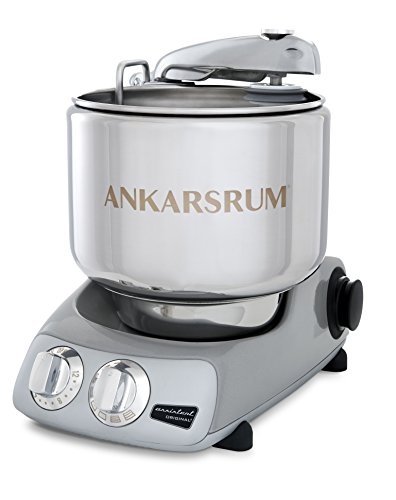
2. Ankarsrum Original Stand Mixer
A Swedish mixer with a rotating bowl and a roller-and-scraper system. It kneads dough gently and handles stiff, high-hydration bread doughs well.
Suits: serious bakers. Strengths: a different kneading method and a durable build. Weaknesses: it has a learning curve. Skip it if you also want to whip small amounts of cream.
Best for larger batches and weekly bakers
3. KitchenAid Professional 600 Series Bowl-Lift Stand Mixer
A bowl-lift stand mixer with a larger bowl and a sturdier design than tilt-head models. The lifting bowl holds firm when the dough gets heavy.
Suits: larger batches and weekly bakers. Strengths: a stable bowl-lift build. Weaknesses: it is heavy and tall. Skip it if storage space is limited.
View KitchenAid Professional 600 on Amazon
Best for occasional bread and general baking
4. KitchenAid Artisan Series Tilt-Head Stand Mixer
The best-known home stand mixer, with a tilt-head design and a bowl sized for family baking. It handles smaller bread doughs and many other jobs.
Suits: occasional bread and general baking. Strengths: attachments and wide availability. Weaknesses: heavy doughs can strain it. Skip it if you bake big batches weekly.
View KitchenAid Artisan on Amazon
Best for bakers who want a roomy bowl
5. Cuisinart Precision Master SM-50 Stand Mixer
A tilt-head stand mixer with a large bowl and a wide range of speeds. It is offered as a lower-profile alternative to the big names.
Suits: bakers who want a roomy bowl. Strengths: speed range and a large bowl. Weaknesses: check the dough capacity before large batches. Skip it if you plan to knead stiff doughs often.
View Cuisinart SM-50 on Amazon
Best for bakers who like precision
6. Breville Bakery Chef Stand Mixer
A stand mixer from a brand known for baking tools, with a built-in timer and a design built for bakers. It is a sensible option for people who measure their kneading time.
Suits: bakers who like precision. Strengths: a timer and baking-focused features. Weaknesses: a smaller accessory ecosystem. Skip it if you want many optional attachments.
View Breville Bakery Chef on Amazon
Care and Setup
- Do not exceed the dough capacity the maker states.
- Run on low speeds with heavy dough to protect the motor.
- Wash the hook and bowl by hand if the maker advises it.
- Place the mixer on a stable surface away from the counter edge.
Mistakes to Avoid
- Overloading the bowl with a double batch.
- Running at high speed with stiff dough.
- Leaving the mixer unattended while it kneads.
- Choosing a lightweight body for heavy bread.
Dough Hydration and What It Asks of a Motor
Not all bread dough puts the same load on a mixer. A wet, high-hydration dough, such as a ciabatta style, is slack and sticky and may be gentle on the motor but hard on the hook, because it clings and smears. A stiff, low-hydration dough, such as a bagel dough, is dense and heavy, and it can stall a weak motor or make a lightweight mixer jump on the counter. Whole grain and rye flours add their own challenges, since they absorb water differently and give a denser, less elastic dough.
Think about the breads you actually make. If you bake soft sandwich loaves and rolls, most mid-range stand mixers cope as long as you keep batches modest. If your routine is stiff dough, several loaves at a time, or frequent whole grain recipes, you want a mixer designed for sustained kneading.
Capacity listings can mislead. Makers often quote a maximum flour or dough weight, and that figure is usually a ceiling for ideal conditions, not a comfortable working amount. Running at the ceiling every time wears a motor faster. Aim for batches well below the stated limit, especially with stiff dough. Check the manual for maximum dough weight, recommended speeds and run-time limits.
Kneading time also varies. Machines that knead gently and efficiently may need less time to develop gluten. Overworking can heat the dough and affect fermentation. Keep an eye on dough temperature and follow your recipe, adjusting if your mixer warms the dough more than expected.
Hook Shape, Bowl Geometry and Kneading Action
How a mixer kneads matters as much as how strong it is. Planetary mixers move the hook around the bowl while it spins, which works well but can leave dough climbing the hook or sticking to the bowl. A spiral hook tends to hold dough down better than a simple C-shaped one. Some machines use a different geometry, such as a rotating bowl with a roller and scraper, which treats dough more gently and handles small and large batches differently.
Bowl shape influences how well small batches knead. In a wide bowl, a small amount of dough can sit away from the hook and not get worked. In a deep, narrow bowl, a larger batch is held near the hook but may be harder to scrape out. Look at the listing for the bowl size and the minimum recommended dough quantity, since some machines work poorly with very small amounts.
Check that the hook reaches the bottom of the bowl. Many mixers allow you to adjust the gap between the beater and the bowl, which affects how well it picks up flour. A gap that is too large leaves unmixed flour at the bottom, while one too small can scrape the bowl. Follow the manual’s adjustment instructions.
Think about convenience too. A splash guard or bowl cover cuts flour mess. A bowl with handles is easier to lift when full of dough. A dishwasher-safe hook saves time. The right action depends on your style, so consider whether you want gentle, slow kneading or a fast, conventional approach.
Stability, Noise and Countertop Practicalities
A mixer working heavy dough exerts a lot of force, and a light machine can rock or walk across the counter. Weight and rubber feet help, and wide, low designs tend to sit more steadily than tall ones. Many users still stay nearby during long kneads, especially with stiff dough, and place the mixer on a non-slip mat for extra protection.
Noise varies by design and speed. Some motors hum steadily, others whine under load, and gear-driven designs produce characteristic sounds. Makers rarely publish consistent noise data, so rely on the general description and what users report, understanding that opinions vary. If you bake early in the morning or live in an apartment, quieter operation may matter.
Consider height and storage. Tall mixers may not fit under cabinets, and a tilt-head needs clearance to raise. Bowl-lift designs need room above for the bowl to lift. If you must store the mixer in a cupboard, measure and consider weight, because heavy machines are hard to lift. Many people leave them on the counter, so consider the footprint and appearance.
Power cords, outlets and circuit capacity are also worth thinking about. A powerful mixer drawing high current should not share an overloaded circuit. Check the voltage and plug type on the listing, especially for imports. Finally, think about accessory compatibility. Attachments such as pasta makers or grinders are common, but fit varies, so confirm compatibility before assuming.
Care, Wear and Signs of Strain
A mixer that handles dough regularly needs a little care. Wipe the body after each use, clean the bowl and hook, and dry everything before storing. Flour dust can get into vents and controls, so brush or wipe gently. Never submerge the base or motor housing in water. Check the manual about which attachments can go in the dishwasher, as aluminum parts can discolor.
Lubrication and gear wear are part of the long-term picture. Some mixers need occasional regreasing by a service technician, and others are sealed. Read the manual for guidance and avoid taking the unit apart unless instructed, as that can void a warranty. Track the warranty terms and any registration requirements.
Watch for signs of strain. A motor that slows noticeably, a burning smell, a housing that gets very hot, or repeated shutdowns indicate overload. Stop the mixer, let it cool, reduce the batch size or knead part of the dough by hand. Frequent stalling suggests the machine is too small for your bread.
Other warning signs include grinding noises, a wobbling head, leaking grease, or a bowl that no longer locks securely. Hook or bowl damage, such as chips in coatings, should lead to replacement of the part. Replacement hooks and bowls are often available, so check availability before buying. A well-chosen mixer should last for years if you keep within its limits.
Mixer or Hand Kneading and Other Alternatives
Before you buy, ask whether you need a machine at all. Many bakers get excellent bread with hand kneading or with no-knead methods, which rely on time rather than work. A mixer saves effort and suits frequent baking, large batches, or anyone with limited hand strength. If you bake rarely, a good dough scraper, a large bowl and patience might do the job.
If you do want a machine, consider the options. A tilt-head stand mixer suits small to medium batches and general baking. A bowl-lift is steadier and is often chosen for larger loads. Spiral or rotating-bowl designs focus on dough and are chosen by dedicated bread bakers. Bread machines handle the whole process but limit your choice of shape and crust. Food processors can knead some doughs quickly but have capacity limits.
Budget tiers are easy to describe. Entry-level mixers cover occasional baking with light loads. Mid-range machines handle regular bread with a bit more power and stability. Premium models focus on dough capacity, durability and serviceability, and they suit frequent heavy use. Spending more makes sense only if you will use that capability.
Ask yourself these questions: How often do I bake? How much dough per session? What dough types? How much counter space is available? Do I need other attachments? Is service and parts support available where I live? Your answers will point to a size and style that fit, and help you avoid paying for features you will not use.
Mixers for Bread Dough FAQ
Bowl-lift or tilt-head?
Bowl-lift designs generally cope better with heavy dough. Tilt-head models suit lighter jobs.
Can any mixer knead bread?
Many can for small batches, but strong motors and good hooks make a big difference.
How long should I knead?
Follow your recipe and the maker’s guidance, since times vary with dough and mixer.
How much dough can a mixer knead at once?
It depends on the model, and makers list maximums in their manuals. Staying well below the stated limit is kinder to the motor, especially with stiff dough.
Should I use the dough hook on high speed?
Usually not. Most manuals advise low speeds for kneading to protect the motor and to avoid overheating the dough. Follow your model's guidance.
Why does dough climb up the hook?
It often happens with wet or small batches. Stopping to scrape the hook, using a different hook shape, or adjusting the dough hydration can help.
Can I knead a small batch in a large mixer?
You can, but small amounts may not contact the hook well. Check the manual for minimum quantities and consider doubling the recipe.
Does the mixer warm the dough?
Friction can raise dough temperature, particularly in long kneads. Using cooler water and checking dough temperature helps keep fermentation on track.
Do I need a separate bowl for bread?
Not necessarily, but a second bowl is handy when you bake several things in a session. Check whether extra bowls are sold for your model.
How do I stop the mixer from moving?
Place it on a stable surface, check the rubber feet are clean, reduce the batch size or speed, and stay nearby during kneading.
Flour, Gluten and Why Kneading Time Differs
Kneading builds gluten, the network of proteins that traps gas and gives bread its structure. How much kneading a dough needs depends on the flour. High-protein bread flour develops gluten more readily and tolerates longer mixing, while whole wheat and rye flours have bran and fewer gluten-forming proteins, so they develop differently and can be harmed by overmixing.
A common test of readiness is the windowpane test: stretch a small piece of dough gently between your fingers, and if it thins to a translucent film without tearing, the gluten is well developed. This is more reliable than following a clock, since mixers differ in how vigorously they work the dough.
Mixers work dough more efficiently than hands in some respects, but they can also overheat it. Friction raises dough temperature, which speeds fermentation and can lead to over-proofing if you are not careful. Bakers often use cool water to offset this.
- Use the lowest speed that works the dough, since higher speeds build heat and wear.
- Stop mid-mix to scrape and check the dough rather than trusting a fixed time.
- Rest the dough briefly after mixing, which makes final development easier.
Understanding the dough helps you pick a mixer, because a machine that suits wet, sticky dough may differ from one best for stiff dough.
Batch Size and Real Capacity
Listed capacities are generous, and they often refer to the maximum amount of ingredients or flour the bowl can hold under ideal conditions. Dough is denser than cake batter, so the practical limit for bread is lower than the headline number suggests. A mixer that struggles at the edge of its stated capacity is more likely to overheat or wear gears early.
As a guide, work well below the maximum. If you bake one or two loaves a week, a mid-size bowl is enough. If you bake for a family or a market stall, look at larger models, such as the Professional 600 or the Bosch, which are built for bigger batches. The Ankarsrum’s different design handles large amounts, though its bowl style needs getting used to.
The opposite problem also exists. A very large bowl may not engage a small amount of dough, because the hook cannot reach it. If you often make a single loaf, check whether a mixer can handle small quantities.
- List the largest batch you realistically plan to make.
- Check the maker’s guidance on flour weight for dough.
- Allow some margin so the motor does not run flat out.
Warranty, Service and Long-Term Ownership
A mixer that handles dough regularly works harder than one used occasionally for cookies. That raises the importance of service. Before buying, check the warranty length and what it covers, since motors and gears are the parts most likely to fail under heavy use. Some makers offer longer coverage for particular models, and terms change over time.
Consider how you would get a repair. Look for authorized service centers, parts availability and customer support reputation. A machine with replaceable gears and widely available parts can be kept running for many years, while a sealed unit may need a full replacement if something fails.
Resale and parts compatibility can matter for long-term owners. Popular models often have a large supply of accessories, replacement bowls and hooks, and a secondhand market if you upgrade. Less common designs can be excellent but may have fewer options.
If you plan to use a mixer a few times a week, a more robust and more expensive model usually saves money over repeated replacements. If you bake bread a few times a year, a mid-range mixer with decent reviews is probably enough. Read recent owner feedback with caution, and look for patterns rather than single complaints.
Setup, Speed Settings and Safe Use
Place the mixer on a flat, stable counter, away from the edge, and keep the cord clear. Stand mixers can vibrate and creep during heavy kneading, so stay nearby while it runs. Clean, dry feet grip better, so wipe the counter and the rubber feet if the machine tends to move.
Start slowly. Combine the ingredients on the lowest speed until they come together, then increase to a low or medium setting for kneading, following the maker’s manual. Most bread dough is mixed at low speeds, and using higher ones often strains the motor without improving the dough.
Add flour in stages rather than all at once, particularly when mixing a large batch, and put liquids in first to help the hook catch. If the dough climbs the hook, stop, scrape it down and adjust hydration slightly. If the motor sounds strained, stop and let it rest, or divide the dough into two batches.
Always unplug the mixer before changing attachments or reaching into the bowl, and keep hands, spatulas and hair away from moving parts. Let the motor cool between large batches. These habits protect both you and the machine and help it last longer.
Frequently Asked Questions
Is a more powerful mixer always better for bread?
Not necessarily. Wattage ratings are inconsistent between makers, and design matters as much as motor size. Gearing, bowl shape and hook design determine how well a mixer handles dough. Look for evidence of a stable, durable build and the maker’s guidance on dough capacity rather than relying on one power figure.
What should I do if my mixer stalls with dough?
Stop the mixer and unplug it, then remove some of the dough and knead that portion by hand or in a second batch. Check that the dough is not too stiff and that you are using a low speed. Let the motor cool before restarting, and consider a smaller batch size next time.
Can I knead whole wheat or rye dough in a stand mixer?
Yes, but they need less aggressive kneading than white bread dough. Whole grain flours absorb water more slowly, so allow rest time, and avoid overmixing since bran can cut gluten strands. Rye dough is often very sticky, so check the maker’s guidance on whether your mixer suits it.
How do I keep dough from overheating in the mixer?
Use cool water, start with chilled ingredients if your kitchen is warm, and keep mixing time to what the dough needs. Check the temperature at the end of mixing, aiming for what your recipe specifies. If dough feels warm, shorten the first rise or move it to a cooler spot.
Going Deeper: Getting the Most From a Stand Mixer for Bread Dough
Bread dough is the heavyweight bout of the home kitchen, and it separates stand mixers more honestly than any cake batter can. A stiff dough at volume asks for torque, a bowl and hook that actually work the dough rather than push it around, and a motor and frame that can repeat the effort weekly for years without walking across the counter or smelling of strain. The picks above take genuinely different approaches: Bosch’s Universal Plus with its belt-driven power, the Ankarsrum’s rotating bowl and roller, KitchenAid’s bowl-lift Professional 600 and tilt-head Artisan, and the Cuisinart and Breville entries. This section is about the working life of a dough mixer: the signs of a machine coping or struggling, the technique that helps any machine, and the match between a mixer and the bread you actually bake.
Matching the Choice to the Way You Actually Work
If you bake several loaves weekly, perhaps for a family that eats real bread daily, your mixer is a production tool and should be chosen like one. Capacity in flour terms, not bowl volume, is your number: how much dough the machine kneads well in one batch, repeatedly, without strain. Durability of the drive, ease of adding ingredients mid-knead, and a bowl you can lift when full of dough all matter more than the colour range, because you will meet these factors every single bake.
If bread is a weekend pleasure, one or two loaves with time to enjoy the process, the mid-range machines shine. You need competent kneading, a hook that develops dough properly, and a machine that also whips and mixes for the rest of your baking without dominating the counter all week. For this pattern, versatility and storage argue against the largest production designs, and the pleasure of using the machine, its noise, its manners, its cleanup, carries real weight.
If your bread ambitions run to enriched and stiff doughs, bagels, brioche, whole grain loaves with serious chew, you are shopping at the demanding end whatever your volume. These doughs punish weak drives and climbing hooks. Favour the designs known for torque and for keeping dough in the bowl and working, and be realistic that the cheapest route to bagel dough is often a smaller batch in a strong machine rather than a full batch in a struggling one.
The Criteria That Matter Most, Revisited
Mixer marketing speaks in wattage and speed settings. Bread bakers should translate everything into these criteria instead.
- Torque and drive under load: Dough is kneaded at low speed against high resistance, the opposite of what headline wattage describes. Judge by how the machine behaves with a stiff dough: steady, unstrained progress, or slowing, heating and complaint. The drive design, belt, gear or rotating bowl, shapes this behaviour more than the number on the box.
- Working capacity in flour: Every mixer has a flour weight beyond which it stops kneading and starts suffering. Learn that figure for each pick and compare it with your batch size, honestly measured. Baking two batches in a happy machine beats one batch in a machine at its limit, in dough quality and in the machine’s lifespan.
- Hook and bowl action: The dough must be folded, stretched and turned, not merely orbited. Designs differ profoundly: planetary hooks, roller-and-scraper systems, and twin-hook arrangements each move dough differently, and the best test is the dough’s development, smooth, elastic, pulling from the sides, within a reasonable time.
- Stability and noise: A mixer that walks, rocks or shouts under dough is telling you about its margins. On a real counter, with a real batch, stability is safety and noise is a household tax paid at every bake. Neither appears in a specification table; both appear in owner experience.
- Adding ingredients and control: Bread rewards machines that let you add flour gradually, pause and scrape easily, and hold a slow, steady knead without surging. Controls that make sense with floury hands are a genuine feature in this kitchen, not a detail.
- Cleaning and storage reality: Bowls, hooks and splash guards that wash easily, and a machine whose size your kitchen can actually house, decide whether the mixer lives on the counter ready for Friday dough or in a cupboard negotiating its existence.
The pattern across these criteria is respect for the load. Bread dough is not an occasional stress test for a stand mixer; for the buyer of this guide, it is the mixer’s main job. Choose the machine whose strength is structural rather than advertised, and whose capacity matches your flour bag rather than your optimism.
A Step-by-Step Routine That Works
Good machine kneading is a partnership: the mixer supplies force, the baker supplies sequence and judgement. This routine gets the best from any design in the list.
- Mix to a shaggy mass first: Combine flour and liquid and mix briefly, just until no dry flour remains, then rest the dough. This pause, the autolyse in bakers’ language, hydrates the flour and shortens the real kneading dramatically, sparing both dough and machine.
- Add salt and enrichments at the right moment: Salt after the initial mix, butter and enrichments gradually once the dough has come together. Ingredients added in the right order develop gluten instead of fighting it, and the machine’s work becomes visibly easier.
- Knead at the dough speed: Use the low speed the maker intends for dough, not a faster one in impatience. Speed heats and tears dough and strains drives; the correct slow speed, given time, develops a smoother, stronger result.
- Watch the dough, not the clock: Kneading is done when the dough is smooth, elastic and pulling cleanly from the bowl, and passes the gentle stretch test bakers use. Times in recipes are guides for their machine, not laws for yours.
- Rest rather than force a struggling batch: If the machine labours or the dough climbs and stalls, stop, rest the dough briefly, and resume, or divide the batch. A rested dough often finishes beautifully; a forced machine accumulates damage quietly.
- Clean while the dough proofs: Wash the bowl and hook immediately, since dried dough is concrete’s cousin. The proofing interval is perfectly sized for cleanup, and a clean station makes the shaping stage a pleasure rather than a excavation.
Bakers who adopt this routine often discover their existing mixer was better than they thought, because sequence and patience were the missing ingredients. That discovery does not invalidate the upgrade; it clarifies it. You learn exactly which limitation is the machine’s, capacity, torque, hook action, and the reviews above can then be read as answers to a precise question.
Troubleshooting: Problems, Causes and Fixes
Dough climbs the hook and stalls
Climbing means the dough is too stiff for the hook’s action at that volume, or the batch is at the machine’s limit. Reduce the batch, add liquid a spoonful at a time if the recipe allows, and use the speed intended for dough. Persistent climbing in modest batches is a design’s honest confession.
The mixer walks or overheats
Stop and reassess rather than holding the machine down through the batch. Walking and heat are margin warnings: the batch is too large or too stiff for this machine today. Split the batch, finish by hand if needed, and record the flour weight that caused it; that number is your machine’s true capacity.
Dough stays rough and tears
Under-development usually means under-kneading or under-hydration, not a failed machine. Give the dough its full time at the right speed, check the recipe’s hydration against your flour’s thirst, and let the rest step do its quiet work before judging.
The bowl or hook is a nightmare to clean
Dried dough is the enemy and timing is the weapon. A soak in cool water immediately after use dissolves what scrubbing cannot. Hot water sets the proteins and makes everything worse, a small fact that saves real effort once known.
Care, Storage and Making It Last
A dough mixer earns mechanical sympathy: do not exceed its comfortable flour load, let it rest between heavy batches on marathon days, and listen to it. Changes in sound, new smells of strain, or a drive that feels rougher are early reports from the machine, and acting on them early is the difference between a service and a replacement.
Keep the exterior and the bowl mount clean of flour dust and dough residue, which work into mechanisms and hinge points. Wipe the machine after baking days, not eventually, and store attachments with the machine so the dough hook is never the one piece missing on the morning the levain is ready.
Finally, respect the machine’s other life. Most of these mixers also whip, mix and grind their way through a kitchen’s week, and their longevity reflects total use, not just dough. A machine treated as a system, loaded sensibly, cleaned promptly and stored kindly, will knead for a decade or more, which is the timescale bread bakers should be shopping for.
Extra Questions, Answered
Can a stand mixer replace hand kneading entirely?
For most breads, yes, and with excellent results, provided the batch suits the machine and the routine above is followed. Many bakers finish with a few hand folds for the feel of the dough, but that is pleasure and information, not necessity.
How do I know my mixer’s real flour capacity?
Increase batch sizes gradually across bakes and note where behaviour changes: climbing, straining, walking, heat. The last comfortable size before those signs is your working capacity, whatever the manual’s optimism, and it is the number to bake by.
Is a bowl-lift better than a tilt-head for dough?
Bowl-lift designs generally offer the sturdier frame and larger capacity that serious dough work rewards, while tilt-heads win on convenience and counter height. For dough-first buyers the lift usually earns its place; for mixed bakers the head’s ease may matter more.
Why does my dough take longer than the recipe says?
Because the recipe’s clock belonged to a different machine, flour and room. Judge by the dough’s development, smooth, elastic, clearing the bowl, and let your machine’s time be its own. Consistency comes from reading the dough, and it transfers to every recipe you will ever bake.
Can I knead small dough batches in a big mixer?
Small batches can under-engage some hooks and bowls, riding around unworked. If your baking alternates between single loaves and big batches, favour a design known to handle its minimum gracefully, or finish small batches with a brief hand knead, which is no hardship at that size.
How the Picks Differ at the Bowl
The Ankarsrum is the list’s beautiful heretic: the bowl rotates, a roller and scraper do the work, and dough is kneaded with a gentleness and capacity that converts many who try it, at the price of learning an unfamiliar action. The Bosch Universal Plus answers with belt-driven enthusiasm, a compact body belying serious dough capacity, beloved by high-volume home bakers. KitchenAid’s two entries split by frame: the bowl-lift Professional 600 is the dough-first choice in that family, the Artisan the beloved generalist whose dough work is best in moderate batches. Cuisinart’s Precision Master and Breville’s Bakery Chef serve the mixed baker well, with dough competence inside a broader, friendlier package.
Reading the reviews, translate each design into your batch and your bench. The heretics reward commitment; the generalists reward variety; the production designs reward volume. A baker’s calendar, not a ranking table, knows which reward is yours.
Flour, Hydration and the Machine: A Baker’s Triangle
The same mixer behaves like three different machines depending on the dough inside it, because hydration changes everything. A wet dough is gentle work that almost any mixer performs happily; a stiff, low-hydration dough is the heavyweight contest. When a review describes a machine struggling, ask with what dough, and when you test your own machine, standardise the dough before drawing conclusions, or you will grade the recipe instead of the mixer.
Flour choice pulls the same lever. Strong bread flour drinks more water and develops more gluten than softer flours, changing both the load and the kneading time. Bakers who change flour and batch and machine settings simultaneously learn nothing except that baking is confusing. Change one corner of the triangle at a time, and the mixer in front of you will tell you its truth within a few bakes.
The Mixer as a Bakery’s Long Apprenticeship
A stand mixer bought for bread becomes a witness to a baker’s whole development: the first hesitant loaves, the recipe that finally worked, the holiday batches, the loaf that made a neighbour ask for the recipe. Machines that serve this long stop being appliances and become part of the kitchen’s memory, which is why this guide has pressed so hard on drive, capacity and honest construction. You are not buying this season’s mixer. You are hiring the assistant who will be present for a decade of dough, and the interview should be conducted accordingly.
That long view also softens the occasional failure. A strong machine, well matched to its baker, will still meet doughs that defeat it on a given day, a new flour, a stiffer recipe, a batch scaled too boldly. The baker who knows the machine treats those days as information and adjusts, rather than as betrayals. Partnership is the right word for the arrangement, and like all partnerships it improves with attention, honesty about limits, and a short memory for the bad batches.
More Questions, Answered
Should I buy the larger mixer to grow into?
Only if your baking is genuinely growing. An oversized machine that handles your current small batches poorly serves today’s bread badly for a hypothetical future. Buy for the baker you are, with a little headroom, not for the bakery you daydream about.
Does kneading time damage dough?
Over-kneading is possible, especially at too-high speeds, breaking down the structure you built. At correct dough speeds with attention to the dough’s appearance, most home batches finish before damage threatens. Watching the dough remains the safeguard.
What is the first bread to test a new mixer with?
Your most familiar recipe, the one whose dough you know by hand. Familiarity turns the bake into a controlled comparison, and the new machine’s character, its pace, its action, its limits, reveals itself against a known standard.
Should I register the mixer or keep its paperwork?
Keep the manual and proof of purchase with the machine’s other papers, and note the model details somewhere durable. Years later, when a part or a service question arises, that small archive turns a research project into a phone call.
How do I adapt a favourite hand-kneaded recipe to the mixer?
Keep the ingredients identical and change only the method: hydrate first, knead at dough speed in intervals, and judge doneness by the dough rather than converting the recipe’s hand-kneading minutes into machine minutes, which never translate directly. After two bakes you will have your machine’s version of the recipe, written in your notes, and it will be as reliable as the original ever was.
A bread mixer is bought in flour and years: the weight you knead weekly and the decade you expect it to serve. Choose from the picks above by drive, capacity and dough action, in that order, and then bake with the sequence and patience that let any machine show its best. The reward is the particular satisfaction of a well-developed dough rising on the counter, produced by a partnership between a strong machine and a baker who understands it.
The Short Version
For dough-first design, the Bosch Universal Plus. For gentle kneading, the Ankarsrum Original. For heavy loads, the KitchenAid Professional 600. For general baking, the KitchenAid Artisan. For a roomy bowl, the Cuisinart SM-50. For a timer, the Breville Bakery Chef.

