Small batch winemaking usually means one gallon at a time, enough for a handful of bottles. It is a good way to test a recipe, try a fruit wine or learn the basics of fermentation without committing to a full-size carboy, a big tub of juice and a lot of storage.
The six items below mix complete one-gallon kits with the building blocks of a small setup, such as a fruit wine base, a fermenter, yeast and sanitizer. We have not used these products ourselves. Please confirm what is included and what you still need on the current listing before buying.
As an Amazon Associate we earn from qualifying purchases. Links below are affiliate links, and they do not change the product information we give.
What to Look For
| Feature | Why it matters |
|---|---|
| Batch size | One gallon batches are easy to handle and quick to repeat |
| Fermenter | A glass or food-grade fermenter with an airlock keeps the batch safe |
| Ingredients | A fruit wine base or juice plus yeast gives you a simple start |
| Sanitizing | Clean equipment is the single biggest factor in a good result, so budget time for it |
In this guide
Specs at a Glance
| Item | Material | Size | Notes |
|---|---|---|---|
| Home Brew Ohio One Gallon | Glass and plastic | One gallon; check the listing | Starter equipment |
| Vintner’s Best | Fruit concentrate | Check the listing for the base size | Ingredient only |
| Big Mouth Bubbler | Glass | One gallon | Wide mouth; airlock-ready |
| Lalvin EC-1118 | Dry yeast | Packet size; check the listing | Yeast only |
| Star San | Liquid concentrate | Check the listing for bottle size | Sanitizer only |
| Midwest Supplies | Glass and plastic | One gallon; check the listing | Kit bundle |
The 6 Best Small Batch Wine Making Kits
Top pickBest for first-time winemakers
1. Home Brew Ohio One Gallon Wine Making Kit
A starter kit for a one-gallon batch that gathers the basic equipment in one package. It is aimed at first-timers who want to try the hobby on a small scale.
Suits: first-time winemakers. Strengths: a small starter setup. Weaknesses: ingredients may be sold separately. Skip it if you want to make a large batch.
View Home Brew Ohio One Gallon on Amazon

Best for fruit wine experiments
2. Vintner’s Best Fruit Wine Base
A concentrated fruit wine base that is added to water, sugar and yeast to make a small batch of fruit wine. It is a popular shortcut for a simple fruit wine, and it removes the need to press or crush fruit yourself.
Suits: fruit wine experiments. Strengths: an easy start with no pressing needed. Weaknesses: sold as a base, not a complete kit. Skip it if you want a grape wine.
Best for small batch fermenting
3. Big Mouth Bubbler One Gallon Glass Fermenter
A wide-mouth glass fermenter with an airlock and a lid, ideal for small batches. The wide neck makes it easy to add fruit and to clean.
Suits: small batch fermenting. Strengths: wide mouth that is easy to fill and clean. Weaknesses: glass is breakable. Skip it if you want a stackable plastic fermenter.
View Big Mouth Bubbler on Amazon
Best for reliable fermentation
4. Lalvin EC-1118 Wine Yeast
A well-known, reliable wine yeast used for fruit wines and ciders and known for finishing even difficult ferments. It is often sold in small packets that suit a one-gallon batch.
Suits: reliable fermentation. Strengths: a robust and forgiving strain. Weaknesses: a neutral flavour profile. Skip it if you want fruity, delicate esters.
Best for protecting every batch
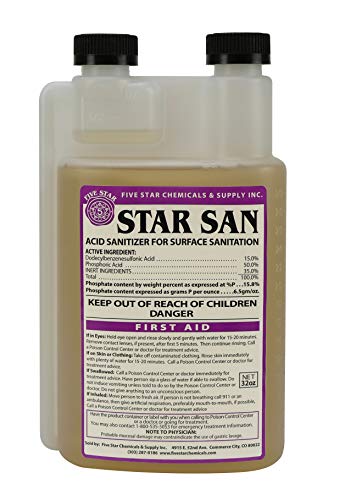
5. Star San Sanitizer
A no-rinse acid sanitizer widely used in homebrewing. It protects small batches from unwanted microbes when used as directed.
Suits: protecting every batch. Strengths: a no-rinse sanitizer. Weaknesses: can foam heavily. Skip it if you want a scent-free product.
Best for those who want a bundle
6. Midwest Supplies One Gallon Wine Making Kit
A one-gallon equipment and ingredient bundle from a homebrew supplier, designed so a newcomer can start making wine at home. It combines key items in one order.
Suits: those who want a bundle. Strengths: a combined small setup. Weaknesses: contents vary by listing. Skip it if you already own equipment.
View Midwest Supplies on Amazon
Care and Setup
- Sanitize every surface that touches the wine.
- Keep the batch at a steady temperature during fermentation, away from heaters and cold drafts.
- Fit the airlock correctly and top it up if needed.
- Store the bottled wine in a cool, dark place.
Mistakes to Avoid
- Skipping sanitizer and ruining a batch.
- Opening the fermenter too often.
- Using the wrong size airlock or stopper.
- Bottling before fermentation has finished, which can build pressure and burst bottles.
One-Gallon Equipment Essentials
A one-gallon setup is simple, but a few pieces are non-negotiable. You need a fermenter sized for the batch with some headspace, a lid or stopper that fits it, and an airlock that lets carbon dioxide escape without letting air in. A wide-mouth jug is easy to fill and clean, while a narrow-neck carboy is easier to seal but harder to reach inside.
Beyond the vessel, a small setup benefits from a few extras:
- A food-safe spoon or paddle for stirring the must.
- A straining bag for fruit, to hold pulp during fermentation.
- A short length of siphon tubing for moving wine off sediment.
- A hydrometer and sample tube, if you want to check sugar and alcohol.
- Sanitizer, since all surfaces must be treated before use.
- Bottles and closures for the finished wine.
Check that each piece suits a one-gallon scale. Large siphons or oversize stoppers may not fit smaller vessels. Stopper and airlock sizes vary, so match them to the vessel’s neck. A set of spare stoppers and airlocks is inexpensive and often saves a batch.
When comparing kits, check the contents list against this checklist. Some bundles include the fermenter and a few tools but not the ingredients, and some include ingredients but not equipment. Know what you must supply yourself before ordering.
Fruit Wine Versus Grape Wine at Small Scale
Small batches are a natural fit for fruit wines. A concentrated fruit base or a bag of fruit lets you experiment without much cost, and the results often drink younger than grape wines. Berries, apples, pears and stone fruit are common choices, and you can scale a recipe by weight. Fruit wines depend on balance: sweetness, acidity and tannin all matter, and many recipes call for additions such as acid blend, tannin and yeast nutrient.
Grape wine from juice or concentrate suits those who want the character of familiar varieties. At one gallon the volume is small, so choose a smaller kit or measure carefully when dividing a larger one. Dividing a juice pack calls for care, because additive packets are formulated for the full batch size.
Think about how you plan to use the wine. A quick, light fruit wine is a pleasant first project and can be ready sooner. A red or white from grapes may benefit from longer aging. For either, keep notes on quantities, times and tastes so you can repeat or adjust the recipe.
Check the ingredients on any juice. Juice with preservatives can stop fermentation, and juice with added sweeteners changes the final balance. Look for plain juice or a product made for winemaking.
Yeast, Nutrients and Fermentation Control
Yeast does the work, and choosing and feeding it well makes a difference. Wine yeasts differ in how much alcohol they tolerate, how quickly they ferment, the temperature range they prefer and the flavors they leave behind. Some are neutral, others emphasize fruit or aroma. Check the packet or listing for the strain’s temperature and alcohol tolerance, and match it to your recipe.
Small batches use only a small amount of yeast, so check the packet size and storage. Rehydrate yeast as the instructions direct, since adding it dry to a cold or sugary must can stress it. Yeast nutrient supports a healthy ferment, particularly in fruit wines, which often lack the nitrogen found in grapes. A stuck or sluggish ferment is often a sign that the yeast needs nutrients, warmth or oxygen at the start.
Keep temperature steady. A fermenter in a drafty place can swing between warm and cold and slow down. A stable spot between the yeast’s stated limits is the target. Use the airlock to watch activity, but remember that bubbling is only an indicator. A hydrometer reading taken over several days tells you whether fermentation has finished.
Stir or swirl gently as instructed, and avoid opening the fermenter often. When active fermentation ends, follow your recipe for racking and clearing. Patience at this stage prevents off flavors.
Sanitizing, Sampling and Bottling Small Batches
Cleanliness decides whether a small batch becomes wine or vinegar. Wash first, then sanitize every surface that touches the wine, including spoons, tubing, airlocks and bottles. Follow the sanitizer’s contact time and rinsing directions. A spray bottle of sanitizer helps you treat small items quickly.
Sampling is important but must be hygienic. Use a clean, sanitized thief or sample tube, and do not return a sample to the fermenter. Keep samples small, since a gallon batch has little to spare.
Bottling needs planning because one gallon yields only a handful of standard bottles. Decide in advance whether you will use wine bottles with corks, swing-top bottles or small bottles that suit the volume. Count the bottles and prepare them before you begin. Siphon wine from the fermenter into bottles, keeping the tube off the sediment and leaving the right headspace.
Make sure fermentation has finished and, if the recipe calls for it, stabilizers have been added before bottling. Bottling too early can cause pressure to build and corks to pop. Label each bottle with the type and date. Store them in a cool, dark place, and open one after a few weeks to see how the wine is developing.
Keep records, and change one variable per batch so you can see what makes a difference.
Scaling Up, Space and Sharing the Hobby
One-gallon batches are a low-risk way to learn, and many hobbyists keep making them even after they own larger equipment. Small volumes mean you can run several experiments at once, using different yeasts, fruits or sugar levels. They also fit apartments, because a few jugs take up little shelf space.
When you are ready to scale up, consider what changes. Larger fermenters need more room and are heavier to move. Ingredient quantities, additive amounts and sanitizer volumes rise in proportion, and you will need more bottles. A recipe that worked at one gallon should scale linearly in most cases, but check each additive instruction. Keep the notes from your small batches, since they will guide you.
Think about space and timing. Fermenting jugs need a steady place, and bottles need cool, dark storage. A shelf or a small cabinet is enough for a small program. Plan the schedule so batches overlap sensibly and you do not run out of bottles.
Finally, consider sharing. Wine made in small batches makes good gifts, and tasting with friends gives useful feedback. Check local rules about home winemaking and sharing, since they vary by region. Be careful with labeling and never sell home-produced wine unless the law in your area allows it.
Small Batch Wine FAQ
Why make a one-gallon batch?
It is easy to handle, quick to repeat and lets you test recipes without wasting much if something goes wrong.
Can I make wine from fruit juice?
Yes, with suitable yeast and care. Choose juice without preservatives, since they can stop fermentation, and check that it has no added sweeteners that you do not want.
How long does small batch wine take?
Fermentation can take a few weeks, then the wine needs time to clear and age. Check your recipe or kit for timings.
Do I need special bottles?
One gallon yields about five wine bottles, and you will need corks or caps and a way to seal them.
How many bottles does one gallon make?
One gallon fills about five standard wine bottles. Plan a few extra small bottles for leftovers and samples.
Which fermenter is best for a one-gallon batch?
A wide-mouth jug is easy to fill and clean, while a narrow-neck carboy is easier to seal. Either works if the stopper and airlock fit. Check the neck size when buying.
Why is my fermentation slow or stuck?
Common causes are low temperature, weak yeast, lack of nutrients or too much sugar. Check the yeast's temperature range and follow the nutrient instructions. A gentle warm spot often helps.
Do I need a hydrometer?
It is not essential for simple recipes, but it tells you when fermentation is finished and helps you estimate alcohol. It makes bottling safer.
Can I reuse bottles and airlocks?
Yes, if they are clean and in good condition. Sanitize them before every use. Replace airlocks or stoppers that crack or fit loosely.
How should I scale a recipe up or down?
Scale ingredients by weight or volume in proportion, but check additive instructions, which are usually written for a specific batch size. Keep notes of what you change.
Is it safe to taste wine during fermentation?
A small sample taken with a sanitized tool is normal. Do not return samples to the fermenter. Take samples sparingly with a small batch.
A Realistic Timeline From Must to Bottle
New winemakers often underestimate how long the process takes, then rush a step and regret it. Even a one-gallon batch follows the same stages as a large one, just with less to clean up. Planning around those stages helps you decide when to start and how to store the results.
- Preparation: sanitize equipment, mix the must, check temperature and add yeast. This takes an hour or two.
- Primary fermentation: active fermentation with foaming and airlock activity, often lasting several days to a couple of weeks depending on the recipe and temperature.
- Secondary fermentation and clearing: the wine is moved off the sediment into a clean vessel, fermentation slows and the wine slowly clears. This can take weeks.
- Stabilizing and bottling: when fermentation is complete and the recipe calls for it, additives are used, the wine is bottled and sealed.
- Aging: many fruit wines improve over a few months in the bottle, while some are pleasant sooner.
Recipes and kits give their own timing, and you should follow them rather than the above outline. The main lesson is that small batches do not speed up chemistry. A gallon ferments at the pace the yeast, temperature and sugar dictate, and patience is the cheapest ingredient you will use.
Because the process spans weeks, plan where each stage happens. A warm, stable spot for fermentation, a cooler place for clearing and a dark shelf for bottles are three locations in even a small home. Write dates on the fermenter with a removable label, and keep a notebook so you can compare batches later.
Racking, Sediment and Clearing
As fermentation ends, yeast and fruit particles settle at the bottom as sediment, called lees. Leaving wine on thick lees for a long time can give off flavors, so winemakers rack it, which means siphoning the clear wine into a clean, sanitized vessel and leaving the sediment behind.
At one gallon, racking is manageable but needs a small, tidy setup. You need a short length of food-grade tubing and a rigid racking cane or a similar tool. Keep the intake above the sediment, and let gravity do the work. Avoid splashing, which adds oxygen to wine that is no longer actively fermenting.
Some small-batch winemakers use fining agents or time to clear the wine, while others accept a slight haze in a fruit wine. Recipes will specify what to use and when. After racking, top up the vessel to reduce headspace, since a large air space can encourage oxidation. Small marbles that have been sanitized, or a smaller vessel for the remaining wine, are common ways to deal with this at home.
Because a gallon batch loses a bit of volume at each racking, the final yield will be somewhat below the starting amount. Plan for that when you decide how many bottles you will need.
Sweetness, Back-Sweetening and Stability
Fruit wines are often finished sweeter than grape wines, and that raises a question: how do you keep sweetness without restarting fermentation in the bottle? The standard approach is to make sure fermentation is fully finished, then use a stabilizer as directed by the recipe or kit, and only afterward add sugar or juice to taste. Skipping stabilization can lead to renewed fermentation in a sealed bottle, which builds pressure.
That is why a hydrometer and a patient approach matter. Stable readings over several days indicate fermentation has stopped. Even then, follow the instructions for your specific ingredients, since they are designed for the batch size and product. Never guess at additive amounts, and measure carefully when scaling down from a larger kit.
If you prefer a dry wine, there is less to manage, but you still need to confirm fermentation has finished. Taste small samples to see how sweetness, acidity and body balance, and adjust only with additions made for the purpose. Note what you add, because small tweaks matter in a gallon.
Choosing Bottles and Closures for a Gallon Batch
One gallon makes only a handful of standard wine bottles, and the closure you choose affects how the wine ages. Corks need a corker and look traditional, but they add cost and complexity. Screw caps and swing-top bottles are simpler and reusable, which suits small batches and experiments. Smaller bottles, such as half bottles, let you open one without committing a full bottle.
Clean and sanitize bottles before use, and inspect them for chips or cracks. Used wine bottles work well if they are in good condition, and swing-top bottles are designed for repeated use. Check that closures seal fully, because a loose cap invites oxidation, and a poor seal on a still wine can cause problems over months.
Label each bottle with the batch name and date. If you make several batches, a simple code in a notebook helps you track what you changed. Store bottles on their sides if corked, upright if capped, in a cool and dark place.
Why a Gallon Is the Perfect Classroom
A one-gallon batch forgives in a way a large batch never can. If an experiment with a new fruit or an unfamiliar yeast disappoints, you have lost an afternoon and a modest bag of ingredients rather than a carboy of regret. If it delights, you have five bottles of evidence and a recipe worth scaling. The Home Brew Ohio and Midwest Supplies kits in this guide are built around that logic, bundling a gallon fermenter, airlock and the small tools that full-size winemaking scales down awkwardly. Beginners learn faster at this size because the feedback loop is short: mix, ferment, bottle and taste, all within a season, then adjust and go again with the lesson still fresh.
Small equipment changes your technique in useful ways. A Big Mouth Bubbler fermenter, with its wide opening, lets you work with real fruit pieces, stir without gymnastics and clean without brushes on sticks, which matters more to success than any specification. Siphoning a gallon demands a gentle hand, since the sediment sits proportionally closer to your tubing, and bottling five bottles is a calm ten minutes rather than a production line. These are not lesser versions of winemaking skills; they are the same skills practised at a scale where you can watch every detail and understand exactly what your hands did.
Fruit, Sugar and Honest Expectations
Fruit wines live or die on the quality and ripeness of what goes in. Frozen fruit, picked ripe and frozen at its peak, often beats tired fresh fruit and releases its juice generously as it thaws. Weigh your sugar additions rather than guessing, take a hydrometer reading before fermentation so you know where you started, and remember that a fruit wine’s flavour concentrates as sweetness ferments away: the must that tastes lush on day one may taste lean at bottling. That is normal, and it is why experienced small-batch makers keep notes on the fruit, its source and the starting gravity, building a private cookbook that improves every single year.
Yeast choice is your quietest lever. The Lalvin EC-1118 in this list is the reliable all-rounder, tolerant and clean, happy in difficult conditions and kind to beginners. Other strains trade some of that security for character, emphasising fruit or softening acidity, and a gallon batch is exactly where to audition them side by side: split a must between two fermenters, pitch different yeasts, and taste the divergence in a few months. Few lessons in winemaking are as vivid, and none are cheaper. The equipment you already own is the laboratory; only your curiosity needs supplying.
Sanitation and the Small-Batch Routine
Star San and the Spray Bottle Habit
More small batches are lost to casual sanitation than to any recipe error. Star San, mixed at its directed strength, keeps working in a spray bottle for quick use, and the habit to build is simple: anything that will touch the wine gets sprayed or soaked first, every time, including the thermometer, the spoon and your own hands’ tools. Work on a clean surface, keep a sanitised tray for small parts, and cap the fermenter whenever you step away. The wine does not care that the batch is small. The microbes certainly do not. Discipline scaled to a gallon is still discipline, and it is what separates makers whose third batch improves from makers whose third batch repeats the first batch’s infection.
Sampling a gallon batch needs economy, because every taste is a meaningful fraction of the whole. Use a sanitised thief, take small draws, and combine your checks: gravity, taste and a look at clarity in one opening of the fermenter rather than three. Top up after racking with a similar wine or sanitised marbles to displace air, since headspace in a small vessel exposes proportionally more wine to oxygen. These little economies and protections are the texture of small-batch craft. They feel fussy for one batch and obvious by the fourth, when your bottles start lining up clean, bright and entirely your own work.
Bottling Five Bottles Well
Bottling day at gallon scale is a pleasure if you prepare it like a small ceremony. Bottles washed and sanitised, closures ready, the wine racked clear and stable, and a bottling wand to fill from the bottom without splashing. Fill one small bottle as your early taster, label everything with the fruit, the yeast and the date, and resist opening the good bottles for at least a few months. Fruit wines in particular knit together in the bottle, losing their raw edges and finding a balance that the day-one sample only promises. Patience at this final step is the cheapest quality improvement in the entire process.
Sharing the results closes the loop. A gallon yields enough to give a bottle away without pain, and the friend who tastes your blackberry or apple wine and asks how it was made may become the person who trades you fruit from their garden next autumn. Small-batch winemaking spreads this way, through gardens, gluts and generosity. Keep one bottle from each batch for a year, taste your progress in a row, and let the shelf remind you that skill in this hobby is not a talent you either have or lack. It is a record of batches, and yours is already underway.
Scaling Up, or Staying Small on Purpose
Deciding What Your Hobby Wants to Be
Success creates a question: repeat the winning gallon, or scale it? Scaling multiplies everything, including storage, cost and the consequences of a fault, while staying small multiplies variety instead. Many experienced makers settle into a rhythm of constant gallon experiments alongside one or two larger batches of proven favourites, which is arguably the best of both worlds. There is no obligation to grow. A shelf of varied, well-made small batches, each with its story and its notes, is a complete achievement in itself, and the kits and fermenters in this guide will support that rhythm for years without asking you to become a small winery against your will.
A Simple Framework for Your Own Recipes
Once the first kit has taught you the process, a gallon of your own recipe stops being intimidating if you build it from a framework rather than from bravado. Start with ripe fruit or a quality base like the Vintner’s Best in this guide, add sugar gradually toward a sensible starting gravity rather than all at once toward a heroic one, choose a yeast whose character suits the fruit, and plan nutrient and acid adjustments as refinements for later batches rather than first-batch gambles. Ferment, rack, taste and record. The framework’s power is that every batch becomes comparable: change the fruit next time, or the yeast, or the sweetness at bottling, and the notes tell you what that single change did, which is how a hobbyist’s shelf of experiments becomes a maker’s reliable repertoire.
Sweetness at bottling is the decision drinkers notice most and makers rush most often. Stabilise properly before any back-sweetening, sweeten in small additions, tasting as you go, and stop one step before you think you should, because sweetness integrates and grows more apparent as the wine rests. Keep one bottle dry from every sweetened batch as a control; future you, tasting them side by side, will learn more from that comparison than from a shelf of other people’s advice. This is the deep pleasure of the gallon scale: controls, comparisons and experiments are all affordable, in money, in space and in the emotional cost of a batch that teaches by failing.
Records That Make the Second Year Better
A winemaking notebook needs only a page per batch to transform the hobby: fruit and its source, starting gravity, yeast, dates of racking, additions, final gravity, bottling date and, later, tasting notes with dates. Photograph the page if paper wanders. By the second year, the notebook answers questions your memory cannot: which orchard’s apples made the better wine, whether the extra month of ageing mattered, which yeast flattered the blackberries. Makers who keep it improve visibly batch over batch; makers who rely on memory repeat their first year indefinitely. The Lalvin packet and the Star San bottle in this guide are consumables; the notebook is capital, and it appreciates every time you open it.
Share the records as generously as the wine. A bottle given with its story, the fruit, the season, the yeast, tastes better to the recipient and recruits more people into the hobby than a silent bottle ever will. Local fruit gluts, garden exchanges and hedgerow seasons will begin to find you once your neighbours know what you do with a surplus of plums. Small-batch winemaking is an old, sociable craft that industrial wine quietly envies, and the gallon fermenter on your counter, modest as it looks, is a working piece of that tradition. Keep it clean, keep it fed with experiments and keep the notebook honest, and it will keep your shelf interesting for years.
Troubleshooting the Batches That Worry You
Stuck, Cloudy and Other Common Alarms
A fermentation that slows early usually wants warmth, a gentle rouse or nutrient rather than panic, and the hydrometer, read twice across several days, will tell you whether it has truly stopped or merely quietened. A wine that will not clear usually wants time, a cool rest or a racking off heavy sediment before it wants additives. A wine that smells of struck matches has usually been stressed or over-protected and often recovers with aeration at racking and patience. Nearly every small-batch alarm resolves into one of three cures, warmth, time or air management, and the notebook’s record of what you did is what turns each alarm from a scare into a lesson with a name.
The discipline underneath all of it is to intervene singly and record honestly. Change two things and you will never know which one worked; record a failure kindly and it becomes tuition instead of shame. Every experienced maker has a batch they poured away, and the difference between them and a beginner is that they can tell you exactly what it taught them. Your gallon batches, cheap, quick and numerous, give you more of these lessons per year than a large-scale maker gets in five, which is why the small-batch route, followed seriously, produces skilled winemakers faster than any other. The equipment in this guide is the classroom; your records are the degree.
Spring Fruit, Summer Gluts, Autumn Hedgerows
The small-batch maker’s year follows the fruit. Spring brings rhubarb and the first forced experiments, tart and vivid, teaching acid balance to anyone paying attention. Summer arrives with more soft fruit than any household can eat, and the gallon fermenter becomes the glut’s salvation: strawberries at their cheapest and ripest, raspberries from a friend’s canes, currants nobody else wanted. Autumn is the maker’s high season, apples and pears and blackberries from the hedgerow, the traditional heartland of country wine, and the season when a row of gallon vessels along a cool wall looks less like a hobby and more like a harvest being honoured. Winter is for the cellar’s quiet work, racking, tasting, bottling and planning, with the notebook open and next year’s fruit already being promised by neighbours.
This calendar is the deepest argument for the gallon scale. A large-batch maker must commit to one fruit in quantity; the small-batch maker can answer every glut with a vessel, five bottles of this, five of that, a shelf that reads like a diary of the year’s generosity. The Home Brew Ohio and Midwest kits in this guide are built for exactly this opportunism, cheap to multiply and quick to deploy when a neighbour arrives with a bucket. Keep two or three fermenters in rotation, a stock of yeast and nutrient, bottles washing in a quiet cycle, and the household becomes the kind of place where surplus fruit is an occasion rather than a problem.
By the second year, the calendar gains a second layer: the drinking of last year’s seasons in this year’s. Last autumn’s blackberry wine beside this autumn’s fresh berries is an education no shop can sell, and it is available only to makers who labelled, dated and kept their bottles with a little discipline. Keep one bottle of each batch for that comparison, minimum, and guard it against the casual opening that claims so many archives. The shelf of single surviving bottles, each with its season on the label, becomes the most interesting shelf in the house, and it was built five bottles at a time, which is to say, by patience rather than by spending.
Teaching Someone Else With Your Spare Fermenter
The Hobby Multiplies
Every small-batch maker eventually faces a curious friend, and the gallon scale makes generosity easy: lend the spare fermenter, share the yeast, supervise the sanitation sermon and send them home with a must of their own. Teaching exposes the gaps in your own understanding faster than any book, and the friend’s first batch, tasted beside yours in a few months, will teach you both something. Communities of makers form exactly this way, one lent fermenter at a time, and they trade fruit, bottles, corks and warnings in a local economy of goodwill. Buy the extra fermenter when you see it cheap. It is not equipment; it is the hobby’s means of reproduction.
Small Batches, Kept Honestly, Become a Cellar
No single gallon will change a household, but a year of them, made cleanly, noted honestly and drunk in their seasons, builds something no purchase can shortcut: a maker’s palate, a shelf of stories and a skill that transfers to every batch that follows. Keep the sanitation sacred, the hydrometer busy, the notebook current and the fermenters full of experiments, and the kits and vessels in this guide will do the rest. The next glut of fruit, whenever it arrives, will find you ready, and readiness, in this hobby, is nine tenths of the wine.
If you take one habit from this guide into your second year, let it be the comparison bottle: one kept from every batch, opened with its siblings at a year’s distance. Your progress, poured into a row of glasses by your own hand, is the most encouraging sight in home winemaking, and it costs nothing but a bottle’s patience per batch.
Finishing a Batch Like You Mean It
A batch is not finished when it is bottled; it is finished when it is labelled, dated and stored where its future self can find it. Choose closures you can apply properly with the equipment you own, corks with a sound corker, screw caps seated firmly, crown caps for the sparkling experiments, because a leaking or oxidised bottle undoes months of patience at the final step. Write the label at bottling, not from memory later: fruit, yeast, the date it was made and the date it was bottled, and a word about sweetness if you adjusted it. Future you, standing in the cellar with a guest waiting, will be grateful for every one of those details, and present you will forget all of them within a month if they are not written down.
Keep a gift shelf, a small section of finished bottles you are proud of, labelled a little more carefully, ready for the dinners and thank-yous that arrive unannounced. A hobby that can produce a personal gift at an hour’s notice changes its place in a household’s life; it stops being an eccentricity in the corner and becomes part of how the family says things. Rotate the gift shelf as batches mature, taste one bottle from each batch before it joins the shelf, and let the standard be honesty rather than perfection. The flawed bottle stays home as tuition; the sound ones go out into the world with your name on them, which is exactly where a maker’s work belongs.
The Bottles You Keep
Reserve, always, the archive: one bottle per batch, stored apart, opened at a year or more beside its younger siblings. The archive is the hobby’s memory made drinkable, and protecting it from casual occasions is a small discipline with an enormous return. When the archive tasting finally happens, invite the friend whose fruit or encouragement started the batch, and let the bottles tell the year’s story in order. Few evenings in a maker’s life are as satisfying, and none of them can be bought.
Tasting With the Notebook Open
When you open a finished bottle, taste it as a report on your own decisions. The fruit character reports on the raw material and the yeast; the balance reports on your sugar and acid judgement; the clarity reports on your patience; any fault reports, usually, on sanitation or on a stabilisation step taken lightly. Read the report without defensiveness, because the wine is not criticising you, it is informing you, and the notebook entry you write tonight is the cheapest tuition in the hobby. Makers who taste this way improve at a speed that surprises them, because every bottle becomes a lesson with a page number rather than a pleasure already fading from memory.
Pour the report for a friend as well, and listen more than you explain. Drinkers who did not make the wine taste what is actually in the glass, unclouded by knowledge of the effort, and their plain reactions, the second pour requested, the glass finished or left, are data of the purest kind. Collect enough of both kinds of evidence, your own analysis and your guests’ instincts, and your next season’s batches will be aimed with an accuracy that no recipe book can give you, because the aim will be at your own table’s true taste.
Related guides
- 6 Best Wine Making Starter Kits With Ingredients Included (2026)
- 6 Best Red Wine Making Kits for Hobbyists (2026)
- 6 Best Wine Making Kits and Starters for Beginners (2026)
Frequently Asked Questions
How long should I wait before drinking a one-gallon fruit wine?
Follow your recipe or kit. Fermentation and clearing typically take weeks, and many fruit wines improve with a few months in the bottle. Tasting a bottle at intervals helps you learn how your wine develops.
What is racking and do I really need to do it?
Racking means siphoning clear wine off the sediment into a clean vessel. It helps prevent off flavors and aids clearing, and most recipes include it. Use sanitized tubing and avoid splashing once fermentation has settled.
Why do I need a stabilizer before back-sweetening?
Stabilizers help prevent leftover yeast from restarting fermentation when sugar is added. Without them, sealed bottles may build pressure. Confirm fermentation has finished, then follow the product directions for your batch size.
Are swing-top bottles good for homemade wine?
They can be convenient, since they are reusable and need no corker. Check that the seals are intact and sanitize them before use. Still wines are the usual use, and sparkling styles need bottles rated for pressure.
The Short Version
For a first one-gallon batch, the Home Brew Ohio One Gallon. For a simple fruit wine, the Vintner’s Best. For a wide-mouth fermenter, the Big Mouth Bubbler. For a reliable ferment, the Lalvin EC-1118. For keeping batches clean, the Star San. For a bundle for beginners, the Midwest Supplies.


