When a search asks for a 1000w stand mixer, it usually means a machine with a big motor that can handle heavy dough without stalling. Wattage alone does not tell the whole story, because gears, bowl shape and the dough hook decide how well the power reaches the dough.
The six mixers below are larger, stronger machines, from commercial-style bowl-lift models to bigger-capacity budget-friendly options. We have not used these products ourselves, so confirm the motor rating, bowl size and included attachments on the current listing before buying. Rated power differs between versions, and we do not state exact figures.
As an Amazon Associate we earn from qualifying purchases. Links below are affiliate links, and they do not change the product information we give.
What to Look For
| Feature | Why it matters |
|---|---|
| Motor | A strong motor with metal gears tolerates long kneading cycles |
| Bowl | Bigger bowls suit double batches and several loaves |
| Build | Bowl-lift frames and heavy bases stay put under load |
| Safety | A tilt lock, overload guard or splash guard adds comfort |
In this guide
Specs at a Glance
| Mixer | Type | Bowl | Notes |
|---|---|---|---|
| KitchenAid Commercial Series | Bowl-lift planetary | Extra-large home class | Built for heavy loads |
| KitchenAid Pro Line Series | Bowl-lift planetary | Large home class | Bigger motor than standard |
| Cuisinart 7-Quart Stand Mixer | Tilt-head planetary | Large home class | Higher-wattage motor, per the maker |
| Bosch Universal Plus | Low-profile bowl drive | Large, dough-focused | Strong dough kneader |
| Aucma Stand Mixer | Tilt-head planetary | Large class | Budget-friendly large bowl |
| VEVOR Commercial Stand Mixer | Planetary | Large class | Aimed at small food businesses |
The 6 Best High-Power Stand Mixers for Bread Dough

Top pickBest for bakers who batch-cook
1. KitchenAid Commercial Series 8-Quart
A very large bowl-lift mixer from KitchenAid, aimed at heavy daily baking. It is a lot of machine for a home kitchen, but it is built to knead large amounts of dough with a steady motor.
Suits: bakers who batch-cook. Strengths: big capacity and a sturdy frame. Weaknesses: it is heavy and takes space. Skip it if you only make small loaves.

Best for frequent bread bakers
2. KitchenAid Pro Line Series
Another bowl-lift option from KitchenAid with a larger motor than the common Artisan line. It sits between everyday home models and the commercial class.
Suits: frequent bread bakers. Strengths: large bowl and a strong motor. Weaknesses: a bulky body. Skip it if you have limited counter space.
View KitchenAid Pro Line Series on Amazon
Best for larger families
3. Cuisinart 7-Quart Stand Mixer
Cuisinart’s large mixer is described by the maker as having a stronger motor than its smaller models, with a big bowl for double batches. A tilt-head design makes it simple to add ingredients.
Suits: larger families. Strengths: a big bowl and a higher-power motor. Weaknesses: tilt-head limits on the stiffest doughs. Skip it if you want a bowl-lift frame.
View Cuisinart 7-Quart Stand Mixer on Amazon

Best for heavy bread batches
4. Bosch Universal Plus
The Bosch uses a low-profile drive with a central column and a bowl that sits on the base. It is known for kneading large dough batches and takes up less height than a planetary mixer.
Suits: heavy bread batches. Strengths: proven kneading power. Weaknesses: an unusual design. Skip it if you prefer a classic whisk-and-beater setup.

Best for budget-minded bakers
5. Aucma Stand Mixer
Aucma sells large-bowl mixers at a budget-friendly level, with a dough hook and beater included. Specs differ between listings, so check the motor and bowl details closely.
Suits: budget-minded bakers. Strengths: a large bowl for the class. Weaknesses: less established support. Skip it if you want a long track record.
View Aucma Stand Mixer on Amazon

Best for small food businesses
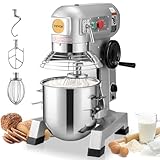
6. VEVOR Commercial Stand Mixer
A heavy planetary mixer aimed at small bakeries and food stalls. It offers a big bowl and strong motor, but it is built for volume rather than style.
Suits: small food businesses. Strengths: high capacity. Weaknesses: a bulky, utilitarian design. Skip it if you want a mixer for a small kitchen.
Care and Setup
- Check that the bowl is locked before starting on a heavy dough.
- Wipe the hook, bowl and splash guard right after use.
- Do not run the motor for long periods without a rest.
- Keep the mixer on a firm, level surface.
Mistakes to Avoid
- Buying on wattage alone and ignoring the gears and bowl design.
- Overloading the bowl beyond the maker’s guidance.
- Running the mixer at high speed for dough.
- Ignoring counter height and cabinet clearance.
What Wattage Does and Does Not Tell You
People searching for a one-thousand-watt mixer are usually trying to buy kneading strength. The trouble is that wattage on a label can mean different things. It may be the electrical power the motor draws, which is not the same as the work it delivers to the dough. Efficiency, gear design and the way the motor connects to the hook all change how much of that power ends up kneading.
A motor that draws a lot of power but drives through weak plastic gears may fail sooner than a lower-rated machine with sturdy metal drive parts. Likewise, a mixer designed for low-speed torque can handle stiff dough with fewer watts than a fast, light-duty motor. Torque and gearing matter as much as the headline number.
Ratings also differ between regions and between versions of the same model, so the number on one listing may not match another. Treat wattage as a rough indicator of class, and look for other cues: all-metal gears, a heavy cast body, a stated bowl capacity and the maker’s own guidance on maximum dough weight or flour quantity. If a listing says nothing about continuous run time or limits, check the manual or ask the seller before relying on it for large batches.
- Look for metal gears and a heavy body, not only a watt number.
- Find the maker’s stated maximum dough or flour quantity.
- Check the recommended run time for heavy dough.
Bowl-Lift, Tilt-Head and Low-Profile Designs Compared
The frame of a mixer shapes how it handles heavy dough. Tilt-head models hinge the motor at the back so the head lifts for adding ingredients and removing the bowl. They are convenient and compact, but the hinge can flex under a stiff load, and the head may bounce or lift if overloaded. They suit moderate batches.
Bowl-lift models keep the head fixed and raise the bowl on arms. The fixed head is generally steadier under load, which is why heavy bread bakers often prefer them. They tend to be taller and heavier, and you need space to lower the bowl. The arms and locking lever should feel firm, and the bowl should seat without wobble.
Low-profile bowl-drive mixers, like the one in this list, use a central column and a bowl that sits on the base. Their hooks work the dough differently, folding and pressing rather than orbiting, and they can handle large amounts of dough in a smaller height. The learning curve is real, since attachments and cleaning differ from a planetary mixer.
Consider what you bake. Weekly sandwich loaves may be fine in a sturdy tilt-head. Several loaves at once, or wholegrain and low-hydration dough, push toward bowl-lift or a dough-focused design. Match the frame to your largest regular batch, not your average one.
Bowl Capacity and Realistic Batch Sizes
Bowl capacity is stated in quarts or litres, but the amount of dough you can knead is much smaller than the nominal volume. Dough needs room to move and rise slightly as it develops, and a bowl filled to the brim will climb the hook and strain the motor. A common rule is to stay well below the maximum and follow the maker’s flour weight limit.
Think about your usual recipes. A standard two-loaf recipe needs far less capacity than a batch of six rolls plus bread. If you bake for a big family, a church group or a small stall, you might want the extra room. If you mostly make one loaf at a time, a very large machine wastes counter space and is harder to clean.
The shape of the bowl also changes results. A narrow, deep bowl lets the hook reach small amounts of dough poorly, so small batches may spin without kneading. A wide bowl handles smaller amounts better. Check the minimum quantity as well as the maximum, because some big machines work badly with a single small loaf.
Finally, remember weight. A full bowl of dough on a lifting arm is heavy, so look for sturdy handles and a design that lets you remove the bowl safely. If you have limited strength, a lighter bowl may matter more than extra capacity.
Safety, Noise and Motor Protection
Heavy dough puts real strain on a motor. Look for overload protection, which cuts power if the motor is working too hard, and for a bowl lock or interlock that stops the motor if the bowl is not seated. These features reduce the chance of damage or injury. A splash guard helps keep flour in the bowl, and a cover over the hook area keeps fingers away.
Noise varies. Powerful motors can be loud, and gears under load may whine. Listings rarely give decibel figures, and if they do, treat them as the maker’s own. If noise matters, read the manual notes on speed settings and consider running dough on the lowest suitable speed, which is generally quieter and kinder to the motor.
Use the mixer within its limits. Start on the lowest speed, add flour in portions, and stop to scrape down if dough climbs the hook. Give the motor rest breaks if it feels hot or if the maker recommends them. Never put hands or tools into a moving bowl, and unplug the machine before changing attachments or cleaning.
Place the mixer on a firm, level surface with the cord clear of heat and water. A heavy machine can walk across a counter under load, so keep an eye on it.
Fit, Support and Long-Term Ownership
A large mixer is a long-term purchase, so think beyond the first loaf. Measure your counter space, the clearance under cabinets with the head raised, and the weight you can lift if you store it away. Many people leave heavy mixers on the counter because moving them is a chore, so be sure you have a permanent spot.
Check what is in the box and what is extra. Dough hook, flat beater and whisk may come with the mixer, while splash guards, extra bowls and attachments may not. A second bowl is useful for baking in stages. Check whether replacement parts, such as bowls, hooks and gears, are available and how they are sold.
Support matters. Look at the warranty length, what it covers and who handles repairs. A brand with an established service network may be easier to deal with than one with limited support. For commercial-style units, confirm that home use is covered. Registration and receipts help if you need a claim.
Signs it is time to replace or service: grinding or clicking from the gearbox, grease leaking, the motor smelling hot, bowl or head wobble, hooks that no longer reach the bowl bottom, or a mixer that stalls on doughs it once handled. Stop using it if you see signs of damage.
Reading the Picks Side by Side: What Actually Separates Them
The six machines in this guide look similar on a spec sheet, yet they behave very differently once a stiff dough is in the bowl. The KitchenAid Commercial Series 8-Quart sits at the heavy-duty end of the list: it is built for repeated large batches and holds its speed when the dough firms up. The KitchenAid Pro Line Series covers much of the same ground in a slightly more home-friendly package, while the Cuisinart 7-Quart Stand Mixer appeals to bakers who want a generous bowl without stepping up to a fully commercial frame. Treat those three as the serious-baker tier of this guide, and judge them mainly on bowl size, how the head or bowl lifts, and whether the footprint suits your counter.
Further down the list the trade-offs change character. The Bosch Universal Plus takes a different mechanical approach from the planetary machines around it, which is why some bakers prefer it for bread even when its headline numbers look modest. The Aucma Stand Mixer is the value play: it handles ordinary doughs well and asks you to be more careful about batch size and rest periods. The VEVOR Commercial Stand Mixer is the outlier, aimed at users who genuinely mix at near-commercial volume. None of these is a bad machine in the abstract; the right question is which one matches the largest batch you actually make, week after week, rather than the largest batch you can imagine making once a year.
A useful way to choose is to work backwards from your flour weight. Write down the flour quantity in your most common recipe, then check it against the maker’s stated flour capacity for each pick, not the bowl volume. Bowl volume tells you what fits; flour capacity tells you what the motor and gearing can knead without straining. If your regular bake sits close to a machine’s limit, step up a tier. If it sits comfortably in the middle of the range, the mid-priced picks will usually serve you just as well and leave counter space and budget for a good scale, a proofing container and better flour.
A Repeatable Test Bake Before You Commit to One Machine
If you are torn between two picks, a structured test bake tells you more than another hour of reading listings. Use the same recipe, the same flour and the same water temperature on both machines, and mix at the speed the manual recommends for dough. Note how long the dough takes to clear the sides of the bowl, whether the head rocks or the whole body walks on the counter, and how warm the motor housing feels after the knead finishes. Small differences in those three observations predict long-term satisfaction far better than headline wattage.
Pay attention to how the dough behaves in the first two minutes. A good match pulls the ingredients into a single mass quickly, without you having to stop repeatedly and scrape flour from the corners. If dry flour keeps hiding under the hook, check the beater-to-bowl clearance before blaming the motor; a small adjustment often transforms the mixing action. Also listen to the sound under load. A steady, even note suggests the gearing is comfortable, while a rising and falling surge usually means the batch is at the edge of what that machine wants to knead.
Finally, judge the cleanup honestly, because it decides whether the mixer gets used on busy weeknights. Time how long it takes to wash the bowl and hook, and notice whether dough creeps into seams or under the head. Machines that are quick to clean, like the simpler designs among these picks, tend to be used more often, and a mixer that is used weekly is a better buy than a more powerful one that feels like a project every time it comes out. Record your notes while they are fresh; after two test bakes the differences between close picks are usually obvious.
Kneading Technique That Gets More Out of Any Pick on This List
Technique matters as much as hardware. Start by holding back a small amount of the recipe’s water, mix the flour and liquid just until no dry pockets remain, then let the dough rest before the main knead. That short rest, often called an autolyse when only flour and water are involved, hydrates the flour so the mixer does less work and the dough comes together smoother. Add the held-back water gradually if the dough feels stiff, rather than flooding the bowl at the start and forcing the hook to slip.
Speed discipline protects both the dough and the machine. Most makers intend dough to be kneaded on a low speed, and running faster rarely develops gluten sooner; it mostly throws the dough around the bowl and heats the motor. If the dough climbs the hook, stop, push it down, and restart rather than reaching for a higher speed. For enriched doughs, add butter or other fats in small pieces after the gluten has started to form, because fat added too early coats the flour and slows development, making the mixer run longer for the same result.
Learn to read doneness by feel instead of by the clock alone. Properly kneaded dough looks smooth, pulls away from the bowl, and stretches thin without tearing immediately. Under-kneaded dough feels rough and tears quickly; overworked dough turns slack and sticky and loses its spring. Checking a minute early costs nothing, while pushing far past the point of good development cannot be undone. These habits lift the results from every pick here, from the Aucma Stand Mixer at the value end to the KitchenAid Commercial Series 8-Quart at the top.
Troubleshooting: The Problems Readers Run Into Most
A mixer that walks across the counter is usually telling you the batch is too large or too stiff for its weight and footing, not that it is broken. Reduce the batch, check that the feet are clean and the counter is dry, and make sure the dough is not far drier than the recipe intends. Persistent walking on modest batches is a sign the machine is undersized for your baking, which is exactly the situation the heavier picks in this guide exist to solve.
Burning smells and sudden shut-offs point to thermal protection doing its job. Let the machine cool fully before restarting, and treat the episode as information: split the next batch in two, confirm you used the recommended speed, and check that vents were not blocked by a towel or a wall. If shut-offs happen with small, soft doughs, that is no longer a technique issue and it is time to talk to the maker’s support while the warranty is still in your favor.
Uneven mixing, where part of the dough is smooth and part is still shaggy, usually comes down to clearance or order of ingredients. Liquids in first helps the hook gather the flour evenly, and pausing once to scrape the bowl is normal even on the best machines. If one side of the bowl consistently escapes the hook, the clearance adjustment described in most manuals is the fix. Keep notes on what changed; dough problems repeat until the cause is identified, and a short log turns guesswork into a quick adjustment next time.
Ownership Over Years: Care Schedule, Storage and Knowing When to Upgrade
Stand mixers reward a light but regular care routine. Wipe the body and head after each use before flour paste hardens in the seams, wash the bowl and attachments promptly, and dry the hook shaft area where moisture likes to linger. Every few months, check the beater clearance, look over the cord for damage, and run the machine empty for a few seconds to listen for new noises. A change in sound is often the earliest warning of wear, and catching it early is the difference between a minor service and a failed mixer on a holiday baking day.
Storage affects lifespan more than most people expect. A mixer kept on the counter gets used more, but it should sit where steam from kettles and dishwashers does not bathe it daily. If you store yours in a cabinet, lift with your legs and keep the bowl attached so the head is protected. Keep the manual and any small parts, such as the pouring shield and extra beater, together in one labeled bag; replacement attachments are easiest to match when you know the exact model variant you own.
Upgrade when your baking outgrows the machine, not when a newer model simply appears. Honest triggers include regularly splitting batches, repeated thermal shut-offs on normal doughs, or a shift toward stiffer doughs your current mixer clearly dislikes. When that day comes, this guide’s tiers still apply: move up one level of capacity and drive strength rather than jumping to the largest machine available, and your next mixer, whether it is the Cuisinart 7-Quart Stand Mixer or the KitchenAid Commercial Series 8-Quart, will feel like a considered step instead of an impulse.
Flour, Water and Batch Planning: The Arithmetic Behind Good Kneading
Most mixer disappointment is really batch-planning disappointment. A recipe written for hand kneading often doubles badly in a machine, because the hook needs enough dough to grip and fold, yet the bowl and motor set a ceiling that doubling crosses. Before you scale a recipe, weigh the flour in your normal batch and compare it honestly with the maker’s flour capacity for your pick. Staying inside that figure, even when it means baking two smaller batches back to back, produces better dough and a calmer machine than one heroic batch that climbs, stalls and overheats.
Water temperature is the quiet variable home bakers control least and benefit from most. Dough warms as it mixes, because friction is heat, so starting with cooler water in summer and slightly warmer water in a cold kitchen keeps the finished dough in the range your recipe expects. If your doughs consistently finish warm and ferment faster than the recipe suggests, the fix is in the jug, not in a different mixer. Note the water temperature that worked in your baking log and repeat it; consistency here makes every other variable easier to judge.
Plan the bake around the mixer’s rest needs as well as the dough’s. Back-to-back heavy batches are where mid-range machines earn respect or show their limits, and a short pause between batches, bowl scraped and motor cooling, is cheap insurance. Bakers who proof in the same bowl they mixed in should remember the dough will rise into the head space, so choose the bowl position and cover with that growth in mind. None of this requires new equipment, just the habit of treating the mixer as one step in a planned sequence rather than the whole process.
Accessories and Add-Ons: What Earns Its Drawer Space
A second bowl is the add-on experienced owners praise most, because it lets one dough proof while the next mixes, and it rescues the day a bowl is dropped or a recipe needs a clean start mid-bake. A spare hook or beater matters for bakers who run enriched and lean doughs in the same session. Beyond those, judge every accessory by a single test: will it be used monthly in your real baking, or is it a solution to a problem you do not have? Drawers full of untouched attachments are the tax on buying for an imagined kitchen.
Pouring shields and splash guards divide opinion, and both sides are right. They genuinely reduce flour clouds at the first mix, especially with the deep bowls on picks like the Cuisinart 7-Quart Stand Mixer, yet they can also slow you down when adding ingredients in stages. If you regularly add flour to a running machine, a shield earns its place; if you mix everything in before starting, it will live in a cupboard. The same logic applies to bowl covers for proofing, useful if your kitchen is drafty, redundant if you already proof in a container with a lid.
Attachment hubs on some machines promise pasta rollers, grinders and grain mills, and those tools can be excellent, but they ask the motor to do work it was not optimized for and they deserve their own honest assessment. Buy the mixer for the dough first, because that is the job it will do weekly, and treat hub attachments as a bonus to explore later. The bakers who stay happiest with machines like the KitchenAid Pro Line Series or the Bosch Universal Plus are the ones who chose for the core task and let extras prove themselves one at a time.
A Short Practice Routine for Your First Month With a New Mixer
Week one with a new mixer should be deliberately easy: a soft, forgiving dough at a comfortable batch size, mixed while you watch and listen rather than while you cook something else. Learn the sounds your machine makes unloaded and loaded, learn how the head or bowl moves, and find where the controls fall under your hand. That familiarity is what later lets you hear trouble early, because you will know exactly what normal sounds like on your own counter, with your own recipes.
In week two, repeat a favorite recipe exactly and change nothing, then write down the result honestly: mixing time, any scraping stops, how the dough felt at the end. In week three, make the same dough again and adjust one thing only, water temperature, rest time or batch size, and compare against your notes. This slow loop feels unambitious, yet it is how bakers come to trust a machine, and trust is what turns a powerful mixer from a special-occasion appliance into the default tool it was bought to be.
By the second month, deliberately cook at the edges of your real routine: your largest honest batch, your stiffest regular dough, and a back-to-back session if your baking ever demands one. Note where the machine feels comfortable and where it asks for help, and bake inside the comfortable zone from then on. If the edges disappoint, you have learned it while returns or exchanges are still simple, which is precisely why the practice month matters more than any first-day impression.
Keep the log going lightly after that, a line per bake rather than an essay. Flour changes, seasons change and your own technique improves, and the log separates those stories from the machine’s. Owners who keep even that much record rarely blame a mixer wrongly or praise it vaguely; they know what it does, and their next purchase, whenever it comes, is the easiest decision in the kitchen because it is based on evidence instead of hope.
A Final Decision Checklist Before You Buy
One more check is worth making before you order: measure the space, surface or cupboard where this purchase will actually live, and compare those numbers with the product’s stated dimensions rather than its photographs. Listings are shot to flatter, and scale is the first casualty of flattering photography. A product that fits its home gets used daily; one that must be stored awkwardly, dragged out or worked around will be quietly resented within a month, however well it performs. Two minutes with a tape measure has saved more purchases in this category than any other single habit.
If you are buying for someone else, weight the forgiving end of this guide more heavily than you would for yourself. A gift succeeds when it fits the recipient’s routine without asking them to change it, so favor the pick that tolerates varied habits, washes easily and does not depend on accessories they do not own. Include the receipt or a note of the exact model, and mention care in one friendly sentence rather than a lecture. The best-regarded gifts in this category are the ones still in daily use a year later, and that outcome is decided by fit long before it is decided by quality.
And if two picks still seem equal after all of this, choose the one whose maker supports it better where you live: clearer documentation, easier spare parts and a range that stays available for replacements. Small differences in the product itself fade within weeks of use, while support is the gift that keeps arriving for years. That tie-breaker, applied calmly, ends most deadlocks in this guide, and it has the extra virtue of being right even when the products themselves are too close to call.
Before you settle on a final choice, run one last comparison against your own routine rather than against the marketing. List the three jobs your high-power stand mixer will do most often, in the order you actually do them, and check the pick you favor against each one in turn. Most disappointment in this category comes from a product that excels at a job its owner rarely gives it, while being merely adequate at the daily task. A few minutes with that list is the cheapest insurance in the whole purchase, and it frequently moves readers one place up or down this guide’s list, which is exactly what a list is for.
It also helps to decide in advance what would make you return or replace the purchase, because that decision is clearer before a box is open than after a week of hoping a mismatch improves. A fit that is wrong, a part that does not seal, seat or connect as described, or a result that falls short on the first honest test are all legitimate reasons to act quickly while returns are simple. Minor unfamiliarity is not; most products in this guide have a short learning curve, and the second or third use is the fairer test. Knowing the difference in advance protects both your money and your patience.
High-Power Mixer FAQ
Does more wattage mean better kneading?
Not always. Gear quality, hook shape and bowl design affect how well power reaches the dough.
Do I need a 7-quart bowl or larger?
Only if you bake big batches. A smaller bowl suits two loaves at a time.
Are commercial mixers suitable for home use?
Many are, if you have the space and a sturdy counter.
What else should I check besides power?
Look at the bowl lock, the base weight and the hook shape, because these decide how steady the mixer stays. Read the user guide for the maker’s own limit on dough weight and kneading time.
Will a big mixer fit under my cabinets?
Measure the height with the head raised, because large bowl-lift and tilt-head models need generous clearance above the counter.
Why do wattage ratings differ between listings of the same mixer?
Makers and regions may quote input power, peak power or a regional version of the model. Compare the model number and check the manual for the figure that applies to you.
Can I knead a small amount of dough in a very large mixer?
Sometimes poorly. A deep, wide bowl may leave small batches out of reach of the hook. Check the minimum quantity in the manual.
Which is steadier for heavy dough, tilt-head or bowl-lift?
Bowl-lift designs are generally steadier because the head is fixed. A good tilt-head can still manage moderate batches.
How long can I run a mixer on heavy dough?
Follow the maker's guidance. Many recommend limited run times and rest breaks. Overheating signs include a hot smell or slowing motor.
Should I buy a second bowl?
It helps if you bake in stages, because you can swap without washing. Confirm that the bowl fits your exact model.
What speed should I use for dough?
Low speeds are standard for kneading and are easier on the gears. Higher speeds are for whisking and batters.
Do big mixers need special electrical outlets?
Usually a standard household outlet is fine, but check the label for current draw and avoid sharing the circuit with other heavy appliances.
How Dough Type Changes the Load on the Motor
Not all bread dough asks the same thing of a mixer. A wet ciabatta at high hydration is sticky and slack, so it clings to the bowl but offers little resistance. A stiff bagel dough, with relatively little water, is the opposite: dense, springy and hard on the gearbox. Pizza dough sits in between, and enriched doughs such as brioche add butter and eggs that make the mass heavier and slower to come together.
The practical lesson is that a mixer that handles one style comfortably may struggle with another. Stiff doughs generate the most strain, so if bagels, pretzels or dense whole grain loaves are your regular bakes, weight the motor and gear build more heavily in your decision. If you mostly make soft sandwich loaves and focaccia, a lighter-duty large mixer may be all you need.
- Low-hydration doughs (bagels, pretzels): highest strain, shorter safe batch sizes.
- Medium-hydration doughs (sandwich loaves, pizza): the everyday benchmark for most buyers.
- High-hydration doughs (ciabatta, focaccia): easier on the motor, but messier and prone to climbing the hook.
- Enriched doughs (brioche, cinnamon rolls): need long kneading, which tests heat build-up more than raw torque.
Kneading Habits That Protect the Machine
How you run the mixer matters nearly as much as what you buy. Many bakers get the dough going by hand or with a short stir on the lowest setting, so the flour is hydrated before the motor takes on the full load. Dry flour dumped into a fast bowl can throw dust and push the hook against stiff, unmixed clumps.
Most bread recipes call for a low speed for the kneading stage. Raising the speed rarely speeds up gluten development enough to be worth the strain, and it can make the machine walk across the counter. Pausing now and then to scrape the bowl and let the motor rest is a sensible habit, especially with large batches.
Many bakers also use an autolyse, resting the flour and water together for twenty to thirty minutes before adding salt and yeast. The rest lets the flour absorb water and begin forming gluten on its own, which usually shortens the time the machine has to knead. That saves wear and cuts the risk of overheating the dough.
Attachments and Accessories Worth Considering
Heavy bread work is easier with a few extras, but most are optional. A pouring shield keeps flour inside the bowl while you add ingredients. A spare bowl lets you start a second batch while the first rises. A silicone bowl scraper or a flexible spatula saves time clearing dough from the hook and sides.
Dough hooks themselves differ. Spiral hooks, C-shaped hooks and the dough arms found on low-profile bowl-drive machines all knead in different ways, and none is universally best. What counts is whether the hook reaches the bottom of the bowl without scraping and whether it keeps the dough in contact with the bowl rather than climbing the shaft.
Before you buy a replacement or add-on part, check that it matches your exact model and bowl size. Accessories sold for a smaller mixer from the same brand often do not fit a larger one, and the listing for a specific part should state which models it supports.
Total Cost of Ownership Beyond the Sticker Price
A mixer that costs less at purchase can cost more over several years if it needs repairs or is difficult to get serviced. When you compare options, look at warranty length, whether the maker offers replacement gears and bowls, and how easy it is to reach support. Heavy-duty mixers are often designed so a worn gear or part can be swapped, which extends their working life.
Resale value is another quiet factor. Well-known models with a long track record tend to hold their value better on used markets, while lesser-known budget machines are harder to resell. That does not make the budget option a poor choice, but it is worth knowing if you expect to upgrade later.
| Cost factor | What to check |
|---|---|
| Warranty | Length, and whether the motor and gears are covered |
| Replacement parts | Availability of bowls, hooks and gears for your model |
| Servicing | Whether the maker offers repair or authorized service |
| Running cost | Electricity is minor; the main cost is wear and parts |
Matching the Mixer to How Often You Bake
A weekly baker making one or two loaves does not need the same machine as someone who bakes daily or sells loaves at a market. For occasional use, a large tilt-head mixer may serve for years. For batches of several loaves, frequent stiff doughs or a small home business, a bowl-lift or commercial-style machine is more likely to last, because it is designed for long, repeated loads.
Be honest about frequency. Buying far more machine than you need adds cost, weight and storage trouble. Buying too little means a mixer that works hard on every batch and may wear sooner. If your needs sit between the two, a mid-range bowl-lift model is often the comfortable middle ground.
Related guides
- 6 Best Hand Mixers for Bread Dough: Hooks and Power (2026)
- 6 Best Stand Mixers for Dough: Pizza, Cookie and Bread
- 6 Best Stand Mixers for Bread Dough
Frequently Asked Questions
How do I know when bread dough is kneaded enough in a stand mixer?
Look for dough that pulls away from the bowl sides and feels smooth and slightly tacky. The windowpane test helps: stretch a small piece gently, and if it forms a thin, translucent film without tearing, the gluten is developed. Timing varies by recipe, flour and mixer speed.
Can a stand mixer overknead dough?
Yes, though it is harder to do than by hand because the machine is steady. Overkneaded dough can turn slack, sticky and weak, and may tear instead of stretching. Heat from long mixing also speeds fermentation. Follow the recipe time and check the dough by feel rather than only the clock.
Is it better to knead dough in the mixer or by hand for the last stage?
Many bakers finish by hand for a minute or two to judge texture and shape the dough. The mixer does the heavy lifting, and a short hand knead lets you feel hydration and elasticity before the first rise. It is a personal choice, not a requirement.
Why does my dough climb up the dough hook?
Climbing usually happens with wetter doughs or small batches that the hook cannot grip against the bowl. A little extra flour, a slightly larger batch or a lower speed can help. Check the hook height as well, since one set too high or low changes how the dough moves.
The Short Version
For a commercial feel, the KitchenAid Commercial Series. For a middle step, the KitchenAid Pro Line. For a tilt-head with power, the Cuisinart. For dough focus, the Bosch Universal Plus. For a budget-friendly large bowl, the Aucma. For volume, the VEVOR.

