Dough comes in many types. Pizza dough is smooth and elastic, cookie dough is thick and sticky, and pasta and pie doughs need a gentler touch. A good dough mixer should handle your usual batch without straining, and it should fit the counter space you actually have.
This list leans toward everyday dough tasks and mixed sizes, from a compact mixer to a stronger low-profile model. We have not used these products ourselves, so confirm bowl size, attachments and motor details on the current listing before buying. Capacity numbers vary between versions, so we avoid exact figures.
As an Amazon Associate we earn from qualifying purchases. Links below are affiliate links, and they do not change the product information we give.
What to Look For
| Feature | Why it matters |
|---|---|
| Dough type | Stiff bread dough needs more power than cookie or pizza dough |
| Size | A compact mixer saves space, but it limits the batch |
| Attachments | A dough hook is essential, and a spare bowl helps in big baking sessions |
| Storage | Check the height under your cabinets |
In this guide
Specs at a Glance
| Mixer | Type | Bowl | Notes |
|---|---|---|---|
| Bosch Universal Plus | Low-profile bowl drive | Large | Dough-focused design |
| KitchenAid Artisan Mini | Tilt-head planetary | Small | Compact body |
| DASH Everyday Stand Mixer | Tilt-head | Small to mid class | Budget-friendly, colorful |
| Hamilton Beach Eclectrics | Tilt-head planetary | Mid class | All-metal body |
| Sunbeam Mixmaster | Tilt-head | Mid class | Retro-style body |
| Kitchen in the Box Stand Mixer | Tilt-head | Mid class | Compact and light |
The 6 Best Stand Mixers for Dough

Top pickBest for big batches of dough
1. Bosch Universal Plus
A low-profile mixer with a central drive, built around a large bowl and a dough hook. It is known for kneading big batches and is often chosen by people who bake bread weekly.
Suits: big batches of dough. Strengths: strong kneading and a large bowl. Weaknesses: an unusual look and learning curve. Skip it if you prefer a planetary layout.

Best for small kitchens
2. KitchenAid Artisan Mini
A smaller version of the Artisan with a more compact body and bowl. It suits small batches of pizza dough, cookies and cakes, and fits a crowded counter.
Suits: small kitchens. Strengths: a compact body and trusted brand. Weaknesses: limited batch size. Skip it if you want to knead big loaves.
View KitchenAid Artisan Mini on Amazon

Best for casual baking
3. DASH Everyday Stand Mixer
DASH makes small, bright appliances, and this mixer is aimed at light baking. It comes with a dough hook and beaters, which makes it a simple entry point for cookies, cakes and small batches.
Suits: casual baking. Strengths: a budget-friendly build and many colors. Weaknesses: not made for heavy bread dough. Skip it if you bake loaves often.

Best for everyday baking
4. Hamilton Beach Eclectrics
A tilt-head mixer with a metal body and a mid-sized bowl. Its pitch is a solid build at a moderate level, with dough hook, whisk and beater included.
Suits: everyday baking. Strengths: an all-metal body. Weaknesses: mid-size batches only. Skip it if you want a large bowl.
View Hamilton Beach Eclectrics on Amazon
Best for retro-minded bakers
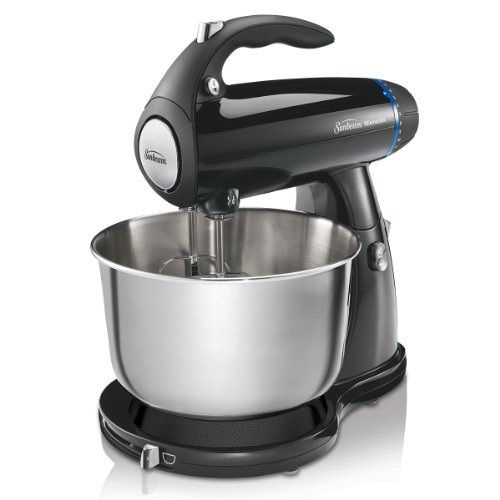
5. Sunbeam Mixmaster
Sunbeam’s Mixmaster name goes back many decades, and the modern stand mixer uses a retro style. It suits cookie dough, cake batter and moderate pizza dough.
Suits: retro-minded bakers. Strengths: a classic look and simple controls. Weaknesses: limited motor power for stiff dough. Skip it if you bake dense bread weekly.

Best for small households
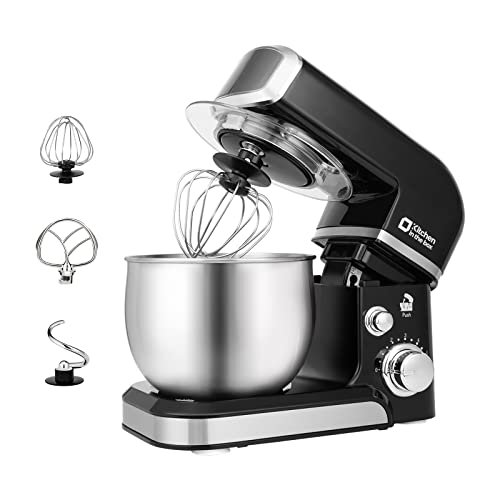
6. Kitchen in the Box Stand Mixer
A lighter, compact mixer sold in several colors, with a dough hook, whisk and beater. It is popular with small households that want a simple machine.
Suits: small households. Strengths: a compact and light design. Weaknesses: not built for heavy loads. Skip it if you want a heavy-duty motor.

Care and Setup
- Clean the dough hook right after use.
- Wipe flour dust from the vents and the head hinge.
- Do not run long cycles on stiff dough without rests.
- Store attachments together so you can find them.
Mistakes to Avoid
- Choosing a small mixer and then making big bread batches.
- Using the wrong attachment for sticky dough.
- Pouring in too much flour while the motor is running.
- Ignoring cabinet height when picking a tall model.
Matching the Mixer to Each Dough Type
The word dough covers very different textures, so the best mixer depends on what you make most. Pizza dough is elastic and moderately firm, and it needs enough kneading to build stretch. Cookie dough is thick, sticky and heavy with sugar and fat, but it requires little gluten development, so the strain comes from stiffness rather than from long work. Pie and pastry dough must stay cold and barely mixed, so a stand mixer is used only briefly, if at all. Pasta dough is very stiff and dry, and can overwhelm light motors.
Bread dough sits at the demanding end because it needs long, steady kneading. Enriched doughs, such as brioche, are soft but need extended mixing to develop structure, so they stress a motor over time rather than at once.
Start by ranking the doughs you make. If cookie dough and cake batter are the main jobs, a lighter mixer will be fine. If pizza and bread are weekly tasks, step up to a stronger motor and a more stable body. If you make a mix of everything, plan around the stiffest dough you regularly handle, since that sets the limit.
Also think about batch frequency. A machine that runs for ten minutes once a week has an easier life than one that runs half an hour every day.
- Cookie and cake: moderate power is enough.
- Pizza: needs steady kneading and a good hook.
- Bread and bagels: need strong, stable machines.
- Pasta: stiff, so check the maker’s limits.
Attachments and the Right Tool for Each Job
A stand mixer usually ships with three main tools. The flat beater handles batters, cookie dough, frostings and mashed mixtures. The wire whisk adds air to egg whites, cream and light batters. The dough hook kneads yeast dough. Using the wrong tool is a common cause of poor results and strain on the motor. A flat beater on bread dough just slaps it around, while a dough hook on cake batter will not blend it well.
Some mixers include a scraper beater with a flexible edge that cleans the bowl as it turns, which saves stopping to scrape and improves mixing of sticky doughs. A pouring shield keeps flour and splashes in the bowl. Extra bowls let you move from one stage to another without washing.
Beyond the basics, many mixers have a power hub for optional attachments such as pasta rollers, meat grinders and food processors. Check that the hub is present and what type it is, and whether the attachments you want are made for your model. Do not assume attachments are interchangeable across brands.
Check the material of each tool. Coated tools can chip or wear if washed roughly, and metal tools can dent. Read the care instructions, because some should not go in the dishwasher. Keep all attachments together in a drawer or a storage box so none go missing.
Compact Versus Large Mixers: Real Trade-Offs
A compact mixer saves counter space, costs less to store and is easier to lift and clean. It is a good choice for small kitchens, single people and occasional bakers. The trade-offs are smaller capacity and often a lighter motor, so large batches of stiff dough can overload it. Many compact machines also have a shorter hook reach, which leaves flour at the bottom unless you scrape.
A larger mixer handles bigger batches and often heavier doughs, but takes more space and weight. If you cannot leave it on the counter, you must be able to lift it comfortably. Large bowls can also handle small amounts poorly, because the hook may not touch the dough.
Think about batch size honestly. A single pizza dough for two people needs very little capacity. A weekend of baking for a family needs much more. Looking at how much flour a typical recipe uses, then checking the listing for the maker’s flour or dough weight limit, gives a realistic picture. Capacity figures vary and differ between versions, so confirm on the product page.
If you are torn, lean slightly larger than your usual need so that occasional big batches do not push the motor, but do not buy a model that you will not use because it is too bulky.
Motor Protection and Working Habits That Extend Life
Most stand mixer problems come from habits, not defects. Overloading the bowl, running at high speed on dough and ignoring warning signs are the usual causes. Learn the maker’s guidance on maximum quantities, and keep to the low speeds the manual recommends for dough.
Watch and listen as the mixer works. A steady hum is normal. A sudden deepening, a slowing motor or a burning smell means stop. Let the machine rest and cool, reduce the batch and try again. Keep the dough from climbing the hook by scraping it down, and add flour a little at a time.
Keep the mixer clean. Flour dust in vents and around the head hinge can build up. Wipe with a damp cloth, never submerge the body, and unplug before cleaning. Wash the hook and bowl soon after use, because dried dough is hard to remove and can hide residue.
Use a stable surface and a non-slip mat if the machine moves. Check that the head locks securely on tilt-head models before starting. If the head or bowl wobbles, stop and reseat. Over time, check for oil leaks around the head, which can indicate worn seals. Lubrication and service should follow the manual, not be improvised.
Shopping Questions and Signs It Is Time to Replace
Before buying, ask: What is the stiffest dough I will make? How many people am I baking for? Where will it live? Which attachments come in the box? How long is the warranty, and who services it? Are replacement bowls and hooks sold separately? Answering these keeps you from buying a mixer that is wrong in size or power.
Look at the cord length, the height with the head raised and the weight. Check the color or finish only after the practical points are settled. Read the manual if it is available online, as it tells you the real limits.
Budget tiers here are best described qualitatively. Entry-level mixers suit light baking and small households. Mid-range machines usually add stronger motors and sturdier builds. Higher-end models focus on durability and capacity. Pay for strength only if your dough demands it.
Signs it is time to replace: persistent stalling on doughs it used to handle, grinding or clicking, a head that will not stay locked, hooks that no longer reach the bowl, cracked housing or a burnt smell. A mixer that struggles with ordinary cookie dough is telling you it is worn or underpowered. If repairs cost close to a new unit, replacement is usually sensible.
How These Six Picks Divide the Work Across Dough Types
The six machines in this guide look similar on a spec sheet, yet they behave very differently once a stiff dough is in the bowl. The Bosch Universal Plus sits at the heavy-duty end of the list: it is built for repeated large batches and holds its speed when the dough firms up. The KitchenAid Artisan Mini covers much of the same ground in a slightly more home-friendly package, while the DASH Everyday Stand Mixer appeals to bakers who want a generous bowl without stepping up to a fully commercial frame. Treat those three as the serious-baker tier of this guide, and judge them mainly on bowl size, how the head or bowl lifts, and whether the footprint suits your counter.
Further down the list the trade-offs change character. The Hamilton Beach Eclectrics takes a different mechanical approach from the planetary machines around it, which is why some bakers prefer it for bread even when its headline numbers look modest. The Sunbeam Mixmaster is the value play: it handles ordinary doughs well and asks you to be more careful about batch size and rest periods. The Kitchen in the Box Stand Mixer is the outlier, aimed at users who genuinely mix at near-commercial volume. None of these is a bad machine in the abstract; the right question is which one matches the largest batch you actually make, week after week, rather than the largest batch you can imagine making once a year.
A useful way to choose is to work backwards from your flour weight. Write down the flour quantity in your most common recipe, then check it against the maker’s stated flour capacity for each pick, not the bowl volume. Bowl volume tells you what fits; flour capacity tells you what the motor and gearing can knead without straining. If your regular bake sits close to a machine’s limit, step up a tier. If it sits comfortably in the middle of the range, the mid-priced picks will usually serve you just as well and leave counter space and budget for a good scale, a proofing container and better flour.
A Repeatable Test Bake Before You Commit to One Machine
If you are torn between two picks, a structured test bake tells you more than another hour of reading listings. Use the same recipe, the same flour and the same water temperature on both machines, and mix at the speed the manual recommends for dough. Note how long the dough takes to clear the sides of the bowl, whether the head rocks or the whole body walks on the counter, and how warm the motor housing feels after the knead finishes. Small differences in those three observations predict long-term satisfaction far better than headline wattage.
Pay attention to how the dough behaves in the first two minutes. A good match pulls the ingredients into a single mass quickly, without you having to stop repeatedly and scrape flour from the corners. If dry flour keeps hiding under the hook, check the beater-to-bowl clearance before blaming the motor; a small adjustment often transforms the mixing action. Also listen to the sound under load. A steady, even note suggests the gearing is comfortable, while a rising and falling surge usually means the batch is at the edge of what that machine wants to knead.
Finally, judge the cleanup honestly, because it decides whether the mixer gets used on busy weeknights. Time how long it takes to wash the bowl and hook, and notice whether dough creeps into seams or under the head. Machines that are quick to clean, like the simpler designs among these picks, tend to be used more often, and a mixer that is used weekly is a better buy than a more powerful one that feels like a project every time it comes out. Record your notes while they are fresh; after two test bakes the differences between close picks are usually obvious.
Kneading Technique That Gets More Out of Any Pick on This List
Technique matters as much as hardware. Start by holding back a small amount of the recipe’s water, mix the flour and liquid just until no dry pockets remain, then let the dough rest before the main knead. That short rest, often called an autolyse when only flour and water are involved, hydrates the flour so the mixer does less work and the dough comes together smoother. Add the held-back water gradually if the dough feels stiff, rather than flooding the bowl at the start and forcing the hook to slip.
Speed discipline protects both the dough and the machine. Most makers intend dough to be kneaded on a low speed, and running faster rarely develops gluten sooner; it mostly throws the dough around the bowl and heats the motor. If the dough climbs the hook, stop, push it down, and restart rather than reaching for a higher speed. For enriched doughs, add butter or other fats in small pieces after the gluten has started to form, because fat added too early coats the flour and slows development, making the mixer run longer for the same result.
Learn to read doneness by feel instead of by the clock alone. Properly kneaded dough looks smooth, pulls away from the bowl, and stretches thin without tearing immediately. Under-kneaded dough feels rough and tears quickly; overworked dough turns slack and sticky and loses its spring. Checking a minute early costs nothing, while pushing far past the point of good development cannot be undone. These habits lift the results from every pick here, from the Sunbeam Mixmaster at the value end to the Bosch Universal Plus at the top.
When a Mixer Struggles: Reading the Warning Signs Early
A mixer that walks across the counter is usually telling you the batch is too large or too stiff for its weight and footing, not that it is broken. Reduce the batch, check that the feet are clean and the counter is dry, and make sure the dough is not far drier than the recipe intends. Persistent walking on modest batches is a sign the machine is undersized for your baking, which is exactly the situation the heavier picks in this guide exist to solve.
Burning smells and sudden shut-offs point to thermal protection doing its job. Let the machine cool fully before restarting, and treat the episode as information: split the next batch in two, confirm you used the recommended speed, and check that vents were not blocked by a towel or a wall. If shut-offs happen with small, soft doughs, that is no longer a technique issue and it is time to talk to the maker’s support while the warranty is still in your favor.
Uneven mixing, where part of the dough is smooth and part is still shaggy, usually comes down to clearance or order of ingredients. Liquids in first helps the hook gather the flour evenly, and pausing once to scrape the bowl is normal even on the best machines. If one side of the bowl consistently escapes the hook, the clearance adjustment described in most manuals is the fix. Keep notes on what changed; dough problems repeat until the cause is identified, and a short log turns guesswork into a quick adjustment next time.
Ownership Over Years: Care Schedule, Storage and Knowing When to Upgrade
Stand mixers reward a light but regular care routine. Wipe the body and head after each use before flour paste hardens in the seams, wash the bowl and attachments promptly, and dry the hook shaft area where moisture likes to linger. Every few months, check the beater clearance, look over the cord for damage, and run the machine empty for a few seconds to listen for new noises. A change in sound is often the earliest warning of wear, and catching it early is the difference between a minor service and a failed mixer on a holiday baking day.
Storage affects lifespan more than most people expect. A mixer kept on the counter gets used more, but it should sit where steam from kettles and dishwashers does not bathe it daily. If you store yours in a cabinet, lift with your legs and keep the bowl attached so the head is protected. Keep the manual and any small parts, such as the pouring shield and extra beater, together in one labeled bag; replacement attachments are easiest to match when you know the exact model variant you own.
Upgrade when your baking outgrows the machine, not when a newer model simply appears. Honest triggers include regularly splitting batches, repeated thermal shut-offs on normal doughs, or a shift toward stiffer doughs your current mixer clearly dislikes. When that day comes, this guide’s tiers still apply: move up one level of capacity and drive strength rather than jumping to the largest machine available, and your next mixer, whether it is the DASH Everyday Stand Mixer or the Bosch Universal Plus, will feel like a considered step instead of an impulse.
Flour, Water and Batch Planning: The Arithmetic Behind Good Kneading
Most mixer disappointment is really batch-planning disappointment. A recipe written for hand kneading often doubles badly in a machine, because the hook needs enough dough to grip and fold, yet the bowl and motor set a ceiling that doubling crosses. Before you scale a recipe, weigh the flour in your normal batch and compare it honestly with the maker’s flour capacity for your pick. Staying inside that figure, even when it means baking two smaller batches back to back, produces better dough and a calmer machine than one heroic batch that climbs, stalls and overheats.
Water temperature is the quiet variable home bakers control least and benefit from most. Dough warms as it mixes, because friction is heat, so starting with cooler water in summer and slightly warmer water in a cold kitchen keeps the finished dough in the range your recipe expects. If your doughs consistently finish warm and ferment faster than the recipe suggests, the fix is in the jug, not in a different mixer. Note the water temperature that worked in your baking log and repeat it; consistency here makes every other variable easier to judge.
Plan the bake around the mixer’s rest needs as well as the dough’s. Back-to-back heavy batches are where mid-range machines earn respect or show their limits, and a short pause between batches, bowl scraped and motor cooling, is cheap insurance. Bakers who proof in the same bowl they mixed in should remember the dough will rise into the head space, so choose the bowl position and cover with that growth in mind. None of this requires new equipment, just the habit of treating the mixer as one step in a planned sequence rather than the whole process.
Accessories and Add-Ons: What Earns Its Drawer Space
A second bowl is the add-on experienced owners praise most, because it lets one dough proof while the next mixes, and it rescues the day a bowl is dropped or a recipe needs a clean start mid-bake. A spare hook or beater matters for bakers who run enriched and lean doughs in the same session. Beyond those, judge every accessory by a single test: will it be used monthly in your real baking, or is it a solution to a problem you do not have? Drawers full of untouched attachments are the tax on buying for an imagined kitchen.
Pouring shields and splash guards divide opinion, and both sides are right. They genuinely reduce flour clouds at the first mix, especially with the deep bowls on picks like the DASH Everyday Stand Mixer, yet they can also slow you down when adding ingredients in stages. If you regularly add flour to a running machine, a shield earns its place; if you mix everything in before starting, it will live in a cupboard. The same logic applies to bowl covers for proofing, useful if your kitchen is drafty, redundant if you already proof in a container with a lid.
Attachment hubs on some machines promise pasta rollers, grinders and grain mills, and those tools can be excellent, but they ask the motor to do work it was not optimized for and they deserve their own honest assessment. Buy the mixer for the dough first, because that is the job it will do weekly, and treat hub attachments as a bonus to explore later. The bakers who stay happiest with machines like the KitchenAid Artisan Mini or the Hamilton Beach Eclectrics are the ones who chose for the core task and let extras prove themselves one at a time.
A Short Practice Routine for Your First Month With a New Mixer
Week one with a new mixer should be deliberately easy: a soft, forgiving dough at a comfortable batch size, mixed while you watch and listen rather than while you cook something else. Learn the sounds your machine makes unloaded and loaded, learn how the head or bowl moves, and find where the controls fall under your hand. That familiarity is what later lets you hear trouble early, because you will know exactly what normal sounds like on your own counter, with your own recipes.
In week two, repeat a favorite recipe exactly and change nothing, then write down the result honestly: mixing time, any scraping stops, how the dough felt at the end. In week three, make the same dough again and adjust one thing only, water temperature, rest time or batch size, and compare against your notes. This slow loop feels unambitious, yet it is how bakers come to trust a machine, and trust is what turns a powerful mixer from a special-occasion appliance into the default tool it was bought to be.
By the second month, deliberately cook at the edges of your real routine: your largest honest batch, your stiffest regular dough, and a back-to-back session if your baking ever demands one. Note where the machine feels comfortable and where it asks for help, and bake inside the comfortable zone from then on. If the edges disappoint, you have learned it while returns or exchanges are still simple, which is precisely why the practice month matters more than any first-day impression.
Keep the log going lightly after that, a line per bake rather than an essay. Flour changes, seasons change and your own technique improves, and the log separates those stories from the machine’s. Owners who keep even that much record rarely blame a mixer wrongly or praise it vaguely; they know what it does, and their next purchase, whenever it comes, is the easiest decision in the kitchen because it is based on evidence instead of hope.
A Final Decision Checklist Before You Buy
And if two picks still seem equal after all of this, choose the one whose maker supports it better where you live: clearer documentation, easier spare parts and a range that stays available for replacements. Small differences in the product itself fade within weeks of use, while support is the gift that keeps arriving for years. That tie-breaker, applied calmly, ends most deadlocks in this guide, and it has the extra virtue of being right even when the products themselves are too close to call.
Before you settle on a final choice, run one last comparison against your own routine rather than against the marketing. List the three jobs your stand mixer for dough will do most often, in the order you actually do them, and check the pick you favor against each one in turn. Most disappointment in this category comes from a product that excels at a job its owner rarely gives it, while being merely adequate at the daily task. A few minutes with that list is the cheapest insurance in the whole purchase, and it frequently moves readers one place up or down this guide’s list, which is exactly what a list is for.
It also helps to decide in advance what would make you return or replace the purchase, because that decision is clearer before a box is open than after a week of hoping a mismatch improves. A fit that is wrong, a part that does not seal, seat or connect as described, or a result that falls short on the first honest test are all legitimate reasons to act quickly while returns are simple. Minor unfamiliarity is not; most products in this guide have a short learning curve, and the second or third use is the fairer test. Knowing the difference in advance protects both your money and your patience.
Finally, keep the paperwork and the product details together somewhere you will find them in a year: the exact model name, the date it went into use and any spare parts you bought with it. Future you, ordering a replacement part or checking whether a new accessory fits, will be grateful for thirty seconds of filing today. Good ownership in this category is mostly that, a series of small, unglamorous habits that keep a well-chosen product performing the way it did in its first week, long after the excitement of choosing it has faded.
One more check is worth making before you order: measure the space, surface or cupboard where this purchase will actually live, and compare those numbers with the product’s stated dimensions rather than its photographs. Listings are shot to flatter, and scale is the first casualty of flattering photography. A product that fits its home gets used daily; one that must be stored awkwardly, dragged out or worked around will be quietly resented within a month, however well it performs. Two minutes with a tape measure has saved more purchases in this category than any other single habit.
Dough Mixer FAQ
Can one mixer do pizza, bread and cookies?
Yes, if the motor suits the stiffest dough you plan to make.
Is a smaller mixer enough for pizza dough?
Often, for one or two pizzas at a time. Follow the maker’s limits.
Should I buy a spare bowl?
It helps when you bake in stages, because you can swap bowls without washing.
What dough hook shape works best?
A spiral or C-shaped hook usually works dough better than a flat hook. Follow the maker’s guidance on speed, and keep to the low settings for stiff dough.
Are simpler mixers fine for cookie dough?
Often yes, since cookie dough is less demanding than bread, though thick batches can still strain a light motor. Add chips and nuts at the end by hand or on a low speed.
How do I stop flour from flying?
Start on the lowest speed and add flour in portions, or fit a splash guard if one is included.
Can I make pasta dough in a stand mixer?
Possibly, but pasta dough is stiff and dry. Check the maker's limits and use small batches on low speed. Some bakers finish by hand.
Which attachment do I use for cookie dough?
The flat beater is the usual tool. Add chips and nuts at the end on low speed so they are not crushed.
Why is flour left at the bottom of the bowl?
The beater or hook may not reach the base, or the bowl may be too large for the batch. Scrape down, and check whether the hook height can be adjusted.
Is a scraper beater worth having?
It cleans the bowl as it turns and reduces scraping, which helps with sticky doughs and batters. It is optional, but handy.
How do I keep pie dough cold in a mixer?
Use chilled ingredients and mix briefly on low speed, then finish by hand. Overmixing warms the fat and toughens the crust.
Can I wash the dough hook in the dishwasher?
It depends on the finish. Check the manual, because some coated tools should be washed by hand.
How much dough can my mixer handle?
Use the maker's stated flour or dough limit, and stay below it. Capacity varies between versions, so check the manual.
Planetary Mixing Versus Spiral Mixing
Most mixers on this list use a planetary action: the hook spins on its own axis while the whole head orbits the bowl. That pattern reaches the whole bowl, but it relies on the hook working against the dough from a moving angle. A spiral mixer, found in many professional bakeries and in some home machines, instead rotates the bowl or a central column against a fixed hook, which kneads with less strain on the motor.
For a home baker the practical difference is how the machine handles stiff, low-hydration dough. Bagel and pizza dough can be dense enough that a planetary hook pushes the dough around the bowl without really folding it. A hook mounted in the center and a bowl with a column, or a machine with a strong geared drive, tends to cope better. For softer sandwich loaves with higher hydration, nearly any well-built planetary mixer is adequate.
The takeaway is simple. If you mostly make enriched, softer doughs, shape and power matter less. If you favor dense dough, look for a machine that mentions a strong gear-driven motor and a hook shape that lifts and folds rather than only spinning in place.
Gluten Development and How a Mixer Fits Into It
Understanding what the machine is meant to accomplish helps you judge whether a mixer is doing its job. Kneading aligns and strengthens gluten, the protein network that traps gas and gives bread its chew. A mixer does this by repeatedly stretching and folding the dough.
- Hydration changes the workload. A wetter dough develops gluten with less physical effort but sticks to everything. Drier dough needs more torque.
- Rest periods help. Mixing briefly, resting the dough for twenty minutes, then mixing again lets flour absorb water and gluten relax, which reduces strain on the motor.
- The windowpane test is the real finish line. Pinch off a small piece and stretch it gently. If it thins into a translucent sheet without tearing, the gluten is developed. A timer is only an estimate.
- Overmixing is possible. Over-kneaded dough can turn slack and sticky. If it stops pulling together and starts looking glossy and loose, stop.
Because kneading times vary with flour type, room temperature, and the individual machine, treat any recipe time as a starting point and judge by the dough itself.
Reading Wattage and Motor Claims With Caution
Wattage is easy to print on a box and hard to compare. A higher number usually signals a stronger motor, but it does not tell you how much of that power reaches the hook, how the gears handle load, or how long the motor can run before heating.
- Compare within a type. Wattage on a compact mixer and a large bowl-lift mixer cannot be compared directly.
- Gears matter as much as watts. Metal gears and a well-sealed gearbox tend to survive heavy dough better than plastic parts.
- Look for continuous-duty guidance. A manual that states a maximum dough weight and a recommended run time tells you more than the peak wattage.
- Speed range. Dough should be mixed at low speeds. A mixer with a fine, lowest setting is more useful for bread than a machine that is fast but coarse at the bottom.
Higher power is not a substitute for a stable machine. A strong motor in a light body will still walk across the counter during a stiff dough, which leads into the next topic.
Counter Space, Weight and Stability
A mixer that is great on paper can be annoying in a small kitchen. Before buying, measure the space under your cabinets, since tilt-head models need clearance to lift, and bowl-lift models are taller. Then consider where it will live.
Heavy mixers stay put because their weight resists the pull of dough. Lighter machines have suction feet that help, but they can still creep when mixing a stiff batch. If you buy a lighter mixer, work with smaller batches, place it on a non-slip mat, and stay nearby while it runs.
Storage matters too. A machine you can leave on the counter gets used more often than one you must lift out of a cabinet. If you have limited space and will mix only occasionally, a compact option with a smaller bowl will likely suit you better than a heavy bowl-lift mixer that you resent hauling out.
Finally, consider noise. Dough work is a long, steady load, and some motors become noticeably loud under it. If you bake early in the morning, that is worth keeping in mind.
Budget Versus Premium Dough Mixers
Lower-priced mixers are fine for occasional loaves, pizza night, and cookie dough in small batches. The compromises are usually lighter bodies, smaller bowls, and gears that are less forgiving of stiff dough, so keep batches modest and give the motor rests. Premium machines spend the money on metal gears, heavier frames, and larger bowls, which pays off if you bake weekly or make double batches. A middle path is to buy for the dough you make most often, not the heaviest dough you might ever attempt, and to check that spare parts and a clear warranty exist before you commit.
Related guides
Frequently Asked Questions
Does mixer wattage matter for bread dough?
It is a useful clue but not the whole story. Gear quality, motor design, and the hook shape matter just as much. A well-built mixer with moderate wattage can outperform a loosely built one with a bigger number. Check the stated dough capacity and whether the gears are metal before relying on watts.
How long should I knead dough in a stand mixer?
Many bread recipes call for roughly five to ten minutes on a low speed, but time varies with flour, hydration, and the machine. Use the windowpane test: a small piece should stretch thin and translucent without tearing. If it tears quickly, knead a bit longer.
Why does my stand mixer walk across the counter?
Stiff dough puts uneven force on the machine, and lighter mixers are especially prone to moving. Reduce the batch size, use a lower speed, place a non-slip mat under it, and stay close while it runs. If it happens with ordinary loads, check that the feet are clean and dry.
Can I let dough rest in the mixer bowl?
Yes, if the bowl is food-safe and you cover it loosely. Many bakers mix briefly, rest the dough in the bowl for twenty minutes, then finish mixing. Remove the hook first if it is hard to clean around, and avoid leaving dough for very long periods to prevent crusting.
The Short Version
For serious dough, the Bosch Universal Plus. For a compact body, the KitchenAid Artisan Mini. For simple baking, the DASH. For a metal body, the Hamilton Beach. For a retro look, the Sunbeam. For a light machine, the Kitchen in the Box.

