A whiskey decanter is a classic gift for birthdays, weddings, retirements and housewarmings. The best ones arrive in a presentation box, look good on a shelf even when empty and work for a range of spirits, so the recipient can use it in whatever way they like.
The six gifts below range from heirloom-style crystal to a globe and a ship-shaped novelty. We have not used these products ourselves, so confirm what is included in the box, the material and the stopper type on the current listing before you order.
As an Amazon Associate we earn from qualifying purchases. Links below are affiliate links, and they do not change the product information we give.
What to Look For
| Feature | Why it matters |
|---|---|
| Presentation | A box with a lining makes a gift feel complete |
| Style match | Traditional, nautical or modern should fit the recipient |
| Included glasses | A set with glasses is gift-ready; a lone decanter is not |
| Stopper | A snug, well-made stopper shows quality |
| Cleaning | Intricate shapes can be hard to wash, so consider the recipient |
| Occasion | Engravable or plain finishes suit personal messages |
In this guide
Specs at a Glance
| Gift | Style | Includes | Notes |
|---|---|---|---|
| Waterford Lismore Decanter | Heirloom cut | Decanter | Classic gift for collectors |
| Godinger Dublin Set | Cut pattern | Decanter and glasses | Boxed set |
| Bezrat Whiskey Decanter Set | Modern set | Decanter and glasses | Gift box set |
| The Wine Savant Ship Decanter | Nautical | Decanter and accessories | Novelty gift |
| Glencairn Gift Set | Tasting | Glasses and decanter options | Tasting enthusiasts |
| Mikasa Cheers Decanter | Simple | Decanter | Everyday gift |
The 6 Best Whiskey Decanters for Gifts
Top pickBest for milestone gifts
1. Waterford Lismore Whiskey Decanter
A heritage cut-crystal decanter from a well-known Irish brand. It is the sort of gift that tends to be kept and handed down, and it looks impressive on a sideboard. Add a card, and it becomes a keepsake.
Suits: milestone gifts. Strengths: an heirloom feel. Weaknesses: decanter only. Skip it if you want glasses included.
View Waterford Lismore Decanter on Amazon
Best for housewarming and birthdays
2. Godinger Dublin Whiskey Decanter Set
A decanter plus matching glasses in a boxed set, with a traditional cut pattern. It is a good choice when you want to hand over a complete bar set. It arrives boxed, so little else is needed for the present.
Suits: housewarming and birthdays. Strengths: a complete set and a gift box. Weaknesses: cut patterns need gentle washing. Skip it if the recipient likes modern shapes.
View Godinger Dublin Decanter Set on Amazon

Best for ready-to-give gifts
3. Bezrat Whiskey Decanter Set
A decanter and glasses set sold in gift packaging, in a contemporary style. It is aimed at buyers who want a ready-to-give present. Check the box contents carefully so no pieces are missing.
Suits: ready-to-give gifts. Strengths: presentation-ready packaging. Weaknesses: brand details vary by listing. Skip it if you prefer heirloom brands.
View Bezrat Decanter Set on Amazon

Best for nautical themes
4. The Wine Savant Ship Decanter
A ship-shaped decanter with a nautical theme, sometimes sold with glasses or a stand. It works for collectors and for anyone who loves the sea. Many giftees enjoy displaying it even before they fill it.
Suits: nautical themes. Strengths: a fun and distinctive look. Weaknesses: hard to clean. Skip it if the recipient likes understated design.
View The Wine Savant Ship Decanter on Amazon

Best for whisky tasters
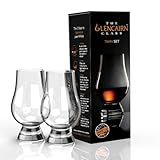
5. Glencairn Whisky Gift Set
A gift set built around the famous whisky nosing glass, sometimes bundled with a decanter. It is ideal for whisky fans who like to taste carefully. Because the glass is small, add a few mixers if the recipient likes cocktails.
Suits: whisky tasters. Strengths: nosing glass pedigree. Weaknesses: glass size is small for mixers. Skip it if you want a cocktail set.
Best for general gifts
6. Mikasa Cheers Whiskey Decanter
A simple, glassy decanter from a familiar tableware name, easy to give and easy to use. It fits a broad range of tastes and bars. Add a bottle of whiskey and the gift is done.
Suits: general gifts. Strengths: an approachable style and a clean look. Weaknesses: nothing flashy. Skip it if you want something dramatic.
View Mikasa Cheers Decanter on Amazon
Care and Setup
- Hand wash the decanter gently after use.
- Keep the box for storage and future gifting.
- Dry the stopper separately to avoid sticking.
- Fill with spirits shortly before serving.
- Wipe fingerprints with a soft cloth for display.
Mistakes to Avoid
- Gifting a decanter without checking the recipient’s bar style.
- Choosing a novelty shape that is hard to clean.
- Forgetting to confirm glasses are included.
- Buying a size that does not fit a standard bottle.
- Overlooking the return policy on a gift.
Matching the Decanter to the Recipient
The best gift decanter reflects the person who will use it, not just the price tag or the box. Start by picturing their home. Someone with a traditional study, leather chairs and a wooden sideboard will probably enjoy a cut or faceted piece. A person with a clean, modern kitchen and minimal shelves may prefer smooth, simple lines and an uncluttered shape.
Think about how they drink. A person who sips a measured pour slowly may value tasting glasses and a calm, classic look. Someone who hosts often might like a larger, sturdier decanter and a matching set of tumblers. A collector who enjoys display pieces may prefer a statement shape, while a practical person will use whatever is easy to pour and clean.
Consider whether they already own a decanter. If they do, a set that adds matching glasses or a small tray is more useful than a second decanter. If you are unsure, a plain, well-made design is the safest choice because it fits most spaces and will not clash with existing decor.
- Traditional taste: cut patterns, heavier glass, a formal stopper.
- Modern taste: clean lines, minimal pattern, simple stopper.
- Theme lover: a nautical, globe or other novelty shape, if you know their hobby.
A gift works best when the recipient could picture it in their home the moment they open it. If you cannot tell, a neutral style with a good box is hard to get wrong.
Crystal, Glass and Lead Questions
Decanters are commonly made from crystal or from ordinary glass, and the names get used loosely in listings. Crystal is generally chosen for its clarity and for the way it takes a deep cut. Standard glass is usually more durable and easier to replace. Neither is automatically better; it depends on how the gift will be used.
The question many buyers ask is about lead. Traditional lead crystal contains lead oxide, and many makers now offer lead-free crystal or glass alternatives. For a decanter that will hold spirits for long periods, some buyers prefer to avoid lead altogether. The product listing should say what the material is. If it does not say clearly, treat that as a reason to look at other options or contact the seller, instead of assuming.
A common approach with any decanter is to use it for serving and to avoid storing spirits in it for months. Spirits in an open container can pick up air and lose character over time, whatever the material. For a gift that may sit on a shelf, it can be worth passing that tip along with the present.
Weight is another clue. Heavier pieces feel substantial and are often stable, but they are also trickier to pour for people with weaker wrists. If the recipient is older, consider a design with a comfortable neck and a manageable weight.
Size, Stopper and Pouring Checks
Practical details decide whether a decanter gets used or ends up as an ornament. Start with capacity. Many decanters are sized to hold roughly one standard bottle, but not all, so check the stated volume if you plan to pair it with a bottle. A decanter that is too small leaves a leftover splash, while a very large one can look half empty.
The stopper is next. A good stopper sits snugly and lifts out without a struggle. Glass stoppers should seat firmly, while ones with a rubber or cork ring may rely on that ring for the seal, which can wear over time. A stopper that is too tight can stick when damp, so the advice to dry it separately is worth repeating when you gift it.
Look at the neck and the shape of the spout. A narrow neck is easier to hold and pour from, but harder to clean. A wide mouth is simple to wash but can splash if poured too fast. Intricate or novelty shapes may have corners that trap residue, so a ship, a globe or a heavily cut base looks great but needs more care.
Finally, check the base. A wide, flat base is stable on a bar cart or a moving shelf, while a narrow base can tip. Read the listing’s dimensions and compare them to the space where the recipient is likely to keep it.
Presentation and Personal Touches
A gift decanter is judged in the first few seconds, so presentation counts. A lined box, a sturdy sleeve or a gift-ready package shows that the piece was chosen with care and protects it in transit. Check the listing for how the item is packed, and ask whether it is suitable for gifting without extra wrapping.
Personal touches turn a nice object into a keepsake. Engraving is the classic one, often a name, a date or a short message. Not every decanter can be engraved, and the service may come from the seller or a separate provider, so confirm what is offered and how long it takes before an important date. Plain, smooth surfaces are generally easier to personalise than heavily cut ones.
If you do not want engraving, a handwritten card goes a long way. Pairing the decanter with a bottle you know they like, a set of tumblers or a small tray makes the present feel complete. If you add a bottle, make sure the volume suits the decanter.
- Keep the original box so the gift can be stored or passed on.
- Include a gift receipt in case of breakage or a duplicate.
- Check delivery dates well ahead for milestone occasions.
For weddings and retirements, a simple design with a dated message often holds up better than a trendy shape.
Budget Tiers and What Changes
You do not need the most expensive piece to give a good decanter, but it helps to know what changes as you move up. At the entry level, expect simpler glass, a basic stopper and plain packaging. These are fine for casual gifts, office parties or a first home bar, provided the shape is practical and the seller describes the contents clearly.
In the middle range, you usually see better weight and clarity, a more carefully fitted stopper, sets that include matching glasses, and attractive boxes. This is the sweet spot for most birthdays, housewarmings and weddings, because the set looks complete without needing extra purchases.
At the premium end, buyers are paying for a recognised maker, a heritage pattern and an heirloom feel. These pieces are often meant to be displayed and kept for years. They make sense for milestone events such as retirements and anniversaries, but only if the recipient will appreciate and care for them.
Before you decide, ask yourself a few things. Will the person want to wash it by hand? Do they already own glasses? Is the gift for display, daily use or both? Is the return policy suitable for a gift in case it arrives damaged? Spending more on fit, material and presentation usually beats spending more on decoration alone.
Whiskey Decanter Gift FAQ
Should I fill the decanter before gifting?
Not usually. Add a bottle alongside it, or include a note so they can fill it themselves.
Is a decanter a good first whiskey gift?
Yes, especially in a set with glasses. It suits anyone who enjoys spirits or hosting.
Can the decanter be engraved?
Some can be personalized. Check seller details and lead times before the occasion.
Crystal or glass?
Crystal looks more formal, while glass is sturdier. Choose based on the recipient’s habits.
How much whiskey does a decanter usually hold?
Many are sized for about one standard bottle, but capacity varies by design. Check the stated volume on the listing if you plan to pair the decanter with a particular bottle.
Is it safe to store whiskey in a decanter long term?
A decanter is best used for serving and for storage over days or weeks rather than months. Air exposure can dull spirits over time, and lead crystal is a further reason some people avoid long storage.
How do I tell if a decanter contains lead?
The product listing or maker should state the material. If the listing is unclear, contact the seller or choose a piece that is clearly described as lead-free.
What is the best way to clean a decanter with a narrow neck?
Rinse with warm water and a little mild soap, then let it drain upside down on a rack. Avoid harsh scrubbing, and check whether the maker recommends a cleaning tool for narrow shapes.
Should a gift decanter come with glasses?
It is not required, but a set with glasses feels complete and ready to give. If the recipient already has glasses, a decanter alone is fine.
Can I give a decanter without a bottle of whiskey?
Yes. Many people give the decanter alone and let the recipient fill it. Adding a bottle is a nice extra if you know their taste.
Are decanters only for whiskey?
No. Many people use them for other spirits such as bourbon, rum or brandy, though they are not usually meant for carbonated drinks. Check the maker's guidance if you are unsure.
Occasions: Matching the Decanter to the Moment
The occasion shapes the gift as much as the recipient does. A retirement, a wedding, a housewarming and a thank-you each carry a different weight, and the decanter you pick should match it. A weighty cut-crystal piece suggests tradition and milestone, while a simpler glass design fits a casual present between friends.
- Milestone gifts, such as a retirement or an anniversary, call for a substantial piece with a classic cut and a good stopper, ideally presented in a box.
- Wedding gifts often work best as a set with glasses, since the couple can use them immediately and display them together.
- Housewarming or hosting gifts suit a smaller, more modest decanter, especially if you include a bottle.
- Corporate or group gifts need a consistent look and a price that scales, so a simple, clean design is easier to repeat.
Think too about how personal you want it to be. An engraved decanter feels special but cannot be returned if the recipient does not drink whiskey, so be sure of the taste before you add initials or a date.
Gifting to Someone Who Does Not Drink Whiskey
Not every recipient drinks whiskey, and a decanter can still be a good gift, but you need to think about use. Many people enjoy a decanter as a display piece, an accent on a bar cart or shelf, and some fill it with another spirit such as rum, brandy or bourbon. A glass decanter can also hold water or serve as a vase, though it is not designed for that.
If you are unsure, consider a set that includes glasses, since a pair of tumblers or Glencairn-style glasses have a practical use no matter what the recipient pours. A decanter with a classic, neutral shape fits most home decor.
- Skip engraving unless you know they will keep and use the piece.
- Include a note explaining that it works for any spirit, so the recipient does not feel pressure to buy whiskey.
- Keep the receipt or gift information if the retailer allows returns.
For a recipient who avoids alcohol entirely, a decanter is probably the wrong gift. Choose something else or a version used for water or iced tea.
Packaging, Shipping and Arrival Day
A heavy glass piece has to travel safely before it can impress anyone. If you order online and ship to the recipient, check that the decanter arrives in a protective box with padding, and consider whether the product listing mentions a gift box. Glass is fragile, and a thin carton can fail in transit.
When the decanter comes to you first, open it right away. Check for chips around the neck, scratches on the base and cracks in the stopper, and make sure the stopper seats properly. Contact the seller promptly if something is damaged, because return windows are often short for fragile items.
- Order early for a gift date so you have time to replace a damaged piece.
- Keep the original packaging until you have confirmed the decanter is in good condition.
- If you ship it as a gift, ask the seller for gift packaging or wrap it with extra padding.
Once it is in hand, wash and dry it carefully before presenting it, since factory dust and handling marks are common and will make a good piece look cheap.
Pairing the Decanter with a Bottle or Accessories
A decanter alone is a beautiful object, but pairing it with something extra makes it feel complete. A bottle of whiskey is the obvious choice, though check that the recipient enjoys the style, since taste in whiskey varies from smoky Scotch to sweet bourbon. If you are unsure, a mid-range, widely liked bottle is safer than something unusual.
Other pairings include a set of glasses, whiskey stones, a small tray, coasters or a book on tasting. Keep it modest. A well-chosen pair is better than a basket full of items that do not match.
- A tasting book or guide suits someone new to whiskey.
- A pair of tumblers suits someone who drinks at home often.
- A tray or coasters protect furniture and complete the presentation.
One more consideration is the age and habits of the recipient. A younger person setting up a first home bar may like a modern, clean-lined decanter and a bottle they can afford to replace, while an older collector may appreciate a traditional design that matches existing crystal. Observe what they already own and what they display, since a gift that echoes their taste is more likely to be used. If you cannot tell, a classic shape with a plain, unadorned body is a safer pick than an ornate or novelty design, and it will still look right in several years.
Finally, write a short card. A sentence about why you chose it, or a memory it connects to, turns a nice object into a meaningful present.
Going Deeper: How to Judge Whiskey Decanters For Gifts in Real Use
Most buyers compare the obvious points first and only later notice the practical details that decide whether a purchase still feels right after a month. For whiskey decanters for gifts, the deciding factor is rarely a single feature in isolation. It is the combination of how the item fits your giving a decanter as a gift, how forgiving it is when you are in a hurry, and how much upkeep it asks for between uses. Readers who start from those three questions usually narrow this list down to one or two sensible options very quickly, without needing to study every specification in detail.
Start with fit. Measure the space you actually have, not the space you imagine after a tidy-up, and compare it honestly with the footprint, height and clearance each option needs. With whiskey decanters for gifts, a small mismatch in fit tends to cause daily friction: doors that do not open fully, items stored at an awkward angle, or a setup that has to be moved every time you use it. If a pick only works when everything else in the giving a decanter as a gift is rearranged around it, treat that as a genuine drawback rather than a minor inconvenience.
Next, think about presentation, boxing and occasion fit. This is the area where cheaper and more considered designs separate most clearly over time. Pay attention to how the materials feel in the hand, whether edges, joints and moving parts look finished rather than merely adequate, and whether the maker explains care in plain language. A product that is honest about its limits in the description usually behaves predictably in the home, while vague claims tend to hide the compromises you will discover later.
Finally, consider rhythm. How often will you use it, in what quantity, and alongside what else? Someone reaching for whiskey decanters for gifts every day needs durability and speed above novelty, while an occasional user can reasonably prioritise appearance or compact storage. Neither priority is wrong, but mixing them up is the most common reason a well-reviewed product ends up unused in a cupboard. Match the pick to the rhythm first, and let the smaller features settle the tie afterwards.
Comparing the Picks Side by Side in Practice
Between the Waterford Lismore Whiskey Decanter and the Godinger Dublin Whiskey Decanter Set, the practical question is which set of trade-offs suits your giving a decanter as a gift better. The Waterford Lismore Whiskey Decanter makes most sense when its particular strengths line up with the way you already work, while the Godinger Dublin Whiskey Decanter Set is the easier recommendation when you want the more forgiving option for mixed, everyday use. Neither displaces the other outright; they simply reward different habits. If you find yourself torn between them, choose based on the task you repeat most often, not the impressive edge case you might try once or twice a year.
Between the Bezrat Whiskey Decanter Set and the The Wine Savant Ship Decanter, the practical question is which set of trade-offs suits your giving a decanter as a gift better. The Bezrat Whiskey Decanter Set makes most sense when its particular strengths line up with the way you already work, while the The Wine Savant Ship Decanter is the easier recommendation when you want the more forgiving option for mixed, everyday use. Neither displaces the other outright; they simply reward different habits. If you find yourself torn between them, choose based on the task you repeat most often, not the impressive edge case you might try once or twice a year.
Between the Glencairn Whisky Gift Set and the Mikasa Cheers Whiskey Decanter, the practical question is which set of trade-offs suits your giving a decanter as a gift better. The Glencairn Whisky Gift Set makes most sense when its particular strengths line up with the way you already work, while the Mikasa Cheers Whiskey Decanter is the easier recommendation when you want the more forgiving option for mixed, everyday use. Neither displaces the other outright; they simply reward different habits. If you find yourself torn between them, choose based on the task you repeat most often, not the impressive edge case you might try once or twice a year.
Between the Godinger Dublin Whiskey Decanter Set and the Glencairn Whisky Gift Set, the practical question is which set of trade-offs suits your giving a decanter as a gift better. The Godinger Dublin Whiskey Decanter Set makes most sense when its particular strengths line up with the way you already work, while the Glencairn Whisky Gift Set is the easier recommendation when you want the more forgiving option for mixed, everyday use. Neither displaces the other outright; they simply reward different habits. If you find yourself torn between them, choose based on the task you repeat most often, not the impressive edge case you might try once or twice a year.
Between the Waterford Lismore Whiskey Decanter and the The Wine Savant Ship Decanter, the practical question is which set of trade-offs suits your giving a decanter as a gift better. The Waterford Lismore Whiskey Decanter makes most sense when its particular strengths line up with the way you already work, while the The Wine Savant Ship Decanter is the easier recommendation when you want the more forgiving option for mixed, everyday use. Neither displaces the other outright; they simply reward different habits. If you find yourself torn between them, choose based on the task you repeat most often, not the impressive edge case you might try once or twice a year.
Across the whole list, a pattern emerges: the picks that earn their place longest are not always the most elaborate. They are the ones whose size, handling and care routine disappear into the background of the giving a decanter as a gift. When two options seem evenly matched on paper, prefer the one you can clean, store and explain to a guest in a sentence. Simplicity that survives contact with real life beats a longer feature list that demands constant attention.
Matching a Pick to Common Situations
Everyday, unhurried use
For routine use at home, consistency matters more than peak performance. Choose the option above that you can set up the same way every time, with the fewest steps between deciding to use it and actually using it. In a giving a decanter as a gift, that usually means favouring straightforward handling and easy cleaning over specialised extras. Keep the item where it is used, keep any accessories together in one place, and the habit will sustain itself without effort.
Entertaining and guests
When guests are involved, presentation and predictability take over. Pick the option that looks settled on the table or counter, works without explanation, and does not require you to disappear for ten minutes of preparation. Practise with it once beforehand if it is new to you. With whiskey decanters for gifts, the version you have used calmly three times will always serve guests better than the theoretically superior version you are still learning on the night.
Small spaces and shared homes
In a compact or shared giving a decanter as a gift, storage and footprint deserve as much weight as performance. Measure cupboards, shelves and worktop depth before ordering, and think about where the item lives on the days it is not used, which for most households is most days. A slightly simpler pick that stores neatly will be used far more often than a larger one that has to be fetched, assembled and put away again each time.
Building a longer-term setup
If this purchase is the first piece of a larger setup rather than a one-off, favour compatibility and replaceable parts over a closed, all-in-one design. Check whether accessories, refills or matching pieces are easy to find, and whether the style will sit comfortably alongside what you plan to add later. Buying with the second and third purchase in mind avoids the familiar pattern of replacing the first item entirely within a year.
Setup, First Use and the First Fortnight
Unbox carefully and keep the packaging until you have completed a first full use. Lay out every part, read the maker’s instructions once from start to finish before beginning, and wash or wipe down anything that will contact food, drink or glassware as directed. For whiskey decanters for gifts, most early disappointment traces back to a skipped setup step rather than a faulty product, so the unglamorous ten minutes of preparation is worth taking seriously.
During the first fortnight, pay attention to three things: how long setup and cleanup actually take when you are not concentrating, whether anything loosens, sticks, stains or behaves differently from the first day, and whether the storage spot you chose still makes sense. Small adjustments made in week one, such as moving the item closer to where it is used or changing the order of steps, usually fix frustrations that otherwise get blamed on the product itself.
Keep a simple note of what works. It sounds excessive for a household purchase, but a few lines about quantities, timings or settings that suited you will save repeated trial and error, especially for items used in batches or for guests. Households that share the giving a decanter as a gift benefit even more, because the note turns one person’s learning into everyone’s starting point.
Care, Cleaning and Keeping It Working Well
Routine care for whiskey decanters for gifts is mostly about little and often. Wipe spills and moisture promptly, clean in the way the maker describes rather than reaching for the strongest product in the cupboard, and let everything dry fully before storing it away. Trapped moisture and leftover residue cause more long-term damage, odour and staining than ordinary use ever does, and both are avoided by the same unhurried two minutes at the end.
Inspect the working parts periodically: seals, threads, joints, blades, hinges or contact points, depending on the design you chose. Early wear is usually visible long before it becomes failure, and replacement of a small consumable part is far cheaper and less wasteful than replacing the whole item. Keep spare consumables with the item itself so a change never has to wait for a delivery.
Avoid the common care mistakes: soaking materials that should only be wiped, stacking or storing while still damp, using abrasive pads on finished surfaces, and forcing a part that resists. Resistance is information. Stop, check alignment and instructions, and only then proceed. Almost every design in this category rewards a gentle hand and punishes improvisation with stripped threads, clouded surfaces or bent fittings.
Before You Buy: A Final Checklist
Run through these questions honestly before ordering. Have you measured the space, including clearance to open, lift or pour? Do you know how the item is cleaned, and are you genuinely willing to do it at the frequency your household needs? Does it suit the quantity you typically handle, rather than the largest gathering you might host once a year? Have you checked what is included in the box, and what is sold separately? If any answer is no, resolve it now; every one of these questions is much cheaper to answer before checkout than after delivery.
It is also worth deciding in advance what would make you return or exchange the item. A clear personal threshold, such as it must fit the intended spot without modification, or it must be manageable to clean on a weekday evening, turns a vague sense of disappointment into a quick, calm decision inside the returns window. Buyers who set that threshold beforehand rarely keep unsuitable items out of inertia, and rarely send back good ones over a fixable setup issue.
Taken together, the picks above cover the sensible ground for whiskey decanters for gifts: options for daily reliability, for presentation, for small spaces and for building out a fuller giving a decanter as a gift over time. Choose the one whose strengths match the job you repeat most, set it up carefully, keep the care routine simple and consistent, and it should serve you well for a long time without demanding attention it has not earned.
Extra Notes on Living With This Choice
One more consideration that experienced owners raise about whiskey decanters for gifts is how the choice behaves across seasons and occasions rather than on a single day. In a busy giving a decanter as a gift, demands shift: weekday use is quick and functional, weekend use is slower and more social, and occasional larger gatherings test capacity and patience in ways ordinary use never does. The strongest pick for you is the one that degrades gracefully across all three modes, staying pleasant when rushed and still satisfying when you have time to do things properly.
Think as well about who else will use it. A product that only works in the hands of the person who researched it is a fragile purchase in a shared home. Clear handling, obvious storage and forgiving cleaning make it far more likely that everyone uses the item correctly, which in turn keeps it in good condition for longer. When comparing the final two candidates on your shortlist, this shared-use test is a reliable tiebreaker.
Finally, give any new purchase a fair trial before judging it. First uses are slower and clumsier with almost every design in this category, and technique improves quickly. Judge the item on your third or fourth use, with the setup settled and the routine familiar. That is the experience you are actually buying for the years ahead, and it is the fairest basis on which to compare it with the alternatives described above.
Frequently Asked Questions
Do whiskey stones work with a decanter?
Whiskey stones chill a drink in the glass without watering it down, but they are not meant to sit in a decanter, where they can scratch the glass or get stuck. Keep them for the tumbler, and store them in the freezer before use.
What is a good price for a decanter gift?
There is no fixed amount. A basic glass decanter suits a casual gift, while cut crystal and boxed sets cost more and fit milestones. Choose a price that fits the occasion and your relationship, and put more weight on quality of the stopper and glass than on brand name alone.
Should I wrap a decanter gift or use the box?
If the decanter comes in a presentation box, keep it, because it protects the glass and looks polished. You can add a ribbon or a card. If the box is plain shipping cardboard, a gift bag or wrapping paper with tissue padding is a better presentation.
Can a decanter be a good gift for a wedding registry?
Yes, especially as a set with glasses. Many couples like having a shared piece for entertaining. If a registry lists exact items, buy from it to avoid duplicates. If not, choose a classic design that will suit a variety of home styles.
The Short Version
For an heirloom, the Waterford. For a complete boxed set, the Godinger. For a contemporary gift, the Bezrat. For a nautical theme, the Wine Savant. For a tasting fan, the Glencairn. For a simple present, the Mikasa.