A home wine dispensing system lets you pour a glass from a bottle while keeping the rest fresh. Some pull wine through the cork with a thin needle and replace it with inert gas. Others remove air with a pump or seal the wine in a smaller container.
The six systems below cover premium gas-based tools, a sparkling-specific version and lower-cost preservation gear. We have not used these products ourselves, so confirm the compatible bottle types, gas capsules and parts on the current listing before buying. Systems that pierce corks do not suit every closure.
As an Amazon Associate we earn from qualifying purchases. Links below are affiliate links, and they do not change the product information we give.
Can I use a needle system on a bottle with a synthetic cork or screw cap?
Needle systems are designed around natural cork, which can reseal after the needle withdraws. Synthetic closures may not reseal in the same way, and screw caps are outside the design entirely. Check the maker’s guidance for your model, and for bottles without natural cork, pour what you need and protect the rest with a pump, gas or a good stopper instead.
Why did my pumped bottle taste flat even though I used the pump straight away?
Pumping removes air, and with it some of the wine’s aroma can feel muted at the next pour, especially in delicate wines. Let the glass sit for a few minutes after pouring, keep the bottle cold while stored, and accept that a pump slows decline rather than freezing the wine at its first-night peak. If flatness is a recurring problem, a gas blanket may suit your wines better than a vacuum.
How do I know when a preserved bottle has finally turned?
Trust smell and a small taste over the calendar. Aromas of vinegar, wet cardboard or bruised fruit that were not there before, a prickly sharpness on the tongue, and a finish that collapses are the usual signs. When in doubt, pour a small test glass first rather than filling everyone’s glass, and let a tired bottle go to the cooking pot or the sink without guilt.
Should I preserve a bottle I plan to finish tomorrow?
A decent stopper and the refrigerator are usually enough for a single night, and they cost nothing. Preservation tools earn their complexity across longer gaps. The exception is a very delicate or very special bottle, where even one night of air can cost more than you want to lose; for that bottle, use the best method you own and pour carefully.
Do these systems work for large-format or oddly shaped bottles?
Fit varies. Needle devices need a standard neck and a sound cork, pumps need a neck their stoppers can seal, and carafes have a fixed capacity that magnums will overflow. Check the listing details against the bottles you actually buy, and keep a simple stopper in the drawer for the shapes no system accepts.
How should I clean a saver carafe or a pump between different wines?
Rinse with warm water as soon as the vessel is empty, wash gently if the last wine was sweet or heavily oaked, and dry fully before the next wine goes in. Stoppers and pump parts benefit from the same treatment, because rubber and plastic hold aromas. Never move straight from a bold red to a delicate white in an unwashed carafe and then blame the white for tasting of the red; a two-minute wash is the cheapest quality control in this entire guide, and it protects the next bottle you open from carrying the ghost of the last one into glasses where it was never invited.
Can I combine methods, such as gas plus the refrigerator plus a stopper?
Yes, and the combinations are usually where the best results live. Gas or vacuum handles the air in the neck, a well-fitted stopper keeps that state from leaking away, and cold storage slows everything else. What does not help is layering two active systems that fight each other, or spending so long assembling a routine that the bottle stands open while you perform it. Keep the sequence short: pour, protect, stopper, chill, note the date.
Is a dispensing system a good gift for a wine lover?
It can be, if you gift the rhythm rather than the hardware alone. A pump or gas set suits almost any wine drinker and asks little of them. A needle system is a generous but specific gift, best given to someone you know opens special bottles and drinks them slowly, and it lands better with a starter supply of its consumables included so the first month costs them nothing. When in doubt, gift the simpler tool; an elaborate device that does not match the recipient’s habits becomes an obligation in a box.
What is the most common way people waste money on preservation?
Buying for the longest timescale they can imagine instead of the one they live. A system bought to keep wine for many weeks, used by a household that finishes bottles in three days, adds cost and fuss without adding saved wine. Match the tool to your real rhythm, keep it clean, store bottles cold, and the modest system used well will outperform the elaborate one used carelessly.
What to Look For
| Feature | Why it matters |
|---|---|
| Method | Gas systems pour through the cork; pumps and carafes only preserve |
| Closure | Check support for natural cork, synthetic cork and screw caps |
| Running needs | Gas capsules and needles are refills you will buy again |
| Use | Count how many glasses you pour and how often |
In this guide
Specs at a Glance
| System | Type | Size | Notes |
|---|---|---|---|
| Coravin Timeless Six Plus | Gas-based pourer | Bottle-top device | Argon capsules |
| Coravin Timeless Three SL | Gas-based pourer | Bottle-top device | Argon capsules |
| Coravin Sparkling | Sparkling stopper system | Bottle-top device | CO2 capsules |
| Savino Wine Saver | Glass carafe with cap | Holds a standard bottle | Floating disc design |
| Vacu Vin Wine Saver | Hand pump and rubber stoppers | Fits standard bottles | Sold as a set |
| Private Preserve | Inert gas spray | Handheld can | Sold in a single can |
The 6 Best Wine Dispensing Systems for Home
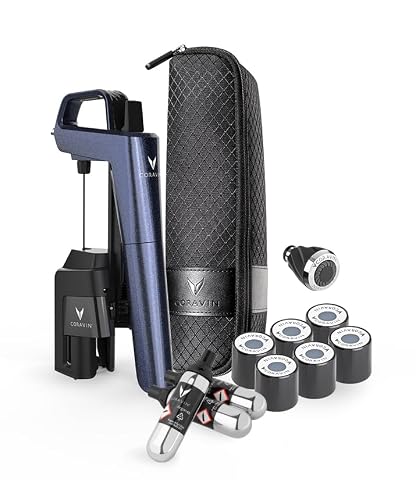
Top pickBest for collectors who pour single glasses
1. Coravin Timeless Six Plus
A premium tool that pushes a thin needle through the cork, pours a glass and refills the bottle with argon gas. It is aimed at people with collections who want to taste a bottle without committing to all of it. Because it works on a bottle at a time, it also suits a household where each person likes a different wine.
Suits: collectors who pour single glasses. Strengths: a respected brand and long wine life. Weaknesses: needle and capsule refills are ongoing. Skip it if you finish bottles in one night.
View Coravin Timeless Six Plus on Amazon

Best for first-time buyers of the brand
2. Coravin Timeless Three SL
A more compact model in the same family, suited to people who want to try the system without the top-end gear. It works on natural cork bottles, and the screw-cap use depends on the model you buy.
Suits: first-time buyers of the brand. Strengths: simple use and a slim body. Weaknesses: fewer features than the top models. Skip it if you need a very fast pour.
View Coravin Timeless Three SL on Amazon

Best for champagne and sparkling lovers
3. Coravin Sparkling
A system designed for sparkling wine, which needs a different approach because of the pressure. It keeps the fizz in the bottle between pours. It is the choice for someone who likes a single glass of bubbles on a quiet evening.
Suits: champagne and sparkling lovers. Strengths: designed for bubbles. Weaknesses: only for sparkling bottles. Skip it if you pour still wines.
View Coravin Sparkling on Amazon
Best for keeping a leftover bottle
4. Savino Wine Saver Carafe
A carafe that uses a floating disc on the wine’s surface to limit air contact. It is an easy switch from the bottle and doubles as a serving piece.
Suits: keeping a leftover bottle. Strengths: simple, no cartridges. Weaknesses: still serves out of the carafe, not a bottle. Skip it if you want to age wine.
View Savino Wine Saver on Amazon

Best for daily glasses and short storage
5. Vacu Vin Wine Saver Pump
A hand pump that draws air out of the bottle, with a rubber stopper that holds the vacuum. It is one of the most familiar preservation tools in the home market.
Suits: daily glasses and short storage. Strengths: low-tech and easy. Weaknesses: best for a few days of storage. Skip it if you want gas protection.
View Vacu Vin Wine Saver on Amazon

Best for light daily use
6. Private Preserve Wine Preserver
A can of inert gas that you spray into a bottle before recorking. It makes a thin protective layer over the wine and is a lighter-weight option than a full dispenser.
Suits: light daily use. Strengths: small and simple. Weaknesses: does not dispense. Skip it if you want a pouring device.
View Private Preserve on Amazon
Care and Setup
- Store capsules and needles as the maker advises.
- Rinse removable parts with water and dry them.
- Replace worn stoppers and needles on time.
- Keep opened bottles in a cool spot.
Mistakes to Avoid
- Using a needle system on a screw-cap bottle that is not supported.
- Forgetting to buy refills.
- Pumping a sparkling wine.
- Storing a half bottle on its side with a loose stopper.
How Preservation Methods Differ
Home wine dispensing and preservation tools use a few different ideas, and understanding them helps you pick the right one. Argon-style systems pass a needle through the cork, let you pour a glass, and replace the poured wine with an inert gas, so the cork seals itself again afterward and the bottle stays corked. The aim is to avoid letting new air touch the wine at all.
Vacuum pumps work the opposite way. They pull air out of the bottle through a rubber stopper, reducing the oxygen above the wine. They are simple and low in cost, though they do not remove all the air and some people feel they work better for sturdier wines.
Gas sprays put a blanket of inert gas on top of the wine after you pour, and then you re-cork the bottle. This is easy to use and needs no special hardware on the bottle, though you must remember to do it each time and the gas layer can be disturbed when the bottle is moved.
Carafes with a sealing design use a different approach, by limiting air contact in a smaller container. Each method has tradeoffs in cost, convenience and how long it suits keeping an open bottle, so think about how often and how long you keep opened bottles.
Matching a System to Your Drinking Habits
The best choice depends on how you drink. If you pour a single glass from several bottles over a few weeks, a system that lets you access wine without removing the cork has the most to offer. If you finish most bottles within a few days and just want to keep the remainder fresh until tomorrow, a low-cost stopper or spray may be all you need.
Think about the wines you keep. Pricey or rare bottles justify a more protective approach, while everyday wine rarely needs it. Sparkling wine is a special case, because it needs a sealing method that holds pressure, and a standard still-wine tool will not do that. Check that the tool is designed for sparkling wine if you drink it.
Consider who will use the system. A tool that takes several steps may be put away and forgotten, while one that is quick tends to get used. If several people in your household pour wine, simplicity matters more than features.
Finally, consider the cost of running it. Some systems need replacement gas capsules or cartridges, and others need only the initial purchase. Check how long a capsule lasts and how easy it is to find replacements before you commit.
Running Costs and Consumables
A dispensing system is rarely a one-time cost. Gas-based devices use capsules, cartridges or canisters that run out, and the number of pours you get from one varies by system and how you use it. Check the product page and manual for the stated number of pours per capsule instead of trusting a guess, and keep in mind that this number is a rough guide.
Replacement parts matter too. Needles, seals and stoppers wear out, and some devices have parts you can replace while others require a whole new unit. Look at whether the maker offers spare parts and whether they are easy to get.
For vacuum pumps, the rubber stoppers can harden or crack with age, and they may stop sealing well. Test a stopper by pumping and checking whether it holds the vacuum for a few minutes, and replace it if it does not. Sprays run out gradually, so note when you open a new can.
Budget tiers fall roughly into simple stoppers and sprays at the low end, pump-based and carafe systems in the middle, and gas-based needle systems at the higher end. A higher tier is not automatically better for you; it is better if you use it often enough to justify the cost and consumables.
Safe Use of Gas and Needle Systems
Gas-based systems involve pressurized capsules and sharp needles, so read the manual closely before first use. Handle capsules as the instructions describe, store them away from heat and keep them out of reach of children. Never use a capsule that is not designed for the device.
When inserting a needle through a cork, go slowly and keep the bottle upright and steady. Hold the bottle on a stable surface, not in your lap or at an angle where the needle could slip. Many instructions recommend keeping the device straight and removing it gently, so the cork can reseal.
Corks matter. Old, dry or damaged corks may not reseal properly after a needle passes through, and synthetic corks or screw caps may not work with a needle system at all. Check the product listing to see which closures are supported, and do not try to force a needle through anything the manual excludes.
Be careful with sparkling wine and with bottles under pressure. Use only a system designed for that purpose, follow the pour instructions and point the bottle away from yourself and others. If something feels wrong, such as resistance that is greater than normal, stop and check the manual.
Cleaning and Storing Your System
Wine leaves sugar and acids on a pouring needle or stopper, so rinse any part that touches wine soon after use. Many makers advise flushing the needle or pouring spout with water, and some recommend a specific cleaning routine, so follow the manual. Avoid harsh detergents on rubber seals that might degrade them.
Dry parts before storing them. Moisture left in a mechanism can cause stickiness or mold, and a stopper that is stored wet may pick up odors. Keep stoppers and seals away from heat and sunlight, which can harden rubber and reduce how well they seal.
Store the device in a spot where it will not be knocked about, ideally in its case or box, with capsules stored separately in line with the instructions. If you store gas capsules, keep them cool and dry.
Watch for signs it is time to replace a part. A pump that no longer holds a vacuum, a needle that bends or sticks, a seal that leaks gas, or a stopper that has gone hard are all clues. Replacing a small part early is cheaper than losing wine to a failed seal.
Wine Dispensing System FAQ
How long can wine last with a preservation system?
Results vary by wine and system. Follow the maker’s guidance.
Do gas systems harm the cork?
They are designed to let the cork reseal, but results differ by cork age.
Are pumps as good as gas?
Pumps help for a few days. Gas systems are aimed at longer periods.
Do I need special bottles?
No, but the closure must be compatible with the product.
Which method is best for a bottle I will keep for weeks?
Methods that limit new air contact, such as gas-based systems, are generally chosen for longer keeping. Results vary with the wine and the closure, so follow the manual and taste periodically.
Can I use a vacuum pump on sparkling wine?
Not usually. Sparkling wine needs a stopper designed to hold pressure, so use a tool made for sparkling wine and check the product listing.
Does a preservation tool work on screw cap bottles?
Some do and some do not. Needle systems generally need a cork, while stoppers and sprays can often be used with other closures, so check the instructions.
Should I refrigerate opened wine?
Refrigeration slows changes in most opened wines, including reds. Let a chilled red warm up in the glass before drinking if you prefer it less cold.
How do I know a vacuum stopper is working?
Pump it, then wait a few minutes and see whether the stopper stays tight and the indicator, if there is one, holds. If it loosens quickly, the seal may be worn.
Are gas capsules safe to keep at home?
They are designed for home use when handled as directed. Store them away from heat and children, and follow the manual for storage and disposal.
Does a preserved wine taste the same as fresh?
It can be close for a while, but wine still changes with time. Taste an opened bottle and use your own judgment on when to finish it.
Why Wine Changes After Opening
Understanding what happens in an opened bottle makes it easier to judge which system is worth buying. Once a bottle is uncorked, oxygen reacts with the wine’s compounds. In small amounts, this softens tannins and opens aromas, which is why many people decant. Over days, the same process flattens fruit, dulls color and can push a wine toward a sharp, vinegary note as acetic acid forms.
Temperature and light speed this up. A bottle left on a warm counter ages faster than one in a cool, dark place. This is why even a simple stopper kept in the refrigerator can extend drinkability noticeably compared with leaving a bottle open on the counter.
The goal of any preservation tool is to limit the wine’s contact with oxygen. The methods differ in how they do it: removing air, replacing it with an inert gas, or avoiding opening the bottle at all. None of them stops aging completely, and each trades cost and convenience for how long it can hold a wine.
Which Wines Benefit Most From Preservation
Not every bottle deserves the same effort. Style and structure influence how well a wine holds up after opening.
- Structured reds: Wines with firm tannins and good acidity often hold up for several days, and some even taste better on day two.
- Delicate reds and older wines: Lighter-bodied reds and aged bottles can fade quickly. These are the best candidates for a gas or needle-based approach.
- Crisp whites and rose: They keep best when chilled and sealed. Their freshness is the main appeal, so air exposure is noticeable sooner.
- Sparkling wine: Pressure is the key. It needs a stopper designed to hold carbonation, and a standard wine pump is not suitable.
- Sweet and fortified wines: Higher sugar or alcohol makes them more resilient, so a basic stopper often works well.
If you mostly drink inexpensive bottles that you finish in a night or two, a premium system is unlikely to pay off. If you open a special bottle for one glass at a time, the argument for a more capable tool gets much stronger.
Counting the Real Cost of Ownership
The price on the box is only part of the picture. Think about what a system costs per glass saved over a year.
- Upfront cost: Pumps and stoppers are inexpensive. Gas-based devices cost considerably more.
- Consumables: Gas capsules, replacement needles or extra stoppers add recurring costs. Check how many pours a capsule typically delivers per the maker’s documentation.
- Replacement parts: Rubber seals and gaskets wear out. Find out whether replacements are sold and how easy they are to fit.
- Wine value: A tool that saves a few expensive pours can pay for itself. One that protects cheap wine seldom does.
A practical test is to estimate how many bottles per month you leave unfinished and what you would normally pay for them. If the savings over a year clearly exceed the system’s cost and consumables, it is easy to justify. If not, a low-cost stopper and refrigerator space may serve you well.
Storing Preserved Wine Properly
Even the best tool works better with good habits. Keep opened bottles upright, which reduces the surface area exposed to air, and store them in the refrigerator. Reds do not need to stay cold forever. Take them out about thirty minutes before pouring so they warm toward a pleasant serving temperature.
Label the bottle with the date you opened it. It is easy to lose track, and a note on a piece of tape removes the guesswork. Taste before pouring for guests. If something seems off, trust your palate and cook with it or discard it instead of serving a flat bottle.
Finally, avoid topping off a half-empty bottle with leftovers from another. Mixing wines accelerates oxidation and muddles flavors. If you plan to keep wine for a week or more, consider transferring it into a smaller clean bottle filled nearly to the top, which leaves very little air inside.
A simple decision rule
If you finish a bottle within two nights, refrigerate it with a basic stopper and stop there. If you regularly keep bottles for four to seven days, a vacuum pump or an inert-gas spray is a reasonable middle option. If you keep bottles for weeks, or want to pour from a bottle without removing the cork at all, only the needle-and-gas style approach is built for that job, and it is the one where the running cost deserves a careful look. Matching the tool to your real habit, not your best intentions, is what keeps the purchase from gathering dust.
Building a By-the-Glass Habit at Home
A dispensing or preservation system changes more than how long a bottle lasts; it changes which bottles you are willing to open. Households without one tend to save good wine for occasions and drink modest wine on weeknights, because opening a serious bottle for a single glass feels wasteful. The systems in this guide attack that problem from different directions, and the right choice depends on how your household actually drinks. The Coravin Timeless models pour through the cork and suit people who want a glass from a bottle they intend to keep returning to. The Coravin Sparkling applies the same thinking to bubbly, which otherwise punishes hesitation. The Savino carafe takes a simpler route, holding wine in a sealed serving vessel. The Vacu Vin pump and the Private Preserve gas cover the everyday end, where a bottle needs help for days rather than weeks. Owning one of these well means matching it to a rhythm, so it helps to name your rhythm honestly before you buy.
The single-glass household
If the common pattern is one glass with dinner while a partner drinks something else, a needle system earns its keep fastest, because it removes the negotiation about whether a bottle is worth opening. Pour the glass, return the bottle to a cool dark place, and keep a simple note of when you first poured from it. The habit to build is rotation: work through one or two preserved bottles rather than opening a new one each night, because even the best system is a brake on change, not a pause button. Keep the everyday pump or gas for the cooking wine and the midweek bottle, and reserve the needle system for wines whose remaining glasses you genuinely look forward to.
The slow-weekend household
Many homes open a bottle on Friday and finish it across the weekend. That rhythm rarely justifies the most elaborate system. A vacuum pump such as the Vacu Vin, used properly with a well-seated stopper and a refrigerated bottle, or a blanket of inert gas from a canister such as Private Preserve, matches the timescale honestly. The Savino carafe also fits here, since it turns the remaining wine into a tidy serving vessel for the next evening rather than a half-empty bottle in the fridge door. The money saved by not over-buying equipment can go into the wine itself, which is usually the better trade at this rhythm.
The collector with a few special bottles
For someone holding bottles they want to taste across months, the calculus changes again. A needle system lets you check on a wine’s development without committing the bottle, which is a real capability rather than a gadget thrill, but it demands discipline: sound corks, correct needle care, upright rest after pouring, and records of what you poured and when. Sparkling specialists should note that fizz needs its own approach, which is why a dedicated sparkling system exists in this line-up at all; a still-wine tool will not keep bubbles lively. Collectors should also accept a limit: preservation extends a conversation with a bottle, it does not make the bottle immortal, and the last glass should be planned rather than discovered too late.
Using Each System Well: Technique Notes That Listings Skip
Needle systems: slow down and keep it clean
With a Coravin-style device, the pour is a small procedure. Check the cork looks sound, centre the needle, press down in one confident motion, pour with the bottle tilted so wine rather than gas reaches the needle, and give the wine time to flow instead of forcing it with repeated bursts. Afterwards, stand the bottle upright for a while before returning it to its side, keep the needle clean and replace it when pours slow or the device starts to struggle, because a worn needle tears corks instead of parting them. Store capsules with the device and keep count of them; running out mid-bottle is an avoidable annoyance. If a cork weeps a drop after pouring, do not panic: stand the bottle upright, let the cork reseal, and check it the next day before deciding the bottle needs drinking sooner.
Pumps and gas: the details that decide whether they help
Vacuum pumps disappoint people who pump half-heartedly and store the bottle warm. Seat the stopper firmly, pump until resistance tells you the air is largely out, then refrigerate the bottle, because cold slows the chemistry that the pump started. With gas canisters, the technique is a gentle blanket rather than a blast: a short spray into the neck, then the stopper or cork back in promptly, and again, cold storage. Both methods reward being done immediately after pouring rather than after dinner, since every hour an open bottle sits on the counter is an hour no tool can give back. Neither method loves sparkling wine, and neither should be trusted with a bottle you would be heartbroken to lose; for those, drink with friends or use the dedicated systems.
The carafe approach: simple, visible, honest
A saver carafe such as the Savino asks the least of you: pour the wine in, let the float or seal do its work, and serve from it over the following days. Its virtue is visibility. The wine is in front of you at the table or in the fridge, so it gets finished while it is still enjoyable instead of being forgotten behind the milk. It is also the easiest of these systems to clean properly, which matters more than marketing suggests, because residue from the last wine is a quiet flavour in the next one. Where it cannot compete is duration; it is a days-scale tool, and treating it as a weeks-scale one leads to exactly the flat, tired glasses that make people distrust preservation altogether.
A Sensible Order to Buy In
If you own nothing yet, start with the method that matches your fastest-drinking bottles, because that is where waste actually happens. For most households that means a pump or gas first, used with refrigeration and prompt stoppering. Add a carafe if your household likes serving from a vessel at the table. Consider a needle system when you catch yourself, repeatedly, declining to open a good bottle for one glass; that recurring moment, not a sale or a review, is the true signal. And add the sparkling system only if opened bubbly genuinely goes flat in your home more than a few times a year. Bought in that order, each tool answers a problem you have already met, and the collection stays small, clean and in regular use.
Head-to-Head: Choosing Between the Systems in This Guide
Timeless Six Plus versus Timeless Three SL
Both pour through the cork, so the choice is about finish, features and how the device will be used rather than about a different principle. The higher model suits the household that will use it constantly and wants the more complete package on the counter; the lighter model suits someone who wants the same core capability in a simpler form and will pour less often. Either way, the running pattern is identical: capsules, needles, sound corks and cool storage. If your hesitation is about whether needle pouring fits your life at all, the simpler model is the more honest test, because the habit matters more than the trim. If you already know the habit fits and you pour for guests regularly, the fuller package will feel less like an experiment and more like part of the furniture of your wine life.
Needle system versus Savino carafe
These two solve opposite problems. The needle system protects wine that stays in its bottle, in the dark, over a long period, and it protects the option of not finishing. The carafe accepts that the wine is open and organises its remaining days gracefully, in a vessel designed for the table. A household that drinks a bottle across a weekend gains little from the needle and much from the carafe’s simplicity. A household that wants one glass from a treasured bottle gains nothing from the carafe, because decanting the whole bottle into it starts the clock for every glass at once. Naming which problem you actually have, in one sentence, usually ends this comparison on the spot.
Pump versus gas canister
The pump and the gas blanket are the closest rivals here, and both are inexpensive habits to run. The pump is mechanical, visible and easy to verify: you can feel the resistance change as air leaves. The gas method is quicker and gentler on delicate aromas, but invisible, so you must trust your technique and be prompt with the stopper. In practice, households that drink young, sturdy wines tend to be perfectly served by the pump, while those who open aromatic, fragile bottles often prefer gas. Many keep both, because the consumables are modest and the bottles they open are not all alike. What neither should do is substitute for the refrigerator; cold storage is the silent partner in every preservation method, and skipping it undermines pumps and gas alike.
What Ownership Really Looks Like After the First Month
Consumables, spares and the drawer test
Every system in this guide has something that runs out or wears out: gas capsules for the needle and sparkling devices, canister gas for the blanket method, rubber stoppers that slowly lose their grip for the pump, needles that dull, seals that tire. Ownership goes well when those items live in one labelled place and get reordered when the second-to-last is opened, not when the last one fails mid-pour. Apply the drawer test before buying: if you cannot picture where the device, its consumables and its small parts will live, the system will migrate between surfaces, lose pieces, and quietly stop being used. The carafe and the pump pass this test most easily, which is part of their appeal. The needle systems ask for a little more organisation and repay it with a capability nothing simpler offers.
Records that take twenty seconds
Preservation multiplies open bottles, and open bottles multiply confusion. A strip of tape and a pen solve most of it: date opened, method used, and a word about how much remains. For needle-poured bottles, add the number of glasses taken if you are tracking a special bottle’s decline. These notes feel fussy for exactly one evening and invaluable by the fourth, when the fridge holds three reds in different states and nobody remembers which one was opened for the neighbours. Records also protect you from the saddest preservation outcome, the bottle kept carefully for so long that care became neglect. If a note shows a bottle has been open well beyond what its method handles gracefully, promote it to tonight’s dinner and enjoy what is left rather than mourning what faded.
Serving preserved wine to guests without a lecture
Guests do not need a seminar, but a sentence of honesty helps: this bottle was opened last week and kept with a preservation system, poured tonight because it is drinking beautifully. Most people are pleased rather than suspicious, especially when the wine in the glass backs the claim up. Pour a small first taste for yourself before filling glasses, as you would with any bottle, and keep a fresh bottle in reserve for celebrations where a preserved one would feel like a compromise. There is also a quiet etiquette point: use preservation to share better wine more freely, not to stretch a bottle past the point where you would serve it to yourself. The technology is at its best when it makes a household more generous, letting a good bottle appear on a Tuesday and again, still sound, when friends come on Saturday.
When to retire a method and change course
Sometimes the honest conclusion is that a system does not fit your life. The pump that lives unwashed, the needle device whose capsules you resent buying, the carafe that holds the wrong amount for your household: each is information, not failure. Sell, gift or demote the tool to occasional duty and simplify. Many contented wine households run exactly one preservation method, used properly, alongside a fridge and a set of decent stoppers. The goal was never to own the most complete system. It was to waste less wine, open better bottles with less hesitation, and pour glasses that still taste like the wine you chose. Judge every device in this guide, and every habit around it, against that simple standard and you will keep the ones that earn their drawer space.
Related guides
- 6 Best Burgundy Wine Glasses for Red Wine: Stemmed or Not
- 6 Best Home Brewing Systems for Craft Beer Fans (2026)
- 6 Best Wine Preservation Systems: Pumps, Gas, Stoppers (2026)
Frequently Asked Questions
Does putting wine in the refrigerator slow oxidation?
Yes. Cooler temperatures slow the chemical reactions that cause wine to fade, so an opened bottle generally lasts longer in the refrigerator than on a counter. This works for reds as well. Just let a red warm up briefly before serving.
Is it worth buying a wine preservation system for cheap wine?
Usually not. The savings from protecting inexpensive bottles rarely cover the cost of a gas-based device and its consumables. A simple stopper plus refrigeration is typically enough. Premium systems make more sense for pricey or rare bottles you pour a glass at a time.
Can I decant wine and still preserve the rest?
Yes, but pour only what you plan to drink into the decanter. Leave the remainder in the original bottle, sealed with your preservation tool, because decanting deliberately adds oxygen. Wine left in a decanter overnight will fade faster.
How should I store a half-empty bottle of wine?
Seal it with a stopper or preservation device, keep it upright in the refrigerator, and label it with the date opened. For longer storage, moving the wine to a smaller clean bottle that is nearly full reduces air contact.
The Short Version
For collectors, the Coravin Timeless Six Plus. For a lighter model, the Coravin Timeless Three SL. For bubbles, the Coravin Sparkling. For a carafe, the Savino. For a pump, the Vacu Vin. For a simple spray, the Private Preserve.

