A wine preservation dispenser lets you pour a glass without finishing the bottle. The better-known versions use a slim needle that passes through the cork and replaces the wine with argon gas, so the cork is never pulled. Simpler dispensers hold an opened bottle and meter out each pour while keeping air away from the rest.
The six picks below cover both approaches, from needle-and-argon systems to a sparkling-wine model and a budget-friendly pouring stopper. We have not used these products ourselves, so treat every detail as a starting point and confirm capsule counts, compatible closures and sizes on the current listing before buying.
As an Amazon Associate we earn from qualifying purchases. Links below are affiliate links, and they do not change the product information we give.
Why is my preserved bottle’s second glass pouring so slowly?
Work through the causes in order of likelihood: a capsule running low, a needle that needs cleaning or replacing, a cork that has been pierced many times and is resisting, or a bottle so empty that the wine barely reaches the needle’s path when tilted. Consult the maker’s maintenance guidance before forcing anything, because a needle system under struggle tears corks. A pour that has slowed gradually across several bottles is almost always maintenance asking politely; attend to it and the speed returns.
Can I take a preservation dispenser when I travel or visit friends?
The Pivot-style approach travels more gracefully than a full needle kit, but gas capsules face transport restrictions in some situations, particularly air travel, so check the rules that apply to your journey rather than discovering them at security. In practice, the dispenser earns its keep at home, where your rotation lives; for a weekend away, a good stopper and a cold bag serve most bottles honestly, and the special bottle you are preserving is usually safer left resting than riding in a car.
How do I keep track of capsules without running out mid-bottle?
Keep the spares with the device, count them whenever you open a new pack, and reorder at the second-to-last rather than the last. Note on the bottle’s label or in your phone how many glasses a bottle has given, because capsule use follows pours, and a household that tracks pours is never surprised. Running out is not a disaster, a stoppered bottle in the fridge waits patiently, but it is an entirely preventable interruption to an evening that was going well.
Does a preservation dispenser make sense for a household of one?
It may make more sense there than anywhere. A single drinker faces the sharpest version of the open-bottle problem: every bottle is a multi-day commitment, and the choice is too often between finishing wine that should have been savoured slowly and wasting wine that should have been finished. A preservation system converts a bottle into a week of single glasses, which is precisely the pattern of a household of one. The Pivot class suits everyday bottles in that life; the Timeless class suits the bottles bought for occasions that one person should not have to postpone until company arrives.
What should I do with a bottle that has been preserved for a very long time?
Pour a small taste first, alone, and judge it as you would any wine: aroma, freshness, finish. If it pleases you, serve it with the confidence the system was bought for. If it has faded, let it go to the kitchen or the sink without treating the moment as the system’s failure; every preservation story ends eventually, and the success is measured in the good glasses that came before the last one. Record the bottle’s full arc in your notes, because that record, first glass to last, is the truest review your household will ever write.
Are the later glasses from a needle-preserved bottle safe to serve to guests?
Yes, when the bottle was sound, the cork was sound, the device was clean and the storage was cool, the later glasses are simply the same wine, older by the interval and protected in between. Serve the first small taste to yourself, as a good host does with any bottle, and then pour for guests without a speech about the technology unless they ask. Curiosity, when it comes, is a compliment to your cellar habits, and the wine in the glass is the only evidence anyone needs.
How do I choose between the Pivot approach and a Timeless model?
Ask how the bottle will live after the first glass. If the cork will come out and the bottle will be finished across a modest arc, the Pivot pattern, preservation through a fitted stopper, matches that life simply. If the bottle must stay corked and give up its glasses one at a time across a long arc, that is the Timeless pattern’s home ground. Many households eventually run both, the Pivot for the week’s drinking and the Timeless for the cellar’s treasures, but the first purchase should answer the pattern you live most often, not the one you live most impressively.
What is the most common beginner mistake with a preservation dispenser?
Opening too many bottles at once because the fear of waste has lifted. Preservation slows change; it does not repeal it, and a rotation of six open bottles serves none of them well. Open the next bottle when the current one is finished or clearly planned, keep the rotation small enough to remember without a spreadsheet, and let the device deepen your enjoyment of a few wines rather than licensing a crowd of them to fade in parallel.
Should the dispenser live on the counter or in a cupboard?
Where it will be used without a second thought, which for most households means visible and near the wine, with its capsules and spares beside it. A device that must be fetched, assembled and supplied before it can pour will be skipped on exactly the tired evenings when it would help most. If counter space forbids it, give it the front of the cupboard, not the back, and keep the simple stopper in the drawer for the bottles that never needed machinery in the first place. The arrangement should make the right tool the easy tool at every timescale, so that protecting a wine never feels like a project, only like the natural last motion of pouring a glass in a house that wastes nothing it loves. That ease, repeated quietly across months of ordinary evenings, is the return on the purchase that no specification sheet can promise and no capsule count can measure, and it is the reason owners who chose well rarely talk about the device at all.
What is the sign that a preservation dispenser has truly earned its place?
You stop noticing it. The bottle you opened last week pours a glass that tastes like the bottle you opened last week should, the special wine appears on an ordinary evening without a debate, and the device has become as unremarkable as the fridge. Tools that disappear into a household’s rhythm are the ones that were chosen correctly, and their owners tend to recommend them quietly, the way people recommend a good mattress or a reliable plumber, without theatre and without a single reservation.
What to Look For
| Feature | Why it matters |
|---|---|
| Closure type | Needle systems suit natural cork; screw caps and synthetic stoppers need other methods |
| Gas supply | Argon capsules run out, so check how many pours one capsule covers |
| Bottle fit | Some units clamp onto the neck, so confirm they suit your bottle shapes |
| Ease of pouring | A smooth trigger or tilt action keeps a pour steady and tidy |
| Upkeep | Needles and seals are wear items, so see whether spares are sold |
In this guide
Specs at a Glance
| Product | Type | Works with | Notes |
|---|---|---|---|
| Coravin Timeless Three | Needle and argon | Natural cork | Longstanding entry model |
| Coravin Timeless Six | Needle and argon | Natural cork | Step-up build in the same family |
| Coravin Pivot | Stopper-based dispenser | Opened bottles | Made for everyday pours |
| Coravin Sparkling | Pressurised stopper | Sparkling bottles | Keeps the fizz in the bottle |
| Vacu Vin Wine Server | Pouring stopper | Opened bottles | Simple, no gas capsules |
| Coravin Timeless Eleven | Needle and argon | Natural cork | Top of the range, automated pour |
The 6 Best Wine Preservation Dispensers
Top pickBest for cork-sealed bottles you want to sip over weeks
1. Coravin Timeless Three Wine Preservation System
The needle-and-argon design that made the brand famous. A thin needle passes through the cork, argon pushes the wine out, and the cork reseals itself afterward. It is aimed at people who open special bottles slowly.
Suits: cork-sealed bottles you want to sip over weeks. Strengths: no need to pull the cork. Weaknesses: argon capsules are an ongoing purchase. Skip it if most of your bottles have screw caps.
View Coravin Timeless Three on Amazon
Best for display-minded owners
2. Coravin Timeless Six Wine Preservation System
A step-up model in the same needle-and-argon family, with a sturdier feel and a more finished look for a bar cart or a counter. The core method is the same, so the extra cost buys design more than a different way to pour.
Suits: display-minded owners. Strengths: the same trusted method with a more polished build. Weaknesses: still depends on argon capsules. Skip it if you want the simplest possible tool.
View Coravin Timeless Six on Amazon

Best for casual daily drinkers
3. Coravin Pivot Wine Preservation System
Unlike the needle models, the Pivot fits into an already opened bottle and is intended for wines you plan to enjoy over a few weeks. It pours with a gentle tilt, which suits a weeknight glass.
Suits: casual daily drinkers. Strengths: works on opened bottles with any closure history. Weaknesses: not meant for months of storage. Skip it if you want to keep corked bottles intact.

Best for sparkling wine fans who drink one glass at a time
4. Coravin Sparkling Wine Preservation System
Built for champagne, prosecco and other sparkling wines, which usually go flat soon after opening. It seals the bottle under pressure so you can pour one flute and keep the rest lively.
Suits: sparkling wine fans who drink one glass at a time. Strengths: it addresses the fizz problem directly. Weaknesses: it only suits sparkling bottles. Skip it if you drink mostly still wine.
View Coravin Sparkling on Amazon
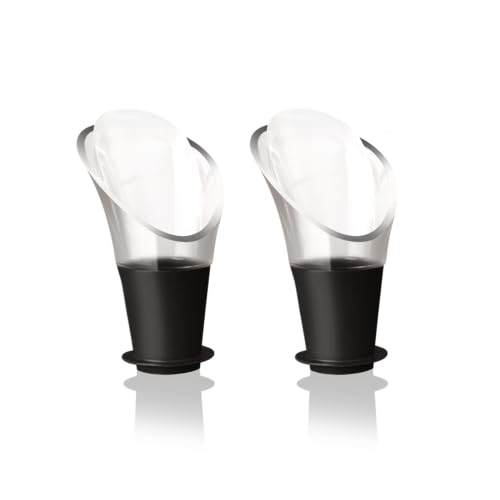
Best for anyone who wants a pour-and-seal tool with no refills
5. Vacu Vin Wine Server
A budget-friendly pouring stopper that fits in the neck of an opened bottle and lets you pour without lifting a loose cork. It has no gas capsules to buy, which keeps ongoing costs near zero.
Suits: anyone who wants a pour-and-seal tool with no refills. Strengths: simple and low maintenance. Weaknesses: it does not replace air with inert gas. Skip it if you want long storage.
View Vacu Vin Wine Server on Amazon
Best for frequent hosts
6. Coravin Timeless Eleven Wine Preservation System
The most automated needle-and-argon model in the family, with a motorised pour meant to make serving quicker and more consistent. It is aimed at frequent hosts and serious collectors.
Suits: frequent hosts. Strengths: quick, steady pours. Weaknesses: the most elaborate and costly option here. Skip it if you pour only a glass or two a week.
View Coravin Timeless Eleven on Amazon
Care and Setup
- Rinse needles and pouring parts with clean water after each session, then dry them.
- Store gas capsules away from heat.
- Keep a spare set of seals or stoppers on hand.
- Chill opened bottles in the fridge, even reds, to slow change in flavor.
Mistakes to Avoid
- Using a needle system on screw-cap bottles.
- Forgetting to check that gas capsules are available where you live.
- Pushing a stopper in crookedly and breaking the seal.
- Leaving a dispensed bottle upright in a warm room for weeks.
How the Needle and Argon Method Works
The Coravin Timeless family at the center of this guide works in a way that surprises people the first time they see it. Rather than pulling the cork, you slide a thin hollow needle through it into the bottle. Pressing the trigger releases argon gas from a small capsule into the bottle, and the gas pushes wine up through the needle into your glass. Argon is an inert gas, so it does not react with the wine, and it takes the place of the wine you pour. When you withdraw the needle, the cork is meant to reseal itself.
The appeal is that the bottle never sees ordinary air during the process, so the remaining wine is protected for far longer than with the cork pulled. That makes the approach popular for special bottles that you want to enjoy slowly over weeks or months. The method depends on a few things going right: a natural cork that reseals, a needle that is clean and undamaged, and a capsule with enough gas.
Safety is worth a thought. The system works under pressure, so follow the manual closely, keep the needle pointed away from your hands and face, and never use it on a bottle that looks cracked or fragile. Use only the gas capsules the maker specifies. Clean the needle and parts as directed after each use so residue does not build up.
- Read the manual before the first pour.
- Keep fingers clear of the needle and the bottle neck.
- Do not force the needle through a stuck or crumbling cork.
Checking Corks and Bottle Suitability
The closure on the bottle decides whether a needle system is a good match. Natural cork is the intended partner, because it is elastic enough to close around the hole after the needle leaves. Many bottles use other closures, and each needs a different approach. Screw caps and glass stoppers cannot be pierced, so a needle system is not an option. Synthetic corks vary, and some are too tough or do not reseal well, so check the maker’s guidance on compatible closures before trying one.
Condition matters even with natural cork. A very old bottle may have a dry or crumbly cork that could break apart when pierced, and a loose cork can leak. A bottle with a wax or heavy foil seal on top needs the covering handled according to the instructions. If the cork looks damaged or the bottle has been stored badly, think twice about using the needle.
Bottle shape matters for the clamp-style models, which sit on the neck. Check that the device fits the bottles you own, including thicker necks, and that it sits stably so the needle goes in straight. Sparkling wines need a separate system designed for pressure, as the listing for the sparkling model describes, and should not be used with a still-wine needle device.
- Check what closure each of your bottles has.
- Avoid very old, dry or damaged corks.
- Confirm the neck diameter against the listing.
Running Costs and Gas Supply
The purchase price of a dispenser is only part of what you will spend. Systems that use argon rely on capsules, which run out and have to be replaced. The number of glasses a capsule delivers depends on how much you pour, the pour speed, the model and the temperature, so the listing and manual are the best places to check the maker’s guidance. Do not assume that a capsule covers a fixed number of bottles.
Divide the cost of a capsule by the number of pours to get a rough cost per glass, and decide if it fits how you drink. If you pour a glass from a special bottle a few times a month, ongoing cost is modest compared with the wine itself. If you serve many glasses every week, the cost of capsules adds up and a simpler tool may suit you better.
Also check availability. Look for how and where replacement capsules are sold, whether they come in multi-packs, and whether the maker offers needles and seals as spares. A device with no easy source of capsules or parts loses its value quickly. Store capsules in a cool, dry place and handle them carefully.
- Compare the running cost with how often you will use it.
- Keep a spare capsule when you run low.
- Check that needles and seals are sold separately for replacement.
- Remember that stopper-style dispensers have no gas costs.
Storing a Bottle After You Pour
Even with a good dispenser, how you store the bottle between glasses matters. Keep it somewhere cool, dark and steady, away from sunlight, heat sources and vibration. For corked bottles protected with a needle system, storing them on their side keeps the cork moist and helps the seal, while stopper systems for opened bottles often work best standing up so the stopper stays in contact with the neck, so follow the maker’s advice for each.
Cooler temperatures slow the changes in wine, which is why many people chill opened bottles, even reds, and bring them up to temperature before serving. Pour small amounts, which leaves more wine in the bottle and keeps a limited amount of gas in use. If you are not sure the wine still tastes good, pour a small taste first.
How long a bottle lasts after dispensing depends on the wine, the method and how many times you open it. Needle-and-argon systems are intended for long periods, while stopper-based dispensers suit days to a few weeks. Delicate whites and old wines are the most fragile, and sturdy reds the most forgiving. When in doubt, drink sooner rather than later.
- Note the date of the first pour on the bottle.
- Check the aroma before each pour.
- Do not leave bottles in a warm room or in sunlight.
Deciding Between a Dispenser and a Simple Stopper
Not every household needs an argon system. A simple pouring stopper like the Vacu Vin server costs far less to run, takes up almost no space and has no capsules to buy. It is a sensible choice if you finish a bottle within a few days. A dispenser that protects with gas makes more sense if you enjoy sampling many bottles over time, own wines you want to keep intact for a special occasion, or often drink alone from a bottle meant for two.
Ask yourself a few questions. How many bottles do you keep open at once? How long do they usually sit? Do the bottles you care about have natural corks? How much are you willing to spend on the tool and on refills? A person who drinks one glass of a favorite wine every night may be happier with a basic stopper and a fridge, while a collector who opens a rare bottle for a single glass may value the needle method.
Consider the bottles themselves. A dispenser is worth more when it protects wine that would be a shame to waste. For inexpensive everyday wines, the cost of the device and its supplies may exceed the value of what it saves. Buy for the wines you actually drink.
- Match the tool to how long you keep bottles open.
- Think about storage space and the effort of use.
- Check the warranty and parts availability for any pricey unit.
Life With a Preservation Dispenser: The First Ten Bottles
A preservation dispenser changes behaviour in stages, and knowing the stages in advance helps you judge the purchase fairly. The line-up here is dominated by one family of ideas: the Coravin Timeless models, which pour through the cork under a blanket of argon; the Pivot, which works through a stopper after the cork comes out; the Coravin Sparkling, which defends bubbles instead of stillness; the Timeless Eleven at the automated end; and the simple Vacu Vin Wine Server representing the low-technology pourer-and-stopper approach. Whichever you choose, the first bottle is a novelty, the next few are an experiment, and only around the tenth bottle does the device become what it will actually be in your life: either a quiet habit or an expensive ornament. Plan to judge it at the tenth bottle, not the first.
Bottles one to three: learning the pour
Use inexpensive, sound bottles for the first pours and treat them as tuition. Practise the sequence until it is boring: inspect the cork, fit the device squarely, pour with patience, and return the bottle to rest in the manner the system intends. Notice how long a glass takes to pour and stop expecting the speed of an open bottle; a preservation pour is deliberately measured, because the gas is doing work as the wine leaves. Keep a note of which bottles you opened and when, even at this stage, because the experiment’s second half, tasting the same bottle later, depends entirely on your remembering what the first glass was like. Drinkers who skip the notebook end up with opinions about preservation that are really opinions about their own memory.
Bottles four to seven: finding your rotation
By the middle bottles a pattern emerges. Most households settle into a small rotation: one red and one white in play, perhaps one special bottle reserved for a glass at a time across a month. The Pivot suits this rotation for bottles you expect to finish within a shorter arc, while the Timeless approach suits the special bottle whose glasses are events in themselves. The discipline that makes the rotation work is restraint at the moment of opening: every new bottle added to the rotation dilutes the attention the others get, and preserved wine, however well kept, is still on a journey in one direction. Finish bottles in a deliberate order, oldest commitment first, and let the device serve a plan rather than a whim.
Bottles eight to ten: the honest verdict
At this stage ask the only questions that matter. Are you opening better bottles on ordinary nights because the fear of waste has gone? Are the later glasses from preserved bottles genuinely close to the first? Are the capsules, needles and routines a fair exchange for that freedom, in your house, with your hands? If the answers are yes, the dispenser has earned its counter space and its consumables budget. If the answers are mixed, the fault is often rotation discipline rather than technology, and one month of finishing what you open before opening more will usually reveal which. If the answers are plainly no, sell or gift the device without self-reproach; a household that finishes its bottles in an evening never needed it, and knowing that is worth the experiment.
Pouring Technique: The Details That Decide Whether Argon Works
Before the needle: cork inspection and bottle position
A needle system trusts the cork to reseal, so give it a cork worth trusting. Bottles with crumbling, soaked or obviously tired corks are poor candidates; drink those openly and soon instead. Present the bottle upright, remove the capsule cleanly so no foil interferes with the device’s seating, and centre the needle over the cork with the device aligned to the neck rather than to your eye’s guess. A pour that begins crooked ends with a torn cork and a slow leak of both gas and confidence. With the Pivot approach, the equivalent discipline is the stopper: seat it fully, every time, because a stopper almost in is a system almost working.
During the pour: patience as a technical requirement
Tilt the bottle so the wine, not the gas space, meets the needle’s path, pour in a controlled stream, and release the trigger or pressure between glasses to let the system settle. Rushing produces sputtering, foaming and a glass that tastes handled. If a pour slows markedly across a bottle’s life, read it as information: the capsule may be nearing its end, the needle may be dulling or clogging, or the bottle may simply be nearly empty. Keep the maker’s cleaning routine for the needle and the spout as part of pouring day, not as an annual event, because dried wine in a needle’s fine channel is the quiet cause of many disappointing second glasses blamed on oxidation.
After the pour: rest, storage and the next glass
Stand a needle-poured bottle upright for a while so the cork can reseal before it returns to its side, and store preserved bottles as you would unopened ones: cool, dark and undisturbed. Heat is the enemy that no gas blanket defeats, so a preserved bottle on a warm counter is ageing faster than an unpreserved one in a cold fridge. When you return for the next glass, pour a small first taste and judge it honestly before filling glasses for guests. The system’s promise is not that wine cannot change, but that change is slowed enough for your plans; your palate remains the final inspector, and it should be consulted every time.
Sparkling Wine: The Special Case That Justifies Its Own Tool
Bubbles obey different rules, which is why a dedicated sparkling preservation approach exists in this guide at all. A sparkling wine’s life after opening is measured in fizz as much as in flavour, and the stopper-and-fridge method that serves a party’s leftovers tonight will not defend a special bottle across a week. If your household opens sparkling wine for one or two glasses at a time, celebrations in miniature, anniversaries on a Tuesday, the dedicated system converts waste into ritual. If sparkling wine in your house means a bottle finished at a gathering, the honest tool is a good clamp stopper and a cold fridge, and the money belongs in the next bottle. The same logic governs the whole category: preservation pays in proportion to the gap between how a bottle is opened and how it is finished, and no gap means no purchase, however elegant the engineering.
Dispenser or Decanter, Dispenser or Stopper: Placing the Tool in Your Ritual
A preservation dispenser is sometimes confused with two neighbours it does not replace. The decanter works on wine you are about to drink, opening it up with air; the dispenser works on wine you are not about to drink, defending it from air. Using both in sequence is normal: pour a glass by preservation for tonight, and when the bottle’s turn finally comes to be finished, decant what remains if the wine is young and firm. The simple stopper, represented here by the Vacu Vin server approach, defends a bottle for the shortest arc at the lowest fuss, and for many bottles that arc is all they need. A mature household kit often contains all three layers, stopper for tonight, Pivot-class protection for the week, Timeless-class protection for the treasure, and the wisdom to know which bottle deserves which. Buying the layers in that order, as your drinking proves each need, keeps the drawer honest and the counter uncluttered.
The Economics of a Glass, Thought Through Without a Calculator
Every preservation dispenser asks the same trade: money spent on devices and capsules in exchange for wine not poured away. The households that win the trade share three traits. They buy bottles good enough that a saved glass is worth saving, they drink slowly enough that bottles genuinely need defending, and they actually use the device because it lives where the wine lives, clean and supplied. The households that lose the trade buy the device for an imagined life: the cellar they do not yet own, the slow evenings that work never permits, the special bottles that guests always finish anyway. Before buying, audit your last ten opened bottles honestly. How many were finished the night they were opened, how many faded in the fridge, and what did the faded ones cost you in pleasure rather than in money? If the honest audit shows waste you resented, a dispenser from this guide is a tool aimed at a real target. If it shows bottles happily finished, your household’s preservation system is already working, and it is called having friends.
Gifting a preservation dispenser
Give one only to a drinker whose pattern you know: the slow drinker, the single-glass household, the collector who nurses treasures. Include the consumables to start, demonstrate on an ordinary bottle, and make the gift about the bottles it will liberate rather than the gadget itself. Given to the wrong pattern, even the finest Timeless model becomes a beautifully engineered paperweight, and the giver’s generosity is measured by the match, not the machine.
Wine Preservation Dispenser FAQ
Does a dispenser keep wine fresh forever?
No. It slows change a great deal, but results vary by wine and by method. Needle-and-argon systems protect longest, and simple stoppers protect for days.
Can I use these on any bottle?
Not always. Needle systems are intended for natural cork, so check the closure on each bottle before you start.
Are refills expensive to keep buying?
Argon capsules are a recurring purchase, so factor them in. Stoppers and servers have no refills.
Can I use a needle dispenser on a bottle with a screw cap?
No. Needle systems are meant for natural cork, so a screw cap is not suitable. Use a stopper-based method instead.
Does the cork really reseal after the needle is removed?
It is designed to, but results depend on the cork's condition and type. Old, dry or very hard closures may not reseal as well.
Is argon safe to use with wine?
Argon is an inert gas that does not react with wine, and the system is designed for this use. Follow the maker's safety instructions, especially around pressure.
How many glasses can I pour from one capsule?
It varies with the model, the pour size and the conditions. Check the maker's guidance on the product page.
Can I use these devices on sparkling wine?
A still-wine needle system is not intended for sparkling wine. The listings include a separate pressurized model for sparkling bottles.
Do I need to clean the needle?
Yes. Follow the maker's cleaning steps after use, and dry the parts before storing them.
Will a dispenser keep wine perfect forever?
No. It slows change, but wine still evolves. Check the aroma and taste before serving.
Who Actually Benefits From a Wine Preservation System
A wine preservation system is a niche tool. It suits people who open bottles slowly, who drink a single glass at a time or who own wine they want to try without committing the whole bottle. If you usually finish a bottle in an evening, or share it at a dinner, you may never use the feature. For those people, a decent stopper or a smaller bottle is more practical.
Collectors and enthusiasts are the main audience for needle-and-argon systems, as these let you sample a pricey bottle and keep the rest for later. Couples where only one person drinks wine, or households with different tastes, are another good fit. People who enjoy a glass each night from a range of bottles can also find the system a good way to keep several open in rotation.
The picture changes if your wine is inexpensive. Spending money on a device and gas refills to preserve a bottle that costs about the same as one capsule does not add up. In that case, a vacuum stopper or a simple cork returns more value for less spend.
Needle Systems Versus Vacuum Pumps and Stoppers
Preservation methods differ in how they keep air away from the wine. A needle system passes a thin needle through the cork, pours the wine out and pushes inert gas in to replace it. The aim is to avoid pulling the cork at all, so the bottle can stay in storage. Because air never gets in, the wine in the bottle is expected to change little.
A vacuum pump draws air out of the bottle through a rubber stopper. It is inexpensive and simple, though removing air may also pull out some of the aroma, and it does not stop all oxidation. Pourers and stoppers like the Vacu Vin type in this guide help control the pour and limit air contact, but they work best for short term storage, as the wine is still exposed to some air.
For the sparkling model, the goal is different. The device holds pressure so bubbles are not lost, and it must be matched to the bottle neck. A still wine tool is not suitable for sparkling wine, as the pressure inside is higher.
How each method compares in practice:
- Needle and argon: best for keeping wine for weeks or longer, highest cost, needs corks that reseal.
- Vacuum stopper: cheap and easy, best for a few days.
- Pouring stopper: a convenience tool that slows oxidation but does not stop it.
- Sparkling stopper: keeps the fizz for a short period after opening.
Cost Over Time and Whether a System Pays Back
The up-front price of a needle system is only part of the cost. Gas capsules are consumed with use, and each capsule serves a limited number of pours, so over a year the refills may exceed the price of the device. Work out how many glasses you pour per month, how many that capsule covers and what a capsule costs where you shop, then divide.
The question is whether the system saves enough wine to matter. If you save part of an expensive bottle that would otherwise go flat, the system can pay back on a handful of bottles. If you mostly open modest wines, it may never get there. Be honest about your drinking habits.
Also include accessories and spare parts. Needles and seals wear out, and some models offer additional needles or a travel case. Check how long the maker supports each model, and whether replacement parts are easy to get, because a system without spares becomes unusable when a small part fails.
Handling Special Cases: Older Wine, Synthetic Closures and Gifts
Older bottles need extra care. Aged corks can be dry or brittle, and pushing a needle through a fragile cork can crumble it or leave it unable to reseal. For a prized old bottle, consider whether the risk is worth it, and read the maker advice.
Bottle shape and position also matter. Some devices need clearance around the neck, so wide-shouldered or oddly shaped bottles may not sit well. If you store bottles on their side, check whether the system can be used on a bottle in that position, and whether it must be upright during pouring. Foil capsules may need trimming or piercing so the needle has a clear path to the cork.
Screw caps and some synthetic closures do not work with a needle approach, as the needle needs to pass through a cork. In those cases, use a stopper or finish the bottle.
As a gift, a preservation system suits wine lovers who already own a good collection. Check what comes in the box, whether argon is included and the number of capsules supplied, so the recipient can start right away. Attach a note on where to buy refills, and the gift stays useful.
Related guides
- 6 Best Wine Preservation Systems: Pumps, Gas, Stoppers (2026)
- 6 Best Wine Dispensers and Preservers for Bars
Frequently Asked Questions
How long can wine last after using an argon preservation system?
Makers describe preserved wine lasting weeks to months, but results vary with the wine, the cork and how many times you pour. Treat these timeframes as claims, not guarantees. Taste the wine before serving, and keep the bottle upright or stored as the maker advises.
Do I need to chill wine differently when using a dispenser?
No. Store the bottle as you normally would, at a steady cool temperature away from light and heat. The dispenser only controls what happens inside the bottle during pouring. Chill white and sparkling wine before serving, as usual.
What is the cheapest way to keep wine fresh after opening?
A stopper plus refrigeration is the lowest-cost method. Cold slows oxidation, so even red wine lasts longer in the fridge. A vacuum stopper adds a small benefit. Plan to finish most opened bottles within a few days, and take red wine out of the fridge before serving.
Can a needle dispenser damage the cork?
Used correctly, a thin needle goes through the cork and the cork seals again, but results vary. Dry, old or crumbly corks are more likely to crack or leak. Insert the needle straight, avoid forcing it, and follow the maker guidance for each bottle type.
The Short Version
For the classic needle method, the Coravin Timeless Three. For a polished build, the Timeless Six. For everyday opened bottles, the Pivot. For bubbles, the Sparkling. For a refill-free server, the Vacu Vin. For the most automated pour, the Timeless Eleven.

