Disclosure: topratedkitchenware.com is reader-supported. When you buy through links on our site, we may earn an affiliate commission from Amazon and other retailers, at no extra cost to you.
Where to buy
The six models below are the verified picks for this guide to best grills for ocean air. Each name links to its Amazon listing, where you can check the latest price on Amazon, confirm the current configuration, and read the newest owner feedback before you decide.
- Char-Broil Classic 3-Burner Propane Gas Grill
- Electactic Stainless Steel 4-Burner Gas Grill with Side Burner
- Char-Broil Performance Series 4-Burner Gas Grill Cabinet
- Nexgrill 4-Burner Gas Grill with Stainless Steel Body
- IdeaMaxx 3-Burner Propane Gas Grill
- Weber Spirit E-425 Gas Grill
Read the full guide ↓ for the ranking logic, the honest limitations of every pick, and the buying checks that matter more than any headline claim.
Salt changes everything about grill ownership, and the best grills for ocean air are not simply the best grills moved closer to the beach. Ocean air carries salt spray and constant humidity that work on steel day and night: finishes bubble, fasteners seize, cast iron blooms with rust, and a grill that would last a decade inland can look tired in two coastal years. This guide reads its verified pool — six gas grills, no charcoal models — entirely through that lens: which materials and coatings stand a chance, which designs are easy to protect, and what care routine each pick honestly demands.
An upfront honesty note belongs here: no pick in this pool is a true marine-grade grill. None of the verified listings claims marine-grade stainless construction, and we will not upgrade any of them with language the data does not support. What this pool offers is a spectrum — porcelain-coated grates and enamelled parts that resist salt well, stainless exteriors that tolerate it with wiping, and cast iron components that will punish neglect fastest. The reviews grade each pick on that spectrum and name the care it needs, because by the sea the routine is part of the product.
Distance from the water matters as much as the grill itself. A home in direct spray range lives a harder equipment life than one three streets back, and a grill stored under a covered porch ages differently from one standing open on a deck. We flag where each pick fits along that scale, and the buying guide below gives you a simple way to grade your own exposure before you shop. Readers whose homes sit directly on the water should continue to Best Grills For Oceanfront Use, where the exposure assumptions are harsher still.
Every specification quoted comes from the verified listing data — burner counts, output, cooking area, grate and body materials — with no prices and no fixed ratings printed. Where the verified data is brief, the review says so rather than guessing at a grade of steel the listing never claimed.
Key Takeaways
- No pick in this pool is verified as marine-grade; the honest choice is among coatings and care routines, and this guide grades both.
- Porcelain-enamelled grates and parts resist salt best per unit of effort; bare cast iron demands the most discipline by the sea.
- Stainless exteriors tolerate ocean air well only if wiped regularly — salt film left sitting is what pits and spots them.
- A quality cover, used on a dry grill, is the single highest-value accessory in salt air; trapping moisture under a cover is worse than none.
- Grade your exposure honestly — direct spray, a few streets back, or stored under cover — and buy for that exposure, not the brochure beach.
In this guide
Quick Picks
Six gas grills graded for salt-air life: materials, coatings and the care each one needs. Start with the porcelain and stainless rows if your grill will live within sight of the water.
| Pick | Badge | Fuel | Why it is here |
|---|---|---|---|
| Char-Broil Classic 3-Burner Propane Gas Grill | Best for Easy Coastal Care | Propane gas | Porcelain-coated grates and a simple format make this the lowest-effort coastal keeper in the pool. |
| Electactic Stainless Steel 4-Burner Gas Grill with Side Burner | Best Stainless Pick | Propane gas | A stainless body that wipes clean fast — the routine salt air rewards — with four-burner flexibility. |
| Char-Broil Performance Series 4-Burner Gas Grill Cabinet | Best Cabinet for Coastal Patios | Propane gas | An enclosed cabinet keeps the tank and tools out of the damp coastal air. |
| Nexgrill 4-Burner Gas Grill with Stainless Steel Body | Best Big Stainless Grill | Propane gas | The big stainless four-burner: 626 square inches with a cabinet, for serious coastal entertainers who maintain their kit. |
| IdeaMaxx 3-Burner Propane Gas Grill | Best for Occasional Coastal Use | Propane gas | Cast iron grates and folding shelves; best kept as the occasional-use or well-sheltered coastal grill. |
| Weber Spirit E-425 Gas Grill | Best Premium Coastal Pick | Propane gas | Porcelain-enamelled cast iron grates and a premium build make this the strongest salt-air specification in the pool. |
How These Picks Were Chosen
The picks come from the verified grills pool, and this guide states only what the verified listings support. That discipline matters most on this keyword: steel grades are the whole ballgame in salt air, and where a listing says “stainless steel” without a grade, we report exactly that and advise the care routine appropriate to unspecified stainless, rather than assuming the most corrosion-resistant grade. No prices or fixed ratings appear anywhere in the guide; both belong on the listing page, where they are current.
Ranking weighted corrosion behaviour above cooking performance — a deliberate inversion of our usual order, because by the sea the grill that still works in year three beats the better cooker that rusted in year one. Porcelain enamel over cast iron scores highest for grates, since the enamel seals the iron from salt; stainless exteriors score well when their owners wipe them; bare cast iron scores lowest unless its owner is genuinely disciplined about oiling. Ease of covering, storing and cleaning counted heavily, because protection is a design feature here.
This is research-led guidance, not a salt-spray chamber test, and we do not claim otherwise. The corrosion behaviour of porcelain enamel, stainless steel and cast iron in marine environments is well established, and the verified specifications tell us which of those materials each pick puts between the ocean and its working parts. Each review then states the honest remainder: the fasteners, burners and internals whose materials the listings do not specify, and which your care routine must therefore protect blind.
One structural note: this pool is all gas. That suits the keyword — gas grills light instantly in sea wind once positioned, and their enclosed fireboxes shelter the flame — but charcoal loyalists by the sea should know the pool offers them nothing here, and the kettle-based discussion in Best Grills For Northern California is the nearest alternative read.
The 6 Best Grills for Ocean Air, Graded for Salt
Each review grades its pick for salt-air life: the materials the listing verifies, the exposure level it suits, and the care routine it honestly requires.

Char-Broil Classic 3-Burner Propane Gas Grill
Badge: Best for Easy Coastal Care
Strengths
- 360 square inches is a right-size grate for most households
- Porcelain-coated grates are easy to clean and resist rust
- Three burners still allow a simple two-zone setup
Trade-offs
- 30,000 BTU is adequate rather than fierce for thick steak searing
- No side burner for pots and sauces
- Side shelves are fixed, so the storage footprint stays full width
| Specification | Detail |
|---|---|
| Burners | 3 |
| Output | 30,000 BTU |
| Cooking area | 360 sq in |
| Grates | Porcelain-coated |
| Extras | Side shelves |
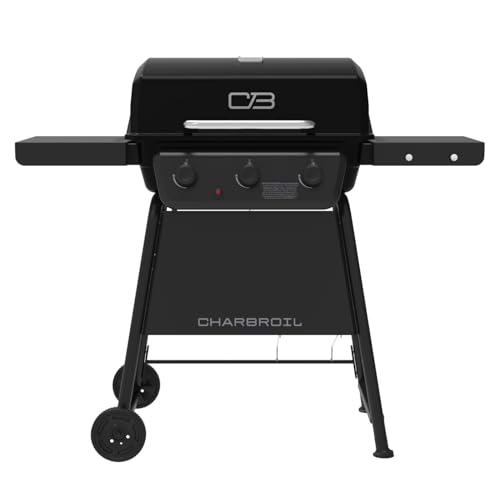
The Char-Broil Classic is a three-burner propane grill with 30,000 BTU of output, 360 square inches of cooking area, porcelain-coated grates and side shelves. It is deliberately unpretentious: enough burners for a two-zone fire, enough grate for a family dinner, and grates whose porcelain coating makes the post-cook scrub less of a battle. The output figure is honest mid-range power — plenty for burgers, chicken and vegetables, less ferocious for an extra-thick steak than the sear-focused models elsewhere in this pool. For buyers who want gas convenience without paying for features they will never touch, this is the straightforward end of the range.
The Char-Broil Classic earns the easy-care badge on the strength of its porcelain-coated grates, the most forgiving grate surface in salt air: the enamel seals the metal, wipes clean after a cook, and does not demand the oiling ritual cast iron insists on. The grill’s simple three-burner format also means fewer panels, seams and ledges where salt film can sit unnoticed. Its output is modest and it is not a premium build, so set expectations accordingly — but for a home a few streets back from the water, with a cover used properly, this is the pool’s lowest-effort path to a grill that still looks decent in year three.
Best for: coastal households a few streets back wanting the lowest-effort care routine / Not suited for: direct-spray front-line exposure or maximum searing power

Electactic Stainless Steel 4-Burner Gas Grill with Side Burner
Badge: Best Stainless Pick
Strengths
- Stainless steel body is easy to wipe down and weather-tolerant
- Side burner adds a pot and pan station beside the grate
- Four burners give flexible zoning for mixed loads
Trade-offs
- Newer brand name; long-term parts availability is less proven
- 42,000 BTU is mid-range power spread across four burners
- Stainless needs regular wiping to keep water spots and fingerprints away
| Specification | Detail |
|---|---|
| Burners | 4 plus side burner |
| Output | 42,000 BTU |
| Body | Stainless steel |
| Extras | Built-in thermometer |
The Electactic is a stainless steel four-burner propane grill rated at 42,000 BTU, with a side burner and a built-in thermometer. The formula is the crowd-pleasing one: four zones of control, a burner for the sauce pot, and a stainless exterior that cleans up with a cloth. Output per burner is moderate, which suits the way most people actually grill — chicken, burgers, vegetables and fish — rather than maximum-char steak work. As a newer brand it cannot point to the decades-long parts ecosystem of the oldest names in this pool, so weigh the specification and the stainless build against that shorter track record.
The Electactic’s stainless body is its coastal case: smooth surfaces that shed a wipe-down in a minute, which is the exact routine salt air rewards, because salt does its damage while it sits. Four burners and a side burner give it full family flexibility. The honest cautions are twofold: the listing does not specify the stainless grade, so assume it needs the regular wiping that all non-marine stainless does, and the brand’s track record is shorter than the legacy names, which matters for coastal replacement parts. Wiped weekly and covered dry, it should hold up well a few streets back; in direct spray, step up your routine or your expectations down.
Best for: owners who will wipe stainless weekly and want four-burner flexibility / Not suited for: anyone who never maintains a grill and lives in the spray zone

Char-Broil Performance Series 4-Burner Gas Grill Cabinet
Badge: Best Cabinet for Coastal Patios
Strengths
- Enclosed cabinet hides the propane tank and stores tools neatly
- Four burners plus a side burner cover family cooking and sauces
- Cabinet format looks tidy on a patio where the grill stays on show
Trade-offs
- Cabinet doors and panels add surfaces that need cleaning and care
- Full-size footprint; not a grill you move or store casually
- Verified listing data is brief, so confirm grate material and area before buying
| Specification | Detail |
|---|---|
| Burners | 4 plus side burner |
| Format | Cabinet style, model 463253925 |
| Colour | Black |
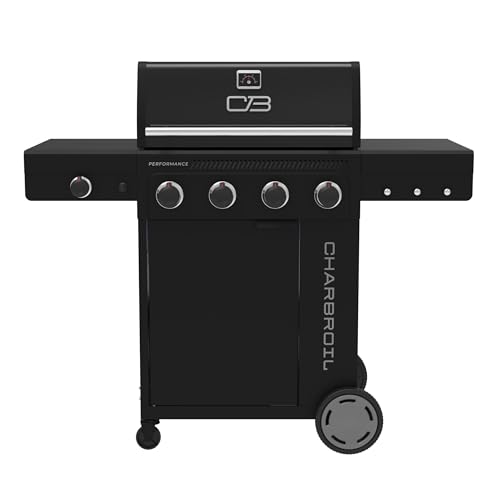
The Char-Broil Performance Series model 463253925 is a four-burner gas grill in a cabinet format with a side burner, finished in black. The cabinet is the point: the propane tank disappears behind doors, tools and a spare grate can live inside, and the whole appliance presents a tidy face to the patio. Four burners give the usual zoning flexibility and the side burner covers the pot work. The verified data for this listing is thinner than for some rivals — the pool confirms the burner count, cabinet format and side burner, but not grate material or exact cooking area — so treat those as details to confirm on the listing page before you commit.
The cabinet format is this Char-Broil’s coastal argument. An enclosed cabinet keeps the propane tank, its connections and your tools out of the damp salt air that corrodes them quietly between cooks, and the whole appliance presents closed, wipeable faces to the weather. Four burners and a side burner cover family cooking. The limits are real: the verified data for this listing is brief, so grate material — a first-order question in salt air — is unconfirmed, and cabinet seams and door hardware are exactly where salt likes to start. Confirm the grate on the listing, keep the hinges and handles wiped, and it suits a sheltered coastal patio well.
Best for: sheltered coastal patios wanting enclosed tank and tool storage / Not suited for: buyers who need the grate material confirmed before purchase

Nexgrill 4-Burner Gas Grill with Stainless Steel Body
Badge: Best Big Stainless Grill
Strengths
- 60,000 BTU is the strongest output figure among the four-burner picks here
- 626 square inches approaches party capacity without a sixth burner
- Double-door cabinet hides the tank and adds enclosed storage
Trade-offs
- Large and heavy; plan a permanent position rather than regular moving
- High output burns through propane faster at full throttle
- Stainless body needs wiping to stay free of spots and prints
| Specification | Detail |
|---|---|
| Burners | 4 plus side burner |
| Output | 60,000 BTU |
| Cooking space | 626 sq in |
| Body | Stainless steel |
| Extras | Built-in thermometer, electronic ignition, double-door cabinet |
This Nexgrill combines a stainless steel body, four burners plus a side burner, 60,000 BTU of output and 626 square inches of cooking space over a double-door cabinet, with a built-in thermometer and electronic ignition. It is the four-burner format pushed toward the top of its class: nearly the cooking area of the six-burner pick, with strong heat for searing and enough zones for a mixed load. The cabinet keeps the tank and clutter out of sight. The costs of the format are size, weight and fuel use at full power — all acceptable if your cooking genuinely fills 626 square inches on a regular basis.
This Nexgrill is the heavyweight stainless option: a stainless body over a double-door cabinet, 626 square inches and the strongest output among the four-burner picks. For a coastal entertainer it offers the full package — capacity, enclosed storage and surfaces that clean fast. The salt-air arithmetic is equally full-size, though: more stainless to wipe, more seams to check, and a big cover to keep in good order. Its cast of features suits a home set back from direct spray whose owner enjoys maintaining good kit; in the front line of the spray zone, its size becomes a maintenance burden rather than a pleasure.
Best for: coastal entertainers set back from direct spray who maintain their kit / Not suited for: front-line decks where its size becomes a cleaning burden

IdeaMaxx 3-Burner Propane Gas Grill
Badge: Best for Occasional Coastal Use
Strengths
- Three burners give genuine two-zone cooking on a mid-size footprint
- Cast iron grates hold heat well and leave clear sear marks
- Foldable side shelves shrink the storage footprint when the cook is done
Trade-offs
- A newer brand name with a shorter track record than the legacy makers
- Cast iron grates need seasoning and prompt drying to stay rust-free
- No side burner for sauces or a pan of beans alongside the main cook
| Specification | Detail |
|---|---|
| Burners | 3 |
| Output | 38,200 BTU |
| Grates | Cast iron |
| Shelves | Foldable side shelves |
| Colour | Black |
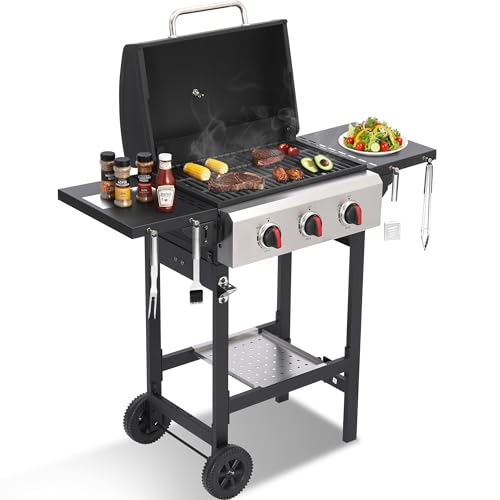
The IdeaMaxx is a three-burner propane grill built around cast iron grates and a 38,200 BTU output figure, with foldable side shelves that let it sit closer to a wall or a storage corner between cooks. Three burners is the smallest configuration that still allows a true indirect zone: light two burners, park delicate food over the third, and you can roast as well as sear. The fold-down shelves are the detail that matters most in tight spaces, because a grill is stored for far more hours than it is cooked on, and shelf width is what usually decides whether a mid-size grill fits a small patio at all.
The IdeaMaxx needs the most honest framing by the sea. Its cast iron grates are excellent cooking surfaces and the fastest-rusting components in this pool if neglected — salt air plus bare cast iron is a relationship that only works with prompt drying and regular oiling after cooks. Its folding shelves do help it tuck under a porch or into a store room, which is genuinely protective, and as an occasional-use grill kept sheltered it can serve a coastal household well. As an open-deck, cook-and-forget grill in direct ocean air, it is the wrong pick, and we badge it accordingly: best for occasional, sheltered coastal use.
Best for: occasional coastal use with sheltered storage and oiled cast iron / Not suited for: open-deck, low-maintenance life in direct ocean air

Weber Spirit E-425 Gas Grill
Badge: Best Premium Coastal Pick
Strengths
- Dedicated sear zone with boost burners for hard crusts on steaks and chops
- Porcelain-enamelled cast iron grates resist rust better than bare cast iron
- Weber Works rails accept prep and storage accessories along the side
Trade-offs
- Sits at a premium tier compared with most four-burner rivals
- Four burners is more grill than a couple or a solo cook will heat most nights
- Accessory rails are most useful if you buy into the matching accessory range
| Specification | Detail |
|---|---|
| Burners | 4 |
| Sear zone | Sear Zone with Boost Burners |
| Grates | Porcelain-enamelled cast iron |
| Extras | Weber Works rails |
| Colour | Black |
The Weber Spirit E-425 is a four-burner propane grill whose headline feature is a sear zone with boost burners, designed to push one part of the grate much hotter than the rest for steakhouse-style crusts. The grates are porcelain-enamelled cast iron, which keeps the heat retention of cast iron while adding a protective coating that slows rust. Weber Works rails run along the side so prep trays and tool holders can hang where you work instead of cluttering the side shelf. It is the refinement pick in this pool: nothing about it is exotic, but the burner control, ignition reliability reputation and parts support of the Spirit line are why buyers pay the premium tier price for it.
The Weber Spirit E-425 carries the strongest salt-air specification in the pool: porcelain-enamelled cast iron grates, which combine cast iron’s heat with an enamel seal against salt, in a premium four-burner format with a sear zone. Weber’s parts ecosystem also matters more by the sea than anywhere — burners, grates and hardware are wear items in salt air, and being able to replace them in year four is a durability feature no coating can match. It remains true that no verified data makes it marine-grade, and its exterior still wants wiping and a cover. But if one pick here is built to be maintained back to health season after season, it is this one.
Best for: serious coastal cooks wanting the best-maintainable specification in the pool / Not suited for: buyers seeking a verified marine-grade grill, which this pool does not contain
Comparison Table
Materials are the story of this table: find your pick’s grate and body materials in its review, and read the key verified detail here alongside the care notes, because in salt air the two cannot be separated.
| Pick | Fuel | Key verified detail | Badge | Listing |
|---|---|---|---|---|
| Char-Broil Classic 3-Burner Propane Gas Grill | Propane gas | 30,000 BTU | Best for Easy Coastal Care | Check on Amazon |
| Electactic Stainless Steel 4-Burner Gas Grill with Side Burner | Propane gas | 42,000 BTU | Best Stainless Pick | Check on Amazon |
| Char-Broil Performance Series 4-Burner Gas Grill Cabinet | Propane gas | Cabinet style, model 463253925 | Best Cabinet for Coastal Patios | Check on Amazon |
| Nexgrill 4-Burner Gas Grill with Stainless Steel Body | Propane gas | 60,000 BTU | Best Big Stainless Grill | Check on Amazon |
| IdeaMaxx 3-Burner Propane Gas Grill | Propane gas | 38,200 BTU | Best for Occasional Coastal Use | Check on Amazon |
| Weber Spirit E-425 Gas Grill | Propane gas | Sear Zone with Boost Burners | Best Premium Coastal Pick | Check on Amazon |
How to Choose the Best Grills for Ocean Air Exposure
Grade your exposure before you grade any grill. Direct spray — a deck the surf mist reaches — is a different equipment world from a patio three streets inland, and both differ from a grill that lives under a roofed porch. As a working rule: the closer the water, the more you should weight porcelain enamel and sealed surfaces, the less you should tolerate bare cast iron and intricate panel work, and the more of your budget belongs in the cover and the care kit. Owners who grade their exposure honestly rarely buy wrong; owners who buy for a postcard beach they do not quite live on often do.
Read materials the way a sailor would. Porcelain enamel is a glass coat over metal: intact, it is superb in salt air; chipped, it lets rust start at the chip, so handle grates without banging them around. Stainless steel resists by forming a protective surface layer, but salt film left sitting defeats it — hence the wiping routine — and unspecified grades vary, so treat every “stainless” claim here as “good, with care” rather than “immune”. Cast iron cooks beautifully and rusts eagerly; by the sea it belongs only to owners who enjoy the oiling ritual. Painted plain steel is the weakest exterior in salt air and needs the most shelter.
Think about the parts you cannot see. Burners, igniters, valves and fasteners live inside the grill where salt air still reaches, and the verified listings rarely specify their materials. That uncertainty argues for two things: brands and formats whose replacement parts are easy to obtain, and a care routine that includes an occasional internal inspection. A grill by the sea is maintained like a boat, in miniature — little and often, with parts replaced before small corrosion becomes a seized or failed component during a dinner party.
Plan storage and covering as part of the purchase. The ideal coastal setup keeps the grill under some overhead shelter with air moving around it, covered with a breathable, well-fitting cover only once the grill is cool and dry. A cover thrown over a damp grill traps exactly the moisture you are trying to exclude, and a flapping loose cover in sea wind scuffs finishes. If the grill must live fully exposed, shorten every maintenance interval in this guide and favour the simplest, smoothest formats — the Char-Broil Classic end of this pool rather than the cabinet end.
Finally, set a maintenance budget of time, not just money. Salt air ownership is a weekly five minutes — wipe the exterior, check the grates, glance at the fasteners — and a seasonal hour for a deeper clean and inspection. If that rhythm sounds pleasant, almost any pick here will serve you. If it sounds impossible, be honest now and choose the lowest-care specification in the pool, because in ocean air the routine is not an accessory to the grill; it is half the product. Readers who cook while travelling the coast will find the portable logic in Best Grills For Motor Home a useful contrast.
How to Care for a Grill in Ocean Air
Coastal grill care is a rhythm, not a project: small habits after every cook, a short weekly routine, and a seasonal inspection. Follow it and the picks in this guide will hold up well; skip it and the ocean will redecorate any grill you buy.
The governing principle is that salt does its damage while it sits. Everything below is about not letting salt, moisture and grease sit — on surfaces, in seams, or under a cover.
- After each cook, brush the grate while warm and let the grill cool with the lid open in dry weather, so moisture escapes instead of condensing inside.
- Wipe exterior surfaces with a damp cloth to remove salt film, then dry them; on stainless, wipe with the grain and finish dry to avoid spots.
- Oil cast iron grates lightly after cleaning while they are still warm, every time, in salt air — this is the non-negotiable ritual for the IdeaMaxx-style grates.
- Cover the grill only when it is cool and dry, with a cover that fits snugly and breathes; lift the cover on dry days to air the grill out.
- Weekly in season, wipe handles, hinges, seams and fasteners — the places salt starts — and check the grease tray, which coastal humidity turns corrosive faster.
- Monthly, inspect inside: burner ports, igniter, hose and connections; brush away corrosion early before parts seize or perforate.
- Each season, deep-clean the firebox and drip path, touch up chipped enamel or paint promptly, and replace any fastener that is starting to bind.
- Store the grill under overhead shelter if you have it, out of direct spray, with air able to circulate around the cover.
- Before a storm or a trip away, secure the cover, close the cylinder valve and, if the forecast is severe, move a portable-format grill fully indoors.
- Keep a small care kit by the grill: soft cloths, a brush, food-safe oil for grates, and the cover — care that is within reach is care that happens.
A word on covers, because they cause as much coastal damage as they prevent. A cover’s job is to shed spray and rain while letting the grill breathe; a sealed plastic trap over a damp grill is a rust incubator. Buy the fit for your model, put it on dry, take it off on fine days, and wash salt off the cover itself occasionally — the outside of the cover collects the same film as the grill would.
Accept the patina where it is harmless. Exterior discolouration on stainless, a handle that darkens, a hinge that needs its drop of oil — these are the normal texture of equipment that lives by the sea and works. The line to defend is functional: burners that light, valves that turn, grates that are clean and sound, fasteners that move. Defend that line with the routine above and the grill will cook for years in air that eats lesser-kept equipment.
Troubleshooting
Problem: rust spots blooming on grates → brush them back to clean metal, dry thoroughly and oil; on porcelain enamel, rust at a chip means the chip needs touching up before it spreads under the coating.
Problem: white spots and tea-staining on stainless → wash with warm water and a soft cloth, dry fully, and shorten your wipe interval; the staining is the salt film’s signature and it is cosmetic if caught early.
Problem: burners lighting unevenly after a coastal winter → brush the burner ports clear of corrosion and debris, check the hose and regulator, and inspect for any perforated section that means the burner’s season is over.
How Far From the Water Are You, Really?
Exposure grading is the most useful exercise a coastal buyer can do, and it takes one honest minute. If spray reaches your deck — if windows need washing of salt, if metal furniture pits — you are in the front line: favour porcelain enamel, simple formats, overhead shelter and the strictest routine in this guide, and accept shorter cosmetic life as the price of the view. The Weber and Char-Broil porcelain picks are your centre of gravity.
A few streets back, the air is still salty but the assault is gentler, and the pool opens up: stainless formats like the Electactic and the big Nexgrill hold up well with ordinary weekly wiping, and even cast iron behaves for owners who oil it. Most coastal households live in this band, and most of this guide is written for them.
Stored under cover — a porch, a carport, a store room — any pick here can live a long coastal life, because you have removed the weather from the equation and left only the humidity, which the routine handles. If you have that storage, buy for cooking first and care second; if you do not, reverse the order without hesitation.
Salt Air and the Rest of Your Outdoor Kit
The grill is not the only thing the ocean is working on, and the habits in this guide generalise. Propane cylinders rust at their bases in salt air — store them off bare concrete, check the collar and valve, and never let a cylinder sit in standing water. Tools, brushes and spare grates all last longer in a closed box than hanging in the open, however convenient the hooks look in summer.
Furniture and fixings teach the same lesson as the grill: the coast rewards smooth, sealed, wipeable things and punishes crevices, raw iron and neglect. Owners who internalise that once — when buying the grill — tend to buy everything else for the house correctly too, which is why this guide treats one purchase as an education. For the strictest version of these rules, where the deck meets the water itself, see Best Grills For Oceanfront Use.
And a small consolation for the maintenance-weary: coastal grilling has compensations no inland owner gets. The sea breeze that carries the salt also carries away the smoke, the evenings stay mild deep into the year, and seafood travels metres rather than miles to your grate. The routine is the rent on all of that — most owners here pay it gladly.
What Salt Air Does to the Parts You Cannot See
Owners tend to judge coastal wear by the surfaces they can see, but the ocean works hardest on the hidden half of the grill. Burner tubes breathe salt air through their ports and corrode from the inside out, which is why a grill can look presentable and light unevenly. Igniter electrodes and their wires live low in the firebox where damp settles. Valve stems and regulator connections sit in the same moist air as the exterior, with none of the wiping the exterior gets. The monthly internal inspection in this guide’s routine exists for exactly these parts, and it is the difference between replacing a burner on your schedule and losing one during a dinner.
Fasteners tell the story early if you learn to read them. The first screw that resists, the hinge that starts to feel gritty, the handle mount with a rust freckle at its edge — these are the grill’s early-warning system, and they appear a season or more before anything structural is at stake. A drop of suitable oil on moving hardware, a prompt touch-up on a freckle, a fastener replaced while it still turns: this is cheap, almost meditative maintenance, and it is what the owners of ten-year coastal grills actually did, in small minutes, while their neighbours’ grills were quietly seizing.
None of this requires expertise, which is the encouraging part. It requires a torch, a soft brush, ten unhurried minutes and the habit of looking. Build the habit in your first season — when everything is new and the looking is pleasant — and it will still be there in the fifth, when it is saving you real money.
Common Buying Mistakes
Buying a grill for its cooking specification alone and discovering its materials in year two is the classic coastal mistake. Inland reviews will not warn you; the grill that wins inland comparisons can be the wrong alloy, coating and seam design for your deck. Materials first, menu second, by the sea.
Covering a damp grill is the second. It feels protective and does the opposite, sealing moisture and salt against every surface. Dry first, cover second, air it on fine days — the order matters more than the cover’s price.
Neglecting cast iron is the third. Bare cast iron in salt air does not forgive a forgotten month; it rusts in weeks. If your life does not include the oiling ritual, choose porcelain-coated grates and enjoy the same sear with a fraction of the discipline.
Assuming “stainless” means “maintenance-free” is the fourth. Unspecified stainless by the sea needs its wipe-downs like everything else; the owners who know that have gleaming grills, and the owners who believed the brochure have spotted ones, from the same product.
Skipping the seasonal internal inspection is the fifth. Exteriors get the attention while burners and fasteners corrode unseen, until a failure arrives mid-cookout. An hour a season inside the firebox is the cheapest insurance in this entire guide.
Final Recommendation
For most ocean-air households, the Weber Spirit E-425 is the pick to beat: porcelain-enamelled cast iron grates, a premium format, and the parts support that turns coastal wear from a death sentence into a maintenance schedule. The Char-Broil Classic is the low-effort alternative — porcelain-coated grates and a simple format that asks the least of its owner — and the Electactic serves owners who want stainless and will keep it wiped.
Take the big Nexgrill if you entertain at scale a few streets back, the cabinet Char-Broil if enclosed storage for the tank matters on a sheltered patio, and the IdeaMaxx only with shelter and an oiling habit. Whichever you choose, buy the cover the same day and start the wiping routine with the first cook — in ocean air, the owner is the corrosion warranty.
Start your shortlist here: Weber Spirit E-425 Gas Grill, Char-Broil Classic 3-Burner Propane Gas Grill, Electactic Stainless Steel 4-Burner Gas Grill with Side Burner. Each link takes you to the current listing, where you can check the latest price on Amazon and confirm the specification before you buy.
Frequently Asked Questions
Is any grill in this guide marine-grade?
No pick’s verified listing claims marine-grade construction, and this guide does not pretend otherwise. The picks are graded on the materials they do verify — porcelain enamel, stainless exteriors, cast iron — and on the care each needs in salt air. A verified marine-grade grill is a specialist purchase beyond this pool.
How often should I wipe down a grill by the sea?
Exterior surfaces weekly in season, and after any day of heavy spray; grates after every cook. The point is never to let salt film sit for long, because sitting salt is what pits stainless and starts rust under coatings.
Are porcelain-coated grates really better than cast iron at the coast?
For most owners, yes: the enamel seals the iron from salt and needs only cleaning, while bare cast iron needs drying and oiling after every cook to stay ahead of rust. Cast iron still sears beautifully — it simply charges a discipline fee that porcelain does not.
Should I keep my grill covered or uncovered by the ocean?
Covered, but correctly: cool, dry grill, snug breathable cover, aired on fine days. A cover over a damp grill traps moisture and accelerates the corrosion you are trying to prevent. Overhead shelter plus a cover is the best arrangement of all.
How long will a grill last in ocean air?
It depends more on exposure and routine than on the grill. Front-line spray with no routine can tire a grill in a couple of seasons; a few streets back with weekly wiping and seasonal inspections, the better-specified picks here should serve for many years, with wear parts replaced along the way.
Does salt air affect propane parts too?
Yes: cylinders, regulators and connections corrode in salt air. Store cylinders upright and dry, inspect the hose and fittings each season, and keep connections inside a cabinet or under cover where the format allows. Treat the gas path with the same little-and-often respect as the grates.
What is the first sign my grill is losing to the salt?
Tea-staining and spots on stainless, rust freckles at enamel chips, stiff fasteners and uneven burner flames. All are cheap to fix when caught at that stage and expensive a season later — which is why this guide pushes a monthly inside look as a habit.