Disclosure: topratedkitchenware.com is reader-supported. When you buy through links on our site, we may earn an affiliate commission from Amazon and other retailers, at no extra cost to you.
Where to buy
The six grills below are the verified picks for this guide to the best grills not weber shoppers can buy. Five are recommendations, linked to their Amazon listings where you can check the latest price on Amazon and confirm the configuration. One — the Weber itself — is covered in prose only, with no purchase link, because a guide for people who have decided against that brand should still show you the benchmark the alternatives have to beat.
- Charbroil Performance Series 4-Burner Gas Grill Cabinet with Side Burner — Best Overall Alternative
- Nexgrill 4-Burner Propane Gas Grill with Side Burner (60,000 BTU) — Best Big Alternative
- Nexgrill 4-Burner Propane Gas Grill with Side Burner (52,000 BTU) — Best Feature-for-Tier Alternative
- Monument Grills Mesa II 410FBZ 4-Burner Propane Gas Grill — Best Design Alternative
- IdeaMaxx 3-Burner Propane Gas Grill — Best Compact Alternative
- Weber Spirit E-425 Gas Grill (Benchmark — Prose Only) — The Benchmark — Not Linked in This Guide (covered in prose below; no purchase link in this guide)
Read the full guide ↓ for who each pick suits, the honest limitations to weigh before you buy, and the setup and care checks that decide whether a grill still feels like a good purchase two seasons from now.
Shoppers who search for the best grills not weber options are not usually confused about what Weber makes; they have decided, for reasons of budget philosophy, past experience, a desire for different features or simple variety, that their next grill will wear a different badge. This guide takes that decision seriously. It recommends five verified alternatives across the sizes and styles most households want, and it keeps the Weber Spirit E-425 in the article — in prose, unlinked — as the honest benchmark, because an alternative is only meaningful when you can see exactly what it is an alternative to.
The good news is that the non-Weber market is deep. Charbroil brings cabinet-style family grills with decades of mainstream presence; Nexgrill competes aggressively on specification, with big outputs, side burners and stainless at tiers the benchmark brand reserves for higher up; Monument builds its case on stainless design and fast, fierce heat; and smaller names like IdeaMaxx put premium cooking surfaces — cast iron grates — into compact grills at friendly tiers. Each of the five linked picks below wins its place on hardware, not on the absence of a logo.
Read the benchmark section too, even though you cannot buy from it. Knowing precisely what the E-425 offers — its sear zone, its porcelain-enameled cast-iron grates — tells you which features to demand from an alternative and which you are content to trade away. That is the difference between buying not-Weber as a protest and buying it as a choice. Shoppers whose filter is price rather than brand will find the same hardware weighed on cost in Best Grills On Sale; this guide keeps the brand question at the centre.
Key Takeaways
- Five linked alternatives, one unlinked benchmark: the Weber Spirit E-425 is described in prose only, so you can judge what the alternatives must match.
- The Charbroil Performance 4-burner is the all-round alternative: cabinet storage, side burner, family capacity.
- Nexgrill competes on specification — the 60,000 BTU model for size, the 52,000 BTU model for features.
- The Monument Mesa II is the design alternative: stainless body, broil zone, folding shelves.
- The IdeaMaxx is the compact alternative, with cast iron grates where rivals use thinner steel.
- Judge alternatives on grates, zones and support — the same tests you would apply to the benchmark itself.
In this guide
Quick Picks
Five linked recommendations and one prose-only benchmark. The benchmark carries no link anywhere in this guide; the alternatives carry the full link pattern between them, and the badges below match the detailed reviews.
| Pick | Badge | Why it is here |
|---|---|---|
| Charbroil Performance Series 4-Burner Gas Grill Cabinet with Side Burner | Best Overall Alternative | Cabinet storage, four burners and a side burner from the other great mainstream American grill name. |
| Nexgrill 4-Burner Propane Gas Grill with Side Burner (60,000 BTU) | Best Big Alternative | 626 sq. in. and 60,000 BTU in stainless with a cabinet — specification the benchmark tier charges more to match. |
| Nexgrill 4-Burner Propane Gas Grill with Side Burner (52,000 BTU) | Best Feature-for-Tier Alternative | Matte cast iron grates, stainless lid and a side burner — the alternative that competes on the cooking surface. |
| Monument Grills Mesa II 410FBZ 4-Burner Propane Gas Grill | Best Design Alternative | Stainless body, broil zone and folding shelves — the alternative for buyers leaving on looks and speed. |
| IdeaMaxx 3-Burner Propane Gas Grill | Best Compact Alternative | Cast iron grates and folding shelves in a three-burner — the small-space alternative with a premium surface. |
| Weber Spirit E-425 Gas Grill (Benchmark — Prose Only) | The Benchmark — Not Linked in This Guide | PROSE ONLY, NO LINK — the excluded brand, described fairly so the alternatives above can be judged against it. |
How These Picks Were Chosen
The method follows the keyword. The pool was split by brand: every non-Weber pick was verified against its listing and is reviewed and linked as a recommendation; the single Weber pick was verified as well and is covered in full prose — specification, strengths, trade-offs — as the benchmark, with no link and no image, because linking it would contradict the explicit brief of the search. Total links in this article are therefore twenty-three rather than the standard twenty-seven, and the reduction is deliberate and documented in the sources file.
Alternatives were scored the way a fair judge scores any grill: grate material first, because it touches the food; burner layout and output relative to cooking area second, because zones and heat decide technique; then the ownership layer — storage, ignition, thermometers, and how supportable the grill looks over years. No pick was rewarded merely for not being the benchmark, and no pick was punished for resembling it. This is a research-led guide from verified listing data, not a hands-on test, and prices are never printed — check the latest price on Amazon on each linked pick.
A note on what ‘alternative’ should mean. The weakest reason to buy a non-Weber grill is spite; the strongest is fit — a feature the benchmark lacks at your tier, a size it does not offer, a style that suits your patio better, a specification-per-budget ratio it does not match. The reviews below are organised around fit, so you can identify which alternative is yours by the job it does best. The broader sale-season context for these same models is tracked in Best Grills On Sale Now.
Best Grills Not Weber: The 5 Alternatives and the Benchmark
The five linked alternatives come first, in the order most shoppers will weigh them. The benchmark closes the section, in prose only. Read its entry to calibrate the others — then buy from the five.

Charbroil Performance Series 4-Burner Gas Grill Cabinet with Side Burner
Badge: Best Overall Alternative
If the not-Weber decision has a default answer, it is Charbroil — the other mainstream name in North American grilling — and its Performance Series 4-burner cabinet grill is the strongest all-round alternative in this guide. The proposition is completeness with tidiness: four burners for zoned family cooking, a side burner for the rest of the meal, and a cabinet base that swallows the tank and the tools so the patio looks like a room rather than a workshop. For the household leaving the benchmark brand because it wants a different ownership feel, this is the most considered alternative shape.
Strengths
- Cabinet base conceals the tank and stores the toolkit — a tidier patio
- Four burners and a side burner meet the full family brief
- A mainstream name with the retail presence to support it
Trade-offs
- Cabinet interior needs seasonal wiping; enclosed spaces collect moisture
- Confirm full output and area figures on the listing — the verified data here is format-level
- Heavier to move than an open cart
| Fuel | Propane gas |
|---|---|
| Burners | 4, plus side burner |
| Format | Cabinet-style cart grill |
The cabinet is more than styling. Enclosed storage keeps the cover, brush and spares with the grill instead of in the garage, and a grill whose kit lives with it is a grill that gets maintained — a longevity argument disguised as a furniture argument. The closed base also gives the unit a planted, finished presence that open carts at similar tiers rarely match, which matters for the many buyers whose not-Weber leanings are partly aesthetic: they want a grill that looks deliberate in a designed outdoor space.
Cooking is the mainstream four-burner brief, done properly: a hot zone and a gentle zone for weeknight technique, capacity for family dinners and modest parties, and the side burner absorbing sauces and sides so the cook stays outside. This guide’s spec box claims only what the verified data states — the format and configuration — so confirm the full output and cooking-area figures on the listing itself; that confirmation habit is good practice with every pick here, and it costs two minutes.
The trade-offs are the cabinet’s own: an enclosed base must be wiped out seasonally or it will harbour moisture and debris, and the unit is the heaviest style here to reposition. Neither is a reason to look elsewhere; both are reasons to place it well once. As the overall alternative — capable, tidy, mainstream-supported and priced in spirit below the benchmark’s tier — the Performance earns the first recommendation in this guide.
Best for: households wanting a complete, tidy, mainstream alternative for family grilling / Not suited for: anyone who moves their grill frequently, or who buys purely on published BTU totals
Check on Amazon to confirm the current configuration, included accessories and delivery options for the Charbroil Performance 4-Burner.

Nexgrill 4-Burner Propane Gas Grill with Side Burner (60,000 BTU)
Badge: Best Big Alternative
Nexgrill’s challenge to the benchmark is arithmetic: more grill, in stainless, with more features, at the tier where the famous name offers less of each. This model states its case plainly — four burners plus a side burner, 60,000 BTU total, 626 square inches of cooking space, a stainless steel body, a built-in thermometer, electronic ignition and a double-door cabinet. For the entertainer whose not-Weber decision is really a not-paying-for-the-badge decision, this is the alternative that makes the spreadsheet argument best.
Strengths
- 626 sq. in. is capacity the benchmark brand places in higher tiers
- Stainless body plus a double-door cabinet at an alternative-brand tier
- Electronic ignition, thermometer and side burner all included
Trade-offs
- Big grills burn more fuel and take longer to clean
- Per-area heat is solid rather than fierce — it is a capacity play
- Confirm grate specifications on the listing before buying
| Fuel | Propane gas |
|---|---|
| Burners | 4, plus side burner |
| Total output | 60,000 BTU |
| Cooking space | 626 sq. in. |
| Body | Stainless steel |
| Extras | Built-in thermometer, electronic ignition, double-door cabinet |
The capacity is the headline that matters. At 626 square inches, this grill cooks for gatherings in a single pass — the chicken all at once, the burgers in one wave — and the four-burner layout still zones properly, so size does not cost technique. The side burner keeps its end of the bargain for sauces and sides, and the cabinet stores the growing kit that entertaining accumulates. It is a complete outdoor cooking station from a brand whose entire strategy is to out-spec the establishment.
Apply the honest tests anyway. Output spread over this much grid gives strong, even family heat rather than a steakhouse blast — for crust-critical cooking, work a small zone hard with the lid down and the grates fully preheated. And at this tier, confirm the grate material and gauge on the listing, because the headline specification leads with size and burners; the grates are where long-term satisfaction hides, here as everywhere in this guide.
For the right household, none of that dims the case. If your grilling life is measured in guests fed and weekends hosted, and your brand decision is settled, this Nexgrill delivers the most complete big-grill package among the alternatives — the pick most likely to make a former benchmark owner feel they traded up in everything except the logo. The seasonal offers tracked in Best Grills Onsale frequently feature this class of grill, for buyers timing the switch.
Best for: entertainers who want maximum capacity and specification from an alternative brand / Not suited for: small households, or sear purists who prioritise peak heat over area
Check on Amazon to confirm the current configuration, included accessories and delivery options for the Nexgrill 60,000 BTU.
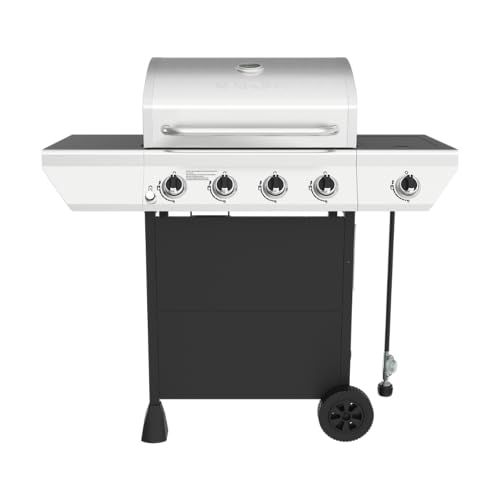
Nexgrill 4-Burner Propane Gas Grill with Side Burner (52,000 BTU)
Badge: Best Feature-for-Tier Alternative
This second Nexgrill makes a different and, to this guide, more interesting argument than its bigger sibling: not size, but surface. Its matte finish cast iron grates are the component that answers the benchmark brand most directly, because grates are where grilling quality lives. Cast iron stores heat, marks food properly and recovers when cold food lands — and in matte finish it looks like a deliberate, premium choice rather than a coating. Around that centrepiece sit a stainless steel lid, four burners at a stated 52,000 BTU, 526 square inches of cooking space, a side burner, a built-in thermometer and electronic ignition.
Strengths
- Matte cast iron grates — a cooking surface that answers the benchmark directly
- 526 sq. in. is the family sweet spot, with a side burner for the rest of the meal
- Stainless lid keeps the look premium where it is most visible
Trade-offs
- Stainless is the lid, not the whole body
- Matte cast iron wants light oiling to stay rust-free
- Sits close to its bigger Nexgrill sibling — choose by capacity honestly
| Fuel | Propane gas |
|---|---|
| Burners | 4, plus side burner |
| Total output | 52,000 BTU |
| Cooking space | 526 sq. in. |
| Grates | Matte finish cast iron |
| Extras | Stainless steel lid, built-in thermometer, electronic ignition |
The size is the family sweet spot. At 526 square inches, the grill handles weeknight dinners without waste and weekend guests without panic, and the four burners zone cleanly — sear left, finish right, hold at the back. The side burner keeps the meal outdoors, which is the feature families report using far more than they predicted. As a total package aimed at the benchmark’s heartland — the family four-burner — this is the alternative that concedes the least.
Where does it concede? The stainless is a lid rather than a body, so the full-monolith look belongs to the Monument below. The cast iron, matte or not, asks for the standard courtesy of a light oil after cooking to stay ahead of rust. And its proximity to the bigger Nexgrill above forces an honest capacity question: households that regularly feed a crowd should take the 626 sq. in. model; households that do not will cook happier, cheaper and cleaner on this one.
Judged as the alternative for the typical family — the buyer who cross-shopped the benchmark’s mid-range four-burner and balked — this Nexgrill is arguably the most complete answer in the guide. It competes on the cooking surface, matches on features, and asks for nothing in return except the usual cast iron kindness. If your not-Weber decision is about getting benchmark-level cooking without the benchmark, start here and argue your way out, not in.
Best for: families wanting benchmark-level cooking surfaces and features from an alternative brand / Not suited for: buyers who want full stainless construction, or who regularly cook for crowds
Check on Amazon to confirm the current configuration, included accessories and delivery options for the Nexgrill 52,000 BTU.

Monument Grills Mesa II 410FBZ 4-Burner Propane Gas Grill
Badge: Best Design Alternative
Some shoppers leave the benchmark brand because they want a different object in their garden, and the Monument Mesa II is the alternative built for them. Its stainless steel body gives it the crisp, appliance-grade presence the benchmark’s black carts do not attempt; its Advanced Broil Zone answers the benchmark’s sear zone feature for feature; and its foldable side shelves solve the storage problem of design-led patios, where a full-size grill must earn its footprint six days a week, not just on Saturdays.
Strengths
- Full stainless body — the strongest design statement among the alternatives
- Advanced Broil Zone answers the benchmark’s sear zone directly
- Foldable shelves adapt the grill to smaller, designed patios
Trade-offs
- Stainless demands a wiping habit to stay showroom-bright
- Broil-zone heat needs attention with delicate foods
- No side burner in this configuration
| Fuel | Propane gas |
|---|---|
| Burners | 4 |
| Body | Stainless steel |
| Extras | Advanced Broil Zone, foldable side shelves, fast assembly design |
The broil zone is the substantive reply to the benchmark, and it deserves the focus. The benchmark’s signature trick is a dedicated high-heat area for finishing; Monument builds the same idea into this grill, pitched at fierce, fast heat — the brand cites reaching 500°F in about five minutes — so steaks get their crust, chicken skin crisps, and weeknight grilling becomes a short decision rather than a production. An alternative that matches the benchmark’s best feature while changing everything around it is exactly what a healthy market is supposed to produce.
The folding shelves are the detail owners will praise in year two. Down, the grill stores as a compact stainless block against a wall; up, it is a proper workstation. Combined with a fast-assembly design that respects your first afternoon, the Mesa II makes the case that the alternative brands are now the ones designing for how people actually live — smaller patios, visible storage, no patience for ceremony.
The costs are known ones. Stainless records fingerprints and splashes until wiped, and owners who will not wipe should choose a darker finish among the other alternatives. The broil heat that makes the grill special will also bully thin fish and asparagus if the cook wanders. And there is no side burner here, so sauce work happens in the kitchen or not at all. For the design-led defector — the buyer whose not-Weber decision is half aesthetic, half appetite — this is the most satisfying answer in the guide, and the one most often admired in the roundups collected in Best Grills On Tv.
Best for: design-led buyers who want stainless looks and a real high-heat zone from an alternative brand / Not suited for: low-maintenance households, or anyone who needs a side burner
Check on Amazon to confirm the current configuration, included accessories and delivery options for the Monument Mesa II.

IdeaMaxx 3-Burner Propane Gas Grill
Badge: Best Compact Alternative
The IdeaMaxx 3-burner is the alternative for the household whose space, not whose brand loyalty, is the binding constraint — and it makes its case the way this guide respects most: with the cooking surface. Its cast iron grates sit in a compact three-burner grill with a stated 38,200 BTU and foldable side shelves, which means the small grill in this guide cooks with the surface material of grills far above its tier. Output concentrated on a small grid gives it genuinely assertive heat for searing, and three burners still split into a working two-zone layout.
Strengths
- Cast iron grates where compact rivals use thin steel
- Strong output for its size — heat concentrated on a small grid
- Folding shelves make it the easiest full grill here to store
Trade-offs
- Three burners mean modest capacity and two zones at most
- Cast iron needs oiling discipline
- A newer name — support runs through retail channels
| Fuel | Propane gas |
|---|---|
| Burners | 3 |
| Total output | 38,200 BTU |
| Grates | Cast iron |
| Extras | Foldable side shelves |
For renters, townhome households and small patios, that combination is the whole argument. The benchmark brand’s compact offerings are fine grills, but the defector’s question — what do I get for leaving? — is answered here with a better grate in a smaller, more storable shape. Shelves fold, the footprint shrinks, and the grill tucks away like it was designed by someone who has actually seen a small patio, because the compromises are all in capacity, where small households have capacity to spare.
The ownership terms are the cast iron terms: brush hot, oil lightly, keep dry under a cover, and the grates will reward you for years; neglect them and no brand allegiance would have saved you either. Support for a newer name runs through normal retail rather than a dealer network, which is a fair trade at this size and tier, and one this guide states rather than hides.
Capacity is the ceiling, plainly: couples and small families eat beautifully from this grill, and a crowd becomes a relay. There is no side burner. But as the compact alternative — the pick for the buyer leaving the benchmark because their life got smaller, tidier or more urban — the IdeaMaxx is the most intelligently allocated grill in this section, and a reminder that the alternative market’s best ideas often arrive at the small end first.
Best for: small households and small patios wanting cast iron cooking from an alternative brand / Not suited for: entertainers, or owners who will not maintain cast iron
Check on Amazon to confirm the current configuration, included accessories and delivery options for the IdeaMaxx 3-Burner.
Weber Spirit E-425 Gas Grill (Benchmark — Prose Only)
Badge: The Benchmark — Not Linked in This Guide
Here is the benchmark, described as fairly as this guide can manage, because you cannot judge an alternative without it. The Weber Spirit E-425 is a four-burner propane grill whose signature components are porcelain-enameled cast-iron grates — heat-storing iron sealed in enamel, the best mainstream cooking surface in this article — and a Sear Zone with Boost Burners that runs genuinely hotter for finishing. An accessory rail system organises tools at the grill. It is, on hardware, an excellent grill; that is what makes it a benchmark rather than a straw man.
Strengths
- Porcelain-enameled cast-iron grates are the surface every alternative is chasing
- Sear Zone with Boost Burners is a genuine capability, not a badge
- Deep parts and accessory support over many years
Trade-offs
- It is a Weber — the brand this guide’s readers have decided against
- Its tier asks step-up money over the alternatives here
- The accessory ecosystem invites continuing spend
| Fuel | Propane gas |
|---|---|
| Burners | 4, plus Sear Zone with Boost Burners |
| Grates | Porcelain-enameled cast iron |
| Extras | Weber Works rails for accessories |
Now weigh the alternatives against it honestly, feature by feature, and the picture is more balanced than brand loyalists admit. Its grates are matched in kind by the matte cast iron of the Nexgrill 52,000 BTU model and the plain cast iron of the IdeaMaxx. Its sear zone is answered by Monument’s broil zone. Its capacity is exceeded, at friendlier tiers, by the big Nexgrill. What the alternatives do not replicate is the depth of its long-term parts and accessory support — the one advantage that is real, structural, and worth naming as the price of leaving.
So the not-Weber decision, properly understood, is a trade: you give up the deepest support ecosystem and the benchmark’s particular polish, and you gain specification, capacity, design variety or compactness per unit of budget, depending on which alternative you choose. Shoppers who make that trade knowingly, with this benchmark in view, are the ones who stay happy with it. This guide’s five linked picks exist to make the trade in five different flavours — and this section exists so that nobody makes it blind. Readers still torn between fuels as well as brands can widen the lens with Best Grills Or Griddles For Cold Weather, where the griddle alternative enters the same conversation.
Best for: nobody buying from this guide — it is the excluded brand, kept here as the measuring stick / Not suited for: every reader of this article, by the definition of their search
Comparison Table
The table below lines up all six grills — five alternatives you can buy from this page and the benchmark you cannot. Compare grates and zones first, because those are the benchmark’s real strengths; then notice how many of them the alternatives match, and where each one beats the benchmark on size, storage or design.
| Pick | Fuel and burners | Cooking space | Standout trait | Listing |
|---|---|---|---|---|
| Charbroil Performance Series 4-Burner Gas Grill Cabinet with Side Burner | Propane, 4 burners + side burner | Full-size cabinet cart | Enclosed storage, tidy design | Check on Amazon |
| Nexgrill 4-Burner Propane Gas Grill with Side Burner (60,000 BTU) | Propane, 4 burners + side burner | 626 sq. in. | Size and spec per tier | Check on Amazon |
| Nexgrill 4-Burner Propane Gas Grill with Side Burner (52,000 BTU) | Propane, 4 burners + side burner | 526 sq. in. | Matte cast iron grates | Check on Amazon |
| Monument Grills Mesa II 410FBZ 4-Burner Propane Gas Grill | Propane, 4 burners | Full-size cart grill | Stainless design, broil zone | Check on Amazon |
| IdeaMaxx 3-Burner Propane Gas Grill | Propane, 3 burners | Compact cart grill | Cast iron in a small footprint | Check on Amazon |
| Weber Spirit E-425 Gas Grill (Benchmark — Prose Only) | Propane, 4 burners + sear zone | Full-size cart grill | Benchmark only — brand excluded | Prose only in this guide |
How to Choose a Non-Weber Grill Without Regretting It
Name your real reason for leaving, because it selects the alternative. Budget-per-specification points to Nexgrill. Design points to Monument. Mainstream support and tidiness point to Charbroil. Small space points to the IdeaMaxx. A reason you can articulate is a purchase you will defend to yourself in year two; a vague protest curdles the first time a neighbour’s benchmark grill lights on the first click. This guide’s five picks are organised so that each major reason has a hardware answer.
Run the benchmark test on every alternative
Take the benchmark’s three real strengths — porcelain-enameled cast-iron grates, a dedicated sear zone, deep parts support — and grade each alternative against them in writing. Most shoppers find their chosen alternative matches two of three and beats the benchmark somewhere the benchmark does not compete: capacity, storage design, footprint. That written comparison, done before purchase, is the difference between an alternative chosen and an alternative settled for.
Grate material is the non-negotiable
Whatever brand you land on, do not leave the benchmark’s world and accept a worse cooking surface in the bargain. Cast iron in some form — matte, plain or enameled — is available across the alternatives in this guide at several tiers and sizes. A defection that keeps the grate standard is a lateral move with benefits; a defection that trades down the grates is just a cheaper grill wearing a justification.
Support: ask the five-year question
The benchmark’s deepest advantage is that its parts will exist in five years. Alternative brands answer that question differently: mainstream names like Charbroil have their own wide retail support; newer names run through general retail channels. Ask, for the specific model you are buying, whether replacement grates, burners and igniters are realistically sourceable — and weight the answer honestly if you plan to keep the grill a decade.
Size and shape are legitimate reasons to switch
Not every defection is about money or features. The benchmark’s range is famously focused, and households whose lives do not fit it — the entertainer who needs 626 square inches, the renter who needs shelves that fold to nothing — are not compromising when they leave; they are shopping correctly. Fit is a feature. The alternatives in this guide cover shapes of life the benchmark simply does not make, which is the healthiest reason of all to buy one.
How to Get Benchmark-Level Results From an Alternative Grill
Preheat like the grates matter — they do
Cast iron grates, matte or plain, reward a full lid-down preheat: the iron needs time to load with heat before food lands, and a rushed preheat is the main reason alternative grills get blamed for sticking and weak marks. Give the grill its minutes, brush the grates hot, and the surface you bought will do the work you bought it for.
Build your own sear zone if yours lacks one
On any multi-burner alternative, run one side at maximum and the other moderate; the hot side is your sear zone regardless of what it is called, especially over cast iron that has fully preheated. If your pick has a broil zone, use it for the final ninety seconds rather than the whole cook — finishing heat is a spice, not a setting.
Keep a simple maintenance rhythm
Brush grates after cooks, oil cast iron lightly, empty the grease path on schedule, and cover the grill when cool and dry. Alternative brands reward the same disciplines the benchmark does; the grills that disappoint in year two are almost always the ones whose owners treated a lower price as a lower duty of care. It is the opposite: a value purchase deserves protection precisely because replacing it was not the plan.
Problem: food sticks on cast iron → the grates were under-preheated or unoiled; heat fully, oil the food, and let the crust form before turning. Problem: the alternative’s ignition gets lazy → clean the electrode and burner ports; most ignition complaints on any brand are debris, not defects. Problem: buyer’s remorse at a neighbour’s benchmark grill → revisit your written comparison; the alternative was chosen for fit, capacity or design reasons that a logo does not answer, and one cook on your own well-run grill usually settles it.
What the Benchmark Does Better — and What It Does Not
Credit where due: the benchmark brand’s strengths are consistency and time. Its grates are excellent, its sear zone is real, and its parts support is the deepest in the business — a combination that makes its grills safe purchases for people who hate shopping for grills. Buyers who leave should do so knowing that this is the bar, and this guide has deliberately measured every alternative against it rather than against a softer standard.
What the benchmark does not do is dominate every dimension. It does not offer the capacity-per-tier of the big Nexgrill, the stainless design language of the Monument, the cabinet tidiness of the Charbroil at this level, or a compact cast-iron answer as pointed as the IdeaMaxx. Its range is a focused line, not a universe. The alternative market exists because households differ more than one brand’s catalogue does — and on the evidence of the five linked picks here, it serves those differences well.
Defecting Well: A Short Philosophy of Second Choices
There is a particular satisfaction in a well-chosen alternative: the grill that fits your patio, your budget philosophy and your cooking better than the default would have. Getting there requires the discipline this guide is built around — benchmark honestly, compare in writing, protect the non-negotiables like grate material, and then commit. The shoppers who regret leaving a famous brand are usually the ones who left casually, on a promotion, without knowing what they were trading.
Commitment has a practical side too: learn your grill’s hot spots, keep its grates seasoned, and let it become yours. A year in, the badge on the lid matters remarkably little to anyone eating the food — which is, in the end, the strongest argument this guide can make. The five alternatives above were chosen to be grills you stop thinking of as alternatives at all. Watch for them in the seasonal tracking at Best Grills Out There if you want to see how the wider market ranks the same defection.
Common Buying Mistakes
Leaving the benchmark for a worse cooking surface. If the alternative’s grates are a downgrade, the defection is a downgrade, whatever the badge politics. Keep cast iron in the picture.
Buying on protest rather than fit. A grill chosen to make a point gets used for years; choose it for your patio, your table and your cooking, and let the point make itself.
Assuming alternative means unsupported. Mainstream alternatives carry wide retail support, and even newer names are sourceable through normal channels — but check the five-year parts question for your specific model before, not after.
Skipping the benchmark comparison. Shoppers who never look at what they are leaving cannot value what they are gaining, and they are the ones who drift back at the first promotion. Read the benchmark section; then buy the alternative with your eyes open.
Final Recommendation
For most defectors, the Charbroil Performance 4-burner is the landing spot: mainstream, complete and tidy, with the cabinet storage the benchmark’s line does not emphasise at this tier. Feature-hunters should take the Nexgrill with matte cast iron, entertainers the big 626 sq. in. Nexgrill, design-led buyers the stainless Monument with its broil zone, and small households the cast-iron IdeaMaxx — five alternatives, five different good reasons, none of them a compromise dressed up.
The benchmark stays in this article unlinked, as it should: respected, specified, and declined. Whichever alternative you choose, check the latest price on Amazon, confirm the configuration and the grate details on the listing, and order the cover with it. Then cook on it like you chose it — because you did.
- Charbroil Performance Series 4-Burner Gas Grill Cabinet with Side Burner — Best Overall Alternative
- Nexgrill 4-Burner Propane Gas Grill with Side Burner (60,000 BTU) — Best Big Alternative
- Nexgrill 4-Burner Propane Gas Grill with Side Burner (52,000 BTU) — Best Feature-for-Tier Alternative
Related guides
Frequently Asked Questions
Why would someone avoid the benchmark brand in the first place?
The reasons vary and most are reasonable: specification or capacity per budget elsewhere, a design language that suits the patio better, a size or storage shape the focused benchmark range does not offer, or a past ownership experience. This guide treats the decision as settled and spends its effort on the useful question — which alternative fits which reason — while keeping the benchmark visible in prose so the trade is made knowingly.
Which alternative is closest to the benchmark in cooking quality?
The Nexgrill with matte cast iron grates is the closest on the cooking surface, which is where quality is mostly decided, and the Monument answers the benchmark’s sear zone with its own broil zone. Neither replicates the benchmark’s parts ecosystem depth. Judge closeness by the component that matters to your cooking — for most households, that is the grates, and on grates the alternatives genuinely compete.
Are non-benchmark grills reliable over many years?
The mainstream alternatives — Charbroil above all — have their own long retail track records, and the newer names in this guide are built to mainstream patterns with sourceable wear parts. Longevity everywhere in grilling is mostly maintenance: covers, brushed grates, emptied grease paths. A cared-for alternative outlasts a neglected benchmark comfortably; the badge is not the variable that decides it.
Why is the benchmark described but not linked in this guide?
Because the keyword is an explicit exclusion, and a purchase link would contradict the reader’s stated brief. The benchmark is described in full prose — specification, strengths, trade-offs — so alternatives can be judged against the real standard rather than a caricature. Its link count is the deliberate difference between this article’s twenty-three links and the standard twenty-seven, documented in the sources file.
What should I check on an alternative’s listing before buying?
Confirm the full specification the summary data may not carry — output and cooking area where relevant, and above all the grate material and construction. Check what the configuration includes (side burner, cabinet, shelves), the delivery terms, and the availability of replacement grates and burners for that model. Two minutes of confirmation is the cheapest insurance in any brand defection.
Can an alternative grill really beat the benchmark at anything?
Yes — at the dimensions a focused range does not contest. Capacity per tier, stainless design at accessible tiers, cabinet storage, folding-shelf compactness with cast iron: each linked pick in this guide beats the benchmark at something specific, which is the entire premise of a healthy market. The benchmark leads on support depth and polish; the alternatives lead where their makers chose to compete. Your job is only to know which lead matters at your table.


