Disclosure: topratedkitchenware.com is reader-supported. When you buy through links on our site, we may earn an affiliate commission from Amazon and other retailers, at no extra cost to you.
How to Choose the Right Grill for Best Grills Under 900 Usd
Because this guide spans fuels, the choosing framework starts one level up: decide what you are optimising. Gas optimises time and zoning — push-button starts, independent burners, a side burner for pans. Charcoal optimises flavour, simplicity and, in an offset design, genuine smoking. Neither optimisation is a personality test; both are calendar tests. Households that grill twice on weeknights usually land on gas. Households whose grilling is a weekend project usually land on charcoal, and spend less doing it.
Within gas, size and burners decide. Match cooking area to your normal headcount — family four-burners sit in the low-to-mid 500 square inches, crowd machines beyond 600 — and read output relative to area rather than as a headline. More burners mean finer zones; special zones mean better finishing. Within charcoal, shape and airflow decide: kettle for all-round control, barrel for capacity, offset for smoking, portable for travel, with dampers and ash handling as the quality markers.
Across both fuels, grate material and support close the decision. Cast iron and enameled cast iron sear best; coated steel is easiest to live with; charcoal grates should be heavy enough to hold a fire’s heat. And for any pick, confirm before ordering that its wear parts — grates, burners, igniters, dampers — are listed and obtainable. That check, plus an honest cover purchase, is what turns a good specification into a decade of service.
One mixed-fuel strategy deserves naming, because this ceiling allows it: a mid-size gas grill for weeknights plus a kettle for weekends covers more real life than either fuel’s flagship alone. If your household contains both kinds of cooks — the Tuesday pragmatist and the Saturday ritualist — splitting the budget is not indecision. It is the correct answer, and several picks in this guide are priced to make it possible.
For this keyword’s audience, add one check to every shortlist decision: total landed cost in USD, including any shipping, a cover, the first fuel purchase and the one accessory your cooking style truly needs. A grill that wins on sticker and loses on landed cost is a common cross-border disappointment, and it is entirely avoidable with ten minutes of arithmetic before ordering.
Buying in USD From Outside the US: What to Check
If you are importing, work through four checks before falling in love with a pick. Fuel: US propane grills use US tank fittings and regulators; using one abroad means sourcing compatible tanks or a certified conversion, which is a safety item, not a shopping detail. Voltage is happily irrelevant for every pick here — ignition systems are battery or mechanical, and charcoal needs no electricity at all. Shipping: a six-burner cart is freight, not a parcel, and freight pricing can exceed the grill’s value; the kettles and portables ship like normal goods. Support: Weber’s global dealer network is the reason its kettles are the safest international purchase in this guide, a point Best Grills Wirecutter also surfaces when comparing long-term ownership across brands.
Charcoal itself is the import-friendly fuel: lump charcoal and briquettes are sold in most markets, chimney starters are universal, and a kettle bought in US trim cooks identically anywhere on earth. That is why, for the international reader, this guide’s centre of gravity sits with the Weber pair and the Cuisinart portable. The AMERLIFE remains the right pick for a US household hosting crowds — the guide simply refuses to pretend geography does not matter to a 900 USD decision.
Where to buy
The six models below are the verified picks for this guide to best grills under 900. Each name links to its Amazon listing, where you can check the latest price on Amazon, confirm the current configuration, and read the newest owner feedback before you decide.
- Nexgrill 4-Burner Propane Gas Grill with Side Burner and Stainless Steel Lid — Best Balanced Family Pick
- Monument Grills Mesa II 4-Burner Propane Gas Grill with Broil Zone — Best Broil Zone
- AMERLIFE 6-Burner Propane Gas Grill with Side Burner — Best for Crowds
- Charbroil Portable 1-Burner Propane Gas Grill — Best Portable Add-On
- Royal Gourmet CC1830S Charcoal Grill and Offset Smoker — Best Charcoal and Smoking Combo
- Weber Original Kettle Premium Charcoal Grill, 22-Inch — Best Charcoal Overall
Read the full guide ↓ for the ranking logic, the honest limitations of every pick, and the buying checks that matter more than any headline claim.
The best grills under 900 is a generous ceiling, and the interesting thing about this line-up is where the money goes when the ceiling stops being the constraint. Alongside four strong propane grills — including a six-burner with 650 square inches and a broil-zone four-burner — this guide includes two charcoal designs that cost a fraction of the ceiling: a barrel grill with an offset smoker, and the Weber Original Kettle Premium. That is not filler. At this budget, the real decision is often fuel philosophy, not features, and a household that chooses charcoal well can bank the difference for a lifetime of charcoal, chimney starters and weekend cooks.
The six picks therefore split into two honest camps. The gas camp — Nexgrill’s balanced four-burner, Monument’s broil-zone Mesa II, AMERLIFE’s six-burner — buys speed, zoning and convenience. The charcoal camp buys flavour, simplicity and, in the Royal Gourmet’s case, an offset smoking chamber no gas grill here can imitate. The Charbroil portable sits between the camps as the travel specialist. Readers narrowing by maintenance appetite will find Best Grills With Easy Cleaning a useful companion, and Best Grills Under $900 Usd covers the same ceiling in the same currency with a different mix.
Read the reviews by camp first and by badge second. If you already know you are a gas household, the charcoal reviews still matter — they define what you are trading away. If you are charcoal-curious, the gas reviews show what the convenience premium actually purchases at this level. Either way, every pick is verified, every specification is sourced from its listing, and every limitation is stated in plain language.
Key Takeaways
- At this ceiling the biggest decision is fuel: gas convenience or charcoal flavour and simplicity.
- The Royal Gourmet offset smoker does a job — true low-and-slow smoking — that no gas pick here can replicate.
- The Weber Kettle Premium is the value story of the guide: a fraction of the ceiling, decades of service life.
- Gas buyers: the AMERLIFE 6-burner for crowds, the Monument broil zone for finishing, the Nexgrill 526 for balance.
- Money saved on charcoal buys years of fuel and accessories; money spent on gas buys time at every single cook.
- Check the latest price on Amazon for each pick — the charcoal picks especially can sit far below the ceiling.
In this guide
Quick Picks
| Pick | Badge | Why it earns its place | Listing |
|---|---|---|---|
| Nexgrill 4-Burner Propane Gas Grill with Side Burner and Stainless Steel Lid | Best Balanced Family Pick | 526 sq. in. and four burners hit the family-size sweet spot without the largest footprint | Check on Amazon |
| Monument Grills Mesa II 4-Burner Propane Gas Grill with Broil Zone | Best Broil Zone | A dedicated broil zone gives high-heat finishing a home instead of forcing whole-grill blasts | Check on Amazon |
| AMERLIFE 6-Burner Propane Gas Grill with Side Burner | Best for Crowds | 650 sq. in. with six burners is true crowd capacity with fine-grained zone control | Check on Amazon |
| Charbroil Portable 1-Burner Propane Gas Grill | Best Portable Add-On | Truly portable — tailgates, campsites, balconies and small patios where a cart cannot go | Check on Amazon |
| Royal Gourmet CC1830S Charcoal Grill and Offset Smoker | Best Charcoal and Smoking Combo | The offset smoker chamber adds genuine low-and-slow smoking to a charcoal grill’s repertoire | Check on Amazon |
| Weber Original Kettle Premium Charcoal Grill, 22-Inch | Best Charcoal Overall | The kettle shape is the most proven charcoal design in existence — parts and accessories are everywhere | Check on Amazon |
How These Picks Were Chosen
This set was built to represent the real choice at a generous ceiling rather than six shades of the same gas cart. Verified listings were filtered for clear specifications and parts support, then organised by role: balanced gas, specialist gas (broil zone), maximum gas (six burners), portable gas, charcoal-plus-smoker, and the reference charcoal kettle. Each role is one a real household actually shops for, and no role is duplicated, so the comparison stays honest about trade-offs instead of inventing differences.
The reviews are research-led, drawn from manufacturer specifications, verified listing data and recurring owner-feedback themes; no hands-on testing is claimed. Charcoal picks were judged on fire management design — dampers, ash handling, charcoal access — with the same rigour gas picks were judged on burners and grates, because at this level buyers cross-shop fuels and deserve one consistent standard.
The 6 Best Picks for Best Grills Under 900
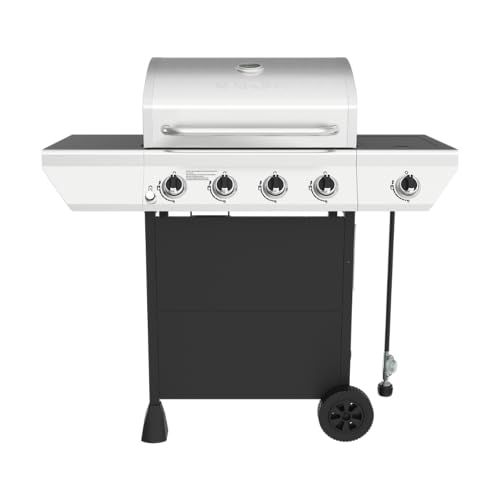
Nexgrill 4-Burner Propane Gas Grill with Side Burner and Stainless Steel Lid
Badge: Best Balanced Family Pick
This Nexgrill configuration sits in the middle of the four-burner market and equips itself sensibly: 52,000 BTU total across four burners and a side burner, 526 square inches of cooking space, a matte finish cast iron grate, electronic ignition and a built-in thermometer under a stainless steel lid. The cast iron grate is the detail keen buyers should notice, because grate mass is what separates a grill that marks food properly from one that merely cooks it through. Five hundred and twenty-six square inches is enough for a family cookout in one round — a tray of chicken pieces plus corn, or burgers for a full table — without the cart dominating a modest patio.
The honest limitations are the mid-tier ones: cast iron sections want a light oiling routine, and the cart’s painted and stainless surfaces will thank you for a cover if the grill lives outdoors year-round. Within its tier, though, the specification is balanced rather than padded, which is why this model keeps appearing in shortlists built around family use.
In the context of best grills under 900, that profile is exactly why this pick carries its badge: it does the job this budget most often asks for, without pretending to do every other job as well.
Strengths
- 526 sq. in. and four burners hit the family-size sweet spot without the largest footprint
- Matte cast iron grate holds heat for better searing than thin wire grates
- Electronic ignition and a lid thermometer cover the everyday convenience basics
Trade-offs
- Cast iron grate sections need oiling discipline to stay rust-free
- Mid-tier cart materials reward using a cover in wet climates
- Side burner output is for pans and pots, not a second full cooking zone
Key specifications (from the verified listing)
- 4 burners plus side burner, 52,000 BTU total output (per API title)
- 526 sq. in. cooking space
- Matte finish cast iron cooking grate
- Built-in thermometer and electronic ignition
- Stainless steel lid
Best for: families of four to six who want cast iron searing in a balanced footprint / Not suited for: regular crowds in the teens, who should size up
Check on Amazon for the current configuration and the latest price on Amazon.

Monument Grills Mesa II 4-Burner Propane Gas Grill with Broil Zone
Badge: Best Broil Zone
The Monument Grills Mesa II builds its pitch around a 4-burner stainless steel grill with an Advanced Broil Zone, foldable side shelves, and listing claims of fast heat-up and fast assembly. The broil zone is the meaningful feature: a section designed to run hotter than the rest, for finishing steaks, blistering peppers, or putting a crust on chicken skin after the gentle cooking is done elsewhere. That division of labour — moderate zones for cooking through, one fierce zone for finishing — is how experienced grillers actually work, and having it designed in beats improvising with every burner on high.
The foldable shelves suit households that park the grill tight against a wall between uses, and stainless steel keeps the presentation clean. Honest notes: the 500-degrees-in-five-minutes figure is the maker’s listing claim, and real heat-up depends on weather and wind; and Monument is a smaller name than the category’s giants, so confirm that wear parts are listed before purchase. For buyers who finish a lot of food at high heat, the layout is the argument.
Read against best grills under 900 as a whole, the pattern is consistent — this is a grill whose strengths line up with what buyers in this search actually cook, and whose weaknesses are the kind you can plan around rather than the kind that ambush you.
Strengths
- A dedicated broil zone gives high-heat finishing a home instead of forcing whole-grill blasts
- Foldable side shelves make storage and tight patios easier
- Stainless steel presentation with an emphasis on quick assembly lowers the setup barrier
Trade-offs
- The fast-heat claim is a listing claim — treat it as a best-case figure, not a guarantee in cold wind
- Folding shelves trade some rigidity for the storage benefit
- Monument is a smaller brand than the category giants, so check parts listings for grates and burners
Key specifications (from the verified listing)
- 4 burners with Advanced Broil Zone (per API title)
- Stainless steel construction
- Foldable side shelves
- Listing highlights fast heat-up (500°F in 5 mins) and fast assembly
- Model Mesa II 410FBZ
Best for: finish-heavy cooks — steaks, peppers, blistered everything — and tight storage spaces / Not suited for: buyers who want the largest brand network behind their grill
Check on Amazon for the current configuration and the latest price on Amazon.

AMERLIFE 6-Burner Propane Gas Grill with Side Burner
Badge: Best for Crowds
The AMERLIFE 6-Burner is the maximum-capacity entry wherever it appears: 650 square inches of cooking area, six main burners plus a side burner with a 60,000 BTU total output figure, cast iron grates, a warming rack, a built-in thermometer and a regulating valve. Six burners change how you cook, not just how much. You can hold a genuine gradient across the grate — fierce on the left for searing, medium in the middle for chicken, barely-on at the right for holding — and the warming rack keeps finished food hot without continuing to cook it hard. For households that host, or that batch-cook for the week, that layout removes the batch-and-shuffle routine entirely.
The honest limitations are scale and stewardship. This grill is big and heavy, it wants a permanent spot, cast iron grates need their oiling routine, and six burners are six sets of ports to keep clean. AMERLIFE is also a newer name in grills, so check parts availability for grates and burners on the listing. If your cooks are genuinely large, the capacity is the point; if they are not, a four-burner will serve you with less overhead.
For shoppers comparing best grills under 900 line by line, this pick is the one to measure the others against on its home ground; beat it there, with your menu in mind, or choose it.
Strengths
- 650 sq. in. with six burners is true crowd capacity with fine-grained zone control
- Cast iron grates plus a warming rack suit big mixed menus cooked in stages
- A side burner keeps pots and pans off the main grate during large cooks
Trade-offs
- This is a large, heavy grill — it needs a permanent home, not regular moving
- Six burners mean more knobs to manage and more components to clean and maintain
- AMERLIFE is a newer grill name; verify spare parts availability before buying
Key specifications (from the verified listing)
- 6 burners plus side burner, 60,000 BTU total output (per API title)
- 650 sq. in. cooking area
- Cast iron grates and warming rack
- Built-in thermometer and regulating valve
Best for: big households, team parents and hosts whose headcount is the whole problem / Not suited for: small spaces and anyone seeking the lightest maintenance load
Check on Amazon for the current configuration and the latest price on Amazon.

Charbroil Portable 1-Burner Propane Gas Grill
Badge: Best Portable Add-On
The Charbroil Portable 1-Burner is a different species from the cart grills around it: a single 11,000 BTU burner in an aluminized steel portable body, built for tailgates, campsites, fishing trips, balconies and the smallest patios. Its virtues are the portable virtues — it sets up in moments, lights without ceremony, cooks a few burgers, dogs or skewers at a time, and packs away without a production. For a household whose grilling happens away from home, or whose outdoor space is a balcony, those virtues are not compromises; they are the entire requirement list.
The honest limitations follow from the same design. One burner means one temperature zone, so there is no indirect side for finishing thick cuts and no room for a crowd; you cook in small batches and keep expectations matched to the format. Aluminized steel is a serviceable budget material rather than a premium one. Judged as a portable, it is a sensible, established design from a mainstream brand; judged as a backyard centrepiece, it was never trying to be one.
In the context of best grills under 900, that profile is exactly why this pick carries its badge: it does the job this budget most often asks for, without pretending to do every other job as well.
Strengths
- Truly portable — tailgates, campsites, balconies and small patios where a cart cannot go
- Simple single-burner design lights fast and asks almost nothing in maintenance
- Propane convenience without charcoal setup or ash disposal
Trade-offs
- One burner means one heat zone — no indirect cooking and no sear-and-finish split
- Cooking area is sized for a few portions at a time, not family cookouts
- Aluminized steel is a budget material; expect a working tool, not a heirloom
Key specifications (from the verified listing)
- 1 burner, 11,000 BTU output (per API title)
- Portable format
- Aluminized steel construction
- Model 465133010
Best for: tailgates, campsites, balconies and as a household’s second grill / Not suited for: family cookouts at home, where one zone and a small grate mean batches
Check on Amazon for the current configuration and the latest price on Amazon.

Royal Gourmet CC1830S Charcoal Grill and Offset Smoker
Badge: Best Charcoal and Smoking Combo
The Royal Gourmet CC1830S is two cookers sharing a frame: a barrel charcoal grill and an offset smoker, with 783 square inches of total cooking area in the listing title, an adjustable charcoal pan, a side door for adding fuel, front and side tables, and a lid thermometer. The offset chamber is what separates it from every kettle and barrel in its price neighbourhood, because it allows true indirect smoking — fire in the small box, food in the main chamber, heat and smoke travelling across. Ribs, pork shoulder and whole chickens cooked that way are a different dish from anything a direct-heat grill produces.
The adjustable charcoal pan helps on the grilling side, letting you raise the fire for searing or drop it for gentler cooking, and the side door means adding charcoal does not require lifting the grate and the food with it. The honest limitations are the charcoal ones, doubled: more assembly, more surfaces to keep clean and seasoned, ash to dispose of, and a fire-management learning curve that the first few cooks will teach you whether you planned the lesson or not.
Read against best grills under 900 as a whole, the pattern is consistent — this is a grill whose strengths line up with what buyers in this search actually cook, and whose weaknesses are the kind you can plan around rather than the kind that ambush you.
Strengths
- The offset smoker chamber adds genuine low-and-slow smoking to a charcoal grill’s repertoire
- 783 sq. in. across chambers is the largest total area in most line-ups at this tier
- Adjustable charcoal pan and a side access door make fire management practical mid-cook
Trade-offs
- Offset smoking has a learning curve — fire management is a skill, not a setting
- Two chambers mean more assembly, more seams, and more surfaces to keep seasoned and clean
- Charcoal cooking is slower to start and messier to finish than gas, every single time
Key specifications (from the verified listing)
- 783 sq. in. total cooking area (per API title)
- Barrel charcoal grill with offset smoker chamber
- Adjustable charcoal pan and side door for adding charcoal
- Front and side tables
- Lid thermometer
Best for: aspiring smokers and charcoal cooks who want grilling and low-and-slow in one frame / Not suited for: weeknight cooks who count minutes, and anyone unwilling to learn fire management
Check on Amazon for the current configuration and the latest price on Amazon.

Weber Original Kettle Premium Charcoal Grill, 22-Inch
Badge: Best Charcoal Overall
The Weber Original Kettle Premium 22-Inch is the reference point every charcoal grill is measured against. The kettle form — deep bowl, domed lid, dampers top and bottom — has been refined for decades, and the Premium trim adds the conveniences that matter weekly: a built-in lid thermometer, heat control dampers, and the One-Touch cleaning system that sweeps ash into a catcher with a lever instead of leaving you to scoop a cold bowl by hand. Cooking on it is a craft with real control. Bank the coals to one side and you have a fierce searing zone beside a gentle indirect zone where thick cuts finish and whole chickens roast; adjust the dampers and the same grill holds a steady, gentle heat for ribs.
The accessory ecosystem around this grill is unmatched, from hinged grates to rotisseries, and replacement parts remain available for models many years old. The honest limitations are charcoal’s own: lighting and waiting for coals takes longer than turning a knob, ash is a recurring chore even with One-Touch, and a round 22-inch grate cooks for a family easily but a crowd in batches.
For shoppers comparing best grills under 900 line by line, this pick is the one to measure the others against on its home ground; beat it there, with your menu in mind, or choose it.
Strengths
- The kettle shape is the most proven charcoal design in existence — parts and accessories are everywhere
- One-Touch cleaning sweeps ash into the catcher with a lever, the easiest ash routine in charcoal
- Built-in thermometer plus dampers give real two-zone, temperature-managed cooking
Trade-offs
- Charcoal always costs more time than gas: lighting, waiting for the coals, and ash afterwards
- A 22-inch round grate is generous for families but big parties still cook in batches
- No side tables built in — you will want a work surface nearby
Key specifications (from the verified listing)
- 22-inch kettle (per API title)
- Built-in lid thermometer
- Heat control dampers
- One-Touch cleaning system
Best for: charcoal cooks who want control, easy ash handling and a grill for the long term / Not suited for: push-button convenience seekers
Check on Amazon for the current configuration and the latest price on Amazon.
Comparison Table
| Pick | Badge | Fuel | Key specification | Listing |
|---|---|---|---|---|
| Nexgrill 4-Burner Propane Gas Grill with Side Burner and Stainless Steel Lid | Best Balanced Family Pick | Propane gas | 526 sq. in. cooking space | Check on Amazon |
| Monument Grills Mesa II 4-Burner Propane Gas Grill with Broil Zone | Best Broil Zone | Propane gas | Stainless steel construction | Check on Amazon |
| AMERLIFE 6-Burner Propane Gas Grill with Side Burner | Best for Crowds | Propane gas | 650 sq. in. cooking area | Check on Amazon |
| Charbroil Portable 1-Burner Propane Gas Grill | Best Portable Add-On | Propane gas | Portable format | Check on Amazon |
| Royal Gourmet CC1830S Charcoal Grill and Offset Smoker | Best Charcoal and Smoking Combo | Charcoal | Barrel charcoal grill with offset smoker chamber | Check on Amazon |
| Weber Original Kettle Premium Charcoal Grill, 22-Inch | Best Charcoal Overall | Charcoal | Built-in lid thermometer | Check on Amazon |
How to Choose the Right Grill for Best Grills Under 900
Because this guide spans fuels, the choosing framework starts one level up: decide what you are optimising. Gas optimises time and zoning — push-button starts, independent burners, a side burner for pans. Charcoal optimises flavour, simplicity and, in an offset design, genuine smoking. Neither optimisation is a personality test; both are calendar tests. Households that grill twice on weeknights usually land on gas. Households whose grilling is a weekend project usually land on charcoal, and spend less doing it.
Within gas, size and burners decide. Match cooking area to your normal headcount — family four-burners sit in the low-to-mid 500 square inches, crowd machines beyond 600 — and read output relative to area rather than as a headline. More burners mean finer zones; special zones mean better finishing. Within charcoal, shape and airflow decide: kettle for all-round control, barrel for capacity, offset for smoking, portable for travel, with dampers and ash handling as the quality markers.
Across both fuels, grate material and support close the decision. Cast iron and enameled cast iron sear best; coated steel is easiest to live with; charcoal grates should be heavy enough to hold a fire’s heat. And for any pick, confirm before ordering that its wear parts — grates, burners, igniters, dampers — are listed and obtainable. That check, plus an honest cover purchase, is what turns a good specification into a decade of service.
One mixed-fuel strategy deserves naming, because this ceiling allows it: a mid-size gas grill for weeknights plus a kettle for weekends covers more real life than either fuel’s flagship alone. If your household contains both kinds of cooks — the Tuesday pragmatist and the Saturday ritualist — splitting the budget is not indecision. It is the correct answer, and several picks in this guide are priced to make it possible.
Cross-fuel shoppers should decide by calendar and menu, in that order. Calendar: how many weeknight cooks versus weekend projects? Menu: how much low-and-slow smoking, high-heat searing and ordinary grilling? A household that is mostly weeknight gas-speed with an occasional smoky weekend might honestly be best served by a mid gas pick plus the kettle — a combination this ceiling uniquely allows.
How to Cook Well on Gas and Charcoal: The Shared Fundamentals
The fuels differ in how heat is made and agree on almost everything else. Preheat properly: a gas grate needs ten to fifteen minutes with the lid down; charcoal needs its twenty minutes in the chimney plus five for the grate. Cook in zones: fierce heat for searing, gentler heat for finishing, a safe zone for resting — burners create zones on gas, coal placement creates them on charcoal, and the cook who sets zones up before the food goes on is calm while everyone else is juggling. Keep the lid down for thick food. Use a probe thermometer instead of guesswork or exploratory surgery.
Setup differs by fuel and deserves one careful pass each. Gas: assemble level, leak-test every connection with soapy water, burn in empty, and learn the ignition sequence. Charcoal: assemble, season a new grate with a first hot fire and a light oiling, and practise one damper-only cook — sausages are forgiving teachers — before attempting anything expensive. Both: position clear of siding and overhangs, on a surface that tolerates heat and the occasional drip.
Maintenance divides the same way. Gas asks for a post-cook burn-off and brush, a monthly grease-tray check, and a seasonal look at burner ports, heat tents and hoses. Charcoal asks for a warm brush-down, ash emptied cold into metal, and dry storage. Both ask for a cover. The households that keep grills for a decade are not doing anything heroic — they are doing these small things on schedule, which is the entire secret this section exists to pass on.
Problem: food sticks to the grate → the grate was not fully hot, the food was moved too early, or the grate was dirty. Preheat longer, brush clean, oil the food rather than the grate, and let the sear release the food in its own time.
Problem: everything cooks unevenly → you have found your grill’s hot spots, which every grill has. Map them once with a layer of plain bread slices toasted on medium, photograph the result, and cook with the map instead of against it.
Problem: flare-ups and bitter smoke → accumulated grease on gas, or unready coals on charcoal. Clean the grease path, or wait for grey-ashed coals; the fuels differ, the lesson — patience and housekeeping — does not.
Charcoal at a Gas Budget: The Case for Spending Less
There is a particular pleasure in buying the Weber Original Kettle Premium or the Royal Gourmet offset smoker from a budget this size: you get the best version of the thing, not a compromise, and the leftover budget converts into years of lump charcoal, a chimney starter, a probe thermometer, a cover and still leaves change. Charcoal’s costs are not in the hardware; they are in time and attention, twenty minutes to light and a fire to manage. Buyers who experience that time as part of the pleasure — and many do, genuinely — are not settling by choosing charcoal here. They are allocating money to the part of grilling they value. Best Grills Undre 200 shows the same philosophy at a much smaller ceiling.
The offset smoker deserves its own sentence in this argument, because it changes the menu, not just the flavour. Low-and-slow ribs, brisket-style cooks and whole chickens with real smoke are dishes the gas picks cannot produce without accessories and workarounds. If those dishes are why you grill, the Royal Gourmet is not the cheap option in this guide — it is the capable one, and the gas grills are the ones that cannot do the job at any point under this ceiling.
What Gas Buys at This Ceiling That It Cannot Buy Cheaper
Gas at this level is not about raw cooking area — cheaper tiers have area. It is about refinement of control: the Monument’s broil zone for finishing, six burners of gradient on the AMERLIFE, electronic ignition and cast iron on the Nexgrill. The pattern is that the last slice of budget buys zoning and grate quality, the two things that determine how a mixed menu — steaks finishing beside resting chicken beside vegetables — comes together without stress. If your cooking is single-item and simple, that refinement is wasted and the charcoal camp or a cheaper gas tier serves you as well; the guide’s honesty about this is deliberate.
Gas also buys back the weeknight. A Tuesday cook on any gas pick here is fifteen minutes from decision to dinner; the same cook on charcoal is a plan. Households grill more often when friction is low, and frequency is the hidden variable in every grill purchase — the best grill is the one used twice a week, not the one admired twice a month. Weigh that truth against flavour honestly, and the fuel decision usually makes itself. Maintenance expectations differ too, and Best Grills With Easy Cleaning breaks down what each fuel asks of you after the cook.
Whichever fuel you choose, plan the first accessory purchase with the grill, not after the first cook: charcoal cooks need a chimney starter more than they need any gadget, because it makes lighting fast, even and free of lighter-fluid flavours; gas cooks need a spare tank and a cover. These unglamorous items decide whether the second month of ownership feels as good as the first weekend.
Also plan the learning curve honestly. Offset smoking and kettle fire management are skills with a three-or-four-cook apprenticeship; budget a few forgiving cooks — sausages, chicken pieces, vegetables — before the expensive brisket. Gas zoning has a shorter curve but the same shape: one or two cooks spent deliberately testing hot and cool zones will teach you more than a season of cooking everything on medium.
One more ownership habit separates satisfied buyers from frustrated ones in every tier: register the purchase and keep the manual, physical or digital, with the model number recorded somewhere you can find it in year four. Ordering the right grate or burner is a two-minute job with a model number and a small research project without one, and the difference only becomes visible long after the box is gone.
Wind deserves a sentence in any honest grill guide. A grill placed broadside to the prevailing wind cooks unevenly, burns more fuel and, on charcoal, races through its fire. Turning the grill, using a fence or wall as a windbreak at a safe distance, or simply choosing the sheltered side of the patio is free performance that no accessory can sell you.
Finally, cook the same simple meal twice when a grill is new — burgers, say, with the same setup both times, changing one variable. It feels unglamorous and it teaches you your specific grill’s temperament faster than a month of varied menus: where its hot side truly is, how its gauge relates to reality, and how its grates like to be brushed. Every grill in this guide rewards that small apprenticeship.
A first-cook checklist, for whichever pick you choose: tools within reach before the food is (long tongs, a wide spatula, a probe thermometer, a tray for raw food and a second, clean tray for cooked food — never the same one), a timer you trust, and a plan for where finished food rests. Most grilling failures are logistics failures wearing a recipe’s clothes, and the checklist is the cheapest fix in this entire guide.
Thermometer discipline deserves its own emphasis because it quietly decides more outcomes than any feature compared here. Grill temperature and food temperature are different measurements: the lid gauge tells you about the cooking environment, the probe tells you about dinner. Chicken is done when the thickest part is cooked through, steaks are done when their centre reaches the doneness your household actually likes, and both facts come from the probe, not from colour, timing folklore or pressing the meat and guessing.
Storage between cooks is the unphotogenic half of ownership. Propane tanks live outdoors, upright, in shade, with valves closed — never in a garage or shed where leaking gas can pool. Charcoal lives dry or it does not light properly; a lidded metal or heavy plastic bin beside the grill is the whole system. Covers go on cool, dry grills, not hot or wet ones, or they trap the moisture they were bought to exclude.
Winter grilling, for households in cold climates, changes the arithmetic rather than the method: everything takes longer, lids should stay closed more faithfully, and charcoal and propane are both consumed faster in wind and cold. The cooks who succeed in January are the ones who add time, shelter the grill from wind at a safe distance, and stop opening the lid to check — the probe earns its keep most in the coldest month.
Accessory priorities, in the order experienced owners usually settle on: a probe thermometer first, then the cleaning tools your grate material wants, then a cover fitted to the model, then the fuel reserve — a spare tank or a dry charcoal store. Everything after that is preference and pleasure, which are fine reasons to buy things, provided the first four are already handled.
Vegetables are the quiet test of a grill’s zone control, and the reason zoning appears so often in this guide. Delicate items — asparagus, peppers, courgette, corn in husks — want fierce heat briefly and then a gentle place to finish, exactly the gradient a well-run grill provides. A grill that can sear a steak and then babysit vegetables without burning them has passed the only examination that matters at a real dinner.
Resting is the step recipes mention and cooks skip. Meat off the grill, rested under loose foil for a few minutes, reabsorbs its juices and finishes gently; meat cut the second it lands weeps onto the board. The resting minutes are also when the grill gets its burn-off started and the table gets set — the rhythm of a well-run cook has the pause built into it, and every pick here is easier to own inside that rhythm.
Common Buying Mistakes
Assuming the dearest pick is the best pick. At this ceiling, several picks cost a fraction of the budget and may suit you better. The kettle’s service life and the smoker’s capability are not consolation prizes.
Buying an offset smoker for its grill size alone. The offset design earns its place through smoking. If you will never smoke, a simpler charcoal grill gives you the same grilling with less assembly and upkeep.
Underestimating charcoal’s time cost. Charcoal is a ritual with a clock: lighting, stabilising, cooking, ash. Loving the food but hating the routine is the classic route to a grill that gathers rust.
Running a six-burner like a two-burner. Big fireboxes reward zone discipline. Lighting everything on high for four burgers wastes fuel and overheats the food; learn the gradient and the size becomes an asset.
Forgetting fuel storage. Charcoal must stay dry and propane tanks need a ventilated outdoor spot. Plan storage before the grill arrives, not after the first bag of charcoal gets rained on.
Final Recommendation
For a single recommendation in the best grills under 900 guide: gas households that host should take the AMERLIFE 6-Burner, gas households that cook for a family should take the Nexgrill 526 or the Monument for its broil zone, and charcoal households should take the Weber Kettle Premium without a flicker of doubt — it is the best long-term purchase in this entire line-up. Smokers should take the Royal Gourmet and learn fire management with genuine enthusiasm. The same ceiling framed slightly differently is explored in Best Grills Under $900 Usd.
The Charbroil portable remains the travel answer alongside any of them. Whichever camp you choose, verify the listing details and check the latest price on Amazon before ordering — and spend any leftover ceiling on the accessories that make the grill a habit: cover, thermometer, chimney or spare tank, as your fuel demands.
Shortlist again: Weber Original Kettle Premium Charcoal Grill, 22-Inch, Royal Gourmet CC1830S Charcoal Grill and Offset Smoker, Nexgrill 4-Burner Propane Gas Grill with Side Burner and Stainless Steel Lid — check the latest price on Amazon for each before you order.
Frequently Asked Questions
At this budget, is gas or charcoal the smarter buy?
Neither is smarter in the abstract. Gas buys time and zoning; charcoal buys flavour, simplicity and — in the offset smoker — a smoking capability gas cannot match here. Your calendar and menu decide, and this guide’s reviews are written to expose exactly that trade.
Can a gas grill smoke food properly?
It can add smoke flavour with accessories, but it does not replicate an offset smoker’s low-and-slow chamber cooking. If smoking is central to your plans, buy the tool designed for it rather than adapting a gas grill.
Is the Weber Kettle Premium too cheap to be the best pick here?
Price and quality decouple in charcoal: the kettle design is simple, proven and supported with parts for decades. Its low price relative to the ceiling reflects the absence of burners, valves and ignition systems — not a lack of cooking ability.
How much charcoal does a kettle use per cook?
A chimney’s worth for most grilling sessions, banked to one side for two-zone cooking. Costs per cook are modest; the real inputs are the twenty minutes to light and the ash routine afterwards.
Who should buy the six-burner instead of the kettle?
The household that hosts often, cooks on weeknights and values push-button speed over ritual — in short, the household whose constraint is time and headcount rather than flavour and craft.
Does the portable grill belong in a guide at this ceiling?
As a household’s second grill, yes: it covers travel cooking that no cart grill can. As a main family grill it would be undersized, and the review says so plainly.


