Disclosure: topratedkitchenware.com is reader-supported. When you buy through links on our site, we may earn an affiliate commission from Amazon and other retailers, at no extra cost to you.
Where to buy
The six machines below are the verified picks in this guide to the best fast coffee makers. Each name links to its Amazon listing, where you can check the latest price on Amazon, confirm the current colour and configuration, and read the newest owner feedback before you decide.
- Ninja Single Serve Coffee Maker, PB051
- Keurig K-Elite Single Serve Coffee Maker, Brushed Silver
- Keurig K-Express Single Serve Coffee Maker, Black
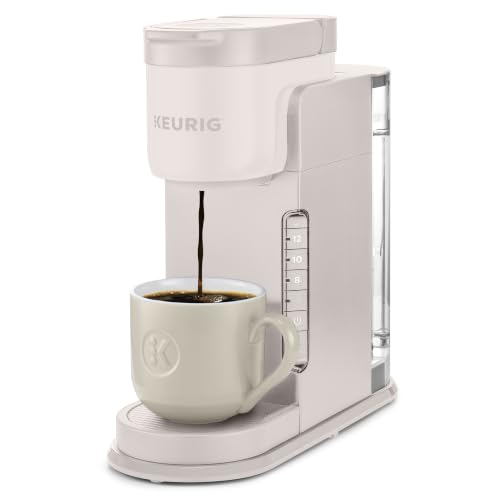
- Keurig K-Express Single Serve Coffee Maker, Warm Stone
- Elite Gourmet 14 oz Single-Serve Coffee Maker
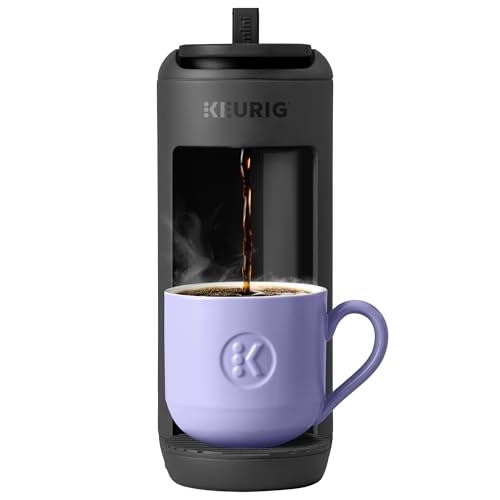
- Keurig K-Mini Mate Single Serve Coffee Maker
Read the full guide ↓ for what “fast” means when it is measured in real mornings rather than in advertisements — and which of these six machines is fast in the way your life actually needs.
The best fast coffee makers are not the ones with the boldest speed claims. They are the ones that fit the shape of a hurried life: the commuter whose coffee must be ready inside a ten-minute window, the parent brewing one-handed, the shift worker whose morning happens at midnight, the student in a dorm room with a lecture across campus. Measured against those lives, fast is a total — the time from deciding you want coffee to holding it, including the filling, the choosing, the waiting, and the cleaning you did yesterday that makes today possible. This guide ranks six single-serve machines by that total, using only verifiable traits: reservoir readiness, step count, cup-size range, and design briefs the makers themselves state, like the Elite Gourmet’s Fast Brew brief. No invented seconds appear anywhere in it.
The six divide by lifestyle. Reservoir machines — the Ninja with 56 oz, the two K-Express finishes with 42 oz — are fast the way a laid-out suitcase is fast: the preparation happened earlier, when time was cheap. Fill-per-cup minis — the Elite Gourmet and the K-Mini Mate — are fast the way a bicycle is fast in a city: small, direct, nothing to warm up or manage, ideal for one person going a short distance. The K-Elite brings the pod platform’s direct routine in a premium finish. Which kind of fast is yours depends on whether your mornings are won the night before or in the moment, and the reviews below are organised to make that call easy. Buyers who want the category’s full feature inventory beyond speed will find it catalogued under Best Features On Single Cup Coffee Makers.
Key Takeaways
- Fast is a total routine time, not a brew-cycle claim: filling, deciding, and yesterday’s cleaning all count.
- Reservoir machines win the prepared morning; fill-per-cup minis win the spontaneous one. Know which morning is yours.
- The Ninja’s 24 oz one-pass ceiling makes it the fastest choice for travel-tumbler drinkers, who otherwise pay for two cycles.
- The Elite Gourmet’s stated Fast Brew design and one-touch grounds brewing give solo drinkers the shortest total routine in this guide.
- A machine slowed by scale is a slow machine whatever its badge says — descaling is the cheapest speed upgrade in coffee.
- For households leaving at the same minute, no single-serve machine is fast enough; that is a batch pattern, and this guide says so rather than selling around it.
In this guide
Quick Picks
| Pick | Badge | Format | Fast for whom | Check |
|---|---|---|---|---|
| Ninja Single Serve PB051 | Best Overall Fast | K-Cup pods and grounds, 4 styles, 56 oz reservoir | Varied households and big-cup drinkers: one pass, always ready | Check on Amazon |
| Keurig K-Elite, Brushed Silver | Best Premium Fast | K-Cup pods, single serve | Pod households wanting the direct routine in a formal finish | Check on Amazon |
| Keurig K-Express, Black | Best Commuter Fast | K-Cup pods, 3 brew sizes, 42 oz reservoir | Travel mug drinkers: tank ready, mug filled directly, door | Check on Amazon |
| Keurig K-Express, Warm Stone | Best-Looking Commuter Fast | K-Cup pods, 3 brew sizes, 42 oz reservoir | The same commuter system in the warm neutral finish | Check on Amazon |
| Elite Gourmet 14 oz Single-Serve | Best Solo Fast | Grounds and tea, reusable filter, 600W | One-touch Fast Brew brief with no pod step at all | Check on Amazon |
| Keurig K-Mini Mate | Best Small-Space Fast | K-Cup pods, up to 12 oz | Dorms, desks, and studios: fill, pod, brew, gone | Check on Amazon |
How These Picks Were Chosen
This guide is research-led and built from a verified product pool. Every format, capacity, and feature in the reviews comes from the manufacturer’s own listing information for that exact model. No brew times are quoted, because the verified data contains no comparable measured times and this guide does not invent them; speed is argued from structure — water readiness, steps in the routine, and whether the machine finishes your real cup in one pass — and from makers’ stated design briefs where they exist. The K-Elite’s verified data is brief, centred on its format and brushed silver finish, and its review stays within that ground.
Ranking followed the lives in the introduction. Prepared households were scored on reservoir size and one-pass range. Spontaneous solo drinkers were scored on total step count, where the minis shine. Commuters were scored on the travel mug test: can the machine fill the vessel that leaves the house, directly, without decanting or a second cycle? Households were scored on relay ability — back-to-back cups without a refill event in the middle. A machine that won one life and lost another was badged for the life it won, rather than averaged into a meaningless middle, because fast is always fast for someone in particular.
The 6 Best Fast Coffee Makers

Ninja Single Serve Coffee Maker, PB051
Badge: Best Overall Fast
Strengths
- The largest standing reservoir in the guide at 56 oz removable — the most mornings begun at full readiness.
- Cup sizes to 24 oz in one pass, deleting the double cycle that makes big-cup drinkers’ mornings slow.
- Four styles and both formats, pods and grounds, so the fast cup rarely waits on a workaround or a missing supply.
Trade-offs
- The widest choice set here: a moment of deciding rides along with the range.
- The biggest counter footprint of the six.
- A household of one small identical cup will pay for range it never touches.
Mini spec box: Format: single serve combo, K-Cup pods and grounds · Brew styles: 4 · Cup sizes: up to 24 oz · Reservoir: 56 oz, removable · Model: PB051 · Colour: Black.
The Ninja is the fast machine for households whose mornings refuse to standardise. One person leaves with a 24 oz tumbler; another wants a small cup, stronger; a third drinks grounds on weekends and pods on weekdays. A lesser machine makes each of those a negotiation with cycles, refills, or formats. The Ninja’s combination — the big standing tank, the one-pass ceiling, the styles, the dual format — is engineered so the answer is simply the cup, made once, now. That is what overall fast means when more than one life shares a counter.
Its honest cost is appetite and space: it is the largest commitment here, in footprint and in features, and a minimalist household will feel the excess daily. But for the varied household, the excess is the speed. Every capability in its list corresponds to a delay that some household, somewhere in this guide’s audience, experiences weekly — and removing a weekly delay is worth more than shaving an unmeasurable moment off a cycle.
Best for: varied households and large-cup drinkers wanting one-pass, always-ready fast coffee / Not suited for: minimalist solo drinkers

Keurig K-Elite Single Serve Coffee Maker, Brushed Silver
Badge: Best Premium Fast
Strengths
- The Keurig pod platform’s direct single-cup routine, presented in brushed silver for kitchens where fast must also look formal.
- The deepest pod range in the category behind it — supply depth is a real-world speed trait.
- Single-serve scope keeps every cycle to one cup’s water and one cup’s wait.
Trade-offs
- Verified listing data is brief — format and finish — so confirm current configuration details on the live listing before buying.
- Pod format only on the verified data.
- Its premium buys presence more than measurable pace; speed purists may prefer the reservoir-argued picks.
Mini spec box: Format: single serve K-Cup pod · Finish: Brushed Silver. (Verified listing data is brief; no further specifications are invented here.)
The K-Elite serves the household whose mornings are fast and whose kitchen is formal, and refuses to make them choose. Its verified proposition is the established Keurig single-serve platform — pod in, cup out, from the widest pod selection in coffee — finished in brushed silver. In real homes, that combination has a speed of its own: the machine is where it should be, stocked with what the household drinks, looking like it belongs, and therefore used without friction or apology.
This guide’s treatment of the K-Elite is deliberately unadorned, because its verified data is. No cycle figures are claimed for it, no reservoir figure is assumed. What stands is platform, format, and finish — and for the buyer whose brief is exactly those three words, that is a complete case. Everyone else will find their speed argued structurally by the reservoir and mini picks around it.
Best for: K-Cup households wanting the direct pod routine in a premium formal finish / Not suited for: grounds brewers or buyers who need every trait itemised

Keurig K-Express Single Serve Coffee Maker, Black
Badge: Best Commuter Fast
Strengths
- Travel mug friendly design plus a 42 oz reservoir: the commute cup brews directly into the mug that leaves, from water already waiting.
- Three brew sizes and a Strong Brew button cover the commuter menu with near-zero deliberation.
- Works with all K-Cup pods, so the 6 a.m. cup is never hostage to a narrow pod stock.
Trade-offs
- The largest travel tumblers may exceed its three sizes where the Ninja’s 24 oz ceiling would not.
- Pod supply discipline is part of the system: an empty drawer is a slow morning.
- Identical platform to the Warm Stone version; finish is the only difference.
Mini spec box: Format: single serve K-Cup pod, works with all K-Cup pods · Brew sizes: 3 · Reservoir: 42 oz, removable · Controls: Strong Brew button · Fit: travel mug friendly · Colour: Black.
Commuter coffee has a deadline, and the K-Express in Black is built like it knows. The reservoir deletes the fill. The three sizes delete the deliberation. The travel mug clearance deletes the decant — the cup is brewed in the vessel that boards the train, sits in the cup holder, and arrives at the desk. What remains is the shortest honest sequence in this guide for a working morning: mug under, pod in, button, lid on, out. The Strong Brew button covers the mornings after bad nights, which is to say a statistically significant share of commutes.
In Black it is also the finish of least resistance — invisible in any kitchen, unbothered by splashes, unargued-with by partners. Commuters optimising a system rather than shopping for an object will recognise the type immediately. Keep the tank filled and the pods stocked, descale on schedule, and this machine will hold up its end of the timetable for years.
Best for: commuters and deadline households wanting the direct mug-to-door routine / Not suited for: very large tumbler drinkers or grounds households
Keurig K-Express Single Serve Coffee Maker, Warm Stone
Badge: Best-Looking Commuter Fast
Strengths
- The complete commuter system above — 42 oz reservoir, three sizes, Strong Brew, travel mug friendly — in Warm Stone.
- The finish suits warm, natural kitchens, so the fast machine earns its permanent counter place visually.
- Full K-Cup compatibility keeps the deadline cup unrestricted.
Trade-offs
- No functional difference from the Black version, and none is claimed.
- Mid-tone finish shows splashes more than black; a wipe keeps the look honest.
- Same size ceiling and pod pattern as the platform.
Mini spec box: Format: single serve K-Cup pod, works with all K-Cup pods · Brew sizes: 3 · Reservoir: 42 oz, removable · Controls: Strong Brew button · Fit: travel mug friendly · Colour: Warm Stone.
The Warm Stone K-Express exists for the commuter whose kitchen is warm-toned and whose standards include the room as well as the timetable. Its service is the platform’s service, already reviewed above in Black: ready water, three sizes, strength on demand, a mug filled directly for the road. The colour’s contribution to speed is indirect but real — a machine that belongs in the room stays on the counter, plugged in and filled, rather than being exiled to a cupboard from which every morning begins with retrieval. Exile is the slowest finish of all, and Warm Stone kitchens are where black machines most often suffer it.
Choose between the finishes in the room, in daylight, and then forget the question forever; the coffee, the timetable, and the machine underneath will be identical either way. That is the last word this guide needs on colour, and it applies to fast machines exactly as it does to fancy ones.
Best for: warm-toned kitchens wanting the full commuter system in a finish that stays on the counter / Not suited for: buyers seeking a functional upgrade over the Black version

Elite Gourmet 14 oz Single-Serve Coffee Maker
Badge: Best Solo Fast
Strengths
- Fast Brew is the maker’s own stated design brief, delivered through one-touch operation — the shortest decision chain in this guide.
- Brews your own grounds in a reusable filter: no pod selection, no pod stock, no pod waste slowing the system down.
- Compact travel mug format with auto shut-off and dishwasher-safe parts keeps even the cleaning leg of the routine short.
Trade-offs
- Water is added per cup, so its speed is cycle-and-simplicity speed, not reservoir readiness.
- One 14 oz cup per cycle; a second drinker doubles the routine.
- The reusable filter wants a rinse after each use.
Mini spec box: Brew capacity: 14 oz single serve · Power: 600W · Operation: one-touch · Filter: reusable, for grounds and loose-leaf tea · Extras: auto shut-off, dishwasher-safe parts, travel mug format, model EHC111A.
For the solo drinker, the Elite Gourmet may be the fastest machine in this guide in the only sense that matters: total elapsed life per cup. There is no reservoir to manage because there is one cup to make. There is no pod ritual because the coffee is yours, scooped from the bag you already own into a filter that rinses in seconds. There is no menu because there is one touch. The maker’s Fast Brew brief sits on top of that subtraction like a signature. Desk workers, solo renters, workshop and studio drinkers, and anyone brewing in a space where a reservoir machine would be furniture rather than tooling — this is your fast.
It also moonlights as the guide’s tea machine, brewing loose-leaf through the same filter, which in a one-person household can retire a second appliance. The borders are firm, though: one cup at a time, 14 oz at most, water each time. Inside those borders it is complete; outside them, the reservoir picks are waiting. Households whose fast problem is really a format problem — pods versus grounds under one roof — may also want to survey the dual-format designs gathered under Best Flexbrew Coffee Makers, where this guide’s Ninja covers the same peace treaty from the reservoir side.
Best for: solo grounds drinkers at home, desk, or studio wanting the shortest total routine / Not suited for: multi-cup households or reservoir devotees
Keurig K-Mini Mate Single Serve Coffee Maker
Badge: Best Small-Space Fast
Strengths
- A compact, portable design made for small spaces, dorms, and offices — the places where fast is measured against a timetable set by someone else.
- Brews up to 12 oz from the full K-Cup range, a real cup rather than a token.
- Nothing to programme, warm up as a ritual, or manage: the routine is fill, pod, brew.
Trade-offs
- The per-cup fill is part of every cycle; it cannot match a reservoir machine’s instant start.
- One cup per cycle makes it a personal appliance, not a household system.
- Pod format only.
Mini spec box: Format: single serve K-Cup pod · Brew size: up to 12 oz · Design: compact and portable, for small spaces, dorms and offices · Colour: Black.
The K-Mini Mate is fast the way a good campus bike is fast: not the highest top speed, but zero friction between deciding and moving. In a dorm room it lives where the lectures are timed from. On an office desk it removes the walk to the shared kitchen, which was always the slowest part of office coffee. In a studio flat it asks for less counter than the mug collection it serves. Its routine — the water for this cup, a pod, a brew of up to 12 oz — has no preparatory acts at all, and for a single person in a small place, preparation was the whole delay.
Judge it as personal equipment. Two people sharing it will queue; a household will outgrow it; a reservoir devotee will miss the tank by day three. But the student, the desk worker, the traveller with a base, and the solo renter will find that it converts coffee from a kitchen event into a wherever-you-are event, and that conversion is the fastest thing in this entire guide.
Best for: students, desk workers, and small-space solo drinkers wanting frictionless personal coffee / Not suited for: households and shared mornings
Comparison Table
| Pick | Fast system | Water | Cup range | Fast for | Check |
|---|---|---|---|---|---|
| Ninja PB051 | Range and readiness | 56 oz reservoir | Up to 24 oz, 4 styles | Varied households, big cups | Check on Amazon |
| Keurig K-Elite | Direct pod routine | See listing | Single serve | Premium pod households | Check on Amazon |
| Keurig K-Express, Black | Reservoir commuter | 42 oz reservoir | 3 brew sizes | Commuters, travel mugs | Check on Amazon |
| Keurig K-Express, Warm Stone | Reservoir commuter | 42 oz reservoir | 3 brew sizes | Commuters, warm kitchens | Check on Amazon |
| Elite Gourmet 14 oz | One-touch subtraction | Fill per cup | 14 oz | Solo grounds drinkers | Check on Amazon |
| Keurig K-Mini Mate | Mini routine | Fill per cup | Up to 12 oz | Dorms, desks, studios | Check on Amazon |
How to Choose a Fast Coffee Maker
Choose by naming your deadline. If coffee must exist inside a fixed departure window, you need readiness and a direct mug path: a reservoir machine, with the K-Express pair built for the travel mug and the Ninja for larger vessels. If coffee must exist inside a study break, a meeting gap, or a small room’s spare minute, you need subtraction: the Elite Gourmet’s one touch or the K-Mini Mate’s three-step routine. If coffee must exist for several different people across a morning, you need the relay traits — reservoir size, back-to-back readiness, and one-pass range — which is the Ninja’s home ground. A fast machine chosen against the wrong deadline is a slow machine with good marketing.
Then check the two honest numbers this category offers: reservoir ounces and cup-size ceiling. The first tells you how often preparation interrupts you; the second tells you whether your real cup finishes in one pass. Between them they predict your lived speed better than any claim printed on a box. Finally, plan the supply: pods stocked at the machine for pod households, coffee and a rinsed filter for grounds households, and a descaling rhythm for everyone, because the fastest machine is a maintained machine and there are no exceptions in this guide or outside it.
How to Make Any Morning Faster: the Fast Coffee Routine
The routine has an evening act and a morning act. Evening: reservoir owners fill the tank; everyone stages the pod or grounds, the mug or tumbler, and anything the cup will need beside the machine; drip trays are emptied while the kitchen is being closed anyway. This act costs two unhurried minutes and buys the entire morning. Morning: start the brew before the parallel tasks — dressing, packing, feeding the household — so the cycle runs inside time that was already spent. Brew the vessel’s size in one pass where the machine allows it. Take the cup, remove the spent pod or rinse the filter in the same motion, and leave the station as you found it, because tonight’s staging depends on this morning’s tidiness.
Troubleshooting, in the pattern that covers most slow mornings. Problem: the routine has crept longer over the months → descale; mineral build-up is taxing every cycle, and it is the first suspect in any machine of any badge. Problem: the cup is ready but the drinker is not caffeinated fast enough on deadline days → the bottleneck is sequence, not machinery; move the brew to the start of the routine and let it run in parallel. Problem: a second person’s cup doubles the morning → the household has outgrown fill-per-cup or small-ceiling equipment; a reservoir machine with a one-pass range matched to your vessels is the structural fix, and no technique substitutes for it.
Fast Coffee for Shift Workers and Irregular Hours
Irregular schedules deserve their own section because they break the assumptions of ordinary coffee advice. The shift worker’s morning may be midnight; the kitchen is dark, the household is asleep, and the coffee must happen quietly, simply, and without a project. For that life, the virtues reorder themselves: a reservoir machine that is simply ready, with no programme to have misfired, and controls that can be operated by touch and habit. The K-Express pattern — tank, pod, one of three sizes, done — is close to ideal, and its Strong Brew button earns a specific mention for the first shift of a rotation, when the body is voting against the schedule.
The minis serve the other irregular pattern: the worker whose base changes — site cabins, rented rooms, a desk that moves. Portability and a three-step routine travel better than readiness does. What both patterns share is intolerance for complexity and for maintenance debt: a descaling routine attached to a calendar date rather than to “weekend mornings” survives rotating shifts, and supplies stocked in depth forgive the shopping that irregular hours make erratic. Fast, for irregular lives, means the machine asks the fewest questions at the worst hours — rank the picks by that standard and the shortlist builds itself.
When Fast Is Not the Priority
An honest fast guide ends by marking its own border. Some coffee is ceremony: the slow weekend pot shared over a newspaper, the careful manual brew, the gathering where coffee is the excuse rather than the fuel. Single-serve speed serves those moments badly by design, and households that treasure them should protect a place for them — a batch brewer for the table, the question surveyed under Best Five Cup Coffee Makers, or a simple filter setup of the kind gathered under Best Filter Coffee Makers — alongside the fast machine that carries the week. The two are not rivals. The weekday machine buys the time; the weekend ritual spends it well.
Fast is also not the priority when the household’s real problem is taste rather than time. A fast cup made from stale supplies, at the wrong size for its dose, through a scaled water path, is merely a quick disappointment, and upgrading machinery will not fix it. Fix the supplies and the routine first — the earlier sections of this guide are a checklist — and only then discover whether a machine problem remains. In many kitchens, honestly audited, it does not.
Fast Coffee in Winter, Summer, and the Seasons Between
Speed has a seasonal rhythm that machine choice can either serve or fight. Winter mornings are dark, deadline-driven, and hot-drink loyal: the reservoir machines rule them, because nobody’s fastest hour should begin with a cold tap and a measuring jug under a bare bulb. Summer rewrites the order — the first drink of a hot day is often iced, made later, and carried outside — and households whose fast machines cannot pivot to iced drinks find themselves queueing at cafés for the season. None of the reservoir picks in this particular guide brews iced coffee as a stated job, which is an honest gap worth naming: summer-fast households should weigh that gap directly, and consider whether a dual-temperature machine elsewhere in the category matters more to them than the readiness ranked here.
The shoulder seasons reward the minis. In spring and autumn, when routines loosen — a cup on the porch, a cup at the allotment shed, a cup in the caravan as it comes out of storage — portability becomes a form of speed, because the fastest coffee is the one made where you already are. The K-Mini Mate and the Elite Gourmet were both designed with those second locations in their briefs. Read across the year, then, the wisest fast purchase is often a system: a reservoir machine anchoring the kitchen’s dark months, a mini roaming with the household’s light ones. The two together cost less deliberation than one machine asked to be perfect in every season.
The Second Cup Problem
Every fast guide should confess the scenario its category handles worst: the second cup, wanted immediately, by the same person or another, while the first is still being carried away. Single-serve machines answer it with a relay — the next cycle starts as the previous cup leaves — and reservoir machines run that relay without a water event inside it, which is why this guide ranks them for households. But the relay has a human bottleneck: the person who takes the first cup must start the second, or the second drinker inherits the full routine. Households that master the handoff — cup out, cup in, button pressed for the next person — experience their machine as roughly twice as fast as households that treat each cup as a private project.
There is also a taste dimension to the second cup that speed talk usually skips. A second cycle run through the same pod or the same grounds is not a second cup; it is the exhausted remainder of the first, and it will taste like an argument against the machine. Fast households should stock and dose for the relay honestly — a fresh pod, a fresh measure — and treat any guide or habit suggesting otherwise as false economy. The second cup problem, solved properly, is a stocking and choreography problem. Solved improperly, it becomes the reason a perfectly fast machine gets blamed at breakfast.
Fast Coffee and the Rest of Breakfast
A fast coffee maker does not exist alone at 7 a.m.; it competes for the same minutes, counter, and attention as everything else breakfast demands, and the households that feel their machine is fast are usually the ones that have choreographed the whole production. The principles are simple. One person, one station: the coffee corner should be usable without crossing the path of whoever is cooking, because crossed paths are where morning minutes actually die. Parallel by default: the brew starts first and runs while toast, eggs, lunches, and children proceed around it — a coffee cycle is one of the few breakfast tasks that needs no supervision, and households that stand and watch it are spending the very time the machine was bought to save.
Staging closes the system. Cups, supplies, and the travel mug live at the station; the reservoir is filled during the evening reset, when the kitchen is being put to bed and time is unhurried; and the first person to the kitchen starts the first cup before any other task, so the machine’s cycle overlaps the household’s rather than queuing behind it. None of this requires a particular model — it works with every pick in this guide — but it multiplies some models more than others. Reservoir machines multiply best, because their readiness is what the choreography spends. Minis multiply best in the opposite setting, the solo kitchen, where there is no production to choreograph and the shortest routine wins outright. Match the choreography to the cast, then cast the machine.
Common Buying Mistakes
The first fast mistake is buying a reservoir household machine for a spontaneous solo life, or a mini for a deadline household — the two kinds of fast are not interchangeable. The second is ignoring the cup ceiling and discovering the double cycle on the first commute. The third is letting the pod drawer or the coffee bag run empty and calling the resulting café trip a machine failure. The fourth is neglecting descaling until the machine slows, then replacing a maintainable machine at full price. The fifth is queuing a synchronised household at a single-serve brewer every morning instead of admitting a batch pattern. The sixth is paying for speed adjectives while skipping the two checkable numbers — reservoir ounces and cup-size ceiling — that actually predict a fast life.
Final Recommendation
For most fast buyers, the Ninja Single Serve PB051 is the complete system: the largest ready reservoir, one-pass cups to 24 oz, four styles, and both formats, ready for every morning a varied household can invent. Commuters should take the K-Express — Black for the classic station, Warm Stone for warm kitchens — and let its reservoir and travel mug routine run the timetable. Solo drinkers should take the Elite Gourmet for grounds or the K-Mini Mate for pods in small spaces, and premium pod households the K-Elite in brushed silver. Fast is not a number on a box; it is a morning that works. Choose the machine whose kind of fast matches yours, keep it stocked and descaled, stage it the night before and start it before everything else, and the coffee will be the least of your deadlines — on the commute days, the shift days, the school-run days, and the rare slow days when the same machine, asked for nothing urgent, simply makes a good cup while the house wakes around it. That range, from deadline to dawdle, is what the best fast machines actually deliver.
Frequently Asked Questions
What is the fastest kind of coffee maker for a weekday morning?
For most households, a reservoir-fed single-serve machine: the water is waiting, the cycle covers one cup, and the mug can be filled directly. For a solo drinker, a one-touch mini like the Elite Gourmet can post the shortest total routine of all, because there is nothing to manage around the single cup.
Why are there no brew times in seconds in this guide?
The verified product data behind these picks includes no comparable measured cycle times, and inventing figures would mislead. Speed here is ranked on checkable structure — reservoir readiness, routine steps, and one-pass cup range — plus makers’ stated design briefs, labelled as briefs.
Is a bigger reservoir always faster?
It is faster in readiness: fewer refills interrupt the routine, and back-to-back cups start immediately. It does not change the brew cycle itself. The right size is the one your household refills during calm moments — 42 oz serves most couples, 56 oz serves heavier or more varied use.
Which pick is best for a student dorm room?
The Keurig K-Mini Mate: compact and portable by design, up to 12 oz per brew, with the full K-Cup range for variety in a small stock. Grounds-drinking students should consider the Elite Gourmet instead, whose reusable filter removes the pod supply question entirely.
How do I keep a fast machine fast?
Descale on the manufacturer’s schedule, keep the reservoir washed and filled, remove spent pods or rinse the filter promptly, and keep supplies stocked at the machine. Scale and empty cupboards are the two forces that slow this category down, and both are habits, not hardware.
Can one fast machine serve a whole family breakfast?
Sequentially, a reservoir machine handles a staggered family well. For a family that sits down together, a batch brewer is the honest tool; many households run both, with the fast single-serve carrying weekdays and the pot carrying weekends.
How do I choose between the two kinds of fast in this guide?
Watch one ordinary morning and notice where your hand waits. If it waits at the sink, filling and measuring, your delay is preparation, and the reservoir machines exist for you. If it waits on nothing but the machine is simply far from where life happens — a desk, a dorm, a workshop — your delay is distance, and a mini placed at the point of need is the faster purchase. If it waits because the first cup must be remade at a bigger size, your delay is ceiling, and the Ninja’s one-pass range is the answer. The wait you actually have is the only honest buying guide; the badges in this article are organised around those three waits.
Which pick should a travel mug household start with?
The K-Express platform, whose travel mug friendly design and 42 oz reservoir were practically specified for the commute: the mug brews directly, the water waits overnight, and the three sizes cover the standard commuter range. Step up to the Ninja only if the household’s tumblers exceed that range or its formats and styles genuinely vary; step down to a mini only if the commute starts from a dorm or desk rather than a kitchen.
Does a fast machine use more energy than a slow one?
Single-serve machines heat only the water for the cup being made, which is the energy-efficient shape of coffee for one or two drinkers; a batch pot heated for a single cup spends energy on water nobody drinks. The larger energy question is behavioural — machines left heating, reheating, or holding coffee for hours — and on that measure the fast, brew-and-done routine in this guide is also the frugal one.
What is the single fastest upgrade I can make without buying a machine?
Move the preparation to the evening. Fill the reservoir or stage the water, set the supplies and the mug at the machine, and empty the drip tray before bed. That one relocation deletes the slowest, most resented minutes of the morning routine at zero cost, on any machine ever made — and if the morning still feels slow afterwards, the remaining delay is genuinely the machine’s, and the picks in this guide are ranked to solve exactly it.
How does hard water affect a fast coffee routine?
Twice over. It scales the machine faster, narrowing water paths and dulling heating until cycles lengthen and temperatures sag; and it punishes the fill-per-cup routine less visibly but just as surely. Households with hard water should descale more often than the standard rhythm and may reasonably fill reservoir machines from a filtered jug. The machine is rarely the slow part of a hard-water kitchen — the water is, and it is fixable.
Is a fast machine a sensible gift for a new parent or a new graduate?
One of the most sensible. New parents brew one-handed at irregular hours and value readiness above every other trait, which argues for a reservoir pick. New graduates in first flats and dorm rooms value footprint and simplicity, which argues for a mini. In both cases include a starter stock of pods or coffee: a fast machine without supplies is a promise, not a gift.
Should a fast household own two machines?
Often, yes — and it is usually the best-value speed upgrade available. A reservoir machine anchoring the kitchen plus a mini at a desk, in a workshop, or in a caravan removes journeys, which are the largest time cost in most cups. Judge the second machine by how many trips it deletes per week; if the answer is more than a handful, it will pay for its counter space in reclaimed minutes within the season.
What should I do on the first morning with a new fast machine?
Run it as a rehearsal, not a deadline. Wash the removable parts, fill the reservoir or practise the fill, brew a first cup at a middle size, and taste before adjusting anything. Set up the evening staging — supplies at the machine, mug in place — that same night. A fast routine is built in the first twenty-four hours; machines blamed for slow starts are usually machines whose owners never built the system around them.
Pods or grounds — which is faster in daily life?
Pods remove measuring and rinsing; grounds remove the pod step and its stocking. In total routine time they are close, and the deciding factor is usually the household’s existing habits. Dual-format machines like the Ninja remove the need to decide, which is its own form of speed.


