Disclosure: topratedkitchenware.com is reader-supported. When you buy through links on our site, we may earn an affiliate commission from Amazon and other retailers, at no extra cost to you.
Where to buy
The six verified picks for this guide to the best rice cookers reddit are listed below. Each name links to its Amazon listing, where you can check the latest price on Amazon, confirm the configuration, and read the newest owner feedback. Read the full guide ↓ for the ranking — and, just as importantly, for a translation of what the community conversation around these machines actually says once you strip out the memes, the brand tribalism and the first-week enthusiasm.
- Zojirushi NS-ZCC10 Neuro Fuzzy Rice Cooker and Warmer — Best Overall, the Community Benchmark
- Zojirushi NS-TSC10 5.5-Cup Micom Rice Cooker and Warmer — Best Everyday Pick
- AROMA Rice Cooker ARC-363NG — Best Budget Staple
- BLACK+DECKER Rice Cooker 6-Cup (Cooked) — Best No-Nonsense Budget
- Dash Mini Rice Cooker 2-Cup — Best for One Person
- BLACK+DECKER 16-Cup Rice Cooker RC516 — Best Big-Batch Budget
Searching for the best rice cookers reddit is a vote of no confidence in ordinary reviews, and it is an understandable one. The shopper who adds “reddit” to the query wants the unfiltered version: owners arguing from years of use, complaints that marketing pages omit, the long tail of gasket failures and coating lifespans and keep-warm quirks that only surface after the hundredth batch. This guide honours that intent in a specific way. It ranks six verified cookers — two computerized Zojirushi models, two Aroma-class budget staples in spirit, a one-person Dash mini and two BLACK+DECKER workhorses — and it reads each one through the community’s recurring themes: what long-term owners praise, what they complain about, where the consensus is solid and where it is merely loud.
Two ground rules govern the article. First, no invented numbers: this guide cites no star ratings, no review counts and no thread statistics, because community sentiment cannot be honestly compressed into figures nobody audited. The themes reported here are qualitative patterns — the arguments that recur, in substance, wherever these machines are discussed by people who own them. Second, the community is a witness, not an oracle: Reddit’s loudest voices skew toward enthusiasts and the aggrieved, and the silent majority who simply cook rice for a decade rarely post at all. The reviews below weigh the discourse accordingly — seriously, and with a salt cellar within reach.
Inside you will find a quick-picks table, the method behind the ranking, six detailed reviews organised around praise, complaints and verdicts, a comparison table, a buying guide, a how-to section, a dedicated guide to reading community advice critically, common mistakes, a final recommendation and a full FAQ. If the community’s budget instincts speak to you, Best Rice Cookers Target covers the big-box value shelf in the same spirit.
The ranking that follows applies that discipline in public: six machines, each placed where its evidence puts it, with the reasoning left visible enough to argue with — which is, after all, the community’s own favourite sport, and the sincerest form of respect this guide can offer it.
Key Takeaways
- The community’s benchmark is the Zojirushi NS-ZCC10: across discussions, its consistency and longevity are the standard other cookers are argued against.
- The NS-TSC10 is the pragmatist’s Zojirushi — the model recommended when the flagship’s tier meets resistance, in a size most households actually need.
- Budget machines have fierce, credible defenders: the small Aroma and the BLACK+DECKER cookers are praised precisely for doing one job without ceremony.
- The recurring complaints across all brands are about consumables and details — inner-pot coatings aging, condensation management, keep-warm drying — not about catastrophic failure.
- The Dash Mini is the community’s beloved specialist: constantly recommended for dorms and solo living, never for anything else.
- Read community advice for patterns, not verdicts: repeated specifics beat volume, and your household’s grains and batch sizes outrank any consensus.
In this guide
Quick Picks
| Pick | Badge | Capacity from listing | Why it earns its place | Link |
|---|---|---|---|---|
| Zojirushi NS-ZCC10 Neuro Fuzzy | Best Overall, Community Benchmark | Warmer format | Adaptive fuzzy logic, automatic keep-warm, delay timer — the reference machine | Check on Amazon |
| Zojirushi NS-TSC10 Micom | Best Everyday Pick | 5.5-cup / 1.0 litre | Micom control with LCD in the everyday size | Check on Amazon |
| AROMA ARC-363NG | Best Budget Staple | 3-cup uncooked / 6-cup cooked, 1.5 Qt | Small-batch rice, oatmeal and soup with auto keep-warm | Check on Amazon |
| BLACK+DECKER 6-Cup | Best No-Nonsense Budget | 6-cup cooked | One-touch rice with steaming basket and removable bowl | Check on Amazon |
| Dash Mini Rice Cooker | Best for One Person | 2-cup cooked / 1-cup uncooked | Personal ceramic-pot cooker with keep-warm | Check on Amazon |
| BLACK+DECKER RC516 | Best Big-Batch Budget | 16-cup cooked / 8-cup uncooked | One-touch volume for crowds and batch cooking | Check on Amazon |
How These Picks Were Chosen
Every pick comes from a verified pool checked against the Amazon Creators API on 2026-11-20, and every product fact in the reviews — capacities, functions, pot types — is drawn from those listings. The ranking layer added for this keyword is community reception, assessed qualitatively: which machines anchor recommendations, which draw consistent criticism and for what, and which occupy the specialist niches that recur in discussion. No metrics are quoted, because none were audited; the article’s discipline is to report the shape of the consensus and the substance of the disagreements, and to flag where the discourse is thin or skewed.
Two biases in community data are corrected for explicitly. Enthusiasm bias: computerized Japanese cookers attract devoted owners who post; basic cookers attract silence from satisfied users, so the budget picks are judged partly by the absence of complaint patterns rather than the absence of praise. Recency bias: a model discussed heavily this year is not thereby better than a quieter one, so longevity of reputation across discussion cycles counts for more than current volume. This remains a research-led guide, not a laboratory test, and it presents community evidence as one input among several — verified specifications and control-technology behaviour being the others.
Where this guide and the crowd might part company, it says so. The community’s affection for maximum capacity, for instance, is treated with the same suspicion here as everywhere on this site: the most-recommended size in a thread is often the size the thread’s loudest household needs, not yours. Readers who want the technology-first view of the flagship pair will find it in this site’s dedicated fuzzy-logic guide, which this article deliberately complements rather than repeats.
The 6 Best Rice Cookers Reddit Discussions Keep Recommending
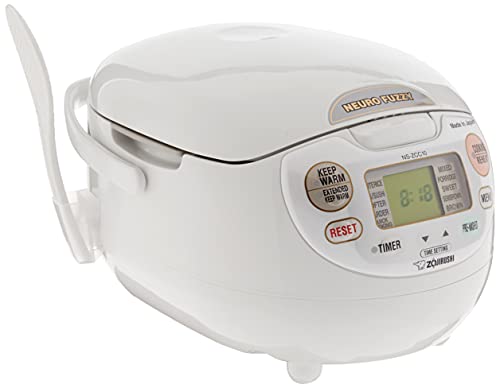
Zojirushi NS-ZCC10 Neuro Fuzzy Rice Cooker and Warmer
Badge: Best Overall, the Community Benchmark
Strengths
- The reference machine in owner discussions: adaptive Neuro Fuzzy control that produces the consistency people describe, in substance, as “it just handles it”.
- Automatic keep-warm that long-term owners single out as the difference between their old cooker and this one.
- A reputation for longevity — the recurring community story is a machine bought once and used for years of daily service.
Trade-offs
- Premium tier, and the community argues about its value as fiercely as it praises its rice: the “worth it” debate is this model’s permanent companion.
- Adaptive cycles are slow; impatience is the complaint of owners who bought the badge without reading about the rhythm.
- Inner pots are consumables on any cooker; replacement cost and availability feature in long-term owner reports and belong in the budget.
Mini spec box
- Type: Neuro Fuzzy rice cooker and warmer
- Controls: fuzzy-logic microcomputer with delay timer
- Keep-warm: automatic
- Finish: white
Every product category has a machine that functions as the community’s unit of measurement, and in rice cookers it is this one. Threads asking “what should I buy?” measure answers against the NS-ZCC10; threads asking “is it worth it?” are really asking whether consistency at this level justifies a premium tier — and the honest summary of years of that argument is that daily rice households tend to land on yes and occasional cooks on no, with both sides able to point to their dinners as evidence. The praise is specific in a way marketing never is: rice that survives a distracted measuring cup, brown rice that behaves, leftovers that reheat like a rumour of the original.
The complaints are equally specific and equally worth hearing. The cycle is unhurried. The machine is a considered purchase whose inner pot will one day want replacing. And its very reputation creates a backlash genre — owners of simple cookers reporting, correctly, that their rice is also good. This guide’s position synthesises the thread: the flagship’s advantage is variance reduction across years and grains, which is either the centre of your rice life or a luxury you will never miss, and no community on earth can decide that for your kitchen.
Best for: daily rice households who want the benchmark machine / Not suited for: occasional cooks or the impatient.

Zojirushi NS-TSC10 5.5-Cup Micom Rice Cooker and Warmer
Badge: Best Everyday Pick
Strengths
- The recommendation veterans give when the flagship’s price enters the chat: Micom consistency in the right size.
- 5.5-cup format matches the households doing most of the asking.
- LCD controls and delay timer make its routine transparent and schedulable.
Trade-offs
- One tier of adaptation below Neuro Fuzzy; the finest edge of forgiveness belongs to its sibling.
- Still a premium purchase next to the budget staples below.
- Capacity is family-sized, not crowd-sized.
Mini spec box
- Capacity: 5.5-cup / 1.0 litre
- Type: Micom (microcomputerized) rice cooker and warmer
- Controls: LCD with delay timer
If the ZCC10 is the community’s benchmark, the TSC10 is its compromise candidate — the model that ends arguments. Its discussion profile is notably calm: fewer manifestos, more quiet confirmations from owners who cook rice most days and have stopped thinking about their cooker, which experienced thread-readers recognise as the highest praise an appliance can earn. The Micom system’s programmed, sensor-informed curves deliver the repeatability that daily cooking actually runs on, and the size is the one the “how much rice do you really make?” question usually answers.
Its trade-offs are the flagship debate in miniature: you give up the deepest adaptation, you keep a premium tier, and in exchange you get the machine most households should probably have bought first. For the reader whose research began on Reddit precisely to escape salesmanship, this is the pick whose community reputation is salesmanship-resistant: it is recommended by people describing their Tuesdays.
Best for: families wanting computerized consistency without flagship commitment / Not suited for: crowds or bargain-first buyers.

AROMA Rice Cooker ARC-363NG
Badge: Best Budget Staple
Strengths
- The budget recommendation with the longest community memory: small, simple, and repeatedly defended by owners who have used it for years.
- Oatmeal and soup roles make it a quiet multi-tasker for small households.
- Automatic keep-warm at a tier where that is not guaranteed.
Trade-offs
- One-touch mechanism: the community’s technique threads (rinsing, ratios, resting) are the manual this machine does not include.
- 6-cup cooked ceiling.
- Basic keep-warm dries rice sooner than computerized models; owners learn to serve promptly.
Mini spec box
- Capacity: 3-cup uncooked / 6-cup cooked, 1.5 Qt
- Roles: small rice cooker, oatmeal cooker, soup maker
- Keep-warm: automatic
- Finish: white
- Model: ARC-363NG
The ARC-363NG occupies the community’s most affectionate niche: the cheap machine that refuses to embarrass itself. Its discussion pattern is distinctive — owners volunteer it in threads asking for gifts, dorm setups, first apartments and second cookers, and the defence is always the same shape: it makes good rice, it has done so for a long time, and it cost very little. In a discourse addicted to upgrades, that durability of satisfaction is data.
The criticisms are the class’s, honestly aired in the same threads: you are the control system, the pot is small, the warmer is a short bridge rather than a holding pattern. None of them is a defect; they are the terms of the tier, and this machine’s community standing rests on how gracefully it keeps them. For small households, it remains the budget answer this guide reaches for first — a judgement the crowd reached long ago and has seen no reason to revise.
Best for: small households, gifts, second cookers / Not suited for: families or hands-off cooks.

BLACK+DECKER Rice Cooker 6-Cup (Cooked)
Badge: Best No-Nonsense Budget
Strengths
- The anti-recommendation recommendation: owners praise it for having almost nothing to discuss.
- Steaming basket adds a second course to a one-button machine.
- Removable non-stick bowl keeps cleanup at the level its buyers demand — minimal.
Trade-offs
- No adaptation, no programs: community technique advice applies in full.
- Modest capacity even by budget standards.
- Keep-warm is basic; the serve-promptly rule applies.
Mini spec box
- Capacity: 6-cup cooked
- Pot: removable non-stick bowl
- Accessory: steaming basket
- Finish: white
Some community favourites are loved loudly; this BLACK+DECKER is loved flatly, which may be the more reliable signal. It surfaces in threads as the machine bought for a rental, a workplace kitchen, a parent who wants one button — contexts where the entire requirement is that rice happens without a learning curve. Reports of drama are rare because there is little to dramatise: a bowl, a basket, a switch, a warm light.
Read its review as the floor of the category, honestly built. Everything above it in this guide buys forgiveness, capacity or finesse; this buys rice. Households whose cooking is plain rice beside other dishes will find the community’s shrug entirely justified — and households who discover, using it, that they care about rice more than they expected have found the cheapest possible education in what to upgrade toward. Its small footprint also earns it a place in the conversation at Best Rice Cookers Small.
Best for: the tightest budgets and the simplest briefs / Not suited for: varied grains or texture chasers.

Dash Mini Rice Cooker 2-Cup
Badge: Best for One Person
Strengths
- The community’s designated solo machine: recommended, in substance, with the words “just get the mini” in dorm and single-living threads.
- Ceramic nonstick pot rinses clean in seconds — the detail solo owners praise most.
- Keep-warm plus oatmeal, quinoa and grain cooking give it a full solo repertoire.
Trade-offs
- One serving is a hard ceiling; the community is blunt that couples should not try to share it.
- Tiny batches punish measuring slips proportionally harder.
- No adaptation of any kind; it is a heated pot with good manners.
Mini spec box
- Capacity: 2-cup cooked / 1-cup uncooked
- Pot: removable ceramic nonstick
- Keep-warm: yes
- Finish: black
The Dash Mini is the rare product whose community reputation is entirely about fit. Nobody claims it makes the world’s best rice; everybody who recommends it describes the same life — one person, small space, meals that are cooked rather than assembled — and reports that within that life it is close to perfect. Its ceramic pot draws specific praise because solo cooking’s real enemy is washing up, and a pot that rinses in seconds removes the last excuse for takeaway.
Its limits are stated by its fans as cheerfully as by its critics: it feeds one. Bought inside that truth, it is one of the most satisfying small appliances in this guide; bought outside it, no discount or enthusiasm can save it. That clarity — a product whose discourse contains almost no disappointed buyers, because its brief is impossible to misunderstand — is itself a lesson in how to read the community well.
Best for: solo cooks, dorms, deskside kitchens / Not suited for: absolutely anyone cooking for two.

BLACK+DECKER 16-Cup Rice Cooker RC516
Badge: Best Big-Batch Budget
Strengths
- The potluck answer: community threads about feeding teams and gatherings reach for big basic cookers like this one.
- One-touch operation that any volunteer can run at an event.
- Steaming basket and removable bowl scale the simple formula up gracefully.
Trade-offs
- Big batches magnify measuring inconsistency, and nothing in the machine corrects it — the crowd’s technique threads apply at scale.
- Too large for daily small-household cooking.
- Basic keep-warm across a long event needs managing: cook closer to serving.
Mini spec box
- Capacity: 16-cup cooked / 8-cup uncooked
- Pot: removable non-stick bowl
- Accessory: steaming basket
- Operation: one touch
- Model: RC516
The RC516’s community role is the workhorse of occasions: the cooker that appears when the question is not “what is the best rice?” but “how do I feed fourteen people on Saturday?” Its defenders are youth-group leaders, big families and batch cooks, and their testimony is consistent — volume, simplicity, and a price tier that makes it a tool rather than a treasure. Nobody babies it, and it does not ask to be babied.
The honest cautions come from the same mouths: a sixteen-cup batch is a technique exam, and the machine grades it without mercy or assistance. Rinse in batches, measure like you mean it, fluff the moment it lands. Households that cook at this scale monthly will find it indispensable; households that cook at this scale yearly should borrow one and spend their money lower in this list — a conclusion the community itself reaches, in its blunter dialect, with impressive regularity. Grain-flexible cooks can extend its repertoire with the ratios discussed in Best Rice Cookers That Cook Other Grains.
Best for: crowds, clubs and batch cooking on a budget / Not suited for: daily small-batch cooking.
Comparison Table
| Pick | Badge | Control type | Capacity (listing) | Community shorthand | Link |
|---|---|---|---|---|---|
| Zojirushi NS-ZCC10 | Best Overall | Neuro Fuzzy logic | Warmer format | The benchmark | Check on Amazon |
| Zojirushi NS-TSC10 | Best Everyday Pick | Micom, LCD | 5.5-cup / 1.0 L | The sensible Zojirushi | Check on Amazon |
| AROMA ARC-363NG | Best Budget Staple | One-touch | 3-cup uncooked / 6-cup cooked | The little staple | Check on Amazon |
| BLACK+DECKER 6-Cup | Best No-Nonsense Budget | One-touch | 6-cup cooked | The no-drama option | Check on Amazon |
| Dash Mini | Best for One Person | One-touch mini | 2-cup cooked | The dorm answer | Check on Amazon |
| BLACK+DECKER RC516 | Best Big-Batch Budget | One-touch | 16-cup cooked | The potluck machine | Check on Amazon |
How to Read Community Advice Without Being Led by It
Weight specifics over volume. Fifty comments saying a brand is great teach less than three comments describing, in detail, how a cooker handles brown rice in year two. Community platforms reward confidence; ownership rewards accuracy. Train your eye on the posts that mention batch sizes, grains, timelines and failure modes — the texture of real use.
Discount the first week, in both directions. New owners post honeymoon reviews and teething complaints with equal energy. The durable signals are the follow-ups: the “one year later” posts, the replacement-pot discussions, the quiet confirmations. This guide’s method weights those heaviest, which is why its ranking will look calmer than any single thread.
Notice who is not posting. Satisfied owners of basic machines are the community’s silent majority — they are cooking dinner, not reviewing it. An absence of threads about the BLACK+DECKER pair is not an absence of owners; it is the sound of an appliance doing an unremarkable job unremarkably well. Conversely, enthusiast machines generate discourse out of proportion to their installed base, which flatters their apparent consensus.
Separate the machine from the method. A striking share of community rice wisdom is technique wearing a product recommendation’s clothes: rinse thoroughly, measure consistently, rest before fluffing, mind the warmer. Those lessons transfer to every pick in this guide, and a reader who absorbs them gets most of the community’s value without buying anything. The product arguments that survive this separation — consistency across variable batches, keep-warm quality, pot longevity — are the ones worth paying for. Material questions, including the coating concerns that surface regularly in threads, get their own careful treatment in Best Rice Cookers That Don T Have Hazardous Ingregients For California and its companion on Best Rice Cookers That Pass California Proposition 65.
How to Choose, Using the Crowd Wisely
Start from your household, not the hierarchy. The community’s ladder — basic at the bottom, fuzzy at the top — describes price and capability, not virtue. Solo cooks belong with the Dash Mini whatever the ladder says; couples with the small Aroma or the TSC10; daily family rice with the Zojirushi pair; crowds with the RC516. Every review above is written to that map.
Let your grains arbitrate the tier debate. The eternal thread — is the premium worth it? — resolves in your pantry. Varied grains, variable batches and long holding argue for computerized control. One rice, one batch size and a careful measurer argue, with the community’s budget wing cheering, for the simple machines and better rice.
Budget for the pot. The one long-term cost the community unfailingly surfaces is the inner pot’s lifespan. Whichever pick you choose, confirm its replacement pot is findable and fold that future cost into the tier comparison; it narrows the apparent gap between cheap and premium more honestly than any sale.
How to Cook Rice the Community Way
Step 1 — Rinse like you mean it. The most repeated sentence in rice discourse, in every dialect: rinse until the water runs mostly clear. It is repeated because it works in every machine in this guide.
Step 2 — Pick one measuring religion. Pot lines, ratios or the knuckle method — the community argues all three, and the only losing position is switching weekly. Consistency of method is what turns a cooker into a known quantity.
Step 3 — Soak the stubborn. Brown rice and mixed grains repay soaking; the delay timers on the Zojirushi pair exist to make that soak automatic.
Step 4 — Rest, then fluff. Ten closed minutes, then a paddle’s cutting fold. The rest is where good rice becomes the rice people post about.
Step 5 — Respect the warmer’s window. Serve within a sensible span; chill leftovers promptly; reheat with a sprinkle of water under cover. Yesterday’s rice is tomorrow’s fried rice — the community’s other sacrament.
Cleaning and care. Soft sponge, no metal in coated pots, lids and condensation paths wiped, everything dry before storage. The coating you protect is the machine your future self inherits.
Troubleshooting. Problem: gummy rice → rinse more or trim water. Problem: hard centres → more water or a soak. Problem: rice dries on warm → serve sooner, or step up to a computerized warmer if your household’s schedule cannot change; the discourse and this guide agree on the diagnosis even when they argue about the cure.
The Great Debates, Summarised Fairly
Is a rice cooker worth it at all? The pot-on-stove loyalists make real points: one less appliance, a crust no electric courts, total control. The cooker loyalists answer with the weekday reality: unattended, repeatable rice while the rest of dinner happens. The synthesis this guide endorses is frequency — cook rice rarely and the stove wins; cook it constantly and the appliance earns its counter.
Expensive versus cheap? Both camps are right about different variables. Cheap machines plus technique produce genuinely good rice; expensive machines produce good rice on your worst evening with your least favourite grain. The debate persists because households differ in which of those they are buying, and it dissolves the moment a buyer names their own variable honestly.
How long should rice warm? Food-safety voices counsel brevity; convenience voices describe long holds on computerized warmers without incident. This guide’s line is the prudent middle already stated: hold for the meal, chill the rest, and let the computerized models’ better warmers serve staggered dinners rather than overnight storage.
Technique Threads: the Community’s Rice Canon
Beyond product arguments, the community maintains a living canon of rice technique, and a reader who absorbs it gets value from this keyword even before buying anything. Its central text is the water question, argued in three dialects: the pot’s printed lines (trust the system), the fixed ratio (trust the measurement), and the knuckle method (trust the hand that has done it ten thousand times). The canon’s mature position — and this guide’s — is that the methods are calibrations of one another: use the lines to learn, a ratio to standardise, and your hand’s knowledge as the final check, and above all use one method long enough for its results to become information.
Around that centre orbit the subsidiary doctrines. The rinse schism — thorough rinsers against the rinse-light — resolves in favour of rinsing for distinct grains and against over-rinsing only where a recipe’s starch is the point. The rest doctrine is uncontested: closed minutes after the cycle are cooking, not waiting. The leftover doctrine has achieved scripture status: chill promptly, fry yesterday’s rice, reheat with water and a lid. And the brown-rice amendments — soak longer, expect chew, let the machine’s program or the timer do the patience — are appended to every canon copy in households that made the switch. A buyer who reads product threads without this canon will misunderstand half the complaints in them, because a large share of “bad cooker” reports are uncalibrated technique discovering itself in public.
Brand Tribalism, Translated
Community discourse organises itself partly into camps, and naming them helps a new reader discount appropriately. The Japanese-computerised camp speaks the language of consistency and longevity, and its weakness is a tendency to treat every simpler purchase as an error awaiting correction. The budget-pragmatist camp speaks the language of value and sufficiency, and its weakness is the mirror image: a suspicion of premiums even where a household’s varied grains would genuinely repay one. The multi-cooker camp, drifting in from the pressure world, regards dedicated rice cookers as charming antiques, and underrates how much daily rice households value a machine that is always ready, always the right size, and never busy making stew. This guide has tried to write from outside all three camps: the flagship is praised for variance reduction and priced as a premium; the budget picks are praised for honest sufficiency and bounded by their briefs; the pressure alternative is acknowledged where it belongs, in its own guide. A reader who can hear each camp’s evidence while declining its uniform will extract the community’s real value — which is considerable — without inheriting its feuds.
Long-Term Ownership: What Year Three Looks Like
The community’s most underrated genre is the long-term report, and synthesising it gives this guide its final layer. Year three of a Zojirushi is, by the recurring account, boring in the best way: the machine cooks as it cooked, the owner has replaced or considered replacing the inner pot, and the purchase has dissolved into the kitchen’s furniture of the mind. Year three of a budget Aroma or BLACK+DECKER is similarly calm where the brief stayed small — plain rice, modest batches, prompt serving — and stormier only where the household’s ambitions quietly outgrew the machine, which is a sizing story rather than a quality one. The Dash Mini’s year three is a biography question: owners whose lives stayed solo report devotion; owners whose lives coupled up report a beloved appliance in a cupboard, which is the happiest failure mode in this entire guide.
Two maintenance themes dominate the long reports across all six picks. Coatings reward the gentle and bill the careless, in every tier, with a predictability that reads almost like physics. And warmers divide the field over time: households that eat in shifts come to regard the computerized models’ holding quality as the feature they actually bought, while basic models’ owners evolve serving rituals around their machines’ shorter window. Neither theme will ever headline a listing. Both will govern your satisfaction in year three, which is precisely the horizon this keyword’s shoppers came to the community to see — and the reason this guide has weighted them as heavily as any specification.
Asking the Community Well: a Note for Readers Who Post
Many readers of this keyword will end up asking the community their own question, and the quality of the answers is largely determined by the quality of the ask. The threads that produce useful guidance share a shape: they state the household’s size, the grains actually cooked, the batch rhythm, the budget’s honest shape, and the one frustration that sent the asker searching. Threads that ask “best rice cooker?” with nothing else collect the hierarchy and the feuds. Include your constraints and the community’s experience becomes a consult rather than a pageant — veterans can map your pantry to a machine because you have shown them the pantry. And when your machine arrives, the culture’s best tradition is the follow-up: return in six months and report, with your grains and your ratios, so the next searcher inherits your data instead of your question. This guide exists in that same spirit, at greater length and with its sources pinned to the wall.
What the Community Gets Wrong, Gently
Balance requires naming the discourse’s recurring errors as clearly as its insights. The first is extrapolation from a sample of one: a single failed pot or a single miraculous batch becomes, in the retelling, a law of the brand, when the honest unit of evidence is the pattern across owners and months. The second is configuration blindness: complaints and praises attach to model names while the actual machines differ by capacity variant, market version or production era, so a thread can argue passionately about two different cookers wearing one name — the model-number discipline this site preaches elsewhere applies with double force to community evidence. The third is the upgrade treadmill’s quiet gravity: threads drift toward the premium answer because enthusiasts post more, and the perfectly served budget household is underrepresented in every sample. Naming these errors does not diminish the community; it is how a careful reader honours it, by taking its evidence seriously enough to grade it. This guide has applied that grading throughout, and its rankings are the result — close to the consensus where the consensus is earned, and willing, on sizing and on hype, to stand a half-step to one side of it.
A Short Glossary of Community Rice Language
New readers of the discourse meet a dialect; here is the phrasebook. “Set and forget” praises automation — the cooker as a colleague, not a project. “Dialled in” describes the calibrated state this guide keeps preaching: a household, a machine and a ratio in agreement. “The knuckle method” is the traditional water measure, judged by the depth above the rice against a fingertip, defended by its practitioners as a calibrated instrument and by its critics as folklore — both, in experienced hands, partly right. “Warmer burn” and its cousins name the slow decline of rice held too long, the complaint that separates the computerized warmers from the basic ones in owner reports. “Pot is a consumable” is the community’s durability doctrine in four words. And “buy once” — usually completed by a rueful clause about crying once — is the premium camp’s entire philosophy compressed: pay for the machine that ends the search. None of these phrases appears in a listing, and all of them carry real information, which is the whole argument for this keyword’s existence: the community has built, in public, the owner’s manual that the manufacturers never wrote. This guide has drawn on it gratefully and, it hopes, accurately.
Common Buying Mistakes
- Buying the thread’s household instead of yours. The loudest recommendation in any discussion belongs to someone else’s batch size, grains and budget.
- Mistaking volume for consensus. A machine with many posts may simply have many enthusiasts; look for repeated specifics across time.
- Judging by week-one reports. Honeymoon and teething posts both mislead; long-term follow-ups are the signal.
- Ignoring the consumables conversation. Pot coatings and their replacements are the community’s most practical topic; budget for them from day one.
- Outsourcing the decision entirely. The crowd can rank machines; only your pantry can rank your priorities.
Final Recommendation
The community’s verdict and this guide’s agree at the top: the Zojirushi NS-ZCC10 Neuro Fuzzy is the benchmark for households whose rice life justifies it, and the Zojirushi NS-TSC10 Micom is the everyday form of the same wisdom. Below them, buy with the crowd’s blessing and your own arithmetic: the AROMA ARC-363NG for small households, the Dash Mini for one, the BLACK+DECKER pair for no-nonsense and for crowds. The forum’s deepest lesson is not any single model — it is that owners who match machine to household rarely come back to complain, and that match is yours to make.
A parting discipline for the reader who came for the crowd’s wisdom: take the community’s questions as seriously as its answers. The threads that age best are the ones that taught their readers how to think — about grains, batches, warmers and pots — and a buyer who leaves with better questions has been served even before a machine is chosen. This guide has tried to be that kind of thread, with an editor.
Carry one habit out of this guide even if you buy nothing from it: write your household’s size, grains and batch rhythm on a note before you open a single listing. Every error this article warns against — the thread’s machine, the crowd’s size, the premium bought for someone else’s pantry — becomes visible the moment your own facts are on paper, and every good decision becomes almost mechanical.
Frequently Asked Questions
Why do people trust Reddit more than review sites for rice cookers?
Because the incentives differ. Community posters are (mostly) owners describing their own machines across months and years, including the unflattering parts — coating wear, warmer quirks, replacement costs — that curated reviews underplay. The trust is not unlimited or always earned, which is why this guide teaches a reading method alongside its ranking: specifics over volume, follow-ups over first impressions, and patterns over any single voice.
What is the community’s most common complaint about rice cookers?
Consumables and details, not catastrophes: inner-pot coatings aging, condensation dripping where it should not, keep-warm drying rice that is held too long, and cords or lids that annoy daily. These complaints appear across brands and tiers, which is why this guide treats pot care, prompt serving and replacement-part availability as first-order buying criteria rather than footnotes.
Do budget rice cookers really satisfy long-term owners?
The evidence of the discourse says yes — within their brief. Owners of the small Aroma and the BLACK+DECKER machines defend them over years of service for plain rice in modest batches, and their satisfaction is credible precisely because their expectations were calibrated: one job, done simply. Dissatisfaction in the budget tier almost always traces to a brief the machine never claimed — varied grains, big batches, long holding.
Is the Zojirushi premium actually worth it, according to owners?
Owners divide by usage, and the division is the answer. Daily, varied rice cooking produces the strongest endorsements, because consistency across grains and batches is the premium’s substance. Occasional, single-rice cooking produces the shrugs, because technique in a simple machine closes most of the gap. Both reports are honest; your pantry decides which describes you.
What technique advice appears in every rice discussion?
Rinse thoroughly. Measure by one consistent method. Soak brown and mixed grains. Rest the rice before fluffing. Serve from the warmer within a sensible window and chill leftovers promptly. None of it is glamorous and all of it transfers to every cooker in this guide — which is why this guide repeats it in every article it publishes, in the community’s spirit if not its dialect.
How should I use community advice alongside this guide?
Use this guide for the verified facts — capacities, functions, control classes — and the ranking logic, then use the community as a long-term field report on the two or three finalists your household narrows to. Read for repeated specifics about your grains and batch sizes, discount week-one verdicts, and let your own first six batches, logged honestly, have the final word. And when the machine has served its first year, consider repaying the commons: a calm follow-up post describing your household, your grains and your machine’s behaviour is worth more to the next searcher than a hundred first impressions, and it is how the resource you just used stays worth using.


