Disclosure: topratedkitchenware.com is reader-supported. When you buy through links on our site, we may earn an affiliate commission from Amazon and other retailers, at no extra cost to you.
Where to buy
This guide to the best 24 volt trolling motor battery options links three true 24-volt deep-cycle batteries — two whose titles name trolling motors outright, and one marine deep-cycle all-rounder built for exactly this class of work. The other three picks are reviewed in full as prose-only entries: a small 24-volt hobby pack that cannot push a boat, and two capable 12-volt trolling batteries that belong on 12-volt motors or in matched series pairs. We link only what a 24-volt motor can actually use, and we say why the rest fall short.
- Xeanerol 24V 5Ah Lithium Battery — prose-only, an RC and DIY pack, not a trolling battery
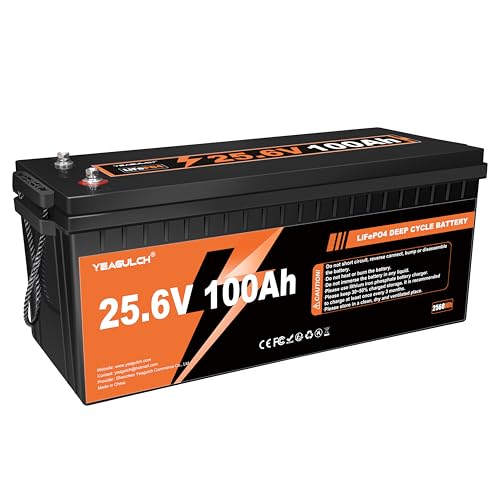
- yeagulch 24V 100Ah LiFePO4 Lithium Battery
- Dyness 24V 100Ah LiFePO4 Lithium Battery
- yeagulch 24V 314Ah LiFePO4 Lithium Battery
- SUPER EMPOWER 12V 100Ah LiFePO4 Battery, Group 24 — prose-only, a 12-volt battery, not 24V
- VEMDIA 12V 100Ah LiFePO4 Battery, Group 31 — prose-only, a 12-volt battery, not 24V
Read the full guide ↓ for the detailed reviews, the runtime maths, and the wiring and charging checks that separate a full day of thrust from a long paddle home.
A 24-volt trolling motor is a commitment to serious fishing. Anglers step up from 12 volts when the boat gets bigger, the wind gets ruder, or the water starts moving — and the best 24 volt trolling motor battery is the partner that commitment requires: a deep-cycle bank that can deliver strong current for hours, hold its voltage while it does so, and recharge overnight ready to do it again. Everything about the purchase follows from that job description, and every disappointment in this category comes from buying something that was never built to meet it.
Unlike the lithium-specific version of this question, this keyword leaves the chemistry open, so the guide judges every pick on the same three tests: is it truly 24 volts, is it deep-cycle equipment sized for propulsion, and does its documentation support trolling duty? Three batteries pass all three. Two more pass everything except the voltage — they are genuine trolling batteries for the 12-volt world, reviewed here because half the anglers reading this page will end up owning one half of a series pair, or will discover their motor is a 12-volt model after all. And one small pack passes the voltage test and fails the job entirely, which makes it the most instructive pick on the page.
Throughout, every specification comes from the verified listing titles in our research pool, and nothing is invented to fill a gap. Anglers planning the full electrical refit will also want the accessory discussion at Best 24 Volt Trolling Motor Battery Disconnect Switch, because a bank this size deserves a proper disconnect, and the sizing logic in this guide pairs naturally with it.
Key Takeaways
- Three picks are linked, all true 24-volt LiFePO4 deep-cycle batteries: the yeagulch 100Ah, the Dyness 100Ah, and the yeagulch 314Ah.
- The two 100Ah picks store 2560Wh each — the conventional full-day class for a 24-volt motor. Choose between them on documented application focus versus documented expansion.
- The 314Ah pick stores 8038.4Wh with a 200A BMS, for big boats, long days, and multi-day trips; it is a scale decision, not a default.
- Two picks are honest 12-volt trolling batteries. They cannot run a 24-volt motor alone; their roles are 12-volt motors and matched series pairs.
- One pick is a 5Ah hobby pack. It shares the voltage and nothing else, and it is reviewed unlinked so you recognise it in search results.
In this guide
Quick Picks
| Pick | Badge | Why it is here | Link |
|---|---|---|---|
| Xeanerol 24V 5Ah Lithium Battery | Best for RC and LED Projects | A compact pack with fast charger for RC cars, LED strips, and CCTV. | Prose-only — not a trolling battery |
| yeagulch 24V 100Ah LiFePO4 | Best Overall | True 24V deep-cycle whose title names trolling motors first among its uses. | Check on Amazon |
| Dyness 24V 100Ah LiFePO4 | Best Deep-Cycle All-Rounder | True 24V marine deep-cycle with a stated expansion path, for boats that share a bank across jobs. | Check on Amazon |
| yeagulch 24V 314Ah LiFePO4 | Best for Long Days on Big Water | 8038.4Wh and a 200A BMS in one unit, for maximum time and thrust between charges. | Check on Amazon |
| SUPER EMPOWER 12V 100Ah LiFePO4, Group 24 | Best 12V Trolling Alternative | A trolling-titled 100Ah deep-cycle battery for 12-volt motors and series pairs. | Prose-only — 12V, not 24V |
| VEMDIA 12V 100Ah LiFePO4, Group 31 | Best 12V for Solar, RV, and Marine | A 100Ah deep-cycle battery whose stated world is solar, home energy, RV, and marine. | Prose-only — 12V, not 24V |
How These Picks Were Chosen
We selected the six batteries from a verified research pool checked through the Amazon Creators API, so every product name, voltage, capacity, and feature in this guide comes from a real listing title. We then applied the keyword’s tests in order. Voltage first, because a 24-volt motor admits no negotiation. Duty class second, because propulsion is a deep-cycle, high-current, hours-long job that hobby packs and starting batteries are not built for. Documented application third, because a title that names trolling motors — or that describes a marine deep-cycle battery of exactly this class — is the best public evidence that the maker designed and supports the unit for this work.
Two linked picks name trolling motors in their titles, and both are yeagulch units at opposite ends of the capacity scale: a 100Ah standard and a 314Ah heavyweight. The third linked pick, the Dyness, names marine, RV, and solar service and is a deep-cycle battery of precisely this voltage, capacity, and management class; under the multi-purpose deep-cycle rule we apply across this cluster, a battery of that description belongs in a trolling shortlist, and its review says plainly that trolling is not named in its title so you can weigh that fact yourself. Transparency about the basis of a recommendation is worth more than a false show of certainty.
The prose-only picks each fail exactly one test, and the failures map the category’s traps. The two 12-volt batteries fail voltage while passing everything else — they are what a hurried buyer orders by mistake, and what a deliberate buyer orders as a pair. The Xeanerol pack passes voltage and fails the job, which is the more dangerous failure because it is the less obvious one. This is a research-led guide built on verified listing data; we claim no hands-on testing, and we print no prices or fixed ratings, both of which change constantly on marketplace listings. Check the latest price on Amazon for any pick you shortlist, and read current owner feedback there as one input among several.
The 6 Best 24 Volt Trolling Motor Battery Options, Reviewed Honestly
Xeanerol 24V 5Ah Lithium Battery
Badge: Best for RC and LED Projects
Strengths
- A genuine 24-volt li-ion pack, complete with a 2A fast charger and cable connector, ready for hobby projects out of the box.
- Its title is honest about its world: RC cars, LED light strips, CCTV cameras, and DIY builds.
- Light and compact in a way no propulsion battery can be, which is precisely its purpose.
Trade-offs
- 5Ah against a trolling motor’s appetite is minutes, not a fishing day — the capacity gap is roughly twentyfold against the standard picks here.
- No deep-cycle design, no propulsion-class discharge capability, and no marine suitability is stated or exists.
- Hobby connectors and construction would not survive a battery compartment’s spray and vibration.
Spec box (from the verified listing title): Voltage 24V; Capacity 5Ah; Chemistry li-ion; Charger 2A fast charger included; Connection cable connector; Stated uses include 24-volt DIY projects, RC cars, LED light strips, and CCTV cameras.
Start the reviews with the impostor, because clearing it away sharpens everything that follows. This is a perfectly decent little battery for the jobs printed on its own title, and if your household includes an RC enthusiast or a lighting project, it may already have a happy home waiting. What it does not have is any relationship to moving a boat. A trolling motor at working throttle draws in an hour what this pack stores in total, several times over, and its construction assumes a workbench, not a bow compartment.
It earns its unlinked place in this guide because search results are voltage-blind. Type this keyword into a marketplace and packs like this one will be served to you by the number alone, wearing the right voltage like a borrowed coat. Now you know the coat’s owner. Buy it for the RC car with a clear conscience, and keep scrolling when the boat is the project.
Best for: RC cars, LED strips, CCTV, and DIY electronics / Not suited for: any propulsion duty whatsoever
yeagulch 24V 100Ah LiFePO4 Lithium Battery
Badge: Best Overall
Strengths
- The title leads with trolling motors: this is a true 24-volt, 100Ah, 2560Wh deep-cycle battery documented for exactly the job in the keyword.
- A built-in 100A BMS gives the protection ceiling this class of motor expects, with low-temperature cutoff protection stated.
- UN38.3 and UL1973 certifications are stated, and the use list extends to off-grid, solar, RV, and marine, so the same bank can serve the whole property.
Trade-offs
- No waterproof rating is stated in the title; on an open boat, give it a dry, secured mounting and spray protection.
- One unit is one point of failure, as with every single-battery architecture.
- 100Ah is the right day for most anglers, not every angler; big-water, all-day, high-throttle fishing is the 314Ah pick’s argument.
Spec box (from the verified listing title): Voltage 24V; Capacity 100Ah; Energy 2560Wh; BMS 100A built in; Stated cycles 15000+ deep cycles; Low-temperature cutoff protection stated; Certifications UN38.3 and UL1973 stated; Stated uses include trolling motors, off-grid, solar, RV, and marine.
This is the recommendation for the typical 24-volt angler, and its case is the alignment of every layer of the decision. The voltage is right in a single case, so the installation is one battery, one charger profile, one protection system. The capacity is the class standard that decades of 24-volt systems were sized around, now delivered with lithium’s deep usable capacity and flat discharge curve, which together mean strong thrust in the last hour that lead-acid never offered. The documentation names the job in the keyword before it names anything else. And the certifications and cold protection close the file on safety and season length.
On the water, what that adds up to is a day that feels simpler than the 12-volt-pair era ever did. No balance checks between paired units, no wondering which half is ageing faster, no mid-season surprise where one tired battery drags its partner down. The management system watches the whole bank as one organism, because it is one. For a new installation, or a conversion from a fading lead-acid pair, this is the clean-sheet answer against which the other picks in this guide should be measured — the all-rounder for capacity, the heavyweight for endurance, the pair route for flexibility.
Its honest limitation is the unglamorous one shared by its class: it asks to be installed properly. Dry and secured mounting, correct cable and breaker sizing per the motor maker, a lithium-profile 24-volt charger, and respect for the cold-charge cutoff. None of that is difficult, and all of it is repaid daily.
Best for: most 24-volt trolling installations, new or converted / Not suited for: anglers whose honest runtime audit demands heavyweight capacity
Check on Amazon to see the current listing for the yeagulch 24V 100Ah LiFePO4, confirm dimensions and stated applications, and read the most recent owner feedback.

Dyness 24V 100Ah LiFePO4 Lithium Battery
Badge: Best Deep-Cycle All-Rounder
Strengths
- A true 24-volt, 100Ah, 2560Wh deep-cycle battery with a smart 100A BMS — the full class specification for 24-volt propulsion and house duty.
- Marine service is stated in the title, and the title documents an expansion path — 4P2S connection up to 20.48kWh — that no rival in this guide matches.
- A stated 10-year lifetime frames it as the infrastructure pick for owners who build a system once and grow it.
Trade-offs
- Trolling motors are not named in the title; the recommendation rests on its marine deep-cycle class, and we say so openly rather than dressing it up.
- Its stated cycle figure of 4000+ is lower on paper than rivals’ headline figures, though all such figures come from differing manufacturer test conditions.
- No waterproof rating or named certifications are stated in the title.
Spec box (from the verified listing title): Voltage 24V; Capacity 100Ah; Energy 2560Wh; BMS smart 100A; Stated cycles 4000+ deep cycles; Stated lifetime 10 years; Expansion 4P2S connection up to 20.48kWh; Stated uses include marine, RV, and solar.
Consider the boat that does more than troll. It cruises to a mooring and runs lights and a fridge at anchor; it may spend winters as the backup bank for a cabin; its owner thinks in systems rather than in single accessories. The Dyness is that owner’s pick in this guide: a marine deep-cycle battery of exactly the trolling class — same voltage, same capacity, same energy, same management ceiling as the Best Overall pick — whose documentation reaches beyond any single job toward a whole electrical life, including a stated route to a bank eight times its size.
For pure trolling duty, the honest comparison with the yeagulch 100Ah is a trade of documented emphases. The yeagulch names your motor; the Dyness names your future expansion. If your boat is a dedicated fishing platform, the first emphasis probably wins. If the bank will grow — a second unit next season, a cabin system the year after — the second emphasis is worth real money, because matched expansion later depends on the path being designed in now. Either way you are choosing between two fully qualified batteries, and this guide’s job is to make the basis of the choice visible, which we have done in the open, including the one fact that cuts against this pick.
Best for: multi-role boats and owners planning a growing 24V bank / Not suited for: buyers who want trolling motors named in the title before anything else
Check on Amazon to see the current listing for the Dyness 24V 100Ah LiFePO4, confirm the expansion details, and read the most recent owner feedback.

yeagulch 24V 314Ah LiFePO4 Lithium Battery
Badge: Best for Long Days on Big Water
Strengths
- 8038.4Wh in a single 24-volt unit, with trolling motors named in the title — more than three standard banks in one case, for the longest days and the biggest boats.
- A 200A BMS doubles the standard protection ceiling, matching heavy motors and hard, sustained throttle work.
- UL 1973 and UN38.3 certifications and low-temperature protection are stated, completing a serious specification.
Trade-offs
- Weight and size demand a planned installation: a strong, low mounting position and a two-person lift, not an afterthought in a cramped bow.
- Capacity beyond your audit is money and weight carried for nothing; most freshwater anglers are honestly served by 100Ah.
- Charging it fully overnight needs a charger with the output to match; a small charger turns refills into a two-day event.
Spec box (from the verified listing title): Voltage 24V; Capacity 314Ah; Energy 8038.4Wh; BMS 200A; Stated cycles 15000+ deep cycles; Certifications UL 1973 and UN38.3 stated; Low-temperature protection stated; Stated uses include trolling motors, RV, marine, solar, backup power, and off-grid.
Some fishing days are simply bigger than the standard bank. A tournament angler running spot-lock against current from dawn to weigh-in, a guide boat that cannot plug in between clients, a multi-day trip beyond the reach of shore power — for these, runtime is not a comfort but the product itself, and this battery is the product. Three standard banks’ worth of energy in a single managed unit means no parallel wiring, no balance questions, and a discharge curve that stays in its strong early territory long after a 100Ah bank would be into its reserves.
The supporting specification matters as much as the headline. A bank this size behind a small management system would be a sports car on bicycle brakes; the stated 200A ceiling is the correct, matched engineering, giving heavy 24-volt motors their full current with protection headroom to spare. The certifications and cold protection close out the file. What remains is fit: measure the compartment, plan the lift, size the charger to the bank, and be honest that this is a purchase for a demonstrated need. Anglers with that need will find it transformative. Anglers without it will find the 100Ah picks above to be the same quality at a third of the commitment, and should buy those with equal confidence.
Best for: tournament, guide, and big-water anglers, and multi-day trips away from shore charging / Not suited for: typical day-trip freshwater fishing, where 100Ah is the honest size
Check on Amazon to see the current listing for the yeagulch 24V 314Ah LiFePO4, confirm dimensions and weight, and read the most recent owner feedback.
SUPER EMPOWER 12V 100Ah LiFePO4 Battery, Group 24
Badge: Best 12V Trolling Alternative
Strengths
- A genuine trolling battery in its own class: 100Ah, 1280Wh, Group 24 deep-cycle, with trolling motors named in the title.
- Expansion support to 4P4S and up to 20.48kWh is stated, explicitly contemplating series builds like a 24-volt pair.
- A 100A BMS and low-temperature cutoff match the protection standard of the 24-volt picks.
Trade-offs
- Twelve volts. Alone, it cannot run a 24-volt motor; as a pair, it brings matched-pair discipline and double the terminals.
- Group 24 is the smaller standard case, which helps fit but fixes capacity at this class.
- Everything said about series pairs applies: buy together, charge in balance, retire together.
Spec box (from the verified listing title): Voltage 12V; Capacity 100Ah; Energy 1280Wh; BMS 100A; Format Group 24 deep cycle; Low-temperature cutoff stated; Expansion supports 4P4S, up to 20.48kWh; Stated uses include RVs and trolling motors, marine, and solar.
Half the readers of this guide will, at some point, own this battery or its twin — because the series pair built from units like it was the standard 24-volt lithium architecture for years, and because as a 12-volt trolling battery it is simply well specified. The stated expansion support is the detail that matters most: the maker has designed the management system to live in series and parallel arrangements, which is the permission slip a pair-builder needs and should never assume without reading.
Its place here is therefore honourable but bounded. If your motor turns out to be a 12-volt model — check the plate before ordering anything — this review just became your shortlist. If you are deliberately building a pair for flexibility or because one unit is already aboard, buy its matched twin at the same time from the same listing. And if you want one battery that answers this keyword directly, the linked picks above exist precisely so that you do not have to build anything at all.
Best for: 12-volt trolling motors, and deliberate matched-pair 24V builds / Not suited for: single-battery 24-volt installations
VEMDIA 12V 100Ah LiFePO4 Battery, Group 31
Badge: Best 12V for Solar, RV, and Marine
Strengths
- Full 100Ah deep-cycle capacity in a Group 31 case, with a built-in 100A BMS and a stated 15000-cycle design figure.
- Its stated world — solar systems, home energy, RVs, marine — covers the house-bank and cross-over duties many boat owners also need covered.
- Lithium iron phosphate chemistry with the flat discharge behaviour that makes it attractive wherever it is installed.
Trade-offs
- Twelve volts, so it fails this keyword’s first test, as its fellow 12-volt pick does.
- Trolling motors are not named in its title; its documented centre of gravity is solar and house energy rather than propulsion.
- As a series-pair candidate it lacks the explicit expansion statement the SUPER EMPOWER pick carries, so pair-builders should confirm limits on the listing.
Spec box (from the verified listing title): Voltage 12V; Capacity 100Ah; BMS 100A built in; Format Group 31; Stated cycles 15000 deep cycles; Chemistry lithium iron phosphate; Stated uses include solar systems, home energy, RVs, and marine.
The final pick is the guide’s generalist: a full-size 12-volt deep-cycle battery aimed at the solar-and-RV world, with marine service in its list. On a boat, its natural job is the house bank on a 12-volt system, or quiet service in the RV that tows the boat — roles it is documented and built for. As a trolling candidate it is the weakest of the three 100Ah-class alternatives here, not on quality but on documentation: propulsion is not its stated centre, and its voltage is wrong for this keyword regardless.
It closes the guide with the same lesson the first pick opened with, from the opposite direction. The Xeanerol had the right voltage and the wrong job; this VEMDIA has nearly the right job and the wrong voltage. Compatibility is a complete sentence, not a single matching word, and the three linked batteries above are the only picks in the pool that speak it in full.
Best for: 12-volt house banks, solar, and RV duty / Not suited for: 24-volt trolling systems, singly or as an undocumented pair
Comparison Table
| Pick | Badge | Voltage and capacity (from listing title) | Key stated features | Link |
|---|---|---|---|---|
| Xeanerol 24V 5Ah Pack | Best for RC and LED Projects | 24V, 5Ah | Fast charger included; RC and DIY uses stated | Prose-only |
| yeagulch 24V 100Ah LiFePO4 | Best Overall | 24V, 100Ah, 2560Wh | 100A BMS; trolling named in title; UN38.3 and UL1973 stated | Check on Amazon |
| Dyness 24V 100Ah LiFePO4 | Best Deep-Cycle All-Rounder | 24V, 100Ah, 2560Wh | Smart 100A BMS; 4P2S expansion to 20.48kWh stated; marine stated | Check on Amazon |
| yeagulch 24V 314Ah LiFePO4 | Best for Long Days on Big Water | 24V, 314Ah, 8038.4Wh | 200A BMS; trolling named in title; UL 1973 and UN38.3 stated | Check on Amazon |
| SUPER EMPOWER 12V 100Ah LiFePO4 | Best 12V Trolling Alternative | 12V, 100Ah, 1280Wh | 100A BMS; 4P4S expansion stated; trolling named in title | Prose-only |
| VEMDIA 12V 100Ah LiFePO4 | Best 12V for Solar, RV, and Marine | 12V, 100Ah | 100A BMS; 15000 cycles stated; solar and marine stated | Prose-only |
How to Choose a 24 Volt Trolling Motor Battery
Confirm the motor first. Read its voltage plate or manual, note its maximum current draw, and let those two facts govern everything. A 24-volt motor takes a 24-volt bank — one true 24-volt battery, or a matched series pair of 12-volt units — and the bank’s management ceiling must clear the motor’s maximum draw with margin, because starting thrust, wind gusts, and a weed-fouled prop all ask for current in bursts. The linked picks’ 100A and 200A ceilings are the classes to compare your motor against.
Size the bank in watt-hours against your honest day. Multiply voltage by amp-hours — 2560Wh for the standard picks, 8038.4Wh for the heavyweight — then think in terms of throttle hours, not clock hours: an afternoon of gentle positioning is a different purchase from a tournament day of spot-lock in current. Lithium’s deep usable capacity and flat voltage stretch every watt-hour further than lead-acid owners expect, which is why 100Ah at 24 volts is the standard recommendation and why the 314Ah pick should be bought on evidence from your own logbook, not on anxiety.
Then decide the architecture with open eyes. A single 24-volt unit is simpler in wiring, charging, monitoring, and replacement. A series pair is more flexible, splits the lifting, and keeps 12-volt options open, at the price of matched-pair discipline forever. Both are respectable; the only disreputable option is the accidental one — a lone 12-volt battery ordered for a 24-volt motor, or a hobby pack ordered for a boat. This guide exists, in large part, to make those two accidents impossible for its readers.
How to Wire, Charge, and Maintain a 24V Trolling Bank
Wire for current and for the sea. Use the cable size and circuit breaker the motor manufacturer specifies, keep runs short, crimp and seal every terminal, cover every post, and mount the battery so a rough crossing cannot move it. Put a disconnect within reach — the reasoning and the options are laid out at Best 24 Volt Trolling Motor Battery Disconnect Switch — because isolating the bank for storage, service, and the unexpected is part of owning a system this size. For a series pair, connect positive to negative between the units, feed the motor from the two free terminals, start with both units at the same charge, and check their balance through the season.
Charge with a lithium-profile charger matched to 24 volts for a single unit, or the manufacturer-specified arrangement for a pair, and respect the cold rule absolutely: no charging below freezing unless the battery’s stated features allow it, which is why the linked picks’ low-temperature cutoffs should be read as protection, not obstruction. Between trips, a partial charge suits storage better than a brim-full bank left for months, and a dry compartment off a freezing floor completes the courtesy.
Troubleshooting, in the order to try it. Problem: thrust fades or the motor cuts under load → terminals and cables first, then state of charge, then whether protection tripped on a current burst. Problem: one unit of a pair reads a different voltage → stop, separate, and treat the pair as broken until the odd unit is checked; pairs age as one or fail as one. Problem: the charger will not start on a frosty morning → warm the battery and let the protection stand down on its own. And a note for the tinkerers who arrive from the project bench: the complete batteries in this guide are sealed, managed systems, a different species from the loose cells discussed at Best 37 Volt Battery and Best 37 Volt Batteries — admire them, install them, and do not open them.
What a Full Day on 2560Wh Actually Feels Like
Numbers become decisions when they are translated into a day. A standard 100Ah bank at 24 volts, fished the way most anglers fish — bursts of positioning, stretches of slow trolling, long drifts with the motor idle — comfortably spans a full day, and lithium’s flat curve means the last hour’s thrust resembles the first hour’s in a way lead-acid veterans find quietly astonishing. Push the same bank hard — high throttle into wind, spot-lock against a river’s push, a heavy boat on big water — and the day shortens in proportion, which is physics rather than defect. The skill this guide is really teaching is calibration: know which of those days is yours, most of the time, and buy the bank that matches it. The standard picks serve the first day. The heavyweight exists for the second. Both answers are correct, for different logbooks.
Spot-Lock, Current, and the Loads Nobody Budgets For
The feature that changed 24-volt runtime maths is the GPS anchoring mode most modern motors offer — the spot-lock that holds a boat over a waypoint by constantly adjusting thrust. It is a wonderful tool and a quiet battery eater, because unlike a drifting angler’s occasional burst, a motor holding station against wind and current works continuously, sometimes for hours over one piece of structure. Anglers who fish this way should budget for it honestly: a day of aggressive spot-lock in moving water can draw like a day of steady trolling, and it is the single most common reason a standard bank disappoints an owner who sized it from gentle-day memories.
The remedy is not panic; it is accounting. If your style is anchored-over-structure in current, treat your day as a heavy day and let the sizing follow — either the heavyweight pick, or a standard bank with a deliberate reserve you refuse to spend by four o’clock. If your style is shoreline casting with the motor as a positioning tool, the standard bank’s margin is already generous. The battery does not know your intentions; your purchase should. This is also why two anglers with identical boats and identical batteries report wildly different runtimes, and why forum arguments about this category so often talk past each other: they are describing different sports that happen to share a motor.
Converting From a Lead-Acid Pair: What Changes and What Does Not
Most 24-volt lithium buyers are replacing the classic architecture — two lead-acid batteries in series — and the conversion deserves a short field guide. What changes: weight, dramatically, with the new bank at roughly half the old one’s mass and usually in a single case, which returns a battery compartment’s worth of space and takes a meaningful load off the bow. Runtime behaviour changes too, from lead-acid’s long fade to lithium’s plateau-and-cliff, which most anglers prefer once they learn to read a state-of-charge indicator instead of judging by thrust feel. Charging changes: a lithium-profile charger at the correct voltage replaces the old unit, and the cold-charge rule joins the household knowledge.
What does not change is just as important. The motor, its specified breaker, and its cable requirements are untouched — the bank feeds the same system it always fed. The discipline of tight, sealed, covered terminals is untouched. The need for a disconnect is untouched, and a conversion is the natural moment to fit one if the boat never had it. Owners who treat the conversion as a battery swap plus a charger swap, with an hour spent inspecting everything the old installation hid, consistently report the smoothest first seasons. Owners who treat it as a battery swap alone occasionally meet the old installation’s deferred maintenance at the worst possible moment, which is to say, on the water, in weather, with fish feeding.
A Word on Weight, Balance, and the Bow
One under-discussed benefit runs through every linked pick in this guide: a 24-volt lithium bank weighs roughly half of the lead-acid pair it typically replaces, and it usually concentrates that smaller mass in a single case you can position deliberately. On a bass boat or a centre-console, weight in the bow is not an abstraction — it shapes how the hull rides, how quickly it comes onto plane, and how the motor’s thrust translates into control at low speed. Owners converting from lead-acid often report that the boat simply feels tidier: less bow-heavy at rest, easier to trim, and kinder to the trailer and the winch at the ramp. None of this appears on a specification sheet, and none of it should decide a purchase alone, but when two batteries tie on the numbers — as the two 100Ah linked picks nearly do — the installation you will live with, lift, and balance for a decade is a legitimate final argument.
Common Buying Mistakes
- Ordering one 12-volt battery for a 24-volt motor. Check the motor’s voltage plate before any listing. This remains the category’s most common and most avoidable error.
- Trusting voltage alone. A 5Ah hobby pack is a 24-volt battery the way a bicycle is a vehicle with two wheels — true, and useless for the motorway. Duty class and capacity must match too.
- Comparing amp-hours across voltages. 100Ah at 24 volts stores twice the energy of 100Ah at 12 volts. Watt-hours are the honest comparison.
- Buying heavyweight capacity on anxiety. The 314Ah pick is magnificent and, for most day-trip anglers, unnecessary. Let your logbook, not your worry, size the bank.
- Skimping on the charger and the disconnect. A lithium bank deserves a lithium-profile charger at the right voltage and a way to isolate it. Budget for the system, not just the battery.
- Charging a frozen battery. The cutoff exists because cold charging does permanent damage. Warm first, charge second.
Final Recommendation
For most anglers, the recommendation is the yeagulch 24V 100Ah (Check on Amazon): a true single-unit 24-volt battery whose title names trolling motors first, with the class-standard energy, protection ceiling, certifications, and cold safeguards the job requires. Choose the Dyness 100Ah (Check on Amazon) instead if your bank will live several lives — marine, RV, solar — or grow along its stated expansion path. Choose the yeagulch 314Ah when your logbook proves the long-day case, and choose the series-pair route from the SUPER EMPOWER units when flexibility matters more than simplicity. Leave the VEMDIA to the house-bank and solar work it documents, and the Xeanerol to the RC bench it was built for. Buy the battery your motor’s plate and your fishing diary agree on, install it like you mean it, and spend the saved worry on the water.
Related guides
Frequently Asked Questions
How long will a 24V 100Ah battery run my trolling motor?
It stores 2560Wh, and real runtime depends on throttle, wind, current, and hull. Fished conventionally — positioning bursts, slow trolling, drifting — it is a full-day bank for most freshwater anglers, with lithium’s flat discharge keeping thrust strong deep into the day. Constant high throttle shortens any bank’s day proportionally.
Can I use two 12V batteries instead of one 24V battery?
Yes — wired in series, a matched pair of 12-volt deep-cycle batteries is the traditional 24-volt architecture and stores the same energy at the same capacity. The pair must be the same model, bought and aged together, and charged in balance. A single 24-volt unit trades that flexibility for simplicity.
Why is a 24V hobby pack not suitable if the voltage matches?
Because a trolling motor needs capacity measured in hundreds of watt-hours delivered for hours, deep-cycle construction, and a protection system rated for propulsion current. A 5Ah RC pack has none of those; the shared voltage number is the only thing it has. The cell-level guides at Best 37 Volt 18650 Battery show the same principle at the opposite end of the size scale: format and duty define a battery, not one number.
What size breaker and cables does a 24V trolling battery need?
The ones your motor manufacturer specifies — that document, not a generic guide, governs, because it knows the motor’s maximum draw. Use the specified protection close to the battery, marine-grade cable of the specified size, and sealed, covered terminals throughout.
Do I need a special charger for lithium trolling batteries?
Yes: a charger with a lithium profile matched to your system — 24 volts for a single unit, or the maker-specified arrangement for a series pair. Keep the cold rule as well: no charging below freezing unless the battery’s stated features explicitly permit it.
Should my electronics share the trolling bank?
They can, and many boats wire them that way, but a hard-working motor and a sensitive fish finder are not natural bankmates: heavy thrust can tug the voltage around in ways screens dislike, even on a lithium bank with its characteristically steady output. The common refinement is a small, separate electronics battery — the compact deep-cycle class reviewed in our companion guides — leaving the 24-volt bank to propulsion alone. It is an optimisation, not a requirement, and plenty of anglers run everything from one bank happily; but if your screens flicker or reboot when you lean on the throttle, separate the economies before you blame either battery.
How do I know if my motor is 12-volt or 24-volt?
Read the motor, not the memory. The voltage is stated on the motor’s specification plate and in its manual, and the boat’s existing battery wiring is the physical clue: a single battery feeding the motor suggests 12 volts, while two batteries wired positive-to-negative in series indicate a 24-volt system. If the boat is new to you, trace the cables before you order anything; five minutes with a flashlight has saved more anglers from the wrong-battery mistake than any guide, including this one, ever will.
Is the 314Ah battery worth it for a weekend angler?
For most weekend day-trippers, no — the 100Ah class covers a full honest day, and the surplus capacity would be weight and cost carried for rare occasions. It earns its place for tournament, guide, big-water, and multi-day use, where runtime is the product being bought.
