Disclosure: topratedkitchenware.com is reader-supported. When you buy through links on our site, we may earn an affiliate commission from Amazon and other retailers, at no extra cost to you.
Where to buy
The best rv ice makers solve a problem every RV owner knows: the little freezer in a motorhome or travel trailer makes a handful of cubes at a time, and a warm afternoon with cold drinks in mind will defeat it before the ice even forms. The six verified countertop machines below are the portable, plug-in answer — sized for RV counters, several of them listed explicitly for RV use, all of them happy on a campground hookup — and every link lets you check the latest price on Amazon before you buy.
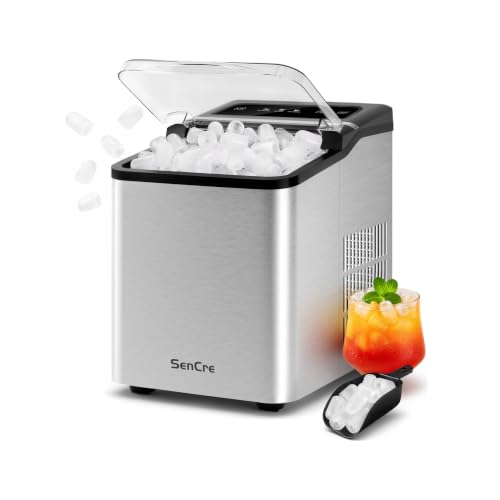
- Sencre Ice Makers Countertop, 26.5 lbs — listed for RV use, nine bullet cubes in about six minutes
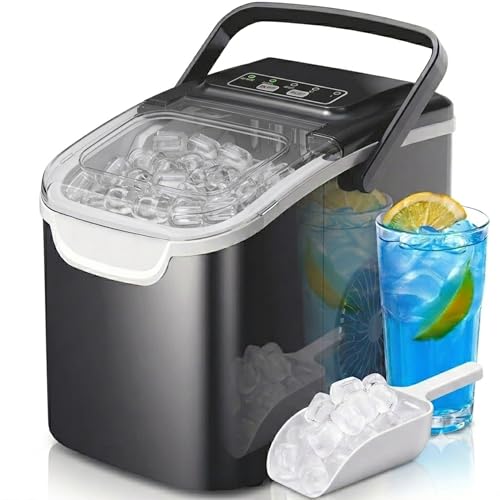
- Silonn Ice Maker Countertop with Carry Handle — the travel-shaped pick, listed for camping and RV use
- Crzoe Countertop Ice Maker — a straightforward bullet machine for the RV galley
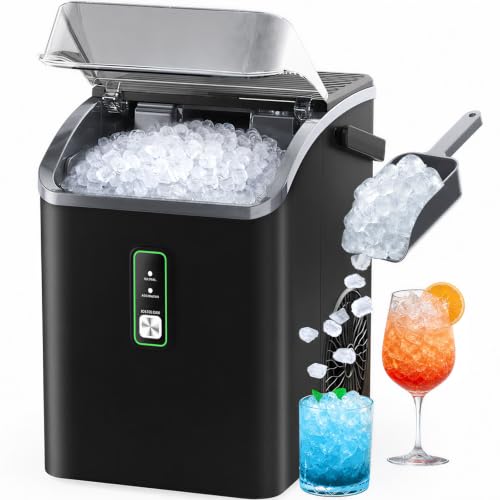
- EUHOMY Nugget Ice Maker Countertop, 35 lbs, Stainless — nugget ice for long stays at full-hookup sites
- Silonn Nugget Ice Maker Countertop with Carry Handle — first nugget ice in about five minutes, compact with a handle
- Kismile Nugget Ice Maker Countertop, Stainless Steel — the quiet pick for small sleeping spaces
Read the full guide ↓ for the RV-specific realities the home guides skip: hookup power, inverter homework, level counters in unlevel campsites, securing a machine for travel days, and cleaning with a limited water supply.
An RV changes the ice equation completely. At home, a countertop ice maker is a convenience competing with a full-size freezer. In a rig, it is a rescue: RV freezers are small, slow, and shared with actual food, and the alternative — buying bagged ice at campground stores — means a drive, a melting bag, and a cooler that needs re-icing every day of the trip. A portable electric ice maker that lives on the galley counter and turns your water supply into a fresh batch every few minutes rewrites the whole routine. Drinks stay cold at the campsite, the cooler gets topped up from your own production, and the freezer goes back to being a freezer.
The six picks here are all countertop machines that fill by hand and plug into a standard outlet, which is exactly the format RV life wants: no plumbing into the rig’s water system, no installation, and a machine that can move from galley counter to picnic table to home kitchen between trips. Two of them — the Sencre and the Silonn bullet model — name RV use in their verified listings outright. The rest earn their place on RV-relevant merits: a carry handle and compact body on the Silonn nugget, a stated quiet operating figure on the Kismile for rigs where the kitchen is also the bedroom, and nugget output on the EUHOMY for long stays where the machine runs at a full-hookup site for weeks. Output runs from 26 lbs to 36 lbs per day, cycle times are about six minutes for the bullet models, and every pick is self-cleaning — a feature that matters even more when your water comes from a tank or a campground spigot.
Key Takeaways
- All six picks are portable countertop machines: hand-filled, standard outlet, no plumbing — the only format that moves between RV, picnic table, and home without installation.
- The Sencre and Silonn bullet models are listed for RV and camping use in their own verified listings; the Silonn’s carry handle makes it the natural travel pick.
- Bullet models drop 8 or 9 cubes about every 6 minutes; nugget models produce first ice in about 5 to 7 minutes on the picks here.
- Power is the RV discipline: run on hookup power freely, and for inverter or generator use, size the supply from the model’s rating label — never from a guess.
- Travel days are storage days: empty the reservoir, let the machine ride secured and upright, and give it a rest before restarting at the next site.
- Quiet matters in a rig. The Kismile’s listing states a 43 dB operating figure, the only quantified noise claim in this group, and small sleeping spaces will feel the difference.
In this guide
Quick Picks
- Best Overall for RV — Sencre Ice Makers Countertop. 26.5 lbs per 24 hours, 9 cubes in about 6 minutes, two bullet sizes, self-cleaning, scoop and basket, listed for home, kitchen, office, bar, and RV use. Check on Amazon
- Best for RV Travel — Silonn Ice Maker Countertop with Carry Handle. 26 lbs per day, 9 cubes in about 6 minutes, self-cleaning, basket and scoop, listed for home, kitchen, camping, and RV use. Check on Amazon
- Best Simple Galley Pick — Crzoe Countertop Ice Maker. 26 lbs per 24 hours, 8 bullet cubes in about 6 minutes, two ice sizes, self-cleaning, black finish. Check on Amazon
- Best Nugget for Long Stays — EUHOMY Nugget Ice Maker Countertop, 35 lbs, Stainless. 35 lbs per 24 hours of chewable nugget ice, first ice in about 7 minutes, self-cleaning, scoop and basket. Check on Amazon
- Best Fast Nugget for RV — Silonn Nugget Ice Maker Countertop with Carry Handle. 36 lbs per 24 hours, first ice in about 5 minutes, soft chewable nugget ice, self-cleaning, compact with a carry handle. Check on Amazon
- Best Quiet Pick for Small Rigs — Kismile Nugget Ice Maker Countertop. 35 lbs per day, stainless steel, first ice in about 7 minutes, stated 43 dB quiet operation, one-touch self-cleaning, positioned for home and office — and ideal where the kitchen is feet from the bed. Check on Amazon
A note on the internal-link neighbors for this guide: RV shoppers often research dessert machines in the same breath, because a rig’s kitchen gets planned all at once. Ice makers and ice cream makers are different appliances — one freezes drinking water, the other churns dessert — and the distinction is covered properly in the comparison section below, with pointers to Best Ice Cream Makers For Beginners and Best Ice Cream Makers For Kids for readers whose campsite plans include the sweet kind of frozen. This guide stays on drink ice, which is the daily-driver need.
How These Picks Were Chosen
This is a research-led guide, and every pick was cross-checked against its verified listing before receiving a link. Every figure in this article — daily output, cubes per cycle, first-ice times, the Kismile’s stated noise figure — comes from that verified data. We do not print prices, and we do not invent the specifications RV buyers most want to see, such as weights and wattages, when the verified listings do not state them. For power sizing, this guide will repeatedly send you to the model’s rating label, because that label — not an article — is the safe source for the number your inverter or generator must meet.
The filters were RV-shaped. First, format: portable countertop only, hand-filled, no plumbing, because a machine that needs installation is not an RV appliance in any practical sense. Second, travel realism: handles, compact footprints, and listings that name RV or camping use scored heavily, because a machine that lives in a rig gets carried, stowed, and re-set-up constantly. Third, power humility: every pick is a standard countertop electric that runs from ordinary outlets, so hookup use is effortless and inverter use is a label-check away. Fourth, hygiene: self-cleaning across all six picks, because RV water comes from tanks and spigots of varying quality, and the cleaning cycle is the owner’s main defense. Both ice styles were kept, because the bullet-versus-nugget argument happens in RV kitchens exactly as it does at home — with the added RV twist that nugget’s faster melt matters more when the “bar” is a picnic table in the sun.
The 6 best rv ice makers, reviewed

Sencre Ice Makers Countertop, 26.5 lbs
Badge: Best Overall for RV
Strengths
- RV use is named in its own verified listing, alongside home, kitchen, office, and bar.
- Nine cubes in about six minutes — quick batches that suit campsite rhythms.
- Two bullet sizes, self-cleaning, and scoop and basket included; 26.5 lbs per 24 hours covers a rig’s daily drinks and cooler top-ups.
Trade-offs
- Bullet ice in a hot cooler melts faster than dense bagged ice; top up little and often.
- Reservoir refills come from your fresh water supply — production shares the tank with everything else.
- No nugget mode for the pebble-ice fans in the family.
Mini spec box: Ice style: bullet, two sizes · Output: 26.5 lbs per 24 hours · Cycle: 9 cubes in about 6 minutes · Cleaning: self-cleaning · Accessories: scoop and basket · Listed settings: home, kitchen, office, bar, RV
The Sencre leads this guide because it does not need an argument made for it: its listing already speaks RV. The performance underneath is the right shape for a rig — a fast nine-cube cycle that produces a round of drinks between docking and dinner, output that covers a couple or small family with cooler duty on top, and two bullet sizes so the small ones slip into the water bottles that go on hikes.
Life with it in a rig settles into a simple pattern. Set up, level the rig, fill the machine from the jug or the filtered supply you trust, and start it when you start setting up camp; by the time chairs are out, the first batches have dropped. During travel days it rides empty and secured, and it earns a short upright rest at the new site before its compressor restarts — standard care for any refrigeration appliance that has been on the road. Run its self-cleaning cycle with particular discipline on trips, because tank water and campground water vary in ways home tap water does not.
Its honest limitation is water arithmetic. Every pound of ice is a pound of your fresh water, and dry-camping households must budget production against showers and dishes. On hookups, that constraint vanishes; off them, make ice deliberately, not continuously.
Best for: most RV households wanting a listed-for-RV machine with fast bullet cycles / Not suited for: nugget devotees or dry campers with very limited water

Silonn Ice Maker Countertop with Carry Handle
Badge: Best for RV Travel
Strengths
- The carry handle is the design’s center — this machine is built to be lifted between galley, picnic table, and storage bay.
- Listed for home, kitchen, camping, and RV use, with full bullet performance: 9 cubes in about 6 minutes, 26 lbs per day.
- Self-cleaning, with basket and scoop included.
Trade-offs
- Portable means plug-in: it needs hookup power or a properly sized inverter/generator supply.
- Needs an upright rest after road days before restarting.
- Household-class output; a big group at one campsite will outpace it without ice banked ahead.
Mini spec box: Ice style: bullet · Output: 26 lbs per day · Cycle: 9 cubes in about 6 minutes · Cleaning: self-cleaning · Accessories: basket and scoop · Extras: carry handle · Listed settings: home, kitchen, camping, RV
If your RV style is motion — new site every few days, machine living in a storage bay between stops, ice served at the picnic table as often as in the galley — the Silonn bullet model is shaped for your life. The handle sounds cosmetic until the third time you carry the machine one-handed while holding a door, a dog lead, or a flashlight. Its listing’s camping and RV framing matches the hardware.
The travel routine is worth stating once, clearly, because it protects the machine: empty the reservoir before moving, carry by the handle with the lid closed, stow it upright and secured so it cannot slide, and at the next site set it level, let it rest, then fill and start. Electrically, treat campsite pedestals as the easy case and any inverter plan as a label-check case — read the rating label, size the supply to it, and never assume a small inverter shrugs off a compressor’s starting demand.
The limitation is the portable-electric boundary itself: no suitable power, no ice. Inside that boundary, this is the most naturally nomadic machine in the guide.
Best for: traveling RVers, campers with hookups, and anyone who stows the machine between stops / Not suited for: off-grid boondocking without a properly sized power system

Crzoe Countertop Ice Maker
Badge: Best Simple Galley Pick
Strengths
- Straightforward bullet fundamentals: 8 cubes in about 6 minutes, two sizes, 26 lbs per 24 hours.
- Self-cleaning included — important when the water supply is a tank.
- Black finish and a compact countertop format that suits small galley counters.
Trade-offs
- Its listing names home, kitchen, office, and party rather than RV — it is here on format and function, so check dimensions against your counter carefully.
- No carry handle is listed, so moving it takes two hands and a little more care.
- Bullet-only output, in line with the other bullet picks.
Mini spec box: Ice style: bullet, two sizes · Output: 26 lbs per 24 hours · Cycle: 8 cubes in about 6 minutes · Cleaning: self-cleaning · Finish: black
The Crzoe is the honest, simple option: a countertop bullet machine that does the galley job without travel-specific branding. For RV owners whose rig has a natural counter home for an ice maker — a spot by the sink with an outlet, where the machine will live semi-permanently through a season — the absence of a handle matters little, and the Crzoe’s steady six-minute rhythm and two sizes cover daily life completely.
We flag its positioning transparently: unlike the Sencre and Silonn above, its verified listing does not claim RV use, so the pre-purchase homework is yours — confirm the footprint and the lid clearance against your galley, and plan its travel-day stowage yourself. None of that is difficult, and thousands of countertop appliances live in rigs on exactly this basis; it simply deserves a sentence of honesty rather than an assumption.
Its limitation is that honesty itself: it is a home machine adopted by an RV, not an RV machine. If your travel style is constant motion, the handled picks fit better; if your style is seasonal parking, the Crzoe is a perfectly sensible galley resident.
Best for: seasonally parked rigs and RV owners with a fixed galley spot / Not suited for: constant-motion travelers who stow the machine daily

EUHOMY Nugget Ice Maker Countertop, 35 lbs, Stainless
Badge: Best Nugget for Long Stays
Strengths
- 35 lbs per 24 hours of soft nugget ice — production that suits weeks-long stays.
- First ice in about 7 minutes, brisk for nugget production.
- Stainless finish, self-cleaning, scoop and basket included.
Trade-offs
- Nugget ice melts fastest of all in a sunny cooler — use it for glasses at the site more than for cooler storage.
- Nugget production earns its output across a running day; it rewards hookup living over battery living.
- No handle is listed; it is a set-it-down machine for a stay, not a daily stow.
Mini spec box: Ice style: nugget / pebble · Output: 35 lbs per 24 hours · First ice: about 7 minutes · Cleaning: self-cleaning · Accessories: scoop and basket · Finish: stainless
Long-stay RV life — the snowbird month, the seasonal site, the work-camping summer — is where nugget ice in a rig stops being a luxury and becomes a routine pleasure. This EUHOMY produces the chewable pebble style at 35 lbs a day, enough for a household that drinks iced drinks from morning to campfire, and its stainless body suits a galley where it will sit visibly for months.
The ownership pattern at a full-hookup site is effortless: water and power are continuous, the machine cycles through the day, and the freezer becomes the bank for surplus. The discipline that remains is hygiene — tank and park water vary, so the self-cleaning cycle and fresh fills matter — and placement, with vents clear in a galley that heats up when the oven runs. Travel days still call for the standard care: empty, secured, upright, rested.
Its limitation is mobility and melt. It is the least travel-shaped pick here and its ice is the fastest-melting; both facts are fine at a long-stay site and limiting on a fast-moving itinerary.
Best for: long-stay and seasonal RVers at hookup sites who love nugget ice / Not suited for: fast itineraries or cooler-first ice strategies

Silonn Nugget Ice Maker Countertop with Carry Handle
Badge: Best Fast Nugget for RV
Strengths
- First nugget ice in about 5 minutes — the fastest start in this guide, and a real gift at a new campsite.
- 36 lbs per 24 hours, the highest output here, in a compact body with a carry handle.
- Soft chewable nugget ice with self-cleaning included.
Trade-offs
- Compact basket fills quickly at full production; empty into the freezer during gatherings.
- Nugget melt rate applies, amplified by outdoor serving.
- Speed and output sit in a higher tier than the simple bullet picks.
Mini spec box: Ice style: nugget, soft and chewable · Output: 36 lbs per 24 hours · First ice: about 5 minutes · Cleaning: self-cleaning · Extras: carry handle, compact countertop size
The Silonn nugget model answers the nugget lover’s travel problem: how to keep the good ice without giving up mobility. It carries like the bullet Silonn — handle, compact body — and starts like nothing else here, with first ice in about five minutes of plugging in at a new site. For families whose campsite ritual is cold drinks within the hour of arrival, that start time is the product.
Its 36 lb daily figure is the guide’s highest, and in an RV that output is best used in the bank-ahead pattern: produce during the day’s hookup hours, freeze bags of nuggets, and draw on the bank at the picnic table in the evening. Keep up the self-cleaning cycle as with all nugget machines, and give it the same travel care — empty, upright, secured, rested — as every pick here.
The limitation is the familiar nugget one, sharpened by sunshine: pebble ice in an outdoor cooler is a topping-up strategy, not a set-and-forget one. For glasses at the site, it is unmatched in this guide.
Best for: nugget-loving RVers who still move regularly / Not suited for: cooler-storage-first campers or the tightest budgets

Kismile Nugget Ice Maker Countertop, Stainless Steel
Badge: Best Quiet Pick for Small Rigs
Strengths
- A stated 43 dB quiet operating figure — in a rig where the bed is feet from the galley, this is a lifestyle feature.
- 35 lbs per day of nugget ice, first ice in about 7 minutes.
- Stainless steel body and one-touch self-cleaning; positioned for home and office use, which translates well to quiet hours anywhere.
Trade-offs
- Its listing does not name RV use; like the Crzoe, it is adopted on merit, so verify your counter fit.
- Quiet engineering sits in a premium tier within the nugget class.
- Nugget melt rate applies as with its nugget siblings.
Mini spec box: Ice style: nugget / pebble · Output: 35 lbs per day · First ice: about 7 minutes · Noise: 43 dB as stated in listing · Cleaning: one-touch self-cleaning · Finish: stainless steel
Small rigs collapse the distance between kitchen and bedroom to almost nothing, and an appliance that cycles through the evening is either quiet or it is off. The Kismile is the pick that treats that as the design brief: a stated 43 dB operating figure, full nugget output, and one-touch self-cleaning in a stainless body. In a van conversion, a small trailer, or a truck camper, those specifications read like they were written for the floor plan.
Practically, quiet buys schedule freedom: run the machine during the evening movie, during a child’s nap in the bunk, during the early morning without waking the rig. Pair that with nugget production banked into the freezer and the Kismile covers a small household’s ice with the least social friction of any pick here. Its listing speaks of home and office rather than RV, so — as with the Crzoe — confirm dimensions against your counter and plan its travel stowage yourself.
The limitation is that quiet is what the premium buys; in a large motorhome with a separated bedroom, the benefit shrinks and the faster or handled nugget picks may serve better. In small rigs, it is the difference between using the machine and apologizing for it.
Best for: vans, small trailers, and any rig where the bed is near the galley / Not suited for: large rigs where noise carries no penalty
Comparison Table
| Pick | Ice style | Output | First / cycle ice | RV note | Link |
|---|---|---|---|---|---|
| Sencre Countertop | Bullet, 2 sizes | 26.5 lbs/24H | 9 cubes in ~6 min | RV named in listing | Check on Amazon |
| Silonn Bullet with Handle | Bullet | 26 lbs/day | 9 cubes in ~6 min | Handle; camping/RV in listing | Check on Amazon |
| Crzoe Countertop | Bullet, 2 sizes | 26 lbs/24H | 8 cubes in ~6 min | Simple fixed galley pick | Check on Amazon |
| EUHOMY Nugget 35 Stainless | Nugget / pebble | 35 lbs/24H | Ready in ~7 min | Long-stay nugget output | Check on Amazon |
| Silonn Nugget with Handle | Nugget, soft chewable | 36 lbs/24H | First ice in ~5 min | Fastest start; handle | Check on Amazon |
| Kismile Nugget Stainless | Nugget / pebble | 35 lbs/day | First ice in ~7 min | Quiet: 43 dB stated | Check on Amazon |
How to Choose an Ice Maker for Your Rig
Start with your travel pattern, because it eliminates half the field honestly. Fast movers — a new site every few days, everything stowed for travel — should buy a handle and a listing that speaks their language: the Silonn bullet for simplicity and speed, the Silonn nugget for pebble ice without surrendering mobility. Long-stay campers should buy output and finish: the EUHOMY nugget for weeks of production, the Kismile if the rig is small and quiet hours matter. Seasonal parkers with a fixed galley spot can adopt the Crzoe or any pick here on pure function. Pattern first, product second, is the order that prevents returns.
Next, do the two RV measurements home buyers skip. Measure the galley counter with the lid’s opening arc in mind and the route the machine will travel from storage to counter — door widths and bay openings included. Then do the power inventory: which outlets are live on hookup, which are live on your inverter, and what the machine’s rating label demands. The label is the only safe source for that figure; size any inverter or generator plan to it, remembering that compressors ask for their most at start-up. If your rig’s answer is “hookups only,” that is a fine answer — it describes most RV ice making — but know it before you buy, not at a dry campsite.
Finally, budget the water. On hookups, production is effectively free of constraint. Dry camping, every batch is fresh water spent, and the wise pattern is deliberate production: fill the cooler in the morning, make the evening’s drink ice in the afternoon, and let the machine rest overnight. Bullet ice stretches further in coolers; nugget ice delights more in glasses. Choose the style your campsite actually consumes, and the machine will feel perfectly sized.
How to Set Up, Run, and Care for an Ice Maker in an RV
- On arrival, level the rig first — the machine needs a level counter to cycle properly.
- Set the machine with vents clear, away from the stove’s heat, on the counter it will live on for the stay.
- If it traveled, let it stand upright for a rest before switching on.
- Rinse the basket and scoop; if the machine sat in storage, run a self-cleaning cycle and discard the first batch.
- Fill from your trusted water — the filtered jug or the supply you drink from — to the marked line.
- Start production while you set up camp; bank early batches into the freezer or cooler.
- Serve with the scoop, top up the reservoir as prompted, and keep the lid closed against campsite heat.
- On travel day: switch off, drain fully, dry, stow upright and secured, scoop washed and stored separately.
Troubleshooting on the road follows the same physics as at home, with RV twists. Problem: production slows at a hot site → shade the machine, clear the vents, start with cool water, and check the rig is level; heat and tilt are the usual culprits. Problem: ice tastes like the tank → drain, self-clean, refill from a trusted jug, and discard a batch; RV water systems reward exactly this discipline. Problem: the machine trips the supply or will not start on inverter power → stop and read the rating label against the inverter’s capacity; a compressor’s start demand is the figure that matters, and undersized supplies are a sizing problem, not a machine fault.
Ice Makers vs Ice Cream Makers at the Campsite
Because RV kitchens are planned in one pass, the two frozen appliances are often researched together, so the distinction deserves one clean section. An ice maker freezes water into cubes or nuggets for drinks, coolers, and food storage — a daily utility. An ice cream maker churns a prepared mix into dessert — an occasional pleasure, and one with its own research trail through Best Selling Ice Cream Makers and roundups like Best Ice Cream Makers Consumer Reports. In a rig, the ice maker earns its counter space first: it works every day, feeds the cooler, and supports every meal. An ice cream maker, if it travels at all, is the second appliance, chosen after the ice supply is solved. Buy in that order and both purchases will feel right.
A Day of Ice in a Rig: Production Planning That Works
The households that love their RV ice maker run it on a loose daily rhythm rather than in emergencies. Morning: start the machine with camp setup or breakfast, and let the first cycles fill the basket while the day organizes itself. Late morning: empty the basket into a freezer bag and into the rig’s freezer — this is the bank — and let production continue. Midday: serve drinks from the basket, top the cooler from the bank if it is a cooler day, and refill the reservoir while you are thinking about it. Afternoon: a second banking round, because the evening is when campsite ice demand peaks and nobody wants to listen to a machine playing catch-up during the campfire hours. Evening: serve from the bank and the basket together, and let the machine finish the day full, so tomorrow starts ahead.
Two adjustments tune the rhythm to conditions. In serious heat, shift production earlier and bank harder, because both the machine and the cooler work against the weather from noon onward; a machine in a shaded, ventilated galley with cool fill water will out-produce the same machine baking beside a sunny window. In a group — extra family at the next site, a rally weekend — start the day before, bank two bags, and accept one bag of store ice as the base layer of the big cooler; the machine’s job becomes maintenance, which is the job it is genuinely best at. Planned this way, even the 26 lb class feels abundant, and the 35–36 lb nugget picks feel luxurious.
Boondocking Honestly: When the Machine Stays Off
Dry camping deserves a straight paragraph, because it is where RV ice expectations go to be disappointed. Without hookups, an electric ice maker draws on the same battery bank and water tank as everything else in the rig, and a compressor appliance is a real load in both currencies. Some rigs — generous solar, a large bank, an inverter sized with the machine’s rating label in mind — can run a countertop ice maker for planned hours each day and treat it as a fair trade. Many cannot, and for them the honest kit is the old one: trays in the freezer when it runs, bagged ice bought with the tank and the water budget in mind, and the countertop machine left for hookup days, where it shines. None of the picks in this guide pretends otherwise, and this guide will not pretend on their behalf: portable electric means the ice follows the power, and the RVers who plan around that fact are the ones still happy with their purchase in year three.
Finally, a word about expectations at altitude and in extreme heat, the two conditions RVers meet that home owners rarely do. Any refrigeration appliance works harder when the air around it is very hot, and production at a desert site in the afternoon will be slower than the same machine’s morning output in the shade — plan banking around the cool hours. At high campsites the same patience applies: give the machine its level spot, its clear vents, and its time, and it will do its work. The ratings in this guide describe standard conditions; the road supplies the variations.
Winterizing and Between-Trip Storage
An RV ice maker shares the rig’s calendar, including the off-season, and a few habits protect it across the gaps. Before any storage longer than a trip home, run the self-cleaning cycle, drain the machine completely, and leave the lid open until the interior is genuinely dry — a sealed, damp ice maker stored for a month is a stale-smelling ice maker at the next season’s first campsite. Store the scoop washed and dry, ideally outside the machine, and keep the unit upright in its travel position rather than on its side in a crowded bay. If the rig is winterized, the ice maker simply joins the checklist as another water-holding appliance to leave dry. At the season’s return, the ritual reverses: inspect, rinse, self-clean, discard the first batch, and only then fill for drinks. Owners who keep this small liturgy report that the machine’s third season tastes exactly like its first — which, for an appliance whose entire job is the taste of frozen water, is the whole game.
Common Buying Mistakes
- Guessing at inverter capacity. Read the model’s rating label and size the supply to it — compressors demand the most at start-up.
- Traveling with water in the reservoir. Empty before moving, every time; sloshing water and a sliding machine help nothing.
- Restarting the compressor the second you park. Let a traveled machine rest upright before its first cycle at the new site.
- Ignoring the lid’s opening height. RV cabinets sit low; measure with the lid open, not just the footprint.
- Forgetting the water budget while dry camping. Ice is water spent; plan production around the tank.
- Running the machine in a hot, tight corner. Vents exist for a reason, and campsite heat already works against production.
One campsite habit separates delighted owners from disappointed ones more than any specification: they treat the first evening as the audition and adjust once. If the machine’s spot runs hot, move it two feet. If the basket empties by four o’clock, start banking at breakfast. If the nugget ice vanishes into drinks beautifully but disappoints in the cooler, reassign it to glasses and let store ice hold the cooler. Every pick in this guide rewards that single round of adjustment with years of unremarkable, reliable service — which is the highest praise an RV appliance can earn.
Final Recommendation
For most RV households, start with the Sencre Ice Makers Countertop: it is listed for RV use, cycles nine bullet cubes in about six minutes, and covers a rig’s daily drinks plus cooler duty. If your life is motion, take the Silonn with Carry Handle and let its handle earn its keep at every stop. Nugget lovers should choose the Silonn Nugget for travel or the EUHOMY stainless for long stays, and small-rig owners should listen seriously to the Kismile’s quiet case. Whichever you choose, level it, rest it after travel, fill it with water you trust, and keep its cleaning cycle sacred — do those four things and campsite ice stops being a chore and becomes a given.
Frequently Asked Questions
Can a countertop ice maker really keep up with RV life?
Yes, for the way RV households actually use ice. The bullet picks here produce a batch about every six minutes and 26 lbs or more across a day, which covers drinks for a family plus cooler top-ups when you bank production into the freezer during the day. What it will not do is fill a large cooler from empty in one go — plan the first fill with a bag of store ice if you need one, then let the machine maintain it.
What power does an RV ice maker need?
A standard household-style outlet. On shore power or a campground pedestal, that is effortless. On an inverter or generator, check the specific model’s rating label and size the supply to it, remembering that a compressor’s start-up demand is its peak moment. This guide quotes no wattage figures because the verified listings do not state them; the label is the authoritative source.
Should I choose bullet or nugget ice for an RV?
Bullet ice is the practical default: fast cycles, two sizes on several picks, and better behavior in coolers. Nugget ice is the pleasure choice: soft and chewable in glasses, faster-melting in coolers and sunshine. Many RV households split the difference by making nugget ice for drinks at the site and keeping dense store ice for long cooler duty on travel days.
How do I travel with an ice maker in the RV?
Empty the reservoir, let the interior dry, and stow the machine upright and secured so it cannot slide or tip. Carry handled models by their handle with the lid closed. At the next site, set it level and let it rest upright before restarting, then run it as normal. If it sat in storage between seasons, start with a self-cleaning cycle and discard the first batch.
Can I fill the ice maker from my RV’s fresh water tank?
You can, and many owners do — with the caveat that tank water quality varies with the system’s age and maintenance. If your drinking water comes from a filtered jug, fill the ice maker from the same jug; the machine recirculates meltwater, so the water you start with is the ice you get. Keep the self-cleaning cycle on schedule regardless of source.
Is a quiet ice maker worth it in an RV?
In small rigs, often yes. When the bed is a few feet from the galley, a machine that can run during naps, movies, and early mornings gets used far more than one that must wait for the household to be fully awake and out. The Kismile in this guide states a 43 dB operating figure in its listing; in larger motorhomes with separated bedrooms, the advantage matters less.
What if my RV freezer could just make the ice instead?
It can, slowly and in small quantities, and that is exactly the gap these machines fill. A countertop unit produces in minutes what a small RV freezer produces in hours, without evicting food, and it keeps producing all day. Most owners end up using both: the freezer as the bank for bagged ice from the machine, and its own small ice supply as a reserve.
Can I run an RV ice maker while driving?
It is generally a parked activity. The machine needs a level surface, a stable power supply, and water that is not sloshing with every turn, and its compressor deserves the same rest-after-transport courtesy after the drive as before it. Most owners produce ice at the site — banking bags into the freezer before departure if the travel day needs cooler ice — and arrive with the supply already made.
How much counter space does an RV ice maker need?
Enough for its footprint plus ventilation clearance and room to open the lid fully and lift the basket out — measure your galley with all three in mind, including the swing of cabinet doors above. The verified listings here do not publish dimensions we can quote, so check the product page of your shortlisted model against your tape measure before ordering.