Disclosure: topratedkitchenware.com is reader-supported. When you buy through links on our site, we may earn an affiliate commission from Amazon and other retailers, at no extra cost to you.
Where to buy
Five of the six ovens below carry verified purchase links as genuine small-space candidates or honest compromises. The sixth — a 26-quart extra-large model — is reviewed in prose only, because an oven whose own listing calls its interior “Extra Large” cannot honestly be sold as a small-space pick. Measure your counter first, then start here.
- Ninja Digital Air Fry Countertop Oven SP101
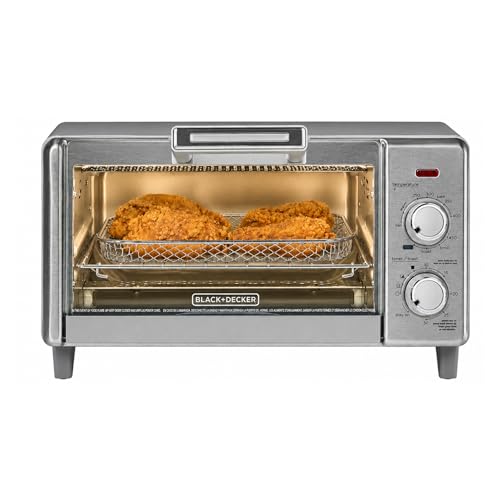
- BLACK+DECKER 4-Slice Air Fry Toaster Oven
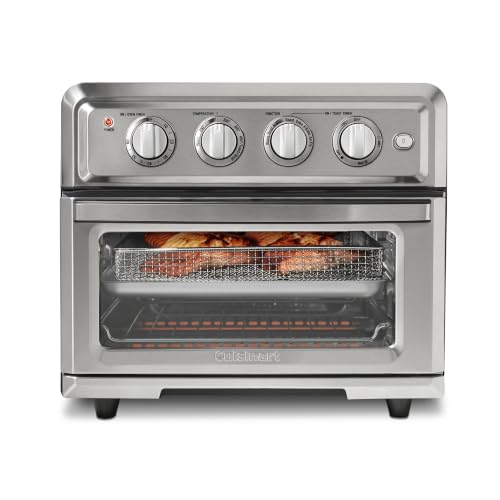
- Cuisinart Air Fryer Toaster Oven Combo TOA-55
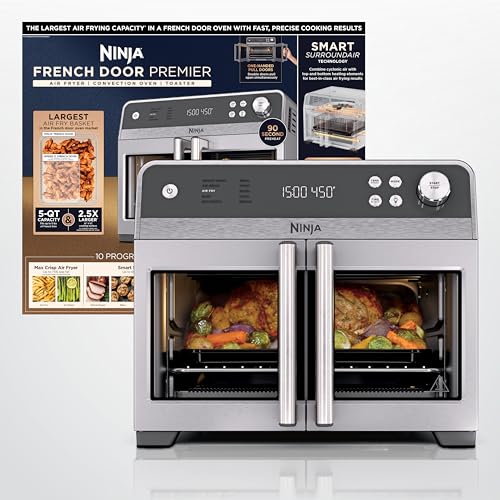
- Ninja French Door Premier Air Fry Oven FO101
- Gourmia Toaster Oven with French Door Design
- Emeril Lagasse 26QT French Door Air Fryer Toaster Oven — prose-only pick, see its review for why
Read the full guide ↓ for the measuring method, clearance rules, and storage strategies that make a small kitchen work.
Introduction: Finding the best toaster ovens for small spaces
The best toaster ovens for small spaces are chosen with a tape measure before a feature list. In a small kitchen, every appliance competes with prep area, and an oven that is two inches too deep or a door that swings into your only workspace will be resented daily, however well it cooks. The real small-space virtues are a modest footprint, a door or storage design that respects tight geometry, and capacity that is honest about its scale — enough for your actual meals, not for imaginary dinner parties. Five ovens in this guide meet that brief in different ways, from a Ninja that flips up against the backsplash to a compact 4-slice BLACK+DECKER. The sixth pick is handled in prose only, deliberately: it is a fine extra-large oven for other kitchens, and this guide will not pretend otherwise.
Small-space cooking also rewards versatility per inch. An oven that toasts, bakes, reheats, and air fries replaces several gadgets that a small kitchen cannot house, which is why the picks here are multi-function countertop ovens rather than single-purpose mini appliances. If your small kitchen’s other priority is morning toast, Best Toaster Ovens For Toast narrows the same question, and Best Toaster Ovens For Toasting Bread looks at bread performance specifically. Measure honestly, and the right choice usually becomes obvious.
Key Takeaways
- The Ninja SP101 is the standout small-space design: it flips up and away, returning counter depth after cooking.
- The BLACK+DECKER 4-Slice is the smallest, simplest footprint in the guide.
- Measure width, depth with the door open, and cabinet clearance — and leave ventilation space on every side.
- Mid-size picks like the Cuisinart TOA-55 are compromises: real capacity that still fits a modest counter, if yours measures up.
- The Emeril 26QT is prose-only here: its listing says “Extra Large Interior,” the opposite of this keyword’s core requirement.
- In small kitchens, versatility per inch beats raw capacity — one oven should replace several gadgets.
In this guide
Quick Picks
| Pick | Badge | Standout trait from verified listing | Link |
|---|---|---|---|
| Ninja SP101 | Best for Small Spaces | 8-in-1, XL cooking in a flip up and away design, 1800W | Check on Amazon |
| BLACK+DECKER 4-Slice | Best Compact Footprint | 5-in-1, EvenToast technology, 9-inch pizza format | Check on Amazon |
| Cuisinart TOA-55 | Best Mid-Size Compromise | 0.6 cu. ft., 1800W, fits a 12-inch pizza, convection | Check on Amazon |
| Ninja FO101 | Best If You Can Spare the Room | 10-in-1, 20.3 Qt, French doors, cyclonic air to 450F | Check on Amazon |
| Gourmia French Door | Best Family Compromise | 6-slice capacity, 17 presets, dishwasher-safe trays | Check on Amazon |
| Emeril Lagasse 26QT | Not a Small-Space Pick (Prose-Only) | 26QT extra-large interior — included to warn, not to sell | Prose-only — see review |
For the next size conversation up, see Best Toaster Ovens Mid Size, and for premium small-footprint aspirations, Best Toaster Ovens High End.
How These Picks Were Chosen
This is a research-led guide based on verified catalog data, not claimed hands-on testing. Every pick was confirmed through Amazon’s Creators API on 2026-11-20, and the capacity and design language quoted here is the listings’ own. Selection for a small-spaces guide applied the keyword’s core requirement as a filter, and one pool member failed it in its own words: the Emeril Lagasse 26QT’s verified title announces an “Extra Large Interior” and a 26-quart capacity. Rather than quietly dropping it, we review it in prose only — no link, no image — so readers who encounter it in this category understand exactly why it does not belong in a small kitchen. The remaining five were ranked by how honestly they serve small spaces: storage innovation first, then compact footprint, then carefully-labelled compromises for readers whose “small” still has a few spare inches.
Two standing rules apply throughout: no static prices, because they change constantly — check current figures through the links — and no fixed ratings or review counts, which shift daily. Dimensions and design are what decide this purchase, so they carry the guide. Where a listing does not state external dimensions in the data we verified, we say what is known — format, capacity, storage design — and instruct you to confirm the exact footprint on the listing before ordering.
The 6 Best Toaster Ovens for Small Spaces

Ninja Digital Air Fry Countertop Oven, SP101
Badge: Best for Small Spaces
Strengths
- Flips up and away against the backsplash — the only true storage solution here
- XL cooking format with 8-in-1 functions despite its storage trick
- 1800W digital performance for toast, air roast, bake, and more
Trade-offs
- Low interior height limits tall dishes
- Must cool before flipping up, so the space returns after the meal, not during
- Wide footprint while in use — the saving is in storage, not in cooking mode
Mini spec box: Functions: air fry, air roast, broil, bake, toast, bagel, dehydrate, keep warm (8-in-1) · Power: 1800W · Format: XL, flip up and away · Finish: Silver
The SP101 rethinks the small-space problem instead of merely shrinking. Most compact ovens save space by cooking less; the Ninja cooks at XL scale — wide trays, family toast loads, air-roasted vegetables — and then, once cool, rotates up to stand against the backsplash, handing back the front half of your counter for prep, dough work, or simply the visual calm of an uncluttered kitchen. In a studio or galley kitchen, that transformation is the difference between an oven that lives out permanently and one exiled to a cupboard, from which it will rarely be fetched. Respect its two honest limits: the low cavity profile favours flat food over tall roasts, and the flip-up reward comes after cooling, not mid-service. For the small kitchens that cook seriously, no other pick here competes with its space logic. Its frozen-pizza performance in a separate, food-focused context appears in Best Toaster Ovens Frozen Pizza.
Best for: small kitchens that cook widely and often / Not suited for: tall roasts or impatient storers
BLACK+DECKER 4-Slice Air Fry Toaster Oven
Badge: Best Compact Footprint
Strengths
- Smallest format in the guide — a true compact countertop citizen
- 5-in-1 coverage handles the daily essentials without excess
- EvenToast technology aimed at consistent small-batch browning
Trade-offs
- Fits a 9-inch pizza; standard frozen pizzas are out
- 4-slice capacity means batches for bigger households
- No specialty modes like dehydrate or rotisserie
Mini spec box: Functions: air fry, bake, broil, toast, keep warm (5-in-1) · Capacity: 4-slice · Pizza fit: 9-inch · Technology: EvenToast
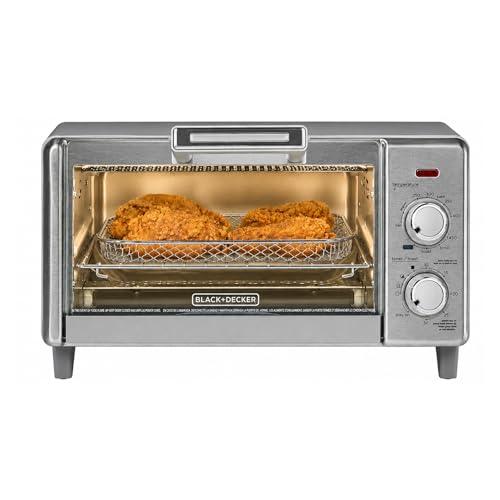
If the Ninja is the clever answer, this BLACK+DECKER is the simple one: a compact oven that asks for the least counter and covers the core jobs — toast for two, a personal pizza, reheated leftovers, small air-fried snacks. In a first apartment, a dorm-adjacent kitchenette, an office kitchen, or a camper-style setup, proportionality is a virtue, and this oven is proportionate. It will not pretend to family scale, and its 9-inch pizza limit should be read as a definition rather than a flaw: buy it for the meals of one or two people and it fits those meals, and your counter, exactly. Pair it with the measuring method in the buying guide below and it is the lowest-risk purchase in this article. Bread-focused readers can check its toasting credentials further in Best Toaster Ovens For Toasting Bread Evenly.
Best for: singles, couples, and the tightest counters / Not suited for: family batches or 12-inch pizzas

Cuisinart Air Fryer Toaster Oven Combo, TOA-55
Badge: Best Mid-Size Compromise
Strengths
- 0.6 cu. ft. cavity fits a 12-inch pizza — real capacity, honestly stated
- 1800W with convection and a 450°F maximum for serious cooking
- Removable crumb tray keeps a hard-working small kitchen clean
Trade-offs
- Mid-size, not mini: measure before assuming it fits a small brief
- Needs full clearance like any powerful countertop oven
- Stainless finish shows in a small kitchen — keep it wiped
Mini spec box: Functions: 7-in-1 · Power: 1800W · Max temperature: 450°F · Capacity: 0.6 cu. ft. · Pizza fit: 12-inch · Tray: removable crumb tray · Finish: Stainless steel
Some small kitchens are small in area but generous in one good counter run, and for those, the TOA-55 is the compromise that gives up the least cooking. Its 0.6 cubic foot cavity takes a 12-inch pizza — the threshold that separates real family utility from personal-size cooking — while its footprint remains that of a single countertop appliance rather than a second range. The honest framing matters: this is not a mini oven, and in a truly tiny kitchen it may still be too much. Measure your run, check the listing’s dimensions, and if it fits with clearance, you gain an oven that never asks you to apologise for its capacity. If it does not fit, the two picks above it in this guide exist precisely for you.
Best for: small-but-serious kitchens with one good counter run / Not suited for: the tightest galley counters

Ninja French Door Premier Air Fry Oven, FO101
Badge: Best If You Can Spare the Room
Strengths
- French doors need less front swing space than a drop-down door at full open
- 10-in-1 versatility replaces several appliances a small kitchen cannot store
- Cyclonic air to 450F with sear crisp for high-performance cooking
Trade-offs
- 20.3 Qt body is a substantial footprint — a compromise pick, not a compact one
- Premium-tier positioning
- Over-specified for toast-and-reheat households
Mini spec box: Functions: 10-in-1 including air fry, sear crisp, bake, broil, toast, dehydrate · Capacity: 20.3 Qt · Max temperature: 450F · Surface: PFAS-free · Finish: Stainless
The FO101 appears in a small-spaces guide under one argument only: consolidation. A small kitchen that must choose between an oven, an air fryer, and a dehydrator can instead choose this one 10-in-1 appliance whose French doors at least minimise the clearance drama in front of it, since the doors open sideways rather than folding down into your workspace. That argument is real, but it has a hard precondition — the counter must actually fit a 20.3-quart oven with ventilation room. If yours does, the FO101’s consolidation can net-save space across the whole kitchen. If it does not, no versatility arithmetic will save the purchase. We include it, labelled plainly as a compromise, because some readers’ “small space” is a compact house with a decent kitchen rather than a studio — and for them, this may be the smartest single box.
Best for: compact homes consolidating appliances / Not suited for: genuinely tiny counters

Gourmia Toaster Oven, French Door Air Fryer Combo
Badge: Best Family Compromise
Strengths
- 6-slice capacity serves a family from one appliance
- 17 presets simplify life in a busy, shared small kitchen
- Dishwasher-safe trays cut cleanup where sink space is precious
Trade-offs
- French-door family format is not compact — measure carefully
- Preset panel is more than minimalists want
- Black finish and width dominate a small visual field
Mini spec box: Capacity: 6-slice · Presets: 17 · Controls: digital display, adjustable time and temperature · Technology: FryForce 360° · Trays: dishwasher-safe
The Gourmia is the family version of the compromise argument. A small kitchen feeding four people cannot downsize its appetites, only its appliances — and one 6-slice oven with 17 presets, doing breakfast, snacks, and dinner sides, may occupy less total space than the toaster plus air fryer plus oven-mitigation gadgets it replaces. Dishwasher-safe trays matter doubly where the sink is small and the washing-up queue is long. As with the Ninja FO101, the precondition is measurement: this is a family-format oven whose presence in a small-spaces guide is justified by consolidation, not by footprint. If your counter cannot take it with clearance, believe the tape measure, not the hope.
Best for: families in small kitchens consolidating appliances / Not suited for: solo cooks or minimal counters
Emeril Lagasse 26QT French Door Air Fryer Toaster Oven — Prose-Only Pick
Badge: Not a Small-Space Pick (Prose-Only)
Strengths
- 26QT capacity and 24 presets serve large households well — elsewhere
- French doors and six included accessories are genuinely convenient
- Extra-large interior suits batch cooking and entertaining
Trade-offs
- Its verified listing calls the interior “Extra Large” — the direct opposite of this guide’s brief
- 26-quart footprint would dominate a small kitchen’s counter
- Capacity you cannot house is not capacity you own
Mini spec box: Capacity: 26QT, extra-large interior (per listing) · Presets: 24 one-touch options · Accessories: six included · Doors: French door · Status: prose-only, no purchase link, no product image
We include this Emeril model for one reason: it circulates in this category’s verified pool, and a reader shopping for small-space ovens may well encounter it and wonder. The answer, in its own listing’s words, is that it offers an extra-large 26-quart interior — a virtue for a big family kitchen and a disqualification here. Buying it for a small space would mean surrendering most of a counter to an appliance sized for another life. If your kitchen is actually large and your household hungry, research this model on those terms with our blessing; the presets, French doors, and included accessories make it a legitimate big-kitchen contender. But in this guide it carries no link and no image, because a small-spaces recommendation must mean what it says.
Best for: large kitchens — which is why it is prose-only here / Not suited for: small spaces, by definition
Comparison Table
| Model | Space strategy | Capacity cue (as listed) | Link |
|---|---|---|---|
| Ninja SP101 | Flips up and away for storage | XL, low profile | Check on Amazon |
| BLACK+DECKER 4-Slice | Compact footprint | 4-slice, 9-inch pizza | Check on Amazon |
| Cuisinart TOA-55 | Mid-size compromise | 0.6 cu. ft., 12-inch pizza | Check on Amazon |
| Ninja FO101 | Consolidation (10-in-1) | 20.3 Qt | Check on Amazon |
| Gourmia French Door | Consolidation for families | 6-slice | Check on Amazon |
| Emeril 26QT | None — extra-large | 26QT extra-large interior | Prose-only |
How to Choose a Toaster Oven for a Small Space
Measure three dimensions and one behaviour. Width: the counter run the oven will occupy permanently. Depth: from backsplash to counter edge, with the oven’s door fully open — a drop-down door extends the footprint dramatically, French doors far less, and the flip-up Ninja sidesteps the question in storage. Height: the gap to upper cabinets, plus the clearance the manual requires for heat. Behaviour: how the oven lives when idle, which in small kitchens is most of its life. An oven that stores slim, like the SP101, effectively costs you space only while cooking; a fixed oven charges rent around the clock.
Then audit what the oven replaces. List the appliances it would retire — a slot toaster, a basket air fryer, a separate dehydrator — and measure their combined footprint honestly. Consolidation is how mid-size picks like the Cuisinart, Ninja FO101, and Gourmia can belong in this guide: one box on the counter, two boxes out of the cupboard. But consolidation only counts if you actually retire the other appliances; an oven added to a full gadget collection is just more crowding. Finally, match capacity to your household’s real meals: slice count for breakfast scale, pizza inches for dinner reality, and no quart-envy — the prose-only Emeril is the standing warning against buying volume your kitchen cannot house.
How to Live Well With a Countertop Oven in a Small Kitchen
Setup: place the oven where its door opens into your least-used workspace, keep its ventilation clear, and run the first burn-off cycle with windows open, as with any new oven. Build the landing zone into the layout — a heat-safe board or mat beside the oven that always stays clear, because a hot tray with nowhere to land is the small kitchen’s daily emergency. Store the oven’s own trays and racks inside it, keep cords managed short, and if your oven flips up or your routine allows, return the counter to prep mode after every session; small kitchens stay liveable through resets, not through size.
Daily use rewards batching: while the oven is hot for dinner, toast tomorrow’s croutons or roast the vegetables for lunch, extracting full value from each preheat. Clean little and often — crumbs and splatter in a small kitchen are not just hygiene, they are smells with nowhere to dissipate. Troubleshooting follows the pattern. Problem: the kitchen overheats → the oven is too large for the space or vents are blocked; restore clearance and cook in shorter, planned batches. Problem: no prep room remains → the oven’s idle footprint is the issue; consider flip-up storage or a compact replacement rather than enduring it. Problem: door strikes cabinets or handles → reposition so the door’s swing or drop has a clear arc, or choose French doors at replacement time.
Small Kitchen Layouts: Galley, Studio, and Corner Solutions
In a galley kitchen, the oven belongs on the run opposite the main prep board if possible, so turning from board to oven is a pivot, not a journey, and its heat stays away from your primary workspace. In a studio, where the kitchen is also the living room, favour the quietest, cleanest-running routine: compact ovens and flip-up storage preserve the room’s second life, and prompt cleaning prevents cooking smells from taking up residence in soft furnishings. Corner placements suit French-door and flip-up models best, since they ask the least of the space in front. In rental kitchens, where nothing can be modified, the oven’s portability is a feature — every pick here is a countertop appliance that leaves with you, and the compact BLACK+DECKER is the easiest to move between homes without drama. Whatever the layout, keep the triangle of oven, board, and bin tight: most small-kitchen frustration is walking, and most of the walking is avoidable by placement.
The Consolidation Audit: One Oven, Fewer Gadgets
Do the audit on paper before you buy. Write down every small cooking appliance you own, how often each was used in the last month, and the counter or cupboard volume it occupies. A toaster oven with air fry, bake, broil, toast, and keep-warm functions — the compact BLACK+DECKER’s exact list — honestly replaces a slot toaster and covers much of a small air fryer’s work for one or two people. Larger multi-function models extend the replacement list further. The audit usually reveals that the kitchen’s problem is not the absence of an oven but the presence of three half-used gadgets, and that the bravest small-space decision is subtraction. Donate or store the retired items the week the oven arrives, not “soon” — soon is how cupboards become museums and counters stay crowded.
Common Buying Mistakes
The defining mistake is buying capacity first and measuring later — the 26-quart prose-only pick exists in this guide as the monument to that error. Second is forgetting the door: a drop-down door needs a clear, heat-safe zone in front that many small counters cannot offer. Third is ignoring cabinet clearance and venting, then cooking in a pocket of trapped heat. Fourth is keeping every old gadget “just in case,” negating the consolidation that justified the oven’s size. Fifth is choosing by width alone while the depth quietly overhangs the counter’s usable edge. Measure in three dimensions, audit honestly, and the small kitchen wins.
Final Recommendation
For most small kitchens, choose the Ninja SP101 — its flip-up storage is the only design here that truly gives space back. For the tightest counters and simplest needs, choose the BLACK+DECKER 4-Slice. If your measurements honestly allow a mid-size oven, the Cuisinart TOA-55 repays the room with a 12-inch pizza capacity. Measure first, consolidate bravely, and your small kitchen will cook far above its size.
Vertical Thinking: Using Height When Width Runs Out
Small kitchens punish horizontal thinking and reward vertical thinking. The flip-up Ninja is the purest expression of the idea — an oven whose stored shape is tall and thin rather than low and wide — but the principle extends to the whole station. Wall-mounted rails for mitts and tools, a magnetic strip for knives, and shelves above the oven’s clearance zone (never within its heat path) all move clutter off the counter the oven needs. Even your habits can go vertical: stack the oven’s own accessories inside its cavity, store boards upright in a rack beside it, and keep the landing zone sacred by giving everything else a home that is not “next to the oven.” Kitchens feel small mostly at counter level; the airspace above is usually unclaimed territory, and claiming it safely is the cheapest renovation there is.
Be strict about the heat boundary, though. Nothing stored above or beside the oven may sit within the clearance the manual specifies, and nothing flammable belongs anywhere near the vents. Vertical storage is a discipline of safe distance, not a licence to surround the appliance. Done properly, it gives a compact or flip-up oven the clear stage it needs to be used daily — and daily use, not theoretical capacity, is what makes any of these picks worth its footprint.
What Small Kitchens Actually Cook: A Repertoire That Fits
The fear behind many small-kitchen purchases is that a modest oven means modest food. The repertoire says otherwise. Toast and eggs for breakfast; a tray of roasted vegetables and sausages for dinner; a personal pizza on Friday; reheated leftovers that taste cooked rather than microwaved; a small batch of muffins on Sunday; garlic bread, cheese toast, and roasted nuts for the in-between moments. That is a full cooking life, and every pick above the prose-only line in this guide covers it. What small ovens genuinely cannot do is volume theatre — the whole bird, the three-tray bake day, the party-sized casserole — and most small households rarely attempt those even when they own a full-size range. Cooking for the life you have, in the space you have, with an oven sized to both, is not a compromise. It is the definition of a well-equipped kitchen.
Where a household does occasionally cook big, the answer is usually borrowing scale rather than owning it: a friend’s kitchen for the holiday bake, a disposable tray strategy for the one annual event, or simply choosing the mid-size compromise pick — the Cuisinart — whose 12-inch pizza capacity covers the most common “big” job of all. The rest of the year belongs to the right-sized oven, used constantly, on a clear counter.
Renters, Movers, and First Apartments
Countertop ovens are the renter’s best friend among cooking appliances: no installation, no landlord negotiation, no leaving it behind. For first apartments especially, the compact BLACK+DECKER and the flip-up Ninja solve the two classic problems — tiny kitchens and uncertain futures — because both move house easily and fit the next kitchen almost regardless of its shape. When you move, the oven travels in its box with its trays inside, and the calibration you learned travels in your notebook. Choose durability of routine over novelty if you expect to move often: simple controls, a removable crumb tray, and a footprint that assumes nothing about cabinet heights. The oven that survives three apartments is the one that never depended on any of them.
Noise, Heat, and Smells: The Small-Space Sensory Budget
In a small home, an appliance’s side effects occupy the same rooms you live in, so they deserve a line in the buying decision. Fan-driven modes — air fry especially — are the loudest and the most aromatic; in a studio, a late-night air fry session perfumes the bedding as surely as the kitchen. Plan fragrant, fatty cooking for when windows can open, keep the oven scrupulously clean so old grease does not smoke into new meals, and favour bake and toast modes for quiet hours. Heat is the other budget: a big oven run long in a small flat is a space heater you did not ask for in July, which is one more argument for right-sizing and for batching — one preheat, several jobs — rather than repeated small runs. None of these factors appears on a spec sheet, and all of them decide whether a small-space oven is loved or quietly resented by spring. The compact and flip-up picks minimise the sensory footprint along with the physical one; the compromise picks ask you to manage it actively. Choose with your whole home in mind, not just the counter.
A Measuring Session, Done Properly, in Ten Minutes
Here is the exact routine this guide recommends before any purchase. Clear the intended counter completely. Measure its width and depth with a tape, and the height to the lowest point of the cabinets above. Open an imaginary door: for a drop-down design, mark how far a horizontal door would extend and whether you can stand comfortably behind that line; for French doors, mark a hand’s width each side. Check the outlet position and cord reach without tension. Then, and only then, compare those numbers with the dimensions on the listing of the oven you favour, adding the manual’s clearance to every side. Photograph the empty space with the measurements written on tape stuck to the counter — the photo settles every later argument with your memory. Ten minutes, honestly spent, prevent the most common and most avoidable disappointment in this entire category: a good oven that simply does not fit the life around it.
Small Space, Full Table: Cooking for Guests Without a Big Oven
Guests test a small kitchen’s system, not its size. The method is sequencing, the same trick small restaurants use: choose a menu where the oven handles one course at a time in waves — bruschetta and cheese toast to start, a roasted main in a single tray, a warmed dessert — while cold and stovetop dishes fill the gaps. Personal pizzas turn the constraint into the entertainment, each guest building their own on a 9-inch base in a compact oven. Keep-warm functions hold early finishers gracefully. Clear and reset the landing zone between waves, because in a small kitchen the reset is the service. Guests remember the food and the company; nobody has ever remembered that the oven was compact. Plan the waves, and a small-space oven feeds a table as graciously as any range.
The deeper comfort is this: constraints, once accepted, become style. The small kitchen that cooks in waves, batches intelligently, and keeps its counter clear develops a rhythm that large kitchens, with their sprawling simultaneity, often lack. Your oven choice is simply where that rhythm starts.
When Small Is Temporary: Buying for the Kitchen You Will Have
Some small kitchens are a season — a first job in a new city, a year between houses, a renovation endured in a corner of the house. If a move to a larger kitchen is genuinely near, the mid-size compromise picks deserve extra weight, because the Cuisinart or Gourmia that stretches today’s counter will settle comfortably into tomorrow’s. If the small kitchen is your long-term reality, optimise for it without apology: the flip-up Ninja and the compact BLACK+DECKER are not starter ovens awaiting replacement but correct answers to a permanent question. The mistake is buying for a fantasy kitchen in either direction — the extra-large oven for dinner parties you will not host in a studio, or the toy oven you will outgrow by spring. Read your own lease, your own habits, and your own calendar, and let them arbitrate. Appliances serve lives, not aspirations, and the happiest small kitchens are the ones furnished for the life actually being lived in them.
Keep a small “kitchen notebook” habit in a small home: the oven’s best settings, the meals that worked in waves, the measurements of your counter written once and kept forever. In a small kitchen there is nowhere for clutter to hide, including mental clutter — and a page of notes is the cheapest storage upgrade of all. When the next appliance decision arrives, you will make it from data about your own life rather than from a showroom’s imagination, which is the quiet advantage of cooks who have learned to live well in small spaces.
The One-Week Small-Kitchen Trial
Before the oven arrives, trial its footprint with a cardboard box or a taped outline of its dimensions on your counter, and live with the outline for a few days of real cooking. You will learn things no measurement predicts: whether the outline blocks the kettle’s steam path, whether the cook who loads the dishwasher collides with it, whether its position catches the evening sun and the glare that comes with it. Move the outline until the kitchen flows around it, and you have found the oven’s home before spending anything. After delivery, give the real oven the same week of grace: cook your ordinary repertoire, note where it helps and where it hinders, and adjust its position once, decisively. Small kitchens are systems, and systems settle through small, observed adjustments — not through hope, and not through returns.
That trial week has one more use: it reveals your household’s true cooking frequency, which is the number that should have driven the purchase all along. If the outline hosted three meals a day, buy versatility with confidence. If it hosted toast and little else, the compact pick was always your answer, and knowing so before checkout is worth more than any discount. Data about your own kitchen beats every advertisement, including the honest ones in this guide.
Cleaning in a Small Kitchen: Little and Often Wins
Small kitchens amplify mess: one greasy splatter is a larger fraction of your world than it would be in a big room, and smells linger where air volume is small. The routine that works is frequency over intensity — crumb tray emptied weekly without exception, interior wiped while warm after greasy sessions, door glass kept clear so you can see browning instead of opening the door and fogging the room with steam and scent. Dishwasher-safe trays, as on the Gourmia, shrink the washing-up footprint of each session; removable trays generally, as on the Cuisinart and the compact BLACK+DECKER in our wider guides, keep the habit easy enough to survive busy weeks. A clean oven also runs truer: crumbs and carbonised grease are tiny insulators and tiny smoke sources, and in a small cavity their effects arrive sooner. Treat cleaning as part of cooking, not as a separate chore with its own day, and the oven stays the pleasant centre of a small kitchen instead of its problem tenant.
Finally, grant your small kitchen the compliment it deserves: it made you deliberate. Every choice in this guide — measure, consolidate, store vertically, cook in waves — is a habit that large kitchens benefit from too and rarely bother to learn. The oven you choose here, sized with honesty and used with rhythm, will not feel like a compromise for a single day of its service. It will feel like the centre of a kitchen that knows exactly what it is doing.
Power and Outlets in Older, Smaller Kitchens
Small kitchens are often older kitchens, and older kitchens have fewer outlets and more shared circuits. A powerful countertop oven — several picks here run at 1800W — should have the outlet largely to itself while cooking; running it alongside a kettle or microwave on the same circuit invites tripped breakers at the worst moment of a meal. Plan the outlet when you plan the position: the oven’s home should be within comfortable cord reach of a suitable socket without the cord crossing the sink, the hob, or its own hot sides. If your kitchen forces compromises, the smaller ovens ease them, drawing their power in a smaller, simpler package and heating a cavity matched to modest meals. None of this is glamorous, and all of it is the difference between an appliance that integrates into a small home and one that fights the building. Check the practicalities before the features, and the features will take care of themselves.
One last small-space virtue deserves naming: silence about the whole subject. The right oven, rightly placed, stops being a topic. Nobody discusses the counter anymore; nobody apologises for the kitchen. Meals simply happen, in a room that works. That quiet is what you are actually shopping for, and every measurement in this guide is in its service.
So measure with care, choose with honesty about your household’s size and habits, retire the gadgets the new oven replaces, and give the arrangement a week to settle before judging it. Small kitchens reward exactly that patience, and they repay it every day, at every meal, for years.
And if a friend with a sprawling kitchen questions your compact choice, invite them to breakfast. Hot toast, a clear counter, and a room that works will make the argument more eloquently than any specification sheet — including, we freely admit, this one.
Keep the tape measure in the kitchen drawer afterwards. Small homes acquire objects constantly, and every future arrival deserves the same ten honest minutes your oven received. It is the smallest habit in this guide and, over the years, possibly the most valuable one.
Measure twice, buy once, cook for years — the small kitchen’s whole philosophy, printed on an imaginary card above the counter where the oven, rightly sized at last, is already warming someone’s breakfast.
That card, like the settings cards recommended elsewhere in these guides, turns one careful purchase into a household standard — and standards, quietly kept, are what make a small kitchen feel not small at all, but simply, completely sufficient.
Sufficient is a beautiful word for a kitchen. It means the toast is hot, the counter is clear, the cook is unhurried, and the room — however many feet it measures — is exactly big enough for the life being cooked in it.
Frequently Asked Questions
What is the smallest type of toaster oven for a tiny kitchen?
Compact 4-slice models like the BLACK+DECKER in this guide ask for the least counter. Flip-up designs like the Ninja SP101 cook larger but store slimmer, which can be the better trade.
How much clearance does a countertop oven need in a small kitchen?
Follow the model’s manual, and keep open space at the sides and top for heat to escape. Never run the oven flush against walls or under cabinets without the specified gap.
Can a large oven ever make sense in a small kitchen?
Only through consolidation — if one multi-function oven retires several gadgets and your counter genuinely fits it with clearance. An extra-large oven bought for capacity alone, like the prose-only 26-quart pick, does not make sense here.
Are French doors better for small spaces?
They reduce the clear zone needed in front of the oven, since the doors open sideways instead of dropping down. That helps in tight galley layouts.
Where should I store a toaster oven in a small kitchen?
Ideally it lives on the counter in a permanent, ventilated spot — cupboard-stored ovens get used less. Flip-up models are the exception that store slim against the backsplash.
How do I stop a countertop oven making my small kitchen too hot?
Keep vents clear, batch your cooking to use each preheat fully, and favour the smallest oven that fits your meals — oversizing is the usual cause.