Disclosure: topratedkitchenware.com is reader-supported. When you buy through links on our site, we may earn an affiliate commission from Amazon and other retailers, at no extra cost to you.
Where to buy
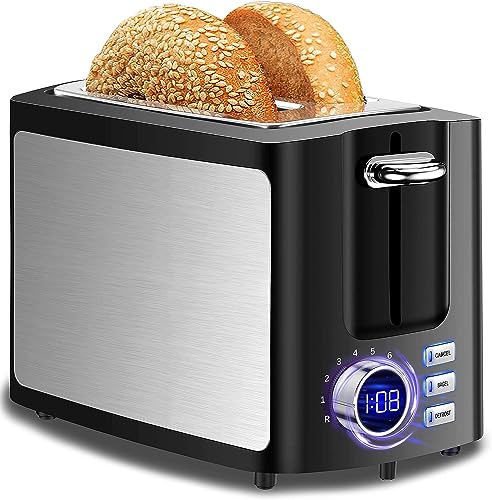
Slim is the most abused adjective in small appliances, so the best slim toasters are defined in this guide by the listing, not by the photograph. One of the six current toasters in the verified pool states a slim profile — the bella Fits-Anywhere, a slim toaster with one extra-long slot — and it is the only linked pick. Five standard-body alternatives are reviewed in full below, without links, for readers testing whether slimness is truly their priority.
- Elite Gourmet ECT1027B Cool-Touch Toaster — a standard-body cool-touch model for thick bread, covered as an alternative. (covered below as a prose-only alternative; no Amazon link, for the reason explained in How These Picks Were Chosen)
- Hamilton Beach 22634 Extra-Wide Slot Toaster — a standard-body family model with toast boost, covered as an alternative. (covered below as a prose-only alternative; no Amazon link, for the reason explained in How These Picks Were Chosen)
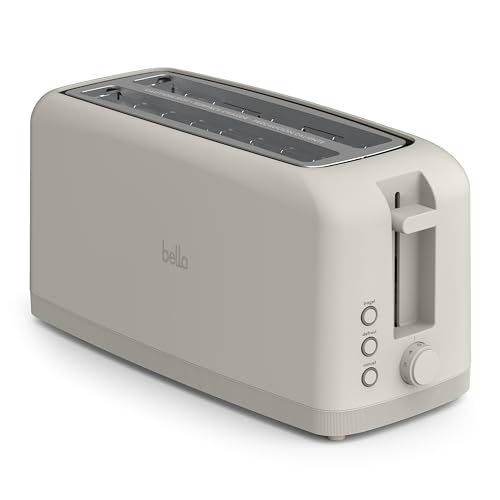
- bella Fits-Anywhere Slim Toaster — Check on Amazon — the stated slim design: narrow body, one extra-long slot, four slices.
- BLACK+DECKER 2-Slice Toaster with Extra-Wide Slots — a standard-body classic with an extra lift lever, covered as an alternative. (covered below as a prose-only alternative; no Amazon link, for the reason explained in How These Picks Were Chosen)
- Hommater 2 Slice Wide Slot Smart Toaster — a standard-body smart toaster with a countdown, covered as an alternative. (covered below as a prose-only alternative; no Amazon link, for the reason explained in How These Picks Were Chosen)
- Amazon Basics 2 Slice Toaster — a standard-body basic whose cord wrap aids storage, covered as an alternative. (covered below as a prose-only alternative; no Amazon link, for the reason explained in How These Picks Were Chosen)
Read the full guide ↓
The best slim toasters are bought by people who have measured their counter and found it wanting: a strip along the backsplash, a corner by the fridge, a galley run where every standard appliance is a small land claim. This guide honours that measurement by linking only what a listing actually calls slim. Of six current toasters, one qualifies — the bella Fits-Anywhere, stated as a slim toaster whose single extra long and wide slot holds four slices — and the other five appear as fully reviewed, prose-only alternatives.
That structure is a feature, not a shortage. Slim buying fails in a predictable way: a shopper with a genuine space constraint is charmed by a standard machine’s display or defrost button, buys it, and spends years working around its footprint. By reviewing the temptations honestly alongside the one true slim design, this guide lets you make that trade deliberately if you make it at all — and helps everyone else buy the bella with the confidence that they surveyed the field first.
Key Takeaways
- Only the bella Fits-Anywhere states a slim profile in its listing; it is the sole linked pick in this guide.
- Slim does not mean small capacity here: the bella’s long slot holds four standard slices, more than any alternative.
- The five alternatives are standard two-slice bodies with real virtues — and no slim claim — covered prose-only.
- The bella listing states no shade count, wattage or named special modes; confirm controls on the product page.
- Judge slim by your counter strip’s depth, and remember the machine trades depth for length.
- A cord wrap (Amazon Basics) helps a stored toaster, but storage is a routine, not a profile.
In this guide
Quick Picks
The badges tell the methodological story: one slim pick, five standard-body alternatives, each badged for its genuine strength so you can see exactly what slimness costs in features — and what it buys in space.
| Toaster | Badge | Why it is here | Availability |
|---|---|---|---|
| Elite Gourmet ECT1027B Cool-Touch Toaster | Best Standard-Body Cool-Touch Alternative | Standard body; cool-touch; 1.25-inch extra-wide slots; six shades. | Prose-only — see review |
| Hamilton Beach 22634 Extra-Wide Slot Toaster | Best Standard-Body Family Alternative | Standard body; toast boost; bagel and defrost; slide-out tray. | Prose-only — see review |
| bella Fits-Anywhere Slim Toaster | Best Overall — The Only Stated Slim Toaster | SLIM stated; one extra-long slot; four slices; oatmilk finish. | Check on Amazon |
| BLACK+DECKER 2-Slice Toaster with Extra-Wide Slots | Best Standard-Body Classic Alternative | Standard body; extra lift lever; seven shades; bagel mode. | Prose-only — see review |
| Hommater 2 Slice Wide Slot Smart Toaster | Best Standard-Body Display Alternative | Standard body; LCD countdown; nine shades; full function set. | Prose-only — see review |
| Amazon Basics 2 Slice Toaster | Best Standard-Body Storage Alternative | Standard body; cord wrap; stated 900W; plain buttons. | Prose-only — see review |
If a standard-body row keeps catching your eye, that is useful data about your priorities. The reviews below price each alternative in the only currency this keyword deals in — counter space — so the exchange, if you make it, is an informed one.
How These Picks Were Chosen
The screen was a single stated attribute: a slim, narrow or space-saving profile claimed in the verified listing title. The bella claims it outright — “Slim Toaster”, a “Fits-Anywhere” design. The other five titles claim slot width, shade ranges, displays, lift mechanisms and storage cords, but never body slimness, and several describe deliberately generous extra-wide slots. Under the programme rule linking only picks whose listings state the core attribute, the result is one linked pick and five prose-only alternatives.
Rather than discard the alternatives, the guide reviews them as the genuine opportunity cost of slimness. Each one offers something the bella listing does not claim — a defrost button, a countdown, an extra lift, a cool-touch body, a stated wattage — and a reader is entitled to weigh those offerings against a narrow counter with full information. What the guide refuses is the relabelling: a standard body does not become slim because it appears in a slim guide.
The research is listing-led throughout, with unstated attributes reported as unstated: the bella’s shade count, wattage and special modes are absent from its title and are treated as questions for its product page, not as blanks for invention. Behavioural commentary reasons from stated design. The bella link carries you to the live listing to check the latest price on Amazon; the alternatives carry no links by deliberate design.
The 6 Best Slim Toasters — One Slim Design and Five Standard-Body Alternatives
The bella review is the recommendation. The alternatives follow in pool order, each assessed fairly on its own merits and then measured against the slim brief it does not claim to meet.
Elite Gourmet ECT1027B Cool-Touch Toaster
Badge: Best Standard-Body Cool-Touch Alternative
Strengths
- Cool-touch exterior is reassuring in busy or small kitchens
- Extra-wide slots are sized for bagels and thick-cut bread
- Six shade settings cover the everyday light-to-dark range
Trade-offs
- No defrost or reheat function is named in the listing title
- No crumb tray is mentioned in the title, so check the listing detail before assuming one
- No wattage is stated in the title
Key specs from the listing
- Format: 2-slice pop-up toaster
- Slots: 1.25-inch extra-wide slots
- Shade settings: 6
- Functions named in the listing: cancel, bagel
- Exterior: cool-touch, black finish
- Model: ECT1027B
The Elite Gourmet ECT1027B leads the alternatives with a proposition aimed at shared, tight kitchens: a cool-touch exterior and 1.25-inch extra-wide slots in a standard two-slice body, with six shades and bagel handling. In a narrow kitchen where people squeeze past the counter, cool-touch sides are a thoughtful safety property — but they are a property of the surface, not of the footprint, and the listing states no slim profile, so the machine is prose-only here.
Choose it over the bella only if thickness and touch-safety outrank depth in your kitchen: your slices are chunky, your counter is standard, and your walkway is close. Its listing names no defrost function and no crumb tray in its title, so verify those on the product page. As a slim toaster, it makes no claim; as a considerate standard toaster, it makes several good ones.
Best for: tight shared kitchens that value cool-touch sides on a standard counter / Not suited for: narrow counter strips — surface safety is not slimness
Hamilton Beach 22634 Extra-Wide Slot Toaster
Badge: Best Standard-Body Family Alternative
Strengths
- Toast Boost lifts small slices higher for safer retrieval
- Bagel and defrost buttons cover the two most common special cases
- Slide-out crumb tray makes routine emptying quick
Trade-offs
- The blue finish will not suit every kitchen scheme
- No reheat or cancel function is named separately in the title
- No wattage is stated in the title
Key specs from the listing
- Format: 2-slice pop-up toaster
- Slots: extra-wide slot design
- Shade settings: 7
- Functions named in the listing: bagel, defrost, auto shutoff, toast boost
- Crumb tray: slide-out
- Colour: Kitchen Makeover Blue
- Model: 22634
The Hamilton Beach 22634 is the family alternative: bagel and defrost buttons, auto shutoff, Toast Boost for small slices, seven shades and a slide-out crumb tray, in a standard body with a blue finish. It is prose-only because its listing states no slim attribute, and its footprint is the conventional two-slice rectangle that slim shoppers are specifically trying to escape.
Its temptation is legitimate: families in small kitchens need functions and lack space, and this machine answers the first need completely. The guide’s counsel is sequencing — decide the footprint question first, because it is the one that cannot be revised after purchase. If a standard body genuinely fits your counter, this may be your toaster. If it does not, no defrost button will shrink it.
Best for: families whose function needs outrank their space shortage / Not suited for: genuinely narrow counters

bella Fits-Anywhere Slim Toaster
Badge: Best Overall — The Only Stated Slim Toaster
Strengths
- The only pick here whose listing states a slim profile
- One extra-long slot takes long artisan slices that defeat standard slots
- Four-slice capacity in a narrow body is a rare combination
Trade-offs
- The listing title states no shade count, so verify the dial range on the product page
- The title states no wattage and names no bagel or defrost mode
- A single shared slot means four slices share one browning cycle
Key specs from the listing
- Format: slim toaster with one extra long and wide slot
- Capacity: 4 slices in the long slot
- Profile: slim, Fits-Anywhere design
- Colour: Oatmilk
The bella Fits-Anywhere earns this guide’s only link by doing the one thing the keyword asks: its listing states a slim toaster, and the design cashes that claim intelligently. A single extra long and wide slot runs along a narrow body, so the machine lives in the backsplash strip, holds four standard slices in a row, and takes long artisan slices lengthwise — capacity and length bought with the depth a small kitchen does not have. The oatmilk finish suits its permanent, on-display life.
The honest costs are a shared shade across each cycle, and a listing that states no shade count, wattage or named bagel or defrost mode — controls to verify on the product page before a frozen-bread household commits. Neither cost is spatial. Judged purely as a slim proposition, it is complete in a way no alternative here attempts: narrow every morning, generous at every breakfast.
Best for: narrow counters, galley kitchens, long-loaf households / Not suited for: two-shades-at-once households
BLACK+DECKER 2-Slice Toaster with Extra-Wide Slots
Badge: Best Standard-Body Classic Alternative
Strengths
- Extra lift lever raises small items clear of the slots
- Seven shade settings give fine control at the darker end
- Removable crumb tray keeps cleaning straightforward
Trade-offs
- No defrost or reheat function is named in the listing title
- No wattage is stated in the title
- Utilitarian styling will not be the reason anyone chooses it
Key specs from the listing
- Format: 2-slice pop-up toaster
- Slots: extra-wide slots
- Shade settings: 7
- Functions named in the listing: bagel mode
- Lever: extra lift lever
- Crumb tray: removable
The BLACK+DECKER alternative is the familiar standard: extra-wide slots, bagel mode, seven shades, a removable crumb tray and an extra lift lever, in the standard two-slice body its listing describes without any slim claim. It is prose-only, and its daily footprint is the ordinary rectangle of its class.
Its distinctive kindness remains retrieval — the lever that lifts short slices clear — which matters in deep standard slots and is irrelevant to footprint. A shopper whose counter is adequate and whose muffins sit low will find it the most conventionally satisfying alternative here. A shopper whose counter is a narrow strip should admire it and move on; familiarity is not a dimension.
Best for: adequate counters that value easy retrieval of short slices / Not suited for: narrow counter strips
Hommater 2 Slice Wide Slot Smart Toaster
Badge: Best Standard-Body Display Alternative
Strengths
- LCD countdown removes the guesswork from waiting
- Nine shade settings are the widest range in this group
- Reheat function is named, which several rivals here omit
Trade-offs
- The display and smart positioning make it the least minimal design here
- No crumb tray is mentioned in the title
- No wattage is stated in the title
Key specs from the listing
- Format: 2-slice pop-up toaster
- Slots: wide slot design
- Shade settings: 9
- Display: LCD digital countdown timer
- Functions named in the listing: bagel, defrost, cancel, reheat
The Hommater is the information-rich standard body: a wide slot, an LCD countdown, nine shade settings and bagel, defrost, cancel and reheat functions, none of which its listing connects to any slim claim. It is prose-only, and it occupies standard two-slice territory on the counter.
In a slim guide its role is to test conviction. If timing precision and shade granularity matter more to your household than the reclaimed strip of workspace, your kitchen evidently has room for your priorities, and this is a capable machine. If the strip is truly all you have, a countdown — however useful — is information about a toaster that does not fit, and the bella remains the answer.
Best for: ample counters that value timing and precision / Not suited for: narrow counter strips
Amazon Basics 2 Slice Toaster
Badge: Best Standard-Body Storage Alternative
Strengths
- The only pick whose title states its wattage, which helps comparison
- Cord wrap keeps a small counter tidier between uses
- Defrost, cancel and bagel buttons cover the full everyday set
Trade-offs
- Six browning settings are the joint-narrowest range here
- Plain black and silver styling is functional rather than decorative
- No extra-lift or toast-boost feature is named in the title
Key specs from the listing
- Format: 2-slice pop-up toaster
- Slots: extra wide slots, sized for bagels
- Browning settings: 6
- Power: 900W (the only wattage stated in this group)
- Functions named in the listing: defrost, cancel, bagel
- Crumb tray: removable
- Storage: cord wrap
- Finish: black and silver
The Amazon Basics closes the alternatives as the storage strategist: extra-wide slots, six browning settings, defrost, cancel and bagel buttons, a removable crumb tray, a stated 900W, and a cord wrap, in a standard body whose listing states no slim profile. It is prose-only, and its relevance here is the cupboard theory of small kitchens — that a standard toaster, neatly corded, can live out of sight.
The theory is sound for households that will truly lift the machine out daily, and the cord wrap genuinely serves it. For everyone else, the bella’s leave-it-out slimness is the more honest solution to the same problem. Decide which household yours is before choosing which machine’s version of “small” to believe.
Best for: disciplined cupboard-storage households / Not suited for: leave-it-out narrow counters
Comparison Table
The first column records the only fact this keyword is about: whether the listing states a slim profile. The remaining columns show what each standard body offers instead, so the trade is explicit.
| Toaster | Badge | Listing-stated highlights | Link |
|---|---|---|---|
| Elite Gourmet ECT1027B Cool-Touch Toaster | Best Standard-Body Cool-Touch Alternative | Slim: not stated. Cool-touch body; 1.25-inch extra-wide slots; 6 shades | Prose-only |
| Hamilton Beach 22634 Extra-Wide Slot Toaster | Best Standard-Body Family Alternative | Slim: not stated. Toast boost; bagel and defrost; 7 shades; slide-out tray | Prose-only |
| bella Fits-Anywhere Slim Toaster | Best Overall — The Only Stated Slim Toaster | Slim: STATED. One extra long and wide slot; 4 slices; Fits-Anywhere design | Check on Amazon |
| BLACK+DECKER 2-Slice Toaster with Extra-Wide Slots | Best Standard-Body Classic Alternative | Slim: not stated. Extra-wide slots; extra lift lever; 7 shades; removable tray | Prose-only |
| Hommater 2 Slice Wide Slot Smart Toaster | Best Standard-Body Display Alternative | Slim: not stated. LCD countdown; 9 shades; bagel, defrost, cancel, reheat | Prose-only |
| Amazon Basics 2 Slice Toaster | Best Standard-Body Storage Alternative | Slim: not stated. 900W stated; cord wrap; removable tray; plain buttons | Prose-only |
One stated claim, five honest silences. Readers who want the compact idea pursued further can continue to Best Small And Compact Toasters; readers curious how materials change the picture can continue to Best Stainless Steel Toasters. Both roads, in this pool, lead to the same machine — for different stated reasons.
How to Choose the Best Slim Toasters for a Genuinely Small Counter
Start by auditing your counter like an estate agent: where does a toaster have to live in your kitchen — not where you wish it lived? Measure that place’s depth and length and the clearance above it. Slim machines trade depth for length, so a viable slim placement is a long, shallow, clear strip, typically along the backsplash. If your only candidate spot is short as well as shallow, no design in this guide will save it, and a stored standard toaster or a kitchen rethink is the honest answer.
Read “slim” claims with a lawyer’s eye. In this pool, one listing states the word; five do not, and the five include machines a shop assistant might casually call neat or compact. A stated slim profile, a stated slot format and a stated capacity — the bella gives you all three in one title — are the only safe foundations. Photography lies about scale more reliably than any other element of a listing, so let words and your own tape measure govern.
Then weigh what slimness costs in your specific routine. The bella’s listing is silent on shade count, wattage and special modes; the alternatives collectively offer defrost buttons, a countdown display, lift mechanisms and a stated 900W. A fresh-bread household pays almost nothing for the bella’s silences. A frozen-bread household must resolve the defrost question on the product page, and may rationally conclude that a standard body earns its footprint. Slimness is a means to a workable kitchen, not a moral quality. Feature-led overviews, such as Best Smart Toasters, show the full-featured field if you go that way.
Consider the machine’s visual life. A slim toaster is a permanent resident of a small visual field; its finish will be in your eyeline at close range indefinitely. The bella’s oatmilk is designed for that exposure. The alternatives offer blue cheer, black-and-silver utility and classic countertop anonymity. In a large kitchen this paragraph would be frivolous; in a small one, it is ergonomics for the eyes.
Last, simulate a week, not a morning. Day one flatters any machine. By day five, the questions are whether the strip still works as workspace with the toaster in place, whether the shared shade has started any arguments, and whether crumbs are being managed along a long slot. The slim format passes that week in kitchens shaped like it, and fails in kitchens that merely wished they were. Buy for the kitchen you measured.
How to Live Well With a Slim Toaster: Placement, Use and Care
Place the machine along the backsplash with its long side parallel to the wall, clear air above for heat and steam, and the cord routed behind it so the saved workspace stays saved. Keep its run free of the small migrants of kitchen life — oil bottles, utensil pots, post — because a slim station works only while its strip stays a strip. Calibrate the shade on your standard loaf during the first week, one step at a time, and settle a house setting.
Load the long slot in one unoverlapped row, grouping slices of similar thickness; centre a single long slice within the slot’s span. Everything in a cycle shares one browning outcome, so order mixed batches thoughtfully: delicate slices can be lifted at the shared setting while heartier ones take a brief second pass, rather than the reverse, which sacrifices the delicate slice entirely.
Problem: the workspace beside the toaster keeps disappearing. → The strip is being colonised; restore the boundary physically, with the bread box or board defining the toaster’s territory. Problem: browning varies along the row. → Check thickness grouping and crumb build-up along the slot floor; unplug, cool and shake out weekly. Problem: the pale finish shows marks. → Wipe cool with a soft, barely damp cloth; slim machines live on display, and their upkeep is part of their design brief.
Monthly, inspect the full length of the slot for trapped seeds or crumbs, and confirm the machine still sits with its air gap from the wall. Never immerse the body, spray into the slot, or use metal utensils to retrieve toast. The standard-body alternatives in this guide ask for the same fundamentals — trays emptied, exteriors wiped cool, air kept clear — with the addition of tray routines where their listings state them.
If the slim life proves not to be yours, the exit is painless: the alternatives reviewed here are the mainstream, and the ownership basics for the compact end of them are gathered in Best Small And Compact Toasters. Most households, though, find that a counter that finally fits their kitchen is a hard benefit to give back.
Who Actually Needs a Slim Toaster?
The honest census is narrower than marketing suggests: galley kitchens, studio flats, narrowboat and caravan kitchens, office kitchenettes, and family kitchens whose counters have been colonised by the evidence of family life. What unites them is a strip-shaped opportunity — length along a wall, no depth to spare. For those kitchens, a slim toaster is not a compromise appliance but the only full-capacity design that fits, and the bella’s four-slice slot makes the point that fitting need not mean shrinking the breakfast.
Everyone else is buying an aesthetic, which is also legitimate — a calm, low line along the backsplash pleases many eyes — provided it is bought as an aesthetic and not as a solution to a space problem that does not exist. If your counter is generous, the alternatives’ functions are worth more than a profile you do not need, and this guide’s prose-only reviews double as your shortlist for that happier problem.
Slim by Design vs Small by Accident
There is a difference between a toaster designed slim and a toaster that is merely small. Small standard machines shrink capacity and slots along with the body, and their owners pay daily in split batches and trimmed slices. The bella’s design refuses that exchange: the body narrows by reorganising around one long slot, and capacity grows to four slices in the process. That is the signature of a real slim design — the constraint produced a better arrangement, not just a lesser one.
Use that signature as your shopping test beyond this pool. Ask of any slim candidate what its narrowness reorganised and what it merely removed. Listings that state the resulting format plainly — slot, capacity, profile — are answering the question. Listings long on adjectives and short on format are usually selling the accident, not the design.
Small Kitchens Around the World Agree on One Thing
From studio flats to narrowboats to the compact kitchens of dense cities everywhere, the spatial problem repeats with local variations: worktop is scarce, wall length is comparatively available, and appliances designed as deep squares waste both. The slim format — in this pool, the bella’s stated design — is the toaster’s answer to a global floor-plan fact. It is no coincidence that the design pairs narrowness with a long slot: the same households that lack counter depth tend to bake or buy the long, bakery-style loaves that cities specialise in.
The alternatives in this guide belong to the other, larger world: kitchens where a standard two-slice rectangle is a trivial resident. Neither world is a judgement on the other, but appliances are not transferable between them by optimism. The discipline this guide teaches — stated attributes over adjectives, your tape measure over anyone’s photography — is the whole difference between a kitchen that absorbs its appliances and a kitchen that negotiates with them daily.
The Slim Toaster as a Permanent Resident
Most small appliances live one of two lives: resident or stored. Stored machines must justify a lift, a plug and a clearing of space every time they are used, and many quietly stop being used at all — the cupboard is full of excellent appliances that lost that daily negotiation. A slim toaster is a bid for residency: it asks for the least valuable real estate in the kitchen, the backsplash strip, and in exchange it is simply there, at breakfast, without ceremony. Residency is the real product being sold by the format.
That is why this guide treats the Amazon Basics’ cord wrap with respect rather than mockery: it is the stored life, done properly, and for households with a genuine cupboard routine it can beat a resident machine they do not want to look at. The choice between the bella and the cord wrap is really a choice between two honest domestic systems. The only dishonest option is the standard machine bought for a strip it will never fit, resident by default and resented by default.
Reading Slim Claims Anywhere: A Field Guide
Take this guide’s method with you when you shop beyond it. A trustworthy slim claim names the format it produces — the slot arrangement, the capacity, the design idea — in the same breath as the adjective, exactly as the bella’s listing does. A suspicious claim offers the adjective alone, supported by photography against an empty background and, often, a hand of unverifiable scale. Between those poles, dimensions in a specification table outrank both: if a listing gives you real measurements, believe them over every adjective including slim itself.
Apply the same literalism to capacity. Slim machines are often assumed to be small machines, and the assumption is used to sell genuinely small toasters to households that needed narrow ones. The bella holds four slices; a merely small toaster might hold two narrow ones. Narrow and small are different products for different kitchens, and the listing that states its slot and its count — as this pool’s one slim listing does — is the listing that respects the difference, and you.
Renting With a Slim Toaster: The Portable Upgrade
Renters occupy a special place in slim economics, because they cannot renovate the kitchen they actually cook in. A slim toaster is the rare upgrade that is fully portable, needs no landlord’s permission, and converts the least useful strip of an unfamiliar counter into a working station on the day it arrives. When the tenancy ends, the improvement leaves with its owner — which makes the format, for renters, closer to furniture than to fixture, and worth choosing with a longer horizon than the current flat.
The rental lens also sharpens the stored-versus-resident question from the topical sections: in a small rental kitchen, cupboard space is usually as scarce as counter space, which weakens the cupboard strategy and strengthens the bella’s case for permanent, narrow residence. Renters should measure the strip in the viewing, not after signing — a thirty-second check that has saved more breakfasts than any feature list in this guide.
Slim Toasters and the Rest of the Small-Appliance Shelf
A slim toaster rarely lives alone in its philosophy for long: households that discover the backsplash strip tend to re-shop their other appliances by the same stated-format discipline, and kitchens become coherent — a row of long, shallow, honestly specified machines along the wall, with the deep centre of the counter finally kept for cooking. The bella is often the first purchase in that sequence simply because breakfast is daily and its frustrations are felt first.
The sequence has a failure mode worth naming: buying slim versions of everything, including appliances whose work genuinely needs depth and volume. The discipline is format-to-task matching, not slimness as ideology — the same discipline this guide applied when it refused to call five good standard toasters slim. Keep the tape measure and the literal reading; let each appliance, like each pick in this guide, state its case in words you can verify.
Slim Toasters in Campervans and Weekend Cabins
Second homes and leisure vehicles compress every kitchen question this guide asks: counter depth is minimal, storage is contested, power and cleaning are budgeted, and appliances are used intensely for short stays by people in holiday rather than routine mode. A resident slim machine suits the fixed tiny kitchen of a cabin; a cord-wrapped standard machine suits the van that must stow everything for the road. The bella and the Amazon Basics divide those two lives between them almost too neatly.
The deciding factor is the same as at home, stripped of ceremony: will the machine live out or be lifted? Answer for the actual rhythm of your stays — not the tidy rhythm you intend — and the choice makes itself. Holiday properties, like rentals, punish complicated intentions and reward appliances that are simply there, understood at a glance, on the first morning.
The Aesthetics of the Low Line
There is a reason the slim format photographs so calmly in kitchen design features: a low, continuous line along a backsplash lowers a room’s visual noise, letting worktops read as one surface rather than a parking lot of boxes. Designers reach for that line deliberately, and the bella’s oatmilk finish — soft, warm, unreflective — is clearly composed for it. In open-plan homes where the kitchen is also the living room’s backdrop, that calm is a daily, lived benefit and not a superficial one.
The caution is only that the line must be earned by the household’s habits: a slim machine amid a cluttered strip is a sports car in a traffic jam, its design argument lost. Buy the format for the kitchen you will actually keep — or keep the kitchen the format asks for, which many owners find is the same resolution stated from the other side.
When Slim Is the Wrong Answer Entirely
A guide that only sells its own category is an advertisement, so let this section be plainly on the record: slim is wrong when the household’s breakfast is a parallel, multi-shade, multi-bread production; wrong when frozen stock is the staple and no one will verify a defrost answer; wrong when the only candidate strip is short, socketless or beneath a low cabinet; and wrong when the buyer simply prefers a substantial machine’s presence on a generous counter. In each case the alternatives reviewed here are not consolations — they are the correct purchases.
The bella’s solitary link in this guide is therefore not a claim that slim wins universally. It is a claim that where slim is the question, one current machine answers it in stated words, and the rest answer other questions well. Knowing which question is yours remains, as it has been throughout this guide, the entire skill of buying a toaster.
A Final Measurement: The Thirty-Second Audit
Before any slim purchase is final, run the thirty-second audit in the kitchen where the machine will live. Stand at the counter with a tape measure and a phone torch. Measure the strip’s depth and length. Check the clearance above it, including the cabinet door swing and any under-cabinet light fitting that eats into the air the toaster needs. Find the socket and trace the cord’s honest route. Then mime the full act: bread out, slices in, toast up and out, with your other hand free for the butter dish. If the mime flows, the format fits; if it snags, it snags at the exact point the mime showed you, and no listing can argue with that.
Write the four numbers down and keep them with the order confirmation. They are your evidence if the machine that arrives does not match its stated format, and they are your shopping list for every small appliance that follows. Households that measure once, in this much detail, rarely measure twice — because the first purchase, like the bella recommendation in this guide, tends to be the one that stays.
Common Buying Mistakes
The foundational mistake is trusting photographs for scale. Toasters are photographed alone, in empty space, at flattering angles; a standard body can look slender and a slim body bulky. Only stated attributes and your own measurements survive contact with your counter.
Second, buyers confuse slim with small and accept shrunken capacity they never needed to accept. The bella holds four slices — slimness done by design. If a slim candidate holds less than your household’s batch, it is the wrong kind of slim, whatever its depth.
Third, shoppers let a feature talk them out of a footprint requirement, then spend years annoyed at the wrong thing. Features are used at breakfast; footprints are lived with all day. If the strip measurement was real, honour it, and let the defrost question be settled on the bella’s product page rather than by surrendering the counter.
Final Recommendation
The recommendation is the bella Fits-Anywhere: the only toaster in this pool whose listing states a slim profile, and a design that turns narrowness into capacity — four slices and long loaves in the strip of counter the alternatives cannot use. For the kitchens this keyword describes, it is the complete answer.
Let an alternative take the purchase only when your own audit says the counter was never the binding constraint — then the Hamilton Beach’s family functions, the Hommater’s countdown or the Amazon Basics’ plain completeness are all honourable choices, bought as standard toasters in daylight.
Check the bella Fits-Anywhere Slim Toaster on Amazon.
Frequently Asked Questions
What counts as a slim toaster in this guide?
A toaster whose listing states a slim profile. Only the bella Fits-Anywhere does in this pool — a slim toaster with a Fits-Anywhere design and one extra long and wide slot. The other five models state no slim attribute and are reviewed as standard-body alternatives.
Why do five of the six picks have no Amazon link?
Their listings do not claim the keyword’s core attribute. This guide links only picks whose listings state slimness, and covers the rest prose-only — fully reviewed, without links or images — so their features can still inform an honest decision.
Does the bella hold as much as a normal toaster?
More, by slice count: four standard slices in a row in its single long slot, against two in every alternative here. Long artisan slices also fit lengthwise. All slices in a cycle share one shade outcome.
What are the bella’s shade settings and wattage?
Its listing title states neither figure, and no special modes are named there either. This guide reports that gap rather than filling it; use the link in this guide to check the product page for the full control and electrical details.
Will a slim toaster work in a family kitchen?
If the family toasts one bread at one shade, the four-slice batch is genuinely family-sized. If the family splits on doneness or needs a stated defrost routine, a standard-body alternative may serve better — footprint permitting. The format rewards agreement.
Is storing a standard toaster in a cupboard just as good?
It is a workable strategy for disciplined households, and the Amazon Basics’ cord wrap supports it. Most households, honestly, stop lifting within weeks. A slim toaster’s premise is that permanent, narrow residence beats a daily lift that quietly stops happening.
How is this guide different from the slim line guide?
This guide judges slimness in the broadest sense — any stated slim profile. The slim line treatment focuses on the long, narrow line format and placement along the counter run. In this pool both point to the bella, by the same stated claim.