Disclosure: topratedkitchenware.com is reader-supported. When you buy through links on our site, we may earn an affiliate commission from Amazon and other retailers, at no extra cost to you.
Where to buy
This guide to the best small and compact toasters is built around one honest distinction: only one pick in our verified pool actually claims a slim, space-saving design in its own listing, and that pick carries the Amazon link in this guide. The bella Fits-Anywhere Slim Toaster is listed below with a link so you can check the latest price on Amazon. The other five models are reviewed in full further down as prose-only context picks, because their listings describe standard two-slice footprints without any compact or slim claim, and we do not link a product as a compact pick when its own listing never says so. Read the full guide below before you decide, because for genuinely small kitchens the shape of a toaster matters as much as its slot count.
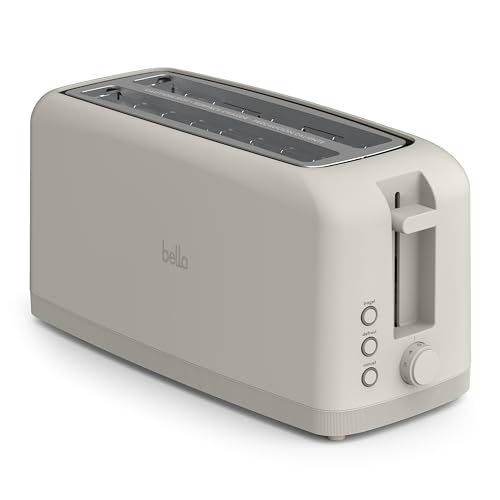
- bella Fits-Anywhere Slim Toaster — Best True Slim Design. Best for narrow counters where a four-slice capacity has to fit a two-slice footprint conversation.
- BLACK+DECKER 2-Slice Toaster with Extra-Wide Slots — Best Extra Lift (prose-only in this guide). Best for standard two-slice counters where small items need a higher lift.
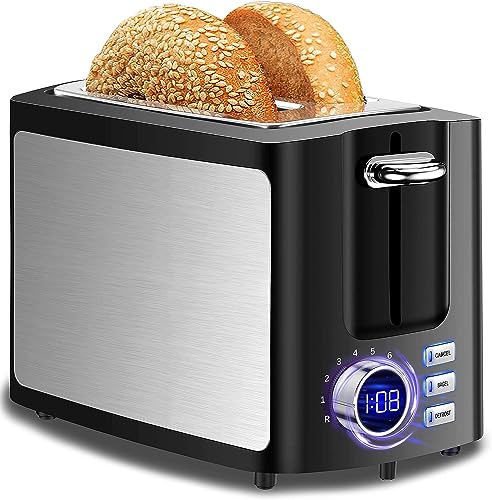
- Hommater 2 Slice Wide Slot Smart Toaster — Best Display Controls (prose-only in this guide). Best for buyers who want a countdown display on a conventional two-slice body.
- Amazon Basics 2 Slice Toaster — Best Cord Storage (prose-only in this guide). Best for tidy counters thanks to its cord wrap.
- Elite Gourmet ECT1027B Cool-Touch Toaster — Best Cool-Touch Sides (prose-only in this guide). Best for tight gaps where hot side panels are a worry.
- Hamilton Beach 22634 Extra-Wide Slot Toaster — Best Colour Choice (prose-only in this guide). Best for buyers matching a blue kitchen scheme.
Read the full guide ↓
Introduction: Small Counters Change What a Good Toaster Looks Like
Finding the best small and compact toasters starts with a tape measure, not a feature list. In a small kitchen, a dorm room, an RV galley or a shared flat, the counter is a contested space: the kettle, the coffee maker, the chopping board and the fruit bowl all compete for the same few inches, and a toaster that sprawls will spend its life being shoved into a cupboard, which means it will spend its life not being used. The best small and compact toasters solve a geometry problem first and a browning problem second. They keep a shallow depth, a narrow width or a low profile so they can live permanently on the counter, ready for the weekday breakfast rush, instead of becoming another appliance you have to excavate before you can eat.
There is, however, a honesty problem in this corner of the market, and this guide is built to confront it directly. Plenty of ordinary two-slice toasters get described in roundup articles as compact simply because they hold two slices instead of four, even when their listings publish no dimensions and make no space-saving claim at all. A standard two-slice body is smaller than a four-slice body, but that does not make it a compact design: many two-slice models are surprisingly deep front to back, with long crumb trays, protruding levers and cords that trail across the worktop. When we checked the six verified listings behind this guide against their own product titles, only one of them, the bella Fits-Anywhere Slim Toaster, actually presents itself as a slim, fits-anywhere appliance. The rest are perfectly respectable two-slice toasters whose listings say nothing about compactness. So this guide links the one verified slim pick, reviews the other five in full as prose-only context so you can judge whether a standard two-slice footprint is small enough for your space, and spends much of its length on the measuring, placing and storing skills that decide whether any toaster feels small in daily life.
If your real problem is not footprint but slice thickness, our companion research on Best Thick Slice Toasters covers the wide-slot end of the market, and if you are comparing control styles, the display-led models discussed under Best Smart Toasters show how far two-slice controls have come. For the rest of this page, though, the subject is space: how to measure it, how to spend it, and which of these six verified models respects it best.
Key Takeaways
- Only one pick in this verified pool, the bella Fits-Anywhere Slim Toaster, claims a slim, fits-anywhere design in its own listing, so it is the only linked pick in this guide; the other five are reviewed prose-only as standard two-slice context.
- Compact is a shape, not a slice count. A slim four-slice design can occupy a narrower strip of counter than a bulky two-slice body, so measure depth and width before you assume fewer slots means a smaller appliance.
- Depth is the dimension that decides daily life: a toaster that fits under wall cabinets and leaves room to work in front of it will stay on the counter, and a toaster that stays on the counter gets used.
- Cord management is a compact feature in disguise. The Amazon Basics pick lists a cord wrap, and in a small kitchen a short, controlled cord is worth real space.
- Cool-touch sides, listed on the Elite Gourmet pick, matter more in tight gaps where the toaster sits close to walls, jars and other appliances.
- Before buying anything, measure your counter run and under-cabinet height, then compare against the listing dimensions on the product page rather than relying on the word compact in a headline.
In this guide
Quick Picks
| Pick | Badge | Format | Why it is here | Link |
|---|---|---|---|---|
| bella Fits-Anywhere Slim Toaster | Best True Slim Design | 4 slice, extra long and wide slot, slim body | The only verified listing here that claims a slim, fits-anywhere design | Check on Amazon |
| BLACK+DECKER 2-Slice Toaster with Extra-Wide Slots | Best Extra Lift | 2 slice, extra-wide slots, 7 shade settings | Extra lift lever helps small items in a standard two-slice body (prose-only) | Prose-only |
| Hommater 2 Slice Wide Slot Smart Toaster | Best Display Controls | 2 slice, wide slot, LCD countdown | A countdown display and 9 shade settings on a conventional body (prose-only) | Prose-only |
| Amazon Basics 2 Slice Toaster | Best Cord Storage | 2 slice, extra wide slots, 900W | Cord wrap keeps a small counter visually and physically tidier (prose-only) | Prose-only |
| Elite Gourmet ECT1027B Cool-Touch Toaster | Best Cool-Touch Sides | 2 slice, 1.25 inch extra-wide slots, 6 shades | Cool-touch housing suits tight gaps beside walls and jars (prose-only) | Prose-only |
| Hamilton Beach 22634 Extra-Wide Slot Toaster | Best Colour Choice | 2 slice, extra-wide slot, 7 shades | A blue finish and toast boost in a standard two-slice footprint (prose-only) | Prose-only |
One pattern in that table deserves emphasis before you read on. Five of these six models are two-slice machines, and it is tempting to treat that as proof they are all compact. Resist the temptation. Slice count tells you capacity, not footprint, and none of those five listings publishes a slim or compact claim. The bella is the interesting exception that proves the rule: it carries four slices in a slim body with one extra long and wide slot, which is a genuinely different answer to the space problem, trading the usual two-slot layout for a single long slot that keeps the body narrow. Everything else in this guide flows from that distinction between claimed, verified compactness and assumed compactness.
How These Picks Were Chosen
This guide is research-led. We did not run a test kitchen, bake a set number of loaves or put any of these machines through hands-on trials, and we will not pretend otherwise. Instead, we worked from the verified listings for six pop-up toasters, checked every claim in this article against what each listing actually states, and applied a strict linking rule for this keyword: a pick is linked as a small and compact choice only when its own listing supports a space-saving claim. The bella Fits-Anywhere Slim Toaster passes that test with the words slim and fits-anywhere in its name and an extra long and wide slot layout that explains how the slim body still feeds a family. The other five listings describe conventional two-slice toasters with useful features, extra-wide slots, bagel modes, countdown displays, cord storage and cool-touch housings, but no compact claim, so they are covered in full, with strengths and trade-offs, as prose-only context picks.
Why include them at all? Because many readers searching for a compact toaster will discover, tape measure in hand, that a standard two-slice footprint does fit their counter, and for those readers the choice among ordinary two-slice models is the real decision. Excluding them would leave that majority with no guidance. Including them without links, and saying plainly why, keeps the guide honest in both directions: we do not sell you a compact claim that the manufacturer never made, and we do not hide solid alternatives that might suit your measured space. Throughout the guide, specifications are limited to what the listings state: slot format, shade settings, named functions such as bagel, defrost, cancel and reheat, and the one stated power figure in the pool. Where a listing is silent, for example on exact dimensions, we say so and tell you where to check, rather than filling the gap with invented numbers.
Finally, a note on what compact buying actually involves, because the method shaped the whole guide. We weighted, in order: verified space-saving design, footprint logic (slot layout and body shape), features that help in small spaces (cord storage, cool-touch sides, lift height for small items), and then general toasting controls. That weighting is why a four-slice machine tops a guide about small toasters, and why some well-known two-slice names sit in the prose-only section. If your priorities differ, the buying guide layer further down will help you re-weight the same six listings for your own kitchen.
The 6 Best Small and Compact Toasters in Detail
A quick reading note: the linked pick comes first, followed by the five prose-only context picks in badge order. Every review follows the same pattern, badge, strengths, trade-offs, the specifications its listing actually states, who it suits, and an honest limitation, so you can compare like with like.

bella Fits-Anywhere Slim Toaster
Badge: Best True Slim Design
Strengths
- The only listing in this pool that claims a slim, fits-anywhere design, which is exactly the claim this keyword asks for.
- Four-slice capacity from a single extra long and wide slot, so family capacity does not require a wide two-slot body.
- A long slot swallows artisan loaves and long sourdough slices that force standard slots to toast in two rotated passes.
Trade-offs
- One long slot means slices share a single chamber, so two very different breads toast on one shared setting.
- The listing states no shade count or named bagel and defrost functions, so control detail is thinner than on the two-slice picks.
- The Oatmilk finish is a specific look that will not blend into every kitchen scheme.
Mini spec box
- Format: 4 slice, single extra long and wide slot
- Design claim: slim, fits-anywhere body
- Finish: Oatmilk
- Listing-stated functions: none named beyond the slot format
The bella is the answer to a specific and common problem: the counter run is long enough but not deep enough, or the only free strip is the narrow run between the sink and the wall, and a conventional toaster body simply will not sit there without crowding everything else. By stretching one slot lengthways instead of placing two slots side by side, the design keeps the body slim while still taking four slices, which is the trick that earns it the top spot in a guide about small and compact toasters. For a family in a small flat, that combination is genuinely valuable: weekday breakfasts for several people usually push buyers toward a four-slice machine, and four-slice machines are usually the widest appliances on the counter. This one argues you do not have to choose between capacity and a narrow footprint.
The long slot has a second, quieter benefit. Long slices from a bakery loaf, wide sourdough rounds cut in half, and other awkward shapes that sit half out of a standard slot fit lengthways here, so browning covers the whole slice in one pass. If your household buys unsliced loaves, that alone can justify the layout. The honest limitation is control sharing: one slot means one browning decision per batch, so the person who likes pale toast and the person who likes it dark cannot both win in the same cycle, and the listing’s silence on shade settings and preset functions means you should read the product page carefully if a dedicated bagel or defrost mode matters to you. For everyone whose first problem is space, though, this is the verified pick that was designed for the problem.
Best for: small kitchens that still need four-slice capacity and long-loaf flexibility / Not suited for: households wanting two independent shade settings running side by side
BLACK+DECKER 2-Slice Toaster with Extra-Wide Slots
Badge: Best Extra Lift (prose-only in this guide)
Strengths
- Extra lift lever raises small items like English muffins and crumpets clear of the slots, a daily convenience in any size of kitchen.
- Extra-wide slots with a bagel mode cover thick and halved items without forcing them.
- Seven shade settings give finer browning steps than the six-setting picks in this pool.
Trade-offs
- The listing makes no slim or compact claim, so it is prose-only here even though the two-slice format is modest.
- No dimensions are stated in the listing title, so you must check the product page measurements against your counter.
- No cord storage is listed, which matters when a small counter also has to hide cable clutter.
Mini spec box
- Format: 2 slice, extra-wide slots
- Shade settings: 7
- Listing-stated functions: bagel mode, extra lift lever, removable crumb tray
As a standard two-slice toaster, this BLACK+DECKER is easy to respect. The extra lift lever is one of those features that sounds minor in a listing and becomes essential by the second week of ownership, because the items that get stuck in toasters are always the small ones, and fishing them out near hot elements is how breakfasts and fingertips suffer. Seven shade settings give a household with split preferences a fighting chance of both people landing near their ideal, and the extra-wide slots plus bagel mode mean the machine is not limited to thin sandwich bread. In a small kitchen, versatility like that earns its counter space, because one appliance that handles muffins, bagels and toast replaces the temptation to own a second device.
Why is it prose-only in a compact guide? Because nothing in its listing claims a compact or slim design, and we link on evidence, not on the assumption that two-slice automatically means small. If you measure your counter and a standard two-slice depth fits comfortably, this becomes one of the strongest context picks in the guide, and its feature set is arguably richer than the linked pick’s. The honest limitation is exactly that measurement step: without a stated footprint claim, the burden of checking falls on you, and the product page dimensions, not this guide, are the authority. Treat it as the benchmark ordinary two-slice option against which the bella’s slim claim has to justify itself.
Best for: buyers whose measured space fits a standard two-slice body and who toast lots of small items / Not suited for: buyers who need a verified slim design for a very narrow counter strip
Hommater 2 Slice Wide Slot Smart Toaster
Badge: Best Display Controls (prose-only in this guide)
Strengths
- LCD digital countdown timer removes the guesswork from waiting, which helps when breakfast is a timed routine.
- Nine shade settings are the widest browning range in this pool.
- A full function set is listed: bagel, defrost, cancel and reheat in one control layout.
Trade-offs
- No compact or slim claim appears in the listing, so it sits prose-only in this space-focused guide.
- A display-led control panel is one more thing to keep clean in a small kitchen where splashes travel.
- Two-slice capacity on a conventional body will not solve a genuinely narrow counter.
Mini spec box
- Format: 2 slice, wide slot
- Shade settings: 9
- Display: LCD digital countdown timer
- Listing-stated functions: bagel, defrost, cancel, reheat
The Hommater is the control enthusiast’s pick in this pool, and in a small kitchen that has a particular appeal: when counter space forces you to own exactly one toaster, you want that toaster to be the one that tells you how long is left, offers a reheat function for the slice you forgot while making coffee, and lets you fine-tune browning across nine settings rather than splitting the difference on a coarse dial. The countdown display also changes behaviour in shared small kitchens, because a visible timer ends the hover-and-guess routine that clogs the worktop in front of the machine. Readers comparing control philosophies will find this same model leading our smart-toaster research, where its display earns it the linked spot it does not get here.
Here, though, the subject is footprint, and on footprint the listing is silent. There is no slim claim, no space-saving language, nothing to distinguish its body from any conventional two-slice machine. So it is reviewed in full and recommended honestly for the right buyer, the one whose counter fits a standard body and whose frustrations are about control rather than space, but it carries no link in a guide whose linking rule is verified compactness. The honest limitation to weigh is that a feature-rich panel does not shrink a toaster, and if your problem is genuinely a narrow strip of counter, features will not fix it.
Best for: control-focused buyers with a standard two-slice space available / Not suited for: buyers whose primary problem is a narrow or shallow counter
Amazon Basics 2 Slice Toaster
Badge: Best Cord Storage (prose-only in this guide)
Strengths
- Cord wrap is listed, and in a small kitchen a managed cord is real, usable space reclaimed.
- The only stated power figure in the pool, 900W, gives buyers a concrete electrical data point.
- Extra wide slots with dedicated defrost, cancel and bagel buttons cover the everyday function set cleanly.
Trade-offs
- No compact or slim design is claimed in the listing, so it is prose-only for this keyword.
- Six browning settings are the pool’s standard rather than its finest range.
- The black and silver finish shows crumbs and fingerprints readily on a crowded counter.
Mini spec box
- Format: 2 slice, extra wide slots
- Browning settings: 6
- Power: 900W (the only wattage stated in this pool)
- Listing-stated functions: defrost, cancel and bagel buttons, removable crumb tray, cord wrap
Small-kitchen veterans know that the cord is part of the footprint. A toaster body might fit a gap perfectly while its cable snakes across the only chopping space you have, and that is why this Amazon Basics model earns a badge in a space guide despite making no compact claim of its own: the listed cord wrap lets you shorten the cable to the distance between toaster and socket, which in a galley kitchen can be the difference between a tidy run and a daily tangle. The rest of the package is sensibly plain, extra wide slots for bagels, six browning settings, a removable crumb tray and the trio of defrost, cancel and bagel buttons, plus the pool’s only stated wattage for buyers who like a hard number when they plan around older wiring or shared circuits.
Its prose-only status follows the same rule as the others: standard two-slice body, no space-saving claim in the listing. If your counter fits it, it is a rational, tidy-minded choice, and the cord wrap genuinely serves the small-space cause even if the marketing never says so. The honest limitation is that six settings and a conventional body will not thrill anyone, and buyers in truly narrow spaces should treat it as a fallback if the slim pick’s long-slot layout does not suit their bread habits, rather than as a compact specialist.
Best for: tidy-minded buyers who value cord management and a stated power figure / Not suited for: buyers needing a verified slim body above all else
Elite Gourmet ECT1027B Cool-Touch Toaster
Badge: Best Cool-Touch Sides (prose-only in this guide)
Strengths
- Cool-touch housing is listed, which matters when a toaster sits inches from a wall, a jar or a passing hand.
- Slots are specified at 1.25 inches and described as extra-wide, the pool’s clearest slot measurement.
- The listing explicitly covers bagels and thick bread alongside a cancel function and six shades.
Trade-offs
- No slim or compact claim is made, so despite the small-space-friendly housing it is prose-only here.
- Six shades are standard for the pool rather than a fine-grained range.
- The black finish is plain if you were hoping the toaster would add colour to a small kitchen.
Mini spec box
- Format: 2 slice, cool-touch body
- Slot width: 1.25 inches, extra-wide
- Shade settings: 6
- Listing-stated functions: cancel, bagels and thick bread suitability
- Model: ECT1027B
In a big kitchen, a toaster’s hot sides are a minor caution. In a small one, where the toaster wedges between the kettle and the wall and hands reach past it for mugs, cool-touch housing becomes a placement feature: it widens the spots the toaster can safely occupy and makes a tight gap a realistic home rather than a scorch risk. That is this Elite Gourmet model’s real contribution to the compact conversation, and it is a practical one. Add the pool’s only stated slot measurement, 1.25 inches, and an explicit nod to thick bread, and you have a two-slice machine whose listing gives small-space buyers two concrete things to work with, even though compactness itself is never claimed. Our wide-slot research under Best Thick Slice Toasters leans on that same slot specification.
The prose-only reasoning is by now familiar: no slim claim, no link, full review anyway. The honest limitation is that cool-touch sides help you place a standard body more flexibly, but they do not make the body smaller, so a genuinely narrow strip still belongs to the bella. Where the Elite Gourmet wins is the awkward middle case, the counter that has room for a two-slice toaster but only in a tight, touch-prone spot. For that kitchen, this is arguably the most placeable standard model in the pool.
Best for: tight placement spots where hot side panels are the main obstacle / Not suited for: the narrowest counters, where only a slim body will fit
Hamilton Beach 22634 Extra-Wide Slot Toaster
Badge: Best Colour Choice (prose-only in this guide)
Strengths
- Toast Boost lifts small slices higher after the cycle, reducing the fingertip fishing that plagues compact counters.
- Auto shutoff is listed, a reassuring behaviour in small homes where the toaster may sit near curtains or paper.
- Seven shades, bagel and defrost buttons and a slide-out crumb tray complete a well-rounded two-slice package.
Trade-offs
- The listing claims no compact or slim design, so it is prose-only in this guide.
- The Kitchen Makeover Blue finish is a commitment: it will anchor your colour scheme whether you planned that or not.
- No cord storage is listed for buyers battling cable clutter.
Mini spec box
- Format: 2 slice, extra-wide slot
- Shade settings: 7
- Listing-stated functions: bagel and defrost buttons, auto shutoff, Toast Boost, slide-out crumb tray
- Finish: Kitchen Makeover Blue
- Model: 22634
Small kitchens are often the most personal kitchens, and this Hamilton Beach leans into that with a blue finish that treats the toaster as a deliberate splash of colour rather than an appliance to hide. Beyond the paint, the feature set suits confined spaces in two specific ways. Toast Boost addresses the stuck-muffin problem from the other direction, raising finished items higher so they clear the slot without tongs, and auto shutoff adds a layer of calm in homes where the toaster’s neighbours are a tea towel rail and a stack of post. Seven shade settings and the usual bagel and defrost pairing round out a machine that asks for a standard two-slice space and then behaves thoughtfully inside it.
It is prose-only for the standing reason: the listing never claims compactness, and this guide links on claims verified in the listing itself. The honest limitation is that colour and convenience cannot shrink a footprint, so measure first. If the space fits and the blue fits your kitchen’s personality, this is the context pick most likely to make a small counter feel chosen rather than compromised.
Best for: buyers who want colour and small-item lift in a standard two-slice space / Not suited for: buyers shopping on a verified slim claim or a neutral finish
Comparison Table
| Pick | Format | Shades | Standout listed feature | Compact status | Link |
|---|---|---|---|---|---|
| bella Fits-Anywhere Slim Toaster | 4 slice, one extra long and wide slot | Not stated in listing | Slim, fits-anywhere body | Verified slim claim | Check on Amazon |
| BLACK+DECKER 2-Slice Toaster | 2 slice, extra-wide slots | 7 | Extra lift lever | Standard body, no claim | Prose-only |
| Hommater 2 Slice Smart Toaster | 2 slice, wide slot | 9 | LCD countdown display | Standard body, no claim | Prose-only |
| Amazon Basics 2 Slice Toaster | 2 slice, extra wide slots | 6 | Cord wrap, 900W stated | Standard body, no claim | Prose-only |
| Elite Gourmet ECT1027B | 2 slice, 1.25 inch extra-wide slots | 6 | Cool-touch housing | Standard body, no claim | Prose-only |
| Hamilton Beach 22634 | 2 slice, extra-wide slot | 7 | Toast Boost, auto shutoff | Standard body, no claim | Prose-only |
Read the table’s last-but-one column as the guide in miniature. One verified slim claim, five standard bodies with genuinely different strengths. If your counter can absorb a standard body, the choice among the five is about features: lift height, display, cord control, cool sides or colour. If it cannot, the table has exactly one row for you, and no amount of feature envy should talk you out of the tape measure’s verdict.
How to Choose a Small or Compact Toaster
Start with the space, measured properly. Note three numbers before you look at a single product: the depth of your counter from wall to front edge, the length of the free run where the toaster will live, and the height from counter to the underside of any wall cabinet. A toaster needs working room in front of it for the crumb tray and for you, and it needs clearance above it because heat and steam rise straight out of the slots. If a listing publishes dimensions, compare them against those three numbers with a margin, not a hope. If a listing does not publish dimensions in its title or summary, treat that as a step in the process, not a detail to skip: open the full product page and find them, because for this category the dimensions are the product.
Next, understand slot layout as a space strategy. The conventional two-slice body places two slots side by side, which makes it roughly square. A long-slot design like the bella’s places the capacity lengthways, which makes the body narrow and deep rather than wide. A four-slice two-slot body is the widest of all. Which shape is compact depends entirely on your counter’s shape: a narrow, deep body wins on a short run beside the sink, while a square two-slice body wins in a corner. This is why the word compact on its own tells you so little, and why this guide keeps returning to shape rather than slogans. Buyers who split their shopping between small-space and capacity concerns often end up reading our Best Toasters 2 Slice research as well, since the two-slice class is where most compact shoppers land once measurements are done.
Then weigh the small-space features that listings do state. Cord storage, listed on the Amazon Basics pick, converts cable sprawl into order. Cool-touch housing, listed on the Elite Gourmet pick, widens your placement options in tight gaps. A high lift, the BLACK+DECKER’s extra lift lever and the Hamilton Beach’s Toast Boost in different forms, matters more in small kitchens because there is less elbow room for tongs and improvisation around hot slots. A removable or slide-out crumb tray, listed on several picks here, matters because small counters show crumbs instantly and a tray you can empty without moving the machine keeps the area usable. None of these features shrinks a toaster, but together they decide whether a standard body feels compact in practice.
Finally, be honest about capacity. Compact buying fails when a household of five buys a two-slice toaster to save space and then runs it in relays every morning, hogging the counter for longer than a four-slice machine would have sat there. The slim four-slice layout exists precisely for that household. Conversely, a single person in a studio flat gains nothing from capacity they never use. Match the machine to the breakfast you actually make, and let the tape measure arbitrate the rest.
How to Place, Use and Store a Toaster in a Small Kitchen
Placement comes first. Put the toaster on the run of counter you use for breakfast preparation, not in the theoretically emptiest corner, because a toaster you have to carry is a toaster you will stop using. Keep it clear of the sink’s splash zone and away from the hob, and never under a low cabinet while it is running, since rising heat needs somewhere to go. If wall cabinets force a choice, pull the toaster forward for the cycle and slide it back afterwards; several picks here have bodies designed to be moved, and building that small ritual into your morning is better than scorching a cabinet underside over months.
Daily use in a small space rewards a crumb routine. Empty the crumb tray weekly, or twice a week if your household toasts seeded bread, because in a small kitchen crumbs migrate into every prep task. Wipe the top plate after the machine cools, and give cool-touch sides a quick wipe too, since tight placement means splashes from neighbouring cooking land on the toaster more often. When you toast small items, use the lift features your machine offers rather than reaching in, and if an item does jam, unplug first and let the elements cool before you do anything else.
Storage, when the counter truly cannot keep the toaster out, should be treated as a design problem rather than a defeat. Choose the cupboard nearest the breakfast zone, keep the toaster at the front of the shelf rather than behind the slow cooker, and coil the cord the same way every time so setting up takes seconds. A toaster stored with its tray emptied and its cord managed comes out willingly; a toaster stored dirty and tangled stays in the cupboard, and breakfast becomes cereal.
Troubleshooting in Tight Spaces
Problem: toast browns unevenly after you moved the toaster into a corner → check that the machine sits level and that no side is hard against a wall trapping heat; a small gap on each side restores normal behaviour. Problem: the crumb tray will not slide out in the toaster’s usual spot → the tray needs front clearance, so rotate the machine or move it forward for the weekly empty; if this happens every time, the spot is too tight and the toaster should live a few inches further along the run. Problem: the cord keeps creeping across your only prep area → shorten it with the cord wrap if your model lists one, or reroute to the nearest socket rather than the most familiar one; in small kitchens the nearest socket is usually the right one.
Compact, Slim and Two-Slice: Three Words That Do Not Mean the Same Thing
Shopping vocabulary causes real mis-buys in this category, so it is worth separating the three terms. Two-slice describes capacity only. Compact describes a design intention, a body shaped to take less room than the class average, and it should be backed by dimensions. Slim describes a shape, narrow in one dimension, usually width, and it is the most useful of the three words because it tells you which dimension the designer spent. The bella in this pool is slim and claims to fit anywhere; the five two-slice picks are capacity-described only. When you read any guide, including the ones comparing Best Stainless Steel Toasters by finish or Best Stovetop Toasters by heat source, apply the same discipline: ask what the word in the headline is actually claiming, then check whether the listing claims it too.
This is also why the geographic and specialist variants of toaster shopping reward care. A buyer reading about Best Smart Toasters Australia faces voltage and plug questions on top of size questions, and a buyer tempted by heritage manufacturing stories in Best Swiss Made Toasters still has to fit the machine on the counter at the end. Angle after angle, the tape measure remains the final authority, which is a reassuringly old-fashioned conclusion for such a modern appliance category.
Common Buying Mistakes
- Assuming two-slice means compact. Capacity and footprint are different things. Five picks in this very guide are two-slice machines whose listings make no compact claim at all.
- Measuring width and forgetting depth. Depth decides whether the toaster fits under cabinets and leaves working room. Measure all three dimensions of your space before ordering.
- Ignoring the cord. A body that fits with a cord that sprawls is a half-fit. Cord storage, or a nearby socket, belongs in the decision.
- Buying capacity you will not use, or refusing capacity you need. Both errors come from shopping the headline instead of your breakfast. A slim four-slice exists for busy small kitchens; a two-slice exists for quiet ones.
- Placing the toaster under a low cabinet permanently. Heat rises. Pull the machine forward for each cycle or choose a spot with clear air above it.
- Trusting the word compact without dimensions. If a listing will not state its size, that silence is information. Check the full product page or choose a pick whose space claim is explicit.
Final Recommendation
For the reader this keyword describes, the small kitchen, the tight counter, the breakfast made in a space that has to do everything, the recommendation is the one verified slim design in the pool: the bella Fits-Anywhere Slim Toaster. It is the only pick whose own listing claims the space-saving shape the search promises, and its long-slot layout turns that slimness into four-slice, long-loaf usefulness instead of a compromise. If your tape measure tells you a standard two-slice body fits after all, then re-read the prose-only reviews with features in mind: the BLACK+DECKER for its extra lift, the Hommater for its countdown display, the Amazon Basics for its cord wrap, the Elite Gourmet for cool-touch placement freedom, and the Hamilton Beach for Toast Boost in a blue finish. But let the measurement make that call, not optimism. Space is the one specification you cannot upgrade later, so buy the shape your kitchen can actually keep.
Frequently Asked Questions
What makes a toaster genuinely compact rather than just two-slice?
A compact toaster is designed to take less counter room than the class norm, and its listing should support that with a slim or space-saving claim and published dimensions. Two-slice only describes how much bread fits at once. Several standard two-slice bodies are quite deep, while the bella in this guide carries four slices in a slim body, which is why it is the linked pick here and the two-slice models are prose-only context.
How much counter clearance does a toaster need above it?
Heat and steam rise directly from the slots, so the toaster needs clear air above it while it runs. If it lives under wall cabinets, slide it forward for each cycle and back when it has cooled. Never run a toaster inside a closed cupboard or directly beneath a low shelf, whatever its size.
Can a slim toaster really handle four slices?
Yes, when the design uses one extra long slot instead of two side-by-side slots, as the bella listing describes. Four standard slices sit in a row lengthways. The trade-off is that all four share one browning decision, so mixed shade preferences in the same batch mean compromise.
Is a long slot better than two slots for small kitchens?
It depends on your counter’s shape and your bread. A long slot makes the body narrow, which suits short counter runs, and it swallows long artisan slices whole. Two slots suit households that toast different items at different shades simultaneously. Measure your space, then think about your loaves, in that order.
Why are five of the six picks in this guide not linked?
Because their listings make no compact or slim claim, and this guide links a pick as a compact choice only when the listing itself supports that claim. They are reviewed in full because a standard two-slice footprint fits many small kitchens once measured, and their features, from cord wraps to cool-touch sides, are genuinely relevant to small-space living.
What should I measure before buying a compact toaster?
Three things: the depth of the counter run, the length of free counter where the toaster will sit, and the height to any cabinet above. Then compare those numbers with the dimensions on the product page of the model you choose, leaving a working margin in front for the crumb tray and your hands.
Does cord storage really matter in a small kitchen?
More than most buyers expect. The cord is part of the working footprint, and a wrap, like the one listed on the Amazon Basics pick, lets the cable span only the distance to the socket. On a short counter that reclaimed strip is often your only clear prep space.