Disclosure: topratedkitchenware.com is reader-supported. When you buy through links on our site, we may earn an affiliate commission from Amazon and other retailers, at no extra cost to you.
Where to buy
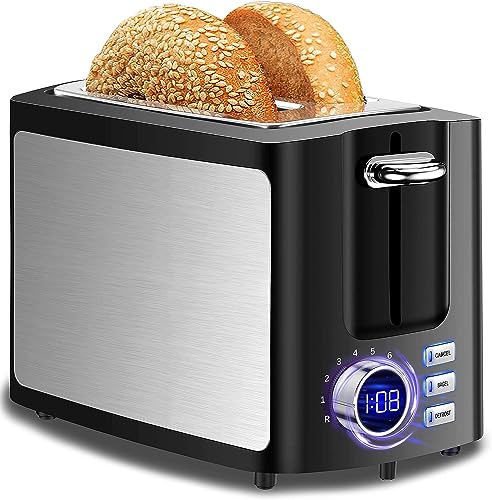
This guide to the best smart toasters applies a strict definition of the word smart, and the result is a short linked list on purpose. Of the six verified listings behind this guide, exactly one presents itself as a smart toaster: the Hommater 2 Slice Wide Slot Smart Toaster, whose listing pairs that claim with an LCD digital countdown timer and nine shade settings. It is the only linked pick below. The other five models are capable, well-specified two-slice and slim four-slice toasters, but their listings describe dials, levers and buttons rather than displays or smart controls, so they are reviewed in full as prose-only context picks. If you want a toaster that shows you a countdown and fine-grained shade control, start with the linked pick; if you want to understand what smart should mean before you spend anything, read the whole guide, because the buying-guide layer explains the difference between a genuinely smarter control system and a conventional toaster wearing a fashionable label.
- Hommater 2 Slice Wide Slot Smart Toaster — Best Overall Smart Pick. Best for buyers who want a countdown display and the finest shade steps in this pool.
- Amazon Basics 2 Slice Toaster — Best Button-Based Simplicity (prose-only in this guide). Best for buyers who prefer labelled buttons to screens.
- Elite Gourmet ECT1027B Cool-Touch Toaster — Best Cool-Touch Classic (prose-only in this guide). Best for simple controls in a safer housing.
- Hamilton Beach 22634 Extra-Wide Slot Toaster — Best Auto Shutoff (prose-only in this guide). Best for households that value a listed safety shutoff.
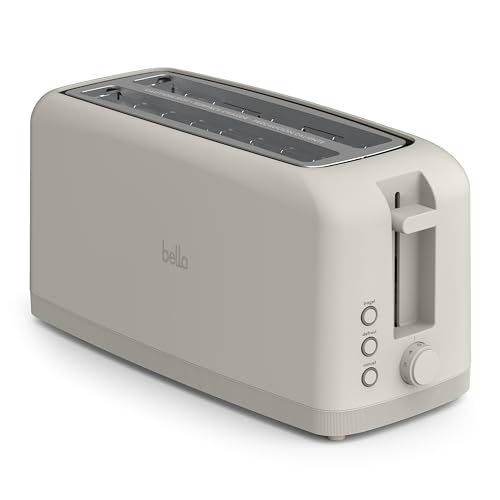
- bella Fits-Anywhere Slim Toaster — Best Slim Long-Slot (prose-only in this guide). Best for space-led buyers who do not need a display.
- BLACK+DECKER 2-Slice Toaster with Extra-Wide Slots — Best Extra Lift (prose-only in this guide). Best for lever-and-dial traditionalists who toast small items.
Read the full guide ↓
Introduction: What Smart Should Mean at Breakfast
The best smart toasters promise something a dial cannot offer: information. A conventional toaster asks you to guess how long is left, to memorise which number on a dial matches your bread, and to hover nearby because the only notification is the pop. A smarter toaster replaces that guesswork with feedback, a countdown you can read from across the kitchen, shade steps fine enough that your preference survives the change from white bread to sourdough, and one-touch functions for the frozen, the halved and the merely forgotten slice. When those features are real, breakfast becomes a timed routine instead of a small act of faith, and in a busy household that difference is felt every single morning.
But smart is also the most abused word in the small-appliance aisle, and this guide refuses to play along with the abuse. Plenty of ordinary toasters acquire the smart label in roundup articles simply because they are new, or black, or sold online. When we checked the six verified listings behind this guide, only one of them, the Hommater, actually describes itself as a smart toaster, and it backs the word with the pool’s only display: an LCD digital countdown timer, alongside nine shade settings and bagel, defrost, cancel and reheat functions. None of the six listings claims app control, voice control or Wi-Fi, and we will not pretend otherwise anywhere on this page; if your definition of smart requires a phone app, none of these verified picks meets it, and the honest advice is to shop a different, connected category with your eyes open. Within this pool, smart means a display-led control system, and exactly one pick qualifies for a link on that basis.
The other five picks still matter to the conversation, which is why they are reviewed in full below. Many buyers who arrive searching for smart discover that what they actually want is reliability, a bagel mode that works, a lift lever that rescues muffins, or a slim body that fits the counter, and those wants are served by conventional machines at conventional complexity. Readers weighing the display-led route against simpler formats may also want our Best Toasters 2 Slice research, and anyone shopping from outside the United States should read the regional notes gathered under Best Smart Toasters Australia before assuming a US listing translates directly. First, though, here is the one verified smart pick, and the five honest alternatives, in detail.
Key Takeaways
- Only one verified listing in this pool calls itself a smart toaster: the Hommater, with an LCD digital countdown timer and nine shade settings. It is the only linked pick in this guide.
- No listing in this pool claims app control, Wi-Fi or voice assistants. In this guide, smart means display-led feedback and fine shade control, not connectivity.
- A countdown timer is the single most useful smart feature at breakfast, because it turns waiting into planning and ends the hover-by-the-toaster routine.
- Nine shade settings give the Hommater the finest browning steps here; the other picks offer six or seven, or do not state a count.
- Conventional picks still win for many buyers: labelled buttons, extra lift levers, cool-touch housings and auto shutoff solve real problems without a screen.
- Judge any toaster calling itself smart by what its listing states: a named display, a stated shade range and named one-touch functions, not by the adjective alone.
In this guide
Quick Picks
| Pick | Badge | Controls | Why it is here | Link |
|---|---|---|---|---|
| Hommater 2 Slice Wide Slot Smart Toaster | Best Overall Smart Pick | LCD countdown, 9 shades, bagel/defrost/cancel/reheat | The pool’s only self-described smart toaster, with its only display | Check on Amazon |
| Amazon Basics 2 Slice Toaster | Best Button-Based Simplicity | Buttons for defrost, cancel, bagel; 6 browning settings | Labelled-button clarity with a stated 900W (prose-only) | Prose-only |
| Elite Gourmet ECT1027B Cool-Touch Toaster | Best Cool-Touch Classic | 6 shades, cancel | Simple controls in a cool-touch body (prose-only) | Prose-only |
| Hamilton Beach 22634 Extra-Wide Slot Toaster | Best Auto Shutoff | 7 shades, bagel and defrost buttons | A listed auto shutoff and Toast Boost (prose-only) | Prose-only |
| bella Fits-Anywhere Slim Toaster | Best Slim Long-Slot | Not stated in listing | A slim four-slice long slot for space-led buyers (prose-only) | Prose-only |
| BLACK+DECKER 2-Slice Toaster | Best Extra Lift | 7 shade settings, bagel mode | An extra lift lever for small items (prose-only) | Prose-only |
Notice what the controls column reveals: a clear ladder. At the top sits a display with a countdown and nine steps of browning. Below it, two seven-setting machines and two six-setting machines offer the traditional dial-and-button experience, and at the bottom a slim design whose listing does not discuss controls at all. Smart, in this pool, is not a spectrum of six; it is one machine with a screen and five without. The reviews below keep that ladder in view, because the right question is not which toaster is smartest in the abstract, but how much feedback your mornings actually need.
How These Picks Were Chosen
This is a research-led guide. We have not run hands-on trials, toasted a set number of test slices or connected any of these machines to a phone, and nothing in this article should be read as a lab result. Our method was to take the six verified listings assigned to this keyword, read exactly what each one states, and apply a linking rule strict enough to mean something: a pick is linked as a smart toaster only when its own listing supports the claim with smart positioning and display-led controls. The Hommater passes on both counts, naming itself a smart toaster and listing an LCD digital countdown timer. The Amazon Basics, Elite Gourmet, Hamilton Beach, bella and BLACK+DECKER listings describe capable conventional controls and make no smart claim, so those five are covered completely, with badges, strengths, trade-offs and verdicts, as prose-only picks.
We also defined our terms before ranking anything, because smart has at least three meanings in the wild. The strongest meaning, a connected appliance with an app, sensors and firmware, is claimed by none of these listings, and we say so openly rather than letting readers assume it. The middle meaning, digital feedback and precision controls, is the Hommater’s territory. The weakest meaning, smart as a synonym for modern or well designed, is marketing weather, and we ignored it. Specifications throughout this guide are limited to listing-stated facts: slot formats, shade counts, named functions and the pool’s single stated wattage. Where a listing is silent, on connectivity, on dimensions, on a shade count for the bella, we report the silence instead of filling it with plausible invention, because a buying guide that invents specifications has stopped being a guide.
That discipline shapes the recommendation at the end of this page. If display-led control is your priority, there is one verified answer here. If it is not, the prose-only five are not a consolation prize; they are the actual shortlist for most kitchens, and the buying-guide layer will help you choose among them by the problems they solve rather than the labels they wear.
The 6 Best Smart Toasters in Detail
The linked pick leads, because it is the only machine here whose listing claims the keyword. The five prose-only reviews follow in badge order, each written to the same standard, so you can judge whether your household needs a display at all, or whether a simpler control style serves your mornings better.
Hommater 2 Slice Wide Slot Smart Toaster
Badge: Best Overall Smart Pick
Strengths
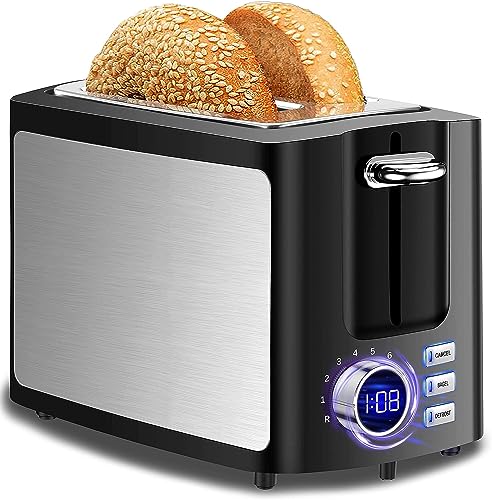
- LCD digital countdown timer shows the time remaining, the defining smart behaviour in this pool.
- Nine shade settings offer the finest browning gradations of any pick here.
- Bagel, defrost, cancel and reheat functions are all listed, so the common breakfast jobs each get a dedicated control.
Trade-offs
- Smart here means a display, not connectivity: the listing claims no app, Wi-Fi or voice control.
- A screen and a wider function set mean more settings to learn than a single dial machine.
- Two-slice capacity is shared with most of the pool, so family batches still run in relays.
Mini spec box
- Format: 2 slice, wide slot
- Display: LCD digital countdown timer
- Shade settings: 9
- Listing-stated functions: bagel, defrost, cancel, reheat
The Hommater earns the only link in this guide by doing the one thing that changes how a toaster feels to live with: it tells you what is happening. A countdown display sounds like a luxury until a weekday morning stacks toast against a train time, a school run and a kettle, at which point knowing whether the slice has most of a minute left or only a few seconds becomes the difference between buttering at leisure and sprinting back across the kitchen. The display also quietly improves browning consistency, because you can pair a shade number with a time you have seen, repeat the pairing tomorrow, and build a small personal database of what works for your bread, your freezer and your tastes. Nine shade settings support that project with steps fine enough to matter; on a six-setting dial, the gap between adjacent stops is where many households’ ideal toast lives, unreached.
The function list is the other half of the case. Reheat is the underrated one: the slice that popped while you were finding the jam gets a gentle warm-through instead of a second full browning that tips it into dryness. Defrost handles the frozen loaf honestly, bagel mode addresses the halved, dense case, and cancel is the admission that humans change their minds. The honest limitation is the boundary of the word smart itself. Nothing in the listing promises an app, a connected home integration or automatic bread sensing, so buyers dreaming of a toaster that talks to their phone should treat this as a display-led appliance, not a connected one. Judged on what it actually claims, though, it is the most informative toaster in this pool, and information is what smart was supposed to mean all along.
Best for: routine-driven households that want countdown feedback and fine shade steps / Not suited for: buyers who require app or voice connectivity from a smart appliance
Amazon Basics 2 Slice Toaster
Badge: Best Button-Based Simplicity (prose-only in this guide)
Strengths
- Separate labelled buttons for defrost, cancel and bagel make the control logic obvious to any guest or teenager.
- The pool’s only stated wattage, 900W, gives planners a concrete electrical figure.
- Cord wrap and a removable crumb tray keep the machine tidy to own.
Trade-offs
- No display and no smart claim in the listing, so it is prose-only in a smart guide.
- Six browning settings are the pool’s coarsest ladder alongside the Elite Gourmet.
- Feedback is the traditional kind: you learn its timing by living with it.
Mini spec box
- Format: 2 slice, extra wide slots for bagels
- Browning settings: 6
- Power: 900W (the only wattage stated in this pool)
- Listing-stated functions: defrost, cancel and bagel buttons, removable crumb tray, cord wrap
There is a respectable argument that the smartest control system is the one nobody has to learn, and this Amazon Basics model is that argument in appliance form. Three labelled buttons cover the three mid-cycle decisions a household actually makes, the dial offers six browning stops, and the slots are extra wide so bagels fit the machine the buttons describe. In a household with guests, grandparents or a rotating cast of teenagers, that legibility has real value: nobody needs a manual, a tutorial or a charged phone to make toast. The stated wattage is a small, welcome piece of concreteness for buyers planning around older circuits, and the cord wrap acknowledges that counters are shared spaces.
It is prose-only here for the simplest of reasons: its listing claims buttons, not brains. If your search for a smart toaster was really a search for a toaster that feels considered, this one may quietly be your answer, and the guide’s final recommendation will say so plainly. The honest limitation is feedback. With no countdown and no display, your first week involves the traditional apprenticeship of watching, waiting and learning what its middle setting does to your usual loaf. Households that run on tight schedules will feel that gap; households that run on habit will never notice it.
Best for: shared households that value legible, labelled controls over displays / Not suited for: buyers who specifically want countdown feedback
Elite Gourmet ECT1027B Cool-Touch Toaster
Badge: Best Cool-Touch Classic (prose-only in this guide)
Strengths
- Cool-touch housing makes the machine safer to place and to brush past in a busy kitchen.
- Slots are specified at 1.25 inches and described as extra-wide, with bagels and thick bread named in the listing.
- A cancel function and six shades cover the essentials without menu-diving.
Trade-offs
- No smart positioning, display or countdown appears in the listing.
- Six shades are standard rather than fine-grained.
- The black finish is understated if you wanted the toaster to be a design feature.
Mini spec box
- Format: 2 slice, cool-touch body
- Slot width: 1.25 inches, extra-wide
- Shade settings: 6
- Listing-stated functions: cancel; bagels and thick bread suitability
- Model: ECT1027B
The Elite Gourmet’s contribution to this conversation is physical rather than digital. Cool-touch sides change where a toaster can live and how relaxed a kitchen feels around it, which is a form of everyday intelligence that never appears in a features race. Its listing also gives the pool’s most concrete slot specification, 1.25 inches, and names thick bread directly, so buyers whose loaves run chunky get a straighter answer here than anywhere else in the six; our Best Thick Slice Toasters research draws on exactly that specification. Controls stay deliberately plain: six shades and a cancel function, the breakfast essentials with nothing to configure.
Prose-only status follows from the guide’s rule, since the listing makes no smart claim and offers no display. The honest limitation is that if countdown feedback is what brought you to this keyword, this machine offers none of it, and no amount of placement friendliness substitutes. But if your smart search was really about a toaster that behaves sensibly in a real kitchen, hot sides solved and thick slices welcome, this is the context pick that respects the underlying need.
Best for: safety-conscious placement and thick-sliced loaves with simple controls / Not suited for: buyers seeking display-led or connected features
Hamilton Beach 22634 Extra-Wide Slot Toaster
Badge: Best Auto Shutoff (prose-only in this guide)
Strengths
- Auto shutoff is listed, a passive safety behaviour that suits forgetful mornings.
- Toast Boost raises finished small items higher, reducing stuck-muffin rescues.
- Seven shades with bagel and defrost buttons cover a wide household range.
Trade-offs
- No display, countdown or smart claim appears in the listing.
- The blue finish will not suit every kitchen’s palette.
- Auto shutoff is a safety net, not a substitute for a cancel decision mid-cycle.
Mini spec box
- Format: 2 slice, extra-wide slot
- Shade settings: 7
- Listing-stated functions: bagel and defrost buttons, auto shutoff, Toast Boost, slide-out crumb tray
- Finish: Kitchen Makeover Blue
- Model: 22634
If the Hommater’s intelligence is active, a display talking to you, the Hamilton Beach’s is passive: an auto shutoff that quietly ends a cycle, and a Toast Boost that thinks about the moment after the pop, when small slices sit low and fingers go fishing. Both behaviours address the two genuine hazards of toaster ownership, the forgotten cycle and the stuck muffin, without asking the user to learn anything. Seven shade settings give it the joint-finest conventional ladder in the pool, and the slide-out crumb tray keeps the weekly clean simple. The blue finish is a personality decision layered on top, and in a plain kitchen it may be exactly the point.
It carries no link here because its listing claims none of the smart apparatus this keyword is about, and the guide’s honesty about that is what makes the one link it does give worth trusting. The honest limitation: passive safety is not feedback. You still will not know how long a cycle has left, and if your mornings run to the minute, that unknown is the thing a display exists to remove.
Best for: households that value passive safety behaviours and a higher lift / Not suited for: buyers who want visible countdown information
bella Fits-Anywhere Slim Toaster
Badge: Best Slim Long-Slot (prose-only in this guide)
Strengths
- A slim, fits-anywhere body with one extra long and wide slot serves four slices from a narrow footprint.
- Long loaves and wide artisan slices fit whole, in a single pass.
- The Oatmilk finish gives small kitchens a softer look than the usual black or steel.
Trade-offs
- The listing states no shade count and names no bagel, defrost or smart functions.
- One shared slot means one browning decision for the whole batch.
- Nothing in the listing speaks to displays, timers or connectivity.
Mini spec box
- Format: 4 slice, single extra long and wide slot
- Design claim: slim, fits-anywhere body
- Finish: Oatmilk
- Listing-stated functions: none named beyond the slot format
The bella is in this guide as the reminder that not every breakfast problem is a control problem. For the buyer whose counter is a narrow strip, its slim body and long slot solve the actual constraint, and they solve it while feeding four slices and swallowing the long sourdough that defeats standard slots. Set against a smart brief, though, its listing is silent: no shade count, no named functions, no display. We therefore review it warmly and link it not at all, which is the guide working as intended. Buyers whose space problem outranks their feedback problem will find it leading our small-and-compact research instead.
The honest limitation for this keyword is total: if you came for countdowns and fine shade steps, this listing promises neither, and its single shared slot is the opposite of per-slice control. Its intelligence is geometric. Kitchens are different, and so are definitions of a smart purchase; this one is the smart buy for a narrow counter and the wrong buy for a display hunter, and a good guide should be able to say both in the same paragraph.
Best for: narrow counters needing four-slice, long-loaf capacity / Not suited for: buyers shopping for display-led smart controls
BLACK+DECKER 2-Slice Toaster with Extra-Wide Slots
Badge: Best Extra Lift (prose-only in this guide)
Strengths
- Extra lift lever raises small items clear of the slots, the classic solution to the stuck crumpet.
- Seven shade settings match the finest conventional ladder in the pool.
- Extra-wide slots and a bagel mode cover thick and halved items.
Trade-offs
- The listing is entirely conventional: no display, no countdown, no smart claim.
- No auto shutoff or reheat function is named.
- Its feedback loop is the oldest one in the category: experience.
Mini spec box
- Format: 2 slice, extra-wide slots
- Shade settings: 7
- Listing-stated functions: bagel mode, extra lift lever, removable crumb tray
The BLACK+DECKER closes the reviews as the traditionalist benchmark, the machine against which the smart claim has to justify itself. Its extra lift lever is a genuinely thoughtful piece of design that predates the smart era and solves a problem no app has ever addressed. Seven shades, extra-wide slots and a bagel mode complete a package that millions of breakfasts have validated in spirit: set the dial, learn your number, eat. For a buyer whose current toaster is a decade old and beloved, this is the like-for-like modern replacement, and there is no shame in that being the whole requirement.
Prose-only, again, by the rule: nothing in the listing reaches for the smart label, so neither do we on its behalf. The honest limitation is the mirror of its strength. Everything it knows, it keeps to itself; timing, progress and readiness are yours to judge. If that relationship with an appliance sounds peaceful rather than primitive, this may be your pick, and the finishing sections will help you decide with clear eyes.
Best for: traditionalists who want a high lift and a familiar dial / Not suited for: buyers who want any form of digital feedback
Comparison Table
| Pick | Display | Shades | Named functions | Smart status | Link |
|---|---|---|---|---|---|
| Hommater 2 Slice Smart Toaster | LCD countdown | 9 | Bagel, defrost, cancel, reheat | Listed as smart, display-led | Check on Amazon |
| Amazon Basics 2 Slice Toaster | None listed | 6 | Defrost, cancel, bagel buttons | Conventional | Prose-only |
| Elite Gourmet ECT1027B | None listed | 6 | Cancel | Conventional | Prose-only |
| Hamilton Beach 22634 | None listed | 7 | Bagel, defrost, auto shutoff, Toast Boost | Conventional | Prose-only |
| bella Fits-Anywhere Slim Toaster | None listed | Not stated | None named | Conventional, slim design | Prose-only |
| BLACK+DECKER 2-Slice Toaster | None listed | 7 | Bagel mode, extra lift | Conventional | Prose-only |
The display column is the whole argument in one glance: one entry, five blanks. That is not a failure of the pool; it is an accurate picture of a market where the word smart is claimed loudly and equipped rarely. Buy from the row that matches the morning you actually live, not the adjective you searched.
How to Choose a Smart Toaster
Begin by deciding which meaning of smart you are actually shopping for, because the three meanings lead to three different purchases. If you want a connected appliance, one that pairs with an app, joins your home network and takes voice commands, then say so plainly and shop connected ranges, because no listing in this guide claims any of that, and buying a display-led toaster while expecting connectivity is the most common disappointment in this category. If you want feedback, a machine that shows time remaining and offers fine, repeatable shade steps, the Hommater’s listed specification is the template to compare against: a named countdown display, a stated shade count at the fine end of the market, and dedicated functions for bagel, defrost, cancel and reheat. If you want neither and simply want a modern, well-made toaster, drop the adjective and shop the conventional virtues, lift height, slot width, crumb handling and housing, where the prose-only picks in this guide compete on equal terms.
Next, interrogate the shade ladder. The number of settings matters less than the spacing between them, but since listings rarely describe spacing, the count is the proxy you have: nine steps divide the journey from pale to dark more finely than six, which matters most for households split between a light-toast person and a dark-toast person, and for breads like brioche and fruit loaf that brown fast and punish coarse jumps. Pair that with functions honestly. Defrost earns its button in freezer households; reheat earns its keep in distracted ones; bagel mode matters if halved bagels are a weekly event rather than a holiday experiment. A function list is only smart if it matches your actual breakfast repertoire, a point our finish-focused colleagues make in a different way when comparing Best Stainless Steel Toasters, where the headline attribute likewise has to survive contact with your real routine.
Then consider the humans. A display helps whoever cooks for others, because a countdown lets a parent time eggs to toast without guesswork, and it helps guests, who can read a screen more easily than they can learn a dial’s personality. Buttons help households that value instant legibility. Levers and lift mechanisms help everyone who toasts small things. Finally, weigh upkeep: screens and touch surfaces show splashes, dials shrug them off, and in a hard-working kitchen that mundane difference may outlast the novelty of any feature. Smart is a means. The end is toast that arrives the way you like it, at the moment the rest of breakfast is ready, with the least possible hovering.
How to Use Display-Led Controls Well
Getting value from a countdown display is a small discipline. For the first week, treat every cycle as calibration: note the shade number and the displayed time for your usual bread, fresh and from frozen, and write the pairings on a card inside a cupboard door if your household shares the machine. Within days the display stops being a novelty and becomes a schedule: you will know that starting the eggs when the countdown passes a certain point lands everything together, which is the entire promise of the category fulfilled in one habit. Use reheat for the interrupted slice rather than re-toasting it, use defrost rather than extending a normal cycle for frozen bread, and use cancel the moment you smell a setting error, because a cancelled cycle costs seconds and a burnt one costs the slice.
Care is equally simple. Wipe the display and control panel with a soft, slightly damp cloth after the machine cools; crumbs are the enemy of every toaster, so keep the tray on a weekly emptying rhythm and never shake the machine over the counter you just cleaned. Keep the slots free of packaging, foil and oversized items forced in sideways, and let the machine cool between back-to-back family batches when you can, since heat soak shifts browning on later cycles in any toaster, smart or not.
Troubleshooting
Problem: the same shade number browns darker on the second batch → the elements are already hot, so drop one shade step for repeat cycles or let the machine rest briefly; this is physics, not a fault. Problem: frozen bread emerges pale in the middle → use the defrost function rather than a longer normal cycle, since defrost is sequenced for frozen loaves. Problem: the countdown seems inconsistent between breads → different breads genuinely take different times at the same shade, especially moist or sugary loaves; keep per-bread notes for a week and the pattern will settle.
Smart, Digital and Connected: Untangling the Labels
Three labels circulate in this category and they are not synonyms. Digital describes controls: a screen, a timer, electronic shade steps. Connected describes communication: an app, a network, a voice assistant. Smart is used by sellers to mean either, neither, or simply new. The Hommater in this pool is digital and calls itself smart; nothing here is connected. That distinction matters beyond toasters, and the same scepticism serves buyers browsing categories as different as Best Stovetop Toasters, where the appeal is the deliberate absence of electronics, or heritage-led searches like Best Swiss Made Toasters, where an origin story does the persuading that a feature list does elsewhere. In every case the method is the same: read what the listing states, name what it does not, and buy the stated thing.
One more label deserves a sentence, because it appears in listings across the wider market even though it appears in none of these six: sensor-driven browning, where the machine claims to judge the bread rather than the clock. When a listing states such a system plainly, it belongs in the same evidence conversation as a countdown display. When the word sensor appears without any explanation of what is sensed or what changes as a result, treat it as decoration. The discipline is identical in both cases, and it is the discipline this whole guide runs on: a feature you cannot point to in the listing is a feature you should not pay for.
There is also a fair question about whether a toaster needs intelligence at all, and the honest answer is that it needs exactly as much as your routine wastes without it. If your household’s toast problem is timing collisions and shade arguments, feedback features solve real friction. If your toast problem is stuck muffins and hot sides, levers and housings solve it, and a screen is decoration. The mature way to shop this keyword is to let your own breakfast autopsy, not the category’s vocabulary, set the specification.
Do Smart Features Change the Toast Itself?
It is worth separating two promises that marketing happily blurs. A display-led control system does not change the physics inside the slots: elements heat, bread dries and sugars brown, and a countdown timer has no influence over any of it. What the display changes is the human side of the equation, the precision with which you can repeat a result and the ease with which you can coordinate toast with everything else on the stove. Repeatability is not a small thing. Most disappointing toast is not caused by bad elements but by vague instructions given to good ones: a dial nudged by a sleeve, a setting remembered wrong, a frozen slice treated as a fresh one. A numbered shade paired with a visible time turns each breakfast into data, and data is what turns a household’s toast from approximate to reliable over a fortnight of mornings.
There is a second, quieter effect worth naming: attention. A toaster that reports its progress invites you to stay loosely engaged with breakfast instead of either hovering anxiously or wandering off entirely. The reheat function exists for the wandering case, and the countdown exists for the scheduling case, and between them they cover the two ways toast actually fails in real kitchens, which is rarely by burning dramatically and usually by being ready at the wrong moment, too early for the eggs or too late for the train. Judged that way, the smart premium in this pool is not about the toast being better in the slot; it is about the toast being right on the plate, at the right second, in the right shade, more mornings out of ten. Buyers who recognise their own failures in that description will get value from the linked pick. Buyers whose toast already lands reliably will find the conventional five perfectly sufficient, and should spend their attention on slot width, lift and housing instead.
Common Buying Mistakes
- Assuming smart means connected. In this pool, no listing claims an app or Wi-Fi. Read for named features, a display, a shade count, stated functions, and treat the adjective as a headline, not a specification.
- Paying for functions your breakfast never uses. Defrost, reheat and bagel modes are valuable only if your household actually freezes bread, reheats slices and toasts bagels. Match the function list to your repertoire.
- Ignoring shade-step spacing. A household split between pale and dark preferences needs fine steps. Nine settings and six settings are different ownership experiences, not just different numbers.
- Forgetting the second batch. Every toaster browns faster when hot. If you regularly toast in relays, plan to step the shade down for later cycles instead of blaming the machine.
- Overlooking the physical basics. Slot width, lift height and crumb handling decide daily satisfaction long after display novelty fades. The prose-only picks in this guide exist to prove that point.
- Skipping the listing’s silences. If connectivity, dimensions or a shade count are not stated, they are not promised. Check the full product page before ordering on an assumption.
Final Recommendation
If you came to this keyword for the thing it actually promises, feedback, timing and fine control, the verified answer in this pool is singular: the Hommater 2 Slice Wide Slot Smart Toaster, the only listing here that calls itself smart and equips the claim with an LCD countdown and nine shade settings. Buy it for the display and the ladder of shades, and expect a display-led appliance rather than a connected one. If your honest autopsy says your mornings need something else, choose from the prose-only five without any sense of settling: the Amazon Basics for legible buttons, the Elite Gourmet for cool-touch placement and thick slices, the Hamilton Beach for auto shutoff and Toast Boost, the bella for a slim long slot, and the BLACK+DECKER for its extra lift. The smartest purchase is the one matched to your breakfast, and this guide would rather sell you that sentence than a label.
Frequently Asked Questions
What does smart actually mean on a toaster?
On the evidence of real listings, it usually means digital, display-led controls: a countdown timer, electronic shade selection and one-touch functions. It does not automatically mean an app or Wi-Fi. In this guide’s pool, only the Hommater claims the smart label, and its listed equipment is an LCD countdown display with nine shade settings and bagel, defrost, cancel and reheat functions.
Do any of these toasters connect to an app or voice assistant?
No listing in this verified pool claims app control, Wi-Fi or voice integration, and this guide will not imply otherwise. If connectivity is a requirement, shop ranges whose listings state it explicitly, and expect a different product class and ownership experience.
Is a countdown timer genuinely useful or just a novelty?
It earns its place in routine-driven households. Knowing the time remaining lets you synchronise eggs, coffee and the rest of breakfast, ends hovering, and helps you pair shade numbers with times for repeatable results. In a slow, single-person kitchen it matters less, which is why several excellent conventional picks sit in this guide.
Why do later batches toast darker at the same setting?
Because the elements and cavity are already hot. The second cycle starts from warmth, so browning accelerates. Step the shade down a notch for repeat batches or allow a short rest between them. This happens in every toaster, and a display at least makes the pattern visible and manageable.
Why are five picks in a smart toaster guide not linked?
Because their listings make no smart claim and list no display. The guide links a pick as a smart toaster only when the listing itself supports that description. The five are reviewed in full because many readers who search smart actually need conventional virtues, a lift lever, cool sides, a slim body, and deserve an honest shortlist.
How many shade settings do I need?
Enough that your household’s preferences land on settings rather than between them. Six settings suit a single, consistent taste. Seven add a little room. Nine, as on the linked Hommater, help mixed households and fast-browning breads like brioche, where the step between too pale and too dark is small.
What should I check on a smart toaster listing before buying?
Look for named, checkable claims: the type of display, the shade count, the exact function list, and slot format. Then look for what is missing, and if connectivity, dimensions or any feature you care about is unstated, verify it on the full product page rather than assuming the headline adjective covers it.