Disclosure: topratedkitchenware.com is reader-supported. When you buy through links on our site, we may earn an affiliate commission from Amazon and other retailers, at no extra cost to you.
Where to buy
The six electric jug frothers below were confirmed through the Creators API on 2026-11-20 and were shortlisted for coffee drinkers who want one jug to handle the whole home coffee menu. Use the links to check the latest price on Amazon and to confirm the exact variant’s capacity and modes before ordering.
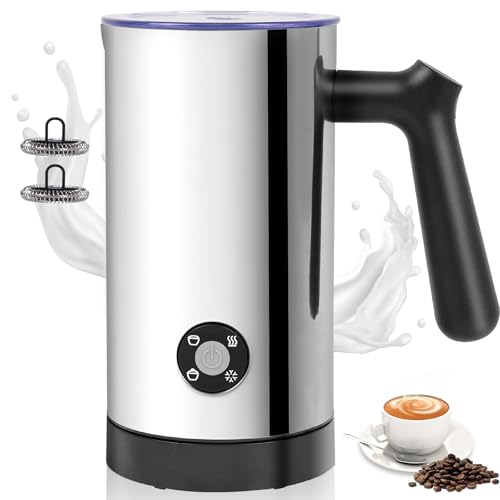
- Casimhu 4-in-1 Electric Milk Frother with LED Touch Screen, 13.52oz, Ceramic-Coated — Check on Amazon
- SIMPLETASTE Milk Frother, 4-in-1 Electric Automatic Milk Steamer — Check on Amazon
- SIMPLETASTE Milk Frother, 4-in-1 Electric Milk Steamer, 16.91oz / 500ml — Check on Amazon
- Ecoflarix 350ml Electric Milk Frother, 4-in-1, 450W, SUS304 Steel — Check on Amazon
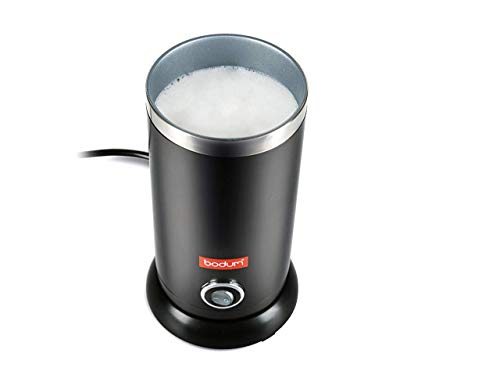
- Bodum 10oz Bistro Electric Milk Frother, Black — Check on Amazon
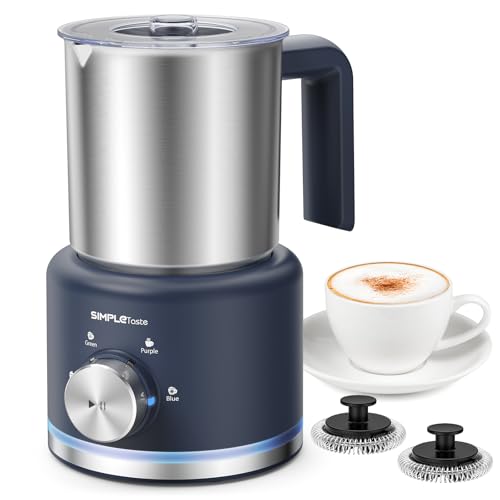
- SIMPLETASTE Milk Frother, 4-in-1 Electric Automatic Milk Steamer, Dark Blue — Check on Amazon
Read the full guide below for coffee-by-coffee guidance, from espresso drinks to filter coffee with warmed milk, plus cleaning and troubleshooting.
The search for the best milk frothers for coffee is the broadest in this cluster, because coffee at home is not one drink. It is espresso becoming lattes, cappuccinos, and macchiatos; it is moka pot coffee softened with steamed milk; it is filter coffee and French press that some drinkers take with warmed milk and no foam at all; and increasingly it is cold brew and iced coffee crowned with cold foam. A frother that serves coffee properly must therefore do more than foam: it must steam-texture milk for lattes, build a cap for cappuccinos, warm milk smoothly for café au lait styles, and make cold foam without heating. That is why every pick in this verified pool is an electric jug, and why most are explicit 4-in-1 models. This guide judges them as coffee appliances, on the breadth of the coffee menu they cover, the repeatability of their cycles during a busy morning, the honesty of their stated capacities, and how easily they clean after daily coffee service. It also keeps the hierarchy of home coffee honest: the coffee itself, its freshness, grind, and brewing, decides most of a cup’s quality, and the frother’s job is to deliver milk at the right texture and temperature without stealing attention from the coffee. A good jug does that invisibly, in parallel with brewing, and shuts off when it is done. You will find key takeaways, a quick picks table, the selection method, six detailed reviews with strengths, trade-offs, and spec boxes drawn only from verified titles, a comparison table, a buying guide organised by coffee style, a how-to covering the main coffee drinks with troubleshooting, sections on pairing a frother with espresso, moka, and filter brewing, common mistakes, a final recommendation, and frequent questions. Drinkers whose coffee order is specifically a latte can go deeper with Best Milk Frothers For Lattes.
Key Takeaways
- For coffee, breadth is the brief: warm foam, steamed milk, warmed milk, and cold foam cover the full home menu, and most picks here are 4-in-1 jugs.
- The 13.52oz Casimhu touch-screen jug is the balanced coffee all-rounder; the 500ml SIMPLETASTE serves households and guests.
- Compact jugs such as the Ecoflarix 350ml and Bodum 10oz suit solo espresso routines and small coffee corners.
- Repeatable automatic cycles matter because milk should finish in step with brewing, not before or after it.
- Verify unstated capacities and modes on the listing; two picks in this pool keep their titles brief.
- Specs come only from verified titles checked on 2026-11-20; no prices or ratings are printed because they change constantly.
In this guide
Quick Picks
| Pick | Badge | Best for | Link |
|---|---|---|---|
| Casimhu LED Touch, 13.52oz, Ceramic-Coated | Best Overall | Most coffee households wanting visible modes and margin | Check on Amazon |
| SIMPLETASTE 4-in-1 Automatic | Best Value | Everyday coffee drinks with one-press consistency | Check on Amazon |
| SIMPLETASTE 4-in-1, 500ml | Best for Households | Multiple coffee drinkers and guest rounds | Check on Amazon |
| Ecoflarix 350ml, 450W, SUS304 Steel | Best Compact | Solo espresso drinkers and quiet kitchens | Check on Amazon |
| Bodum 10oz Bistro, Black | Best Simple Brand Pick | Familiar design name for a tidy coffee corner | Check on Amazon |
| SIMPLETASTE 4-in-1, Dark Blue | Best Colour Option | Styled coffee corners with full automatic function | Check on Amazon |
Badges repeat in the detailed reviews. Hot-chocolate households sharing the same jug should also read Best Milk Frothers For Hot Chocolate.
How These Picks Were Chosen
This guide is research-led and makes no hands-on testing claims. Every product was cross-checked through the Creators API on 2026-11-20, matching brand, description, and image to the API-returned title; only API-confirmed products received Amazon links and images. Spec boxes quote only verified title details, and unstated figures are labelled as unstated with a direction to check the listing. No prices, star ratings, or review counts are printed, because they change constantly; positioning is qualitative and each link invites you to check the latest price on Amazon. Selection weighted menu breadth first, since the keyword is coffee in general: jugs naming lattes, cappuccinos, macchiatos, and hot chocolate, plus warm and cold foam, ranked highest. It weighted cycle repeatability second, because coffee brewing already occupies the drinker’s hands and judgement. It weighted capacity honesty third, favouring titles that state sizes in ounces, millilitres, or both. Cleaning and controls completed the picture, with ceramic-coated, nonstick-style, and steel interiors all represented, and control styles from one-touch automatic to an LED touch screen, so different coffee households can match the jug to the person who will actually operate it at dawn.
The 6 Best Milk Frothers for Coffee Drinkers
These are the six best milk frothers for coffee in all its home forms, judged on menu breadth, cycle repeatability, capacity honesty, and daily cleaning.

Casimhu 4-in-1 Electric Milk Frother and Steamer with LED Touch Screen, 13.52oz
Badge: Best Overall
Strengths
- 13.52oz ceramic-coated jug covers two coffee drinks with margin.
- LED touch screen makes switching between latte foam, cappuccino foam, and cold foam unambiguous.
- Auto shut-off lets the jug run in parallel with espresso or moka brewing.
Trade-offs
- Touch panel prefers dry hands during a busy brew.
- Mid-large footprint needs a measured home in the coffee corner.
- Ceramic coating rewards prompt rinsing after the morning round.
Mini spec box
- Format: Electric jug frother and steamer, 4-in-1
- Capacity stated in title: 13.52oz
- Interior: Ceramic-coated
- Controls: LED touch screen
- Modes named in title: Cold and warm foam; for lattes, cappuccinos, and hot chocolate
- Safety: Auto shut-off
Coffee households change their order daily, and the Casimhu is built for that indecision. One morning it is cappuccino foam, the next it is a latte’s smoother texture, on a summer afternoon it is cold foam over cold brew, and the touch screen keeps those choices explicit instead of buried in button-press codes. The 13.52 ounce jug is the practical centre of the pool: enough for two regular coffee drinks per batch, not so much that a solo drink leaves the milk thin and lost. The ceramic-coated interior suits coffee service specifically, because coffee households froth daily and rinse daily, and a coating that releases residue quickly keeps the jug in the routine rather than in the sink. Auto shut-off is the quiet hero of coffee making, finishing the milk while you tamp, pour, or plunge. Its limits are the usual ones for its class: dry hands for the panel, a real footprint, and gentle cleaning. As a single jug for a whole coffee menu, it is the guide’s first recommendation.
Best for: Households whose coffee order changes daily / Not suited for: Minimalists who make one small drink only

SIMPLETASTE Milk Frother, 4-in-1 Electric Automatic Milk Steamer
Badge: Best Value
Strengths
- Automatic warm foam, cold foam, and milk warming for the full coffee menu.
- One-press consistency suits households where coffee is made by several people.
- Names the core coffee drinks in its title: latte, cappuccino, macchiato, hot chocolate.
Trade-offs
- Capacity is not stated in the title, so verify the frothing maximum on the listing.
- No display to confirm modes at a glance.
- Value tier means function leads and finish follows.
Mini spec box
- Format: Electric automatic milk steamer, 4-in-1
- Modes named in title: Warm and cold foam maker and milk warmer
- Drinks named in title: Latte, cappuccino, macchiato, hot chocolate
- Capacity: Not stated in verified title — check the listing
The SIMPLETASTE automatic steamer is the coffee value pick because coffee routines thrive on delegation. Espresso already asks for attention; a jug that needs only a press, and then produces the same foam as yesterday, frees the drinker to watch extraction, time a moka pot, or simply wake up. Its title names the coffee menu directly, and the milk-warmer mode deserves emphasis for coffee drinkers who take filter coffee with warm milk, a habit a foam-only appliance would fail. The single homework item is capacity: the title does not state it, so compare the listing’s frothing maximum with your usual mugs before ordering. Do that, and this becomes the jug most likely to be used identically by everyone in the house, which is a stronger predictor of good coffee than any premium finish.
Best for: Busy coffee households wanting automatic consistency / Not suited for: Buyers who need stated capacity upfront

SIMPLETASTE Milk Frother, 4-in-1 Electric Milk Steamer, 16.91oz / 500ml
Badge: Best for Households
Strengths
- 500ml capacity serves a household’s coffee round in fewer cycles.
- Automatic warm and cold foam plus easy-clean positioning suit daily volume.
- Metric and imperial capacity stated, simplifying mug planning.
Trade-offs
- Largest footprint in the pool.
- Frothing fill remains below total capacity; groups still need planning.
- Oversized for a solo coffee drinker.
Mini spec box
- Format: Electric milk steamer, 4-in-1
- Capacity stated in title: 16.91oz / 500ml
- Modes named in title: Automatic warm and cold foam
- Drinks named in title: Coffee, latte, macchiato, cappuccino, hot chocolate
- Cleaning note in title: Easy to clean
Where coffee is a household service rather than a solo ritual, capacity becomes kindness. The 500 millilitre SIMPLETASTE lets one person produce lattes and cappuccinos for a partner, family, or a table of guests without living at the counter, and its automatic operation keeps those successive cycles consistent. The title even names coffee itself among its drinks, which fits its role as the generalist’s jug. Easy cleaning matters at this volume, because a household jug is rinsed many times a day and any friction multiplies. The trade-offs are physical and obvious: it is the biggest jug here, it still respects a frothing maximum below its total size, and a solo drinker will find it more appliance than they need. For shared coffee homes, it is the practical centre of the shortlist. Households that also serve two cappuccinos at a time can refine the routine with Best Milk Frothers For 2 Cups Of Capuccino.
Best for: Coffee households and hosts serving several drinkers / Not suited for: Solo drinkers or compact counters

Ecoflarix 350ml Electric Milk Frother, 4-in-1, 450W, SUS304 Steel
Badge: Best Compact
Strengths
- Transparent specs: 350ml jug, 180ml foam figure, 450W, SUS304 steel, two whisks.
- Quiet positioning under 55dB suits early espresso routines.
- Right-sized for one coffee drinker who values a tidy corner.
Trade-offs
- Guests mean repeat cycles.
- Steel requires prompt rinsing after coffee service.
- Smaller volumes reward measured fills.
Mini spec box
- Format: Electric milk frother and steamer, 4-in-1, upgraded version
- Capacity stated in title: 350ml; foam figure stated: 180ml
- Power stated in title: 450W
- Material stated in title: SUS304 steel; 2 whisks included
- Noise note in title: Under 55dB
- Drinks named in title: Latte, cappuccino
The Ecoflarix is the solo coffee drinker’s jug, specified with unusual honesty. Its foam figure teaches the category’s central lesson, that frothing volume is a fraction of total volume, and its two-whisk system maps neatly onto a coffee menu: froth for the morning cappuccino, warm for the afternoon filter coffee with milk. Steel construction suits a serious small coffee corner beside a grinder and a scale, and the quiet positioning respects the household member still asleep while the first espresso is pulled. Its limits are throughput and care discipline. If your coffee life is one excellent drink at a time, those limits never bind; if it regularly becomes three drinks, choose a larger jug and save the Ecoflarix’s virtues for a desk or a small flat.
Best for: Solo espresso drinkers and small, quiet coffee corners / Not suited for: Regular guest rounds

Bodum 10oz Bistro Electric Milk Frother, Black
Badge: Best Simple Brand Pick
Strengths
- Bodum’s coffee heritage makes it a natural citizen of a coffee corner.
- Compact 10oz black jug pairs with French press and espresso setups alike.
- Simple operation suits coffee drinkers who dislike appliance menus.
Trade-offs
- Modes are not stated in the verified title; verify cold foam on the listing if you drink iced coffee.
- 10oz class is a one-to-two-drink jug.
- Minimal title means listing homework for detail-oriented buyers.
Mini spec box
- Format: Electric milk frother, Bistro line
- Capacity stated in title: 10oz
- Colour stated in title: Black
- Other specs: Not stated in verified title — check the listing
Bodum sells coffee equipment to people who already own Bodum coffee equipment, and the Bistro jug’s appeal is that continuity: a compact black frother that looks correct beside a French press, which is how a large share of home coffee is actually brewed. For the press-and-moka majority, its job is warm foam and steamed milk for morning cups, delivered without a learning curve. This guide’s caution is evidentiary: the title does not state a mode list, so iced-coffee drinkers who need cold foam should verify it on the listing or choose an explicit 4-in-1 pick. Judged as a simple, brand-coherent warm-drink frother for coffee, it earns its place; judged as an all-season coffee system, it asks one question you must answer on the listing first.
Best for: Bodum households and simple warm-coffee routines / Not suited for: Buyers who need confirmed cold foam sight unseen

SIMPLETASTE Milk Frother, 4-in-1 Electric Automatic Milk Steamer, Dark Blue
Badge: Best Colour Option
Strengths
- Dark blue finish gives a coffee corner a deliberate accent.
- Full automatic 4-in-1 function for the coffee menu, hot and cold.
- One-press routine keeps brewing the centre of attention.
Trade-offs
- Capacity is not stated in the title, so verify fills on the listing.
- Colour value depends on your kitchen’s real light and palette.
- Dark exterior shows milk spots; wipe after serving.
Mini spec box
- Format: Electric automatic milk steamer, 4-in-1
- Finish stated in title: Dark blue
- Modes named in title: Warm and cold foam maker and milk warmer
- Drinks named in title: Latte, cappuccino, macchiato, hot chocolate
- Capacity: Not stated in verified title — check the listing
A coffee corner is furniture as much as equipment, and the dark blue SIMPLETASTE is the pick for drinkers who admit that. It brings the same automatic 4-in-1 coffee coverage as the value model, warm foam for espresso drinks, cold foam for iced coffee, and warmed milk for filter cups, in a finish that can anchor a counter’s colour story. That combination matters because a frother lives in sight; a jug you enjoy looking at gets used, cleaned, and kept. Verify the unstated capacity against your mugs, as with its sibling model, and wipe the dark exterior as part of serving. If colour is irrelevant to you, the standard automatic model is the same routine without the statement; if your kitchen has a palette, this is the coffee pick that respects it. Matcha drinkers sharing the corner can extend the menu with Best Milk Frothers For Matcha Green Tea.
Best for: Styled coffee corners needing full coffee function / Not suited for: Buyers who need the largest stated capacity
Comparison Table
| Pick | Capacity (as stated) | Modes (as stated) | Coffee note | Link |
|---|---|---|---|---|
| Casimhu Touch 13.52oz | 13.52oz | Cold and warm foam | All-round coffee menu, visible modes | Check on Amazon |
| SIMPLETASTE Automatic | Not stated in title | Warm and cold foam, milk warmer | Automatic value for daily coffee | Check on Amazon |
| SIMPLETASTE 500ml | 16.91oz / 500ml | Automatic warm and cold foam | Household coffee rounds | Check on Amazon |
| Ecoflarix 350ml Steel | 350ml (180ml foam) | Hot and cold, 4-in-1 | Solo espresso, clearest specs | Check on Amazon |
| Bodum Bistro | 10oz | Electric frother (verify modes) | Simple brand-coherent warm drinks | Check on Amazon |
| SIMPLETASTE Dark Blue | Not stated in title | Warm and cold foam, milk warmer | Colour statement, full function | Check on Amazon |
For coffee, the modes column is the menu: confirm that your jug covers the drinks you actually brew, in the seasons you brew them, before comparing anything else.
How to Choose a Frother for Your Coffee Style
Match the jug to your brewing method first. Espresso households need both textures: airy foam for cappuccinos and smoother steamed milk for lattes, plus the discipline of parallel timing, so a clearly moded or automatic 4-in-1 jug is the right class. Moka pot households brew strong coffee in batches and often serve several cups at once, which pushes capacity upward toward the 500 millilitre pick. Filter and French press households drink larger, milder cups; many take warmed milk without foam, so the milk-warmer mode and the heating whisk matter more than foam height, and a jug that only froths would underserve them. Cold brew households live on cold foam in summer and should treat that mode as mandatory. Pod and capsule households value speed and consistency above all, which favours automatic jugs that finish as the capsule does.
Size the jug by drinkers and cup size together. A solo espresso drinker in the 300 to 350 millilitre class will produce better small batches than a family jug half-filled. A couple belongs in the 10 to 13.5 ounce class. A household or a host belongs at 500 millilitres. In every class, respect the frothing maximum and remember that coffee drinks differ: a cappuccino needs less milk per cup than a latte, so the same jug serves more cappuccinos than lattes per batch. Controls should match the operator: automatic for shared and sleepy use, a display for enthusiasts who switch modes by drink. Interiors should match the cleaner: coated for the daily rinser, steel for the prompt and thorough. Price stays qualitative in this guide; shortlist by brewing method, drinkers, and modes, verify the listing details, then check the latest price on Amazon on the day you buy.
How to Make the Core Coffee Drinks with a Jug Frother
Begin every drink the same way: fresh cold milk, the correct whisk, a fill between the marks, and coffee brewing in parallel so milk and coffee finish together. For a latte, froth for a smooth, pourable texture, swirl the jug, tap out large bubbles, and pour steadily into the espresso so milk and foam arrive integrated. For a cappuccino, froth for a taller foam, pour or spoon generously over a shorter coffee, and serve at once while the cap is proud. For a macchiato, add a modest spoon of foam to an espresso and stop; restraint is the recipe. For café au lait and filter coffee with milk, switch to the heating whisk or warm-milk mode and add smooth, hot milk without a foam cap, roughly half and half for a café au lait style. For a mocha, warm the milk with the coffee drink and combine with cocoa according to your manual’s guidance, rinsing promptly. For iced coffee and cold brew, use the cold mode with cold milk, pour the foam over ice and coffee, and serve immediately.
Plant milks slot into the same menu with the adjustments described across this cluster: barista formulations, cold and shaken, a first fill slightly below the dairy line, one cycle only, and a prompt pour. Matcha is not coffee, but it shares the jug: whisk the tea in the cup first, then add frothed milk. Hot chocolate shares the jug too, and the rinse-after-cocoa rule protects tomorrow’s coffee from today’s sweetness.
Cleaning is part of coffee quality. Rinse the jug after the morning round, wash whisk and lid, wipe the interior with a soft sponge, and dry everything. Coffee households froth daily, so residue compounds quickly; a jug cleaned in ninety seconds every day will out-taste a neglected premium jug within a month. Weekly, soak the whisk and inspect the interior; descale only as your manual directs for your water.
Troubleshooting follows a simple pattern. Problem: Milk finishes long before the coffee → start the jug after brewing begins, or choose auto shut-off models and let the milk wait finished rather than reheating it. Problem: Latte tastes thin and watery → the fill was too small for the jug or the milk was overheated by a second cycle; right-size the batch and run once. Problem: Cappuccino foam is coarse → the milk was warm or old, or the heating whisk is fitted; use fresh cold milk and the frothing whisk. Problem: The jug will not start mid-routine → it is unseated or the contacts are wet; reseat and dry. Handheld-curious readers can compare formats in Best Handheld Frothers, though this guide’s coffee brief favours jugs for heating and volume.
Pairing a Frother with Espresso, Moka, and Filter Brewing
Each brewing method asks something different of the jug, and naming it improves the pairing. Espresso asks for timing and texture range, because the drink is small and the milk is half the recipe; the jug must finish with the shot and offer both foam styles. Moka asks for capacity and forgiveness, because moka coffee is strong, served in small cups to several people, and often softened with a generous pour of steamed milk; a mid-to-large jug and a calm cycle suit it. Filter and press ask for volume and the warming mode, because the cups are large and the milk’s role is richness rather than foam; these drinkers should test the heating whisk in their first week and judge the jug by it. Capsule systems ask for synchrony: start the jug, insert the capsule, and let automation meet automation. A household with two brewing methods, espresso on weekends and filter on weekdays is common, should buy for the method that uses milk most, which is almost always the espresso method, and let the warming mode carry the other. That single prioritisation resolves most coffee-frother decisions in mixed kitchens.
Understanding Foam Texture for Coffee: Jug Whisk Versus Steam Wand
Coffee drinkers deserve one honest paragraph about texture. A café steam wand, handled well, produces microfoam fine enough for latte art and a glossy integration of milk and coffee that jug frothers approximate rather than equal. A jug whisk produces a softer, more voluminous foam that is excellent for cappuccinos, very good for lattes when poured promptly and smoothly, and entirely satisfying for the home menu. The jug’s compensating virtues are consistency, parallelism, and accessibility: it produces the same result for a beginner as for an enthusiast, while the espresso is being made, with no steam burns and no technique barrier for a partner or guest. Coffee households should therefore judge a jug by repeatability and menu breadth, not by whether it can pour a rosetta. Enthusiasts who later add a steam-wand machine will still keep the jug for cold foam, hot chocolate, and guest rounds. That is not a consolation; it is the appliance’s real career.
A First-Week Routine That Builds Good Habits
Use the first week to map the jug onto your coffee life. On day one, make your most common drink at a mid-range fill and note texture against your usual cup. On day two, make the second drink on your menu, a cappuccino if day one was a latte, and learn the whisk or mode change. Midweek, test the warming mode with filter or press coffee, because many owners discover their favourite function there. Later, try cold foam over iced coffee even out of season, so summer does not find you learning. By the weekend, serve a guest round at your household’s real pace and judge capacity honestly. Record the winning fills and modes inside a cupboard door. If the jug fits that week, in timing, texture, and cleaning, it fits your coffee life; if capacity fails at the guest test, exchange upward while the return window is open rather than resenting the jug for a year.
Common Buying Mistakes
The first coffee mistake is buying a foam-only appliance when your household drinks filter coffee with warmed milk; the warming mode is not a bonus, it is half the menu. The second is judging a jug by latte art it was never designed to pour, instead of by repeatability. The third is ignoring parallel timing, then reheating milk while espresso waits, which ruins both. The fourth is assuming an unstated mode list includes cold foam; verify it for iced coffee. The fifth is oversizing for guests you host twice a year and underserving the solo drink you make daily. The sixth is neglecting the daily rinse until coffee starts to taste of old milk. Avoid these six, and any pick here will raise your home coffee more than a more expensive coffee brewed carelessly.
Final Recommendation
For most coffee households, start with the Casimhu 13.52oz touch-screen jug for its menu breadth, visible modes, and pair-size margin. Households and hosts should choose the SIMPLETASTE 500ml. Solo espresso drinkers should choose the Ecoflarix 350ml steel jug. The automatic SIMPLETASTE models serve value and colour briefs respectively, once capacity is verified, and the Bodum serves simple brand-coherent warm-coffee routines. In every case: brew in parallel, froth once, pour promptly, and rinse at once.
Frequently Asked Questions
Can a jug frother replace a steam wand for coffee?
For the home coffee menu, largely yes. A jug produces satisfying cappuccino foam and latte texture with far more consistency and less technique than a wand, and it works in parallel with brewing. It will not match a skilled barista’s microfoam for advanced latte art, which most home drinkers gladly trade for reliability.
Which mode do I use for filter coffee with milk?
Use the heating whisk or the warm-milk mode, which heats milk smoothly without building a foam cap. That is the right texture for café au lait styles and for softening filter or French press coffee. Several picks here name a milk-warmer mode explicitly in their titles.
How do I keep milk and espresso finishing together?
Start the jug first, because its cycle is automatic and usually longer, then brew the coffee during the cycle. Auto shut-off models hold the finished milk safely for the short wait. Avoid reheating frothed milk, which flattens texture and flavour.
What size frother suits a household of coffee drinkers?
Solo drinkers suit the 300 to 350ml class, couples the 10 to 13.5oz class, and households or hosts the 500ml class. Remember that lattes use more milk per cup than cappuccinos, so size for your milkiest regular drink, not your smallest.
Does a frother help cold brew and iced coffee?
Yes, through the cold-foam mode. Cold foam over cold brew or iced coffee is one of the strongest reasons to choose a 4-in-1 jug over a warm-only model, and it keeps the appliance central through summer. Confirm the cold mode on the listing for the exact variant you buy.
Why does my coffee taste of old milk?
Residue. Milk left in the jug between drinks, or a whisk that is never soaked, flavours fresh milk within days. Rinse immediately after serving, wash the whisk and lid daily, and soak the whisk weekly. Flavour problems in this category are cleaning problems far more often than hardware problems.
Coffee Routines by Household: Solo, Couple, Family, and Host
The same jug behaves like four different appliances in four different households, so it is worth picturing yours honestly before you buy. The solo drinker’s routine is a study in right-sizing: one espresso, one small batch of milk, one cup, one rinse. A compact jug wins here not because it is cheaper but because small batches foam better in small vessels, the counter stays clear for a grinder and a scale, and the whole ritual takes five unhurried minutes. The couple’s routine is a duet with a timing problem at its centre, solved by parallel brewing and a jug in the 10 to 13.5 ounce class that can hold a shared batch or run two quick individual ones when tastes diverge, one cappuccino and one latte, one dairy and one plant milk with a rinse between. The family routine is volume plus delegation: teenagers and partners must be able to operate the jug identically, which elevates automatic controls and clear fill marks over enthusiast features, and capacity toward the largest jug, because a family that queues for milk will simply stop making coffee at home. The host’s routine is theatre plus logistics: drinks in pairs, a jug that cleans in ninety seconds between rounds, cold foam ready for the guest who wants iced coffee in January, and hot chocolate for the guest who wants no coffee at all. Notice that none of these routines is primarily about foam quality. All of them are about fit between vessel, people, and morning. That is why this guide ranks by household role as much as by specification, and why the most common coffee-frother regret is not weak foam but a jug sized and controlled for a household the buyer does not have.
Seasonal Coffee: One Jug Across the Year
Coffee changes with the calendar, and a 4-in-1 jug is the rare appliance that changes with it. Winter coffee is hot, milky, and frequent: cappuccinos in the morning dark, lattes through the working day, hot chocolate and mochas in the evening, and a jug that rinses easily will be used three times a day without resentment. Spring lightens the menu toward smoother lattes and the first iced drinks; it is the season to practise the cold mode calmly, before summer guests make it urgent. Summer coffee is cold brew and iced lattes under cold foam, served outdoors, where the jug’s job is texture without heat and where plant milks, especially in cold foam, perform at their best. Autumn returns to warmth gradually, through spiced milk drinks and the first cocoa of the year, and it is the right season to descale, inspect the whisk, and reset the coffee corner before winter volume arrives. Households that plan this rotation deliberately get twelve months of value from one appliance and one patch of counter. Households that buy a warm-only frother in January discover its limits in July. The seasonal argument is therefore a buying argument: unless your coffee life is genuinely hot-only, the cold mode is not an extra, it is half the year.
Care Calendar for a Daily Coffee Appliance
Coffee households use a frother more than any other group in this cluster, so care belongs on a calendar. Daily, rinse the jug immediately after the last drink of each session, wash the whisk and lid, wipe the interior with a soft sponge, and dry everything before reassembly; coffee flavour is unforgiving of old milk, and yesterday’s residue is tomorrow’s off-note. Weekly, soak the whisk in warm water with a drop of dish soap, inspect coated interiors for spots that need a soak rather than a scrub, and wipe the base and contacts dry. Monthly, follow your manual’s descaling guidance for your water hardness, check that the jug still seats firmly, and review your fills: coffee habits drift, cups change, and a fill that suited last month’s mugs may overflow this month’s. Seasonally, audit the whole coffee corner: spare whisk located, manual accessible, cold mode practised before summer, cocoa supplies and the prompt-rinse habit ready before winter. This calendar is measured in minutes, and it is the entire difference between a jug that tastes clean in its third year and one that was replaced in its first because nobody rinsed it. Appliances rarely fail; routines do, and the calendar is the routine written down.
What Good Home Coffee Actually Requires from Milk
It helps to end the analysis where the drink begins: in the cup. Good milk for coffee does three things. It arrives at a temperature that warms without scalding, because overheated milk loses its natural sweetness and tastes flat against espresso. It carries a texture matched to the drink, airy for a cappuccino, integrated for a latte, absent for a café au lait, cold and stable for an iced coffee. And it tastes clean, which is a cleaning outcome rather than a purchasing one. A jug frother’s contribution to those three things is control and repeatability: a bounded cycle that does not run away into overheating, a whisk system that distinguishes foam from warmed milk, and an interior you can reset to neutral in ninety seconds. Everything else in this guide, capacity, controls, finishes, brands, is in service of those three cup-level facts. When you evaluate any pick here during its first week, evaluate it there: temperature in the mouth, texture on the tongue, cleanliness on the finish. A jug that passes in the cup will be forgiven almost any specification; a jug that fails in the cup will not be saved by any of them. That is the standard this shortlist was built to meet, and it is the standard your own kitchen should apply.
Hold that cup-level standard alongside one practical resolution: write your household’s three most-made coffee drinks on a note, keep it with the manual, and let every future appliance decision answer to it. Menus drift, guests arrive, seasons turn, but a written menu keeps the coffee corner honest, and an honest coffee corner is what turns a frother from a purchase into a habit that improves breakfast for years.
The note takes one minute to write and saves a surprising amount of money over the years, because most disappointing appliance purchases are menu mismatches: a foam-only jug in a warmed-milk household, a solo jug in a hosting household, a warm-only jug in an iced-coffee household. Your note names the menu, the menu names the modes and the size, and the shortlist above does the rest.
Finally, give a new jug the same grace you give a new coffee. Beans need dialling in across several mornings, and so does a frother: a week of fills, modes, and pours before its character is clear. Judge it on the seventh ordinary morning, not the first experimental one, and most households find the jug they chose with a written menu was the right jug all along.
That patience is the last ingredient in every recipe in this guide, and the one no manufacturer can include in the box.
There is also a quieter benefit to settling the milk question well, which coffee people rarely mention: it ends the morning negotiation with the café down the street. When home lattes and cappuccinos are reliably good, the expensive daily purchase becomes an occasional pleasure instead of a necessity, the kitchen becomes the default, and the frother pays for its counter space in saved trips within a season. That outcome does not appear on any specification sheet, yet it is the reason most buyers in this category are satisfied a year later. Choose the jug that fits your written menu, run it on the routines in this guide, keep it clean on the calendar, and your home coffee stops imitating the café and simply becomes your coffee, which was the goal from the first search.
Your coffee, made your way, at your hour, in your cup: that is the entire promise of this category, and every pick above can keep it.
Keep the promise small and daily rather than grand and occasional, and the appliance will never need to justify itself again; it will simply be part of how the house wakes up, which is the highest compliment a kitchen tool can earn.
Small, daily, and yours: that is good coffee.