Disclosure: topratedkitchenware.com is reader-supported. When you buy through links on our site, we may earn an affiliate commission from Amazon and other retailers, at no extra cost to you.
Where to Buy
Every pick below was shortlisted for best vacuum bag sealers, and each product name links to its Amazon listing so you can check the latest price on Amazon and confirm the current box contents before you order. If you are in a hurry, start with the first pick and work down; the full guide explains exactly why each machine earned its place for a bag-focused home sealing workflow.
- FoodSaver Compact Vacuum Sealer — Best Overall. Check on Amazon for the current listing details.
- FoodSaver PowerVac Compact VS0150 — Best Automation. Check on Amazon for the current listing details.
- ROUUO Vacuum Sealer (95kPa, 230W) — Best Compact. Check on Amazon for the current listing details.
- Bonsenkitchen Vacuum Sealer Machine — Best Vertical Storage. Check on Amazon for the current listing details.
- UPRUBE Vacuum Sealer (95kPa, 9-in-1) — Strongest Stated Vacuum. Check on Amazon for the current listing details.
- Chef Preserve Compact Handheld Vacuum Sealer — Best for Meal Prep. Check on Amazon for the current listing details.
Read the full guide ↓
Finding the best vacuum bag sealers for your kitchen means looking past the biggest number on the box. This guide compares six machines on the evidence their listings actually provide, then walks through the buying decisions, the working technique and the mistakes that separate a good purchase from a frustrating one. Whether your workload is a bag-focused home sealing workflow or something close to it, the goal is the same: a machine whose strengths line up with your real routine, not with a marketing headline.
A vacuum bag sealer earns its keep in the details of bags: how the roll feeds, where the cutter sits, whether the machine wastes a strip on every seal, and how it treats a bag full of something wet or fragile. This guide compares six machines through that bag-first lens. Five are countertop external sealers that heat-seal textured bags and rolls; one, the Chef Preserve, is a handheld unit built around reusable bags, included in the comparison because many households searching for a bag sealer actually want to seal, reseal and reuse rather than cut a fresh bag every time. Reading the picks with that distinction clear will point you to the right format before you spend anything.
Readers comparing neighbouring questions often start with our guide to Best Vacuum Food Sealers Compare, which tackles the closest variation of this search head-on.
Key Takeaways
- For best vacuum bag sealers, the first-listed pick, the FoodSaver Compact Vacuum Sealer, is the safest starting point for most buyers.
- Judge machines on stated features, included accessories and format, not on a single headline figure.
- Technique matters as much as hardware: preparation, temperature and cleaning decide most real-world results.
- Every pick here is linked to its Amazon listing; use “Check on Amazon” to confirm current contents and pricing before ordering.
- If your workload is unusual, the detailed reviews flag exactly which pick suits it and which to skip.
In this guide
Quick Picks
| Product | Badge | Listing |
|---|---|---|
| FoodSaver Compact Vacuum Sealer | Best Overall | Check on Amazon |
| FoodSaver PowerVac Compact VS0150 | Best Automation | Check on Amazon |
| ROUUO Vacuum Sealer (95kPa, 230W) | Best Compact | Check on Amazon |
| Bonsenkitchen Vacuum Sealer Machine | Best Vertical Storage | Check on Amazon |
| UPRUBE Vacuum Sealer (95kPa, 9-in-1) | Strongest Stated Vacuum | Check on Amazon |
| Chef Preserve Compact Handheld Vacuum Sealer | Best for Meal Prep | Check on Amazon |
The badges above are used consistently through this guide, so when a detailed review repeats a badge you can be sure it refers to the same judgement. Badges reflect fit for a bag-focused home sealing workflow: a machine can be excellent in absolute terms and still carry a narrow badge here because its talents point at a particular kind of user.
How These Picks Were Chosen
We compared the machines on what their listings actually state: format first, countertop external sealer or handheld, then stated vacuum strength and power where given, the modes named for dry, moist and delicate foods, cutter and roll storage arrangements, drip management, and the bags or rolls included in the box. Features that appear only in marketing adjectives, without a stated function, were given no weight.
We also weighed the ownership costs and habits that decide whether a sealer earns its place: bag and roll consumption, storage footprint, how the machine behaves across a long session, and how easily it cleans after wet foods. This is a research-led guide with no invented test results; the criteria are laid out openly so you can re-rank the six picks against the way your household actually shops, cooks and stores food.
Detailed Reviews: the best vacuum bag sealers lineup, pick by pick
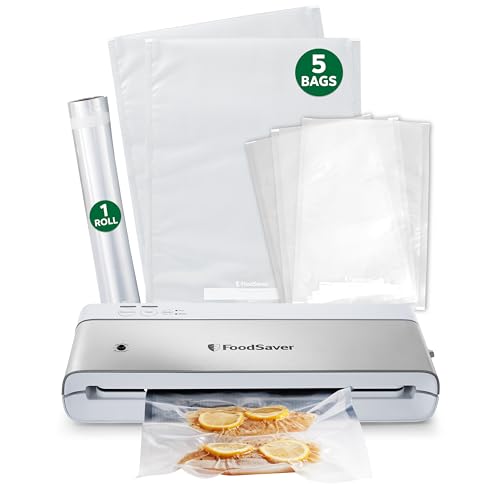
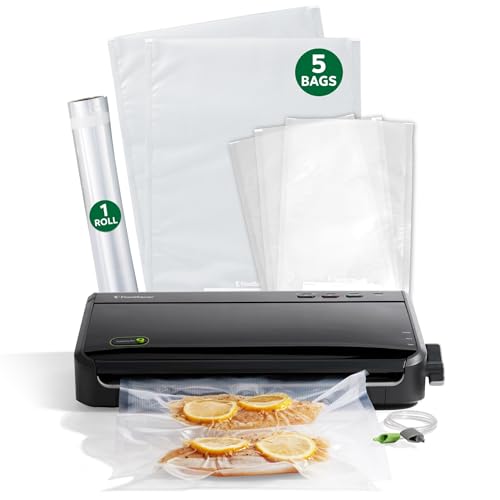
FoodSaver Compact Vacuum Sealer
Badge: Best Overall
The FoodSaver Compact Vacuum Sealer earns its place in a guide to best vacuum bag sealers on the strength of what its listing states plainly. A compact footprint suits smaller kitchens and occasional sealing. That single fact shapes who should buy it: a user whose routine in a bag-focused home sealing workflow will actually use that strength week after week, rather than admiring it once and working around its absence of other features.
In practical terms, expect this machine to reward good preparation. The specification in its title, including airtight bags and roll, describes the ceiling of what it can do; your habits decide how close to that ceiling a normal session gets. Work steadily, keep the process cold and clean as the how-to section below describes, and the gap between this pick and far more expensive machines narrows quickly. Rush the preparation and the same machine will feel ordinary, because the limiting factor was never the motor.
Strengths
- A compact footprint suits smaller kitchens and occasional sealing
- It ships with airtight bags and a roll, ready for storage and sous vide
- White finish blends into light-coloured kitchens
Trade-offs
- Compact machines are happiest in shorter runs with pauses between seals
- No cutter or roll storage is named in the title, unlike the FM2100
- Handheld rivals are still smaller for drawer-only storage
Key specifications (from the listing title)
- Type: Compact vacuum sealer machine
- Included: airtight bags and roll
- Positioned for: sous vide and airtight food storage
- Colour: white
The honest limitation is worth stating plainly: compact machines are happiest in shorter runs with pauses between seals. That is not a reason to cross this pick off your list unless that specific weakness collides with your main use. Every machine in this class trades something away; the art of choosing is matching the trade-off to the work you do least, so the strength you use most is the one you paid for. For readers whose routine centres on a bag-focused home sealing workflow, this pick makes the most sense when its badge description sounds like your household.
Best for: readers whose priorities match its badge, best overall, in the context of best vacuum bag sealers / Not suited for: buyers whose main workload is exactly the trade-off described above.
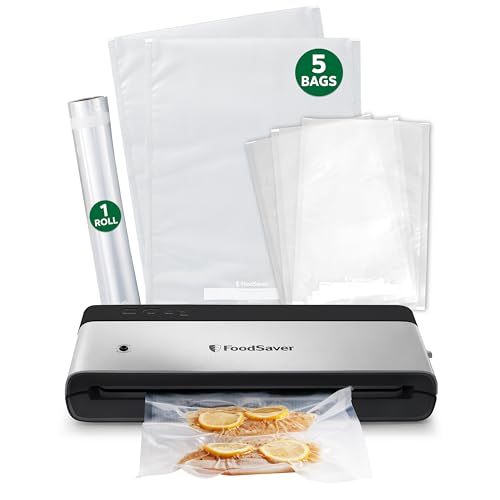
FoodSaver PowerVac Compact VS0150
Badge: Best Automation
The FoodSaver PowerVac Compact VS0150 earns its place in a guide to best vacuum bag sealers on the strength of what its listing states plainly. Vertical storage saves counter depth in tight kitchens. That single fact shapes who should buy it: a user whose routine in a bag-focused home sealing workflow will actually use that strength week after week, rather than admiring it once and working around its absence of other features.
In practical terms, expect this machine to reward good preparation. The specification in its title, including vertical storage design, describes the ceiling of what it can do; your habits decide how close to that ceiling a normal session gets. Work steadily, keep the process cold and clean as the how-to section below describes, and the gap between this pick and far more expensive machines narrows quickly. Rush the preparation and the same machine will feel ordinary, because the limiting factor was never the motor.
Strengths
- Vertical storage saves counter depth in tight kitchens
- Stainless steel and black finish suits modern worktops
- It is positioned for both dry and wet food, which covers most weekly shops
Trade-offs
- Vertical designs still need cupboard height, so measure before assuming it fits
- No roll storage or cutter is named in the title
- Compact class machines benefit from brief rests on very long runs
Key specifications (from the listing title)
- Type: Compact vacuum sealing machine, PowerVac VS0150
- Storage: vertical storage design
- Finish: stainless steel and black
- Positioned for: dry and wet food, reduced bag waste
The honest limitation is worth stating plainly: vertical designs still need cupboard height, so measure before assuming it fits. That is not a reason to cross this pick off your list unless that specific weakness collides with your main use. Every machine in this class trades something away; the art of choosing is matching the trade-off to the work you do least, so the strength you use most is the one you paid for. For readers whose routine centres on a bag-focused home sealing workflow, this pick makes the most sense when its badge description sounds like your household.
Best for: readers whose priorities match its badge, best automation, in the context of best vacuum bag sealers / Not suited for: buyers whose main workload is exactly the trade-off described above.

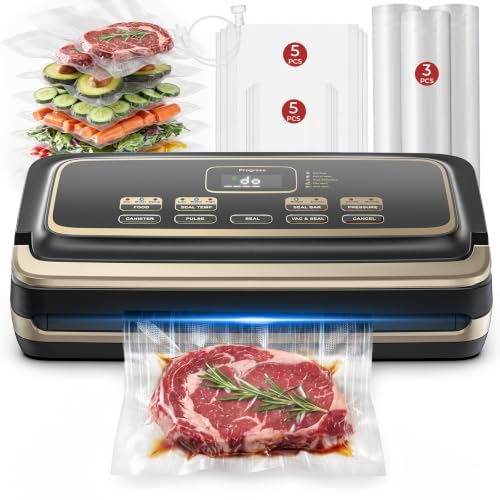
ROUUO Vacuum Sealer (95kPa, 230W)
Badge: Best Compact
The ROUUO Vacuum Sealer (95kPa, 230W) earns its place in a guide to best vacuum bag sealers on the strength of what its listing states plainly. A stated 95kpa vacuum and 230W motor put it at the stronger end of this lineup. That single fact shapes who should buy it: a user whose routine in a bag-focused home sealing workflow will actually use that strength week after week, rather than admiring it once and working around its absence of other features.
In practical terms, expect this machine to reward good preparation. The specification in its title, including 95kpa; power: 230w, describes the ceiling of what it can do; your habits decide how close to that ceiling a normal session gets. Work steadily, keep the process cold and clean as the how-to section below describes, and the gap between this pick and far more expensive machines narrows quickly. Rush the preparation and the same machine will feel ordinary, because the limiting factor was never the motor.
Strengths
- A stated 95kpa vacuum and 230W motor put it at the stronger end of this lineup
- Built-in bag storage and cutter streamline batch sessions
- Pulse mode and a removable drip tray help with moist and delicate foods
Trade-offs
- Strong vacuum can crush delicate items unless pulse mode is used carefully
- Three bag rolls and ten bags are a starter supply, not a long-term stock
- A feature-rich machine rewards reading the manual before a big session
Key specifications (from the listing title)
- Type: Vacuum sealer machine for dry and moist food
- Stated vacuum: 95kpa; power: 230W
- Features: built-in bag storage and cutter, pulse mode, removable drip tray
- Included: 3 bag rolls and 10 bags
The honest limitation is worth stating plainly: strong vacuum can crush delicate items unless pulse mode is used carefully. That is not a reason to cross this pick off your list unless that specific weakness collides with your main use. Every machine in this class trades something away; the art of choosing is matching the trade-off to the work you do least, so the strength you use most is the one you paid for. For readers whose routine centres on a bag-focused home sealing workflow, this pick makes the most sense when its badge description sounds like your household.
Best for: readers whose priorities match its badge, best compact, in the context of best vacuum bag sealers / Not suited for: buyers whose main workload is exactly the trade-off described above.
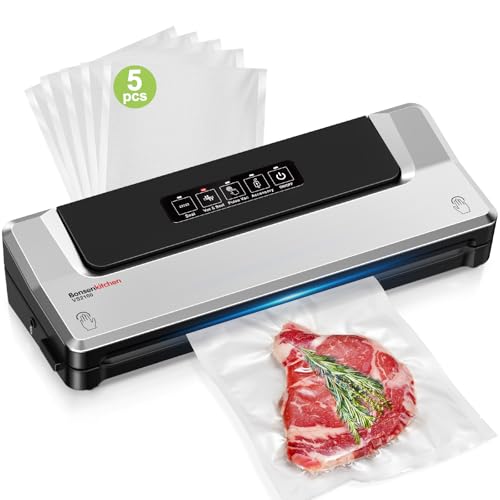
Bonsenkitchen Vacuum Sealer Machine
Badge: Best Vertical Storage
The Bonsenkitchen Vacuum Sealer Machine earns its place in a guide to best vacuum bag sealers on the strength of what its listing states plainly. Multiple modes target meal prep routines directly. That single fact shapes who should buy it: a user whose routine in a bag-focused home sealing workflow will actually use that strength week after week, rather than admiring it once and working around its absence of other features.
In practical terms, expect this machine to reward good preparation. The specification in its title, including silver, describes the ceiling of what it can do; your habits decide how close to that ceiling a normal session gets. Work steadily, keep the process cold and clean as the how-to section below describes, and the gap between this pick and far more expensive machines narrows quickly. Rush the preparation and the same machine will feel ordinary, because the limiting factor was never the motor.
Strengths
- Multiple modes target meal prep routines directly
- The listing names it as an external vacuum system, the standard bag-sealing format
- A compact silver machine that stores easily between sessions
Trade-offs
- Five included bags is the smallest starter supply in this lineup
- No cutter, roll storage or pulse mode is named in the title
- Compact external sealers need textured bags for a proper vacuum draw
Key specifications (from the listing title)
- Type: Compact vacuum sealer, external vacuum system
- Colour: silver
- Positioned for: kitchen food storage and sous-vide, meal prep
- Included: 5 vacuum bags
The honest limitation is worth stating plainly: five included bags is the smallest starter supply in this lineup. That is not a reason to cross this pick off your list unless that specific weakness collides with your main use. Every machine in this class trades something away; the art of choosing is matching the trade-off to the work you do least, so the strength you use most is the one you paid for. For readers whose routine centres on a bag-focused home sealing workflow, this pick makes the most sense when its badge description sounds like your household.
Best for: readers whose priorities match its badge, best vertical storage, in the context of best vacuum bag sealers / Not suited for: buyers whose main workload is exactly the trade-off described above.

UPRUBE Vacuum Sealer (95kPa, 9-in-1)
Badge: Strongest Stated Vacuum
The UPRUBE Vacuum Sealer (95kPa, 9-in-1) earns its place in a guide to best vacuum bag sealers on the strength of what its listing states plainly. A stated 95kPa vacuum with dry, moist and pulse modes covers most foods. That single fact shapes who should buy it: a user whose routine in a bag-focused home sealing workflow will actually use that strength week after week, rather than admiring it once and working around its absence of other features.
In practical terms, expect this machine to reward good preparation. The specification in its title, including 95kpa; flow 12l/min; power 135w, describes the ceiling of what it can do; your habits decide how close to that ceiling a normal session gets. Work steadily, keep the process cold and clean as the how-to section below describes, and the gap between this pick and far more expensive machines narrows quickly. Rush the preparation and the same machine will feel ordinary, because the limiting factor was never the motor.
Strengths
- A stated 95kPa vacuum with dry, moist and pulse modes covers most foods
- A digital timer and easy tear cutter support repeatable batch work
- Bag storage plus a 10 ft bag roll are included from the start
Trade-offs
- A stated 12L/min and 135W spec sheet is mid-pack, so long runs need pacing
- Nine functions in one machine mean a short learning curve
- Strong suction still needs pulse control around soft or delicate items
Key specifications (from the listing title)
- Type: Food vacuum sealer machine, 9-in-1
- Stated vacuum: 95kPa; flow 12L/min; power 135W
- Features: digital timer, easy tear cutter, bag storage
- Included: 10 ft bag roll; modes: dry, moist, pulse
The honest limitation is worth stating plainly: a stated 12L/min and 135W spec sheet is mid-pack, so long runs need pacing. That is not a reason to cross this pick off your list unless that specific weakness collides with your main use. Every machine in this class trades something away; the art of choosing is matching the trade-off to the work you do least, so the strength you use most is the one you paid for. For readers whose routine centres on a bag-focused home sealing workflow, this pick makes the most sense when its badge description sounds like your household.
Best for: readers whose priorities match its badge, strongest stated vacuum, in the context of best vacuum bag sealers / Not suited for: buyers whose main workload is exactly the trade-off described above.

Chef Preserve Compact Handheld Vacuum Sealer
Badge: Best for Meal Prep
The Chef Preserve Compact Handheld Vacuum Sealer earns its place in a guide to best vacuum bag sealers on the strength of what its listing states plainly. Thirty reusable vacuum bags are included, the standout supply bundle here. That single fact shapes who should buy it: a user whose routine in a bag-focused home sealing workflow will actually use that strength week after week, rather than admiring it once and working around its absence of other features.
In practical terms, expect this machine to reward good preparation. The specification in its title, including 30 reusable vacuum bags, describes the ceiling of what it can do; your habits decide how close to that ceiling a normal session gets. Work steadily, keep the process cold and clean as the how-to section below describes, and the gap between this pick and far more expensive machines narrows quickly. Rush the preparation and the same machine will feel ordinary, because the limiting factor was never the motor.
Strengths
- Thirty reusable vacuum bags are included, the standout supply bundle here
- A handheld format stores in a drawer and travels easily
- Reusable bags suit households trying to cut single-use plastic
Trade-offs
- Handheld units work with compatible reusable bags rather than standard rolls
- Small-format sealing is slower for very large batch sessions
- Reusable bags need washing and full drying between uses
Key specifications (from the listing title)
- Type: Compact handheld vacuum sealer machine
- Included: 30 reusable vacuum bags
- Positioned as: portable food sealer, meal saver
The honest limitation is worth stating plainly: handheld units work with compatible reusable bags rather than standard rolls. That is not a reason to cross this pick off your list unless that specific weakness collides with your main use. Every machine in this class trades something away; the art of choosing is matching the trade-off to the work you do least, so the strength you use most is the one you paid for. For readers whose routine centres on a bag-focused home sealing workflow, this pick makes the most sense when its badge description sounds like your household.
Best for: readers whose priorities match its badge, best for meal prep, in the context of best vacuum bag sealers / Not suited for: buyers whose main workload is exactly the trade-off described above.
Comparison Table
| Product | Badge | Format | Listing |
|---|---|---|---|
| FoodSaver Compact Vacuum Sealer | Best Overall | Type: Compact vacuum sealer machine | Check on Amazon |
| FoodSaver PowerVac Compact VS0150 | Best Automation | Type: Compact vacuum sealing machine, PowerVac VS0150 | Check on Amazon |
| ROUUO Vacuum Sealer (95kPa, 230W) | Best Compact | Type: Vacuum sealer machine for dry and moist food | Check on Amazon |
| Bonsenkitchen Vacuum Sealer Machine | Best Vertical Storage | Type: Compact vacuum sealer, external vacuum system | Check on Amazon |
| UPRUBE Vacuum Sealer (95kPa, 9-in-1) | Strongest Stated Vacuum | Type: Food vacuum sealer machine, 9-in-1 | Check on Amazon |
| Chef Preserve Compact Handheld Vacuum Sealer | Best for Meal Prep | Type: Compact handheld vacuum sealer machine | Check on Amazon |
Read the table as a map, not a verdict. The format column alone explains many buying decisions, and the badge column tells you which strength each machine was picked for. If two picks still look equal after the table, the deciding factor is usually in the detailed reviews: an included accessory, a storage arrangement, or a control style that fits your hands and your counter.
How to Choose: a buying guide for best vacuum bag sealers
Format: external, handheld or chamber
External sealers, the countertop picks here, draw air from a textured bag and heat-seal it; they handle the widest range of everyday foods. Handheld models seal compatible reusable or valve bags and excel at small, frequent jobs. Chamber machines seal liquids superbly but are large and costly, and none appears in this lineup. Choose format before features.
Vacuum strength and speed
Stated figures such as 95kPa on two picks here indicate strong draw for dense foods, while flow rates describe how fast air moves. Stronger is not automatically better: delicate foods need a gentler touch, which is why pulse control appears in the better specifications. Judge strength alongside the modes that let you restrain it.
Modes for moist and delicate foods
Dry and moist settings adjust how aggressively the machine pulls and seals, protecting the seal zone from liquid. Pulse modes hand control to you for bread, berries and pastries. If your sealing is mostly dry goods, a simple machine serves well; if marinades and juicy proteins dominate, moist and pulse control move from luxury to necessity.
Cutters, storage and drip trays
Built-in roll storage and a cutter turn bag sizing into a ten-second job and reduce waste. A removable drip tray catches the liquid that escapes wet foods and makes cleanup honest rather than nominal. Vertical storage designs suit narrow counters. These details sound small and decide daily satisfaction.
Bags and running costs
Every external sealer needs textured bags or rolls; handhelds need their compatible reusable or valve bags. Compare the starter supply in each box, then price the bags you will actually consume. Over a year of regular use, bag costs outweigh small differences between machines, and buying the right sizes prevents the waste of sealing small items in oversized bags.
A neighbouring angle worth five minutes is covered in our guide to Best Vacuum Food Sealers Consumer Reports, especially if your workload sits between the two searches.
How to Vacuum Seal Food Properly: Bags, Modes and Storage
- Choose the right bag. Use textured bags or roll stock for external sealers, or the compatible reusable bags for a handheld, and size the bag generously for the contents.
- Prepare the food. Pat very wet surfaces dry, portion proteins flat for even freezing, and let hot food cool fully before sealing.
- Fill with headspace. Leave a clear margin of empty bag above the food so the vacuum can draw and the seal zone stays clean and flat.
- Pick the mode. Dry mode for pantry goods, moist mode for juicy foods, and pulse for anything that can crush, releasing the button at the right moment.
- Seal and inspect. Check the finished seal for channels, wrinkles or gaps, and confirm the bag stays drawn tight around the food.
- For long freezer storage, consider a second seal a short distance from the first as insurance against a single weak point.
- Label everything. Write contents and date on the bag before freezing; vacuum-sealed food all looks alike in a month.
- Clean up. Empty and wash the drip tray if fitted, wipe the seal area, and store the machine with the lid unlatched where the manufacturer advises it, so gaskets are not compressed flat.
For bag sealing, leave at least a hand width of empty bag above the food, smooth the seal zone flat with clean fingers, and if the contents are powdery or wet, fold the bag mouth outward while filling so the seal area stays clean.
If your questions run more basic than this guide assumes, our explainer on Best Vacuum Pack Sealers starts from first principles.
Troubleshooting
Problem: the bag loses its vacuum after a day → check the seal for channels or food residue, confirm the bag is textured stock for an external machine, and reseal on a fresh section of bag.
Problem: liquid reaches the seal and the bag will not seal → stop, wipe the seal zone dry, use the moist setting or pulse control, add headspace, or chill the food until the liquid thickens or partially freezes.
Problem: delicate food gets crushed → switch to pulse control and stop the draw earlier, or pre-freeze soft items briefly so they hold their shape under vacuum.
Rolls, Pre-Cut Bags and Reusable Bags: Choosing Your Bag System
Roll stock is the flexible option. Machines with built-in storage and a cutter, like the FoodSaver FM2100 and the ROUUO and UPRUBE picks, let you size each bag to its contents, which reduces waste on small items and makes room for awkward shapes. The discipline is to cut generously, leave headspace above the food for the vacuum to work, and keep the sealing area clean and dry. Pre-cut bags trade that flexibility for speed: no cutting step, consistent sizes, and a faster rhythm when you are packing many identical portions. Most external sealers move between rolls and pre-cut bags freely, so the machine choice is really about storage, cutter design and how the lid and controls feel across a long session.
Reusable vacuum bags are a different system entirely. The Chef Preserve handheld works with its included reusable bags, sealing through a valve rather than a heat seal. For households that open, use part of, and reseal the same ingredients all week, cheese, deli meats, coffee, produce, that resealable rhythm can cut plastic use and suit the way food is actually consumed. The trade-off is throughput and format: reusable-bag systems are not built for cutting custom bags for a whole bulk shop or a harvest weekend. Many kitchens end up bilingual, a countertop sealer for batch work and a handheld for daily resealing, and there is no rule that says you must choose only one.
Bag quality is the quiet variable in every system. External sealers need textured or embossed bags so air channels stay open during the draw; smooth bags can seal themselves shut before the air leaves. Thickness matters for sharp bones and freezer longevity, and the seal area must be flat, clean and dry or even the best machine will leave a channel. Whichever pick you choose, buy bags in the sizes you genuinely use, store rolls away from heat, and run one test bag whenever you open a new batch of stock.
For a closely related shortlist, see Best Vacuum Sealers 2heat and note how the ranking shifts when the priority changes.
Common Buying Mistakes
- Sealing smooth, non-textured bags in an external machine and blaming the sealer when the vacuum fails.
- Overfilling the bag so food or liquid contaminates the seal zone.
- Skipping the label, then playing freezer roulette with identical silver packages.
- Using full vacuum on delicate foods instead of pulse control.
- Ignoring bag costs when comparing machines, then overspending on the wrong sizes for years.
- Storing the machine latched tight for months, which can flatten gaskets and weaken future seals.
Most of these mistakes share one root: choosing for an imagined workload instead of the real one. Be honest about how often, how much and what exactly you will process, and the right pick usually identifies itself. Readers who recognise their situation in Best Vacuum Sealers Canada may find that shortlist an even closer fit.
Final Recommendation
Start with the FoodSaver Compact Vacuum Sealer. It is the first pick in this guide because its stated strengths cover the widest range of readers searching for best vacuum bag sealers, and its trade-offs are the kind most households can live with. If its badge does not sound like you, move deliberately: the FoodSaver PowerVac Compact VS0150 suits the next most common routine, and the ROUUO Vacuum Sealer (95kPa, 230W) is the pick for readers whose priority matches its badge most closely.
Shortlist again here for convenience: FoodSaver Compact Vacuum Sealer, FoodSaver PowerVac Compact VS0150, ROUUO Vacuum Sealer (95kPa, 230W). Whichever you choose, confirm the current box contents on the listing before ordering, because accessory sets are the detail most likely to change between production runs, and they are the detail your first session will care about.
Frequently Asked Questions
How long does vacuum-sealed food last in the freezer?
Vacuum sealing extends freezer life substantially compared with ordinary wrapping because it removes the air that drives freezer burn, but it does not make food last forever. Dense meats keep far longer than delicate items, and quality still declines slowly over time. Label and date everything, rotate stock, and use your senses when thawing.
Can I vacuum seal liquids and soups?
With an external sealer, seal liquids indirectly: freeze soup or marinade in a container or bag first until solid, then vacuum seal the frozen block. Handheld reusable bags suit small amounts of moist food. A chamber sealer is the only format that seals free liquid directly and easily.
Do I need special bags for a vacuum sealer?
Yes. External sealers require textured or embossed bags or rolls so air can escape during the draw. Handheld models use their own compatible reusable or valve bags. Ordinary smooth bags may heat-seal but will not vacuum properly.
Is vacuum sealing good for sous vide?
It is the standard preparation for sous vide, because the bag hugs the food and transfers heat evenly in the water bath. Several picks here are explicitly positioned for sous vide. Ensure the seal is complete, keep the seal above the waterline where practical, and use bags rated for cooking temperatures.
Why did my seal fail in the freezer?
The usual causes are a contaminated or wrinkled seal zone, a sharp bone edge puncturing the bag, or a single seal with a weak point. Wipe the seal area before sealing, pad sharp edges with a folded piece of bag material or paper towel, and double-seal bags destined for long storage.
Do vacuum bag sealers need special bags?
Countertop external sealers need textured or embossed bags or rolls, because the texture keeps air channels open while the machine draws air out. Handheld reusable systems use their own valve bags. Standard smooth plastic bags will not vacuum properly in an external machine, even if the heat seal itself takes.
One more angle is covered in depth at Best Vacuum Sealers Cnet, which rounds out this cluster of guides.
Going Deeper: Session Craft, Part 1
Freezer organisation multiplies the value of any sealer. Flat, labelled, dated bags freeze into stackable files that thaw quickly in cold water and let you see your inventory at a glance. Keep a running list on the freezer door, proteins, vegetables, prepared meals, and cross items off as you use them. The households that benefit most from vacuum sealing are rarely the ones with the strongest machine; they are the ones whose sealing habit connects to a simple rotation system, so food is used at its best rather than rediscovered a year later as a mystery package.
Going Deeper: Session Craft, Part 2
Bag technique is a skill with a short learning curve and a long payoff. Keep the seal zone clean by folding the bag mouth outward while filling, smooth out wrinkles before closing the lid, and give moist foods more headspace than dry ones. If a seal looks questionable, it is questionable: cut it off and reseal on fresh material rather than hoping the freezer will be kind. Two minutes of care at the counter prevents the slow vacuum loss that quietly ruins a month of good storage.
Going Deeper: Session Craft, Part 3
Consider what sealing is for in your kitchen before chasing features. For some households it is bulk buying: breaking a warehouse shop into portions that freeze without burn. For others it is meal preparation, marinating, or keeping cheese, coffee and deli items fresh through the week. Sous vide cooks need reliable seals that survive a water bath. Each purpose weights the picks differently, which is why this guide describes strengths plainly instead of crowning one machine for every kitchen. Match the machine to the job you do most, and the occasional job will usually still get done.
Going Deeper: Session Craft, Part 4
Maintenance is brief but real. Wipe the sealing strip and gasket after wet sessions, wash removable drip trays promptly, and check the gasket occasionally for cracks or flattening. Store rolls and bags away from heat so the material stays supple. If seals begin to fail on a machine that has worked well, suspect the consumables first, an old bag batch, a dirty seal zone, a tired gasket, before suspecting the motor. Most sealing problems live at the bag and the seal line, not inside the machine.
Going Deeper: Session Craft, Part 5
Finally, a note on food safety, because sealing changes storage, not biology. Vacuum sealing slows oxidation and freezer burn; it does not sterilise food, and sealed perishables still belong in the fridge or freezer, not the cupboard. Thaw sealed food in the fridge, use refrigerated sealed items within sensible times, and when anything smells off on opening, discard it regardless of how good the seal looks. Used with that respect, a vacuum sealer is one of the most practical waste-reducing tools a kitchen can own.
Worth Knowing: The First Week With a New Sealer
The smartest way to learn a vacuum sealer is a deliberate first week. Seal something every day: a portion of mince, a block of cheese, a marinade, a handful of herbs, a leftover portion destined for the freezer. Vary the modes on purpose and watch what each one does to the bag and the food. Note which bag size you reach for most, because that is the size to stock. By the end of the week the machine will have stopped being a gadget and become a step in your cooking, which is exactly when it starts paying for itself in food you no longer throw away.
Worth Knowing: Sealing for the Way You Actually Shop
Vacuum sealers reward households that seal at the point of unpacking, not at the point of regret. When a bulk shop comes home, portion proteins the same day, seal them flat, and freeze them in the order you expect to eat them. Dry goods get sealed when the packet opens, not when they go stale. Leftovers get sealed in single portions that future-you can thaw without committing to a family-sized block. This rhythm, a few minutes at the natural breaks in kitchen life, is what separates a sealer that transforms a food budget from one that gathers dust beside the bread maker.
Worth Knowing: Bones, Edges and Other Bag Killers
The most common cause of a lost vacuum is not the machine at all; it is a puncture. Sharp bone edges, dry pasta corners and the stiff rims of packaging can pierce a bag under vacuum or in a crowded freezer. Pad sharp points with a small folded piece of bag offcut or kitchen paper before sealing, freeze bags flat and separate until solid, and avoid dragging sealed bags across freezer baskets. If a bag loses vacuum, inspect it against the light before blaming the seal: a pinhole tells a different story from a channel in the seal line, and the fix is different too.
Worth Knowing: What Good Looks Like: Reading a Finished Bag
Learn to read a finished bag the way a butcher reads a cut. A good seal is a clean, even band with no wrinkles crossing it, no food trapped in it and no channels running from inside to out. The bag should hug the food closely with no large air pockets, especially around corners and crevices, and it should still look that way after ten minutes on the counter, not just in the first flush of success. If the draw looks weak, check bag texture, fill level and seal-zone cleanliness before assuming the machine is at fault. That diagnostic habit will serve you with any sealer you ever own.