Disclosure: topratedkitchenware.com is reader-supported. When you buy through links on our site, we may earn an affiliate commission from Amazon and other retailers, at no extra cost to you.
Where to buy
This guide to the best vacuum sealers for sous vides is built for production, because cooking several dishes at once — a main, its sides, a second bath for a crowd — is a production problem as much as a cooking one: fast, repeatable sealing, pulse control for wet bags and one handheld for the small side jobs. All six picks are verified and linked so you can check the latest price on Amazon.
- FoodSaver Compact Vacuum Sealer Machine — Best Compact. A small machine whose listing names sous vide, for the second station or small kitchen.
- FoodSaver PowerVac Compact VS0150 — Best for Vertical Storage. A dry-and-wet compact that stands upright between productions.
- ROUUO Vacuum Sealer 95kpa — Best for Wet Batches. Pulse mode and a removable drip tray for marinated, multi-bag sessions.
- Bonsenkitchen Vacuum Sealer Machine — Best Simple Second Machine. A compact external system whose listing names sous-vide work.
- UPRUBE Vacuum Sealer 95kPa — Best Overall for Batch Sous Vides. A fast stated draw and digital timer for identical bags, bag after bag.
- Chef Preserve Compact Vacuum Sealer — Best Handheld for Small Sides. A portable handheld with thirty reusable bags for the little jobs around a big cook.
Read the full guide ↓ for badges, trade-offs, a comparison table and a production workflow for multi-dish bath cooking.
The best vacuum sealers for sous vides — plural, deliberately — are the machines that survive the moment one bath becomes several. A single steak asks little of a sealer. A dinner of steaks, a vegetable course, a sauce-warm bag and a second protein for the guest who eats differently asks for a session: a dozen bags, made quickly, identically, some of them wet, all of them trustworthy for hours, produced while the kitchen is also doing everything else a dinner requires. That session is a small production run, and production runs reward speed, repeatability and control in that order. This guide is written for the plural cook — the entertainer, the meal-prepper, the household that runs two baths because one was never going to be enough — and its badges follow production logic rather than single-portion charm.
The plural angle changes the buying advice in one important way: the second machine stops being an indulgence and becomes a rational tool. Two modest sealers at two stations can out-produce one flagship at a crowded counter, and a handheld that handles the small side bags frees the main machine for the proteins. This list therefore includes both ends of that strategy — the batch engine, the simple second station and the handheld — and its reviews judge each against the production role it would actually play on the night of a big cook. Readers equipping at trade scale beyond the home should continue to our Best Professional Vacuum Sealers overview; readers feeding a table are home here.
Key Takeaways
- The UPRUBE is the batch engine: a fast stated draw and a digital timer make bag twelve behave like bag one.
- The ROUUO handles the wet end of a production — marinated and sauced bags — with pulse control and a drip tray that washes between courses of work.
- A simple second machine, like the Bonsenkitchen or the FoodSaver Compact, doubles a station’s output on big nights for less than a flagship costs.
- The Chef Preserve handheld earns its place on production nights by clearing the small bags — sides, single portions, a child’s plain version — without queuing at the main machine.
- Label every bag with contents and its bath plan; a dozen sealed bags are a system only if the cook can tell them apart at a glance.
- Stage the session: portion everything first, seal in one uninterrupted run, and inspect seams as a batch, against the light, before any bag meets water.
- Hold a two-minute review while the baths run and write the lessons on the plan; plural cooking improves at the speed of its notes, and the fourth production should feel rehearsed rather than improvised.
In this guide
Quick Picks
| Pick | Badge | Format | Production role |
|---|---|---|---|
| FoodSaver Compact | Best Compact | Compact external | Second station, small kitchens |
| FoodSaver PowerVac VS0150 | Best for Vertical Storage | Compact external | Everyday station, stores upright |
| ROUUO Vacuum Sealer 95kpa | Best for Wet Batches | External | Marinated and sauced bags |
| Bonsenkitchen Vacuum Sealer | Best Simple Second Machine | Compact external | Overflow and sides station |
| UPRUBE Vacuum Sealer 95kPa | Best Overall for Batch Sous Vides | External | Main production engine |
| Chef Preserve Compact | Best Handheld for Small Sides | Handheld | Small bags, no queue |
How These Picks Were Chosen
This guide is research-led. Each pick’s format, stated modes and included supplies were verified against its current listing, and the field was then weighted for plural, batch cooking: cycle speed and repeatability, wet-bag control, cleanability mid-session, and the economics of second machines. Only verified products are listed and linked. Makers’ claims are kept distinct from this guide’s judgements throughout: where a listing names sous vide or sous-vide — the FoodSaver Compact and the Bonsenkitchen do — the review says so; where it does not, the case is made on production format alone. The bag systems behind these machines, including the pouch formats surveyed in our Best Vacuum Bag Sealers guide, were treated as part of each pick’s production cost and speed.
The 6 Best Vacuum Sealers for Sous Vides
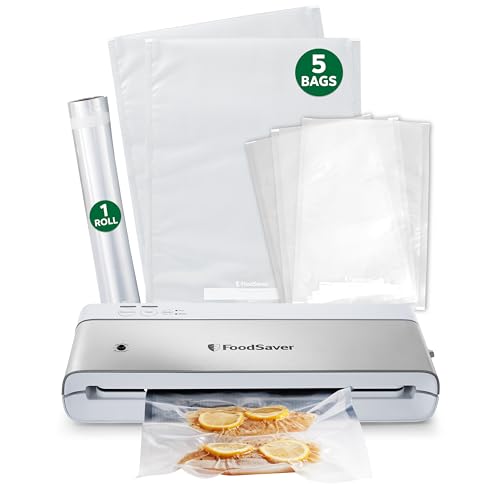
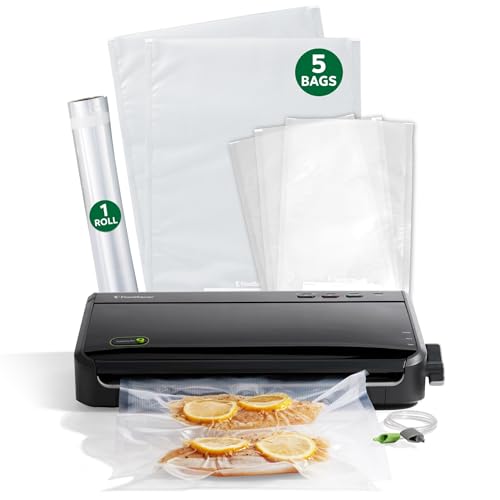
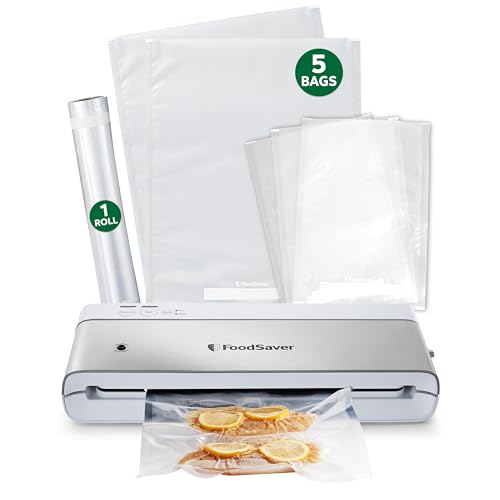
FoodSaver Compact Vacuum Sealer Machine
Badge: Best Compact
Strengths
- Sous vide is named as a core use in the maker’s listing.
- A compact body makes it the natural second station: small enough to appear on production nights and vanish after.
- Bags and a roll are included, so it can run pre-cuts for speed or cut lengths for odd portions.
Trade-offs
- As a main engine for a large production it is outpaced by the UPRUBE and ROUUO.
- No pulse control is stated, so its bags should be the session’s drier ones.
- Rolls live in a drawer rather than in the machine.
Spec box — verified from listing: Format: compact external sealer. Colour: white. Included: airtight bags and roll. Stated uses: sous vide and airtight food storage.
In a plural kitchen the Compact’s value is positional. Set it at the quieter end of the counter, feed it the straightforward bags — vegetables, plain portions, the second protein — and it quietly doubles the session’s throughput while the production machines handle the wet and the difficult. Its maker’s naming of sous vide matters on a crowded night, because a second station is often run by a second pair of hands, and a machine sold for the job asks fewer questions of a helper. Between productions it returns to being what it always was: a perfectly capable small household sealer, named for the bath, sized for a cupboard.
Do not ask it to be the evening’s engine and it will never disappoint. A household whose plural cooking is occasional — a dinner party a month, a holiday production — may even find it sufficient as the only machine, provided portions stay modest and bags stay on the drier side. Volume, as ever in this guide, is the honest dividing line.
Best for: second stations and modest plural cooking / Not suited for: main-engine duty on large, wet productions
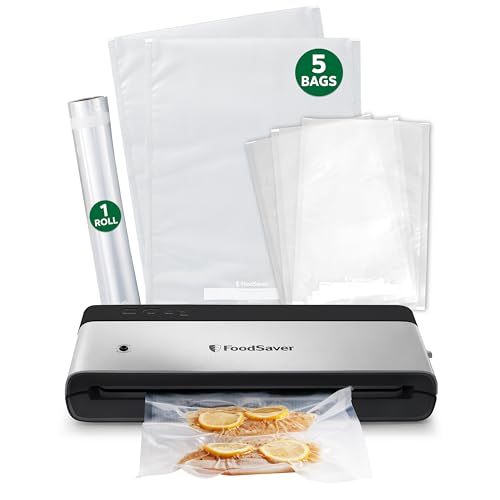
FoodSaver PowerVac Compact Vacuum Sealing Machine VS0150
Badge: Best for Vertical Storage
Strengths
- Stated for dry and wet food, so it can take a share of seasoned bags in a session.
- Vertical storage is a production virtue in disguise: the machine lives at the counter’s edge, ready, without consuming the workspace productions need.
- Simple operation suits a helper-run station.
Trade-offs
- Sous vide is not named in its listing.
- Compact pace and width limit its share of a big session.
- No pulse, timer or roll storage is stated.
Spec box — verified from listing: Model: VS0150. Format: compact external sealer with vertical storage. Finish: stainless steel and black. Stated foods: dry and wet.
Counter space is the scarcest resource in a plural kitchen, scarcer even than time, because every production adds containers, boards, baths and bowls to the same few feet of surface. The PowerVac’s upright storage is therefore more than a household convenience in this context: it lets a second or third sealing point exist in a kitchen that could not park another full machine. Stood at the counter’s end, it handles a steady share of ordinary bags all session, then returns to its narrow gap while two baths occupy the space it vacated.
Its claim is the modest one its listing makes — dry and wet sealing in a compact body — and this guide adds no bath claim the maker did not. As a supporting station in a plural setup, that is entirely enough, and its simplicity means any helper can run it within a minute of being shown.
Best for: supporting stations where counter space decides / Not suited for: main production duty or named-sous-vide requirements

ROUUO Vacuum Sealer 95kpa Food Sealer
Badge: Best for Wet Batches
Strengths
- Pulse mode is the wet batch’s control: marinated bags sealed by eye, one after another, without feeding marinade to the seams.
- The removable drip tray keeps a long, messy session hygienic and quick to reset between groups of bags.
- Roll storage, a cutter and generous starter film keep bag supply inside the station.
Trade-offs
- Sous vide is not named in its listing; the case is wet control and production format.
- Pulse work is operator-paced, so it is the station for your most attentive sealer, not a helper’s first task.
- Station-sized body; plan its counter place in the production layout.
Spec box — verified from listing: Stated vacuum: 95kpa. Stated power: 230W. Modes: Dry/Moist and Pulse. Features: built-in bag storage and cutter, removable drip tray. Included: 3 bag rolls and 10 bags.
Every plural cook has a wet end: the marinated chicken, the sauced ribs, the buttered and herbed vegetables that weep as they wait. On a single-portion night those bags are a moment’s care; in a session they are a queue of small risks, each capable of stopping the line while a seal area is cleaned. The ROUUO is built for that queue. Pulse control turns each wet bag into a watched, ten-second operation instead of a gamble, and the drip tray converts the occasional escape from a production halt into a rinse. Assigned to the wet work — and to the cook with the steadiest eye — it raises the whole session’s standard, because the main engine is never interrupted by the bags it is worst at. Productions that compare tools across the wider market, as our Best Vacuum Food Sealers Compare survey does, consistently find this division of labour — speed machine, wet machine, small machine — outperforming any single do-everything purchase.
Its boundary is attention. Pulse sealing cannot be delegated to the distracted, and a production that assigns it carelessly will produce the failures it exists to prevent. Staffed properly, it is the difference between a wet menu that feels risky and one that feels routine.
Best for: the wet end of batch and entertaining sessions / Not suited for: unattended or helper-first sealing of marinated bags
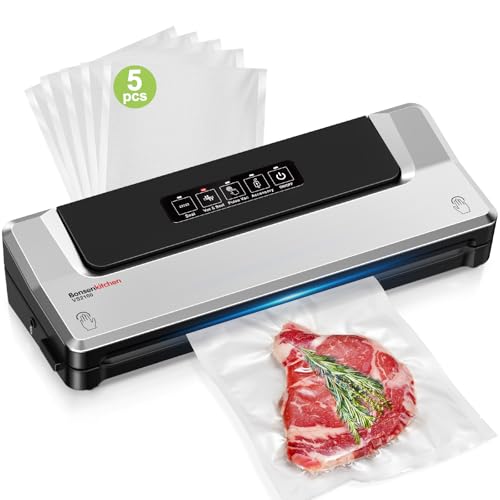
Bonsenkitchen Vacuum Sealer Machine
Badge: Best Simple Second Machine
Strengths
- Its listing names sous-vide among its work, with meal prep and storage.
- A simple compact external system is the easiest second station for a helper to run correctly.
- Small silver body stores between productions without a negotiation.
Trade-offs
- Five included bags are a token; a production household stocks film properly.
- No pulse, cutter or roll storage is stated — assign it the session’s dry, simple bags.
- Compact pace; it supports a production rather than leading one.
Spec box — verified from listing: Format: compact external vacuum system. Finish: silver. Modes: multiple modes for meal prep. Included: 5 vacuum bags. Stated uses: kitchen food storage and sous-vide.
The economics of the second machine favour simplicity, and the Bonsenkitchen is the simplest named machine in this list. Its job on a production night is undemanding and vital: take the overflow — the vegetable bags, the plain portions, the extra bread-warming bag nobody planned — and seal them correctly while the main stations handle the proteins and the wet work. A helper can be taught it in minutes because there is little to teach, and its compact body means it can live in a cupboard fifty weeks a year and still earn its purchase in the other two.
Stock it like you mean it. The five included bags will not survive the first production, and a second station that runs out of film is furniture. With a drawer of bags beside it and the dry work routed to it, the Bonsenkitchen is the most cost-effective capacity in this guide — a sentence this programme’s wider roundups, including the reusable-bag systems in our Best Reviewed Small Vacuum Sealers With Reusable Bags notes, support from the small-machine end of the market.
Best for: overflow and sides at a second station / Not suited for: leading a production or wet-bag duty

UPRUBE Vacuum Sealer for Food, 95kPa
Badge: Best Overall for Batch Sous Vides
Strengths
- A fast stated draw of 12L/min at 135W, governed by a digital timer, makes production bags identical — the core requirement of a multi-bath night.
- Dry, moist and pulse modes span a whole menu’s bags from one station.
- Built-in cutter and bag storage with a ten-foot roll keep the line fed without leaving the station.
Trade-offs
- Sous vide is not named in its listing; the case is production capability.
- Fast draw demands pulse discipline on the wettest bags, or route those to the ROUUO.
- The nine-in-one controls reward a practised main operator.
Spec box — verified from listing: Stated vacuum: 95kPa. Stated speed: 12L/min. Stated power: 135W. Modes: dry, moist and pulse, 9-in-1. Features: easy-tear cutter, bag storage, digital timer. Included: 10 ft bag roll.
Production is a promise that bag twelve equals bag one, and the UPRUBE is the machine in this list built to keep it. The timer turns the operator’s judgement into a setting; the fast draw keeps the session ahead of the kitchen’s other clocks; the roll system means the line never stops for a bag hunt. On a two-bath night — proteins in one, vegetables and a second course in the other — this is the station the whole plan is timed around, sealing the menu in one uninterrupted run while the baths come up to temperature. Its pulse mode covers moderately wet bags credibly, reserving the ROUUO for the genuinely marinated work, and its consistency is what lets a cook trust a dozen bags to a dozen different finishing times without a single anxious thought about the seams.
It asks for the main operator’s chair and a practice session before its first production. Given both, it is the strongest argument in this guide that plural sous vide cooking at home is a solved problem: not a chef’s luxury, but a repeatable household production that a good machine, a stocked roll and a written plan can run on any Saturday.
Best for: main production engine for multi-dish and entertaining cooks / Not suited for: first-time users on their first production night

Chef Preserve Compact Vacuum Sealer for Food
Badge: Best Handheld for Small Sides
Strengths
- A portable handheld with thirty reusable bags clears the session’s small bags anywhere in the kitchen, with no queue at the main stations.
- Perfectly scaled to sides, single portions and the odd extra bag a menu always produces.
- Reusable bags suit the fridge-to-bath loop for small items cooked within days.
Trade-offs
- It is not a production seal for long cooks or large portions; route those to the countertop machines.
- Its bags are a fixed system, so sizes are what the system offers.
- Keep liquids away from the valve area on sauced sides.
Spec box — verified from listing: Format: handheld, portable. System: reusable vacuum bags. Included: machine plus 30 reusable vacuum bags.
Every production has a long tail of small bags: one plain portion for the child, a single fillet for the guest who arrived late to the plan, the leftover half of an ingredient that should be sealed now rather than later. Queuing those bags at the main station breaks the production’s rhythm; ignoring them wastes food. The Chef Preserve dissolves the problem by being everywhere the main machines are not — in a drawer, at the fridge, in a free hand — and its thirty reusable bags mean the tail can be long without consuming the session’s film. On a plural night, that is not a toy’s role; it is logistics.
Its scope is stated as plainly as every pick’s in this guide: small bags, shorter work, fridge horizons. The proteins, the long cooks and the freezer pipeline belong to the countertop five. A production that respects that division gets the best of both formats, which is, in one sentence, the entire strategy of cooking sous vides in the plural.
Best for: small side bags and single portions during productions / Not suited for: long cooks, large portions or freezer pipelines
Comparison Table
| Pick | Badge | Format | Production strength | Check |
|---|---|---|---|---|
| FoodSaver Compact | Best Compact | Compact external | Named for sous vide, second station | Check on Amazon |
| FoodSaver PowerVac VS0150 | Best for Vertical Storage | Compact external | Space-free supporting station | Check on Amazon |
| ROUUO 95kpa | Best for Wet Batches | External | Pulse control, drip tray | Check on Amazon |
| Bonsenkitchen | Best Simple Second Machine | Compact external | Helper-proof overflow station | Check on Amazon |
| UPRUBE 95kPa | Best Overall for Batch Sous Vides | External | Timer-led identical bags, fast draw | Check on Amazon |
| Chef Preserve | Best Handheld for Small Sides | Handheld | Small bags anywhere, no queue | Check on Amazon |
How to Choose Sealers for Plural Sous Vide Cooking
Think in stations, not in a single winner. A plural kitchen needs, in priority order: one production engine whose bags are fast and identical; one answer for wet bags; and as much simple overflow capacity as its biggest nights demand. The UPRUBE plus ROUUO pairing covers the first two priorities completely, and either compact — FoodSaver Compact for a named machine, Bonsenkitchen for the simplest one, PowerVac where space is the binding constraint — covers the third. The handheld is the final layer, bought when the small-bag tail of your productions is long enough to notice. Households that entertain twice a year should buy the engine and borrow patience for the rest; households that cook for a table monthly should equip the full station plan, because the second machine pays for itself in a single saved evening.
Then think in baths. Two baths at two temperatures double a menu’s possibilities and double the bags that must be ready at staggered times, which is a scheduling problem before it is a sealing one: seal everything in one run, label each bag with its bath and its start offset, and let the water, not the sealer, set the evening’s pace. One bath with staggered additions is the simpler production and suits most households; its sealing demand is the same session, differently timed. Either way, the sealer decision precedes the bath decision in importance, because baths are interchangeable and bags are not: a failed bag cannot be swapped mid-cook, while a bath can always be refilled.
How to Run a Multi-Bath Production, Step by Step
Staff the plan as deliberately as you write it. A production run by one person is a sequence; a production run by two is a system, and the second pair of hands should be given the station whose work is most teachable — the simple second machine, the labelling, the handheld’s small bags — while the main operator keeps the engine and the wet work. Brief the helper on exactly three things: which bags are theirs, what a good seam looks like against the light, and when to stop and call rather than seal a doubtful bag. That three-point brief, given once, is the difference between help that accelerates a production and help that must be supervised out of it. Households that entertain often eventually write the brief down, tape it inside the cupboard with the film, and discover that their productions have become teachable — which is to say, repeatable without heroics, which is the whole ambition of the plural method.
Write the plan first: menu, portions, baths, times, finishing order. Portion everything before any machine starts, because a production that alternates cutting and sealing loses the rhythm that makes it fast. Season in the bags, chill the wettest portions, and arrange the session in the order the machines prefer — dry and plain bags first on the main engine, wet bags grouped at the pulse station, small bags swept up by the handheld as they appear. Seal in one uninterrupted run, inspecting seams as a batch against the light at the end, doubling the seals on the longest cooks. Label every bag with contents, bath and start time in a hand anyone can read. Load the baths in plan order, watch each bag’s first minute, clip the floaters, and set timers per bag rather than per bath, since a plural cook’s failures are almost always scheduling failures wearing a sealing costume. Finish in waves — rest, dry, sear, serve — keeping finished bags’ contents warm only within safe limits, and clean the stations while the last course cooks, because a production that ends in a clean kitchen is one the household will repeat.
Troubleshooting productions
Problem: the sealing session falls behind the evening → portion earlier, add the second station, route small bags to the handheld, and pre-cut the session’s bags during the afternoon’s quiet hour.
Problem: one bath’s bags are ready long before their start → that is a plan error, not a sealing one; sealed bags wait happily in the fridge, so resequence the plan rather than rushing the water.
Problem: a wet bag fails mid-session and stops the line → move wet work to the pulse station permanently, wash the drip tray, and inspect the last three bags sealed before the failure, since a weakening seal area announces itself gradually.
Entertaining With Two Baths: a Worked Example
Picture the evening this guide is built for. Eight people, two baths. The first bath holds the main protein in two large bags, sealed that afternoon on the production engine, seasoned in the bag and resting in the fridge. The second bath, at a different temperature, holds vegetables in three bags and a fish portion for the guest who does not eat meat — bags sealed in the same session, the vegetables on the second station, the fish watched gently on the pulse setting because its flesh is delicate. A handheld clears the evening’s small change: the plain portion for a child, the extra bag of bread rolls being kept warm-adjacent, the opened ingredient that must not wait until tomorrow. Nothing in the evening is frantic, because every irreversible step — the sealing — was finished before the first guest arrived, and every remaining step is a matter of timers and a hot pan.
The example’s lesson is organisational, not culinary. Plural sous vide cooking succeeds when the sealing is treated as the production phase and the cooking as the presentation phase, with a clean border between them. Households that blur the border — sealing between courses, hunting for film while a bath waits — experience the method as stressful and conclude it is complicated. Households that respect the border experience it as the calmest way known to feed eight people well. The machines in this list are simply the border’s equipment, sized from a handheld to a production engine, and the right combination is the one that lets your household draw that line at the scale of your largest honest evening.
The Second-Machine Question, Answered Plainly
Because the plural keyword invites it, this guide answers the second-machine question directly. A second sealer is worth buying when any of three conditions holds: your productions regularly queue bags at one station while a helper stands idle; your menu regularly mixes wet and dry bags that fight over one machine’s settings and cleaning; or your household cooks in two places — a kitchen and a cabin, a home and a market stall — where the machine’s absence is regularly felt. When none of those holds, a second machine is a cupboard ornament, and the money is better spent on film, bags and the baths themselves. When one holds, the second machine should be simpler than the first, not grander: its job is overflow, sides and insurance, and the compacts in this list are built to exactly that specification. Note the insurance function, which entertainers undervalue until they need it: a failed machine on a production day with a simple backup in the cupboard is an anecdote, while the same failure without one is a cancelled dinner. Plural cooking, like plural anything, is partly the art of not being stopped by a single point of failure.
The Freezer Pipeline at Plural Scale
Plural cooking and the freezer pipeline are natural partners, because both are batch philosophies. The household that entertains with two baths is the household that benefits most from sealing at wholesale scale: a whole market run portioned in one production, seasoned in the bag, frozen flat and filed by course — proteins in one zone, vegetables in another, the special-diet portions in a third that any cook in the house can find without a search. When the dinner is announced, the production is already half done; the day itself needs only thawing, baths and finishing. That is the deepest convenience in this entire category, deeper than any single cook, and it is entirely a sealing achievement. Its requirements are the ones this guide has repeated at every scale: identical bags from a consistent machine, labels that carry the plan, rotation that keeps the file honest, and film stock counted like money.
Run the pipeline with a producer’s small disciplines. Date everything, because a pipeline’s stock is only as trustworthy as its oldest label. Freeze in the order of the file, flat and separated, so bags do not fuse into archaeology. Keep one page — paper, on the freezer, not an app nobody opens — listing what is inside by course, and strike items as they leave. And hold a monthly reckoning where the oldest bags are promoted into the week’s plan, because a pipeline that only grows is a hoard with better branding. Households that keep those disciplines find that plural sous vide cooking stops being an event they prepare for and becomes a standing capability of the house, like a well-kept pantry: guests can be invited on a Thursday for a Saturday, and the answer is already in the freezer, sealed, labelled and waiting for water.
Two Baths, Two Temperatures: Planning Menus That Need Both
The second bath is usually bought for one of three menus, and naming yours clarifies the sealing it demands. The first is the mixed-protein dinner, where beef and fish — or meat and a vegetarian main built on vegetables and grains — cannot share a temperature and should not share a timetable; its sealing demand is range, from pulse-gentle fish bags to robust joint bags, often in one session. The second is the course-staggered dinner, where a long-cooked main occupies one bath for hours while the second bath runs a sequence of shorter cooks — vegetables, then a sauce-warmed bag, then a dessert-adjacent item — and its sealing demand is scheduling: many bags, clearly labelled, started at offsets the plan, not the memory, controls. The third is the crowd dinner, where two baths simply double one temperature’s capacity, and its sealing demand is pure volume and identity: twice the bags, each indistinguishable from its twin, each trustworthy for the same long cook.
All three menus reward the same station plan, differently emphasised. Mixed proteins want the wet-and-gentle skills at the pulse station. Staggered courses want the labeller’s discipline and the handheld’s ability to seal a late addition without reopening the main session. Crowds want the production engine and a film stock counted twice. A household honest about which menu it actually cooks can weight its purchase accordingly instead of buying for an imaginary banquet — and can also see why this guide refuses to name one machine as the plural answer. The plural answer is a small system, and systems are built from roles: engine, wet station, second station, small-bag runner. Equip the roles you use, in the order your menus use them, and the baths will take care of themselves.
Common Buying Mistakes
The first mistake is buying one flagship for a plural life and discovering that the queue, not the machine, was the problem. The second is the opposite: three cheap machines and no production engine, so every station is somebody’s compromise. The third is forgetting film stock for a session — a production eats bags at a rate single cooks never see. The fourth is leaving labelling to memory across a dozen identical bags. The fifth is mixing wet and dry work on one station without a cleaning pause, and feeding marinade residue into the evening’s later seams. The sixth is planning the baths and improvising the sealing, when the sealing is the phase that cannot be improvised.
A final production habit, borrowed from every kitchen that does this well: hold a two-minute review while the baths run. Which bags fought back, which station slowed, which label confused somebody, which portion size was wrong for its bag — say it while the evening is young, write it on the plan, and file the plan with the film. Plural cooking improves at the speed of its notes, and the household that keeps them will find, by its fourth production, that the system runs itself and the hosts are drinking with their guests while the water does the work. That, and not any specification, is what the machines in this guide are ultimately selling.
Final Recommendation
Order the engine first, cook one plural evening with it alone, and let that evening — its queues, its wet bags, its small-bag tail — tell you which second station to add, rather than buying the whole system on a theory. Productions are honest teachers, and one real evening is worth a month of comparison tables, including this one. Keep the notes from that evening with the film stock, and let the second purchase be the answer to a queue you have actually stood in.
And stock the film before the invitations go out; a production’s guest list and its bag count rise together, and the household that counts both in the same afternoon is never caught short on the night.
Build the plural kitchen around the UPRUBE Vacuum Sealer 95kPa as the production engine, add the ROUUO Vacuum Sealer 95kpa when wet and marinated bags become a regular share of the menu, and take the FoodSaver Compact as the simple, named second station. That trio, run on the production discipline in this guide, will feed a table of any household size without a moment of sealing drama.
Frequently Asked Questions
Why would one household need more than one vacuum sealer?
For the same reason a busy kitchen has more than one pan: parallel work. Plural sous vide cooking produces a session of bags — mains, sides, alternatives, small extras — and stations divide that session by difficulty: a fast engine for the run, a pulse station for wet bags, a simple machine or handheld for overflow and small jobs. One machine can do it serially; the question is whether your evenings can afford serial.
What is the best single machine if I only buy one for batch cooking?
The UPRUBE in this list: its fast stated draw and digital timer are batch features in the strict sense, producing identical bags at production pace, and its mode range covers a whole menu. If your batches lean heavily marinated, the ROUUO’s pulse-and-drip-tray combination is the equal alternative. Either will run a plural evening alone; the second machine is an accelerant, not a requirement.
How many bags does a multi-dish cook typically need?
More than intuition suggests: one per portion or pair, one per side, spares for the inevitable reseal, plus the small extras a table produces. Plan film for the menu you wrote, then add a margin, and keep the stock counted like any other pantry staple. Running out of bags mid-session is the plural kitchen’s most preventable failure, and it is prevented in the shopping, not at the counter.
Can different foods share one bath if their bags are sealed separately?
Yes, when their cooking requirements genuinely coincide, and the bags make it clean: each food in its own bag, each bag labelled, additions staggered by the clock each food needs. Where requirements differ, two baths are the honest answer, and the sealing session simply plans for both. The bags are what make either arrangement orderly rather than approximate.
How should bags be labelled for a multi-bath night?
With the three facts the cook needs at a glance: what it is, which bath it belongs to, and when it goes in or comes out. Write on the bag’s upper area, away from the seal, with a marker that survives water, and keep the handwriting large enough to read through steam and haste. A dozen unlabelled bags are not a system; a dozen labelled bags are a production.
Is a handheld useful at all in serious batch cooking?
Yes, in the logistics role this guide assigns it: the small, scattered bags that would otherwise interrupt the main stations. Its seals are not the production standard for long cooks, and this guide does not pretend otherwise, but a production is an ecology of tasks, and the handheld’s task — being instantly available anywhere — is one the big machines cannot perform. Judge it as equipment for its job, as with every pick here.
Should each bath have its own sealing station?
Not necessarily — stations serve the session, not the baths. One well-run station can seal for two baths comfortably if the session is planned as a single run ahead of the cooking, which is this guide’s recommended shape. Stations multiply when the session itself queues: when bags are still being made while the first bath is already calling for its second wave. Diagnose by the queue, not by the bath count, and add capacity where the waiting actually happens.
How far ahead can bags be sealed before a big cook?
Sealed bags keep their quality on two clocks: the fridge clock for fresh food, which is measured in days and governed by ordinary food-safety sense, and the freezer clock, which is measured in months and governed by your labels. For a production, the practical answer is to seal the day before and hold bags in the fridge for a next-day cook, or to seal weeks ahead and freeze for the pipeline, thawing in the fridge before the baths. What a production should not do is seal fresh food many days ahead and hold it unfrozen on optimism; the bag preserves condition, it does not suspend time, and the plan should respect the difference.
What should be cleaned between groups of bags in a long session?
The seal area and channel whenever wet work has passed, the drip tray if your machine has one, and your own hands and board when moving between raw proteins. Build the pauses into the plan — after the marinated group, before the plain group — so cleanliness is scheduled rather than remembered. A production that plans its cleaning runs faster than one that stops for it guiltily, and its later seams are visibly better for the discipline.