Disclosure: topratedkitchenware.com is reader-supported. When you buy through links on our site, we may earn an affiliate commission from Amazon and other retailers, at no extra cost to you.
Where to buy
This guide to the best ice cream makers for your home judges every machine as a piece of household infrastructure: the freezer space it claims, the counter space it needs, the batch size it produces for a real household, and the routine it asks of the people who live there. Each pick links to its Amazon listing so you can check the latest price on Amazon and verify dimensions and details against your own kitchen.
- Pukomc Home Swirl Ice Cream Maker with 2 Cups, 0.9 Quarts — Best Compact Home Starter. Couples and small apartments wanting a fast, tidy, small-batch routine.
- Cuisinart ICE-90 Ice Cream Maker, Automatic No Pre-Freezing, 1 Qt — Best for Small Freezers. Small kitchens and spontaneous makers who refuse the pre-freeze ritual.
- Whynter Ice Cream Maker with Compressor 1.28 Qt ICM-128BPS, Black and Pink — Best Home Compressor. Smaller households that churn often and want compressor spontaneity.
- Oplace 4-in-1 Compressor Ice Cream Maker 1.0 Qt, Blue — Best Multi-Role Home Pick. Small, curious households wanting yogurt, gelato and soft serve in one compact machine.
- Cuisinart ICE-30BCP1 2 Qt. Ice Cream Maker — Best Family-Size Home Churner. Families who plan batches ahead and want the biggest freezer-bowl capacity here.
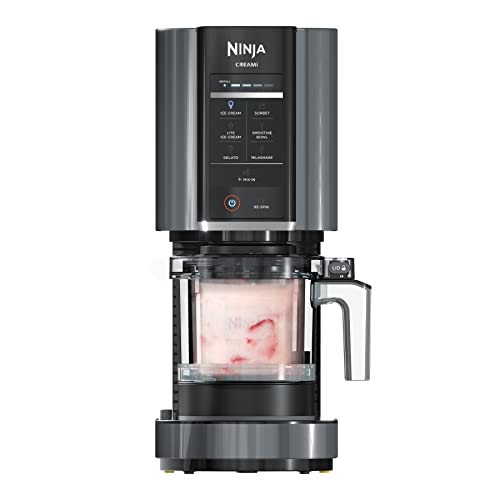
- Ninja CREAMi 7-in-1 Ice Cream Maker NC299AMZ — Best for Home Variety. Variety lovers and protein or dairy-free households happy to freeze bases a day ahead.
Read the full guide ↓ for badges, honest trade-offs, a comparison table and the buying advice that helps you choose between them.
The best ice cream makers for your home are chosen differently from machines chosen for a showroom or a test bench. At home, an ice cream maker is infrastructure. It occupies freezer space every day, counter or cupboard space permanently, and a slot in your household routine — and it succeeds only if all three of those tenancies stay welcome. This guide therefore judges six verified machines on home fit first: batch size against household size, freezing method against your freezer reality, and workflow against the way your household actually cooks and eats.
Start with the freezer audit, because it eliminates more wrong purchases than any other step. Freezer-bowl machines and frozen-base pints need dedicated freezer room that stays cold; if your freezer is a small top compartment already negotiating with bread and leftovers, a no-pre-freeze machine is not a luxury but the only workable format. Then the counter audit: compressor machines are permanent residents, compact machines can be cupboard guests. Neither is wrong — but a machine stored somewhere annoying is a machine used twice a year.
The six picks map the home spectrum. The Pukomc and the Cuisinart ICE-90 are compact answers for small households and small freezers. The Oplace adds yogurt making, earning its footprint across the day. The Whynter ICM-128BPS is the home compressor for households that churn weekly. The Cuisinart ICE-30BCP1 is the family-size freezer-bowl anchor, and the Ninja CREAMi NC299AMZ turns a home freezer shelf into a row of personal pints for a household of divided tastes.
Batch rhythm ties it together. A home machine should produce roughly what your household eats in a week of desserts, because homemade ice cream is best young. Oversized batches age in the freezer; undersized batches turn dessert into labour. The reviews below keep returning to that arithmetic, and the buying guide turns it into a checklist you can run against your own kitchen measurements. Related lenses — the editorial one in Best Ice Cream Makers Kitchn and the ownership one in Best Ice Cream Makers Longest Warranty — reward a read once your home shortlist is set.
Key Takeaways
- Judge a home ice cream maker on three tenancies: freezer space, counter space and routine space.
- If freezer room is scarce, no-pre-freeze formats are the workable choice, not a splurge.
- Match batch size to a week of household desserts; homemade ice cream is best eaten young.
- Multi-role machines earn small-kitchen footprints by working beyond dessert.
- A machine stored somewhere annoying will be used twice a year, whatever its merits.
In this guide
Quick Picks
Six machines mapped to six kinds of home — small freezer, small counter, big family, divided tastes. Badges state the home each pick suits, and the reviews keep the same home-fit lens.
| Pick | Badge | Who it suits |
|---|---|---|
| Pukomc Home Swirl Ice Cream Maker with 2 Cups, 0.9 Quarts | Best Compact Home Starter | Couples and small apartments wanting a fast, tidy, small-batch routine |
| Cuisinart ICE-90 Ice Cream Maker, Automatic No Pre-Freezing, 1 Qt | Best for Small Freezers | Small kitchens and spontaneous makers who refuse the pre-freeze ritual |
| Whynter Ice Cream Maker with Compressor 1.28 Qt ICM-128BPS, Black and Pink | Best Home Compressor | Smaller households that churn often and want compressor spontaneity |
| Oplace 4-in-1 Compressor Ice Cream Maker 1.0 Qt, Blue | Best Multi-Role Home Pick | Small, curious households wanting yogurt, gelato and soft serve in one compact machine |
| Cuisinart ICE-30BCP1 2 Qt. Ice Cream Maker | Best Family-Size Home Churner | Families who plan batches ahead and want the biggest freezer-bowl capacity here |
| Ninja CREAMi 7-in-1 Ice Cream Maker NC299AMZ | Best for Home Variety | Variety lovers and protein or dairy-free households happy to freeze bases a day ahead |
How These Picks Were Chosen
This guide is research-led. We compared the verified listings for each model — the format, capacity, freezing method and controls stated in the listing itself — and weighed them against the job named in the keyword. We did not invent specifications: every capacity, program and feature mentioned in a review traces back to what the listing states, and where a listing is silent on a point, the review says so or leaves the point out. We make no claim to have run laboratory tests on these machines; the judgements here are buying judgements, built from specifications, format logic and the well-understood physics of churning and freezing.
Two filters shaped the shortlist. First, every pick had to be a genuine countertop ice cream maker for home use — not an ice cube machine, not a commercial unit. Second, the six picks together had to span the real decision space: freezer-bowl simplicity, compressor convenience, frozen-base flexibility, single-serve portioning and large-format churning, so that the comparison teaches the trade-offs rather than pretending one format wins for everyone. Badges were assigned after that comparison, and each badge is used consistently from the Quick Picks table through the detailed reviews.
For this home lens, we added household arithmetic to the specification comparison: servings per batch against typical household sizes, freezer volume claimed by bowls and pints, and the number of weekly routines each format can realistically join — dessert only, or breakfast yogurt and dessert both. Machines were not penalised for size; they were matched, honestly, to the homes where that size is a virtue.
The 6 Best Picks for Home Kitchens
Each review follows the same honest pattern: what the machine is, its badge, three strengths, three trade-offs, the specifications confirmed in its verified listing, who it suits and who it does not, and — for linked picks — a link to check the latest price on Amazon.

Pukomc Home Swirl Ice Cream Maker with 2 Cups, 0.9 Quarts
Badge: Best Compact Home Starter
Strengths
- The listed 15 to 25 minute churn window is among the quickest here.
- Two included cups make serving and portioning part of the package, not an afterthought.
- The listing leads with easy operation and easy cleaning, the two things compact machines live or die by.
Trade-offs
- At 0.9 quarts it is one of the smallest batches in the guide.
- It is a focused home machine without the program breadth of the CREAMi models or the scale of the compressor picks.
- Like other quick compact formats, results depend on starting with a well-chilled base.
Key specs from the verified listing: Capacity: 0.9 quarts as listed; Cups: 2 ice cream cups included as listed; Churn time: 15 to 25 minutes as listed; Operation: listed as easy to operate and clean; Extras: recipes included as listed; Makes: ice cream and frozen yogurt as listed.
The Pukomc Home Swirl is built around a short promise: homemade ice cream and frozen yogurt in 15 to 25 minutes, in a 0.9 quart machine listed as easy to operate and easy to clean, with recipes included and two ice cream cups in the box. It is a home swirl format, aimed at the weeknight treat rather than the weekend project, and its size makes that aim honest — this is dessert for a small household, made quickly, served in its own cups. Machines like this succeed or fail on friction, and the listing attacks friction directly: simple operation, simple cleaning, a short churn, and recipes so the first batch needs no research. The honest limitations are the small batch and the narrow brief. There are no gelato programs, no compressor, and no party capacity; a growing family will feel the ceiling. But for a couple, a small apartment, or a gift-able first step into homemade ice cream, the Pukomc formula — fast, small, tidy — is coherent and appealing.
As a home appliance — something that must earn permanent space — the Pukomc Home Swirl works because it is a compact swirl machine built for quick small batches with a 0.9 quarts as listed batch that matches ordinary household demand. It fits the weekly rhythm of a home kitchen rather than demanding the kitchen reorganise around it.
Best for: Couples and small apartments wanting a fast, tidy, small-batch routine / Not suited for: Bigger households or anyone wanting programs, gelato modes or party batches
Check on Amazon — check the latest price on Amazon for the Pukomc Home Swirl.

Cuisinart ICE-90 Ice Cream Maker, Automatic No Pre-Freezing, 1 Qt
Badge: Best for Small Freezers
Strengths
- No pre-freezing in a compact countertop body is a rare combination in this guide.
- Presets and automatic operation remove the guesswork that single-switch machines leave to the cook.
- The Cuisinart name brings the freezer-bowl line heritage into a spontaneous format.
Trade-offs
- At 1 Qt, batches are sized for a few servings, not a crowd.
- Compact no-pre-freeze machines trade batch scale for convenience; frequent family batches mean running it often.
- Preset-driven texture is convenient but less hands-on than a traditional churn for tinkerers.
Key specs from the verified listing: Capacity: 1 Qt as listed; Freezing: no pre-freezing, with Freeze Ease technology as listed; Controls: automatic operation with presets as listed; Format: compact countertop design as listed; Makes: ice cream and frozen yogurt as listed.
The Cuisinart ICE-90 answers the freezer-bowl complaint directly: no pre-freezing. Its Freeze Ease technology, as the listing names it, handles the cold inside a compact countertop body, and automatic operation with presets runs a 1 Qt batch of ice cream or frozen yogurt without a bowl living in your freezer. For small kitchens — where freezer space is the scarcest resource of all — that combination is the entire argument, and it is a strong one. The preset approach also changes who the machine suits. Instead of judging doneness by eye, the cook picks a preset and lets the machine manage the cycle, which lowers the learning curve for first-time makers and busy households alike. The honest limitation is scale: a quart is a quart, and a household serving six will run back-to-back batches or look at the larger compressor and bucket picks. Within its brief — spontaneous, compact, automatic — the ICE-90 is one of the most coherent designs here.
As a home appliance — something that must earn permanent space — the Cuisinart ICE-90 works because it is a compact no-pre-freeze machine built for spontaneous small batches with a 1 Qt as listed batch that matches ordinary household demand. It fits the weekly rhythm of a home kitchen rather than demanding the kitchen reorganise around it.
Best for: Small kitchens and spontaneous makers who refuse the pre-freeze ritual / Not suited for: Large families who need multi-quart batches in a single run
Check on Amazon — check the latest price on Amazon for the Cuisinart ICE-90.

Whynter Ice Cream Maker with Compressor 1.28 Qt ICM-128BPS, Black and Pink
Badge: Best Home Compressor
Strengths
- Compressor freezing with no pre-freeze, in a smaller batch size than the upright Whynter.
- The LCD display and timer bring the same process control as the larger model.
- The black and pink finish is the most playful look among the compressor picks.
Trade-offs
- Compressor hardware still means weight and a permanent footprint, even at this size.
- The 1.28 Qt batch sits between single-serve and family scale, which suits some households and frustrates others.
- It sits in the premium tier relative to freezer-bowl machines of similar capacity.
Key specs from the verified listing: Capacity: 1.28 Qt as listed; Freezing: built-in compressor, no pre-freezing needed; Controls: LCD display and timer as listed; Finish: black and pink as listed.
The Whynter ICM-128BPS takes the compressor promise — built-in freezing, no pre-freezing, an LCD display and timer to manage the finish — and scales it to a 1.28 Qt batch in a black and pink finish. It is the spontaneous machine for smaller households: no bowl in the freezer, no day-ahead planning, and a batch sized for a family dessert rather than a party, with the option to run another batch straight after the first. That middle scale is more useful than it sounds. Many households find a quart and a bit is the honest dessert quantity, and a compressor at this size removes the two classic frictions — freezer space for a bowl and the wait to re-freeze between batches. The honest limitations are the compressor constants: more weight than a freezer-bowl machine, a footprint that needs a home, and a premium-tier position next to simpler machines of similar capacity. For a small household that makes ice cream often, those trade-offs usually resolve in its favour.
As a home appliance — something that must earn permanent space — the Whynter ICM-128BPS works because it is a compressor machine that freezes while it churns, with no pre-freezing with a 1.28 Qt as listed batch that matches ordinary household demand. It fits the weekly rhythm of a home kitchen rather than demanding the kitchen reorganise around it.
Best for: Smaller households that churn often and want compressor spontaneity / Not suited for: Occasional makers for whom a simple freezer bowl is enough machine
Check on Amazon — check the latest price on Amazon for the Whynter ICM-128BPS.

Oplace 4-in-1 Compressor Ice Cream Maker 1.0 Qt, Blue
Badge: Best Multi-Role Home Pick
Strengths
- The 4-in-1 listing spans ice cream, yogurt making, gelato, sorbet and soft serve in one compact body.
- A compact vertical design is the friendliest compressor footprint here for tight counters.
- No pre-freezing keeps it spontaneous despite the small batch.
Trade-offs
- At 1.0 Qt it is a small batch, firmly in few-servings territory.
- A multi-role machine asks the cook to learn several modes rather than one simple churn.
- Vertical compact compressors still carry compressor weight; compact does not mean light.
Key specs from the verified listing: Capacity: 1.0 Qt as listed; Format: 4-in-1 compressor machine as listed; Freezing: no pre-freezing as listed; Functions: yogurt making, gelato, sorbet, frozen yogurt and soft serve among the listed roles; Design: compact vertical design for the home kitchen, blue, as listed.
The Oplace 4-in-1 packs a compressor into a compact vertical body and gives it the widest job list of the small machines: ice cream, automatic yogurt making, gelato, sorbet, frozen yogurt and soft serve, all with no pre-freezing, in a blue finish designed for the home kitchen. A 1.0 Qt batch keeps it in few-servings territory, but the role breadth means the same small footprint earns its counter space across breakfast yogurt and dessert alike. That versatility is the honest pitch. A single-role quart machine must justify itself on dessert nights only; the Oplace can be making yogurt on a weekday morning and soft serve on a Saturday. The honest limitations are scale and learning curve: one quart at a time, several modes to understand, and compressor weight inside a compact shell. For a small, curious household that likes one appliance doing several jobs, it is a smart shape. For a family that just wants a big bowl of vanilla, the larger picks serve better.
As a home appliance — something that must earn permanent space — the Oplace 4-in-1 Compressor works because it is a compressor machine that freezes while it churns, with no pre-freezing with a 1.0 Qt as listed batch that matches ordinary household demand. It fits the weekly rhythm of a home kitchen rather than demanding the kitchen reorganise around it.
Best for: Small, curious households wanting yogurt, gelato and soft serve in one compact machine / Not suited for: Families needing large single batches or a one-button single-job tool
Check on Amazon — check the latest price on Amazon for the Oplace 4-in-1 Compressor.

Cuisinart ICE-30BCP1 2 Qt. Ice Cream Maker
Badge: Best Family-Size Home Churner
Strengths
- The 2 Qt. bowl is the largest freezer-bowl capacity in this line-up, so one batch covers a family dessert plus leftovers.
- The heavy-duty motor as listed is built for thick, dense bases that slow lighter machines down near the end of a churn.
- The large ingredient spout makes adding chips, fruit or cookie pieces mid-churn simple and mess-free.
Trade-offs
- The bowl must be pre-frozen before every batch, so spontaneous ice cream is off the table without planning.
- Back-to-back batches are limited because the bowl warms up and needs a full re-freeze between runs.
- The 2 Qt. bowl takes real freezer and cupboard space compared with the smaller machines here.
Key specs from the verified listing: Capacity: 2 Qt. freezer bowl; Bowl: double-insulated, requires pre-freezing; Motor: heavy-duty motor as listed; Ingredient spout: large opening for mix-ins; Finish: silver; Makes: ice cream and frozen yogurt.
The Cuisinart ICE-30BCP1 is the classic freezer-bowl format done at family scale. You freeze the double-insulated bowl until the coolant inside is solid, fit it to the base, pour in a chilled base and let the heavy-duty motor turn the dasher while the bowl does the freezing. In about the time it takes to clear dinner, the base thickens into scoopable ice cream, and the large spout lets you rain in mix-ins during the last minutes so they stay distinct instead of melting into the base. What separates this model from the smaller freezer-bowl machines is headroom. A 2 Qt. bowl handles a full family recipe without the overflow anxiety that comes when a base expands as it churns, and the stronger motor keeps turning when a dense custard or a chunk-heavy base would stall a lighter drive. The honest limitation is the format itself: the bowl lives in your freezer, the freezer must be cold enough to freeze it solid, and a second batch waits until the bowl has been frozen again. Households that plan dessert a day ahead will barely notice; households that decide at 6 p.m. will feel it every time.
As a home appliance — something that must earn permanent space — the Cuisinart ICE-30BCP1 works because it is a freezer-bowl churner that depends on a thoroughly pre-frozen bowl with a 2 Qt. freezer bowl batch that matches ordinary household demand. It fits the weekly rhythm of a home kitchen rather than demanding the kitchen reorganise around it.
Best for: Families who plan batches ahead and want the biggest freezer-bowl capacity here / Not suited for: Spontaneous cooks who want ice cream without a pre-frozen bowl waiting in the freezer
Check on Amazon — check the latest price on Amazon for the Cuisinart ICE-30BCP1.
Ninja CREAMi 7-in-1 Ice Cream Maker NC299AMZ
Badge: Best for Home Variety
Strengths
- The 7-in-1 program list covers ice cream, gelato, sorbet and milkshakes in one machine, the widest menu here.
- Because the base freezes solid first, protein-rich and lower-sugar bases that defeat churners still process into a scoopable texture.
- Portions are made pint by pint, so one household can run several different flavours in a single evening.
Trade-offs
- Every pint needs a full freeze before processing, so the planning horizon is a day rather than an hour.
- The texture depends on processing a frozen block, which is a different workflow from churning and takes a batch or two to learn.
- Batch size per run is a single container, so serving a crowd means processing several pints in sequence.
Key specs from the verified listing: Format: frozen-base processor, 7-in-1 as listed; Programs: ice cream, gelato, sorbet and milkshakes among the listed functions; Method: base is frozen solid first, then processed at a button touch; Positioning as listed: from healthy to indulgent recipes.
The Ninja CREAMi NC299AMZ does not churn at all, and that is exactly why it earned its following. You pour a base into its pint container, freeze it solid, then lock the pint into the machine and let the processing paddle shave and whip the frozen block into ice cream, gelato, sorbet or a milkshake at the touch of a button. The 7-in-1 program list means the same frozen-block method stretches from a plain vanilla to fruit sorbets and blended drinks without extra equipment. The practical consequence is freedom with ingredients. Bases built on protein shakes, coconut milk, pureed fruit or low-sugar mixes freeze too hard or too icy for a dasher to churn, but the CREAMi processes them after freezing, which is why it shows up in so many fitness and allergy-friendly kitchens. The honest limitation is rhythm: nothing here is same-hour. The pint must freeze solid first, processing is brisk but audible, and each flavour is its own pint. If your household thinks a day ahead and loves variety, the workflow feels liberating; if you want a big bowl churned while dinner cooks, a traditional machine fits better.
As a home appliance — something that must earn permanent space — the Ninja CREAMi NC299AMZ works because it is a frozen-base processor that works on pints frozen solid in advance with a frozen-base processor, 7-in-1 as listed batch that matches ordinary household demand. It fits the weekly rhythm of a home kitchen rather than demanding the kitchen reorganise around it.
Best for: Variety lovers and protein or dairy-free households happy to freeze bases a day ahead / Not suited for: Anyone who wants one large batch churned and served within the hour
Check on Amazon — check the latest price on Amazon for the Ninja CREAMi NC299AMZ.
Comparison Table
One view of all six: format, the headline capacity or format fact confirmed in the listing, and the badge each pick earned. Use it to build a shortlist of two, then read those two detailed reviews closely.
| Pick | Format | Headline fact | Badge | Listing |
|---|---|---|---|---|
| Pukomc Home Swirl Ice Cream Maker with 2 Cups, 0.9 Quarts | compact swirl maker | Capacity: 0.9 quarts as listed | Best Compact Home Starter | Check on Amazon |
| Cuisinart ICE-90 Ice Cream Maker, Automatic No Pre-Freezing, 1 Qt | compact no-pre-freeze | Capacity: 1 Qt as listed | Best for Small Freezers | Check on Amazon |
| Whynter Ice Cream Maker with Compressor 1.28 Qt ICM-128BPS, Black and Pink | compressor | Capacity: 1.28 Qt as listed | Best Home Compressor | Check on Amazon |
| Oplace 4-in-1 Compressor Ice Cream Maker 1.0 Qt, Blue | compressor | Capacity: 1.0 Qt as listed | Best Multi-Role Home Pick | Check on Amazon |
| Cuisinart ICE-30BCP1 2 Qt. Ice Cream Maker | freezer-bowl | Capacity: 2 Qt. freezer bowl | Best Family-Size Home Churner | Check on Amazon |
| Ninja CREAMi 7-in-1 Ice Cream Maker NC299AMZ | frozen-base processor | Format: frozen-base processor, 7-in-1 as listed | Best for Home Variety | Check on Amazon |
How to Choose an Ice Cream Maker That Fits Your Home
Capacity is the first filter, but read it as servings rather than as a number. Half-pint mugs are personal treats. One-quart machines serve a few people tonight. The two-quart class covers a family plus leftovers, and the four-quart bucket exists for gatherings. Match the batch to the occasion you actually have most often, not the biggest occasion you can imagine, because an oversized machine that feels like a production will quietly stop being used.
The second filter is freezing logistics. If your freezer is small or full, a bowl that must live in it is a real cost, and a no-pre-freeze compressor or a compact automatic model may serve you better despite a higher tier. If your freezer has a spare corner, freezer-bowl machines deliver classic churned texture with the simplest hardware here. Frozen-base processors move the freezer burden into pints, which stack neatly but still need a full freeze before dessert.
The third filter is texture ambition. Traditional churning gives the familiar scoopable result and rewards custard bases. Soft serve formats give a serve-now swirl that firms up in storage. Frozen-base processing gives dense, customisable pints and handles bases — protein, fruit, low-sugar — that churning struggles with. Yogurt and multi-role machines add breakfast value. There is no wrong answer, only a mismatch between the texture you picture and the machine you buy.
Close with the ownership questions. How many parts meet the sink after each batch? Does the machine need a permanent counter home, and do you have one? Will the household member who actually makes dessert enjoy this workflow in month six, not just week one? Ice cream makers fail by abandonment far more often than by breakdown, so the best choice is the one whose routine fits your kitchen life.
How to Build a Home Ice Cream Routine That Lasts
Whatever the format, good homemade ice cream follows the same arc: a well-made base, thorough cold, a complete churn or process, and a short rest in the freezer to firm up. Work through these steps and most disappointments disappear.
- Make and chill the base. Cook custard bases gently until they coat a spoon, then chill them thoroughly — ideally overnight. A cold base churns faster and smoother than a warm one in every format.
- Prepare the cold. Freeze bowls and mugs until completely solid, freeze CREAMi pints flat and level until fully hard, or simply switch a compressor machine on and let it pre-chill as its design intends.
- Churn or process without overfilling. Leave headroom for expansion. Add mix-ins in the final minutes so they distribute without melting in.
- Judge the finish. Churned ice cream is done at a thick soft-serve consistency; it firms in the freezer. Pulling it early gives icy texture, while over-churning can turn it grainy or buttery.
- Rest and store. Transfer to a shallow covered container, press parchment or wrap onto the surface, and freeze for several hours for scoopable firmness. Eat homemade ice cream within about a week or two for best texture.
- Clean promptly. Rinse bowls, dashers and canisters before residue dries, dry freezer bowls fully before returning them to the freezer, and never immerse a motor base.
Problem: the batch stays soupy → what to do. The cold was not cold enough or the base went in warm. Chill the base longer, freeze the bowl or pint for the full recommended time, and check that your freezer is genuinely at its coldest setting.
Problem: the texture is icy → what to do. Too much water and too little fat, sugar or body in the base, or too slow a freeze. Richen the base slightly, chill it thoroughly, and make sure the freezing element starts fully cold.
Problem: mix-ins sink or vanish → what to do. They went in too early or too warm. Add them in the last minutes of churning, pre-chill chunky additions, and keep pieces small enough to distribute.
Sizing the best ice cream makers for your home Around Your Household
Do the servings maths before the features maths. A quart of ice cream is roughly four modest servings or two generous ones. A two-quart batch is a family dessert plus a few days of small leftovers. A shelf of frozen-base pints is one serving per pint, in as many flavours as the household has opinions. Now count your household honest eaters, multiply by the desserts you genuinely serve in a week, and you have your capacity target. Most single and couple households land at a quart or under; most families land at two quarts or a compressor that can run twice.
Storage maths follows. Homemade ice cream keeps its best texture for about a week or two, so a batch rhythm that produces a fresh quart twice a week beats a fortnightly giant in both quality and freezer politics. Containers matter at home scale: shallow, wide containers freeze evenly, scoop kindly and stack better than deep tubs. Pressing wrap onto the surface before lidding is a ten-second habit that visibly reduces ice crystals by the third day. These are the unglamorous details that decide whether a home machine becomes a fixture or a regret, and they favour no brand — only honesty about your household. Retail cross-checks for the same models live in Best Ice Cream Makers Macys, and the traditional large-format alternative is discussed in Best Ice Cream Makers Mountain.
Freezer-Bowl Versus Compressor at Home, Settled Plainly
The home version of this old argument is about space geography. A freezer-bowl machine stores its cold in your freezer: the bowl is compact on the counter but permanently rents freezer volume, and it can only make one batch per freeze. A compressor machine stores its cold in itself: it rents counter or cupboard volume instead, asks nothing of the freezer except storage for the finished ice cream, and can run batch after batch. Frozen-base processors split the difference, renting freezer volume in neat, stackable pints.
So the question is never which is better, only which space your home can spare. A large chest freezer makes freezer-bowl economics trivial. A small apartment freezer makes a compact compressor or an automatic no-pre-freeze model the rational buy even at a higher tier. A household of individualists may happily trade a freezer shelf for personal pints. Walk your own kitchen with a tape measure before ordering, and let the geography decide. Rock-and-salt traditionalists have their own home calculus, covered in Best Ice Cream Makers Rock And Salt.
Base Recipes, Decoded: What Each Ingredient Is Doing
A base recipe looks like a list of groceries and behaves like a small engineering specification. Cream and milk set the fat level, and fat sets richness and resistance to iciness. Sugar does double duty: sweetness the tongue reads, and freezing-point control the scoop feels — too little and the result sets rock hard, too much and it never quite firms. Egg yolks in a custard emulsify and add body, which is why custard bases feel dense and luxurious. A pinch of salt sharpens every other flavour. Corn syrup or a spoon of honey, used modestly, discourages crystal growth. When you adjust a recipe, change one lever at a time and note the result; that is how a household develops its own house vanilla.
Fruit and alcohol deserve special handling. Fresh fruit brings water, and water brings ice; roasting fruit, macerating it in sugar, or cooking it briefly concentrates flavour while shedding the water that would freeze coarse. Alcohol lowers the freezing point powerfully, so a heavy hand with liqueur produces a batch that will not set — a little flavours, a lot sabotages. Chocolate and cocoa add solids that firm a base, which is why chocolate recipes often carry slightly more sugar or liquid elsewhere. None of this is machine-specific, and all of it decides more batches than hardware does.
Cleaning and Care That Keep a Machine Honest
Ice cream leaves a rich film, and a machine cleaned promptly is a machine that stays pleasant to use. Rinse bowls, canisters, dashers and pints as soon as serving is done, before residue dries into the seams. Wash in warm soapy water unless the maker instructions say otherwise, dry every part fully — freezer bowls especially, because a damp bowl returned to the freezer can freeze unevenly and harbour off smells — and never immerse a motor base or a compressor body. Wipe exteriors while they are cool, and store lids ajar where the design allows so seals rest uncompressed.
Seasonal care matters for machines that hibernate. Before a winter of storage, run a plain batch or a thorough clean, dry everything for a full day, and store the bowl protected from knocks, because a dented or seal-damaged bowl loses freezing performance quietly. Compressor machines should rest upright and ventilated, and should sit upright for a while after any move before being run again. These habits are unglamorous, and they are also the entire difference between a machine that serves a household for years and one that disappoints by its second summer.
Common Buying Mistakes
Buying capacity for the party you host once a year
The biggest machine feels like the safest purchase and is often the least used. Size for your ordinary week; rent the party problem the one time it arrives by making two batches or buying a tub to supplement.
Ignoring the freezer half of the bargain
Freezer bowls and pints need real, permanent freezer room. Shoppers measure the counter and forget the freezer, then discover the bowl lives on top of the peas and never quite freezes solid.
Pouring in a warm base
A warm or merely cool base doubles churn time and coarsens texture in every format. An overnight chill is the cheapest quality upgrade in all of homemade ice cream.
Overfilling to get more per batch
Churned ice cream expands. An overfilled bowl overflows, under-freezes at the centre and punishes the motor. Two correct batches beat one ruined one.
Judging by the first batch
First batches are learning batches: freeze times, base balance and doneness all need calibration. Judge a machine on batch three, not batch one.
Final Recommendation
For most homes the first choice is the Cuisinart ICE-90: compact, automatic, no pre-freezing, and a quart that matches a small household week. Families with freezer room should choose the Cuisinart ICE-30BCP1 for its two-quart churns; weekly makers with counter room, the Whynter ICM-128BPS; divided-taste households, the Ninja CREAMi NC299AMZ; and small multi-role kitchens, the Oplace. The Pukomc remains the tidy budget-of-space starter.
Shortlist links: Pukomc Home Swirl, Cuisinart ICE-90, Whynter ICM-128BPS — check the latest price on Amazon for each before you decide.
Frequently Asked Questions
Where should an ice cream maker live in a home kitchen?
Where it will actually be used. Counter space suits weekly makers; a reachable cupboard shelf suits monthly makers. Avoid high or deep storage — every awkward retrieval quietly subtracts future batches.
How much freezer space does a freezer-bowl machine really need?
Enough for the bowl to sit level with air around it, permanently. If that space does not exist in your freezer on its fullest day, choose a no-pre-freeze format instead of hoping to reorganise weekly.
What batch size suits a household of two?
A quart or less for most couples, which covers dessert tonight and a few small servings later in the week. Frozen-base pints are the alternative when the two of you never agree on flavour.
Is a compressor machine too much for a home?
Only if you churn rarely. For weekly home use, a compressor removes the planning friction that kills the habit, and its footprint is comparable to other resident countertop appliances. For monthly use, simpler formats are the honest buy.
How long does homemade ice cream keep at home?
Best texture arrives within the first week or two. Keep it at the back of the freezer in a shallow covered container with wrap pressed on the surface, and let it soften briefly before scooping.
Can one machine cover yogurt and ice cream at home?
Yes — the multi-role compressor pick in this guide lists automatic yogurt making alongside gelato, sorbet, frozen yogurt and soft serve, which is how a small home machine earns a daily footprint.